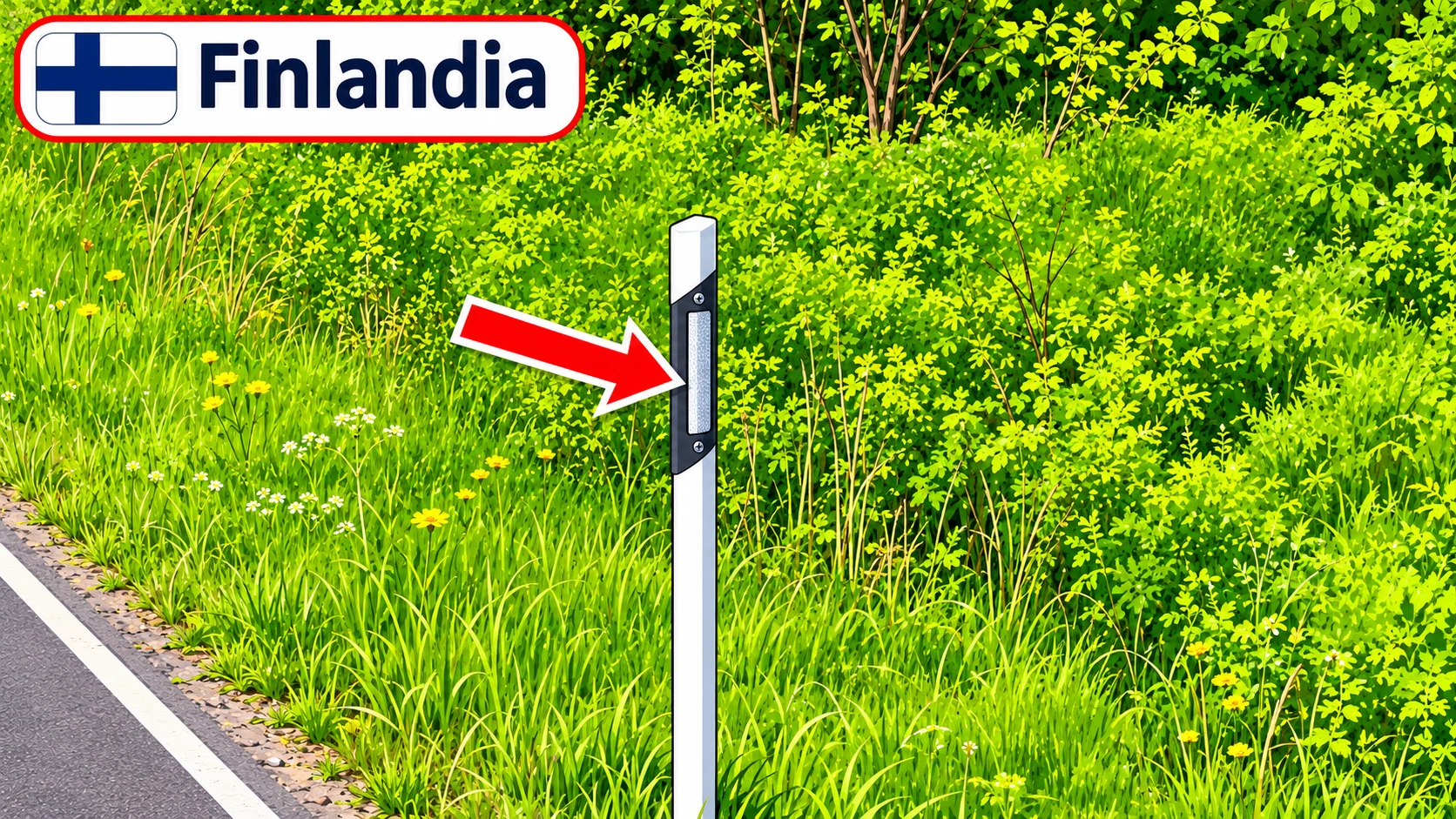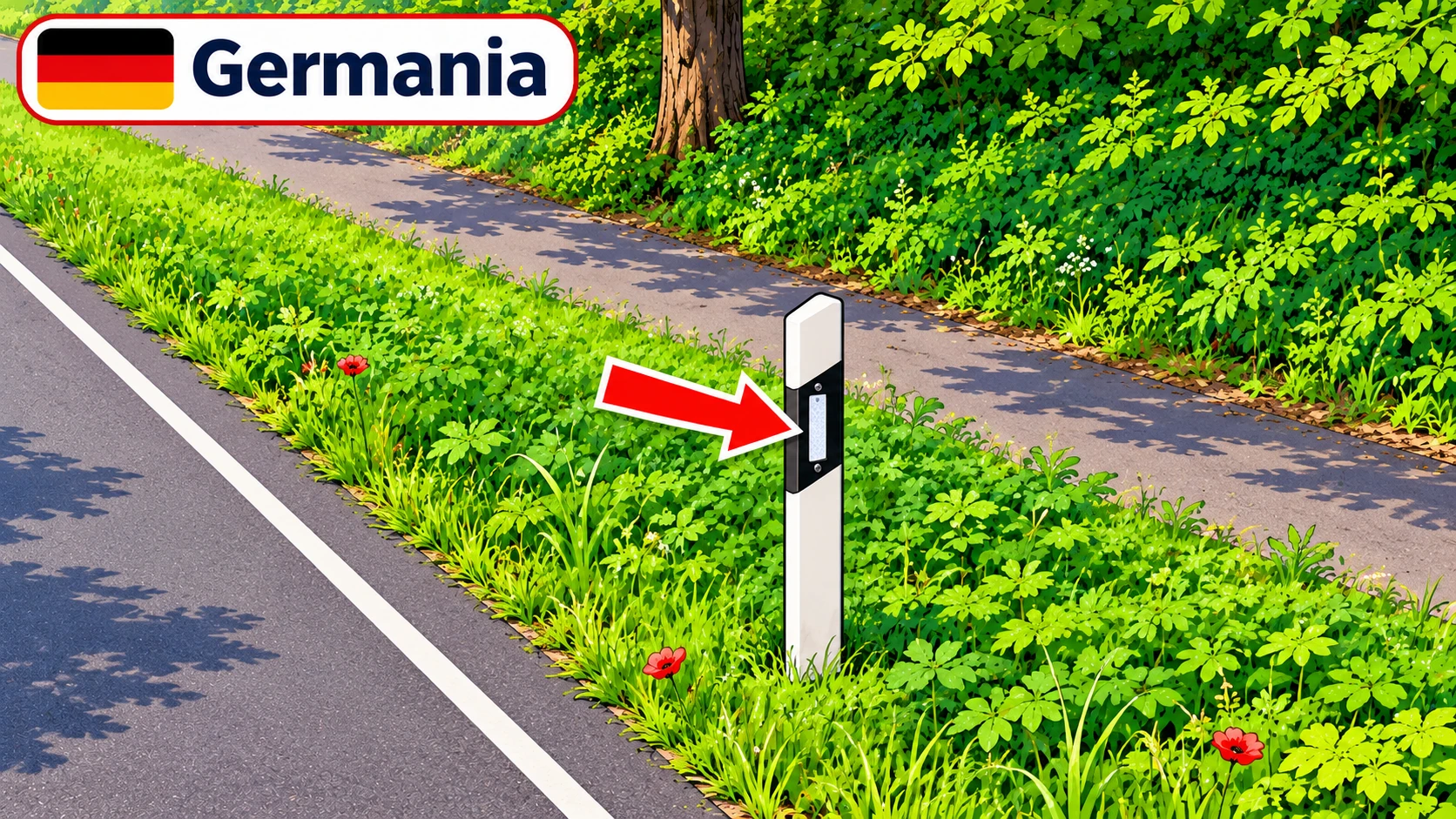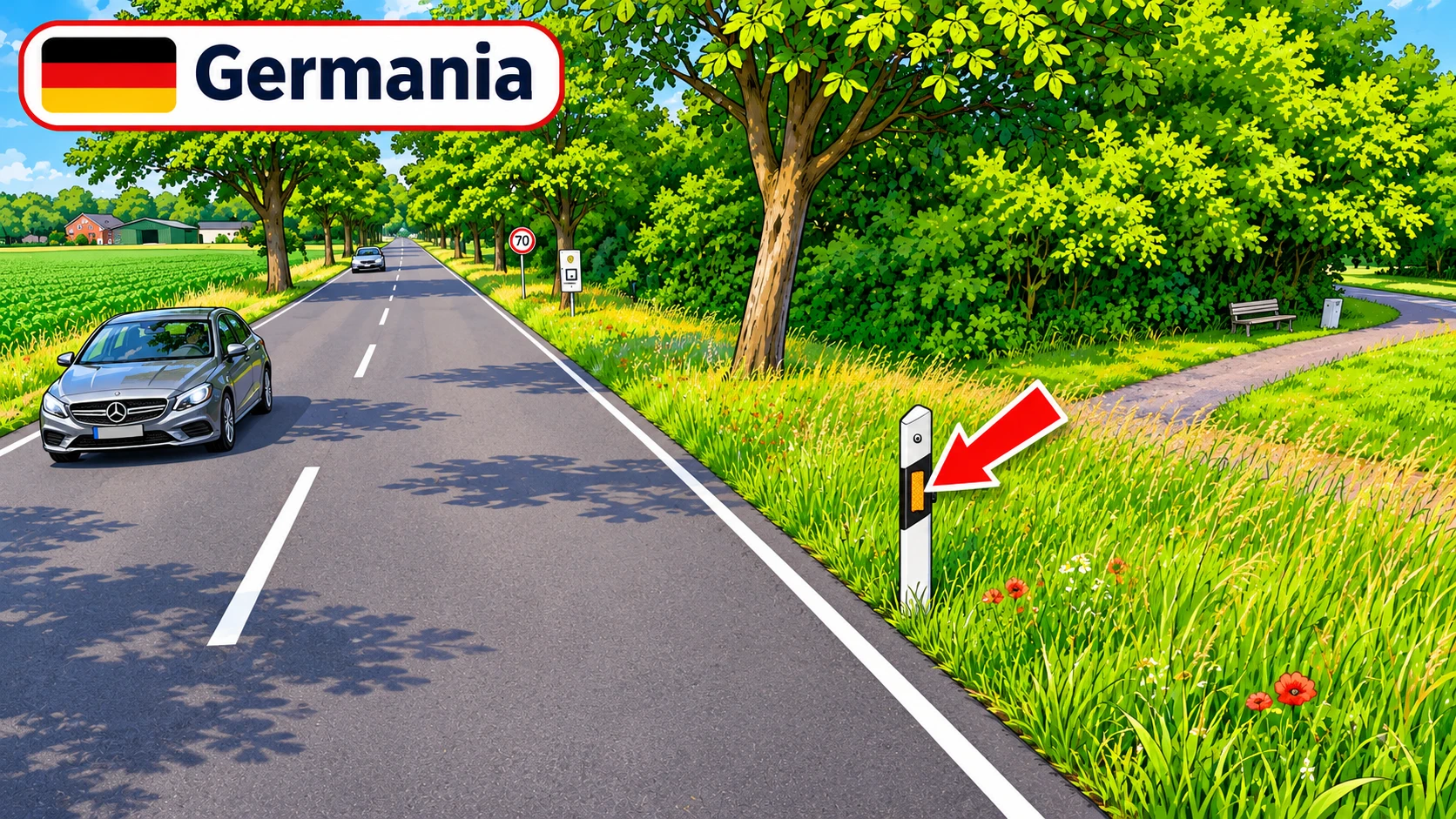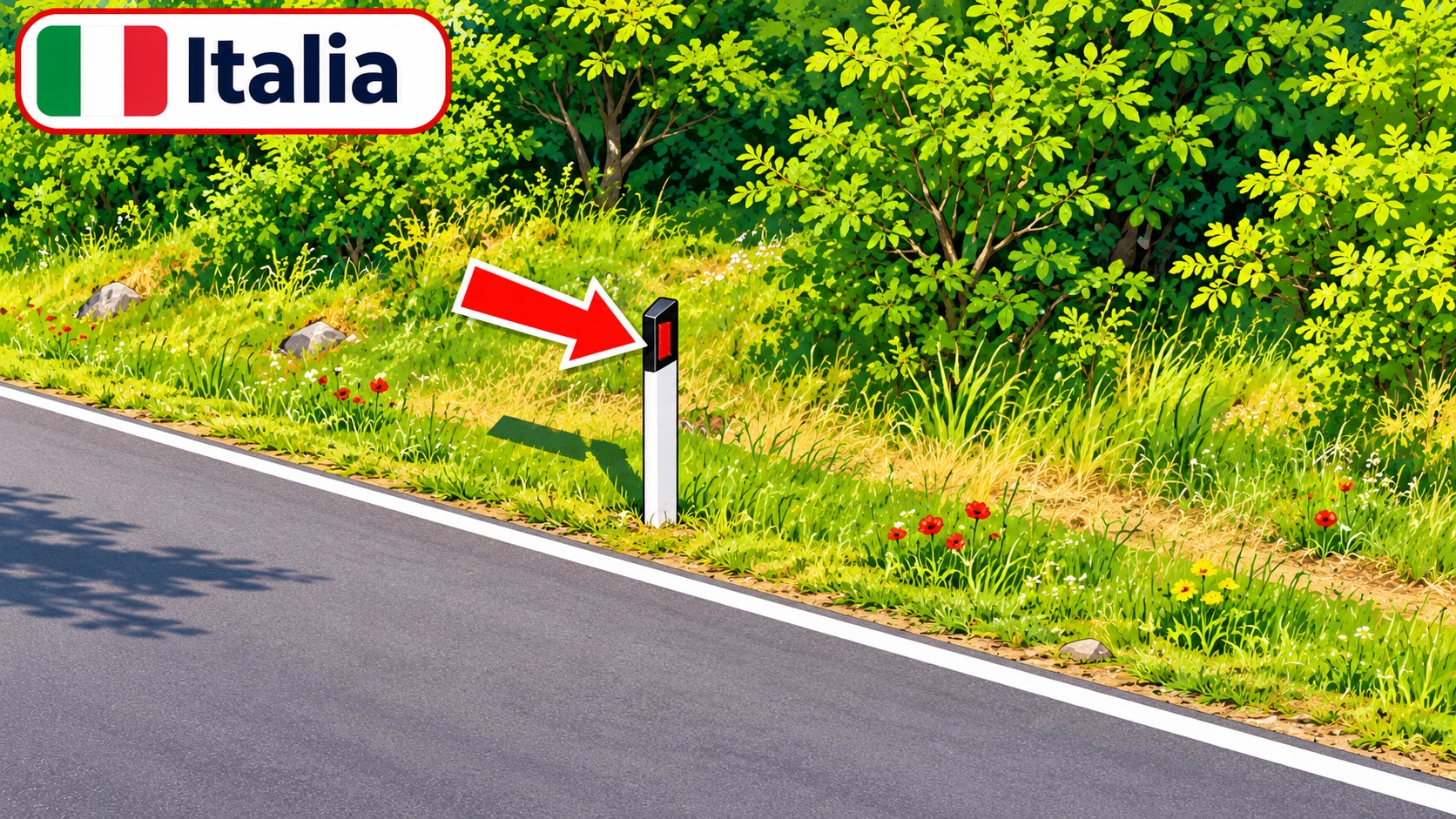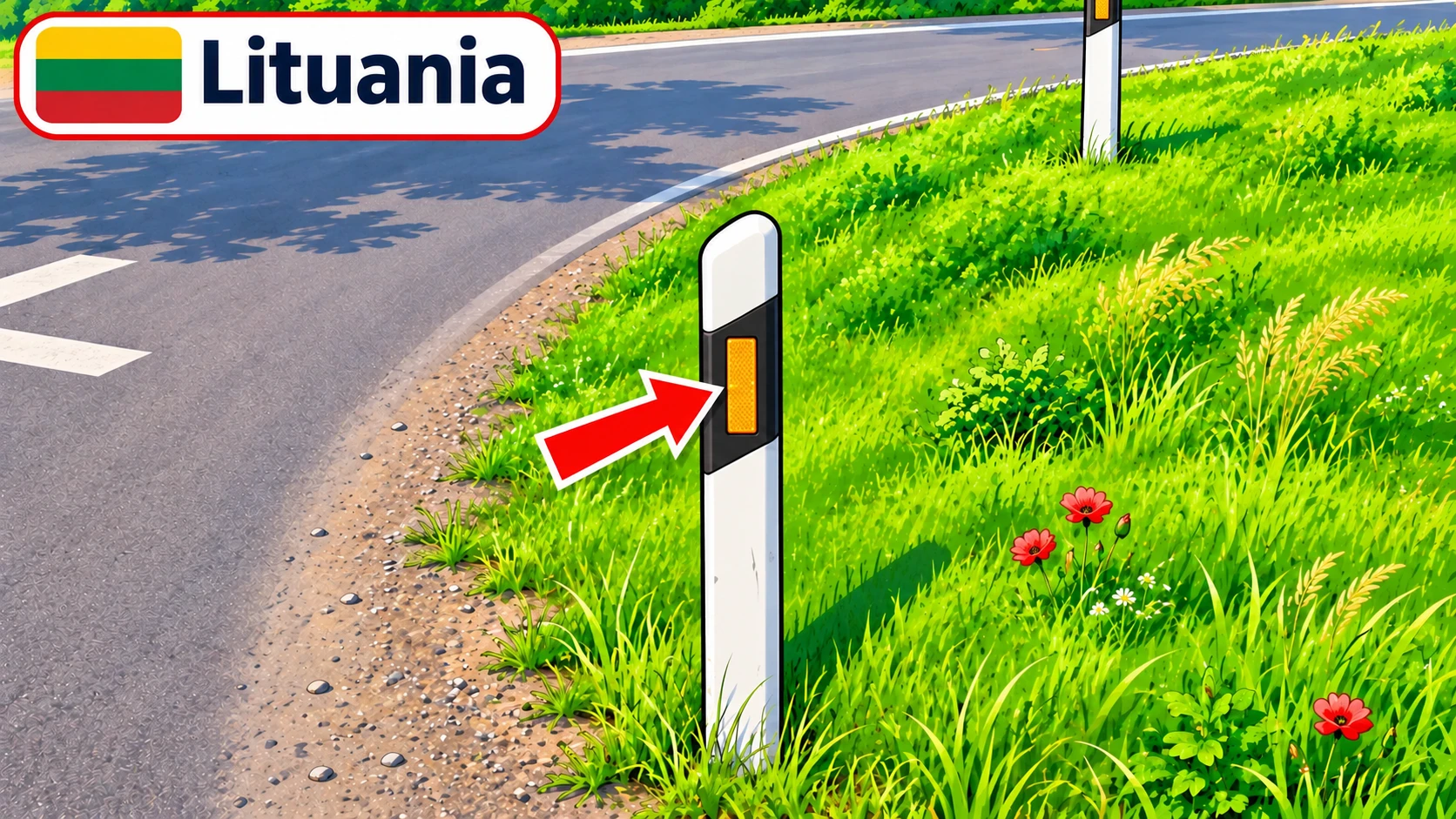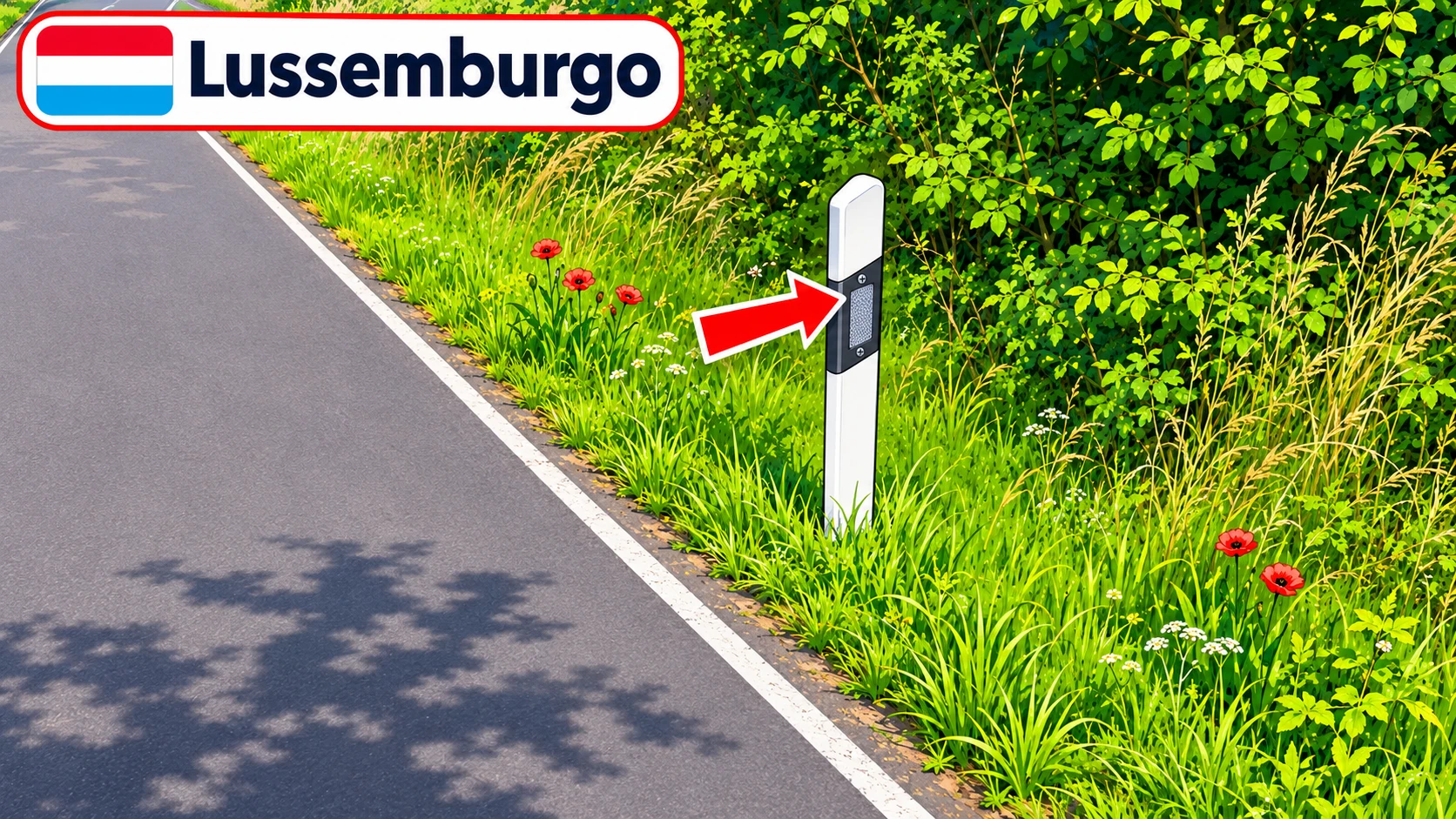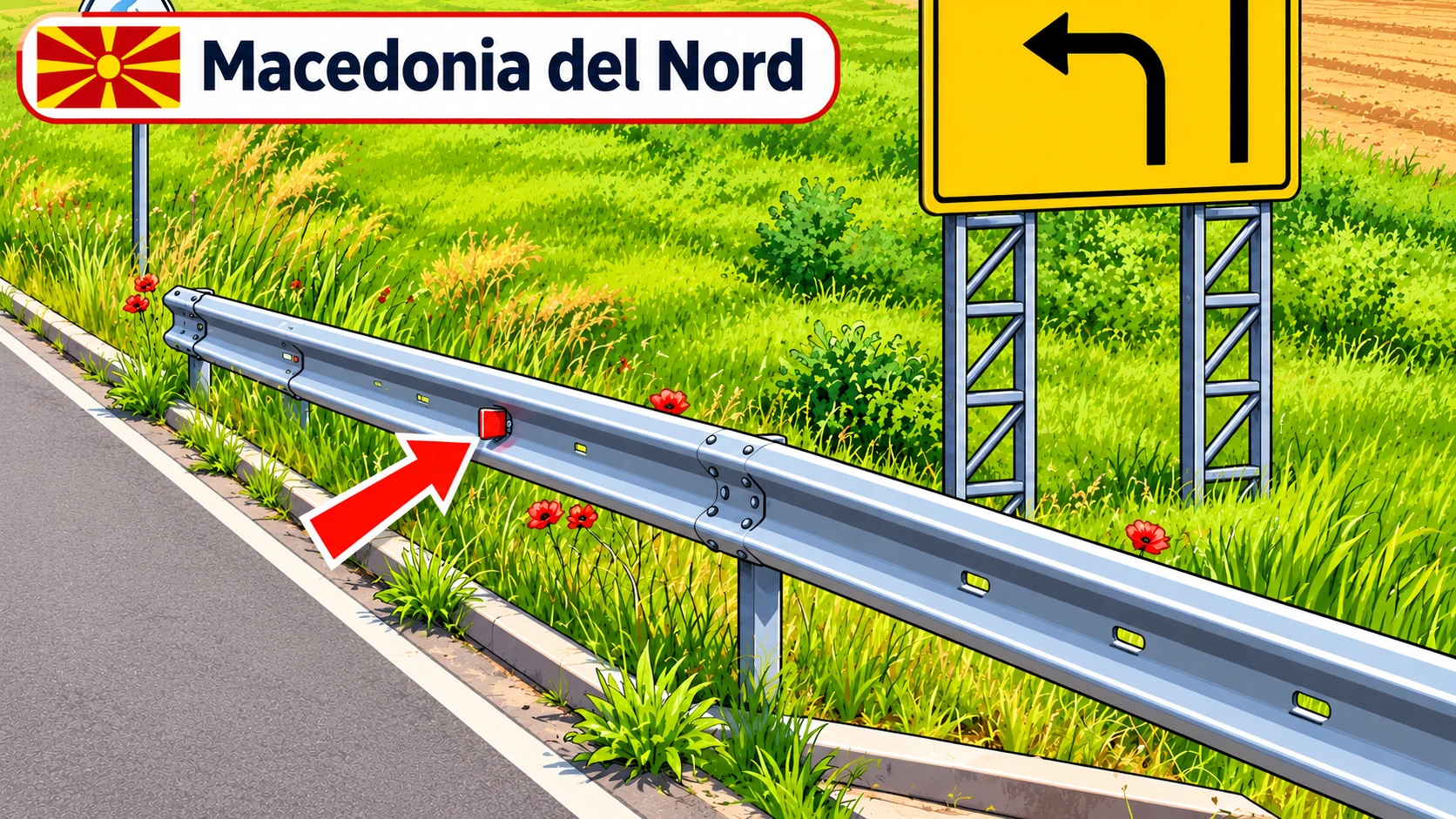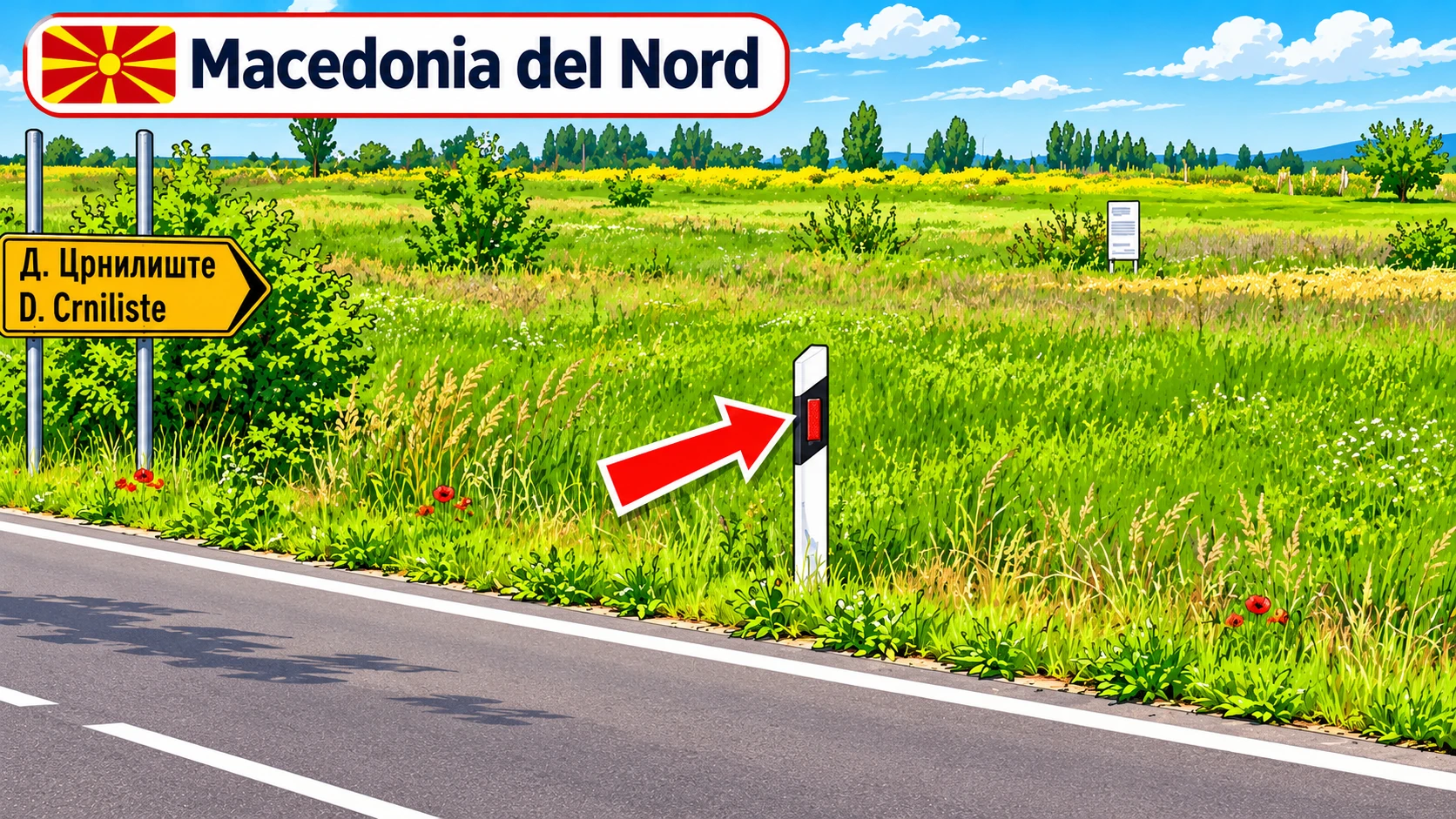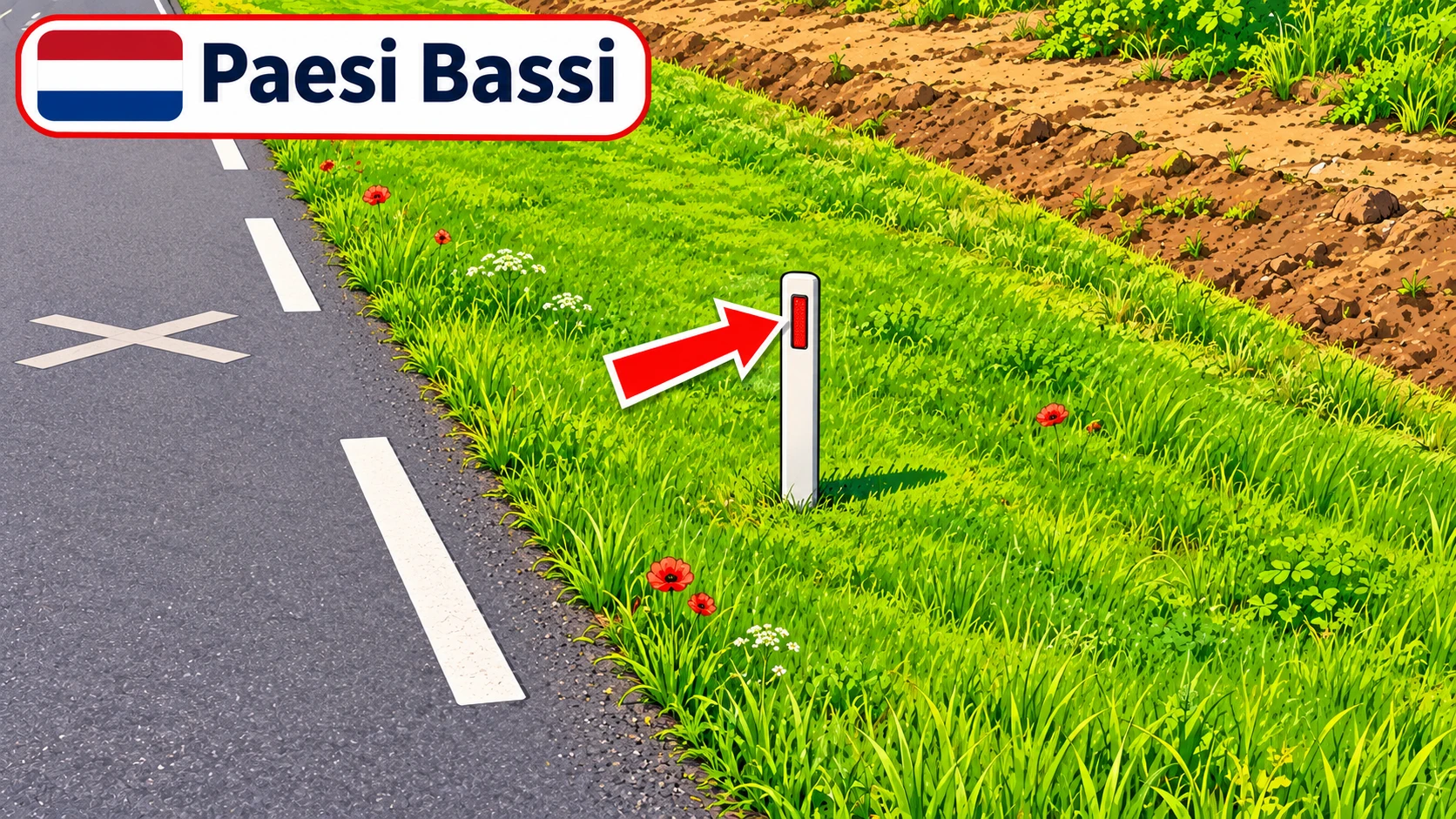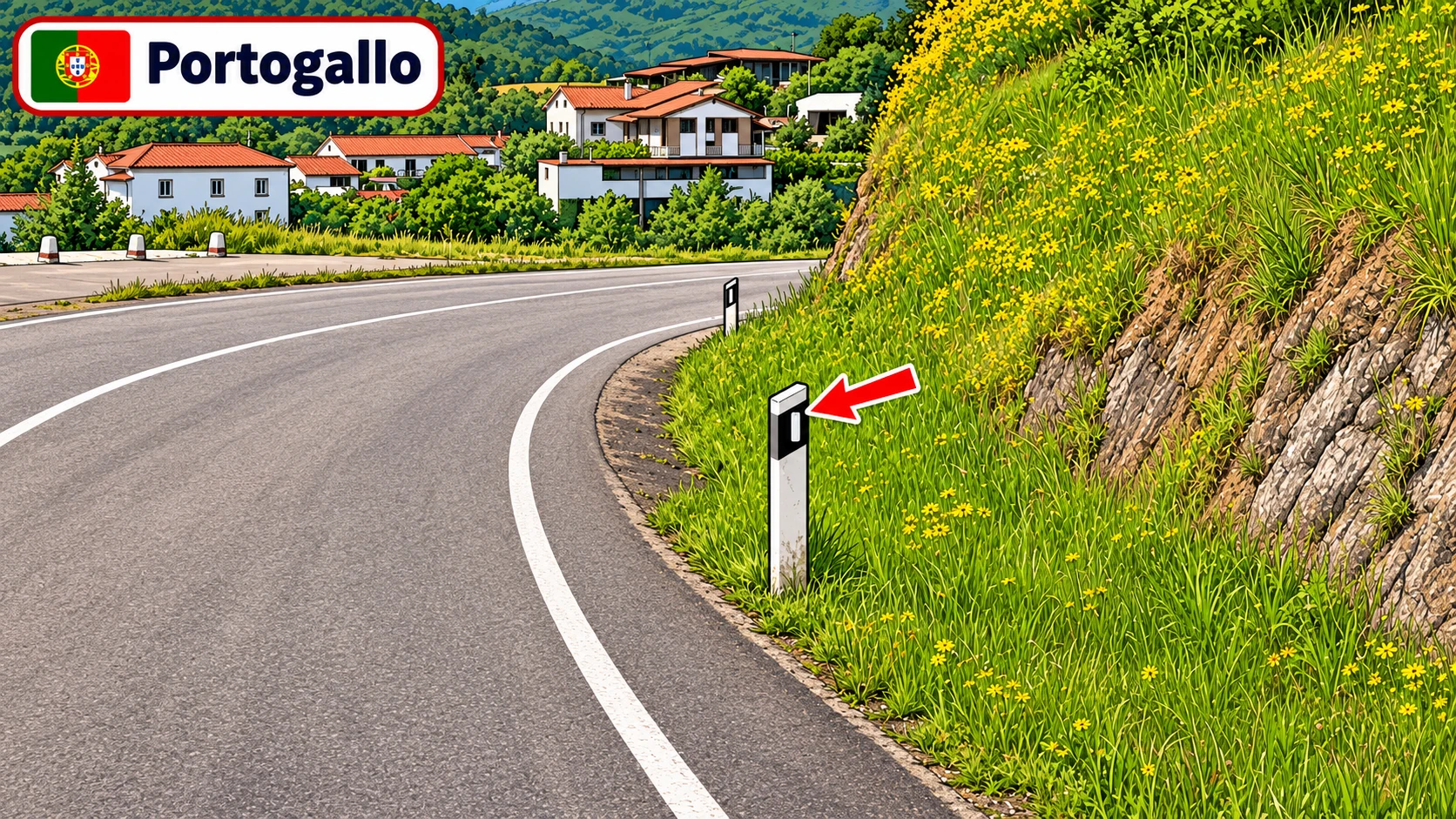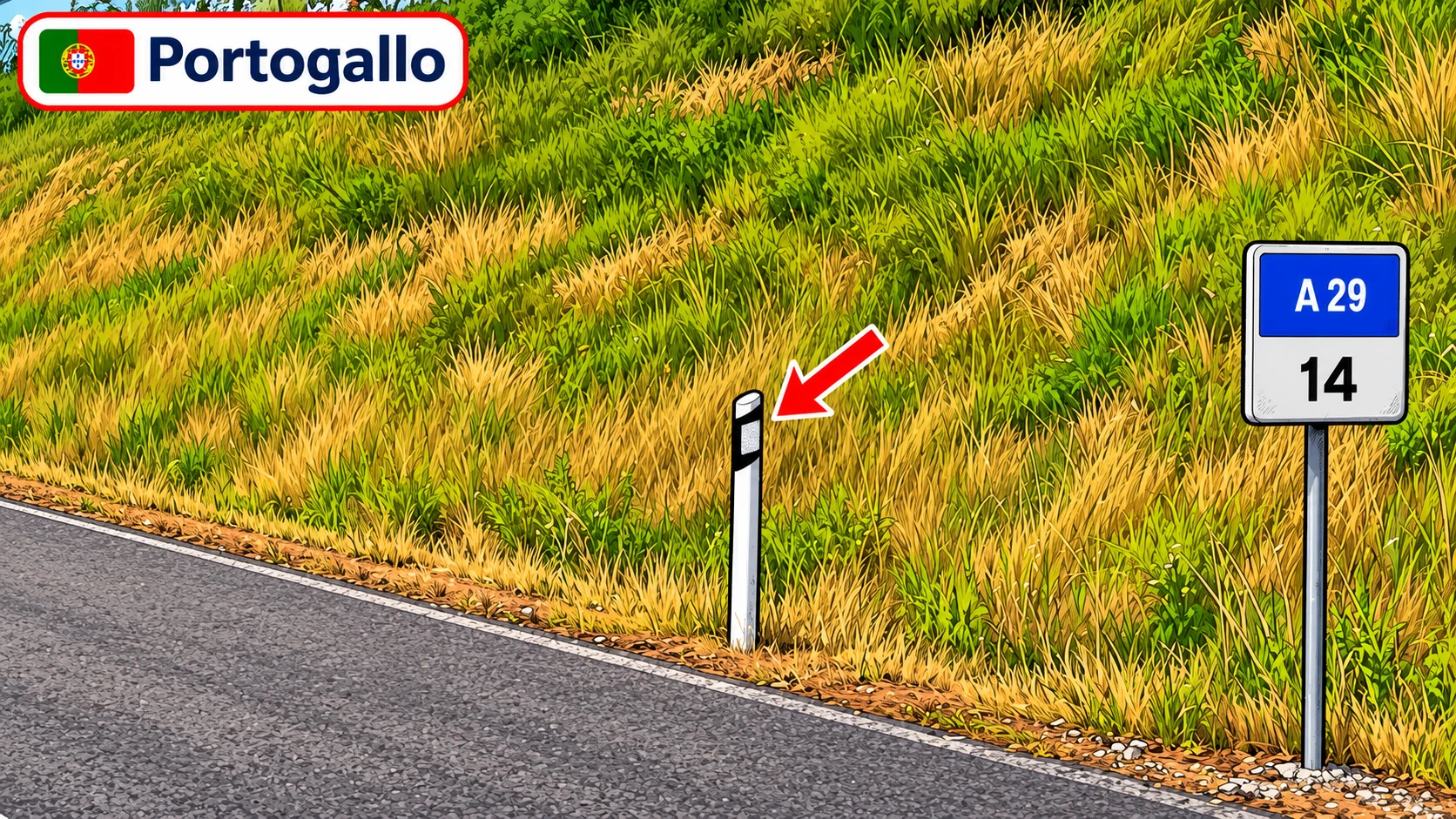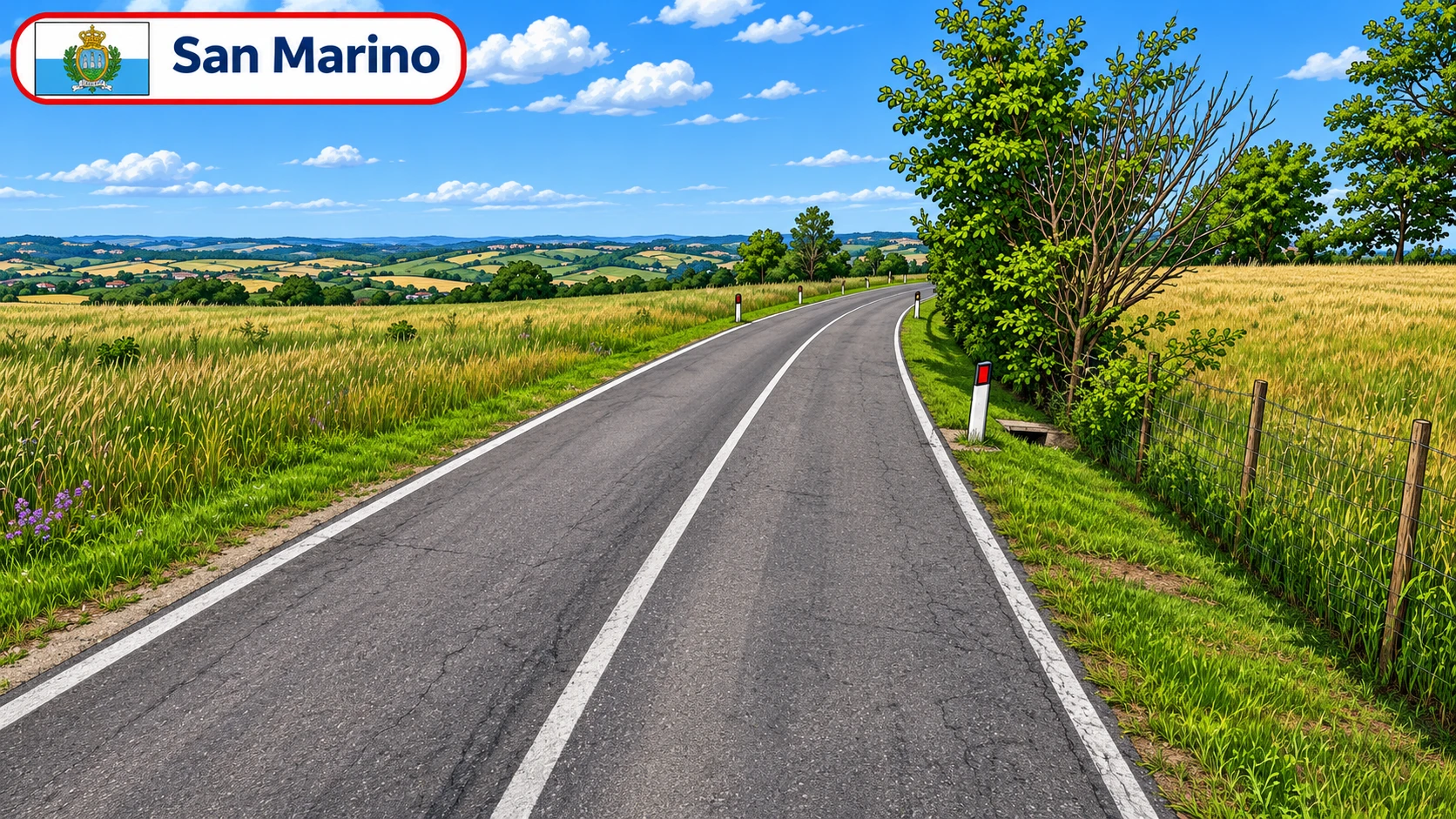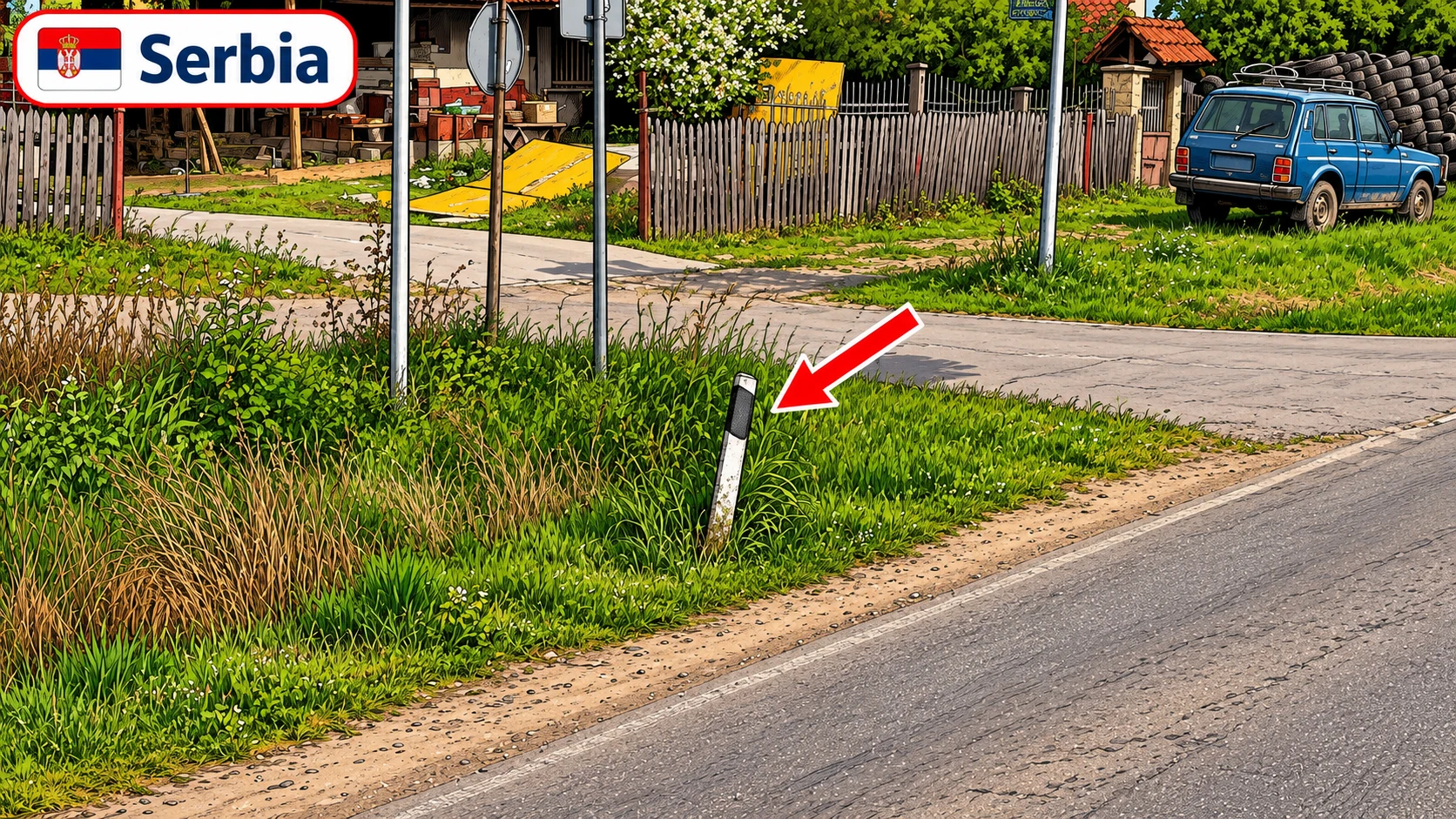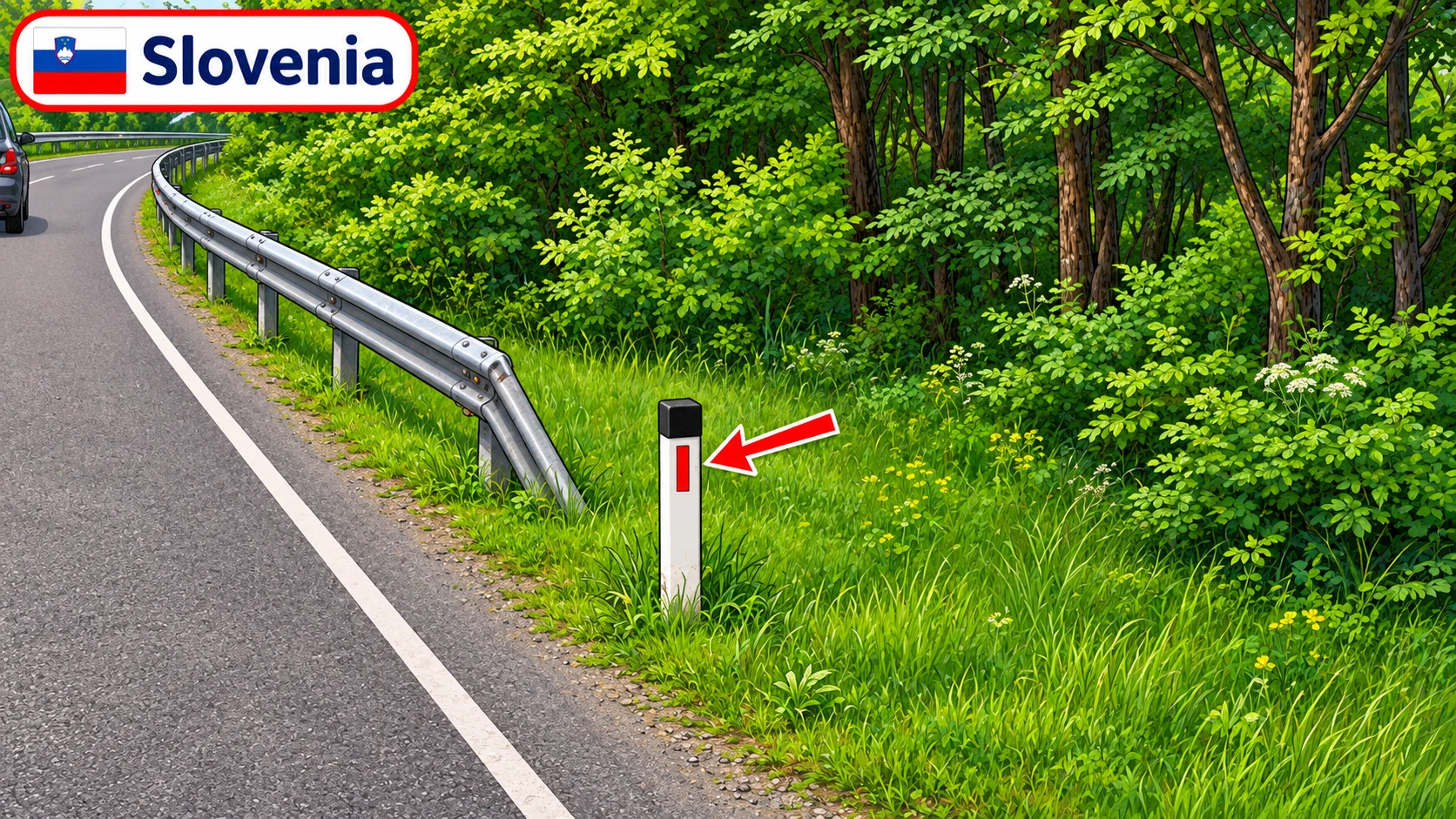
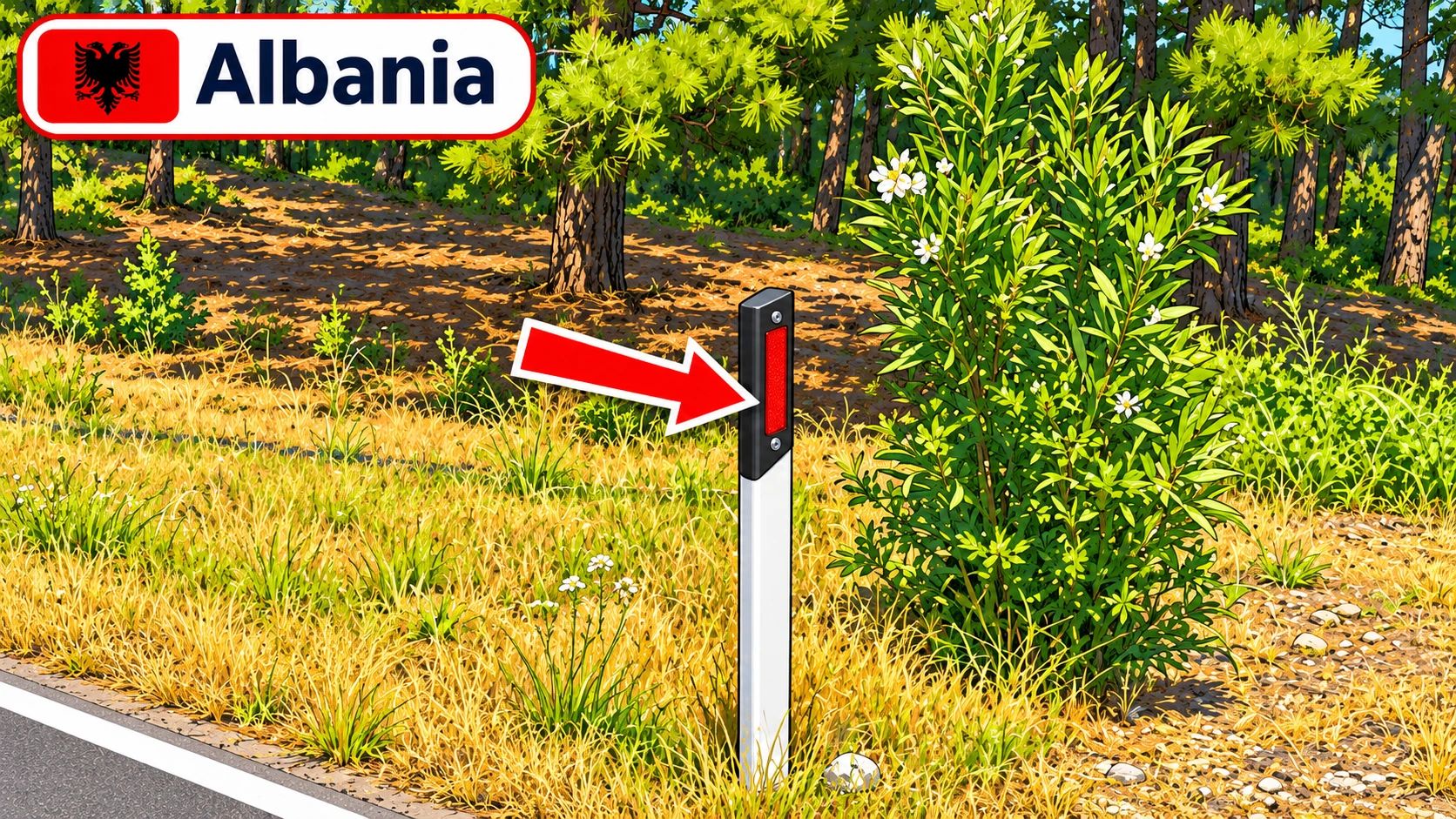
Italian-style delineator
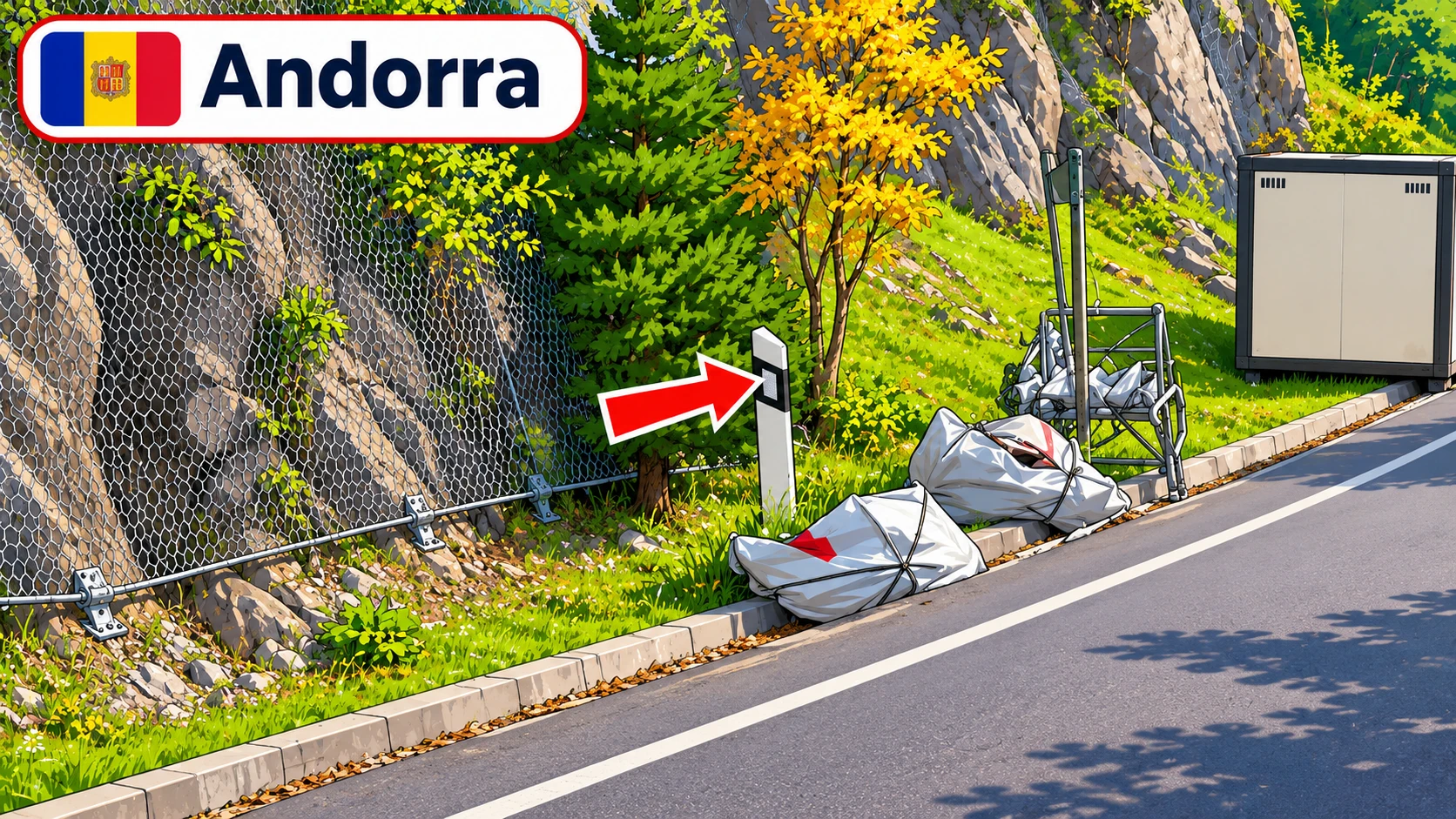
Look for a white roadside post with a dark upper section and a reflector, similar to the design used in Italy.
Explore this clueGeoPointer / Atlas
Choose a country or search for a detail to study.

286 clues
Explore
66 clues
Explore
Coming soon
In preparation
Coming soon
In preparation
Coming soon
In preparationYour choices stay in this browser, without an account.
Look for a white roadside post with a dark upper section and a reflector, similar to the design used in Italy.
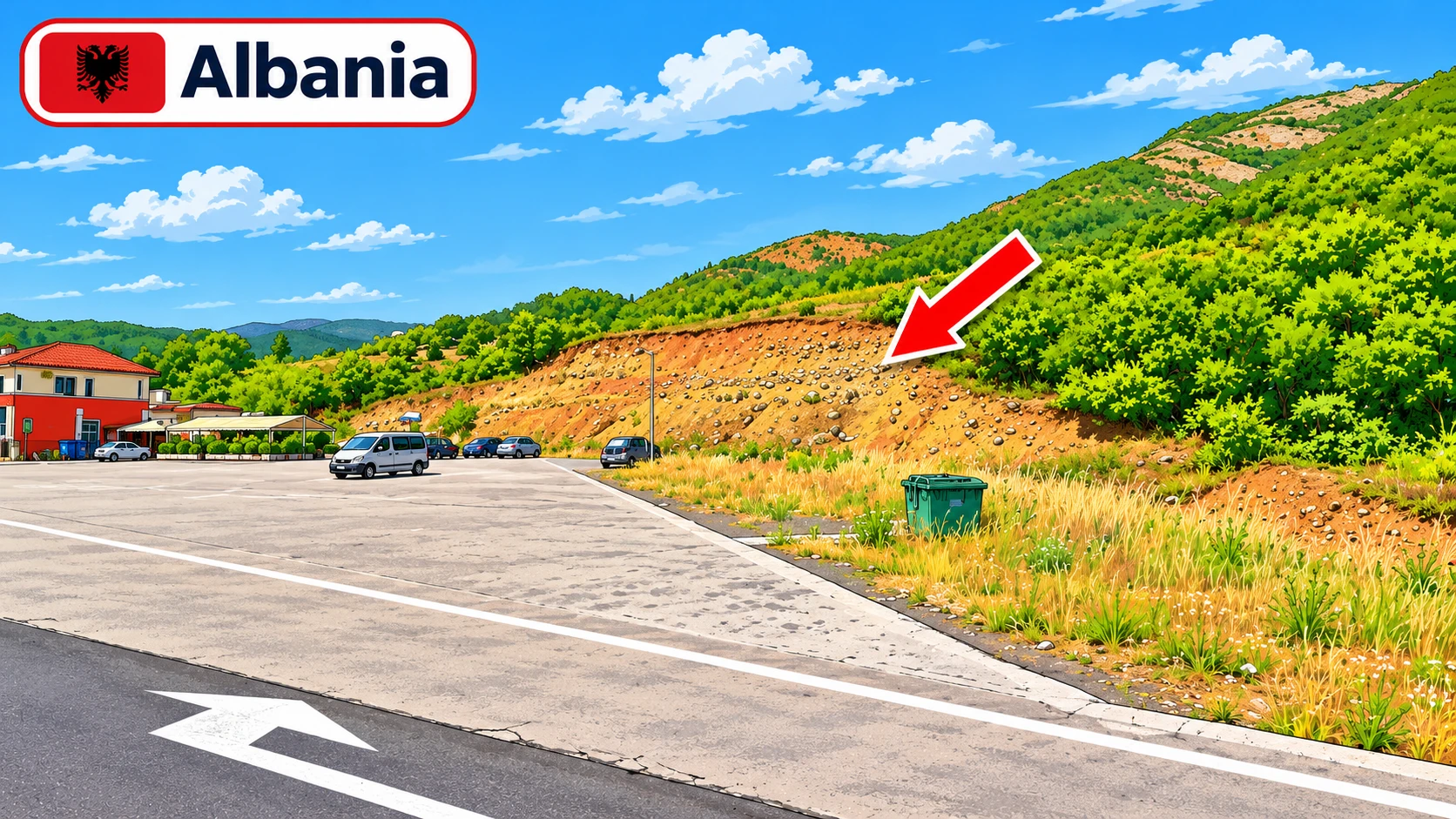
Explore this clueLook at the warm colours of exposed soil and the drier appearance of some Albanian hills, with scrub and patches of bare earth.
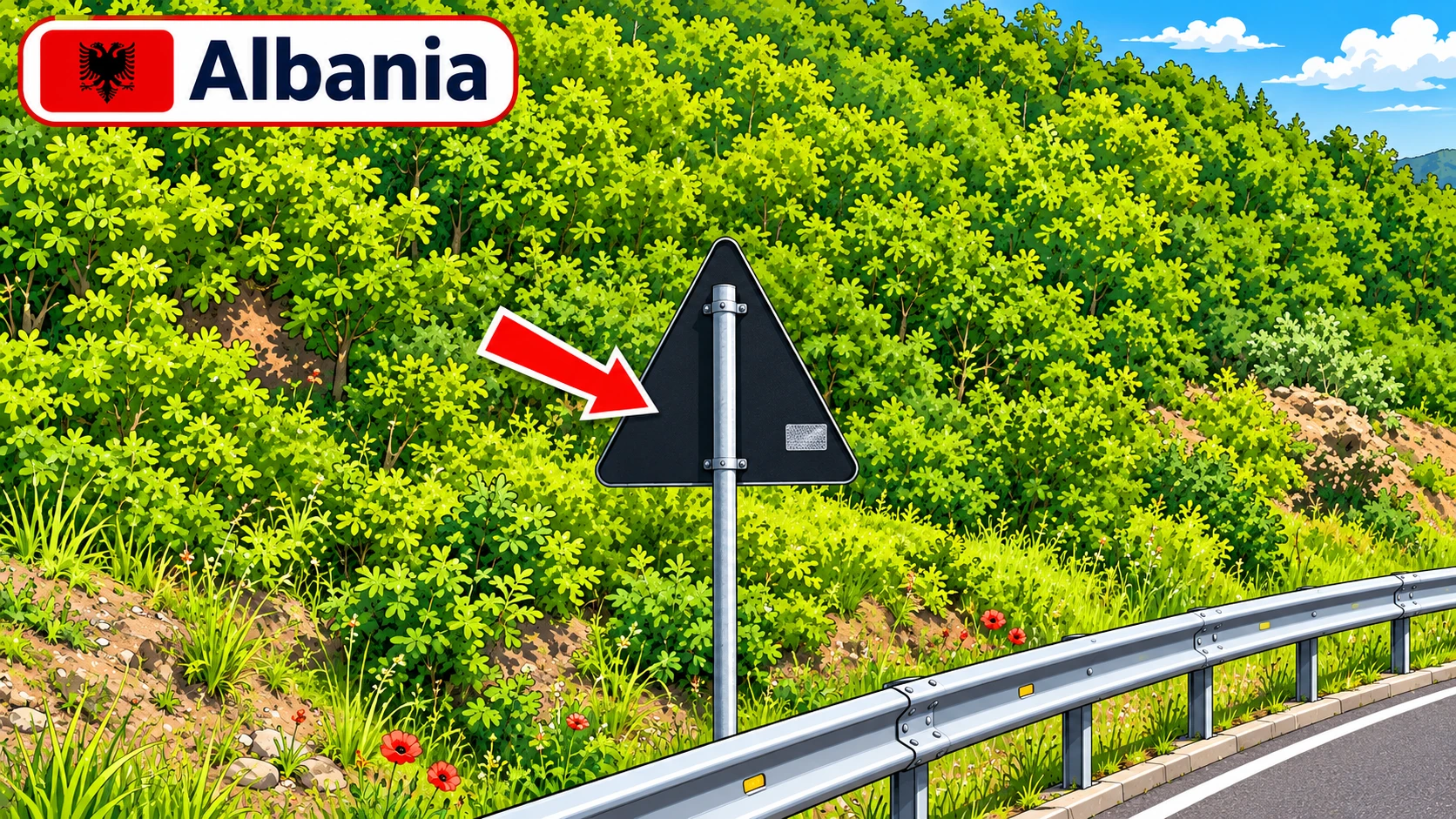
Explore this clueThe back of this triangular road sign is black. Check it even when the front of the sign is hidden.
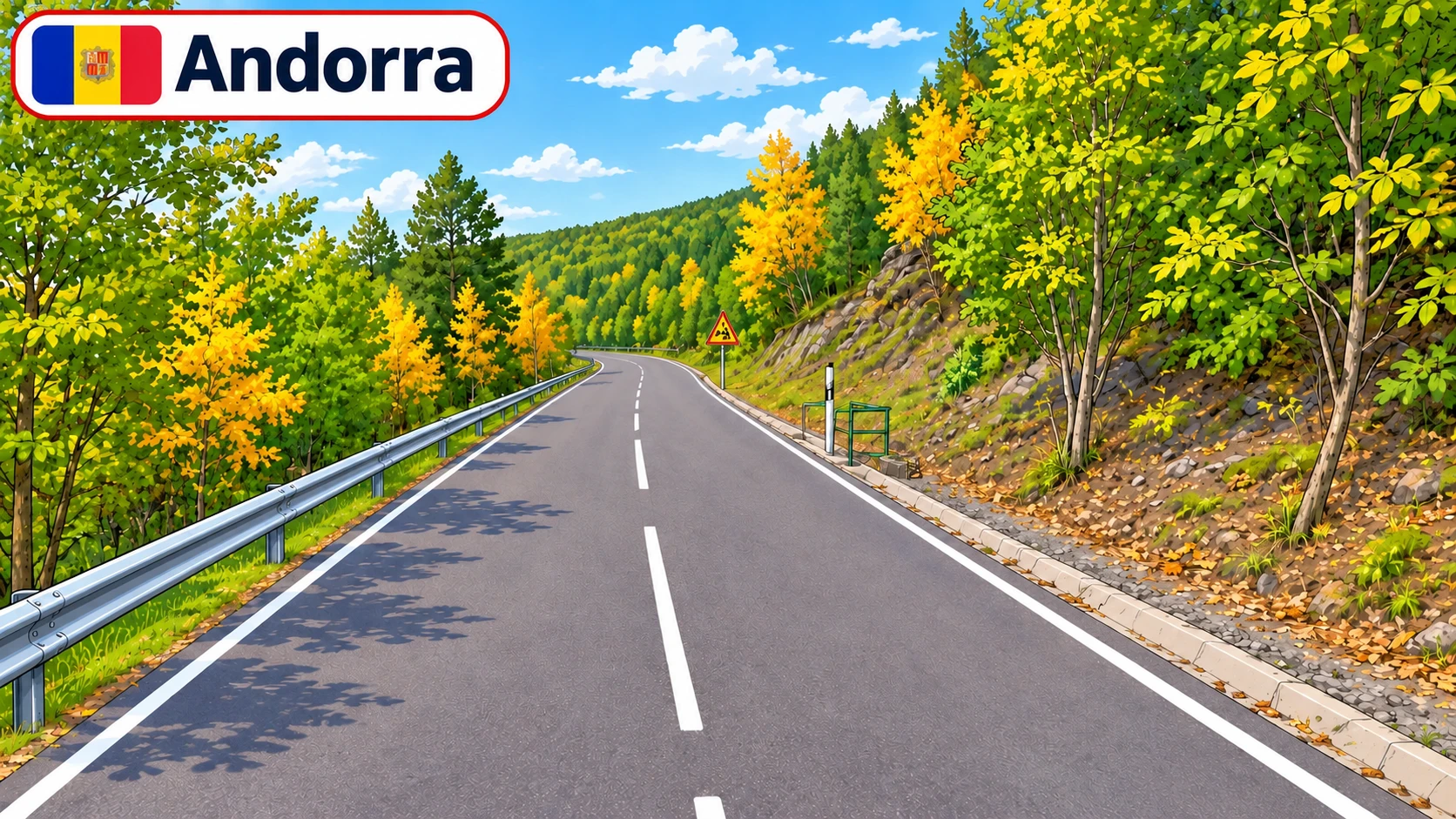
Explore this clueThe road runs between wooded slopes with yellow and green foliage. The author highlights autumn colours in the coverage being used.
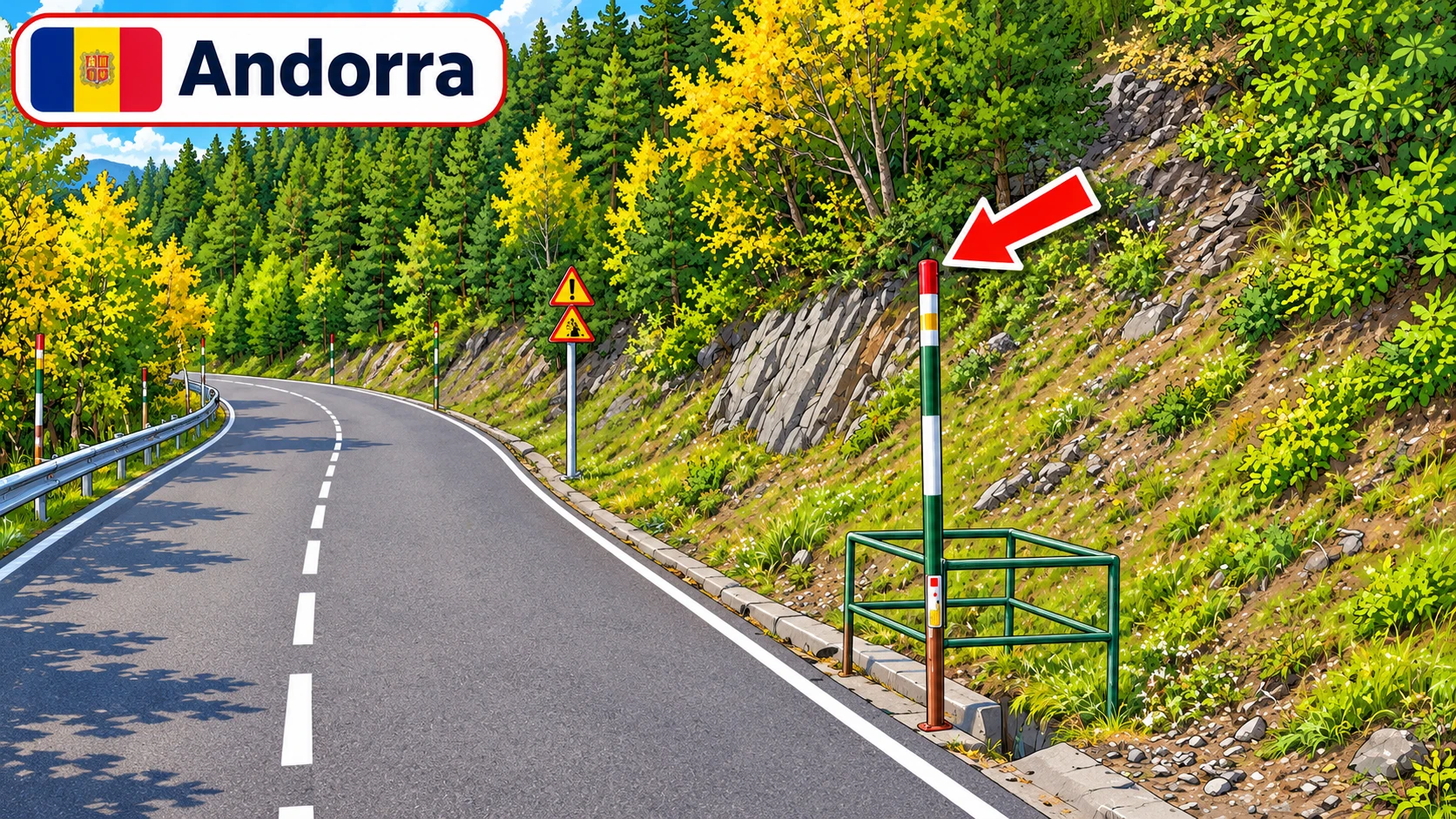
Explore this clueTall roadside poles have coloured bands and red tips. Several variants appear in the sequence.
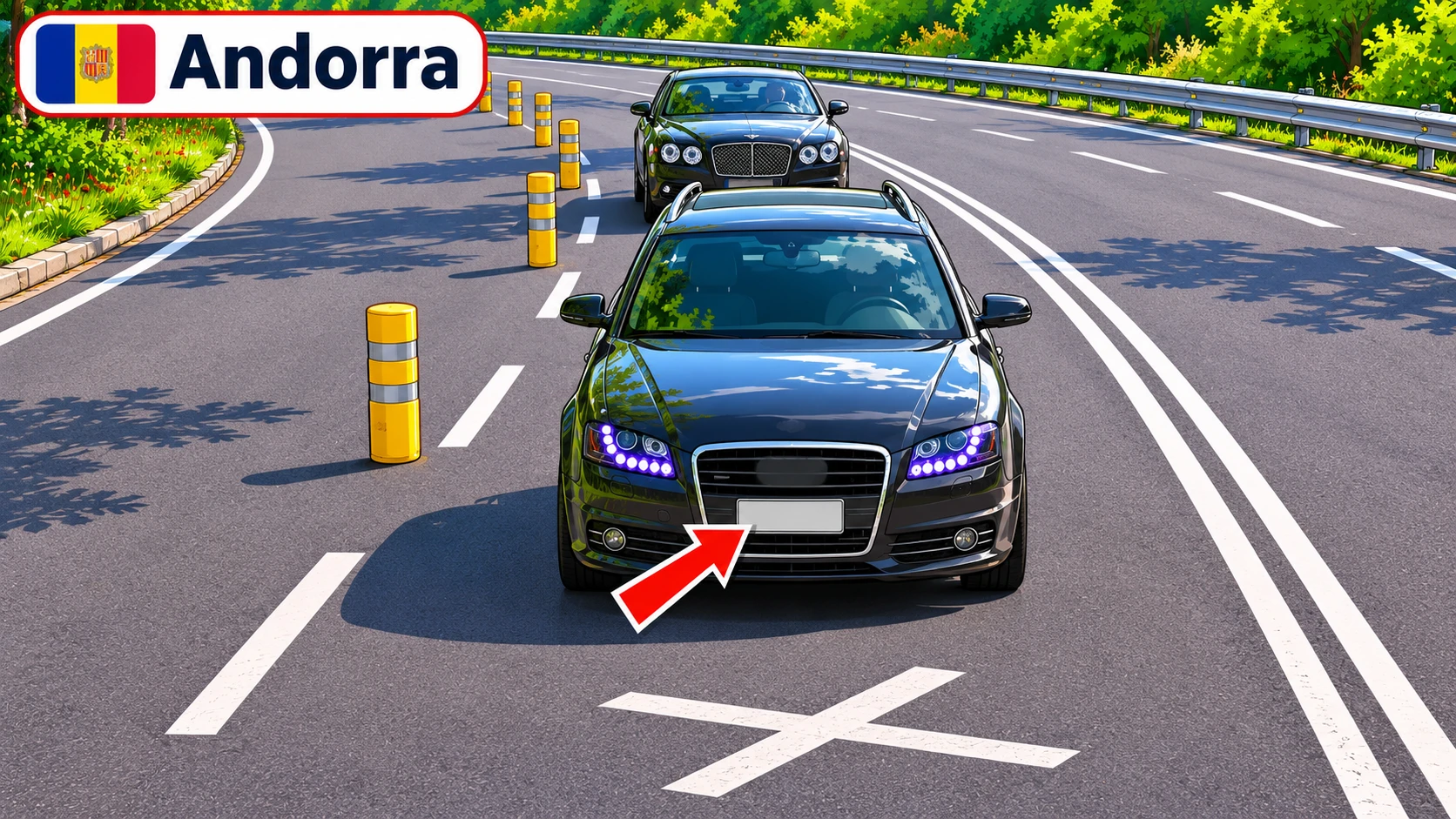
Explore this clueLook for a light-coloured plate without the familiar blue side band seen on many French and Spanish plates.
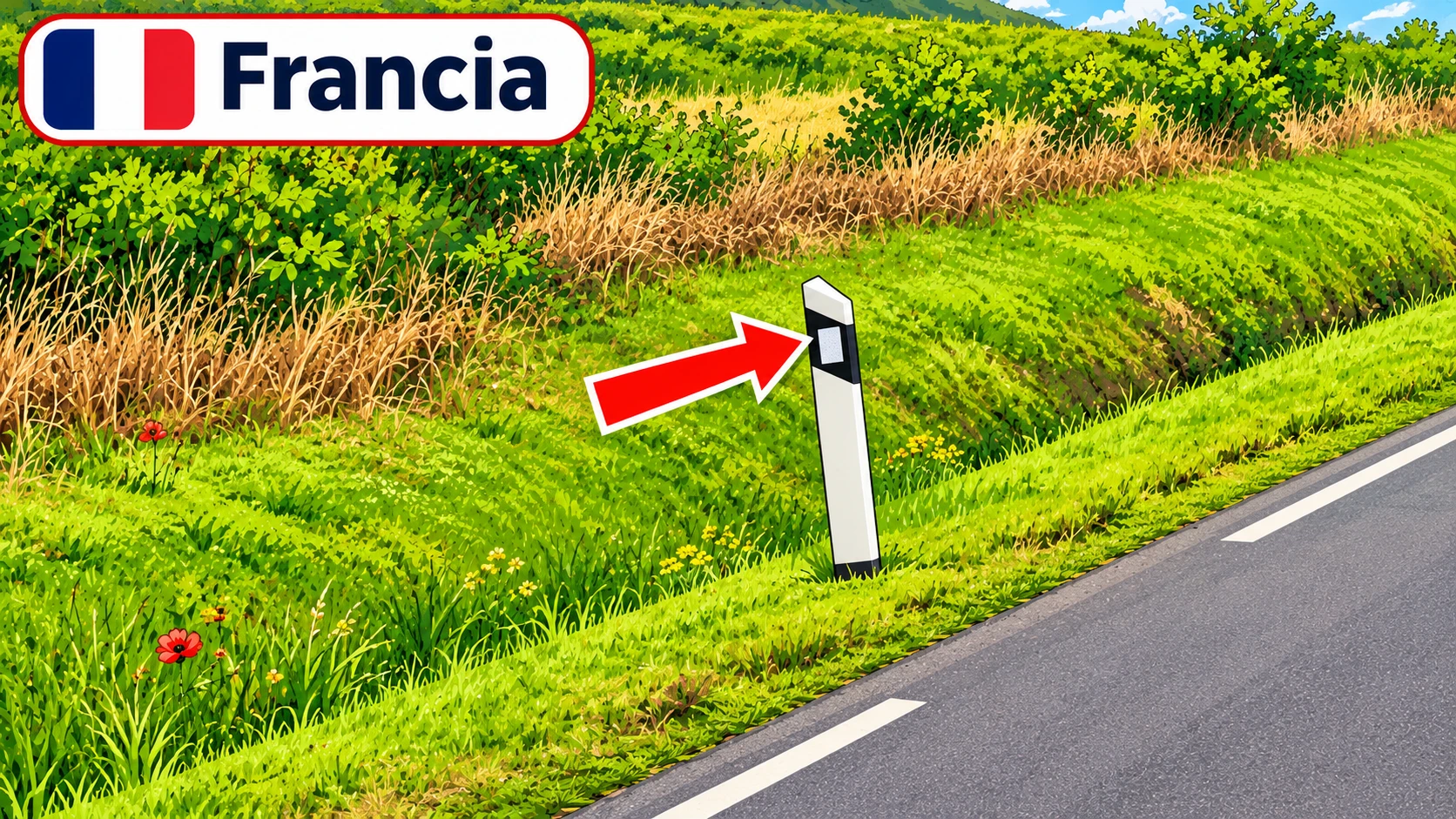
Explore this clueA white roadside post has a dark upper section. The author compares it with a French design.
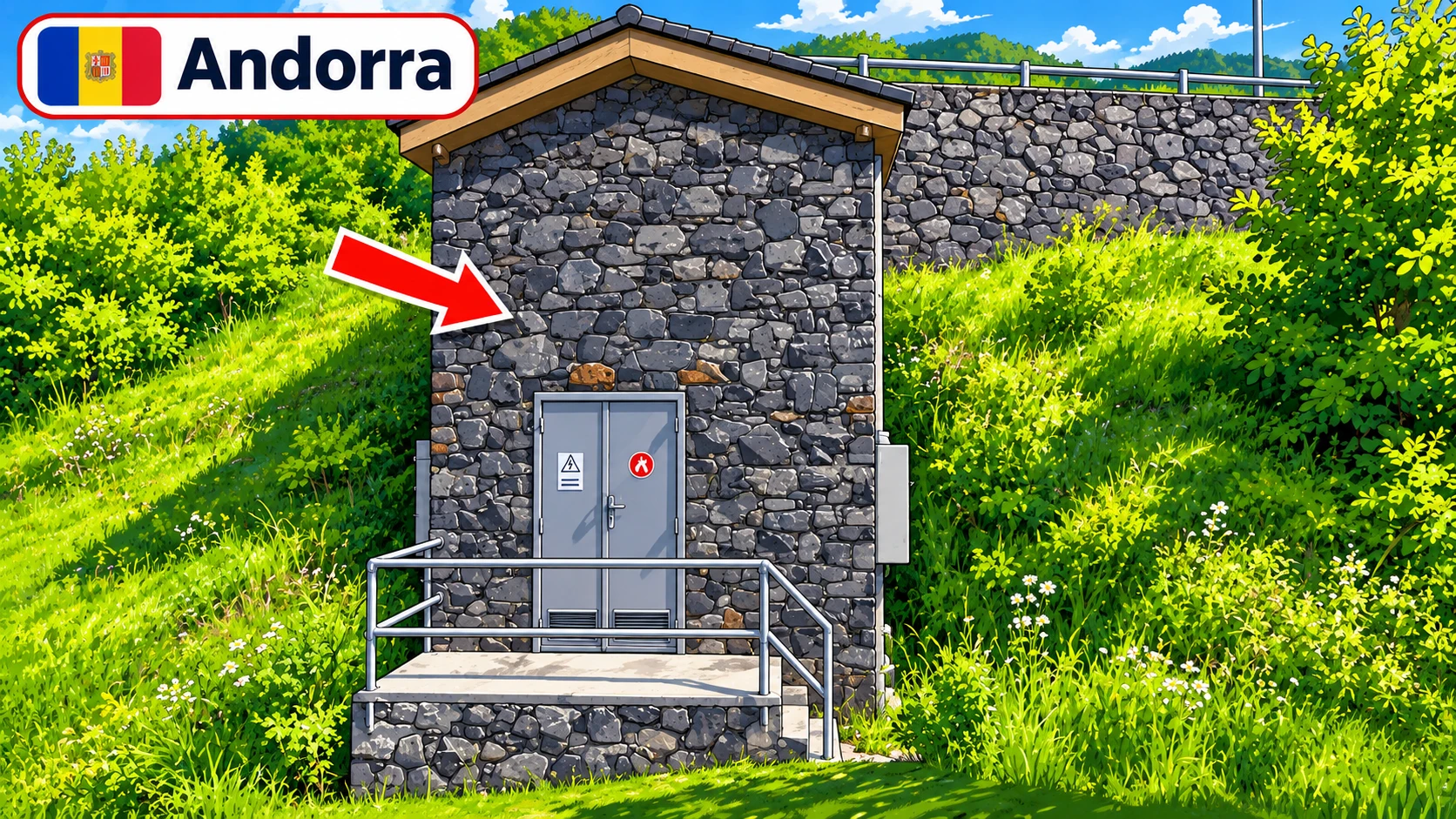
Explore this clueIrregular dark stone covers the small building and neighbouring walls, a material emphasised in the Andorra section.
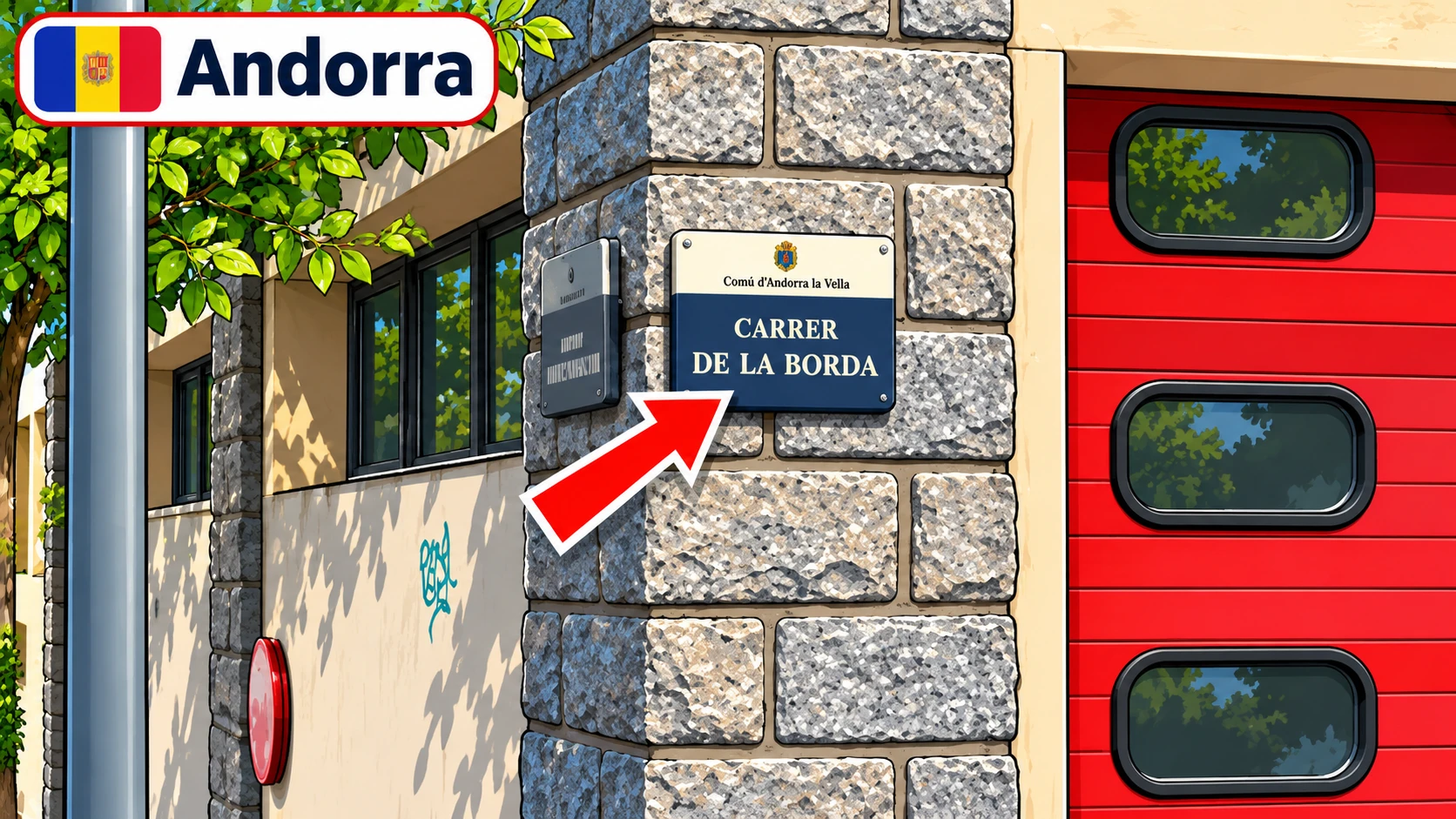
Explore this clueThe street sign illustrates carrer, a Catalan word contrasted with French rue and Spanish calle.
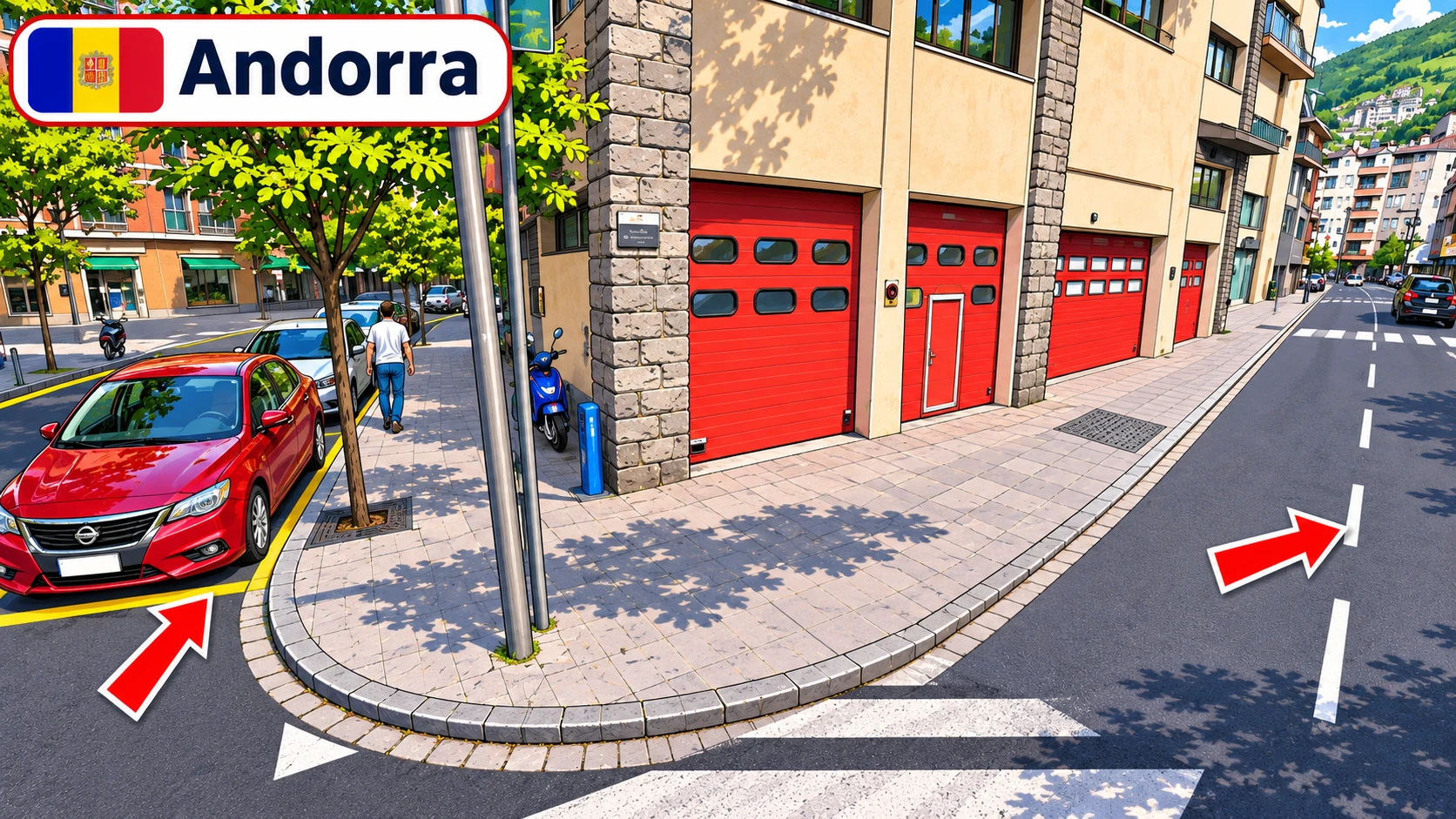
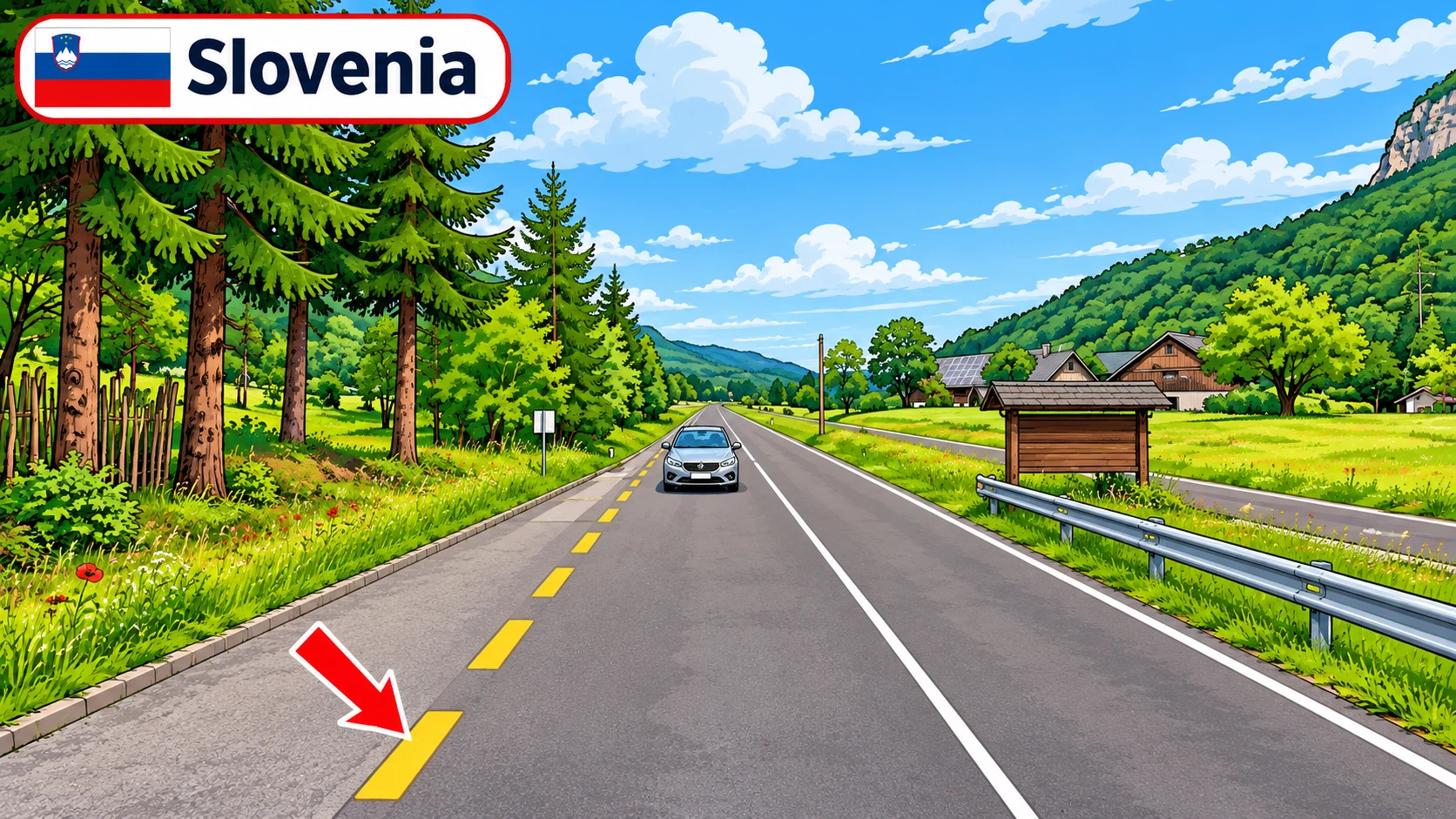
Explore this clueYellow markings appear along urban road edges. The video contrasts them with Malta while noting that traffic here keeps right.
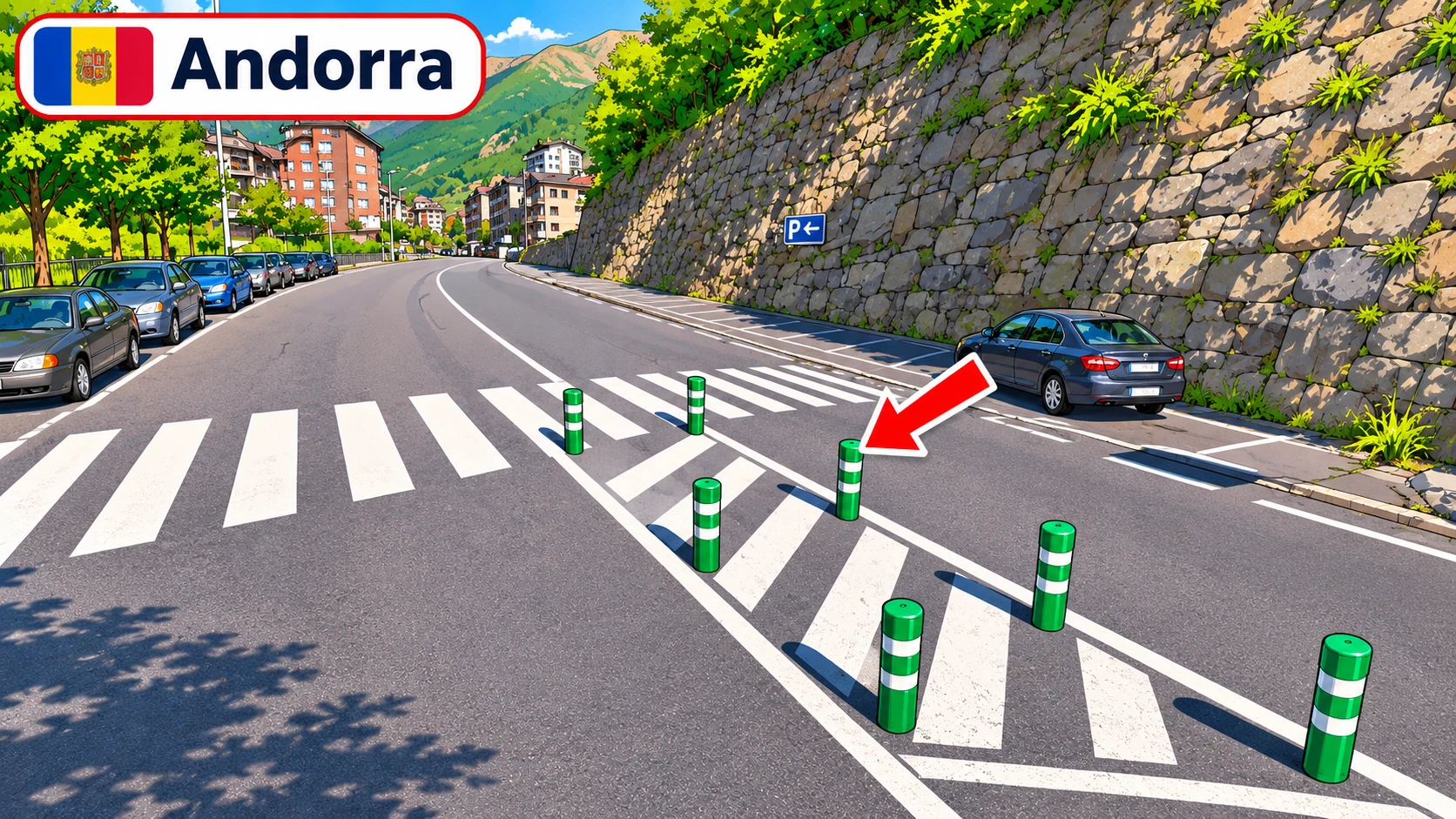
Explore this clueSmall green or turquoise street bollards have pale bands. The author also mentions a yellow version.
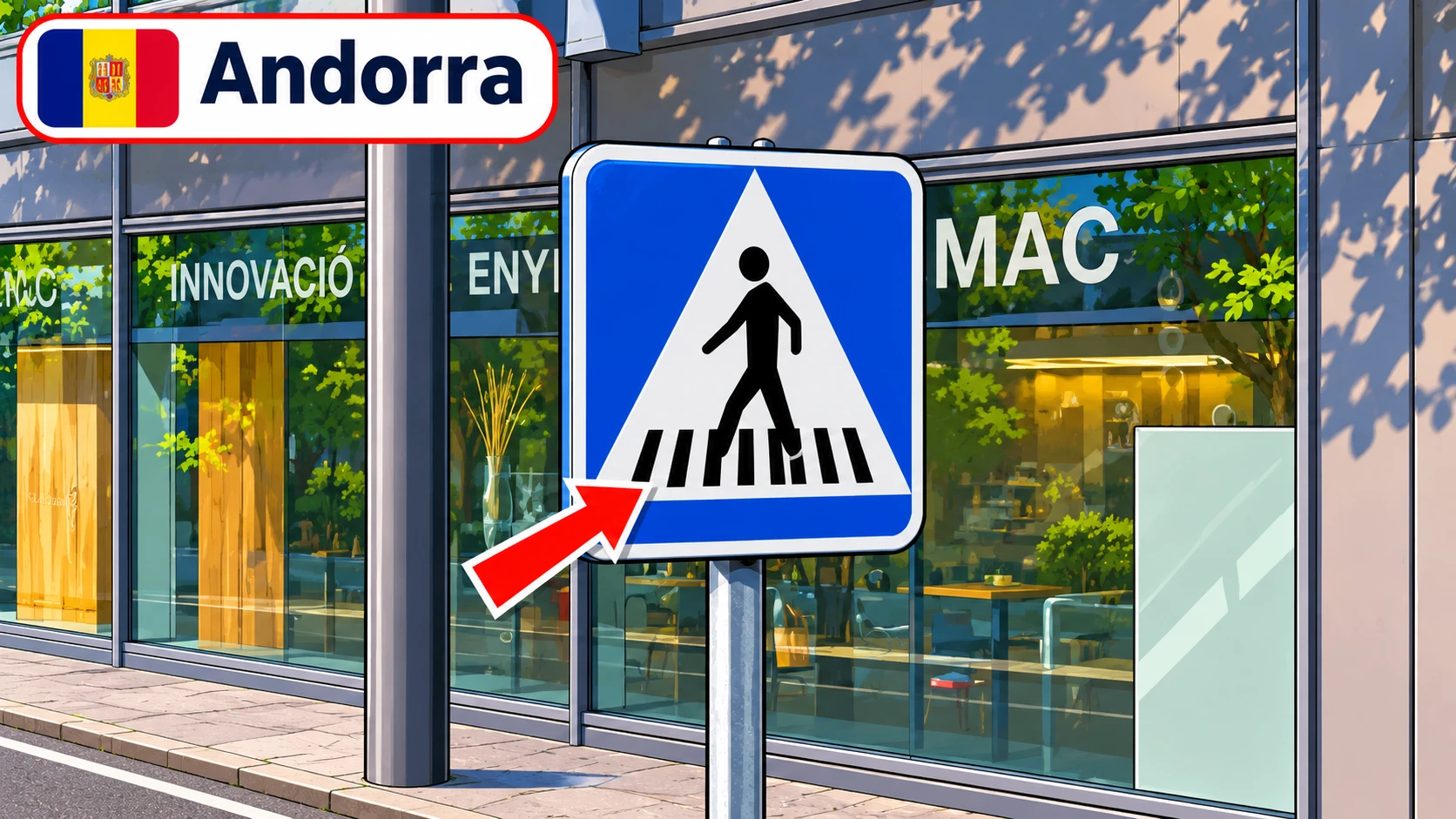
Explore this clueThe author revises the Spanish comparison: Andorra also uses the illustrated pedestrian pictogram with eight stripes.
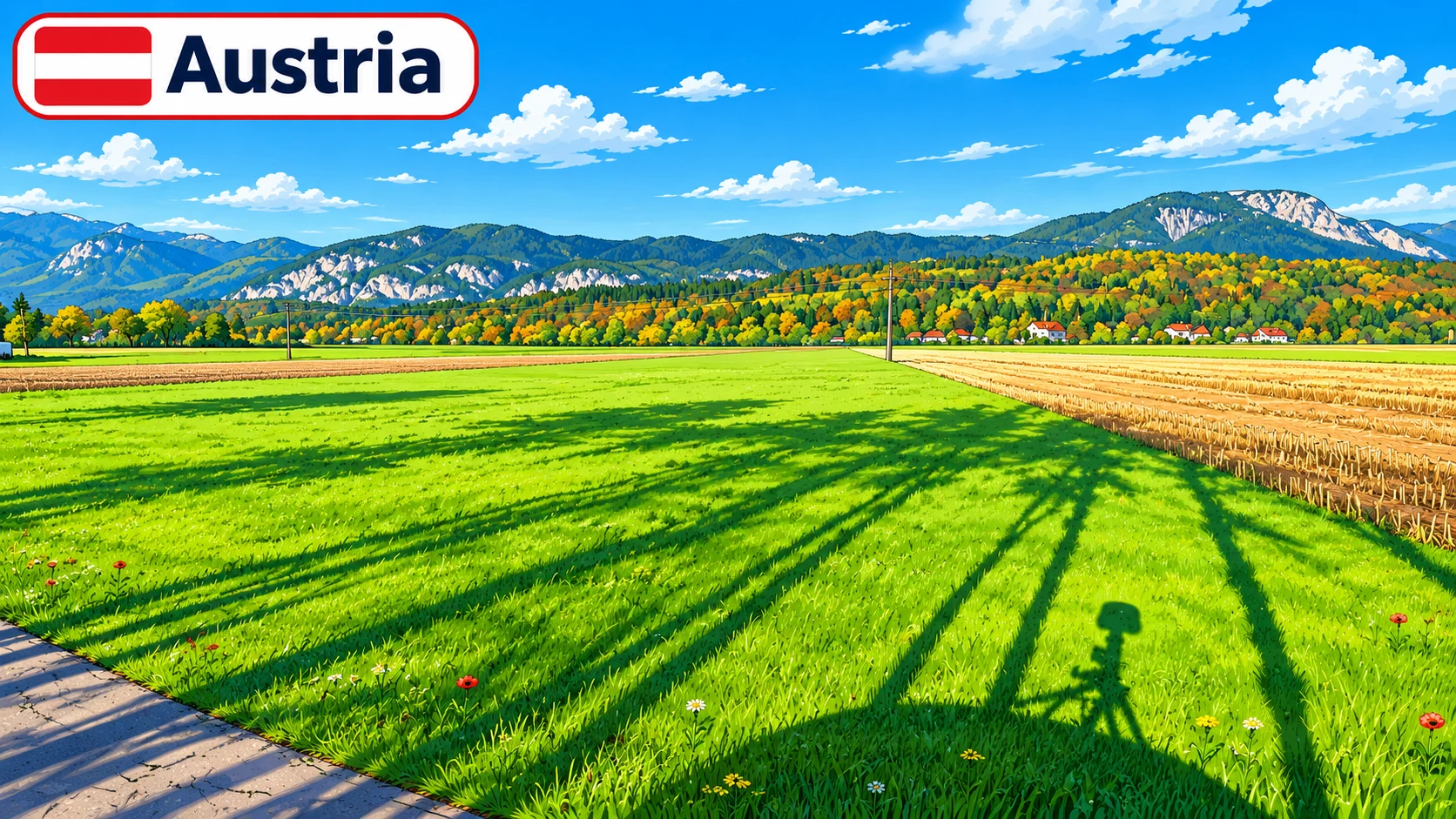
Explore this clueAn open valley and distant mountains illustrate Austria's largely mountainous terrain; the video also mentions flatter northern and eas...
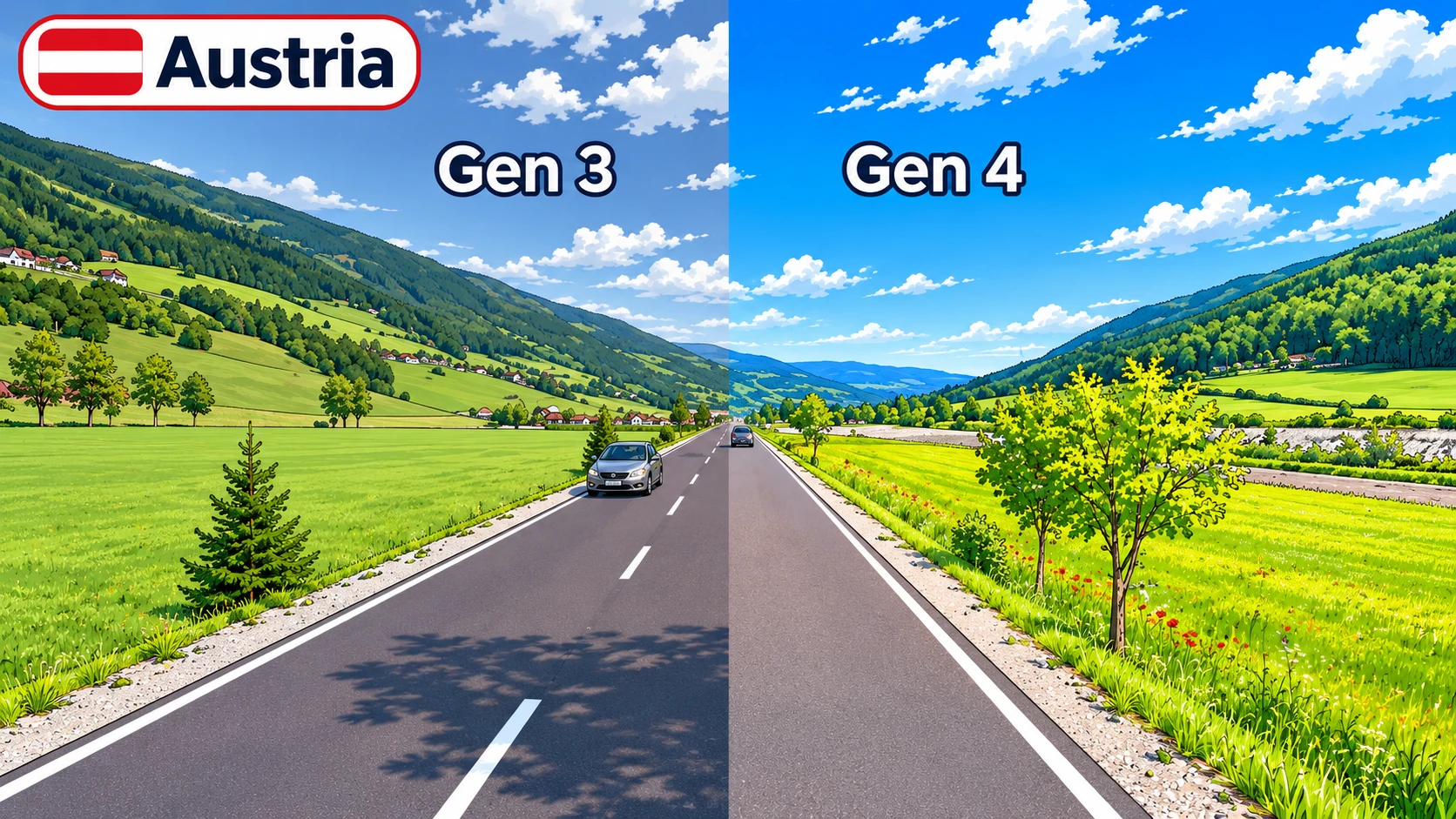
Explore this clueThe video compares Street View generations, describing Gen 3 as less saturated than Gen 4.
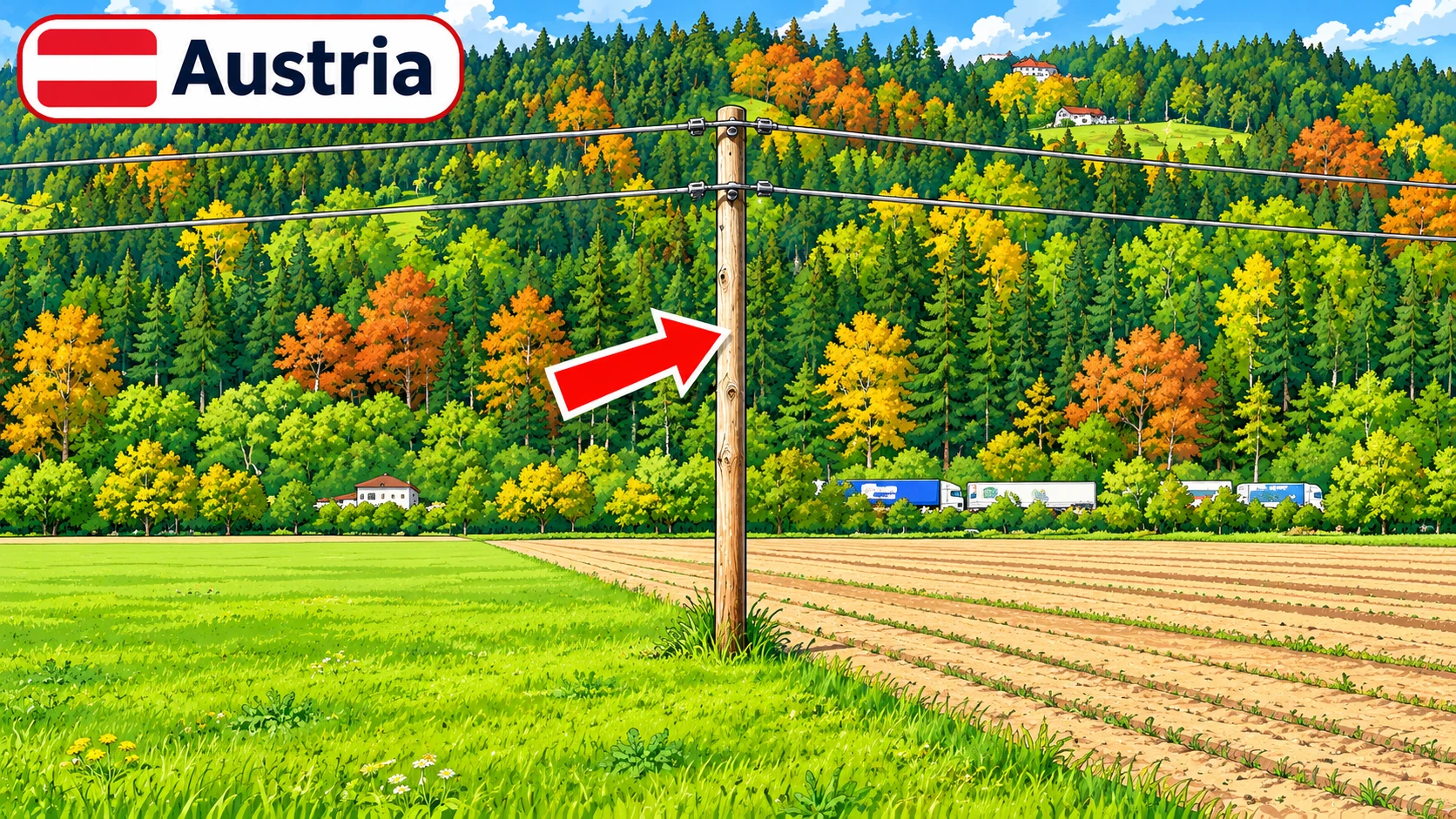
Explore this clueRound wooden utility poles stand along Austrian roads, including this rural example.
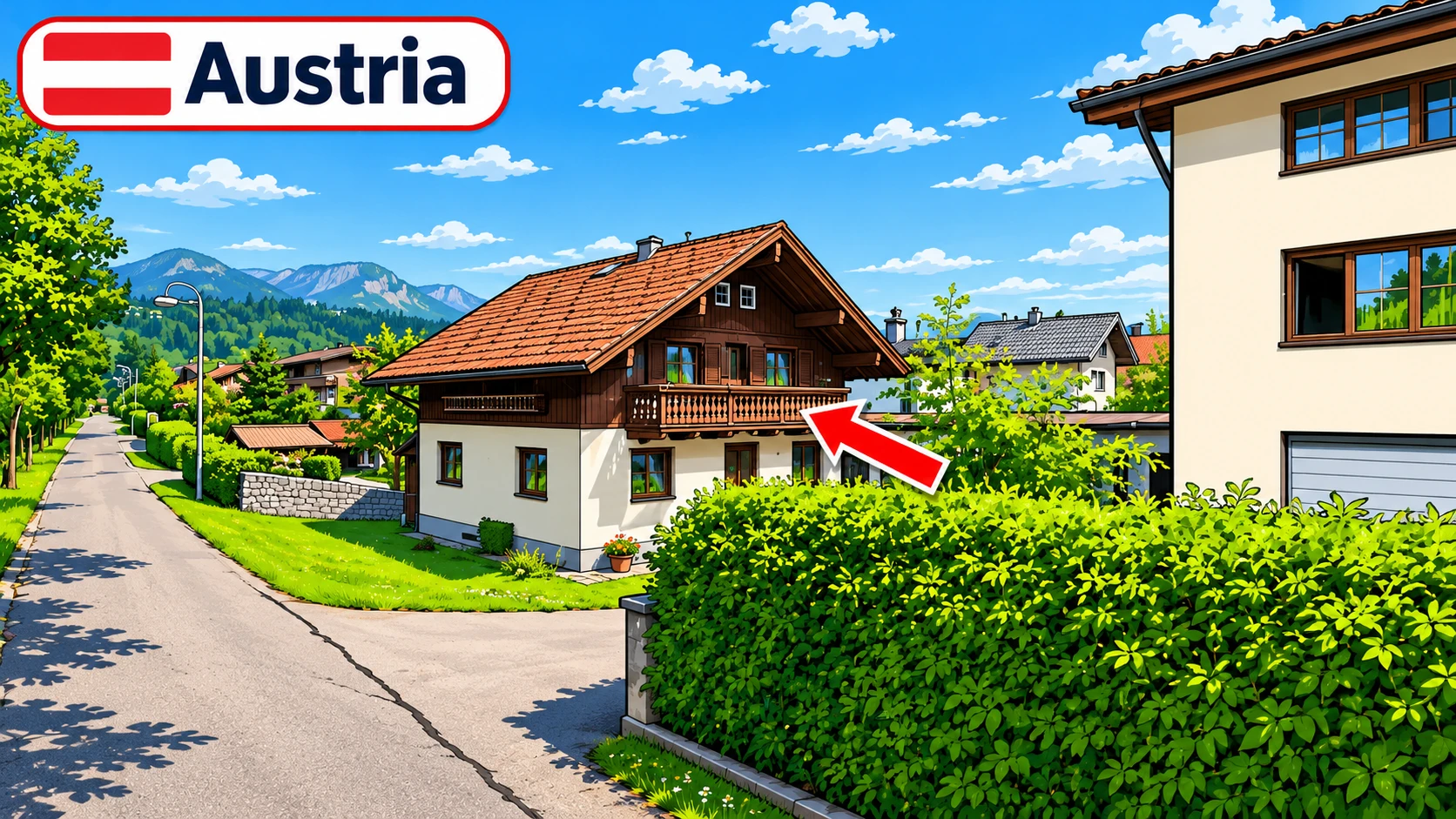
Explore this clueLight façades, dark wooden balconies or panels and pitched roofs form the Alpine architecture described. Combine them with German text...
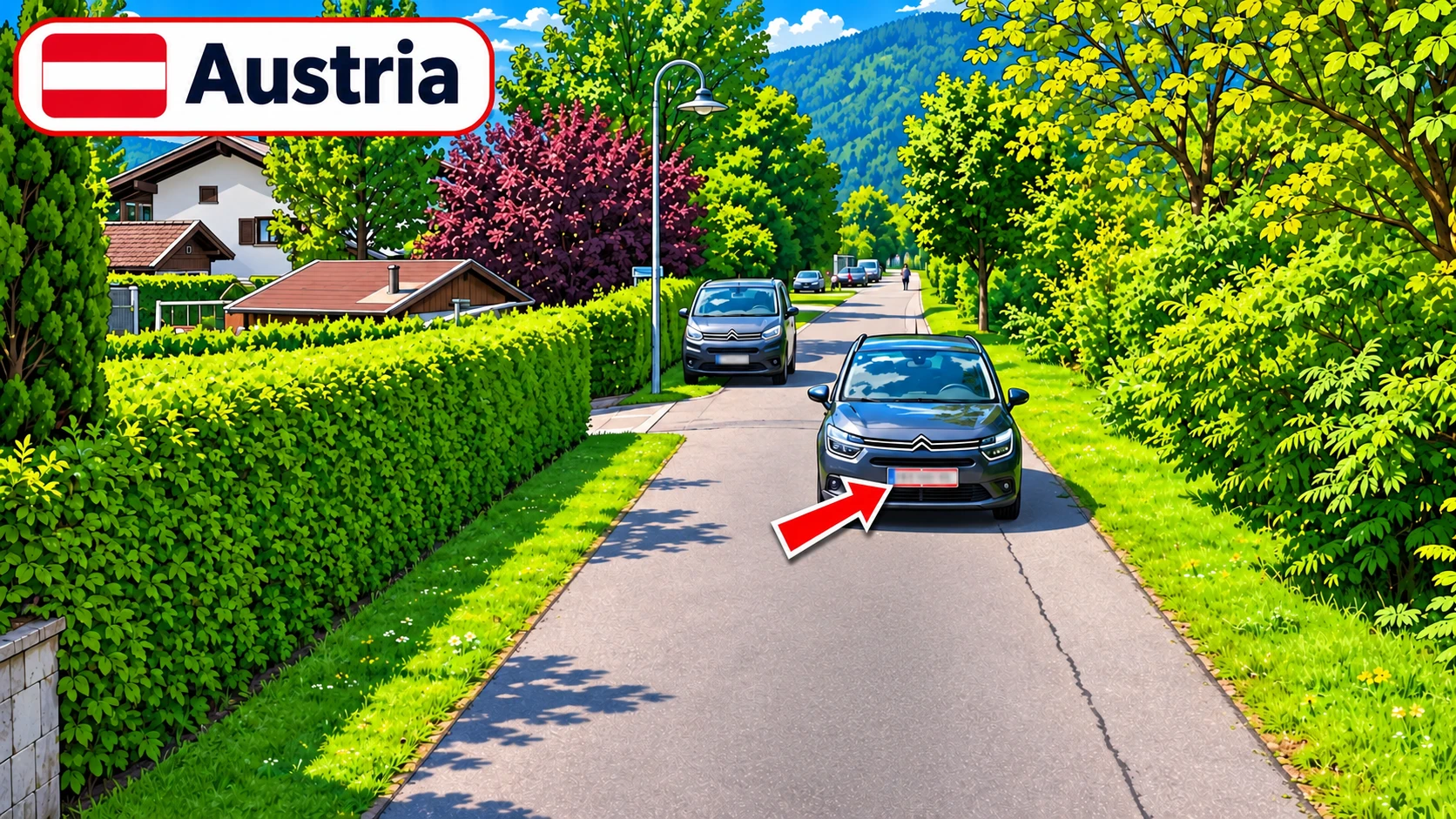
Explore this clueThe author mentions small red details near the upper or lower edges of some Austrian plates, acknowledging that they are hard to see.
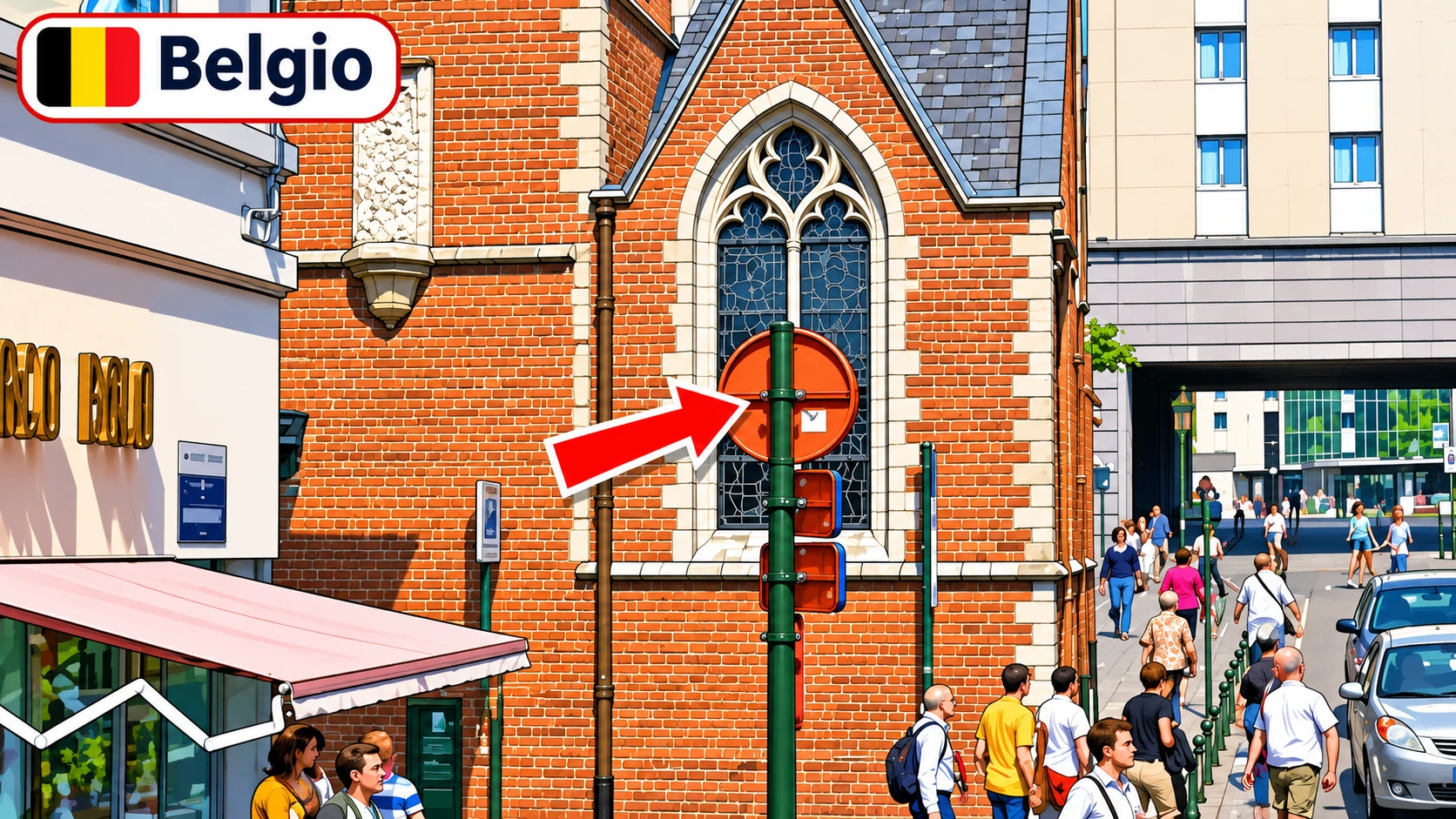
Explore this clueA circular road sign has an orange-toned back and a dark green support. The video also mentions other support colours.
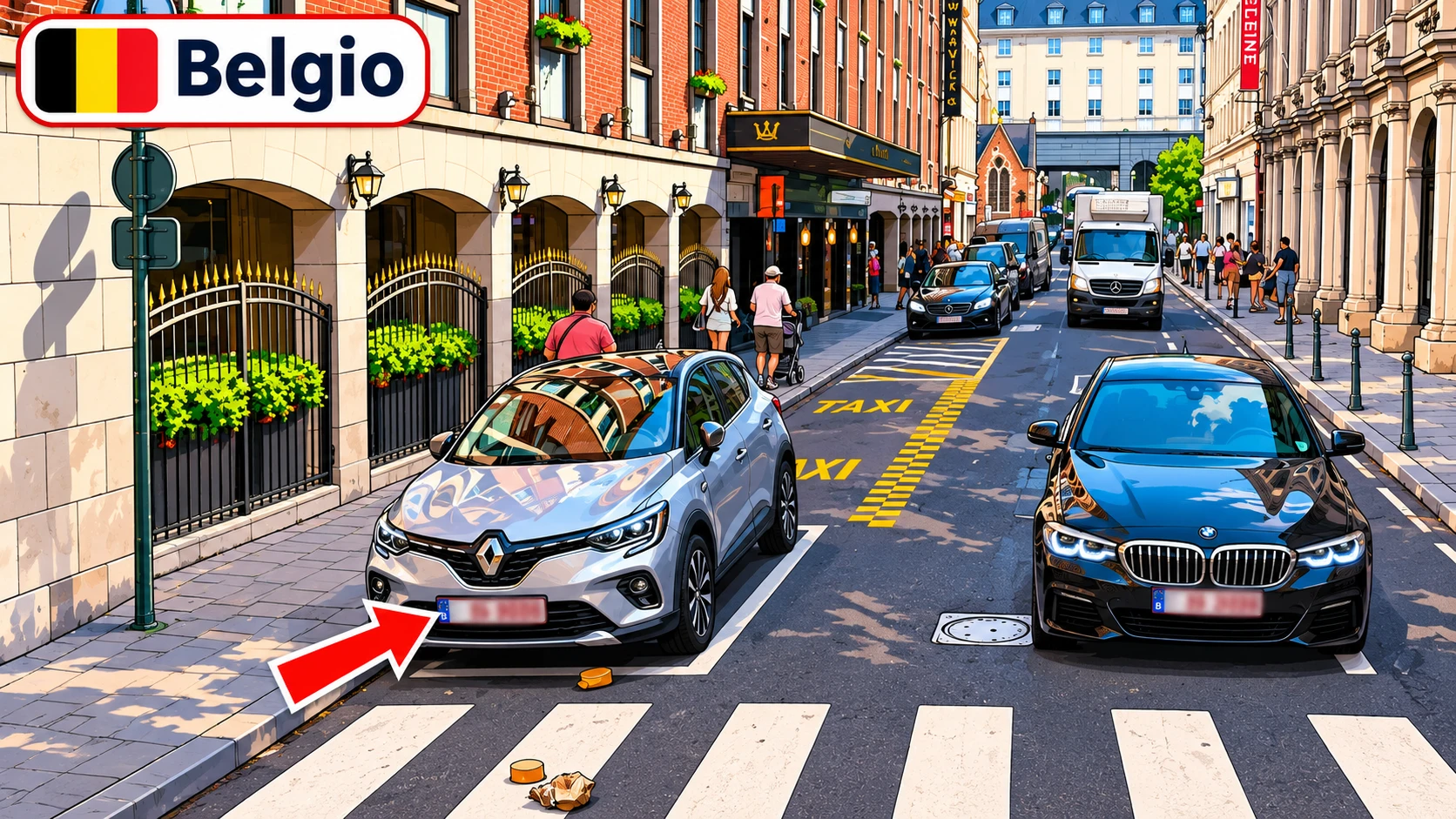
Explore this clueThe guide distinguishes Belgian red plate lettering from the small red plate accents mentioned for Austria.
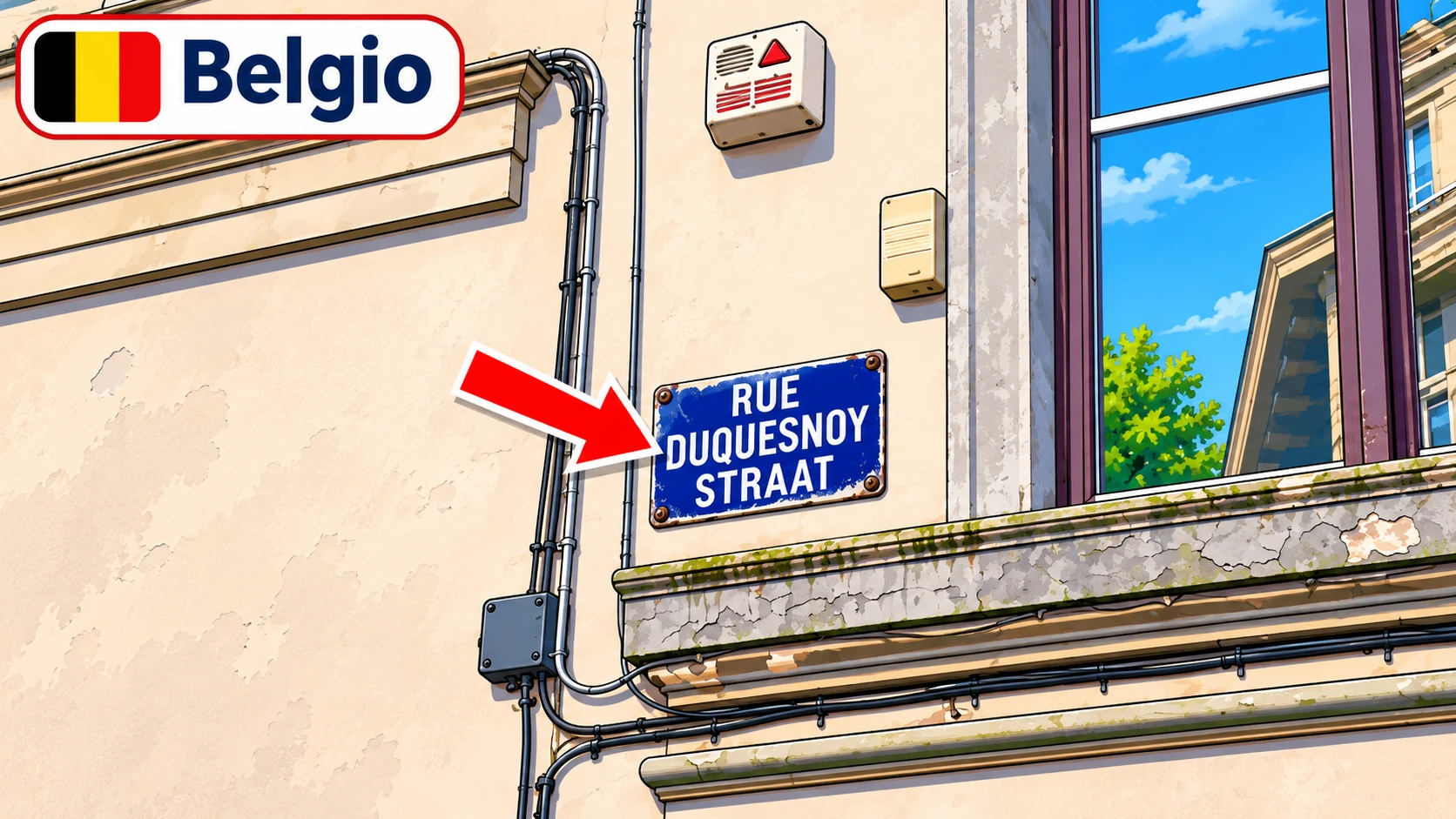
Explore this clueThe panel contains RUE DUQUESNOY and STRAAT, illustrating the presence of French and Dutch.
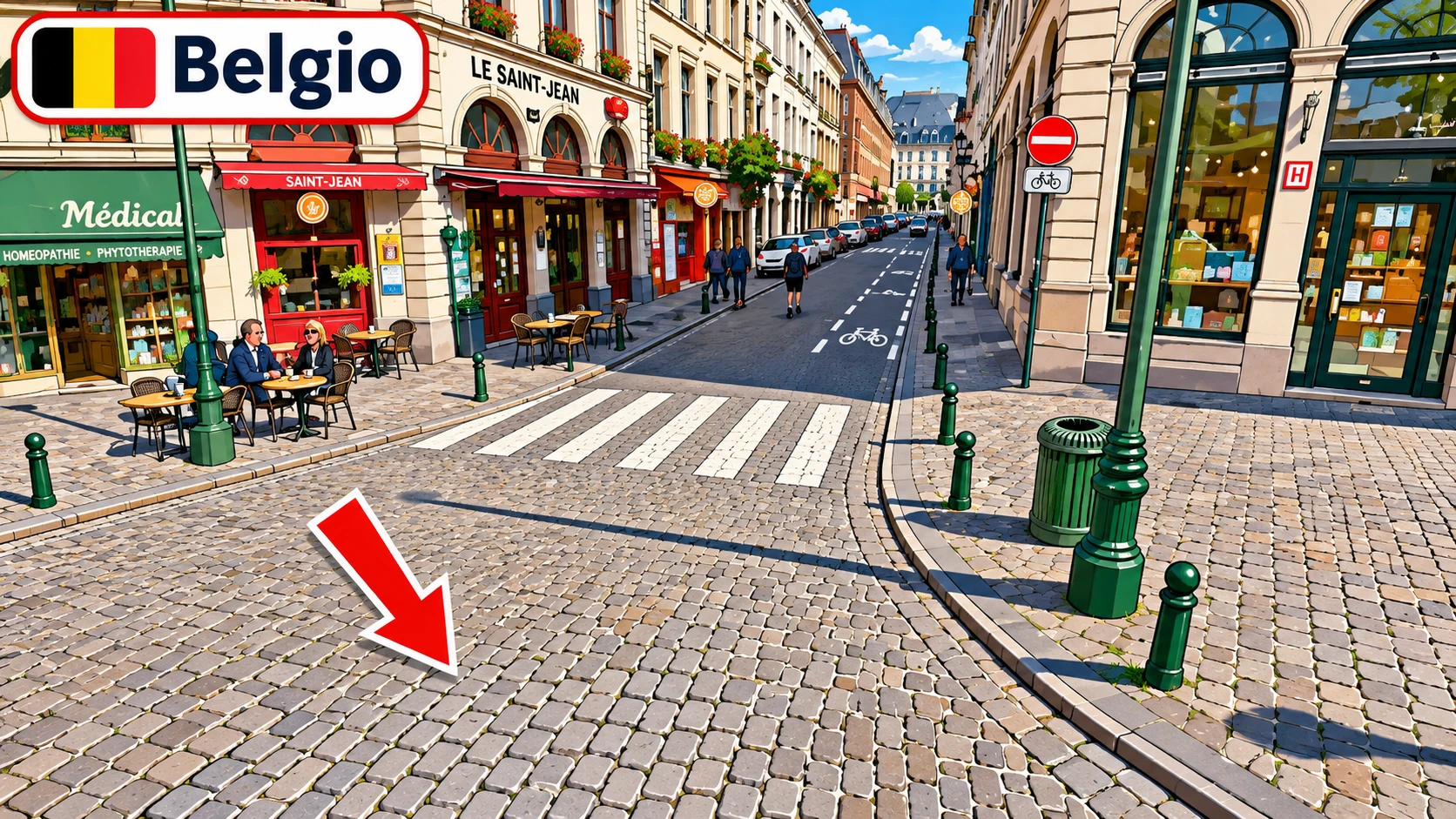
Explore this clueThe square and street use small stone blocks, less uniformly red than the Dutch example used for comparison.
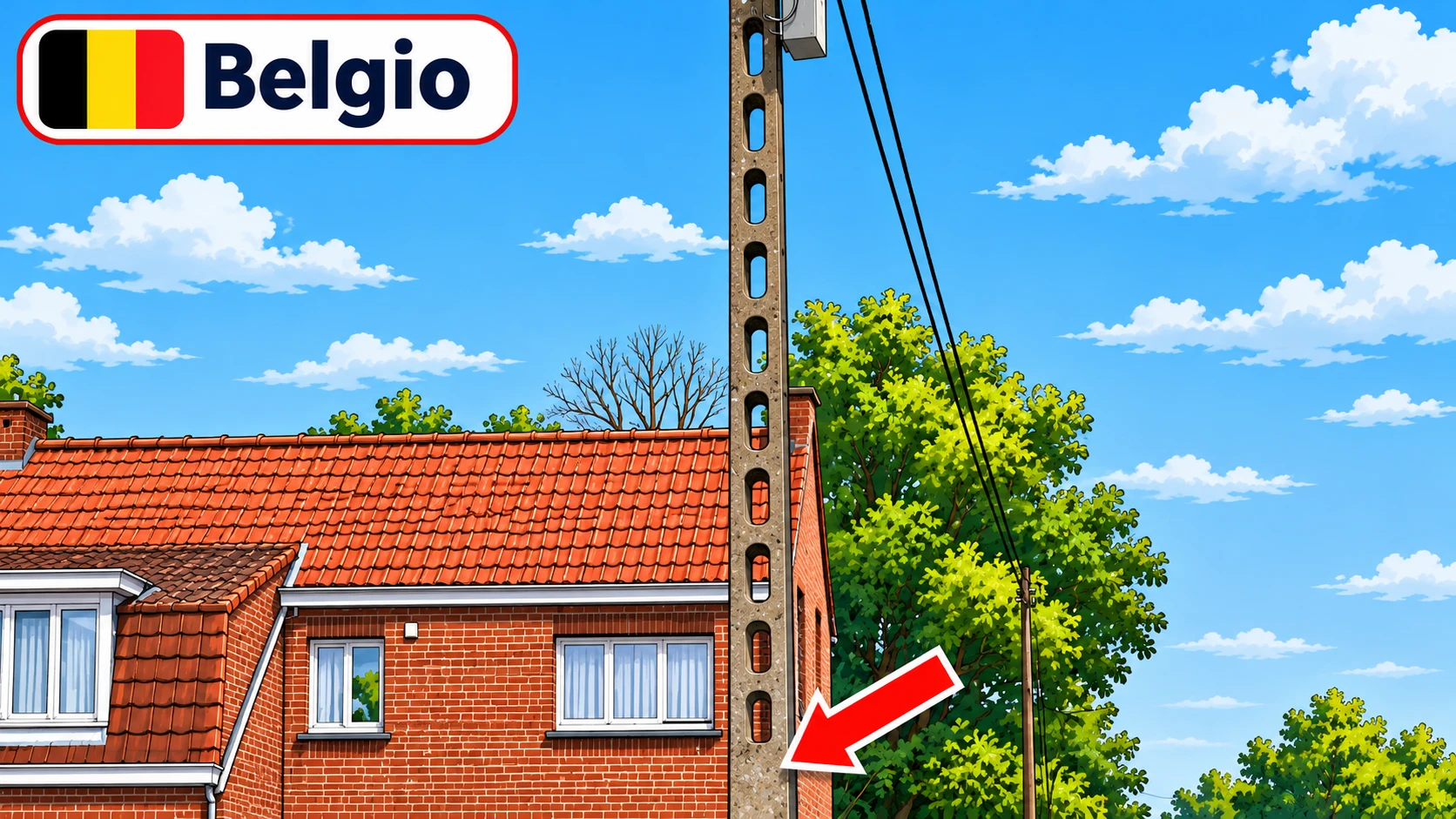
Explore this clueThe concrete pole has elongated rounded openings, while its lower section remains solid. Compare the French and Polish designs.
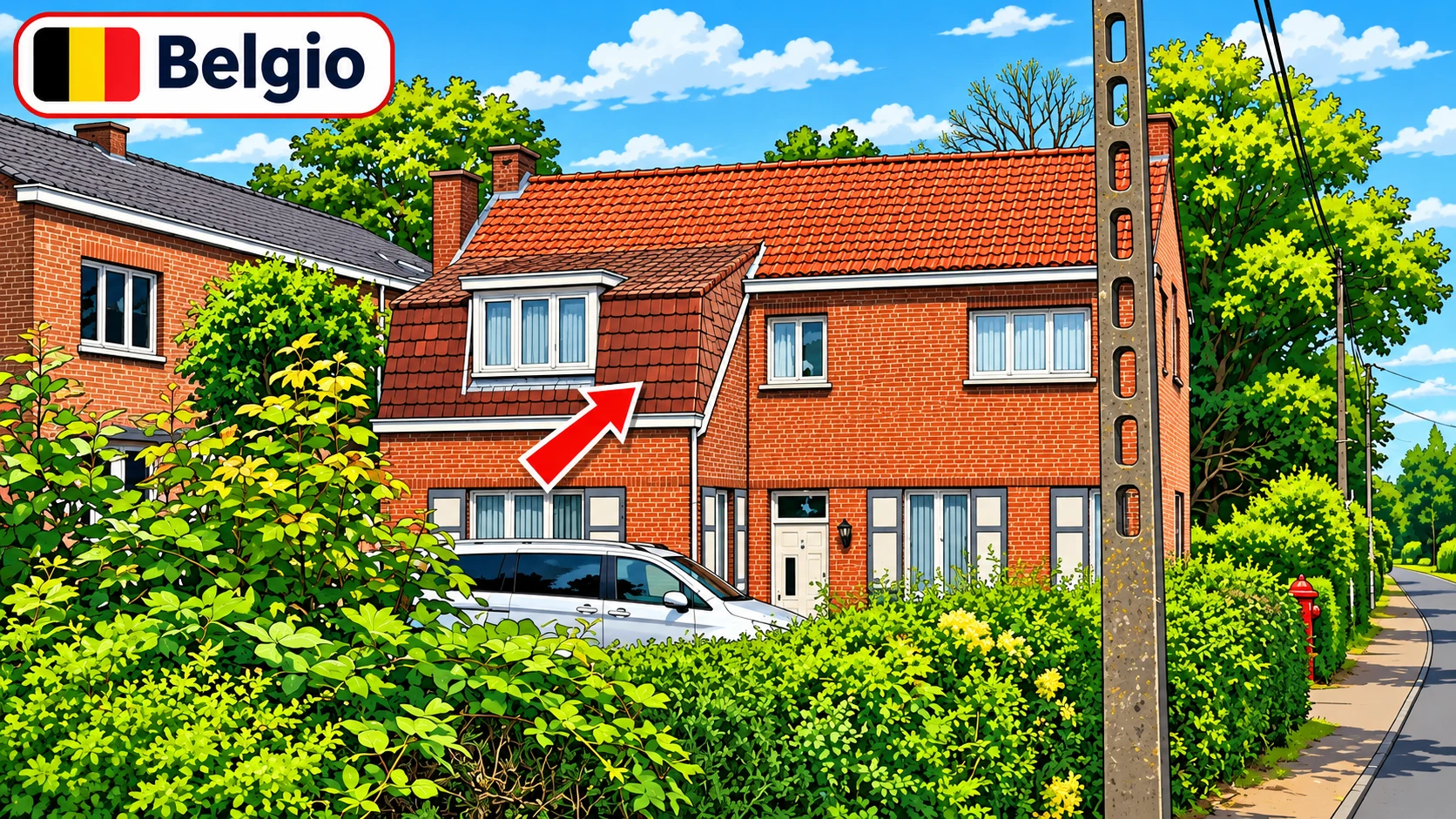
Explore this clueThe rural example shows brick walls and red pitched roofs. The video discusses Dutch influences in the north and French influences in t...
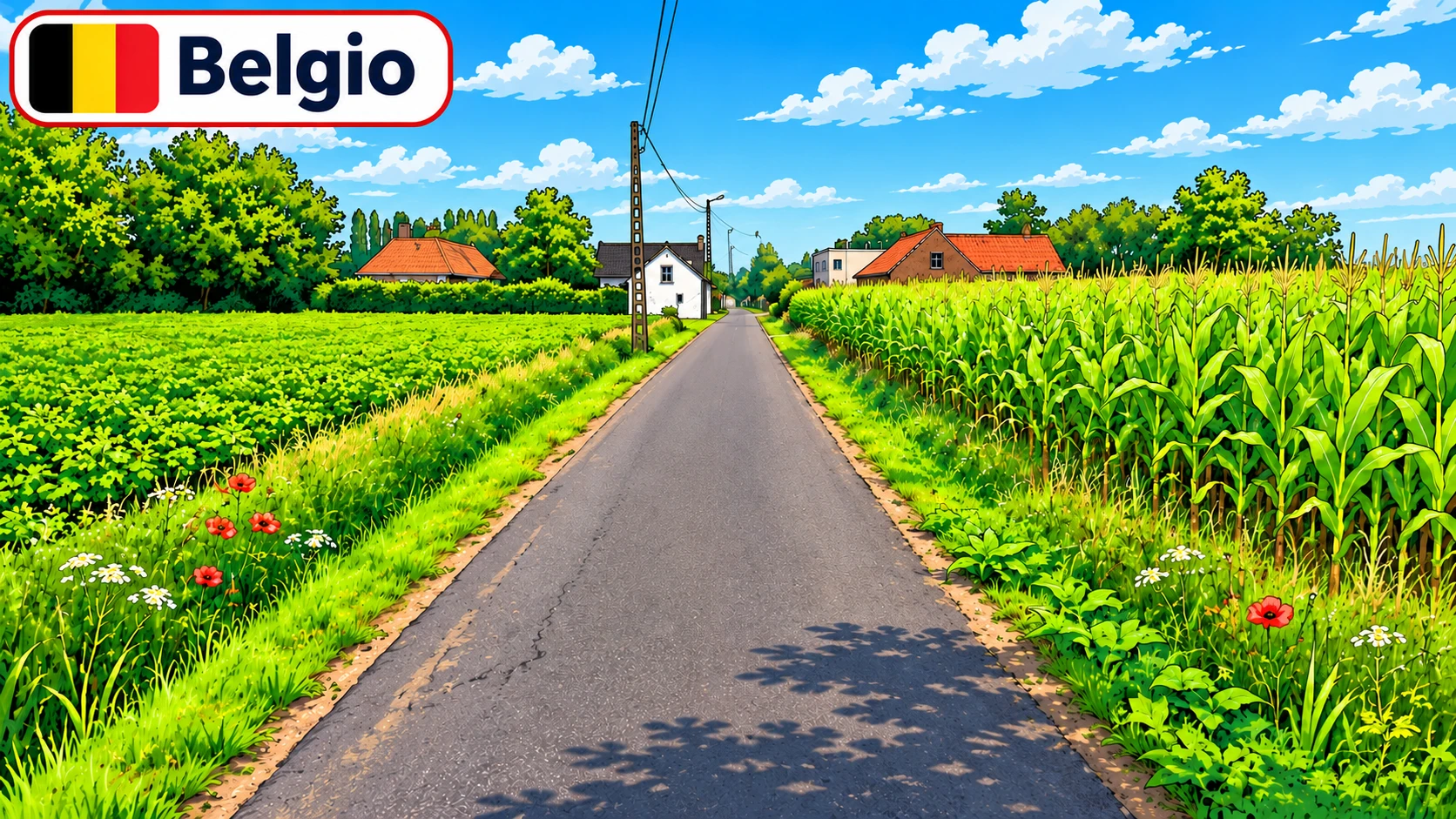
Explore this clueThe guide describes more relief in southeastern Belgium and generally flatter terrain farther north.
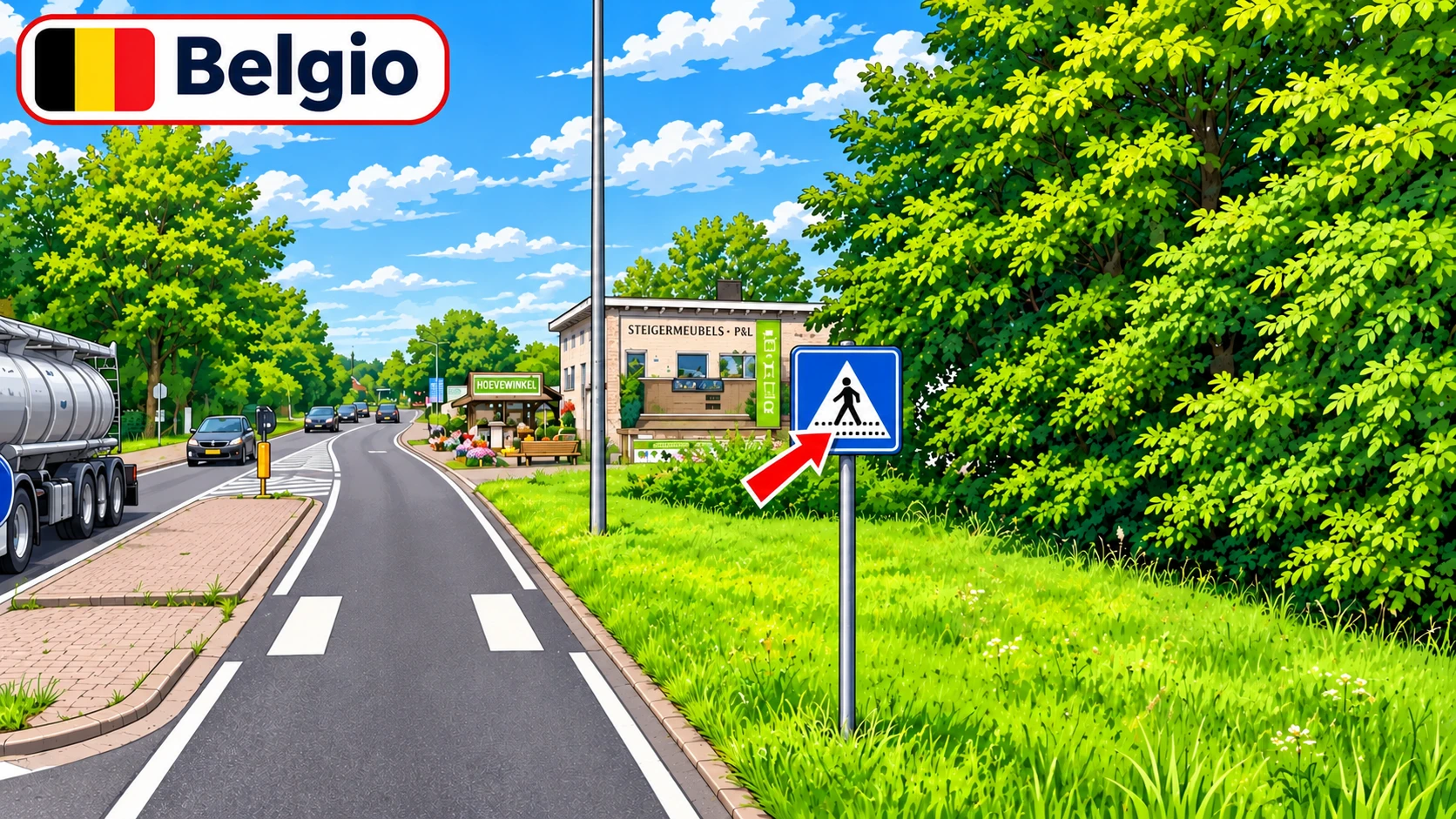
Explore this clueTwo rows of small dots belong to the pedestrian-sign design. The video's caption explicitly says 'On Pedestrian Signs'.
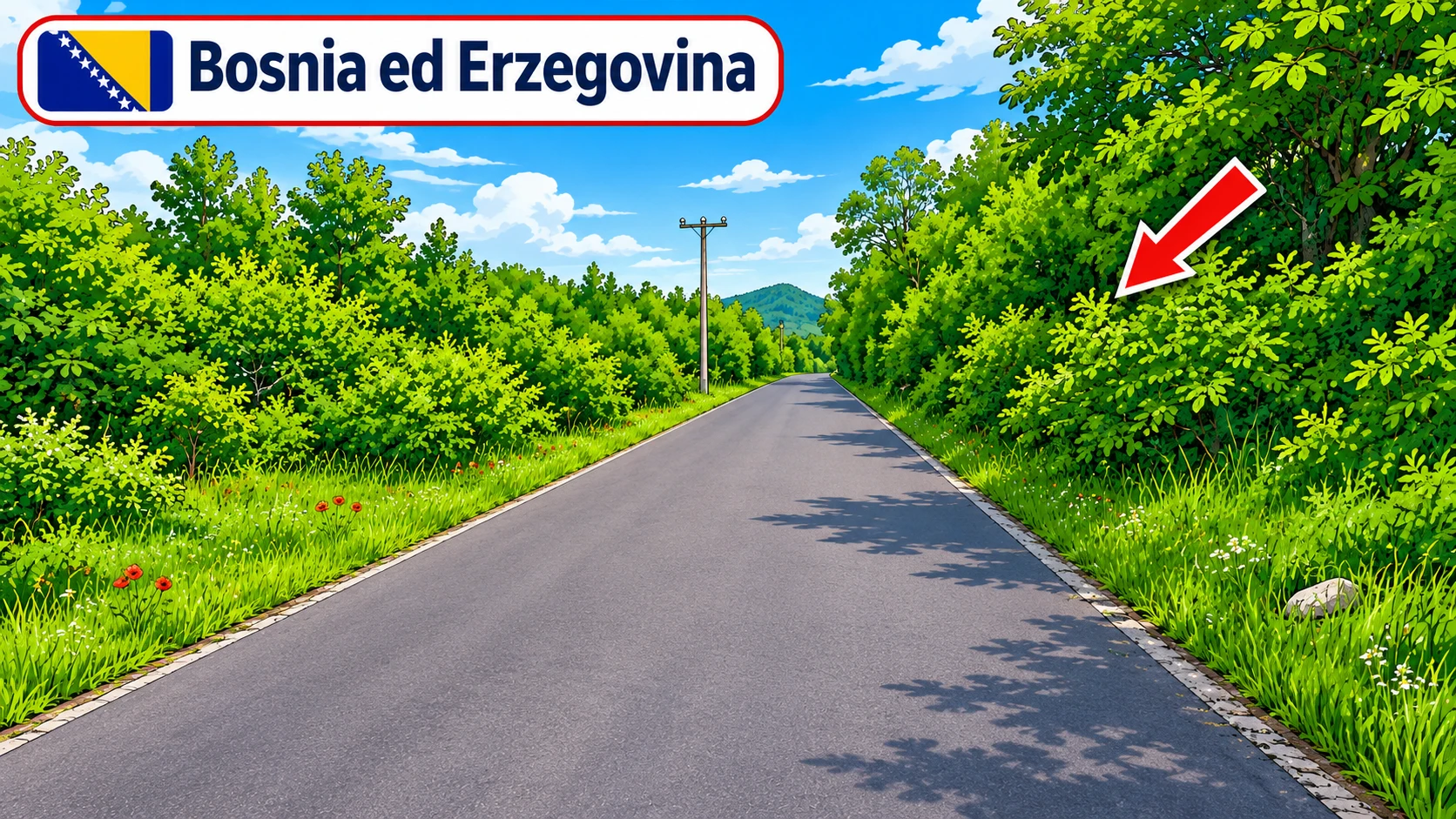
Explore this clueCompare this Bosnian scene's thick woodland, scrub and hills with the more exposed terrain in earlier Balkan examples.
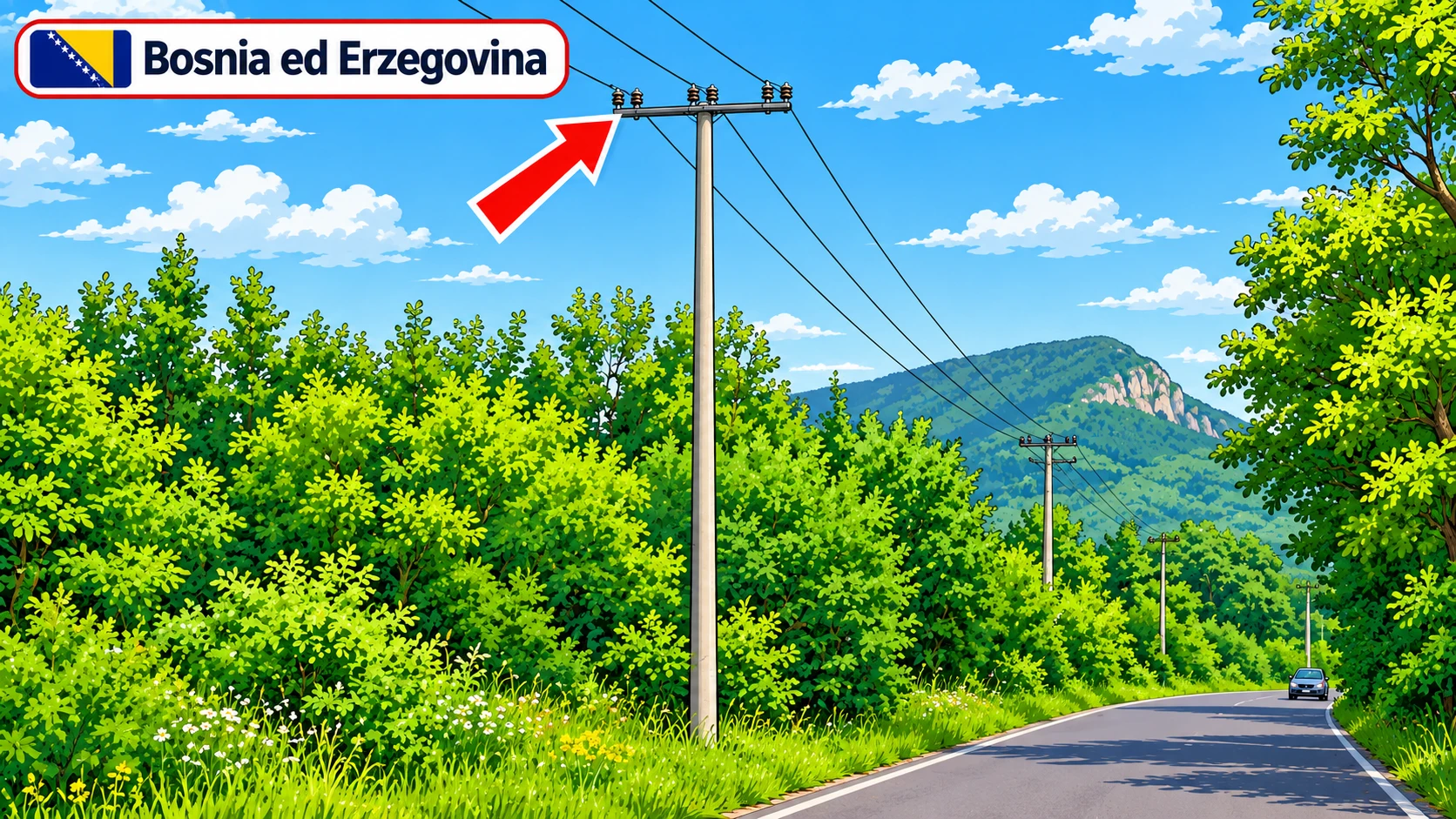
Explore this clueLook for an apparently round pole, a horizontal top crossarm and upward-facing insulators.
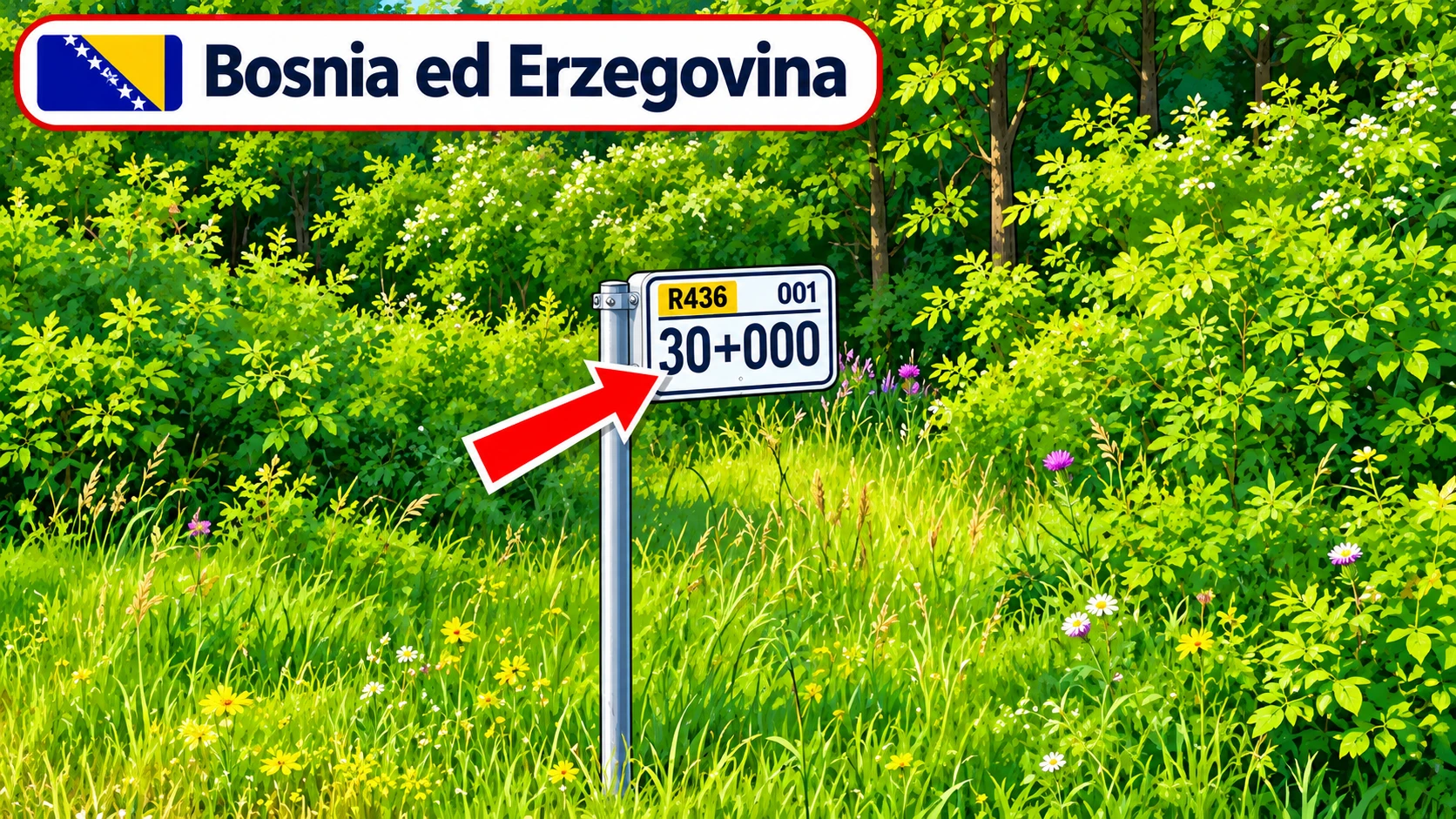
Explore this clueA small white panel uses a plus sign in the distance figure, shown as 30+000 in the video.
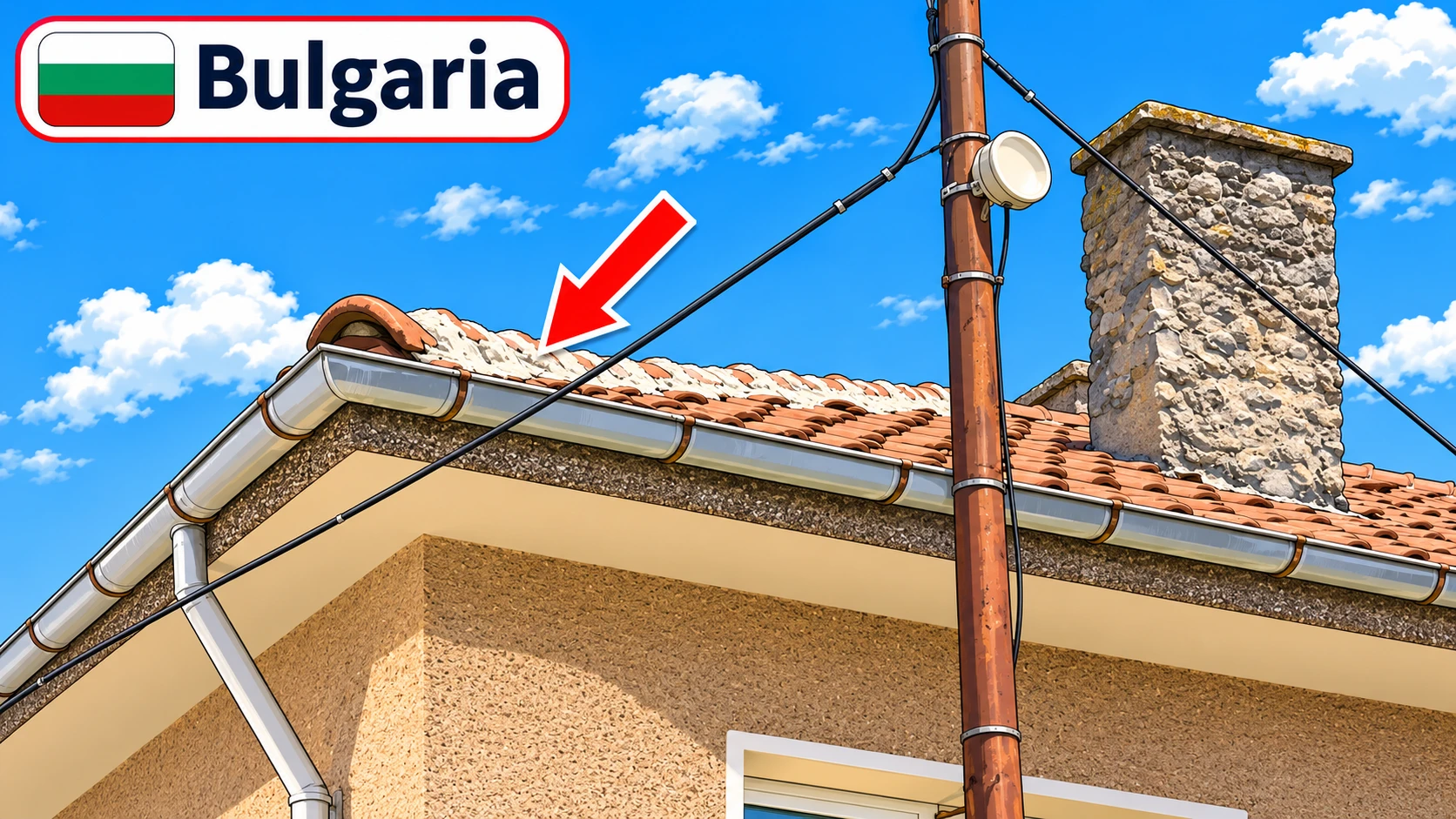
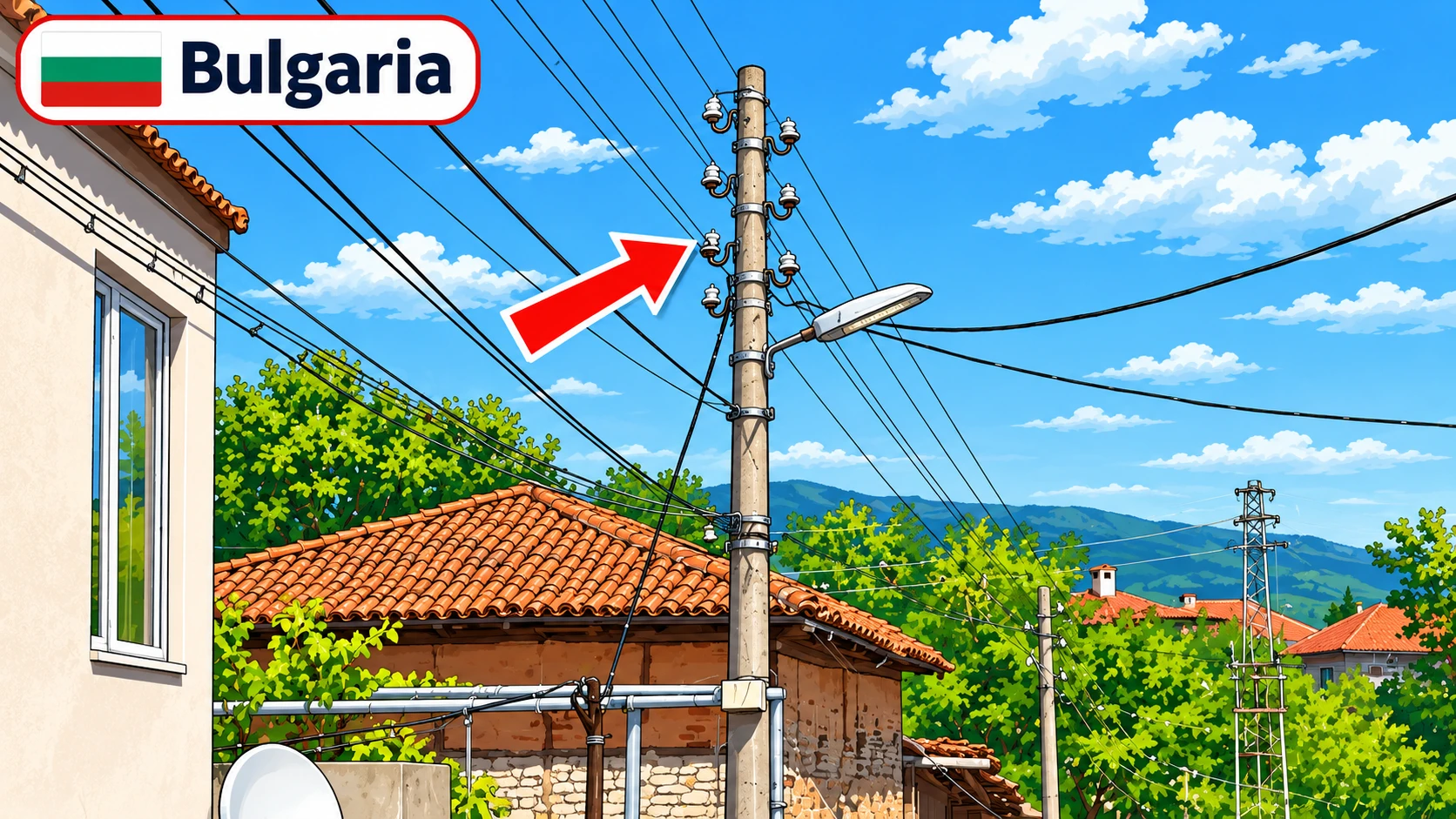
Explore this clueLook for light material between roof tiles along ridges and joints, described as frequent on Bulgarian houses.
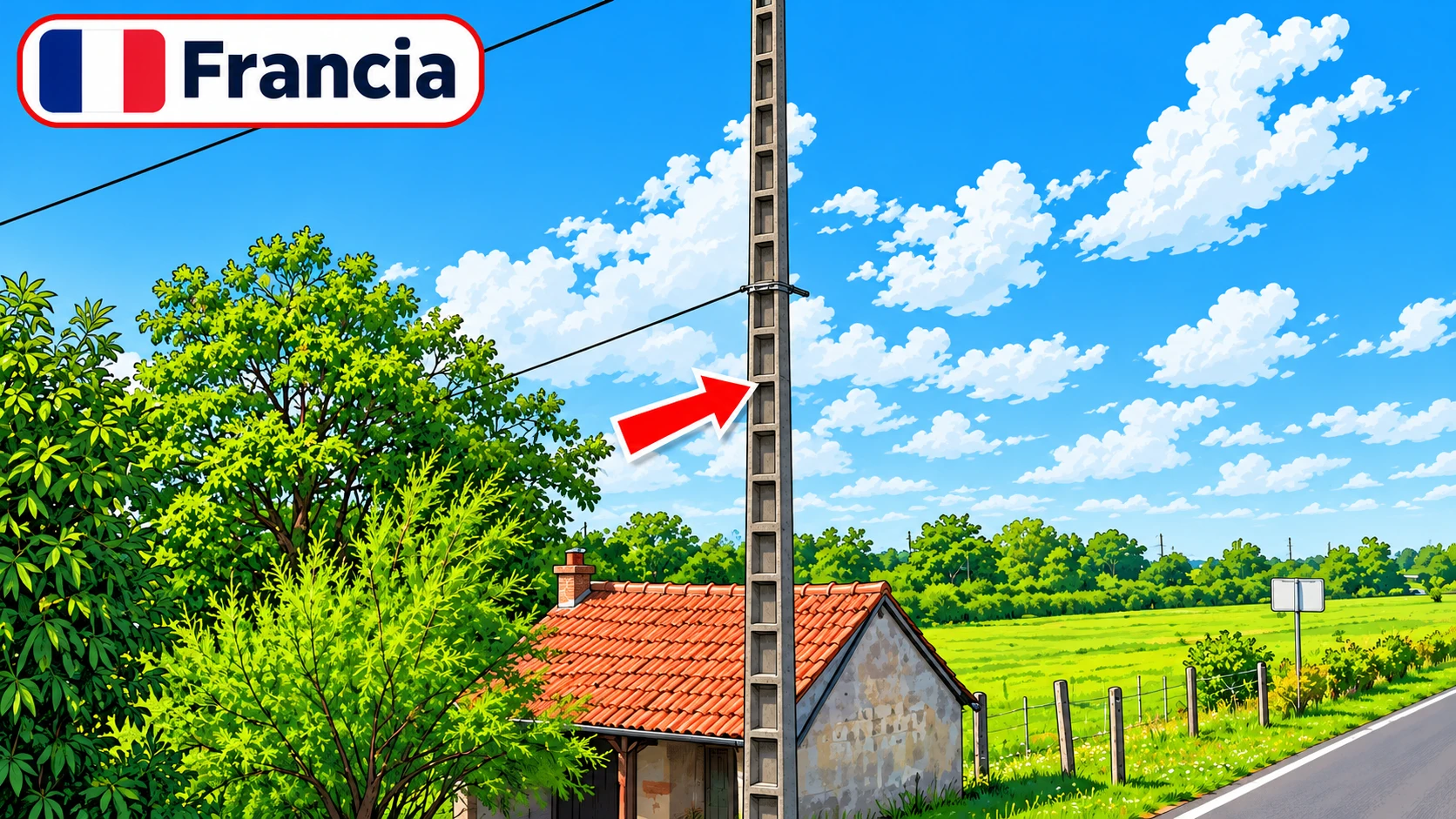
Explore this clueThe apparently round concrete pole has metal climbing steps alternating between its two sides.
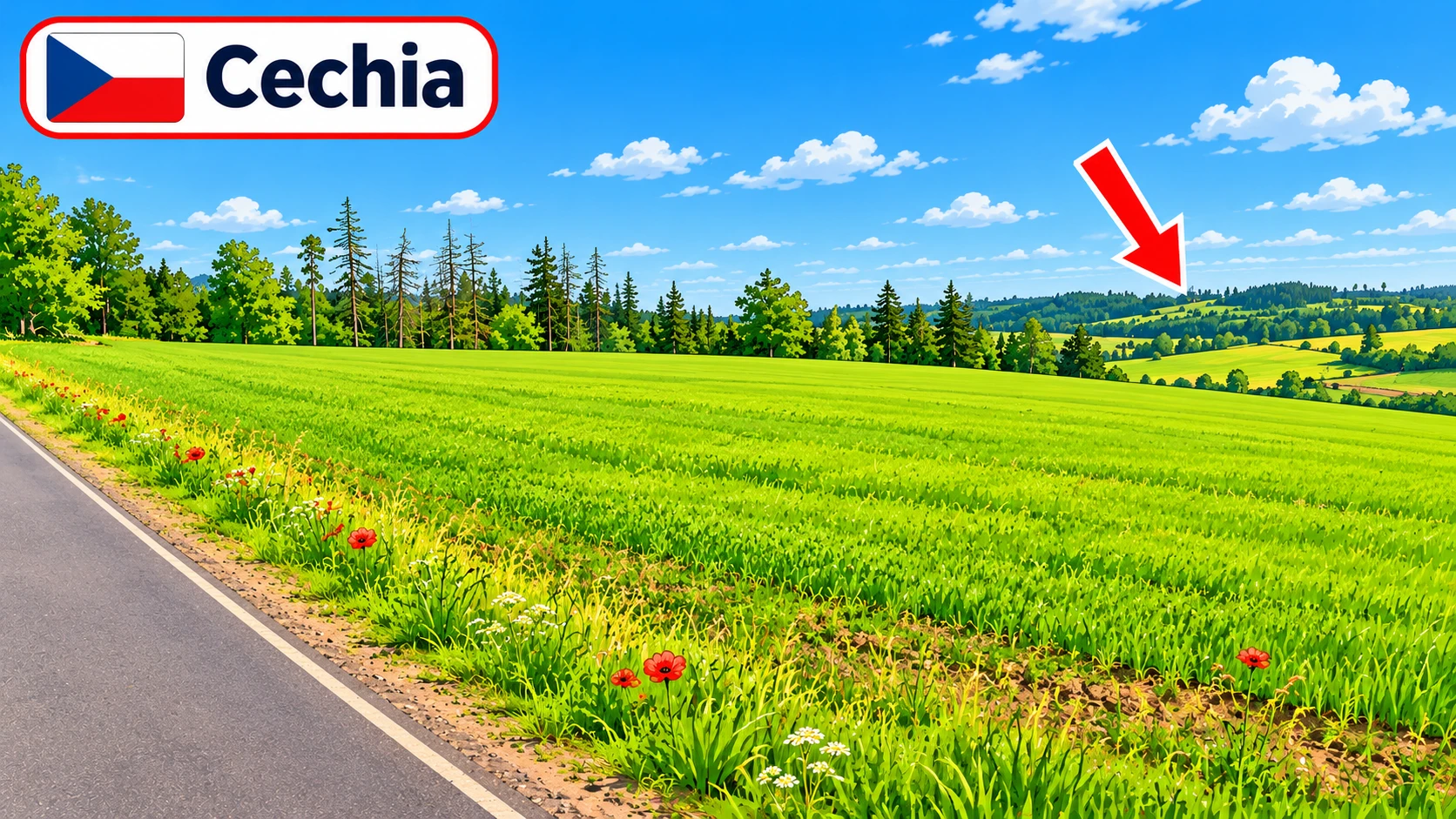
Explore this clueEven this apparently flat agricultural scene shows slight undulations in the road and horizon.
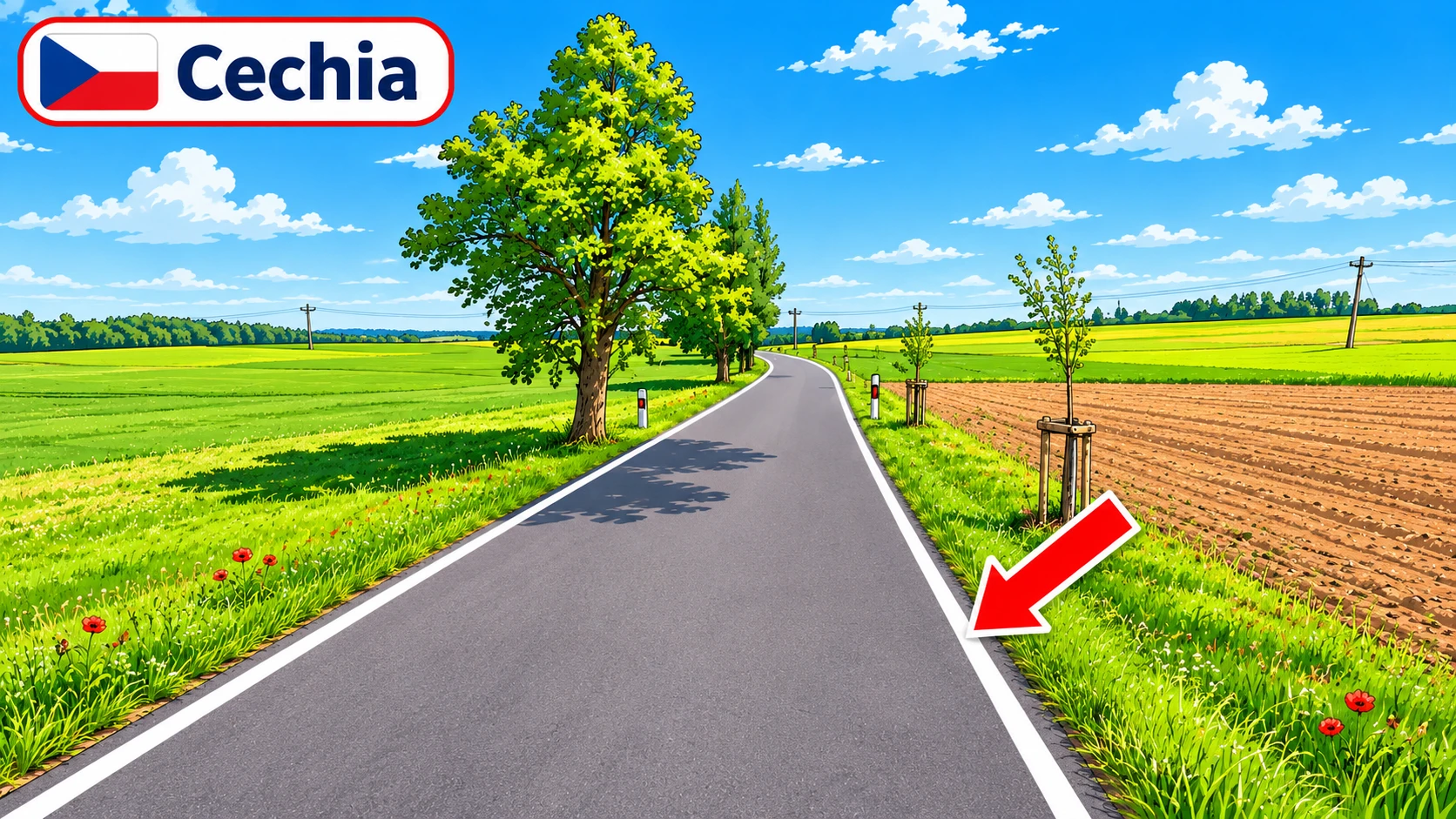
Explore this clueTwo continuous white lines stand out along the edges of a narrow Czech road.
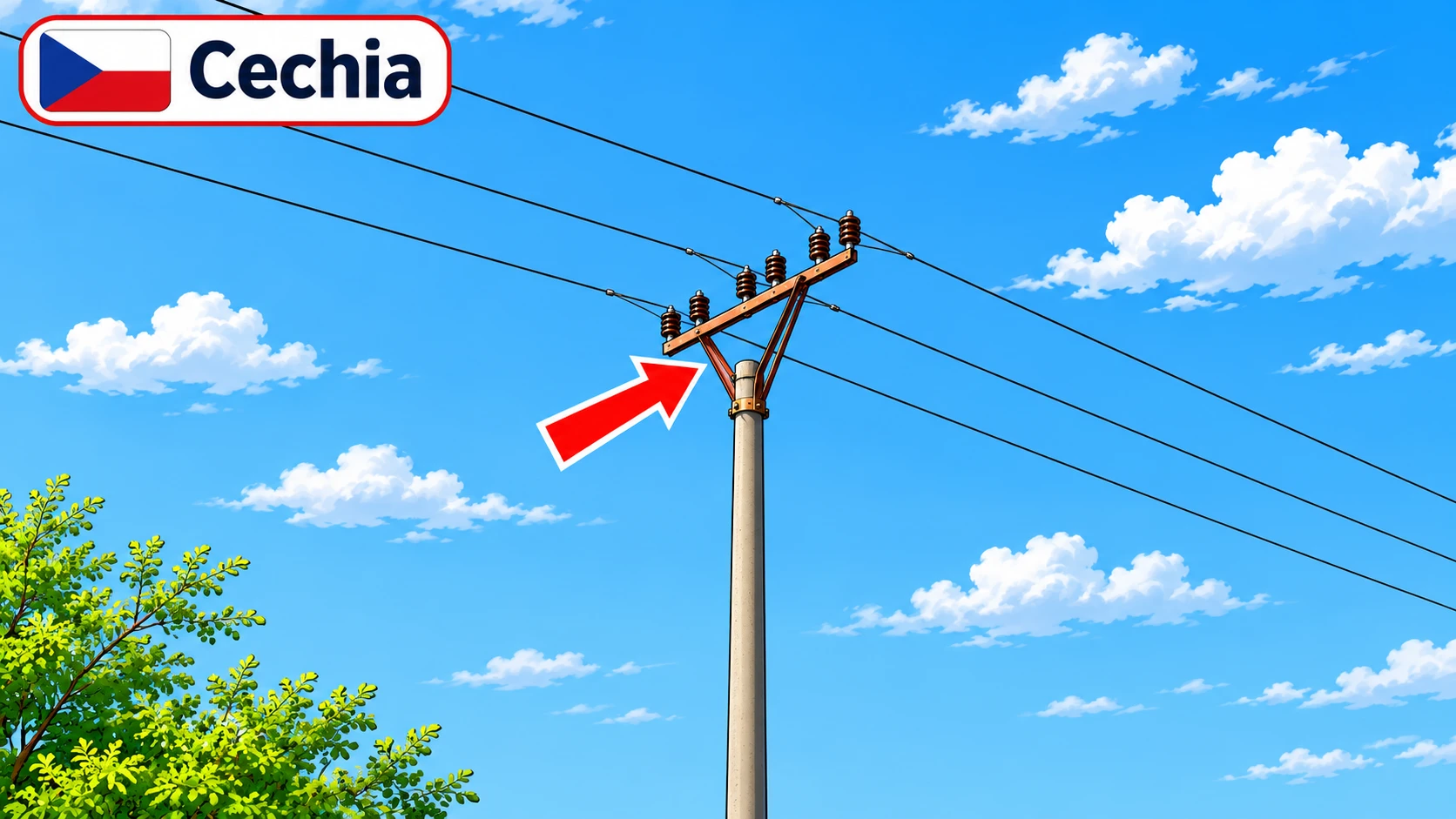
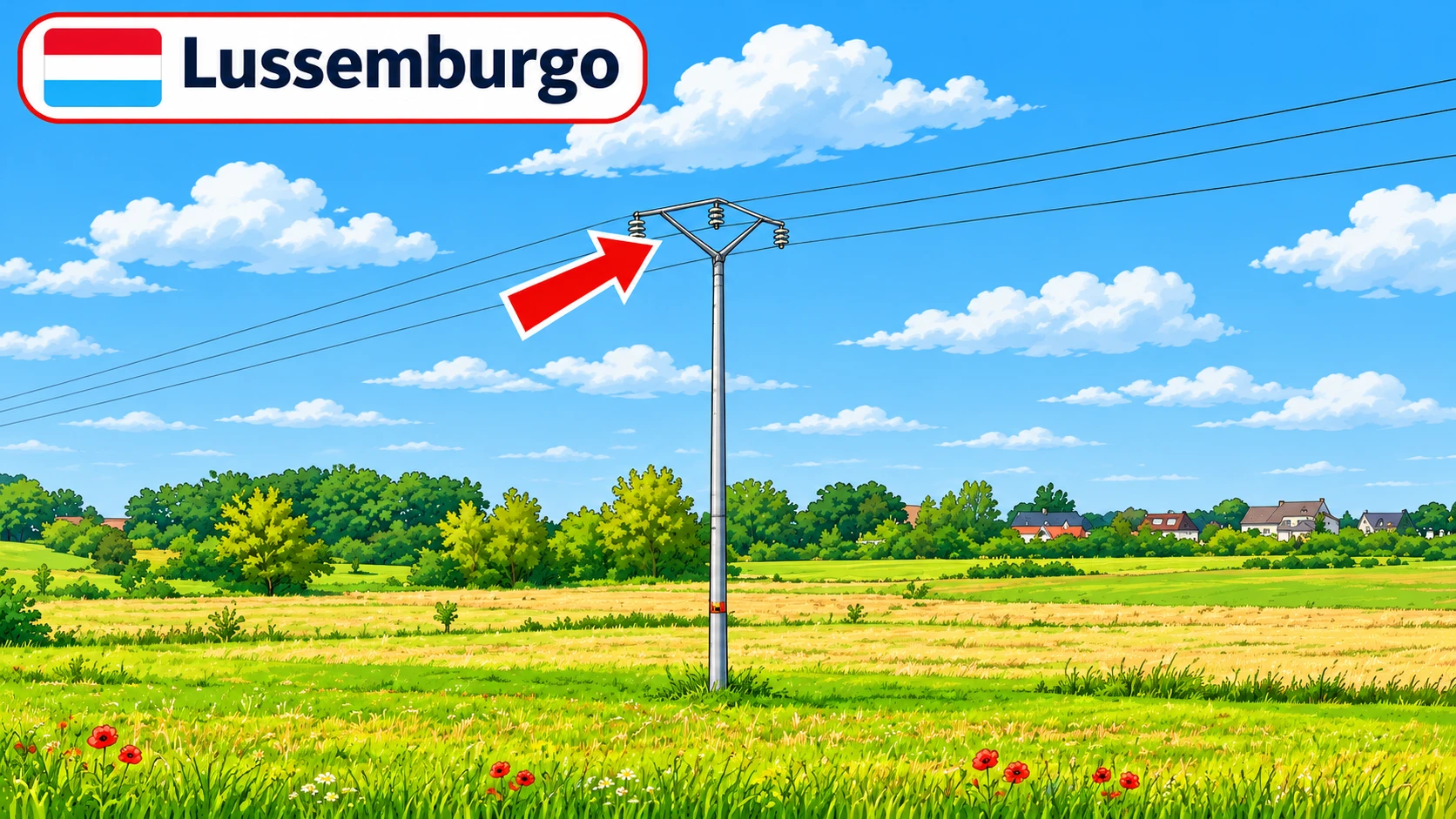
Explore this clueThe pole has a top crossarm, upward-facing insulators and two diagonal braces forming a triangle.
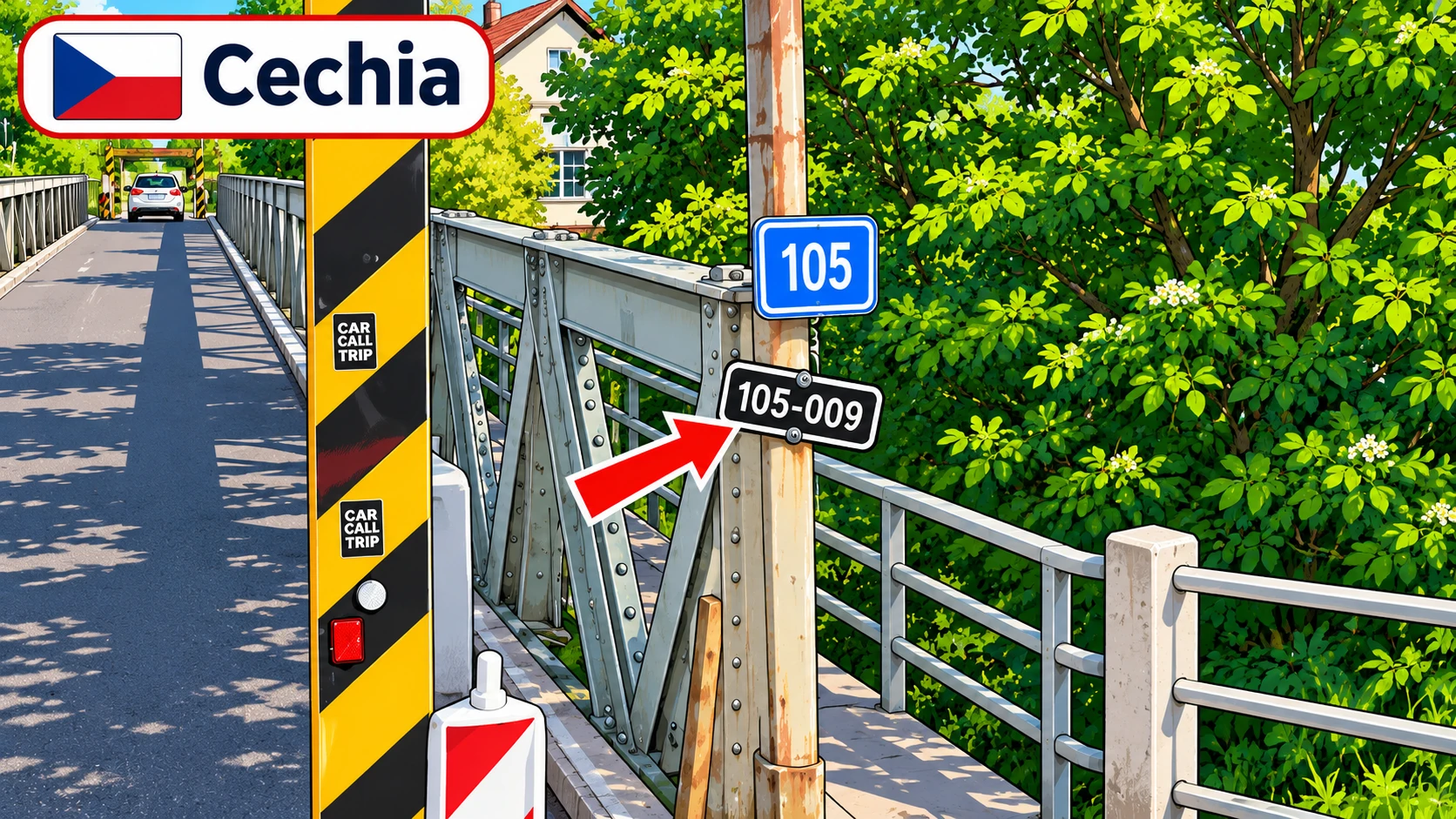
Explore this clueA small rectangular black plate has a white border and white characters, with a code resembling 105-009.
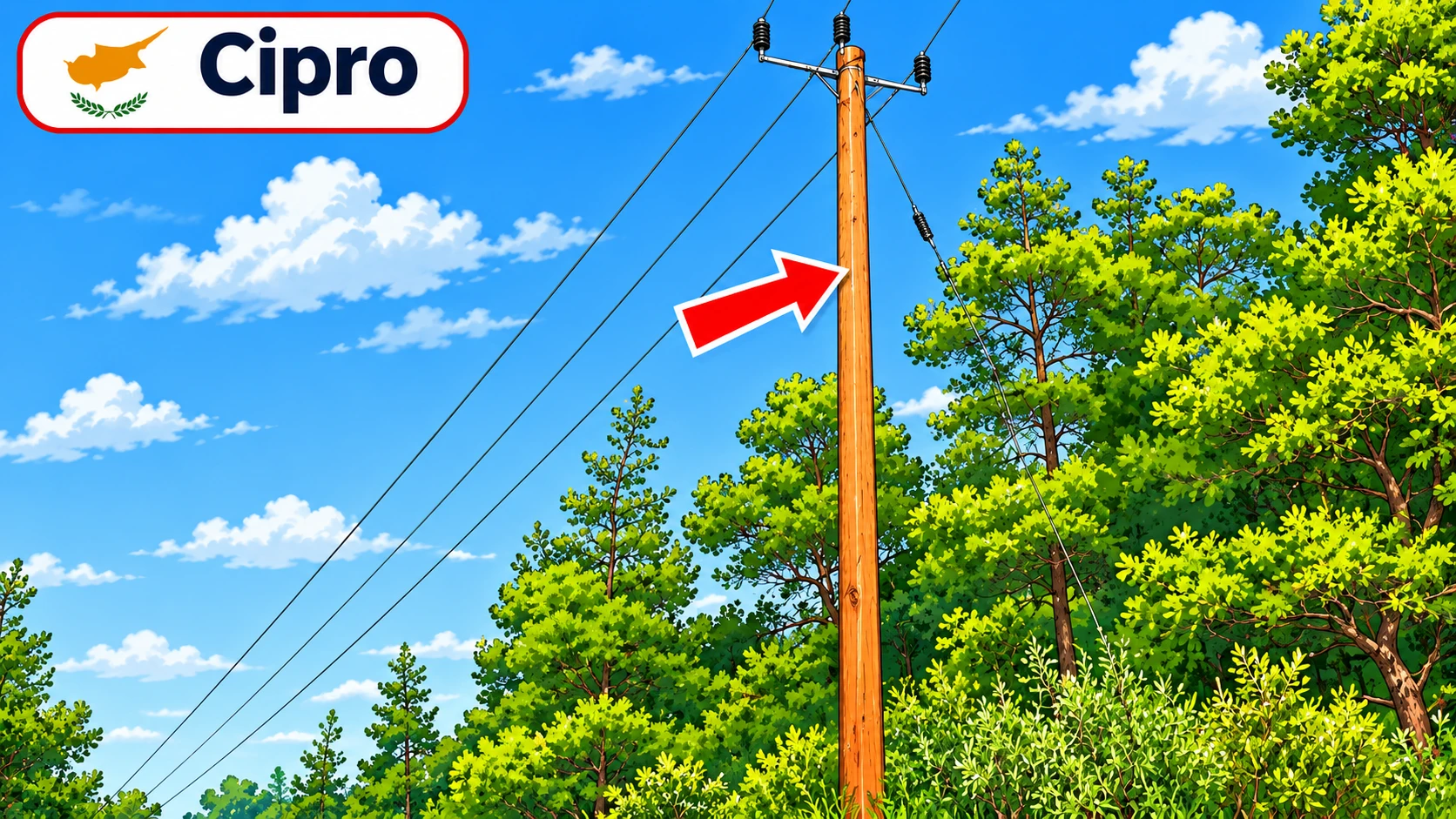
Explore this clueWarm-coloured wooden poles with insulators and possible light labels stand in woodland. The author recalls confusing this landscape wit...
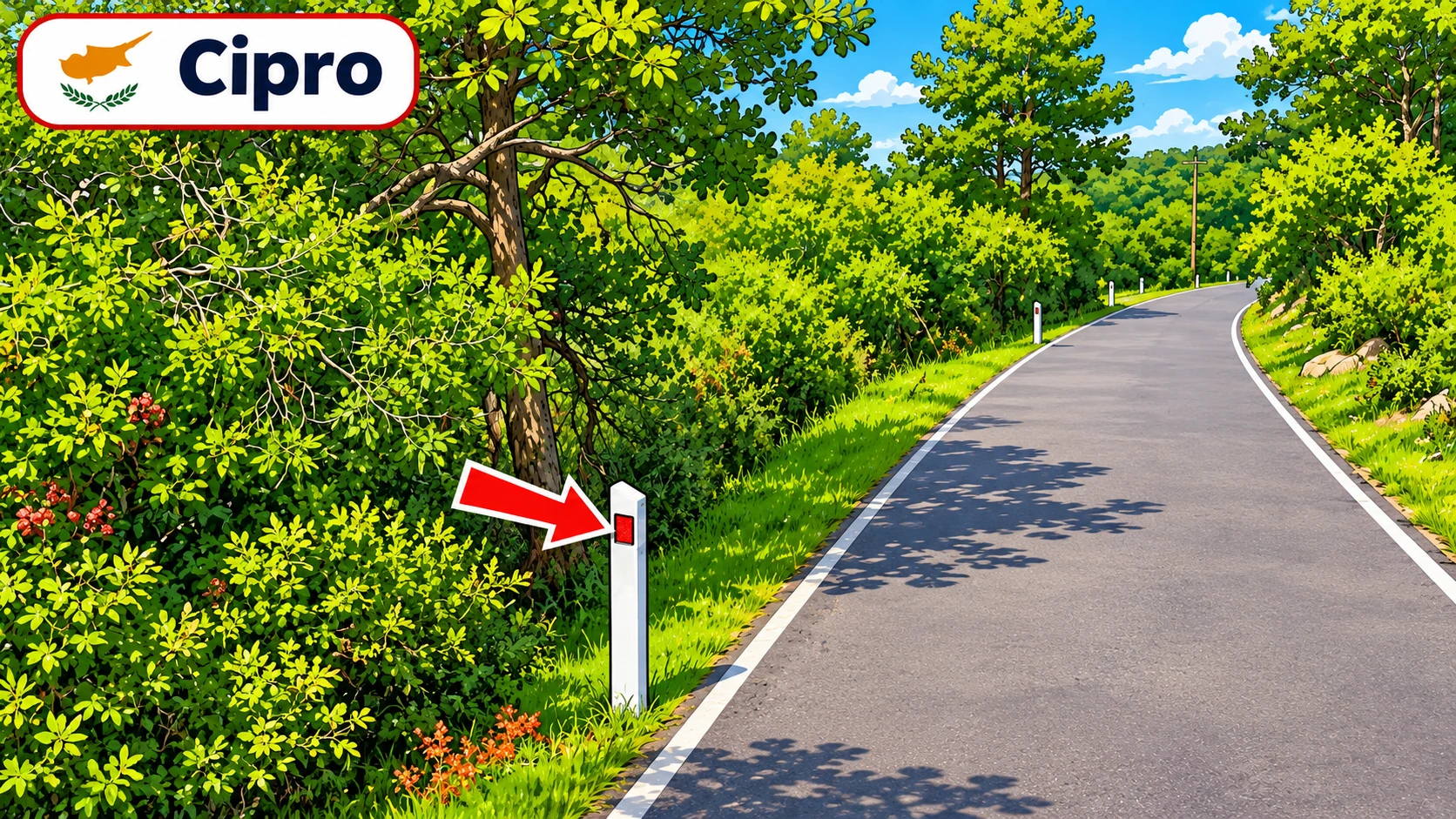
Explore this clueA roadside post has a red reflector near its top, used by the guide to compare Cyprus with Greece.
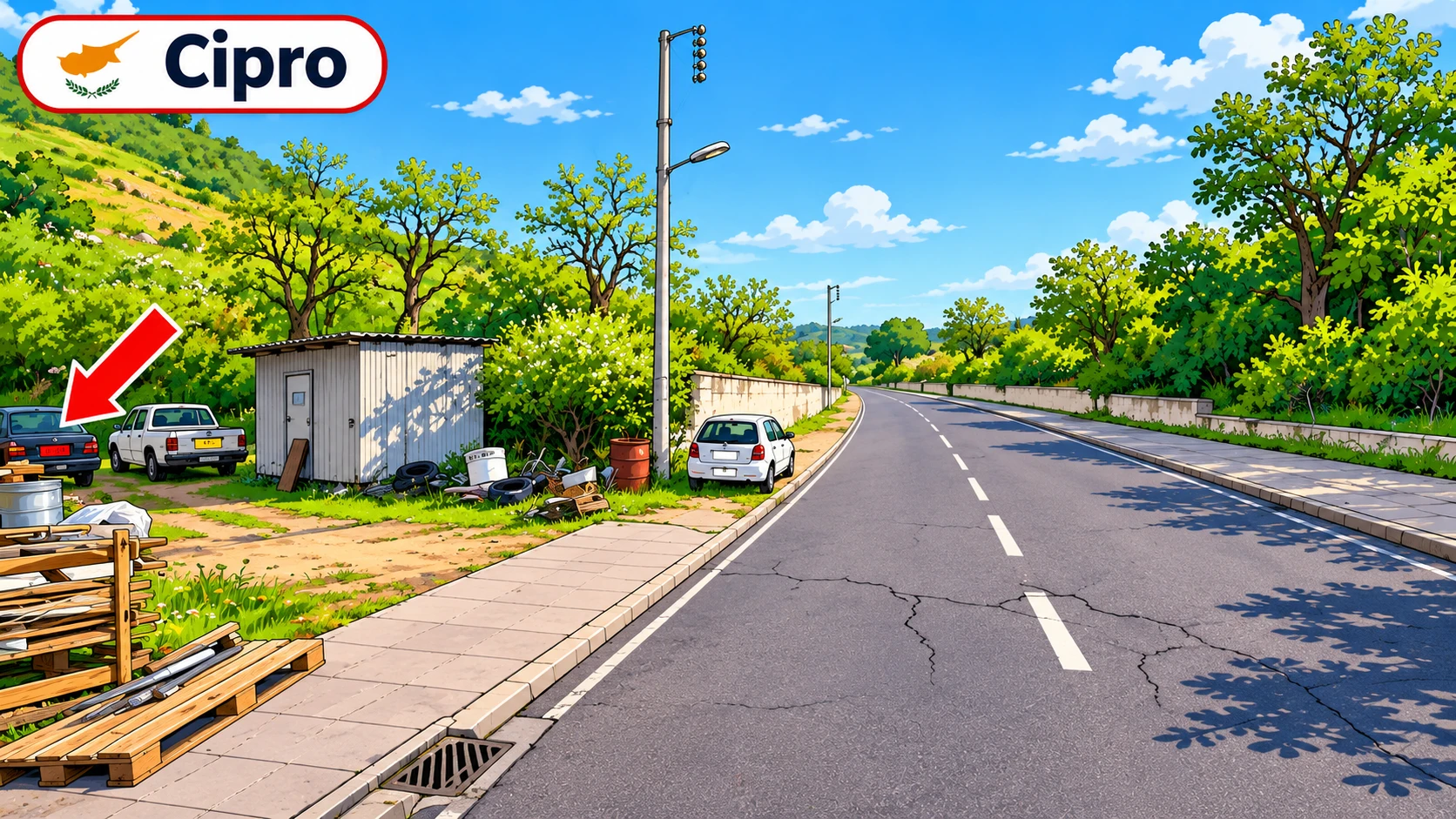
Explore this clueThe video mentions several plate colours and associates red plates with rental vehicles.
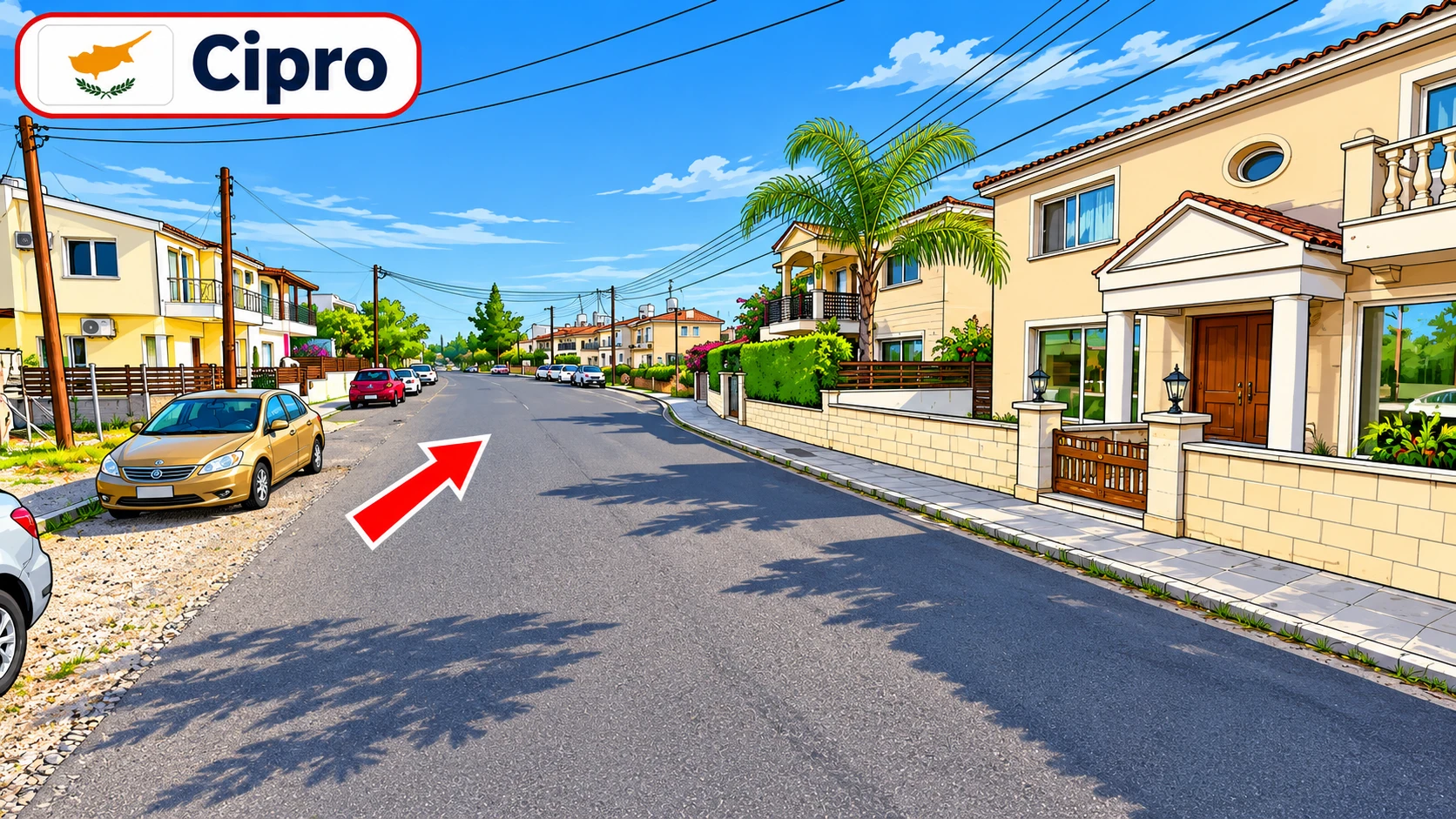
Explore this clueThe guide uses left-hand traffic to distinguish Cyprus from Greece and shows coastal settlements with pale or pastel façades.
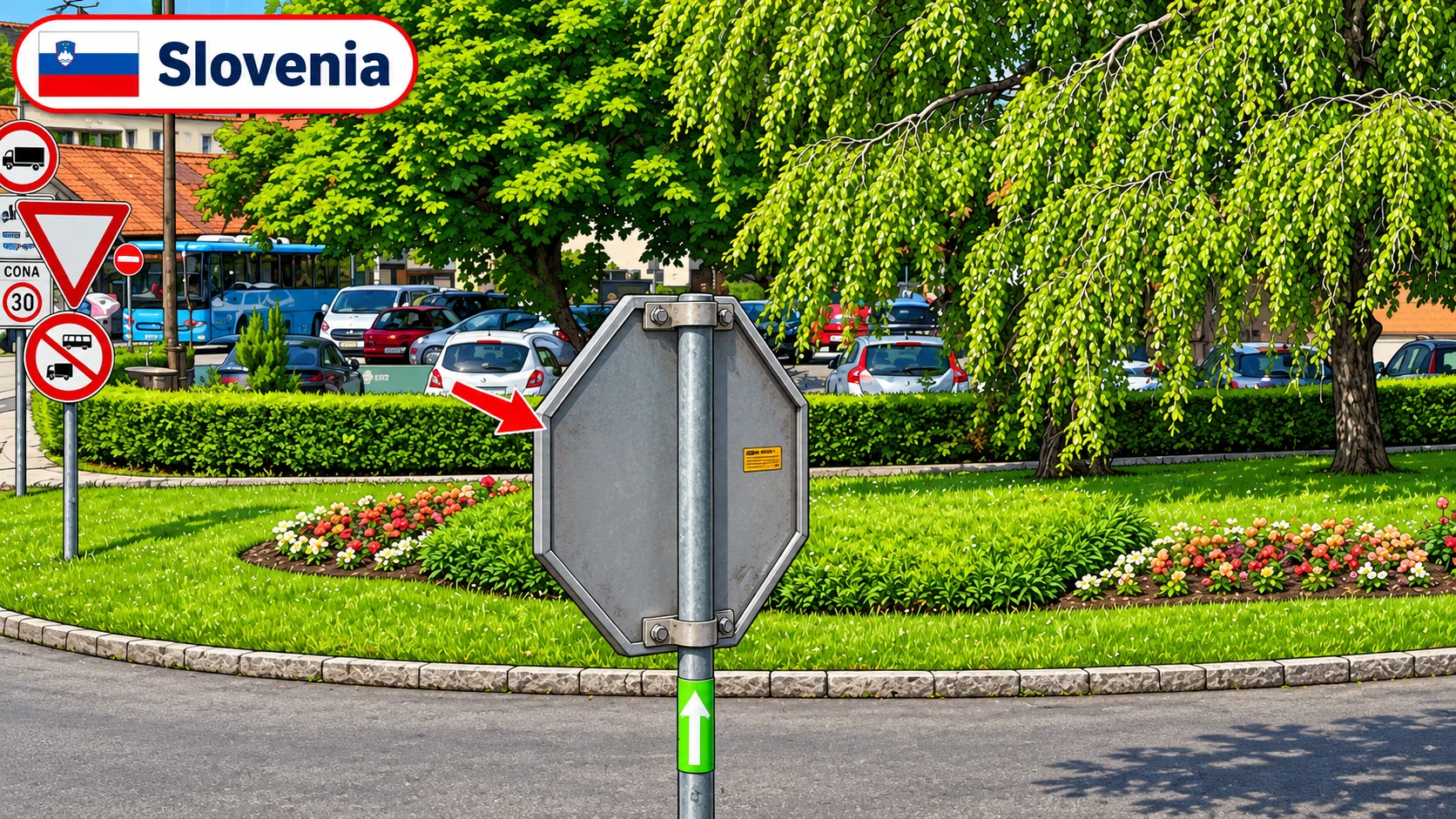
Explore this clueLook closely at a folded or reinforced metal rim with interruptions on the back of a sign, compared with Denmark and Slovenia.
Explore this clueThe scene shows concrete poles with apparently cylindrical shafts. Alternating climbing steps are mentioned but absent on this example.
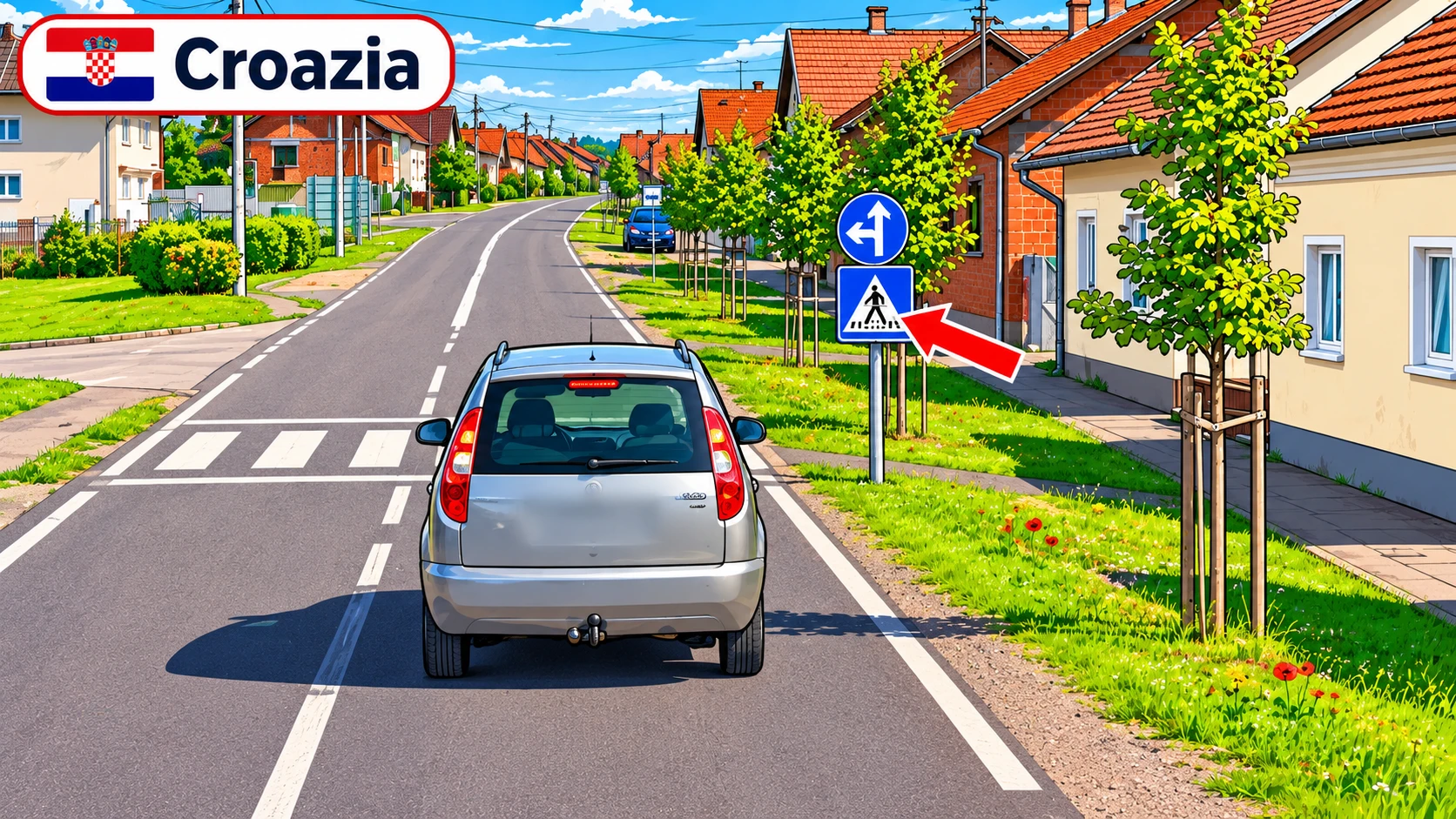
Explore this clueThe guide describes five stripes beneath the pedestrian and a small horizontal body line nicknamed a belt.
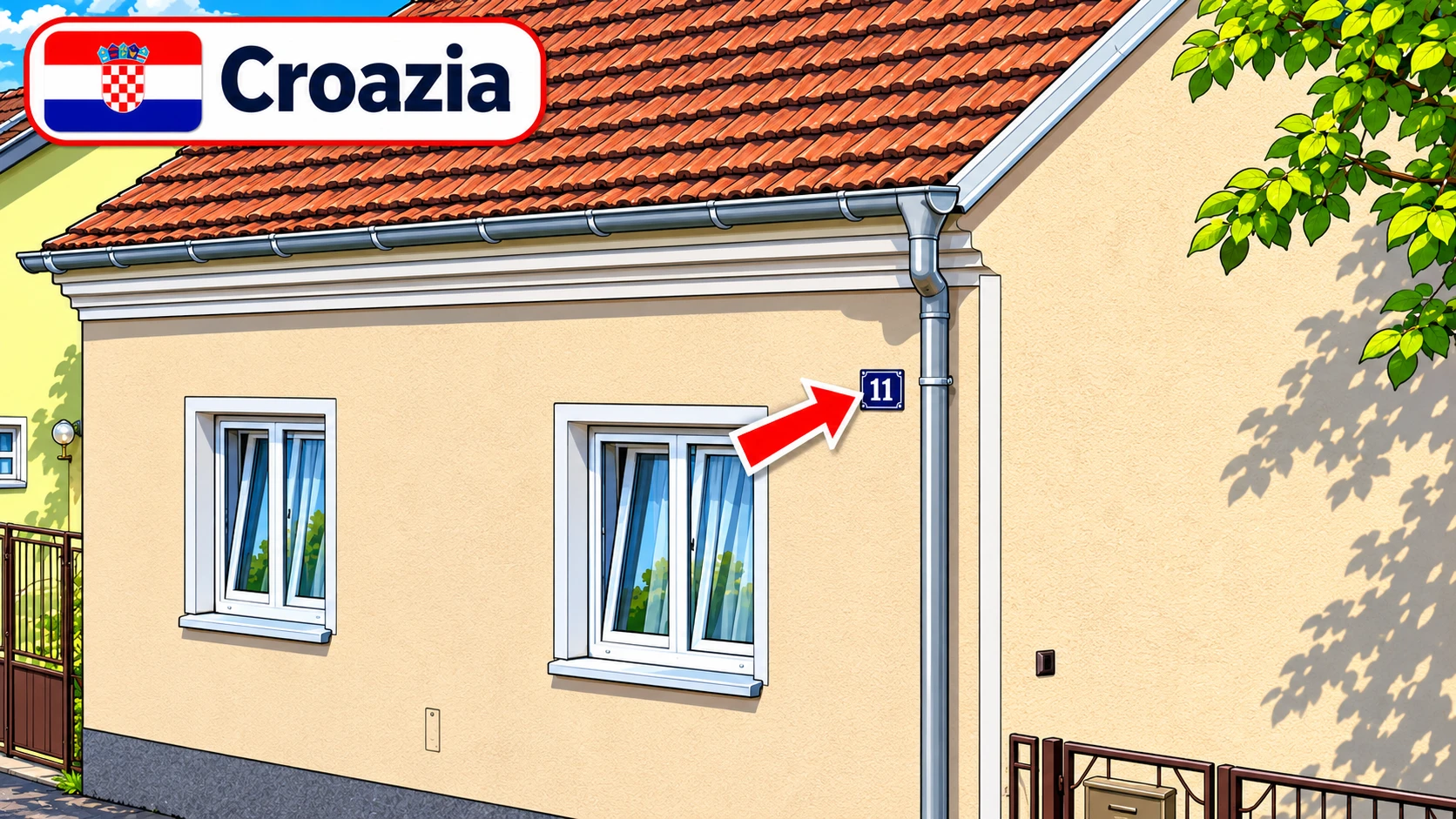
Explore this clueA small dark house-number plaque is attached to a pale wall, described as navy blue and compared with French plaques.
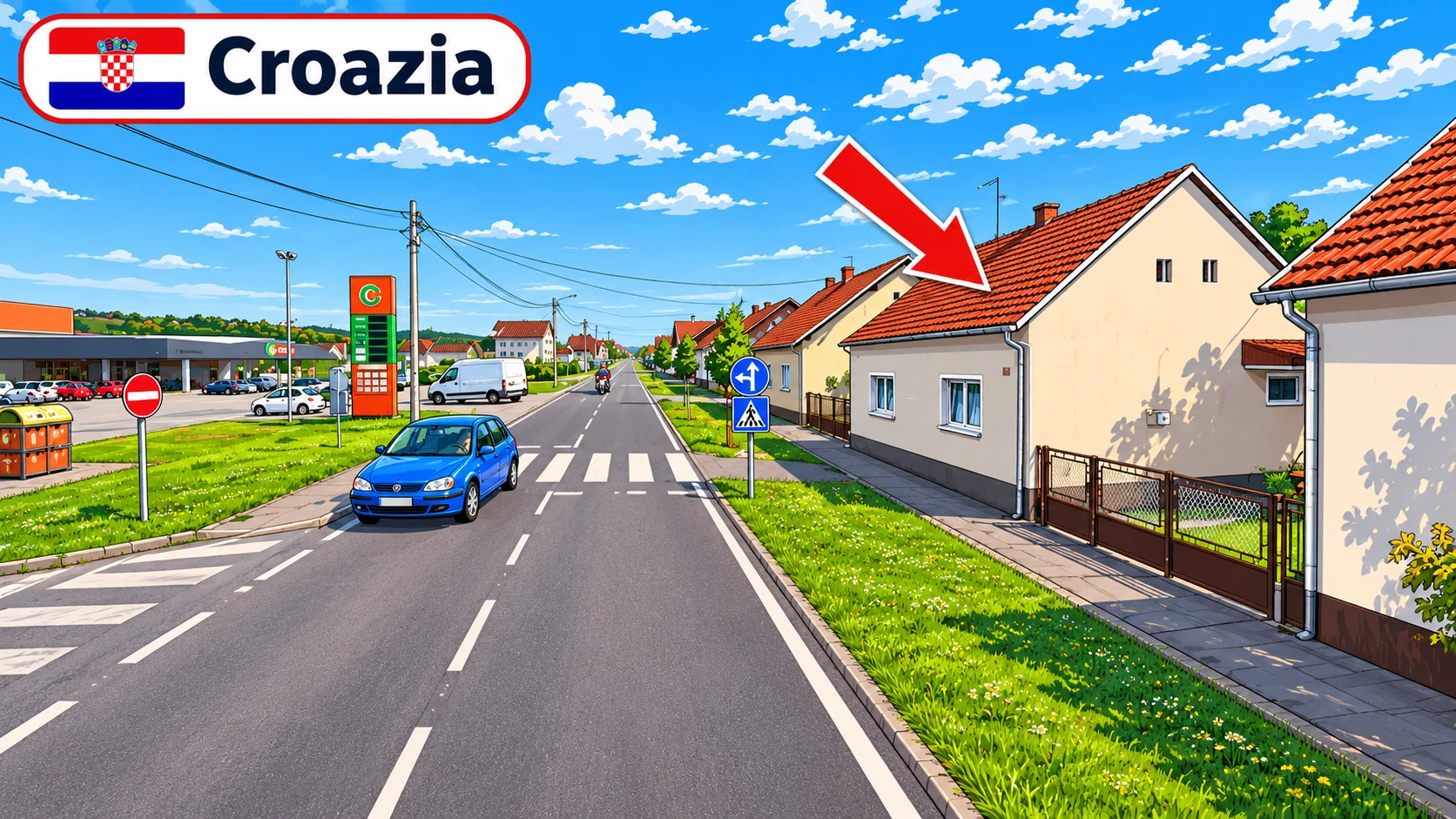
Explore this clueRepeated white or cream façades and red or dark red roofs form the architectural clue in this Croatian settlement.
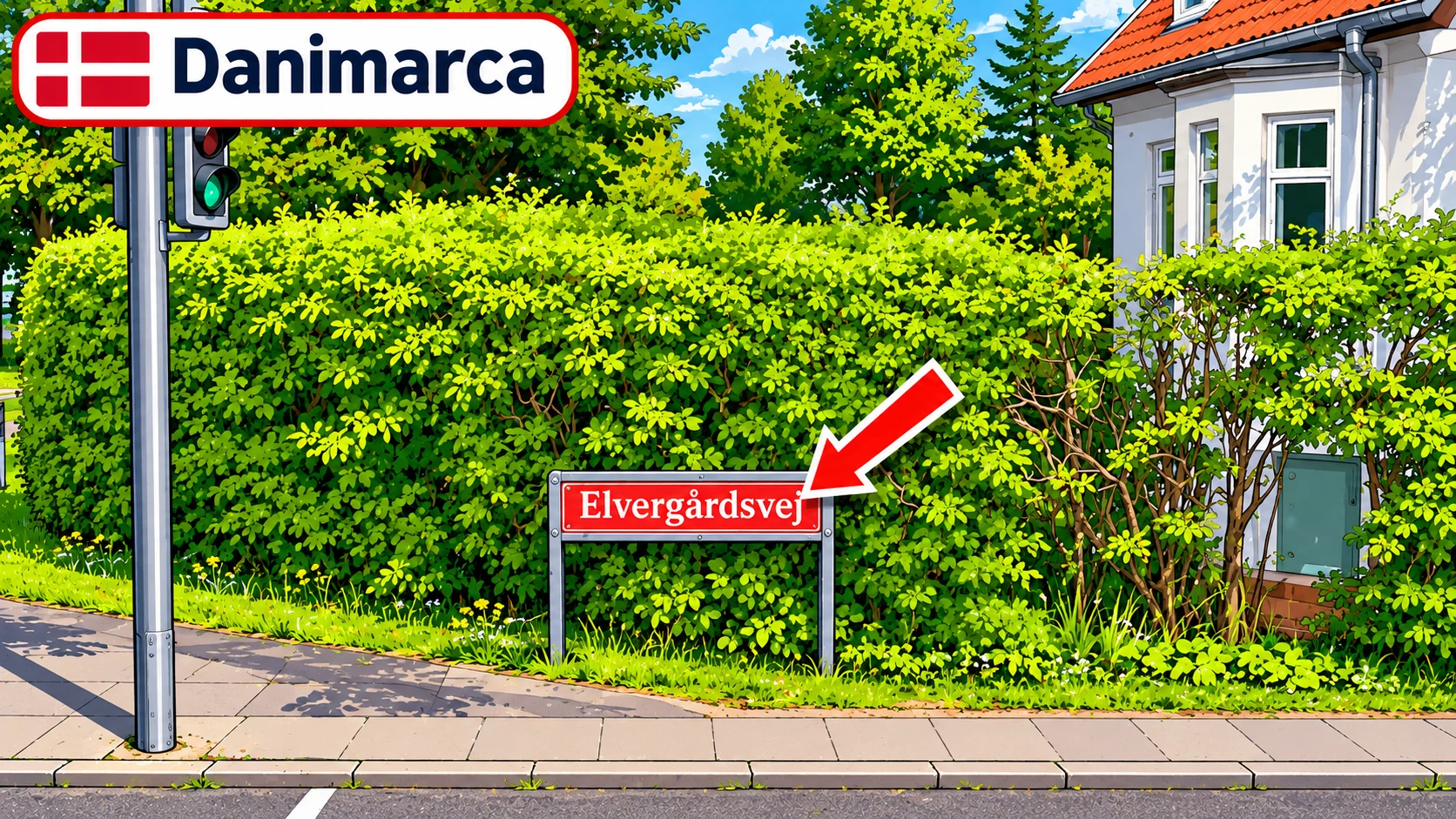
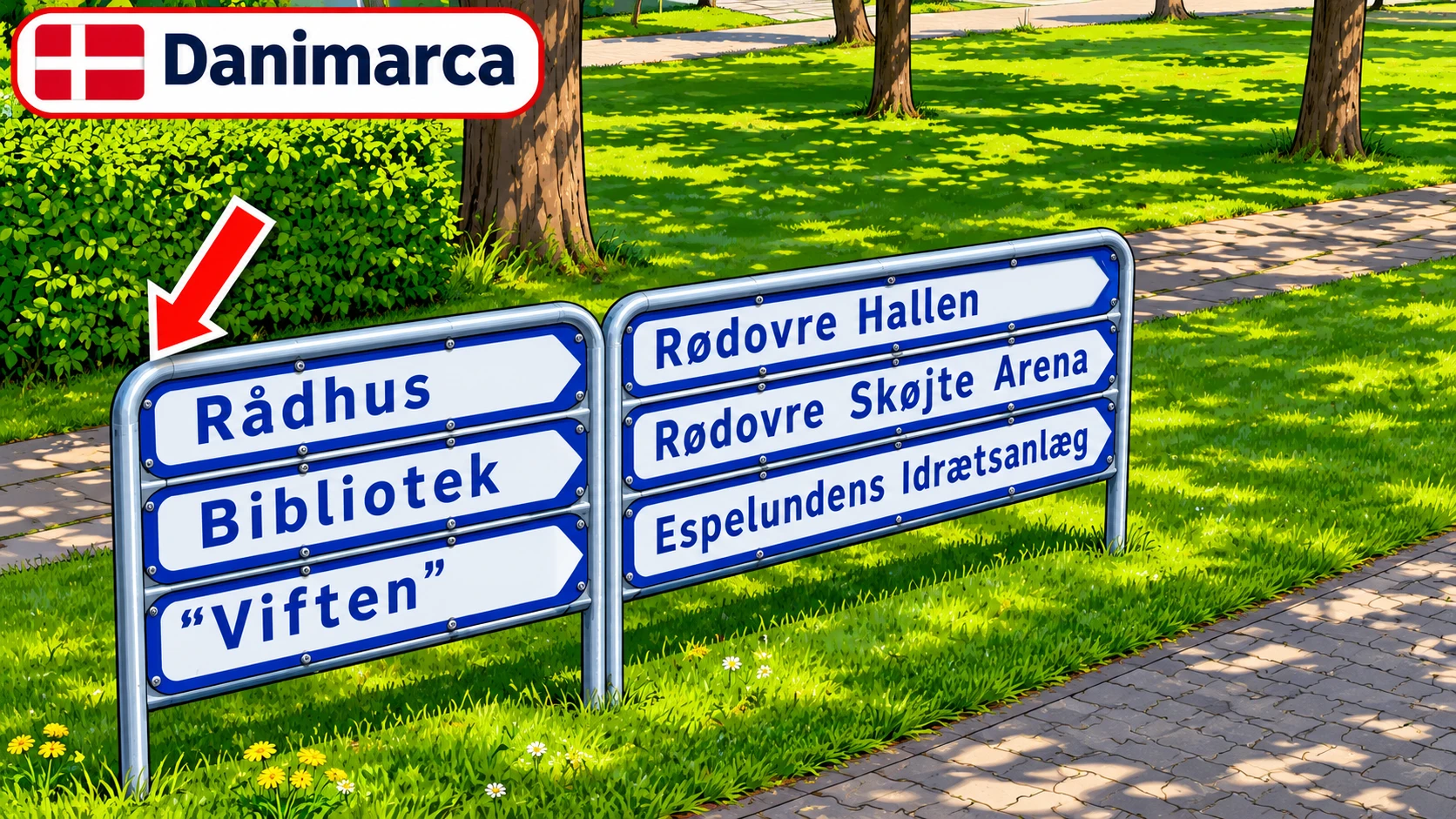
Explore this clueStreet names end in vej, and direction signs show ø. Together they help recognise a Danish-language setting.
Explore this clueDirection panels and other road signs have reinforced folded edges.
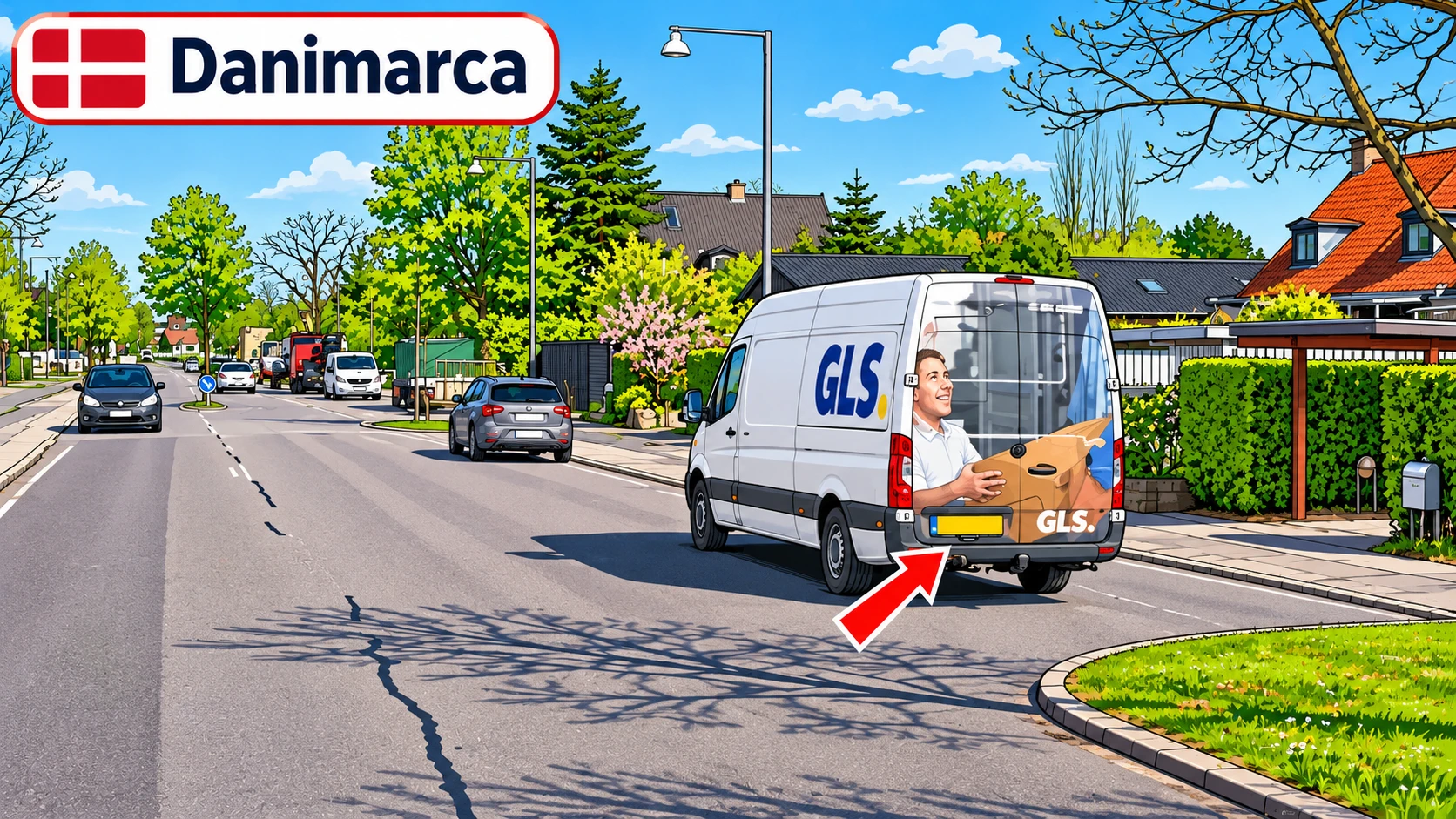
Explore this clueA company van illustrates yellow plates on some commercial vehicles, contrasted with white plates on many private cars.
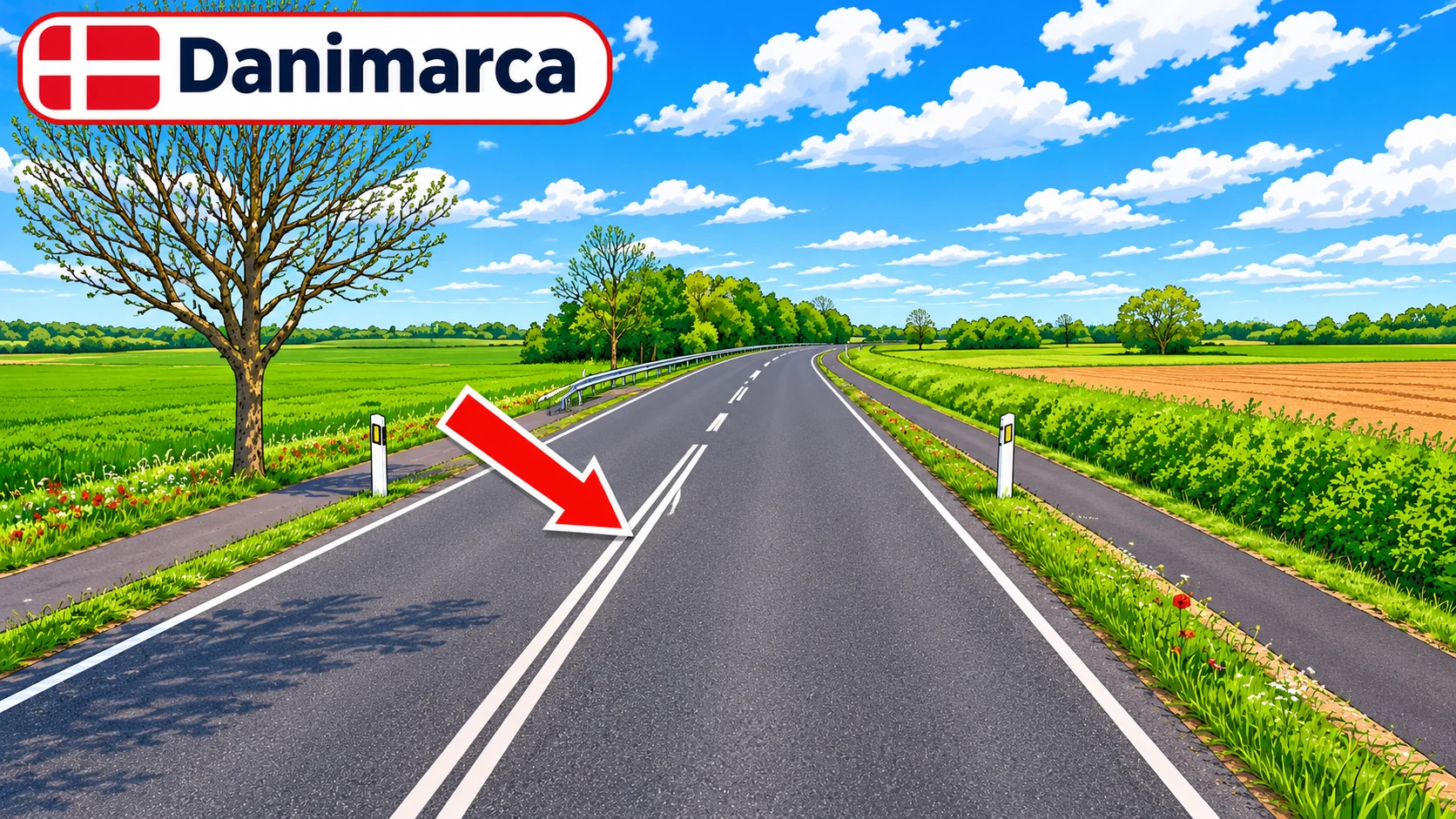
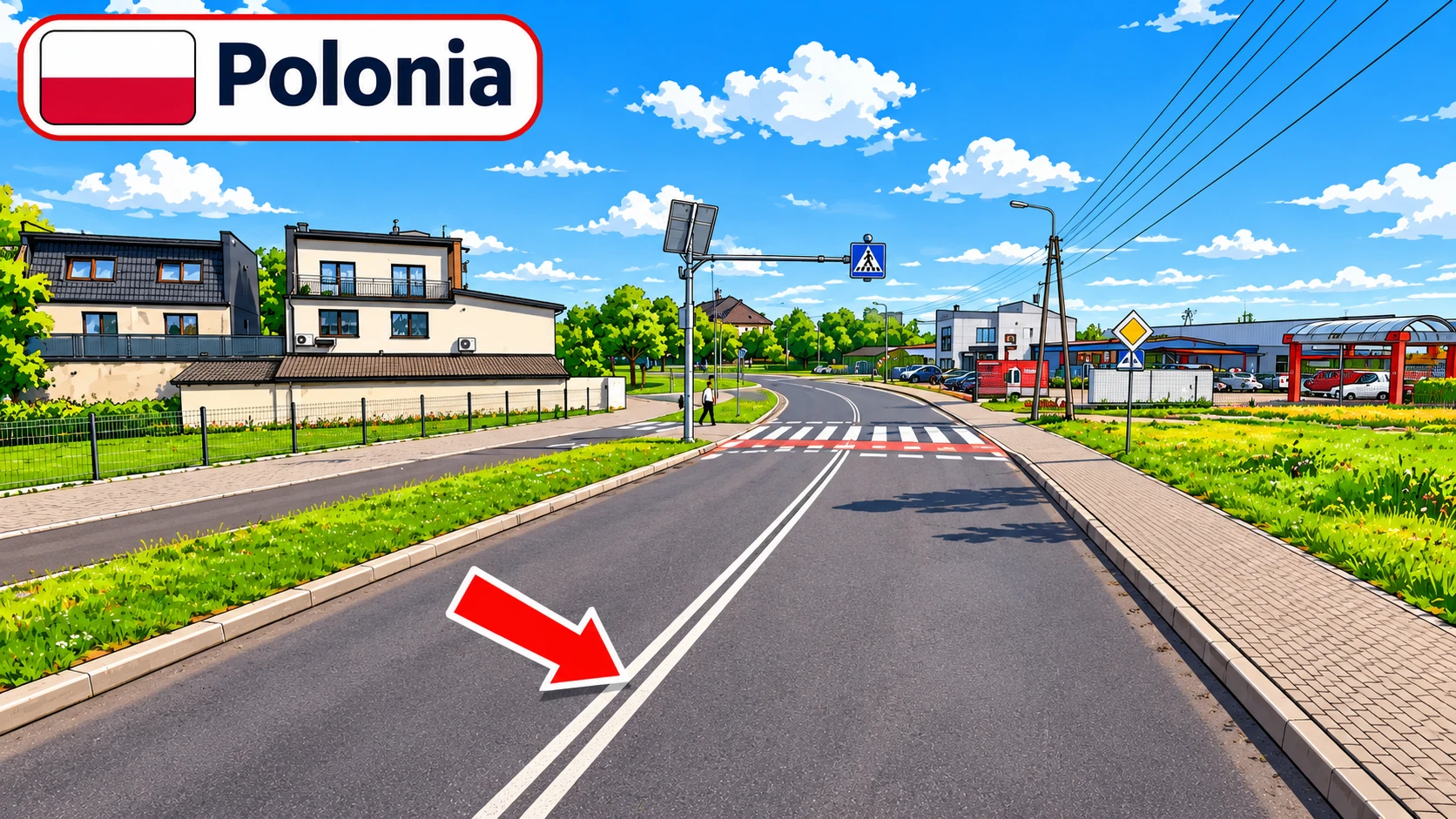
Explore this clueThe video compares double white centre lines with Greece and Poland, and also shows broken centre lines with different dash lengths.
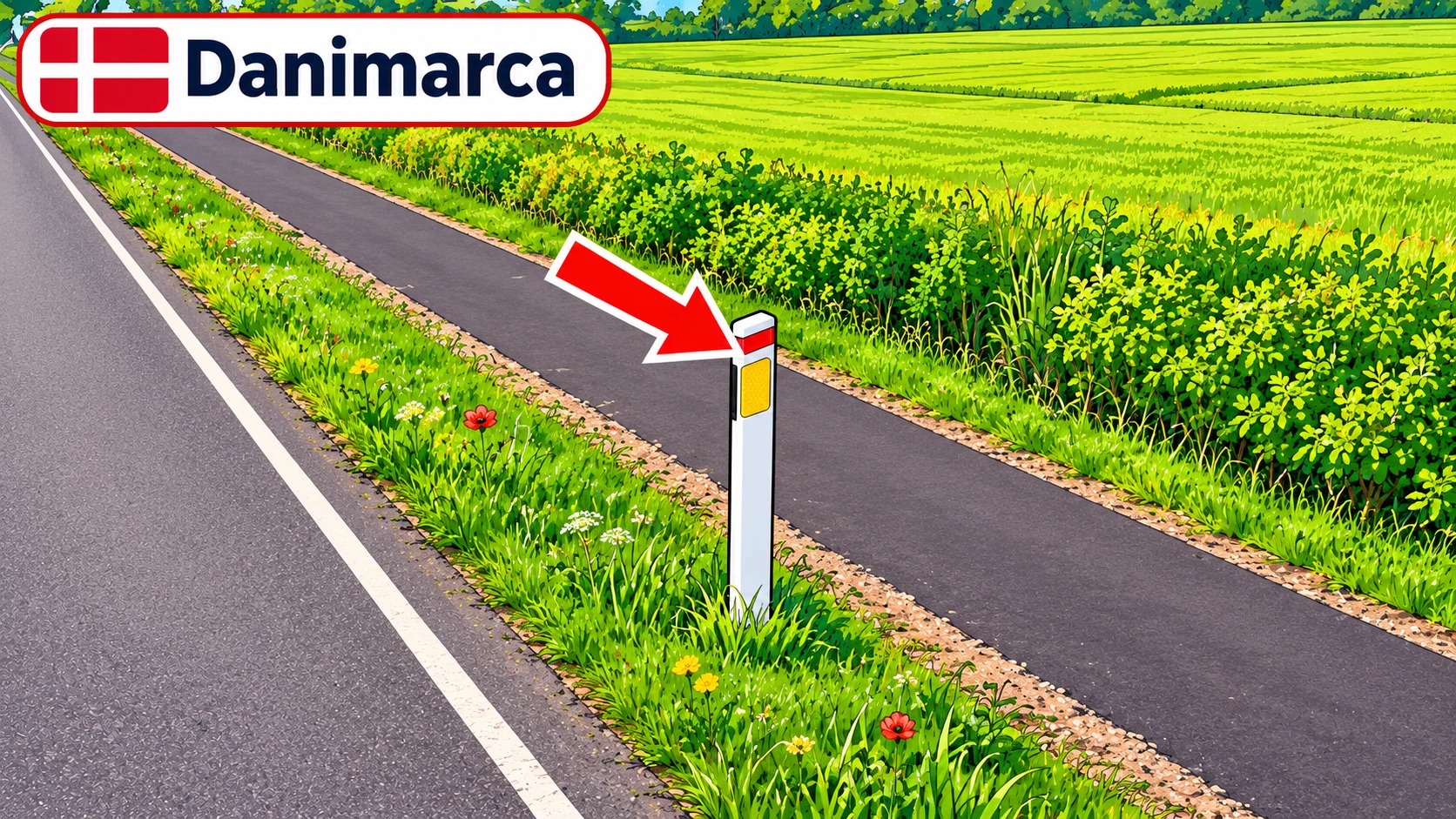
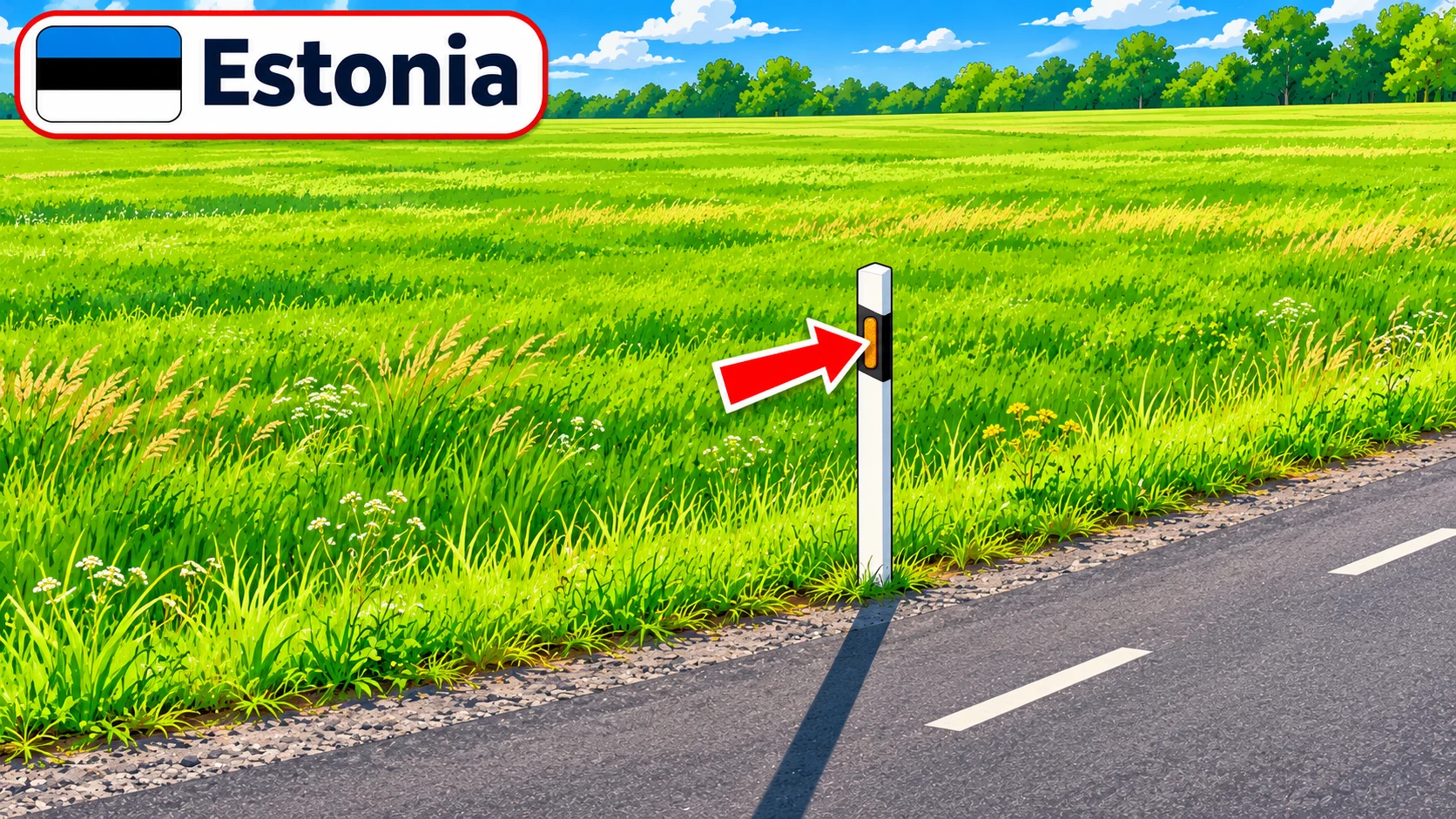
Explore this clueThe white delineator has a small red band near the top, above a relatively wide yellow reflector. The reverse reflector is described as...
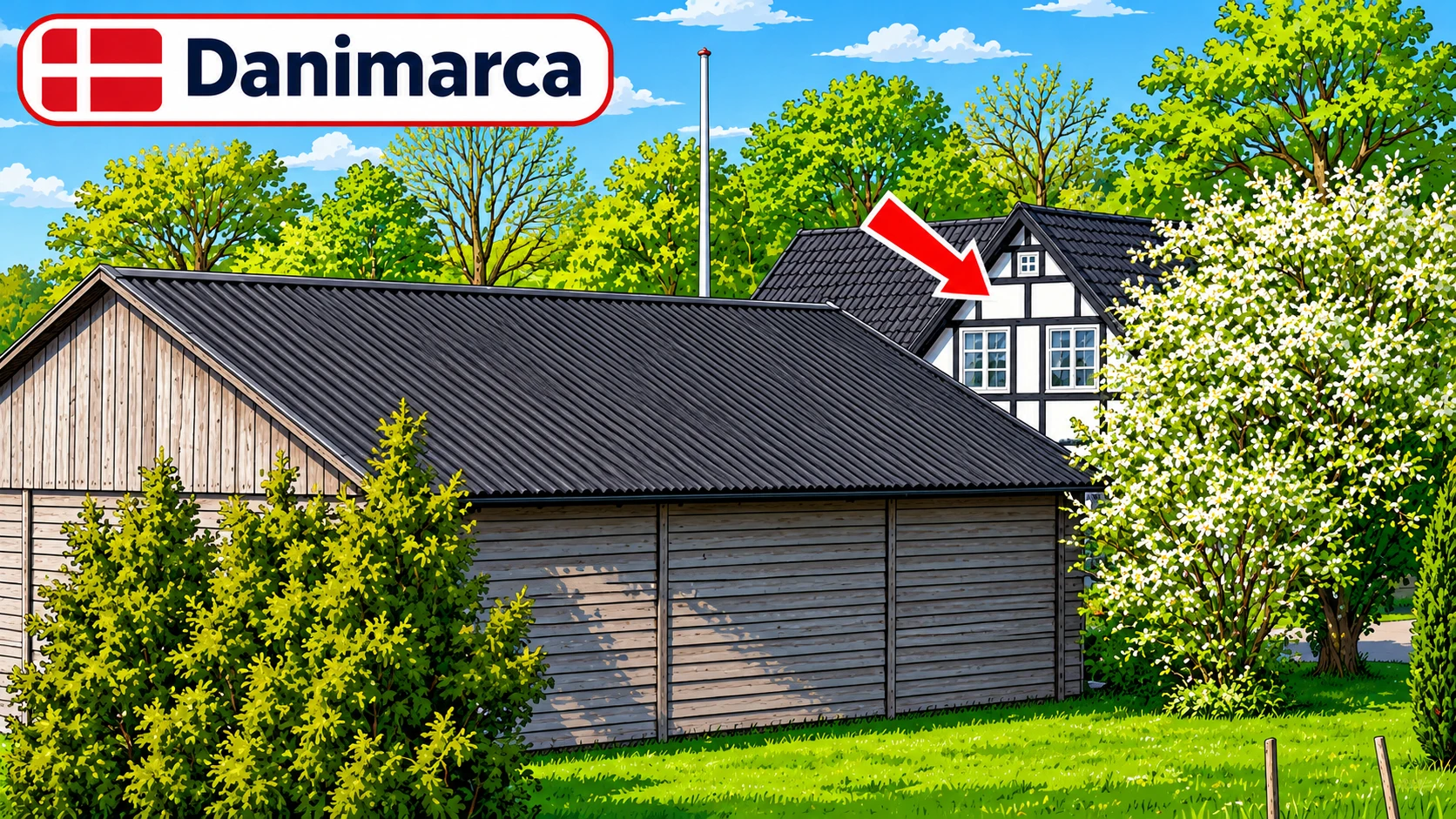
Explore this clueDark exposed framing contrasts with pale walls on the background house. The guide also discusses thatch, tiles and German or British co...
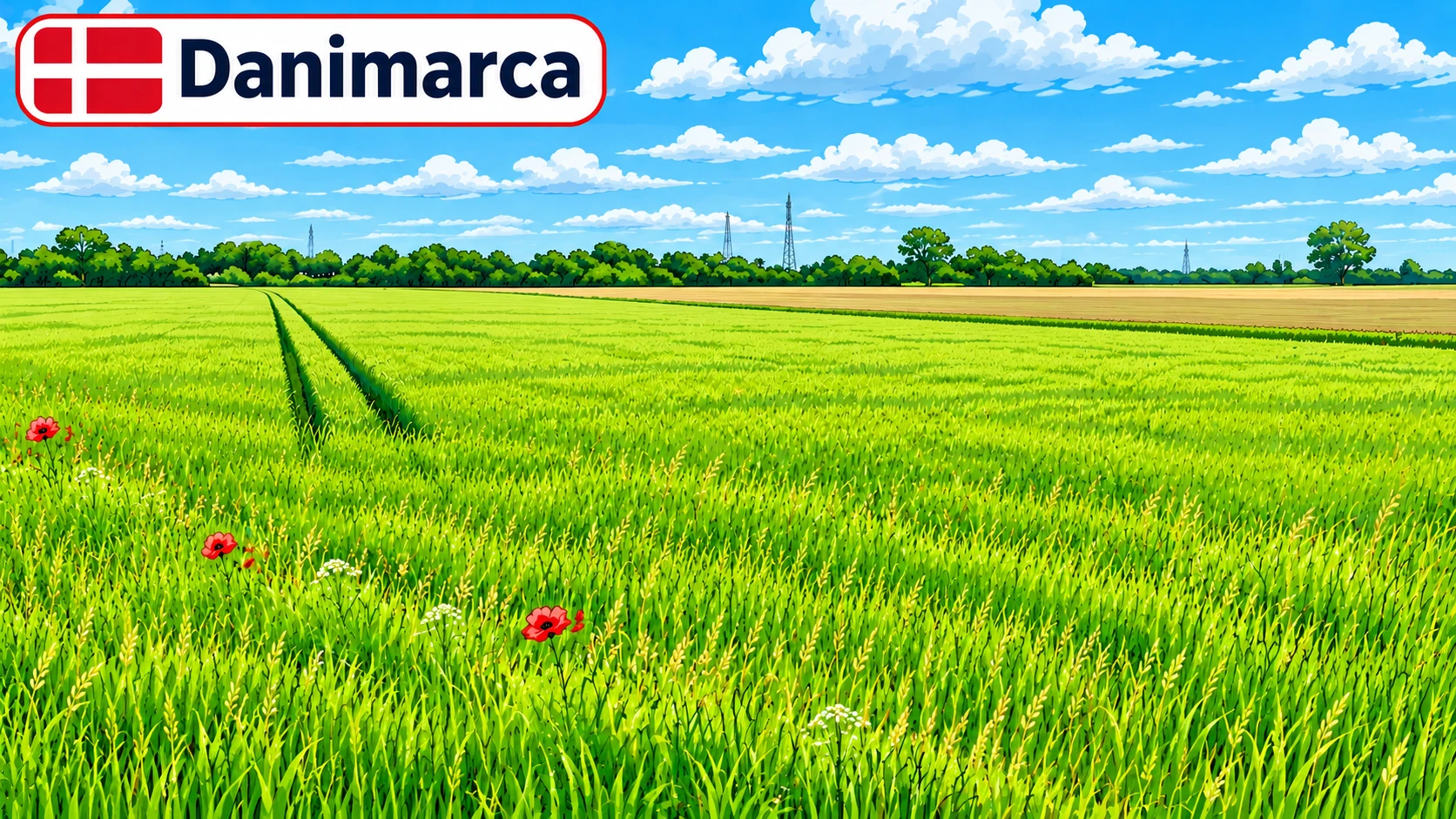
Explore this clueThe rural scene is open and nearly level. Separate cycle paths beside roads are compared with the Netherlands and Belgium.
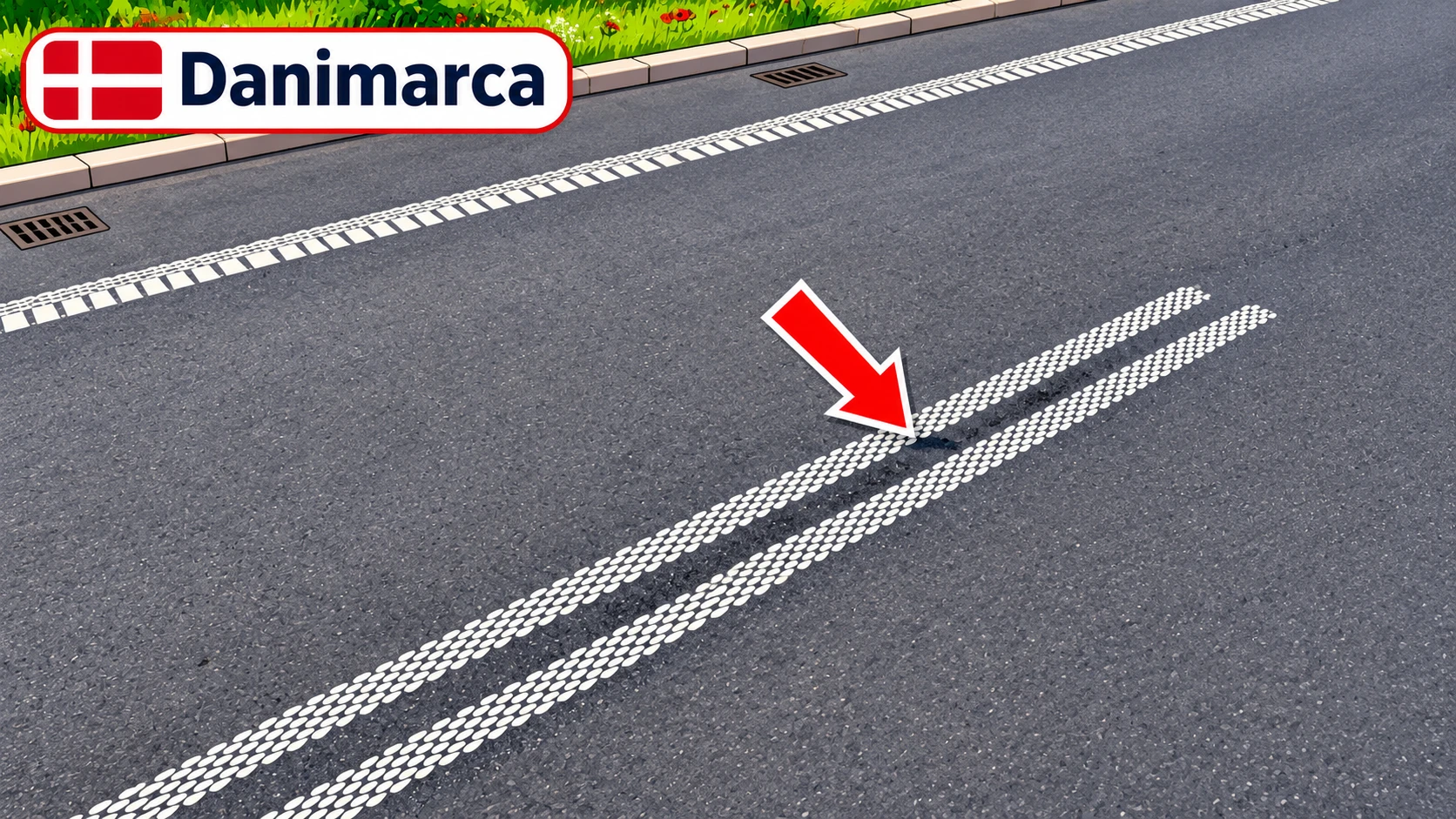
Explore this clueThe enlarged white marking consists of many closely spaced small elements rather than a uniform painted surface.
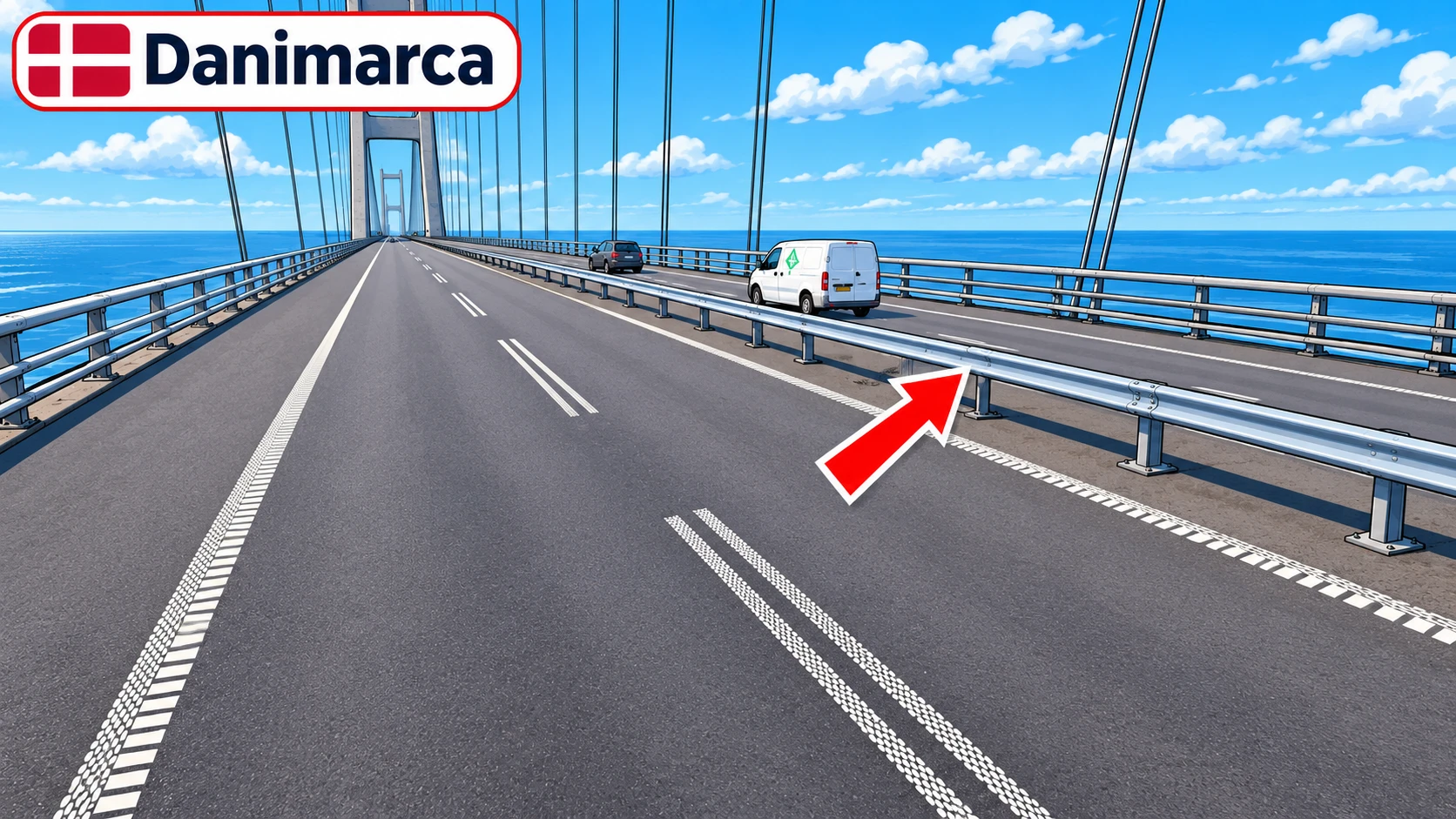
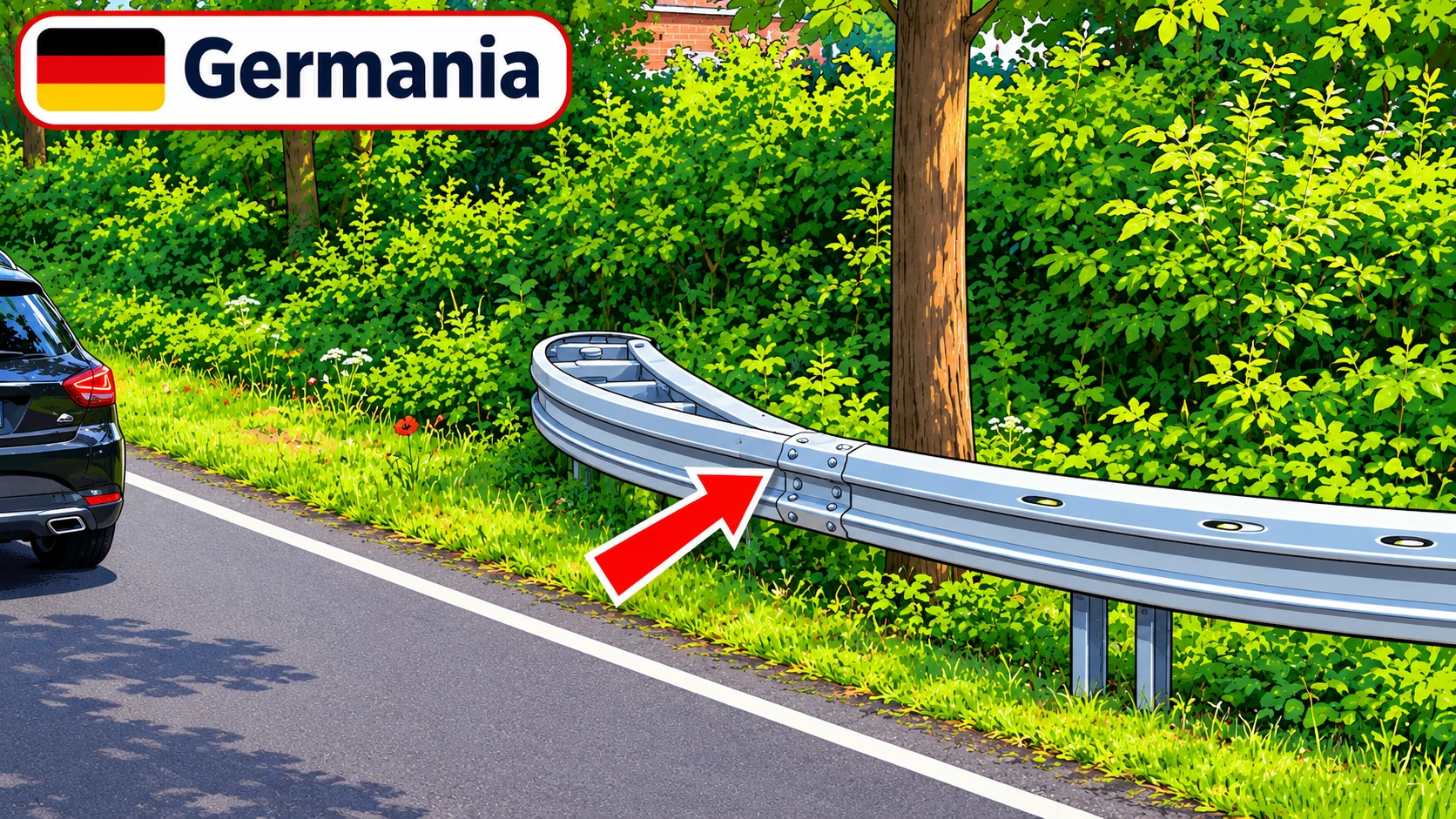
Explore this clueThe Danish section ends with a Type B barrier and no visible reflectors on the illustrated stretch.
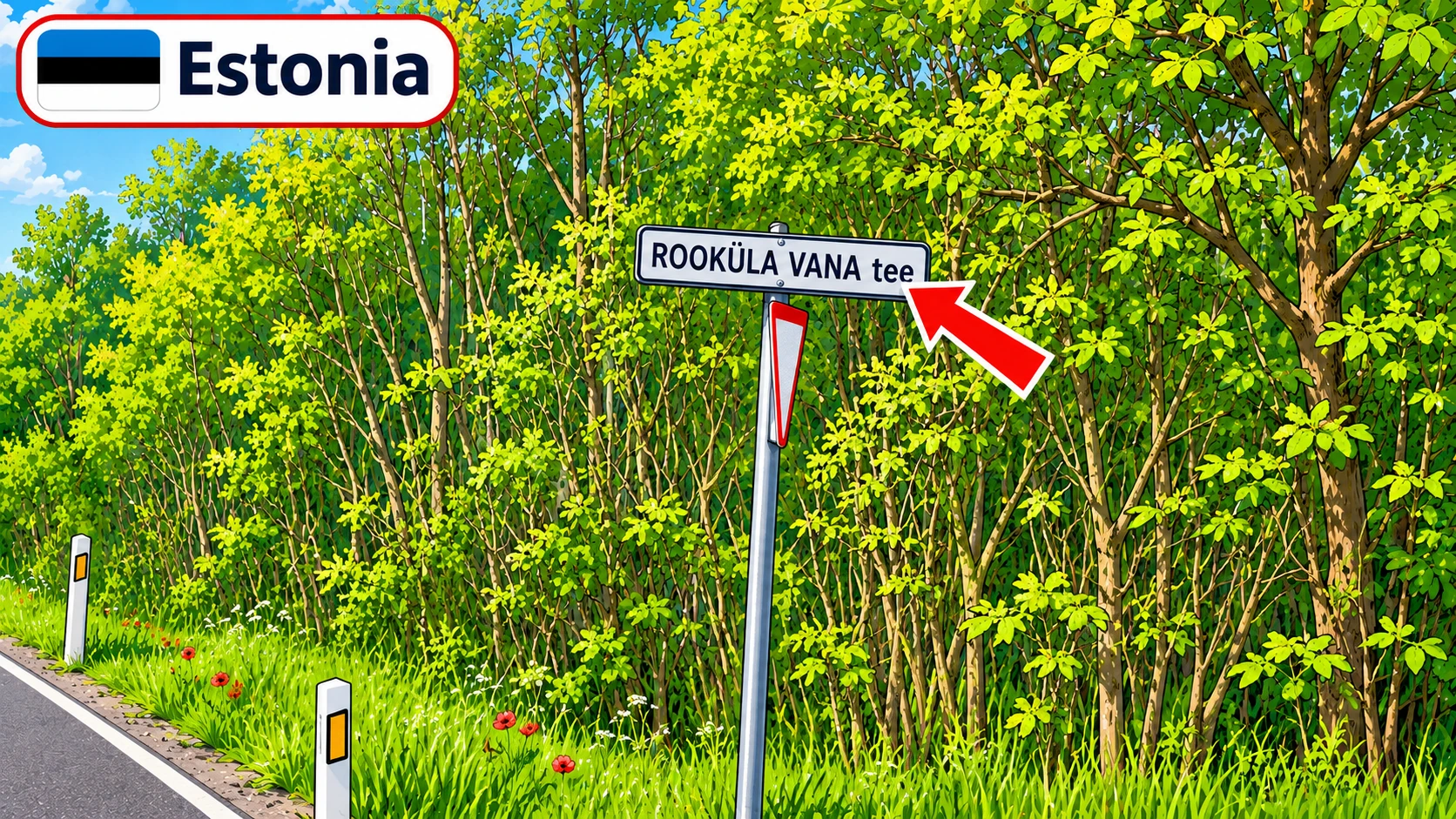
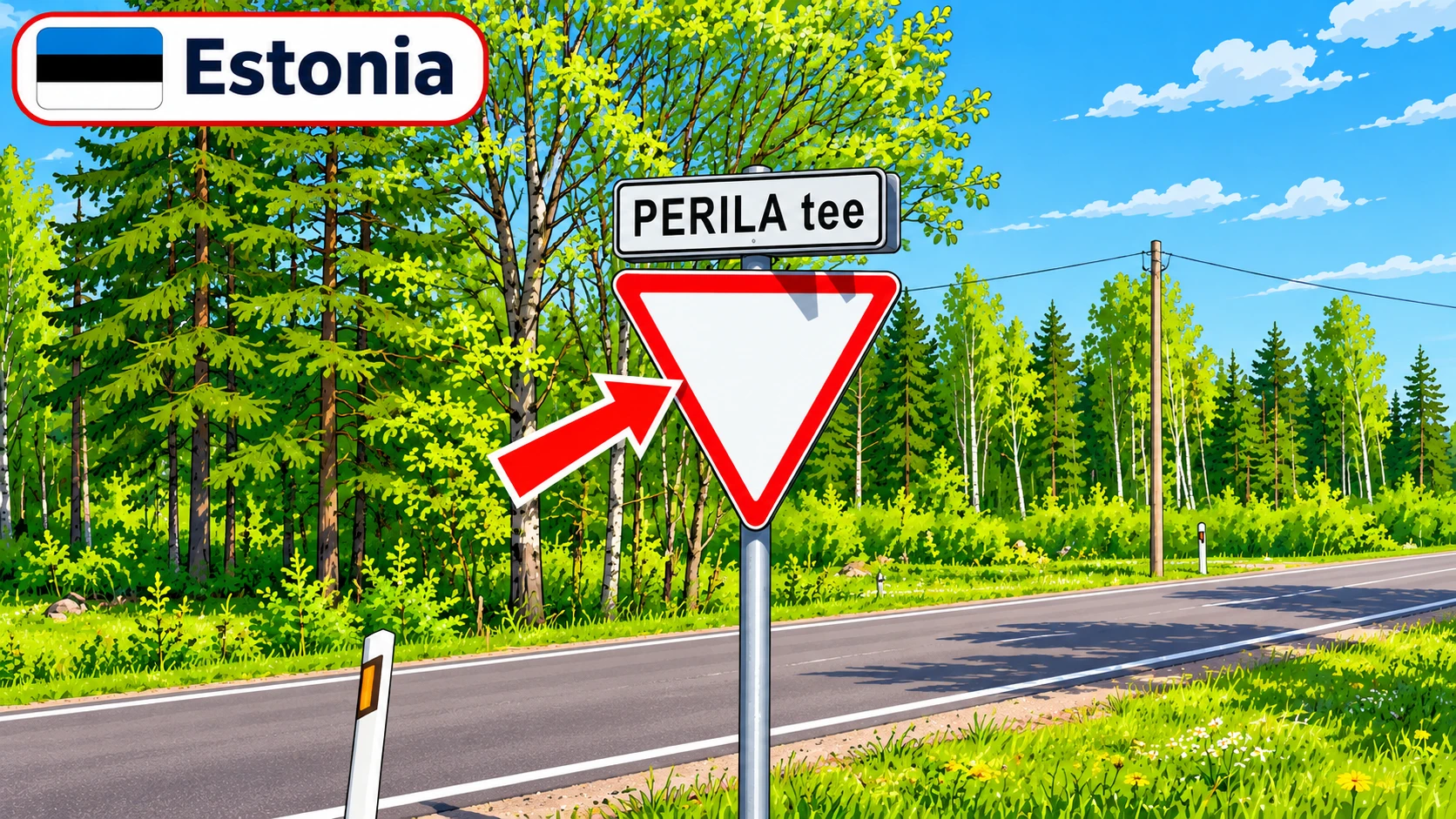
Explore this clueThe sign reads ROOKÜLA VANA tee. Look for tee or the abbreviation tn in Estonian street names.
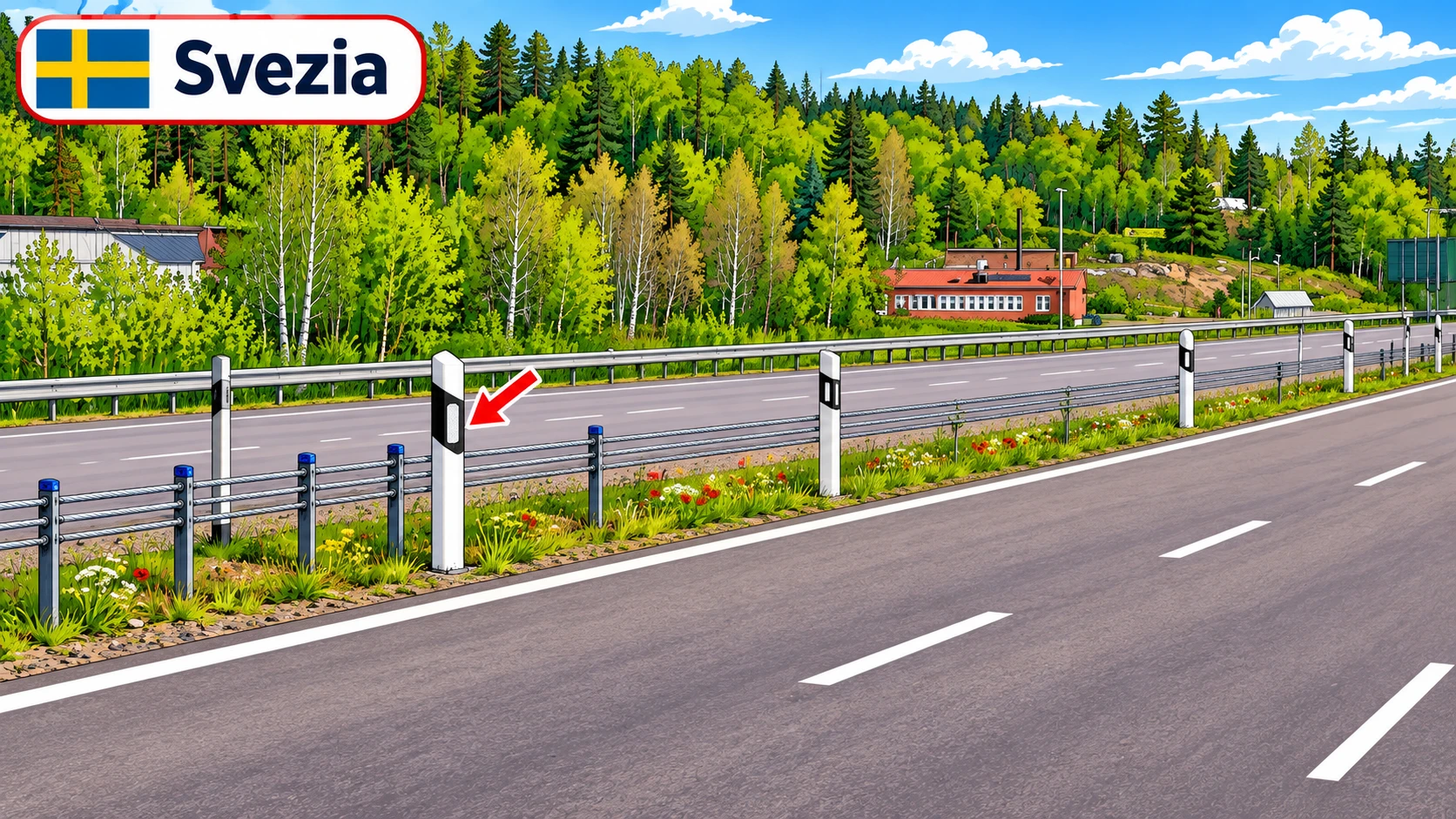
Explore this clueA pale post has a dark upper area and an elongated front reflector; the author mentions two rear elements and compares Sweden.
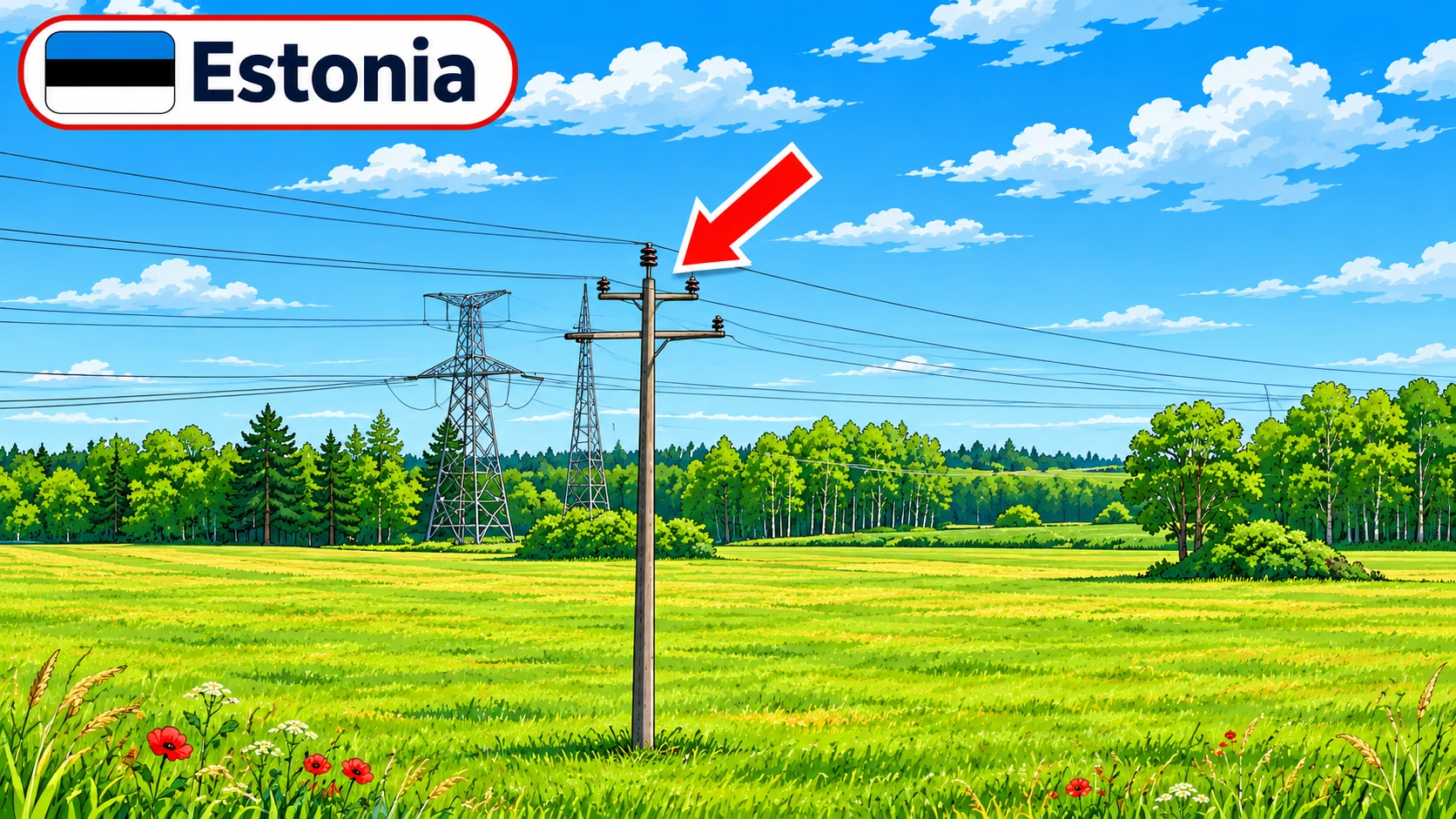
Explore this clueThis Estonian example combines broken edge lines with poles whose tops have three arms and upper insulators.
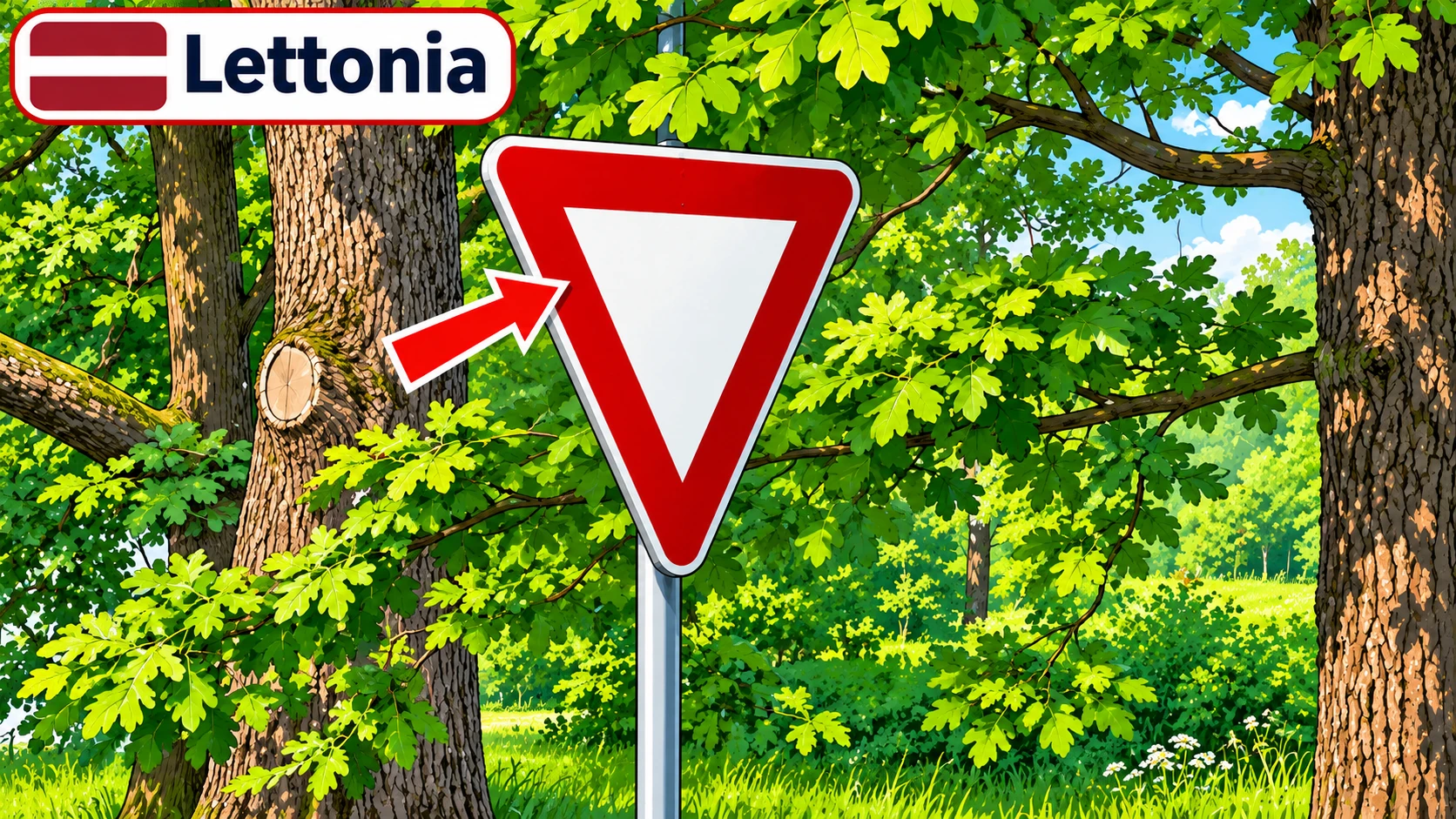
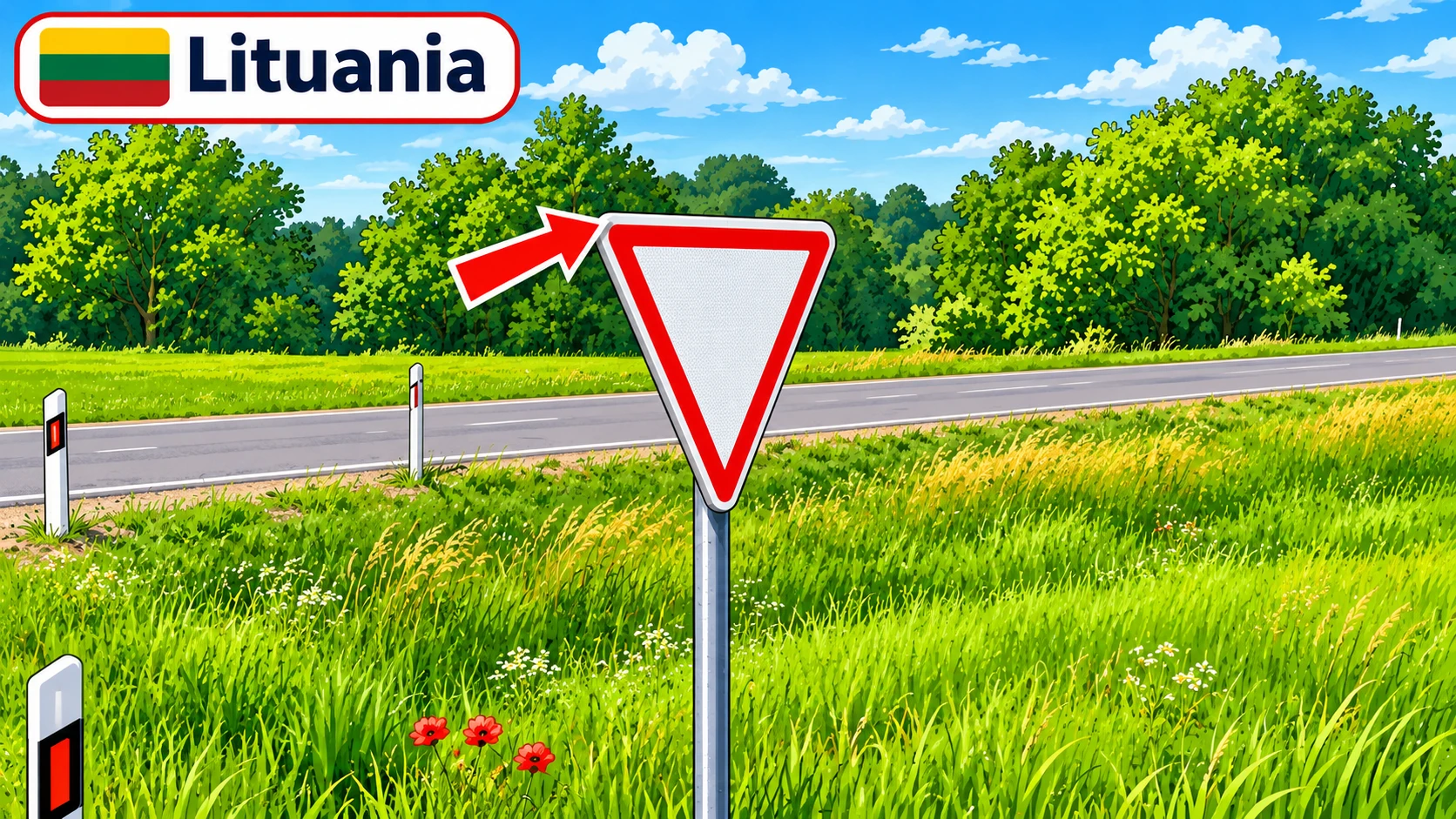
Explore this clueCompare the thin red border and large white centre with the Latvian and Lithuanian examples.
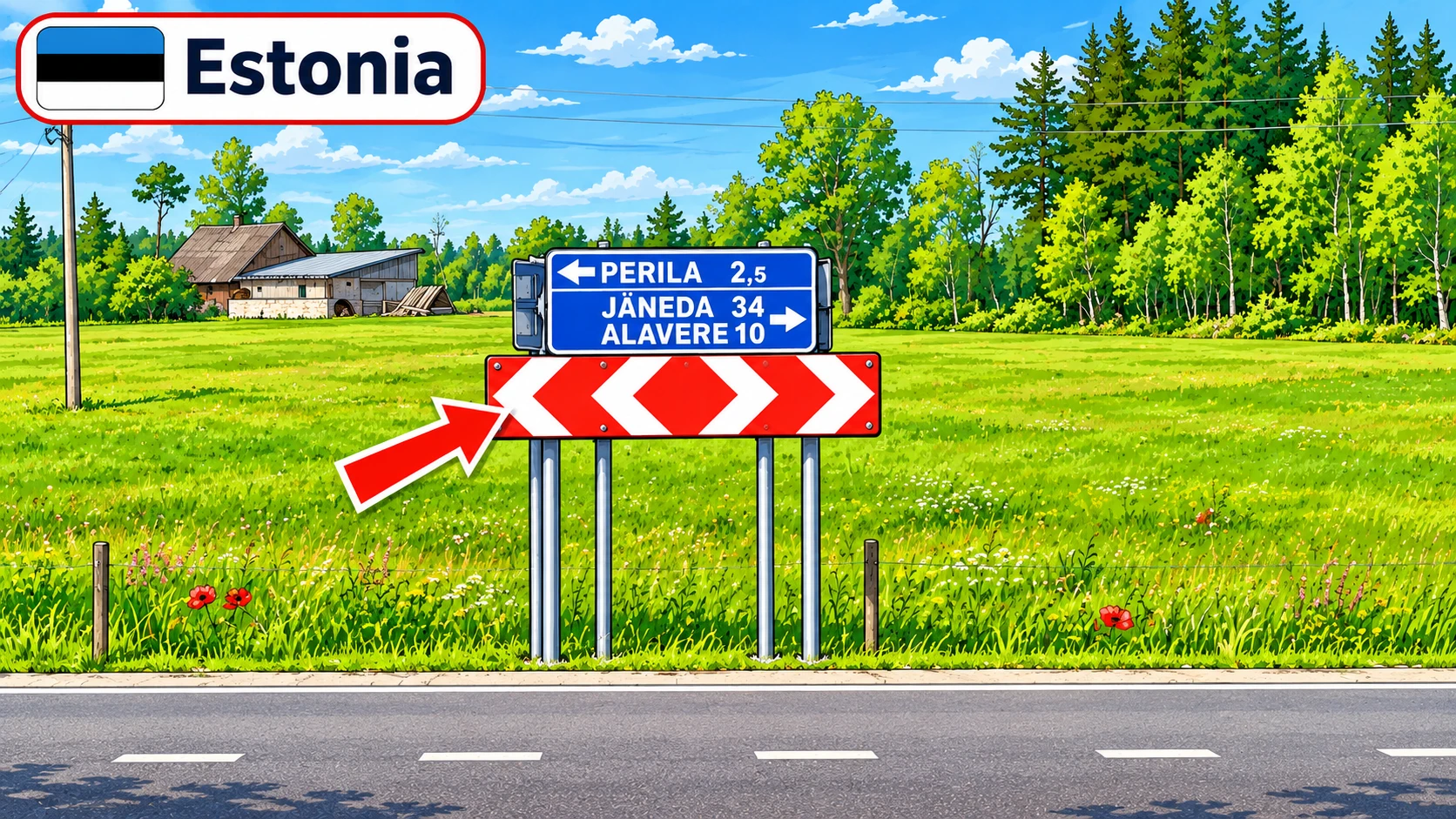
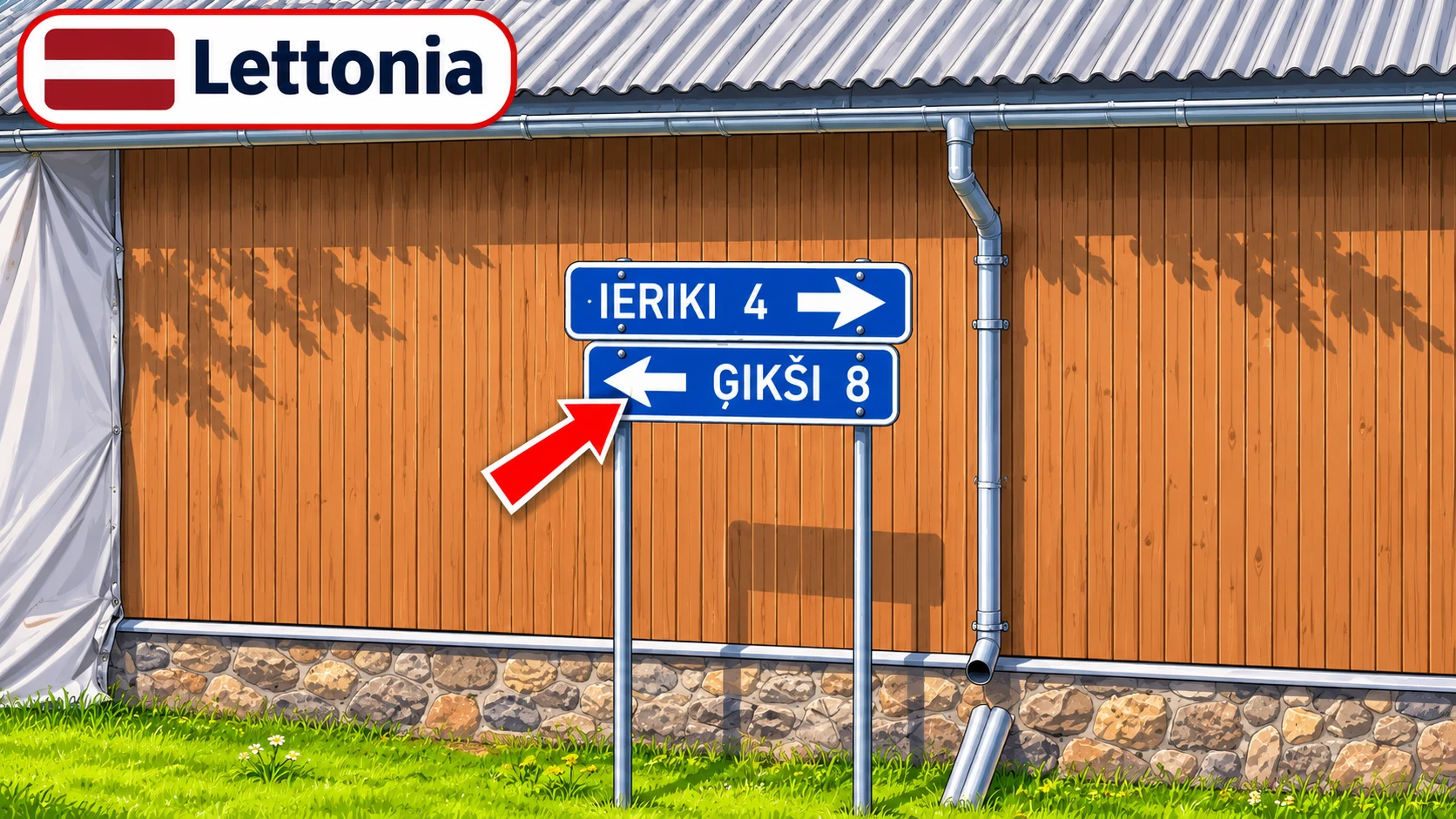
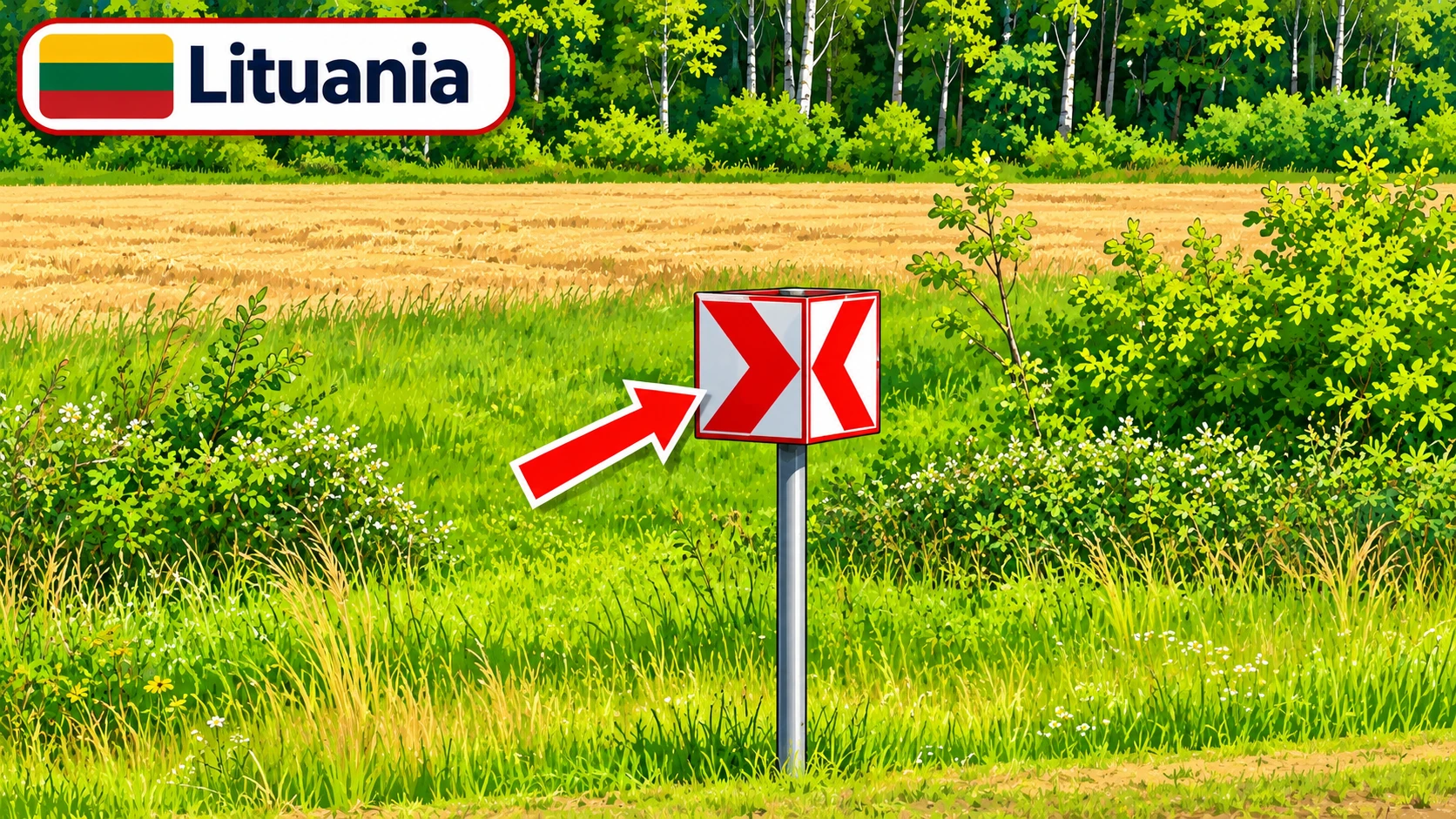
Explore this clueThe junction panel has white arrows on red, contrasted with red arrows on white in Latvia and Lithuania.
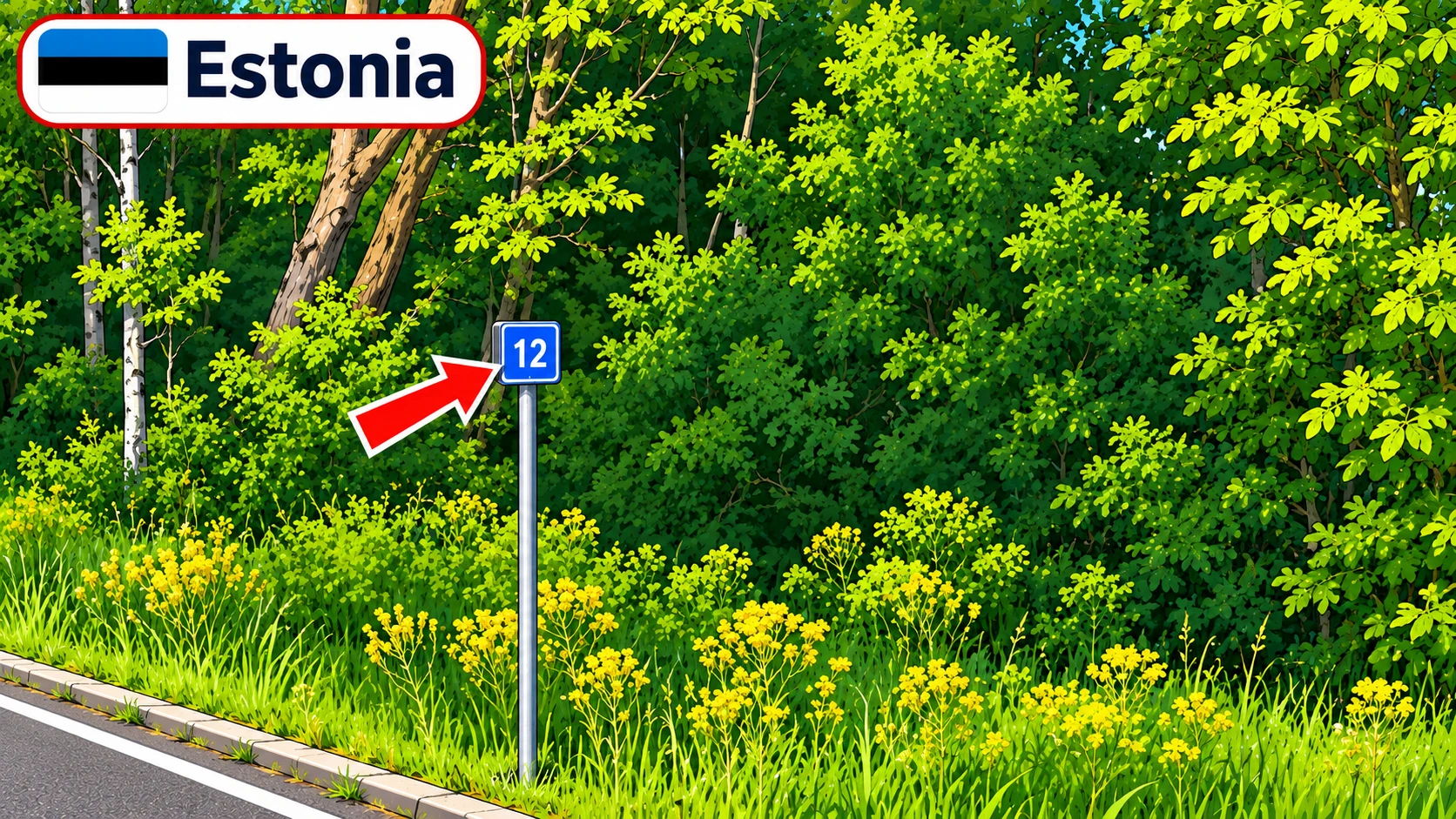
Explore this clueThe face of the small blue marker is perpendicular to the road's direction, so an approaching driver sees it head-on.
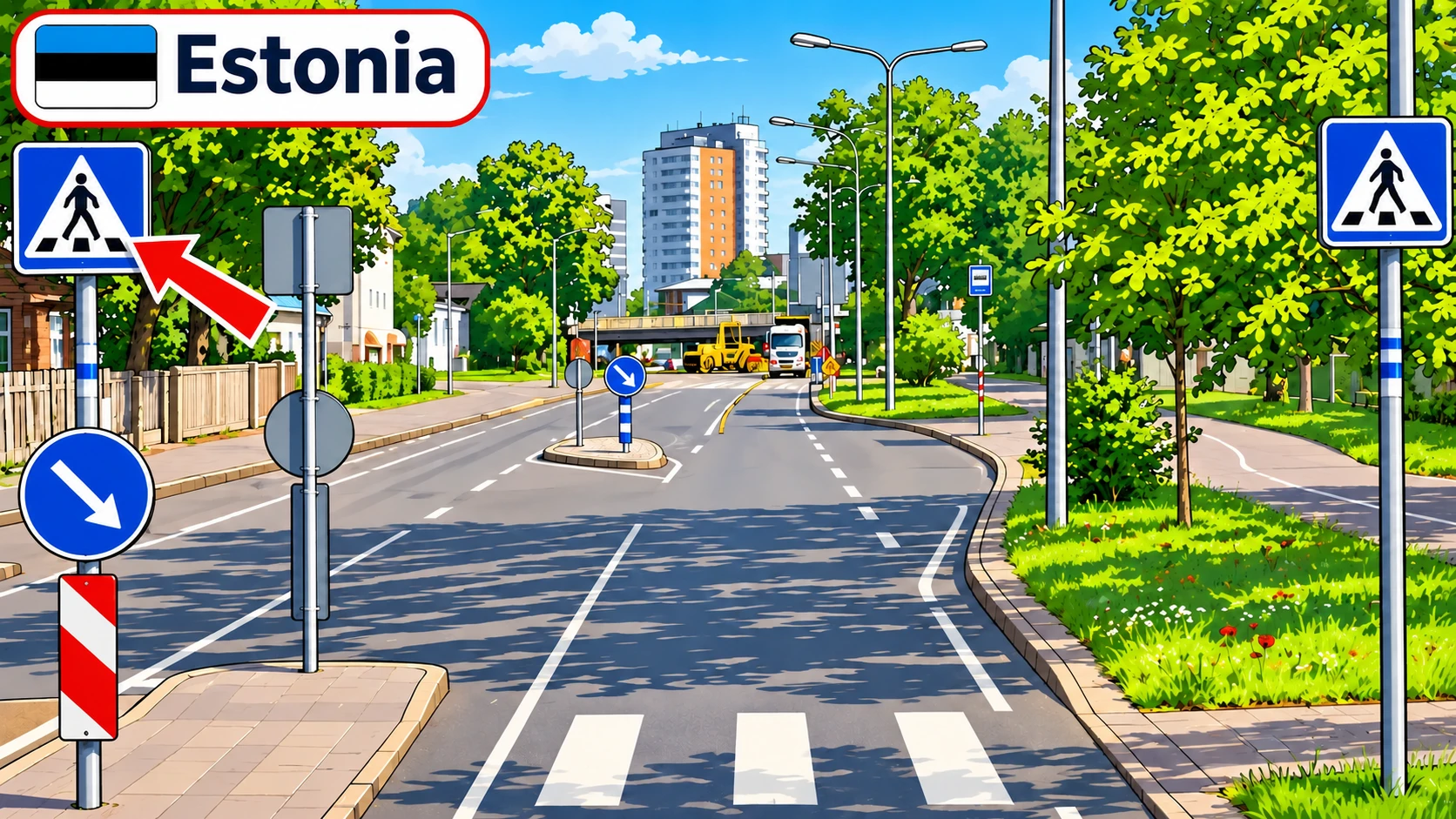
Explore this clueThe guide combines three stripes in the pedestrian pictogram with blue and white details on the supports.
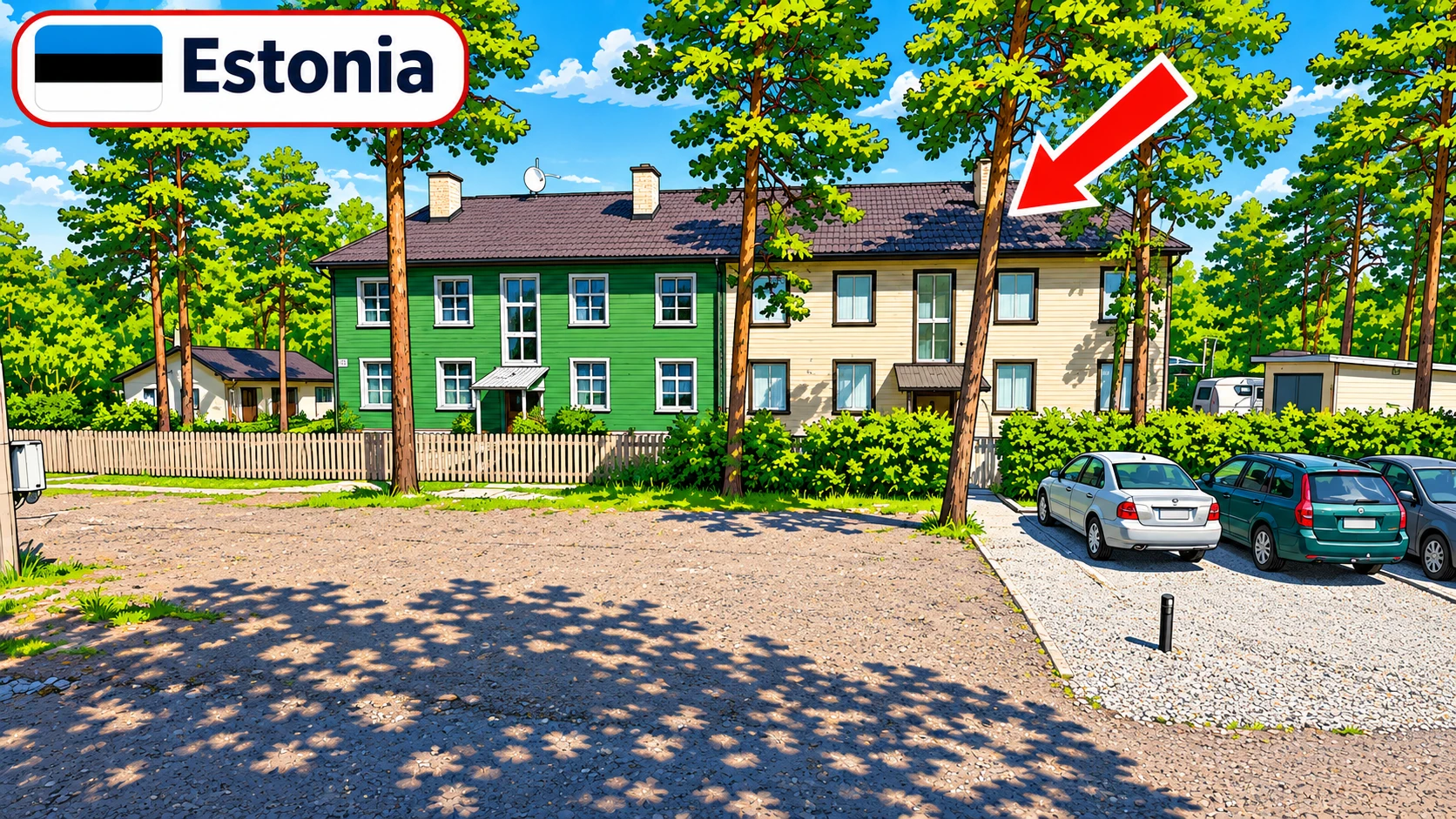
Explore this clueThe buildings have plain pale façades and dark roofs. The triangular gable can be a contrasting colour.
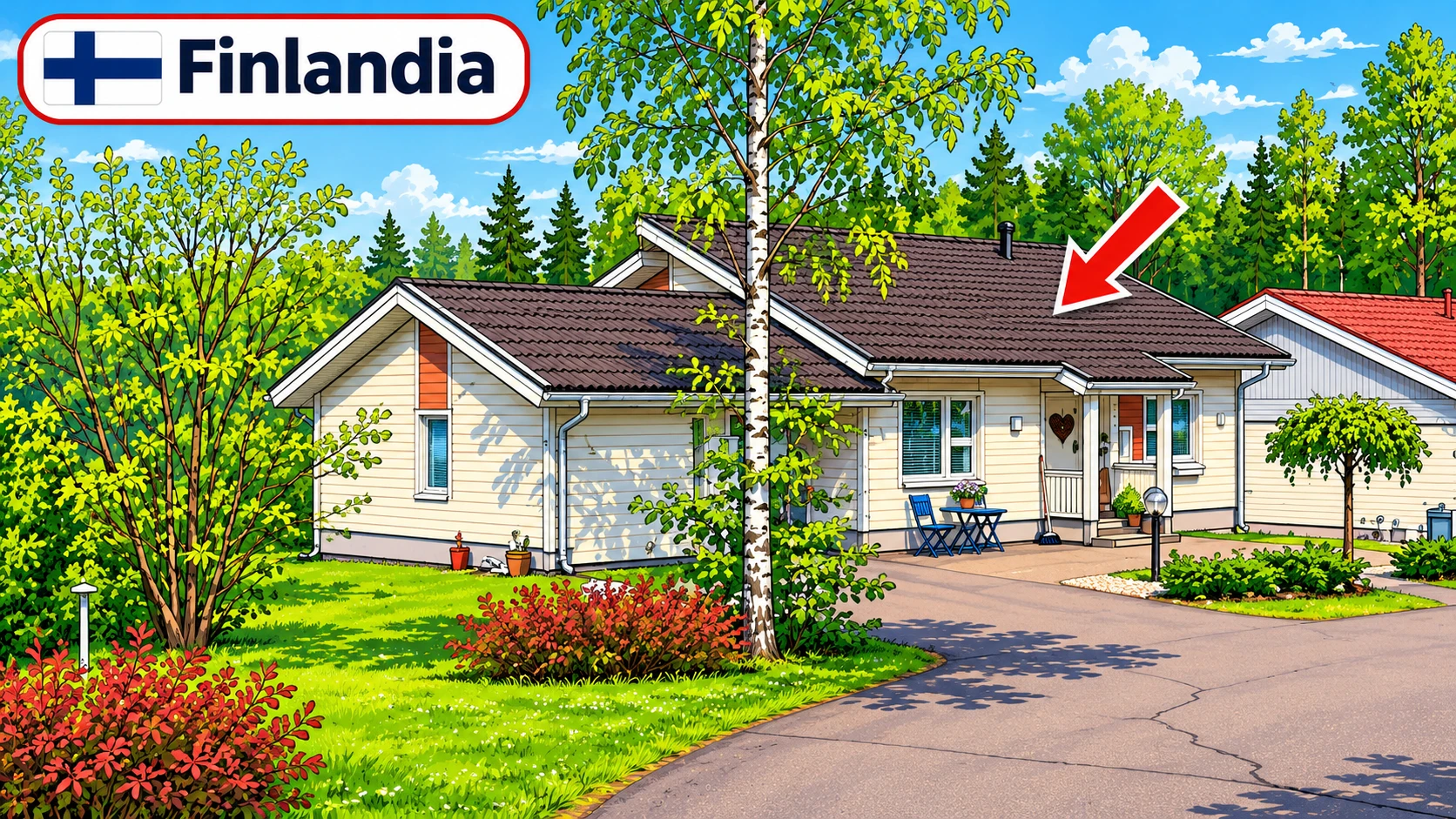
Explore this clueLow houses with light façades and red or dark pitched roofs are compared with Estonia and the red houses of Sweden and Norway.
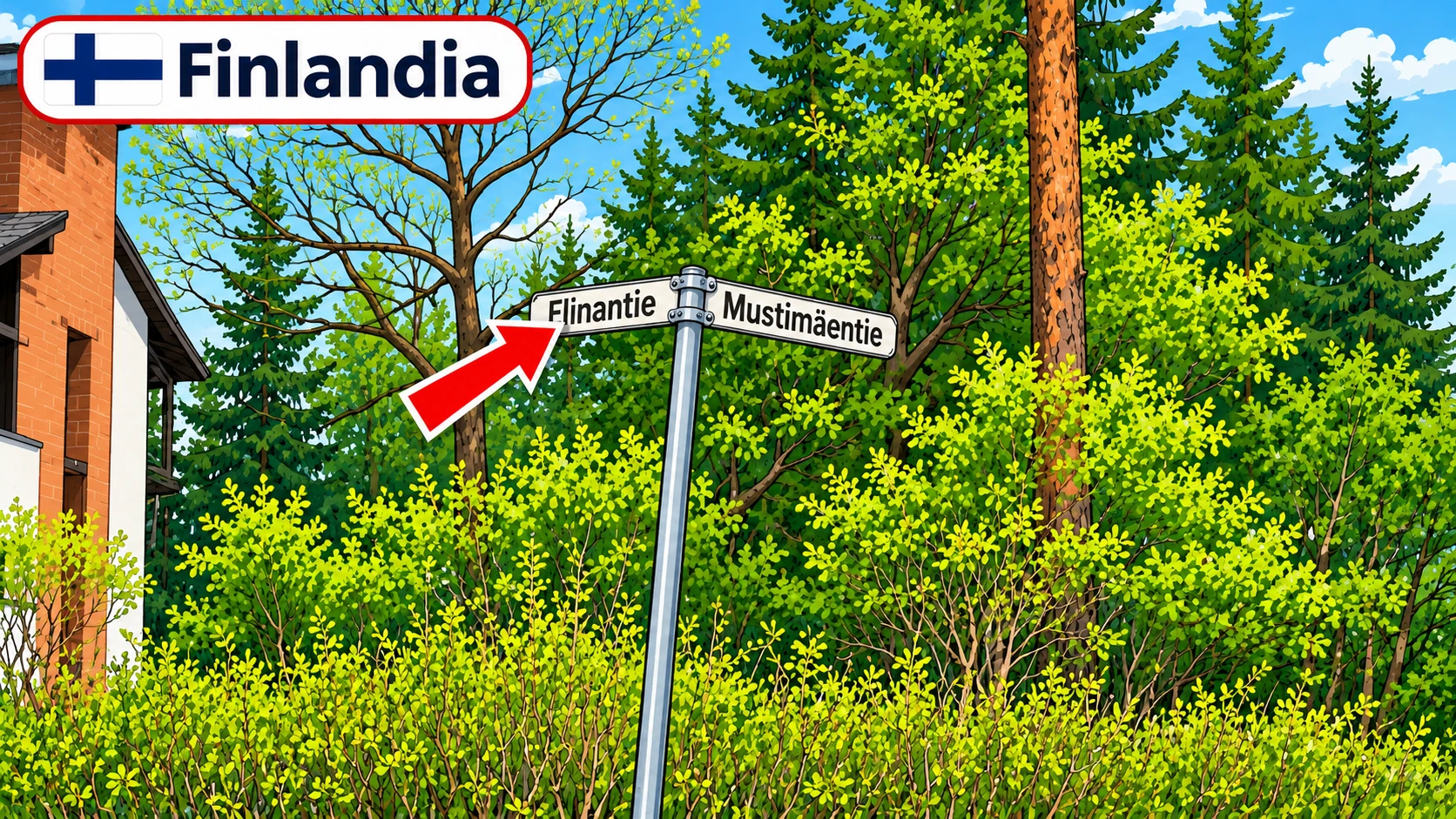
Explore this clueElinantie and Mustimäentie illustrate tie as a Finnish street-name ending.
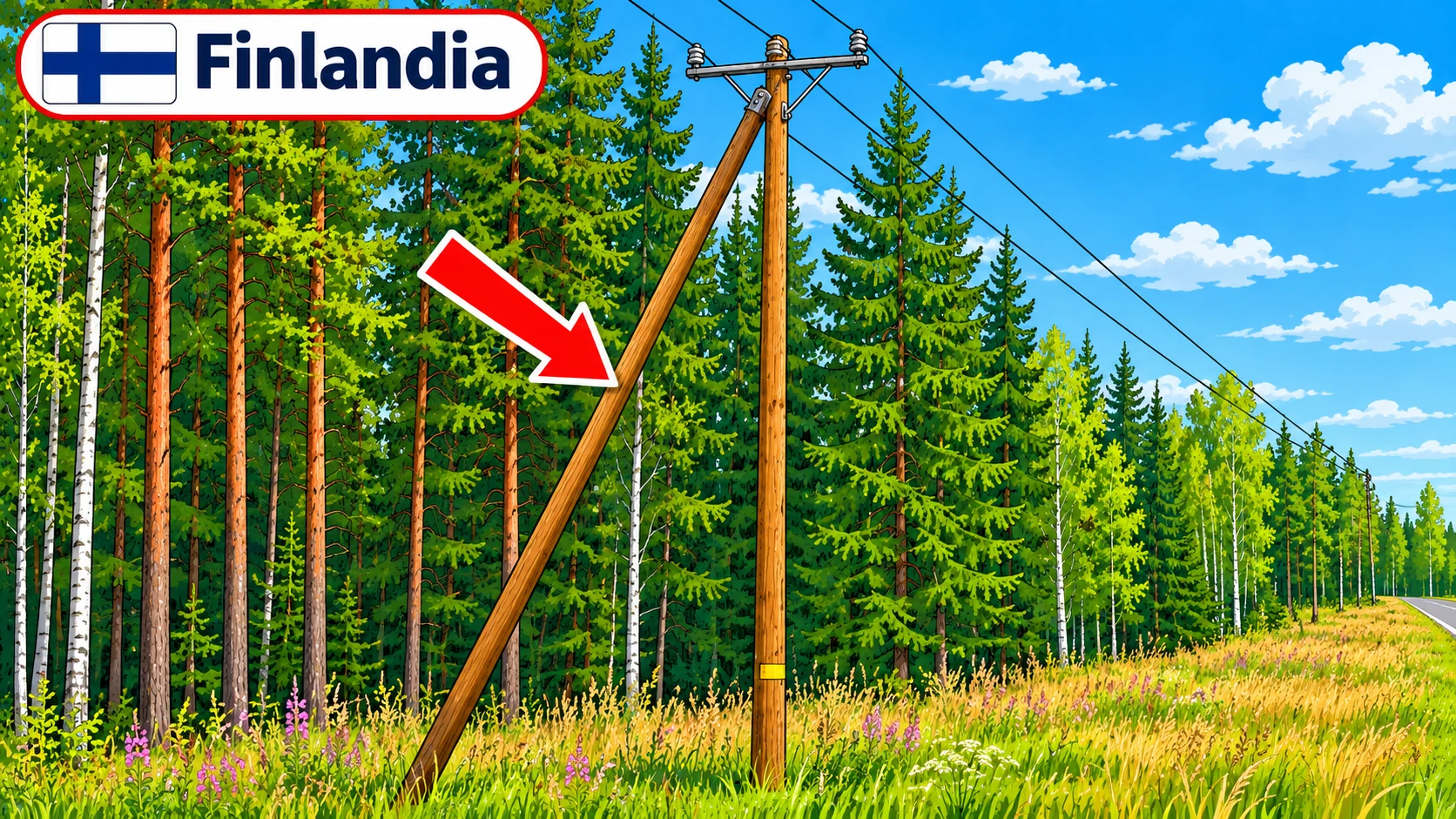
Explore this clueThe scene combines pines with reddish bark and wooden utility poles supported by diagonal braces.
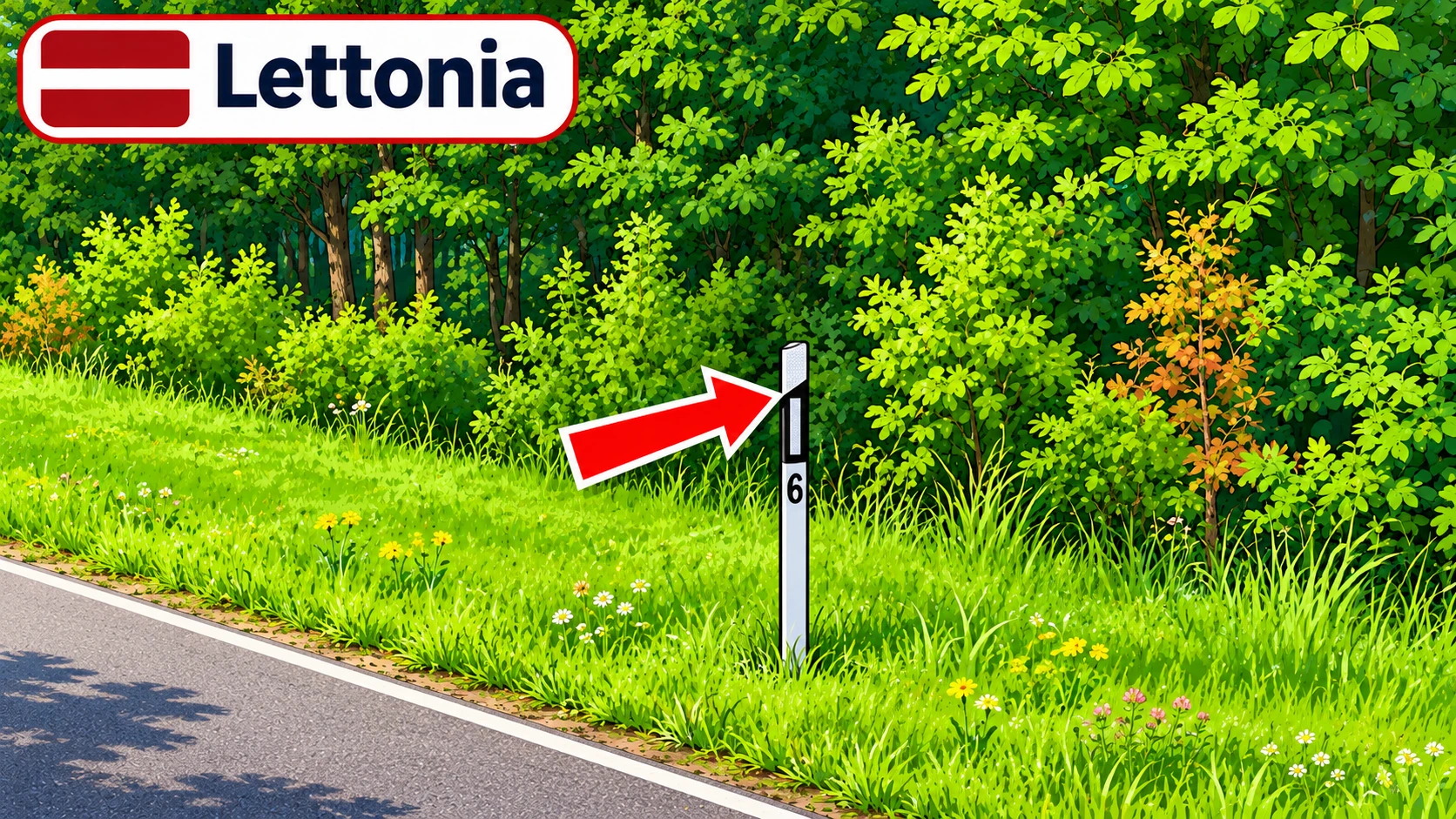
Explore this clueLook for speed-limit signs with yellow interiors and red borders, and a thin white post with a long reflector, compared with Latvia.
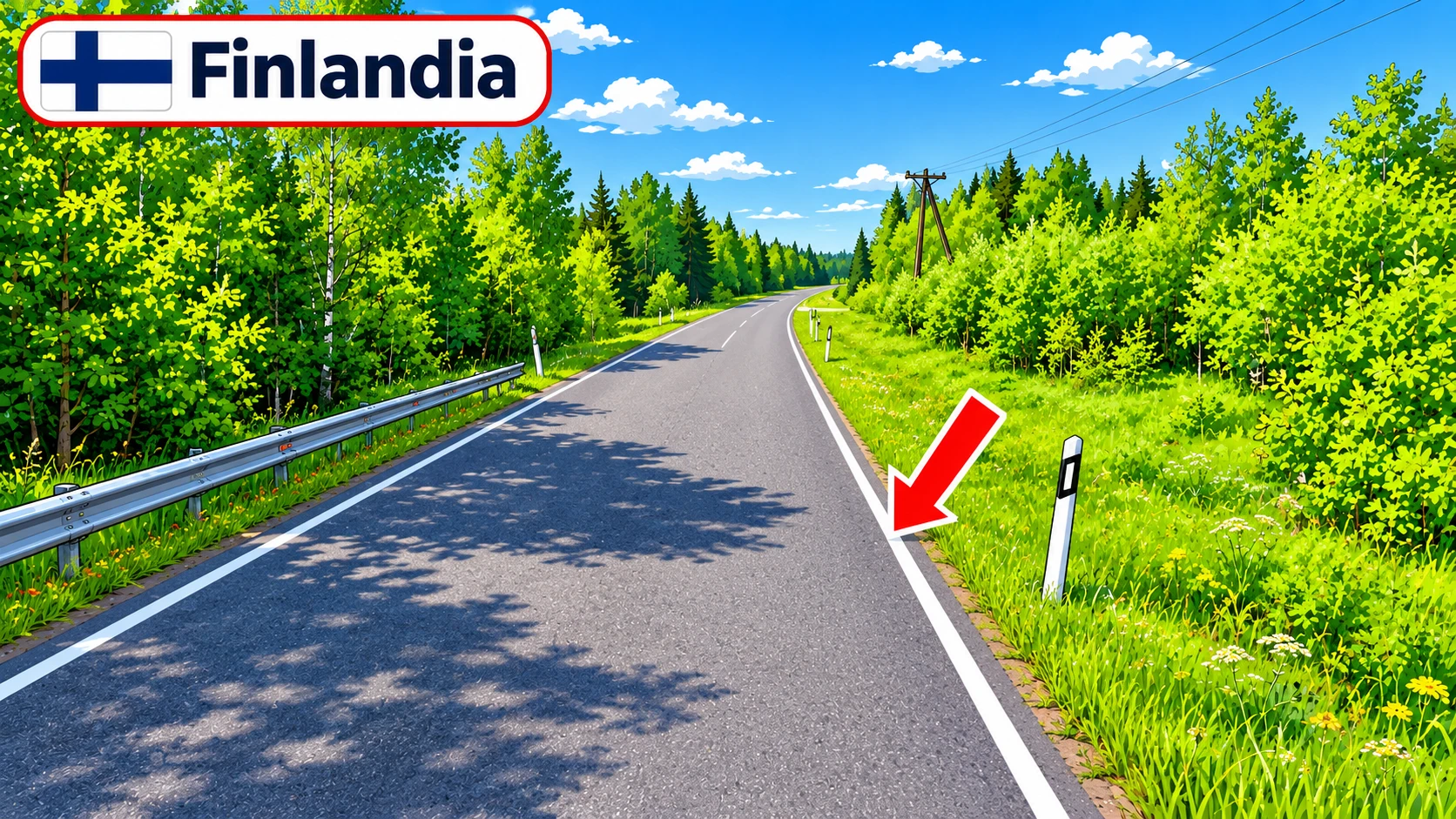
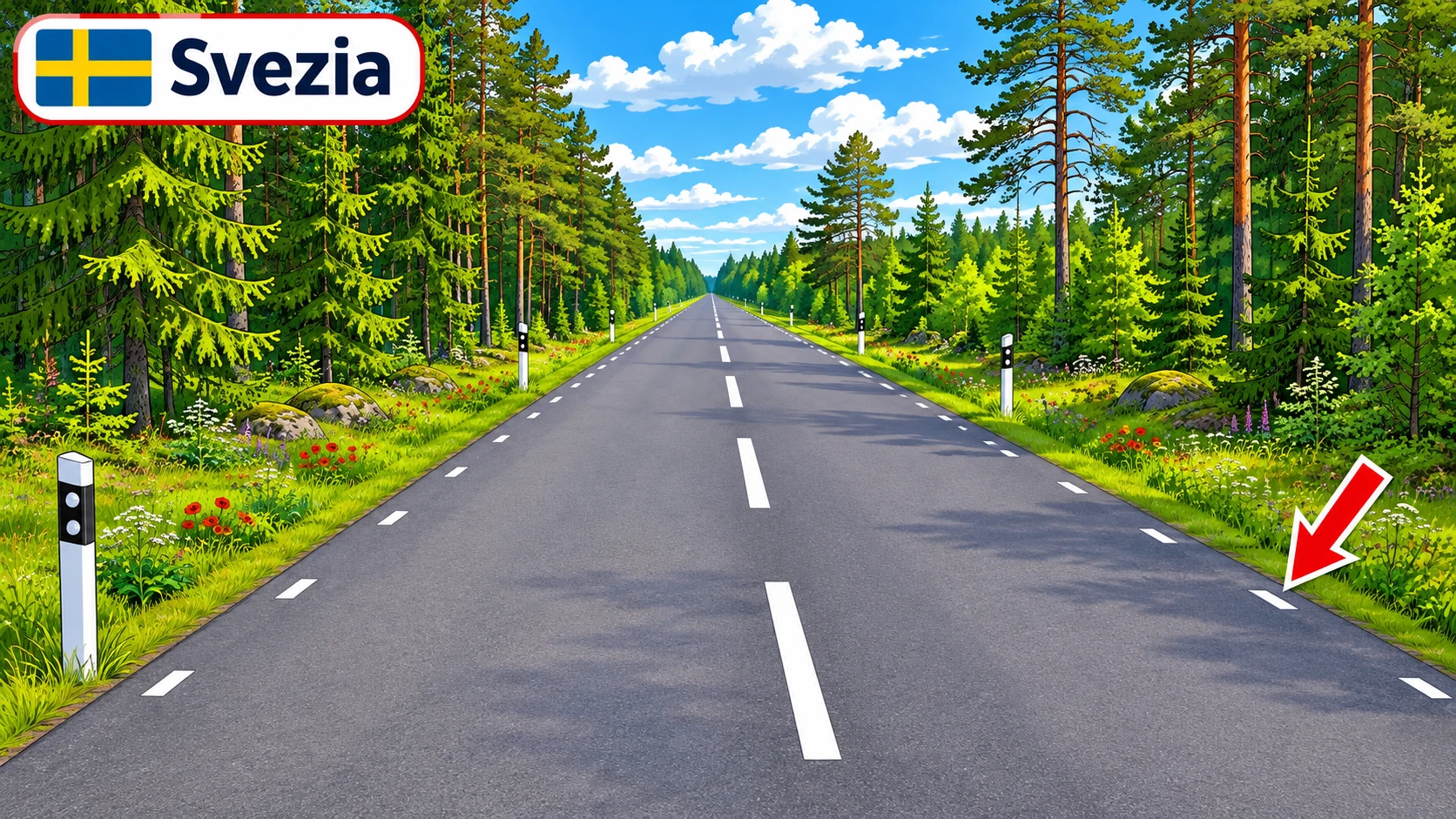
Explore this clueThe guide contrasts Finnish solid edge lines with short Swedish dashes and longer Norwegian dashes in the configurations discussed.
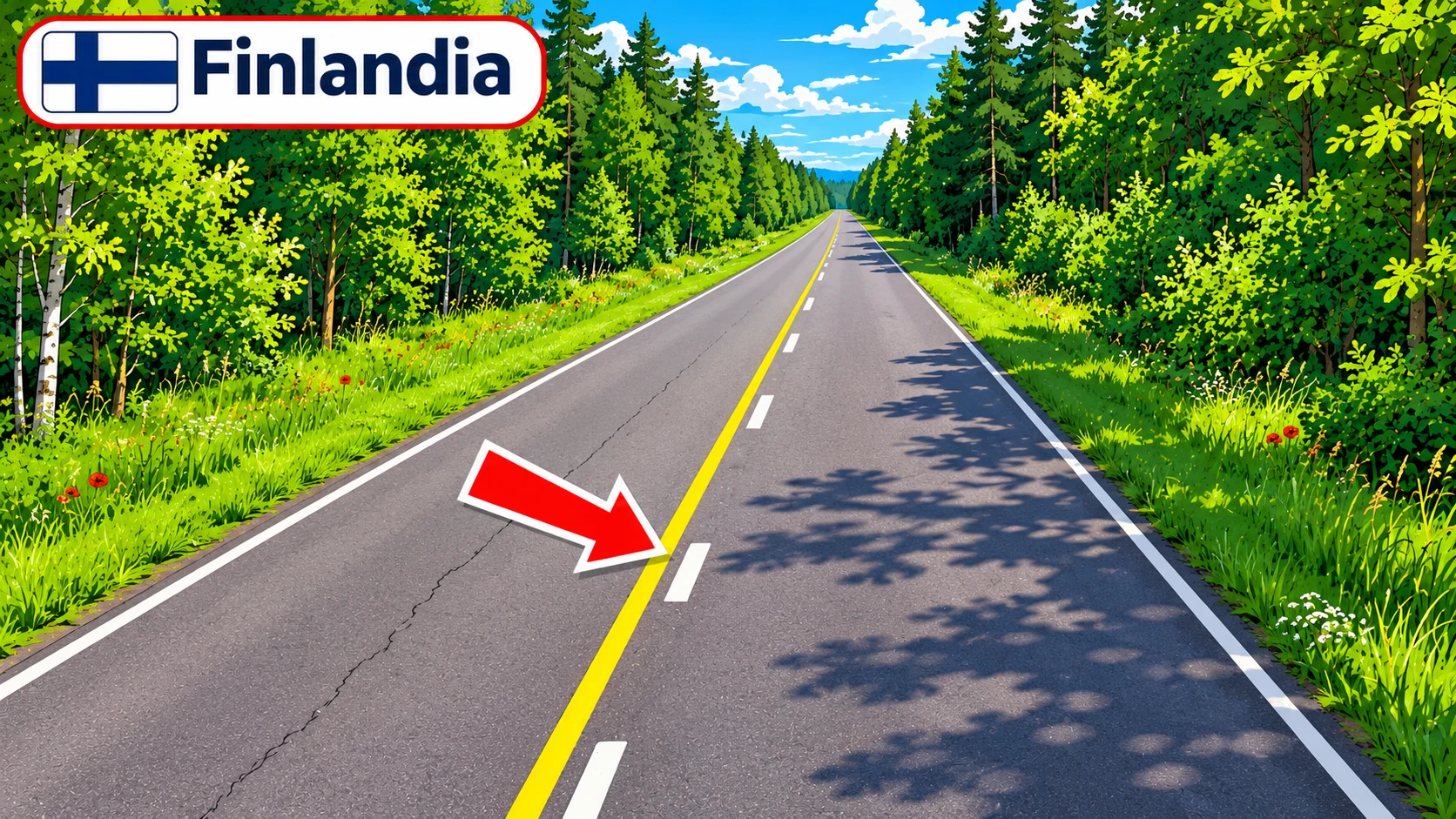
Explore this clueThe video shows a solid yellow line with adjacent white dashes as a useful European-context configuration.
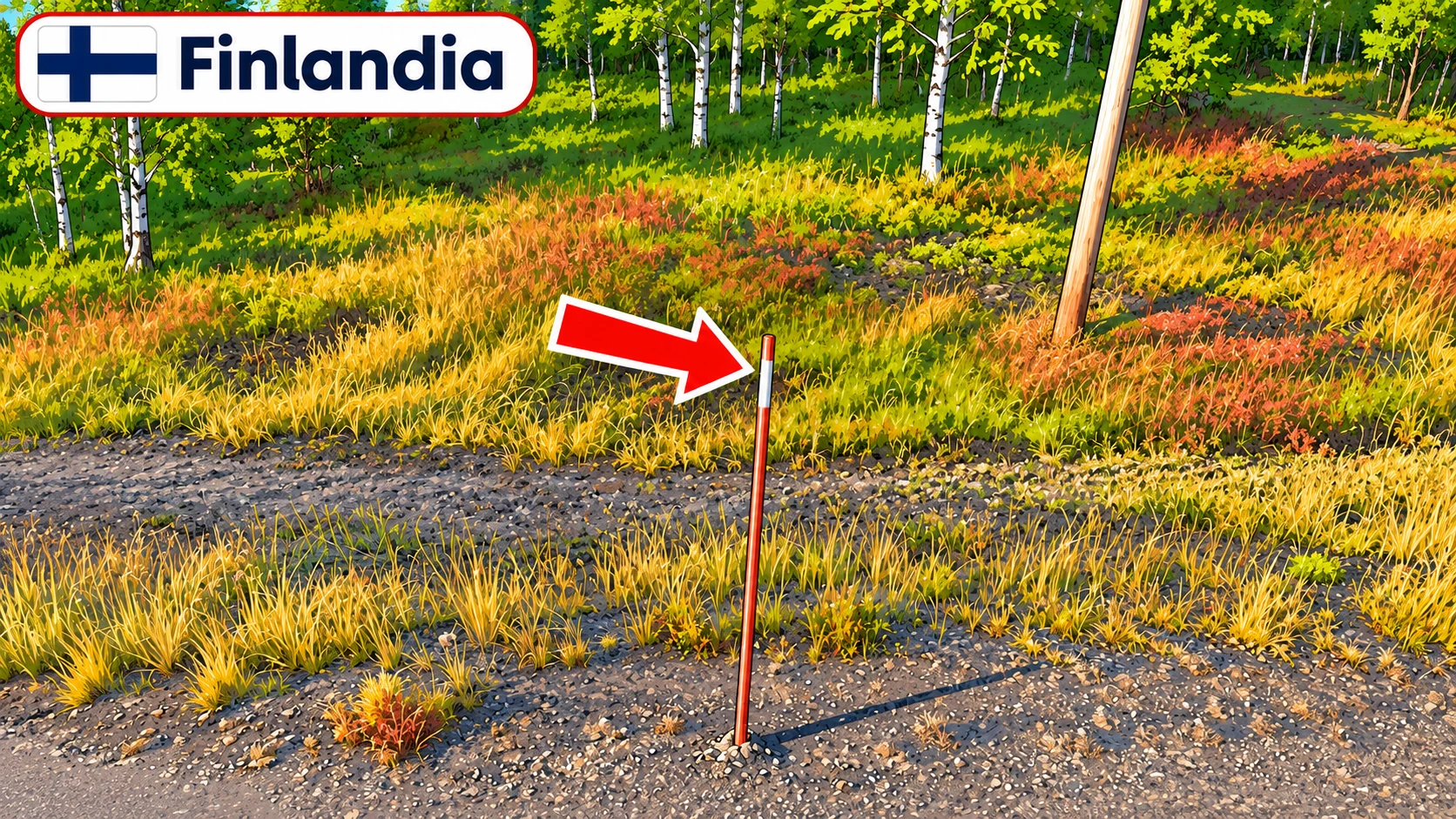
Explore this clueOlder imagery shows broad blur and camera halo; a thin snow pole has a small pale section near its top.
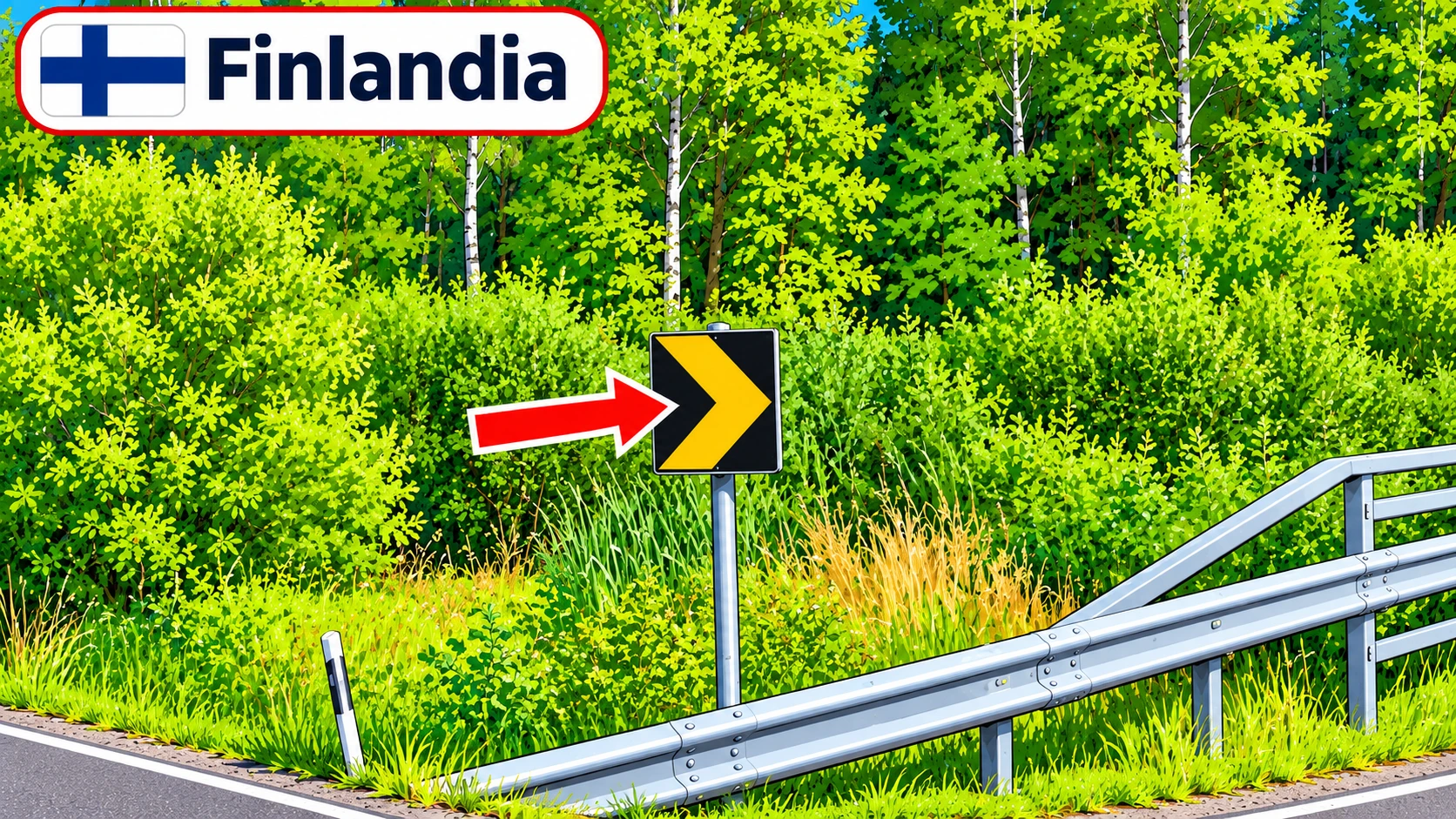
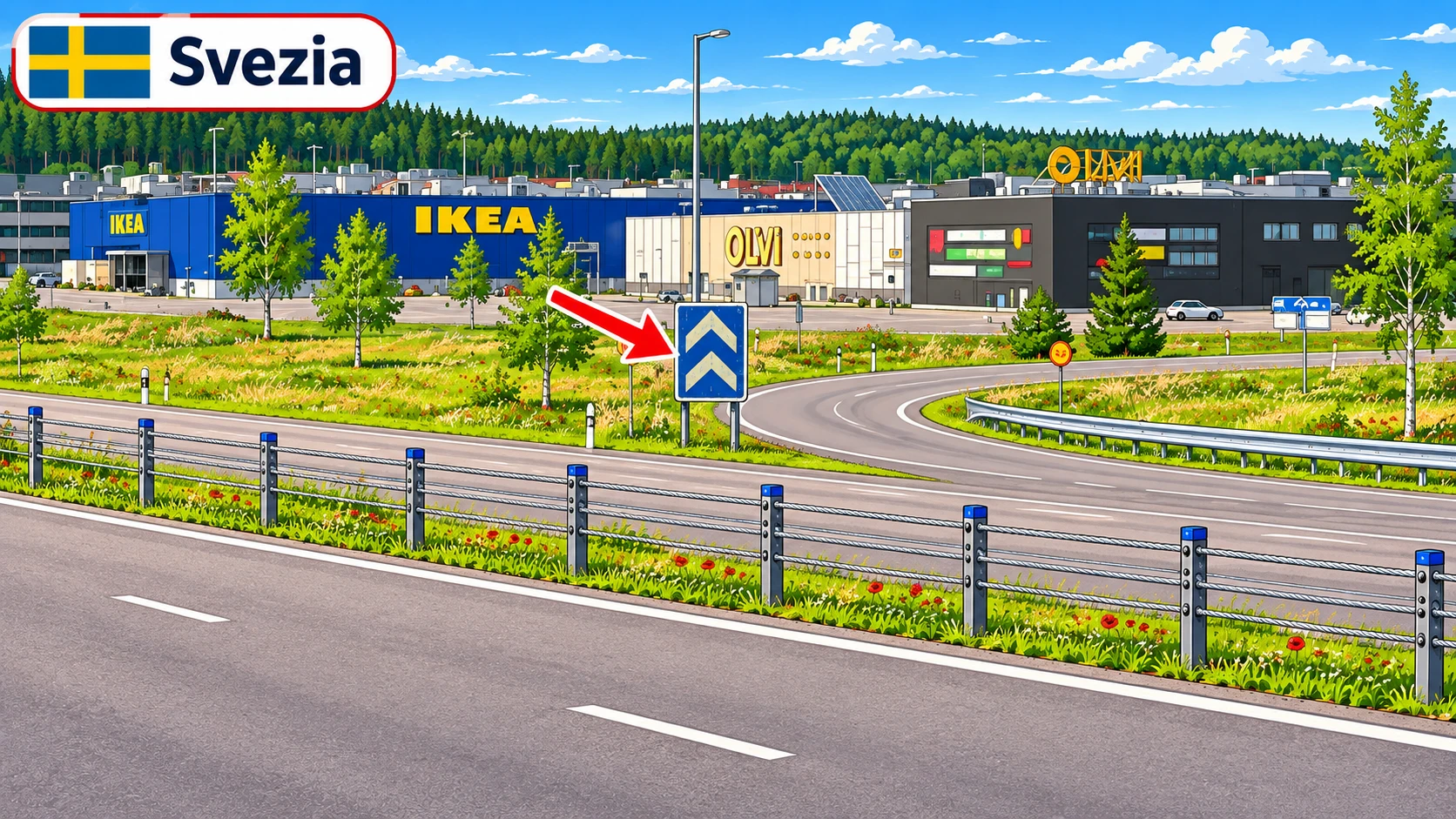
Explore this clueThe curve panel has a yellow arrow on black, compared with Norway and Sweden's yellow-on-blue example.
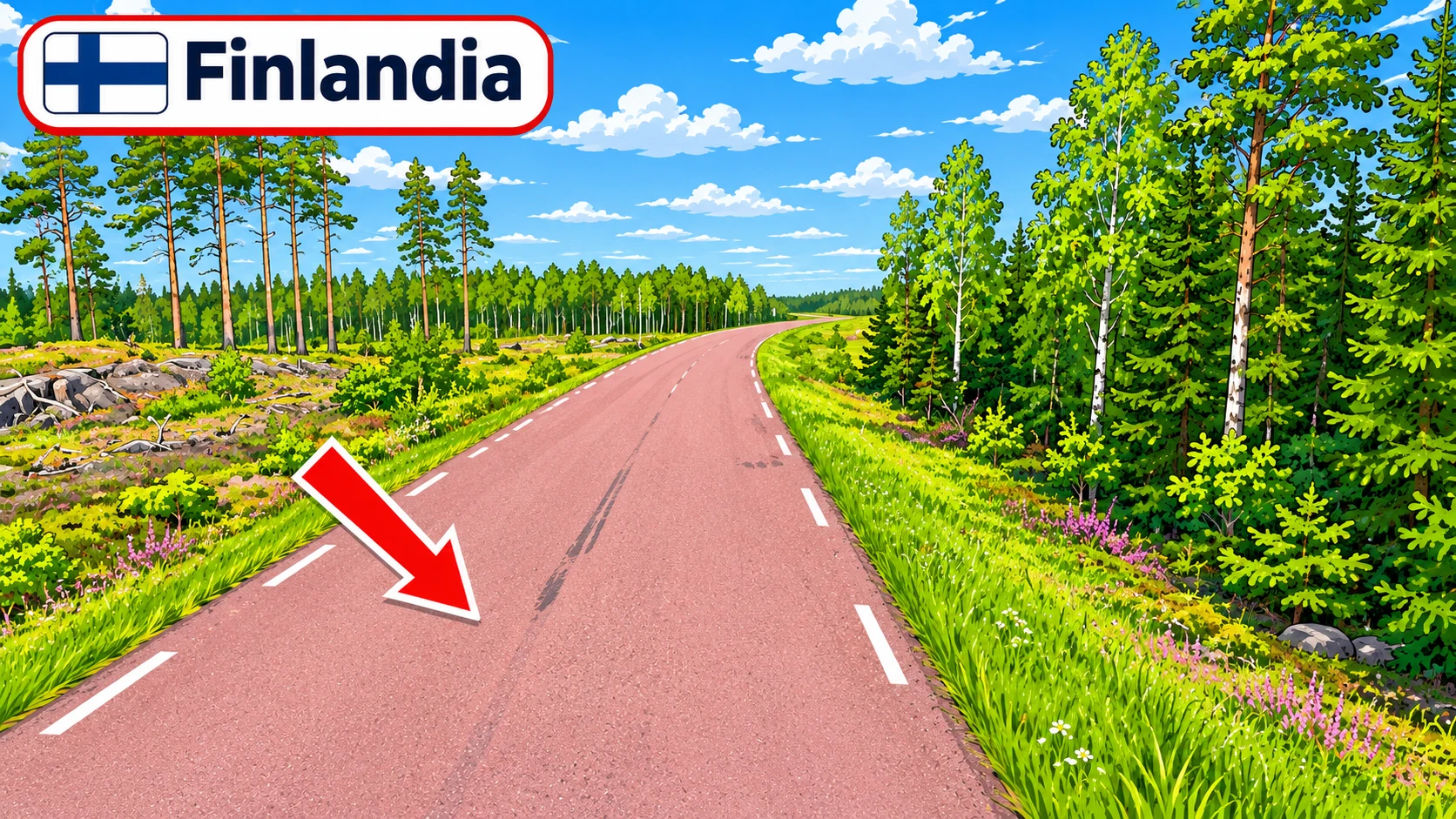
Explore this clueThe video opens an Åland map and shows pinkish road surfacing. Åland belongs to Finland even though the overlay still says Sweden.
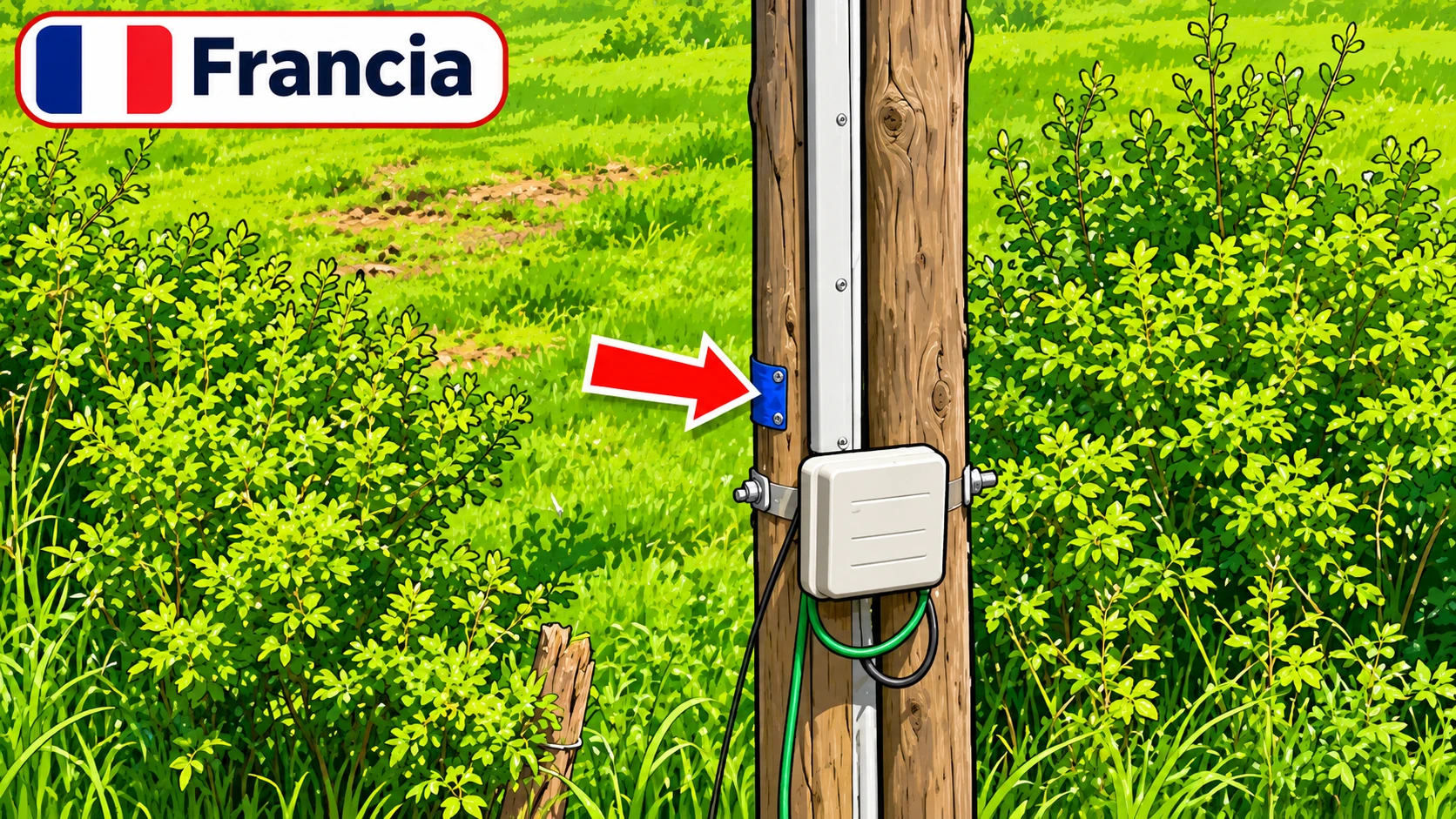
Explore this clueThe video zooms in on a small blue label attached to a French pole beside other components.
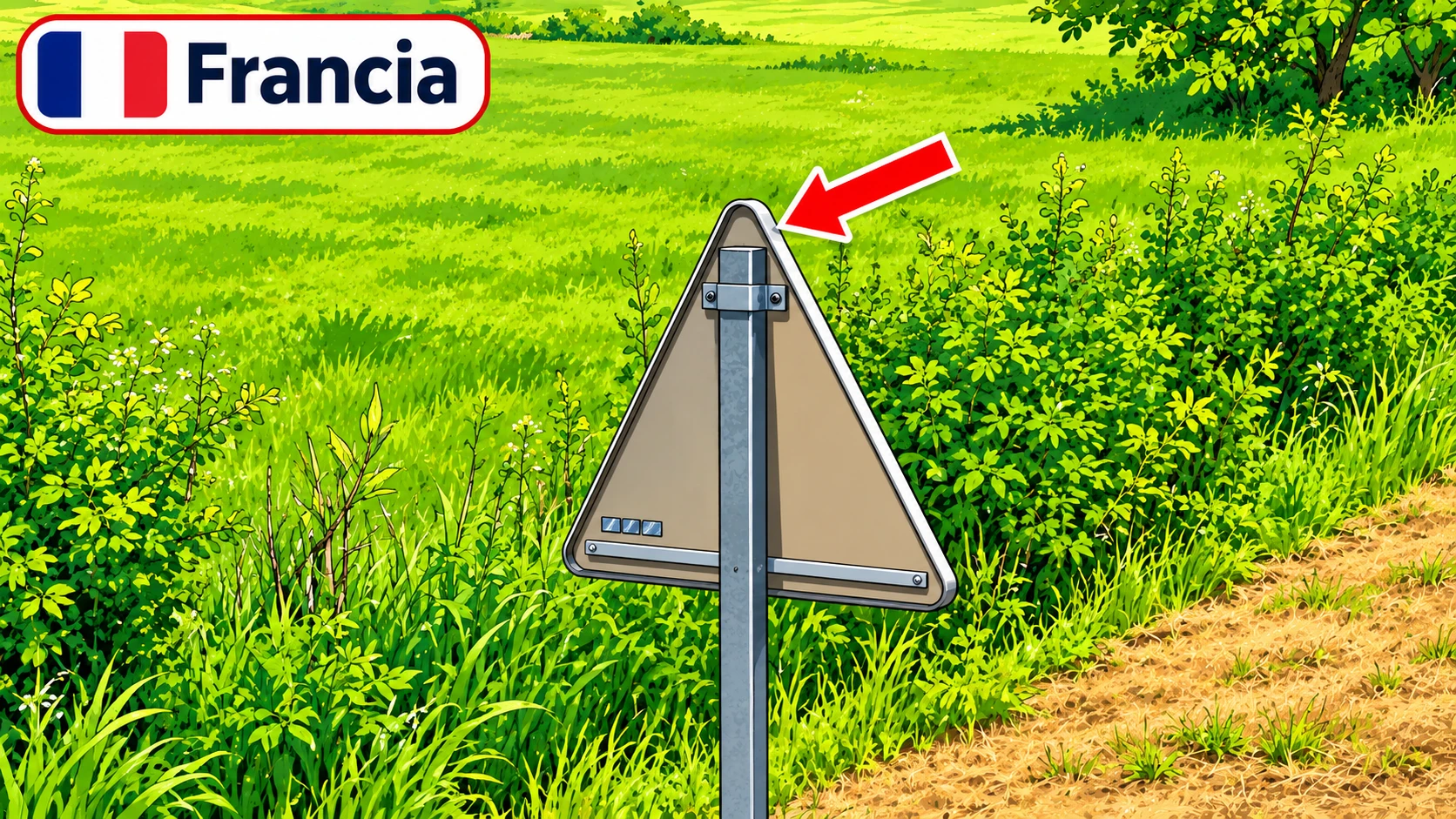
Explore this clueThe rear of the triangular sign has a metal support and a small folded edge, compared with Spain.
Explore this clueThe guide highlights longer, more widely spaced white edge dashes than in certain Swedish examples.
Explore this clueThe illustrated white post has a substantial body and a shaped top. The guide describes a commonly red reflective area and a paler vari...
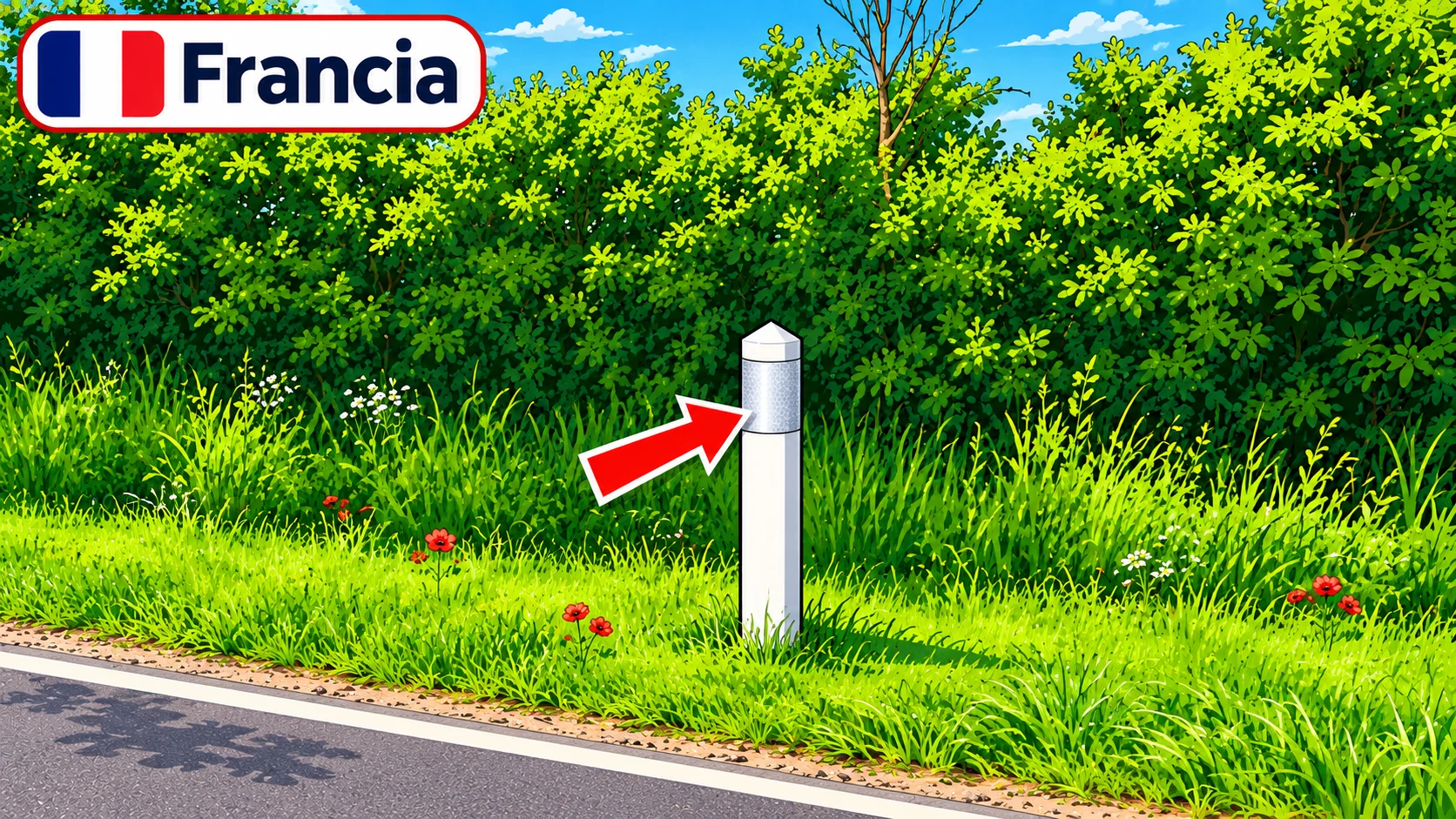
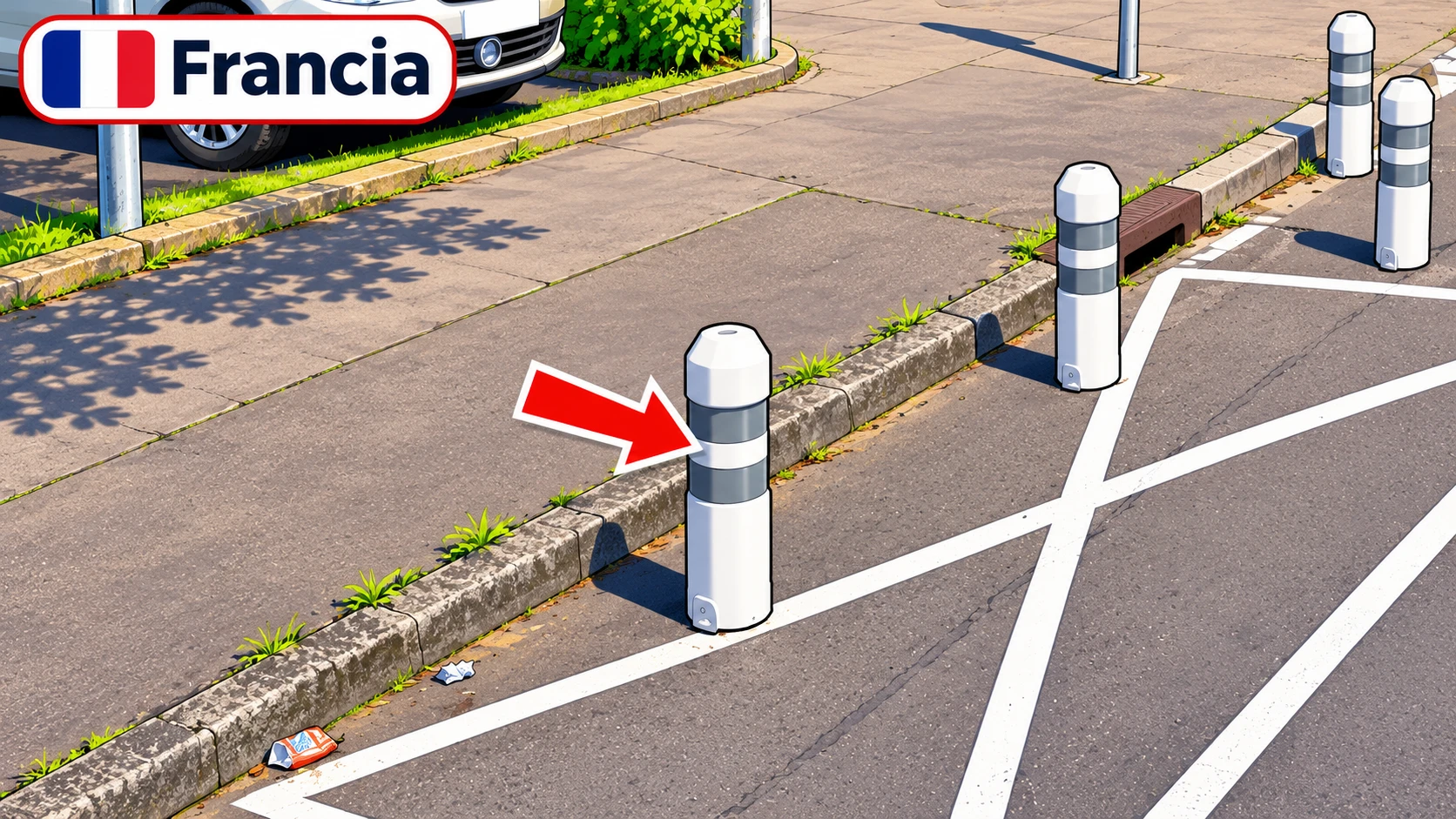
Explore this clueA different French post has a dark upper area and a flatter or squarer body, compared with Greek or Portuguese models.
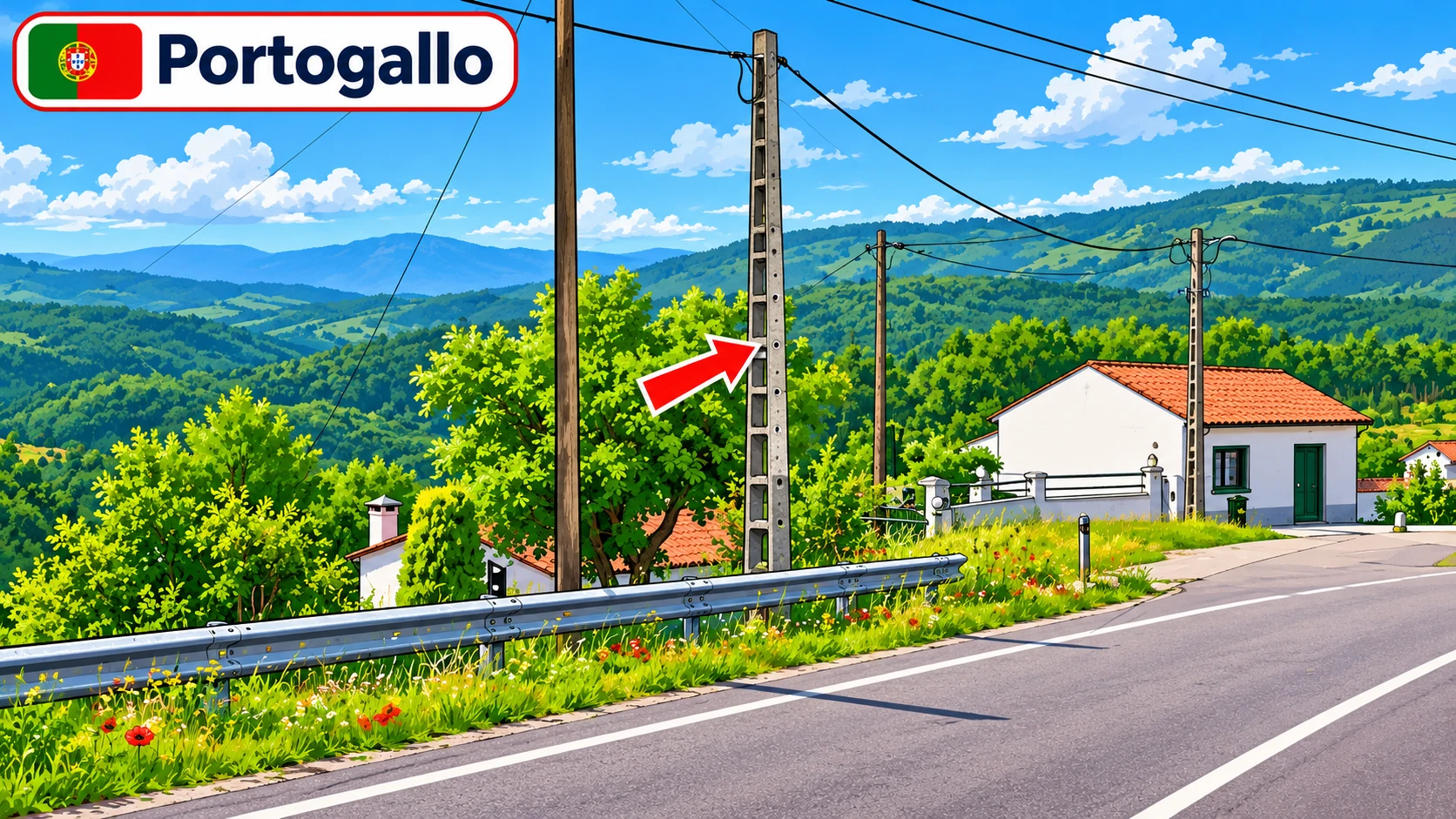
Explore this clueThe concrete pole's rectangular recesses are described as retaining a back wall rather than forming complete holes.
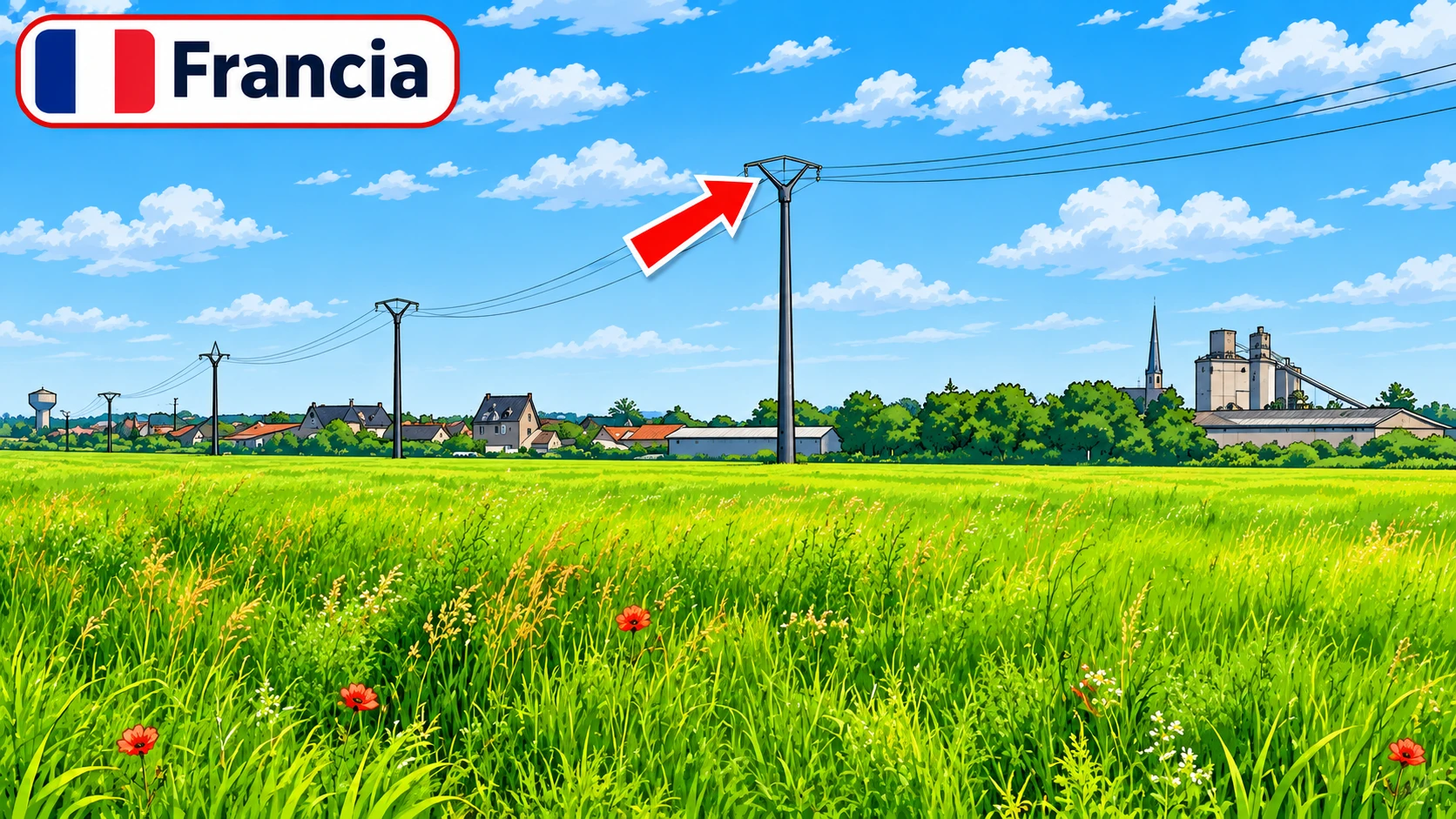
Explore this clueThe author shows open upper arms and variants with arrowhead-like or flatter crossarms.
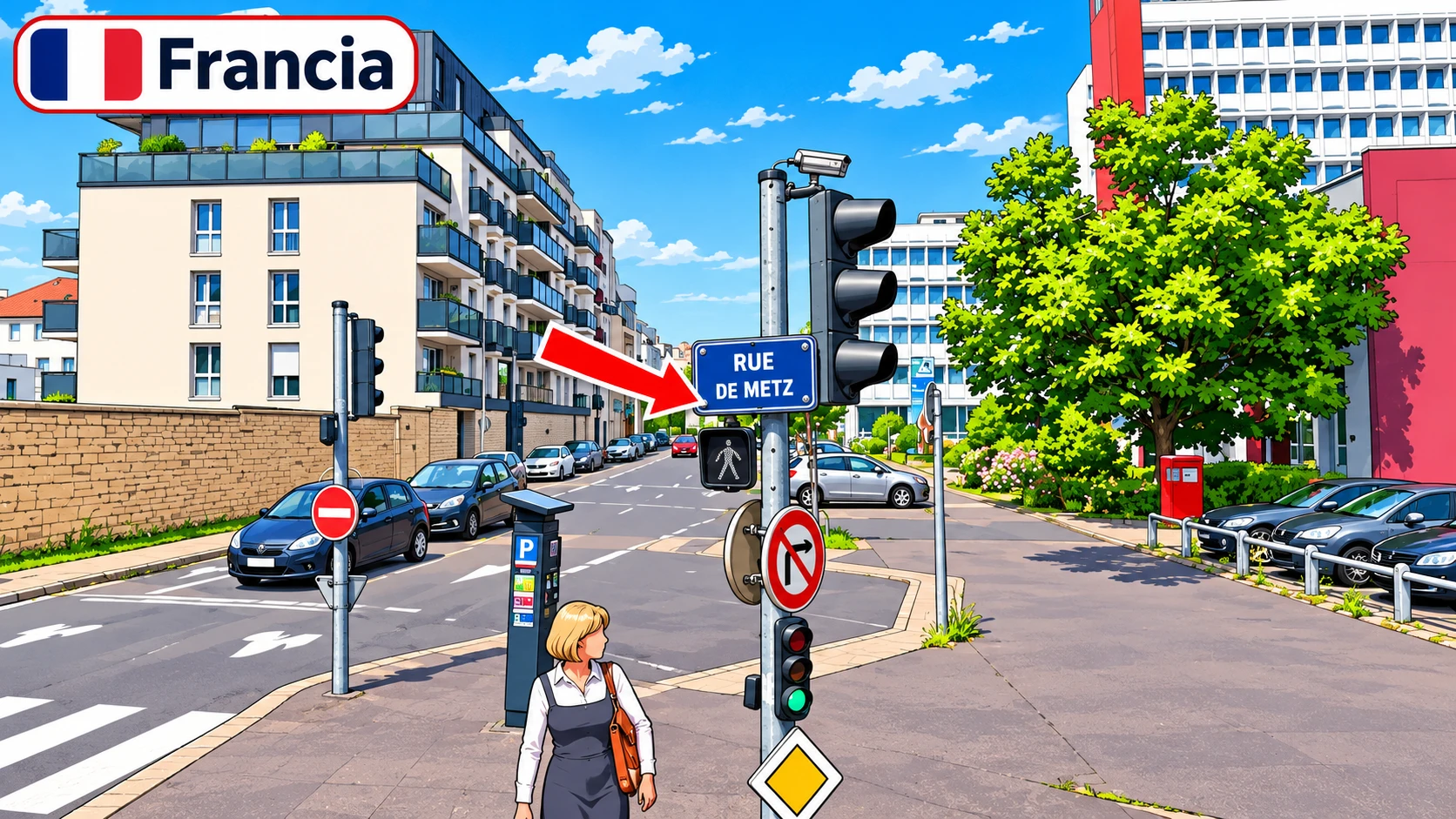
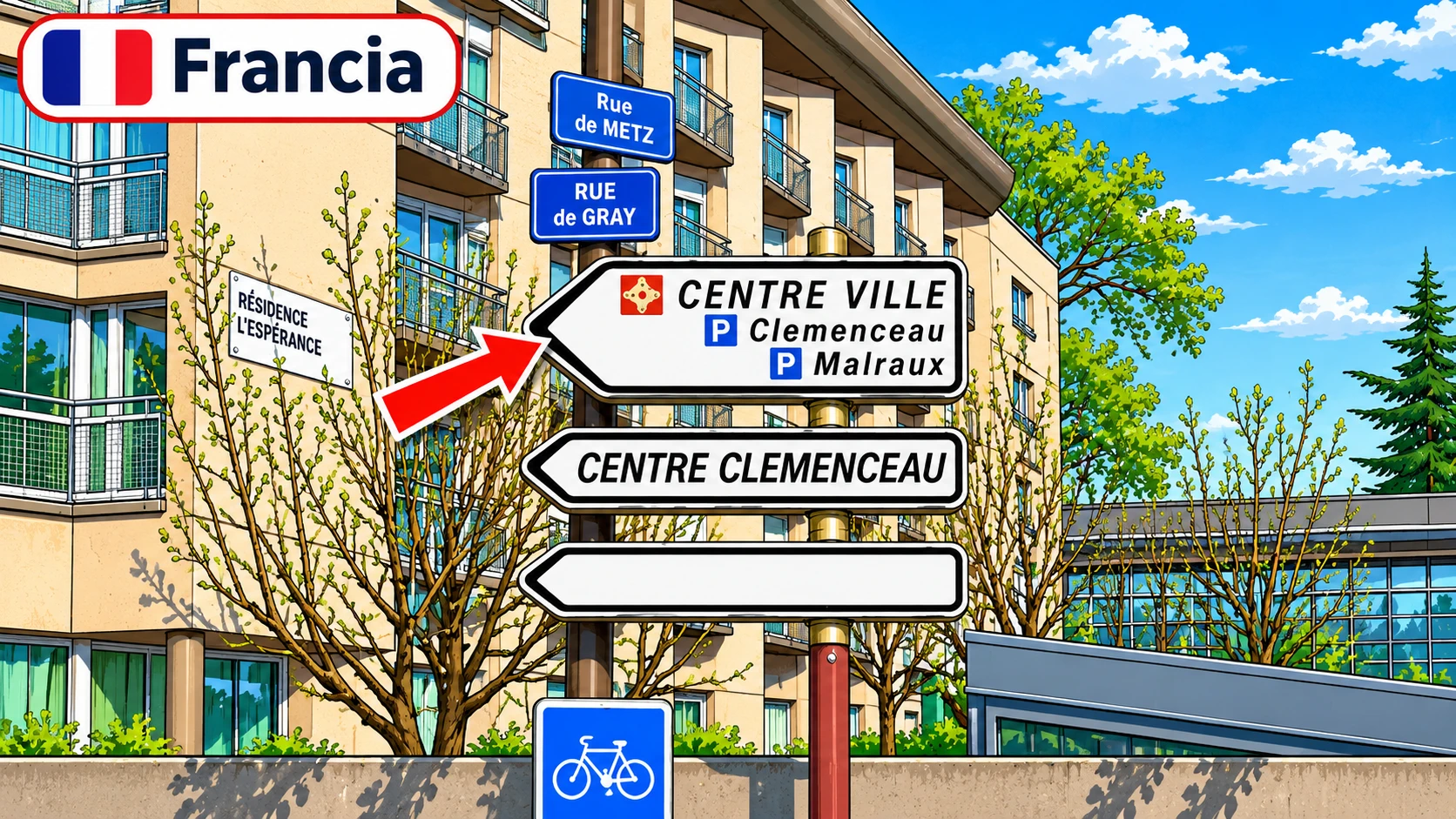
Explore this clueRUE DE METZ illustrates the French street word rue and a blue street-name plaque.
Explore this clueShort rounded pale bollards with wraparound dark bands mark an urban traffic island.
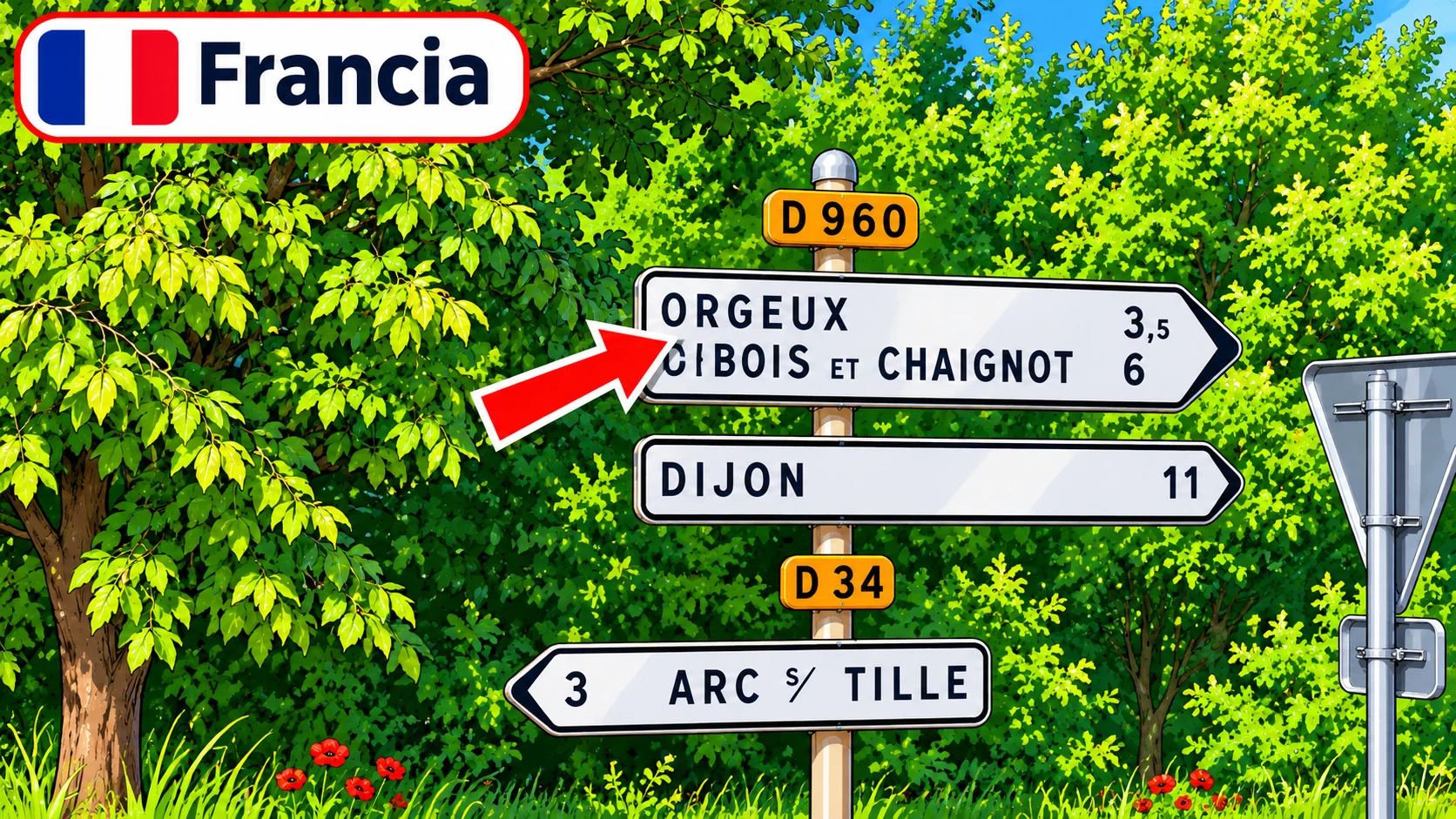
Explore this clueDirection panels have white backgrounds, black borders and shaped arrow tips. Study the transition from border to tip.
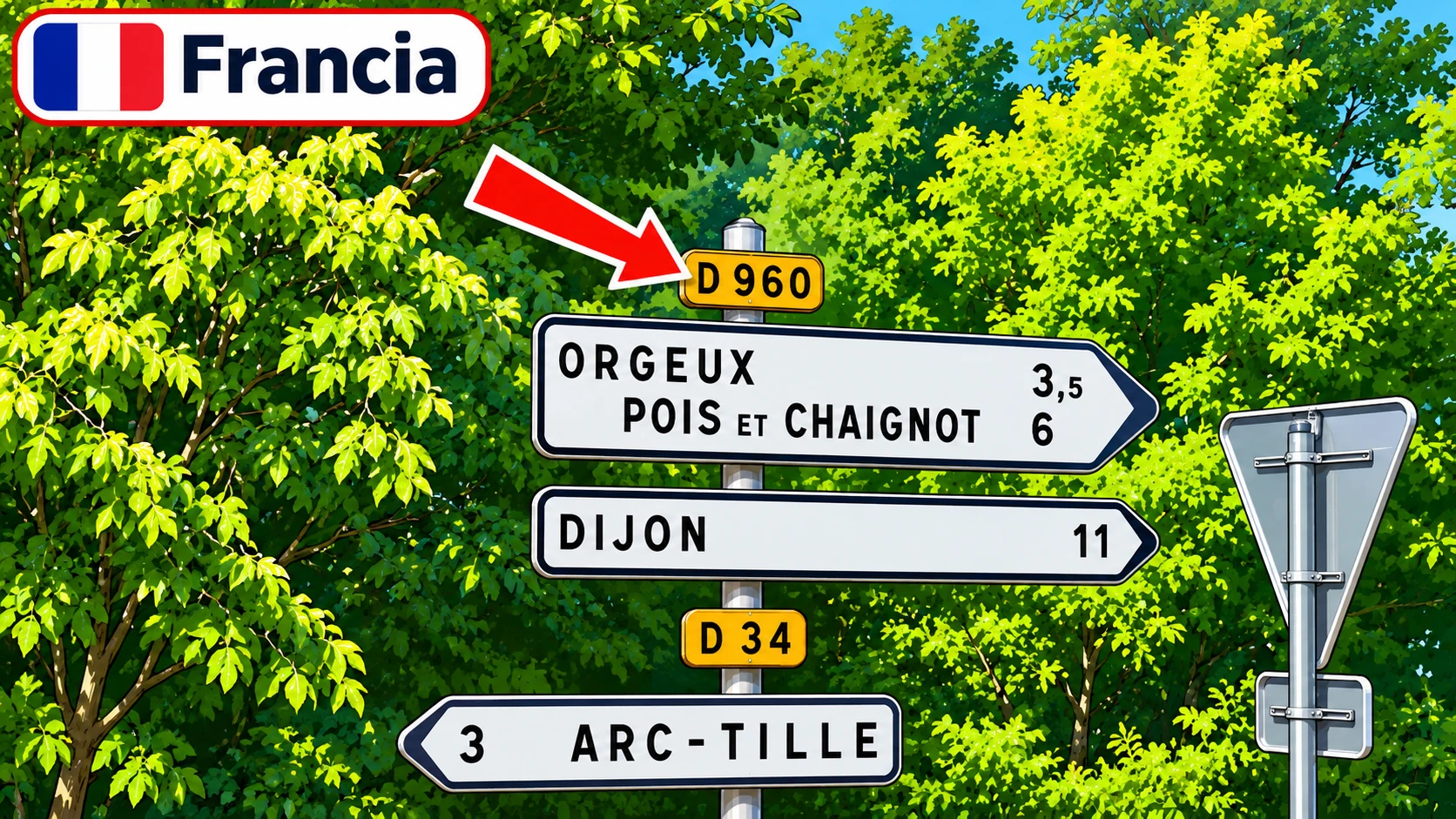
Explore this clueD960 and D34 appear on small yellow or yellow-orange panels above white direction arrows, indicating departmental routes.
Explore this clueORGEUX and BOIS illustrate letter groups that can help recognise French place names.
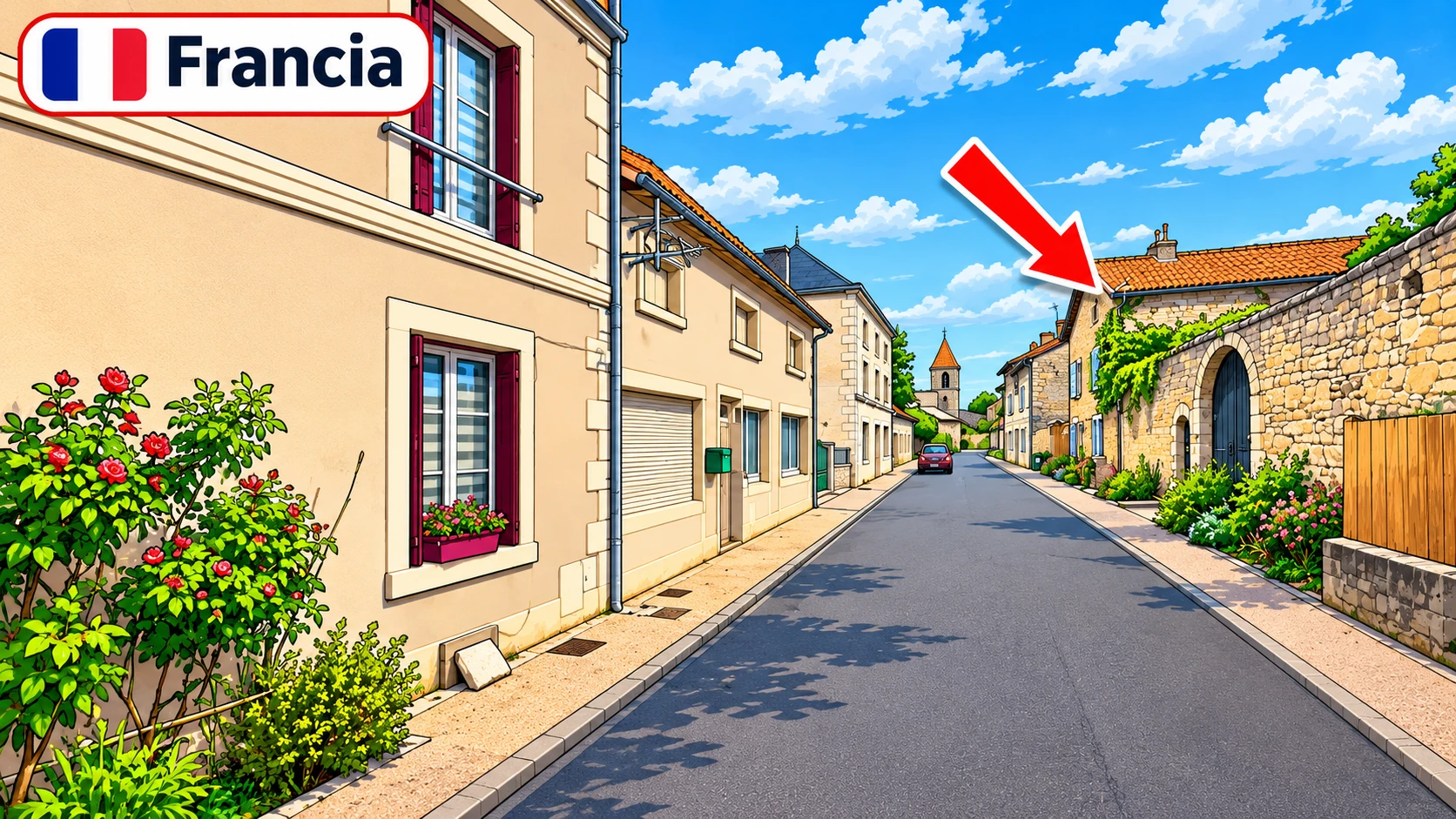
Explore this clueFrench examples include stone buildings, pale walls and orange or grey roofs, with substantial regional variation.
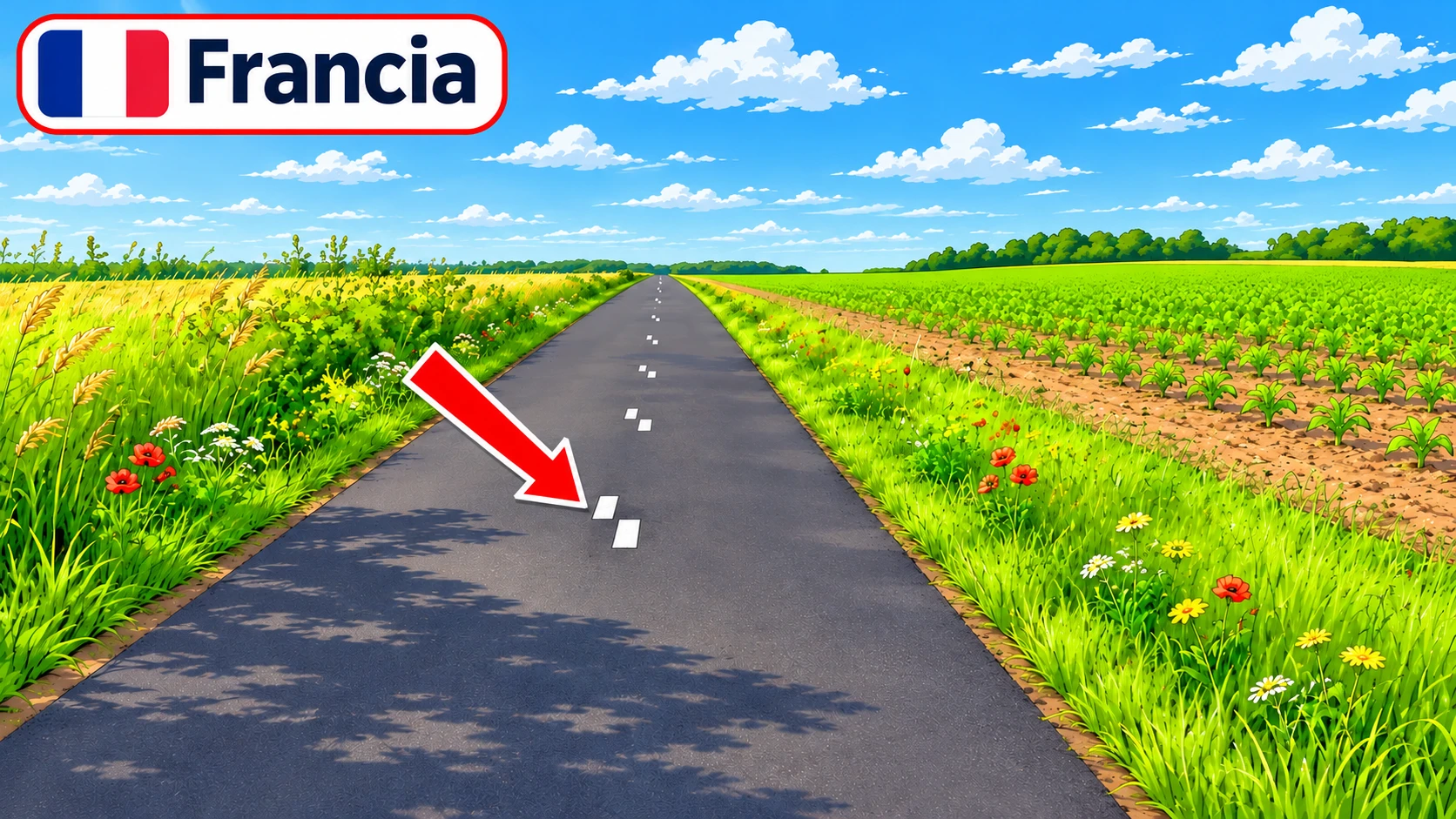
Explore this clueThe author enlarges two small rectangular marks offset from each other on a narrow road.
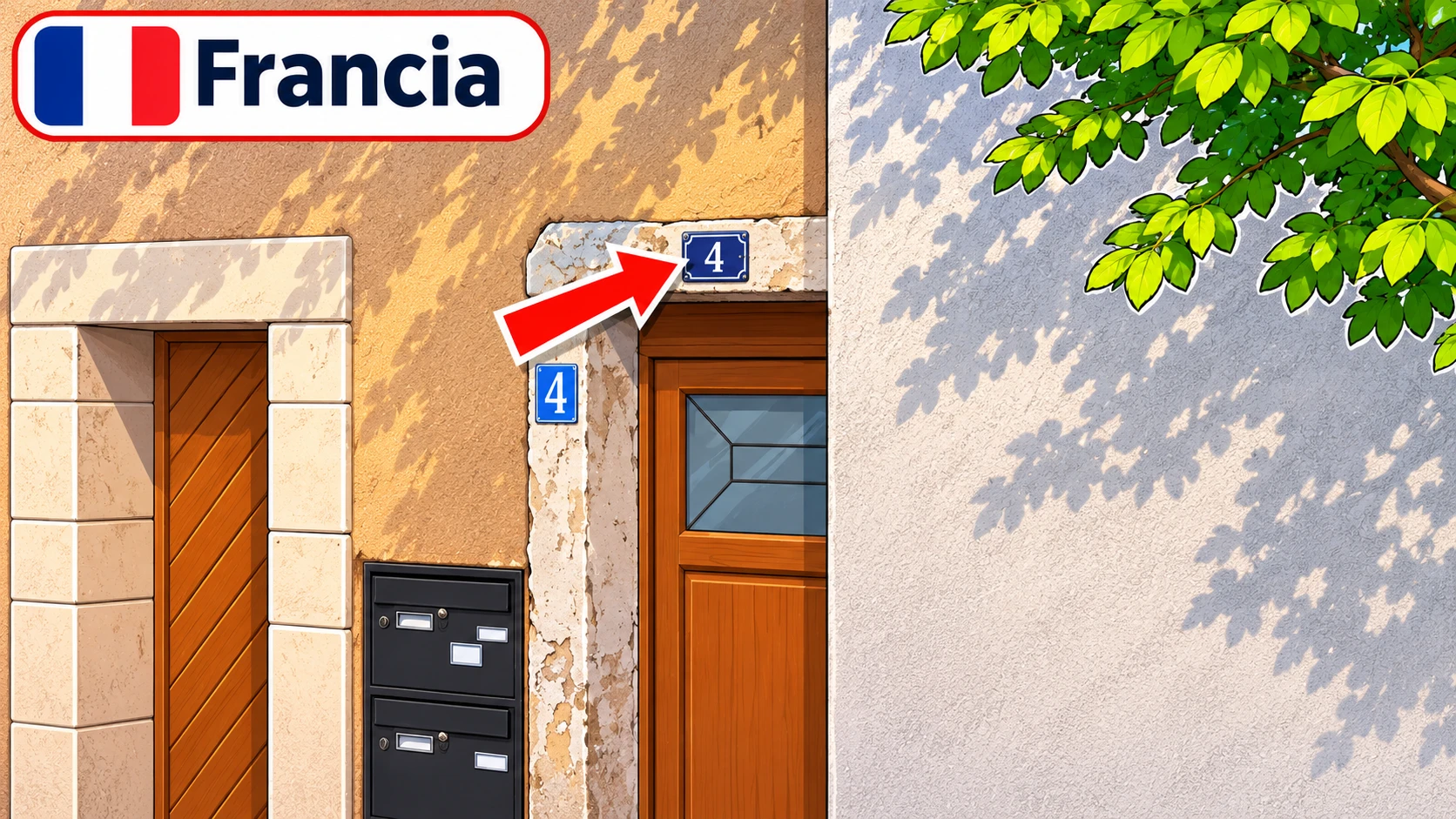
Explore this clueA close-up shows a white number on a dark blue plaque, explicitly compared with Croatia.
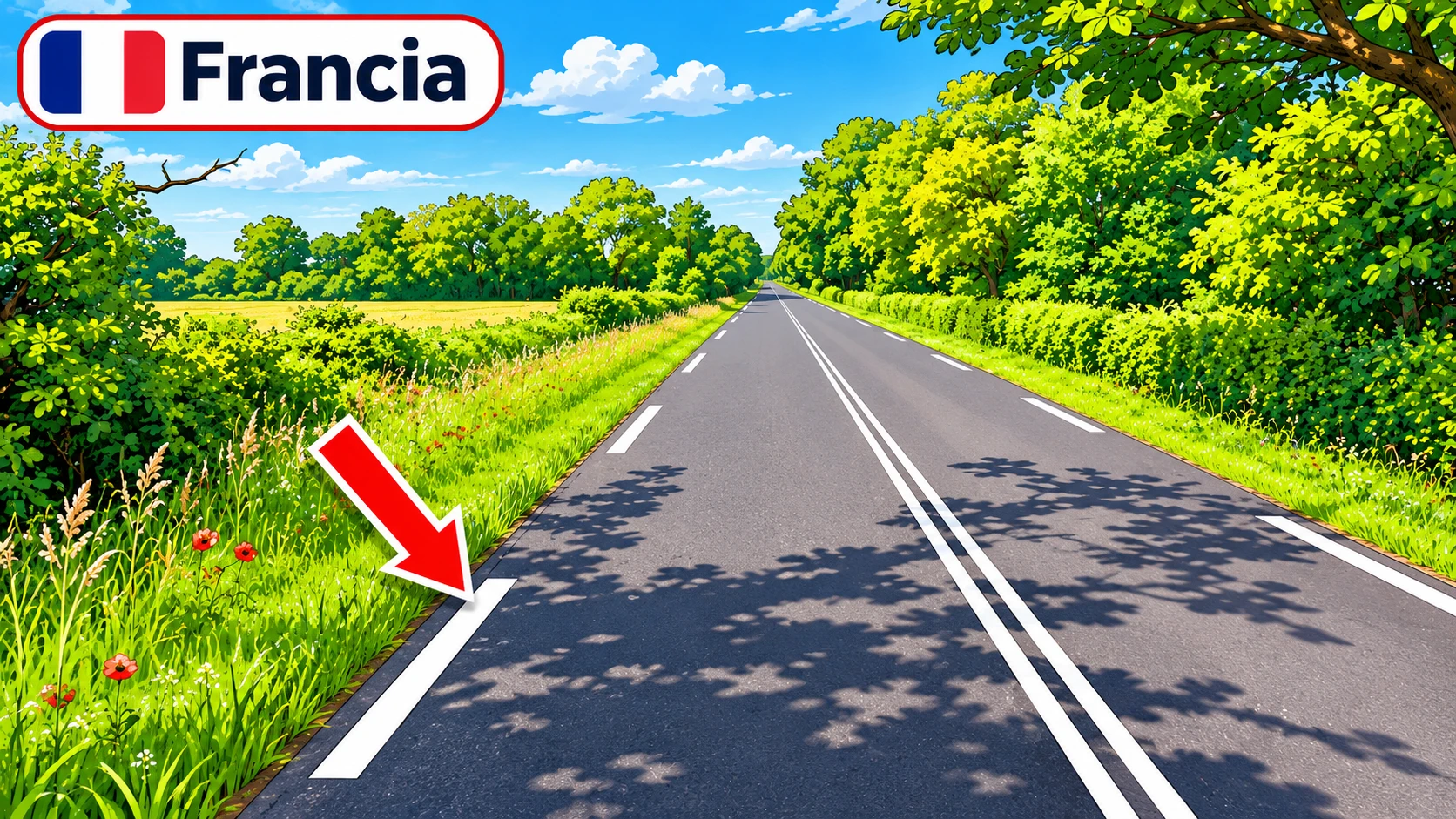
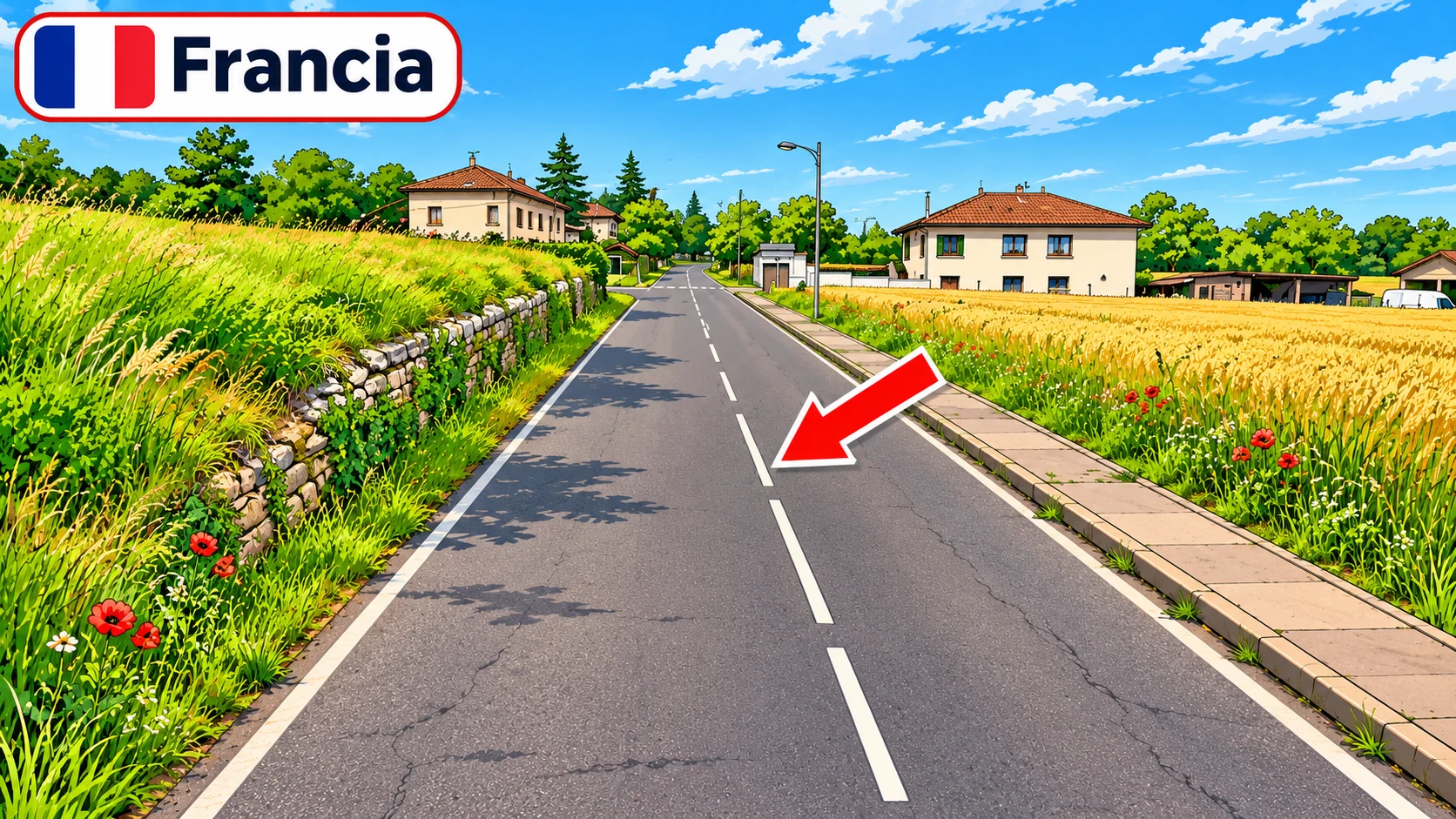
Explore this clueSome French examples have long, thin centre dashes separated by relatively short spaces.
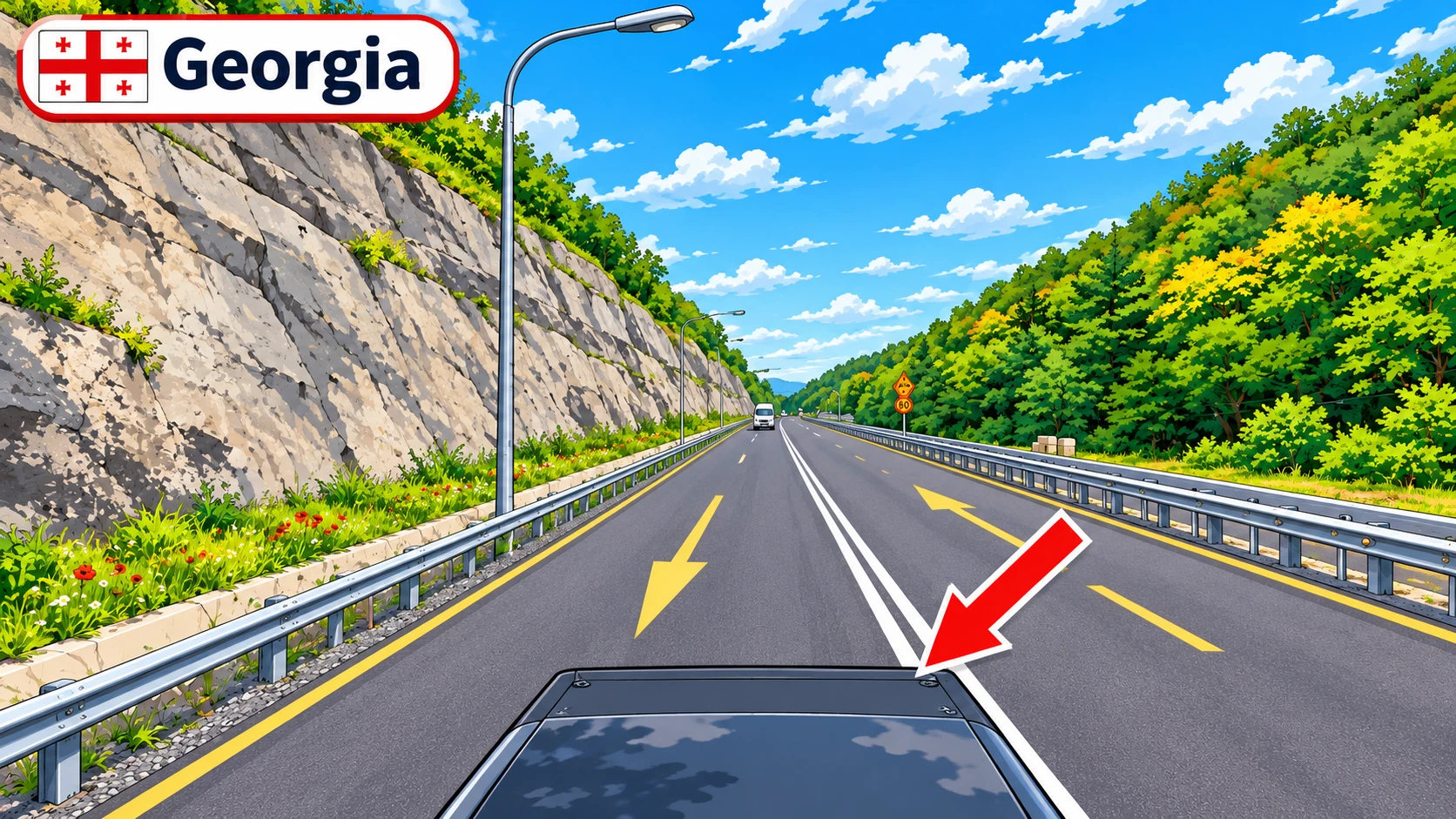
Explore this clueA dark squared-off vehicle part appears at the bottom of the frame, described as black or sometimes grey in Georgian coverage.
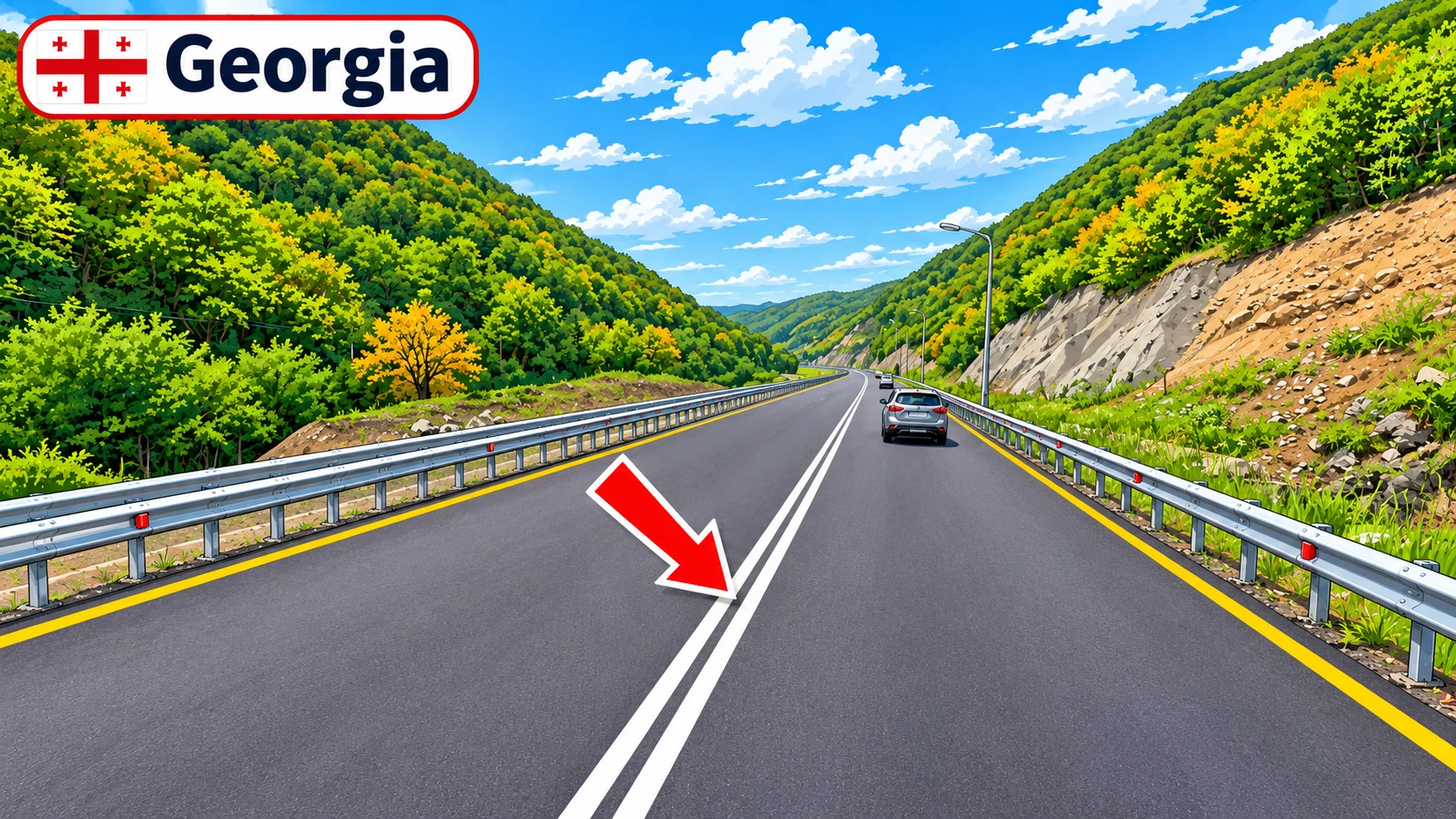
Explore this clueThe example shows double white centre lines and some yellow edge paint, although many Georgian roads use entirely white markings.
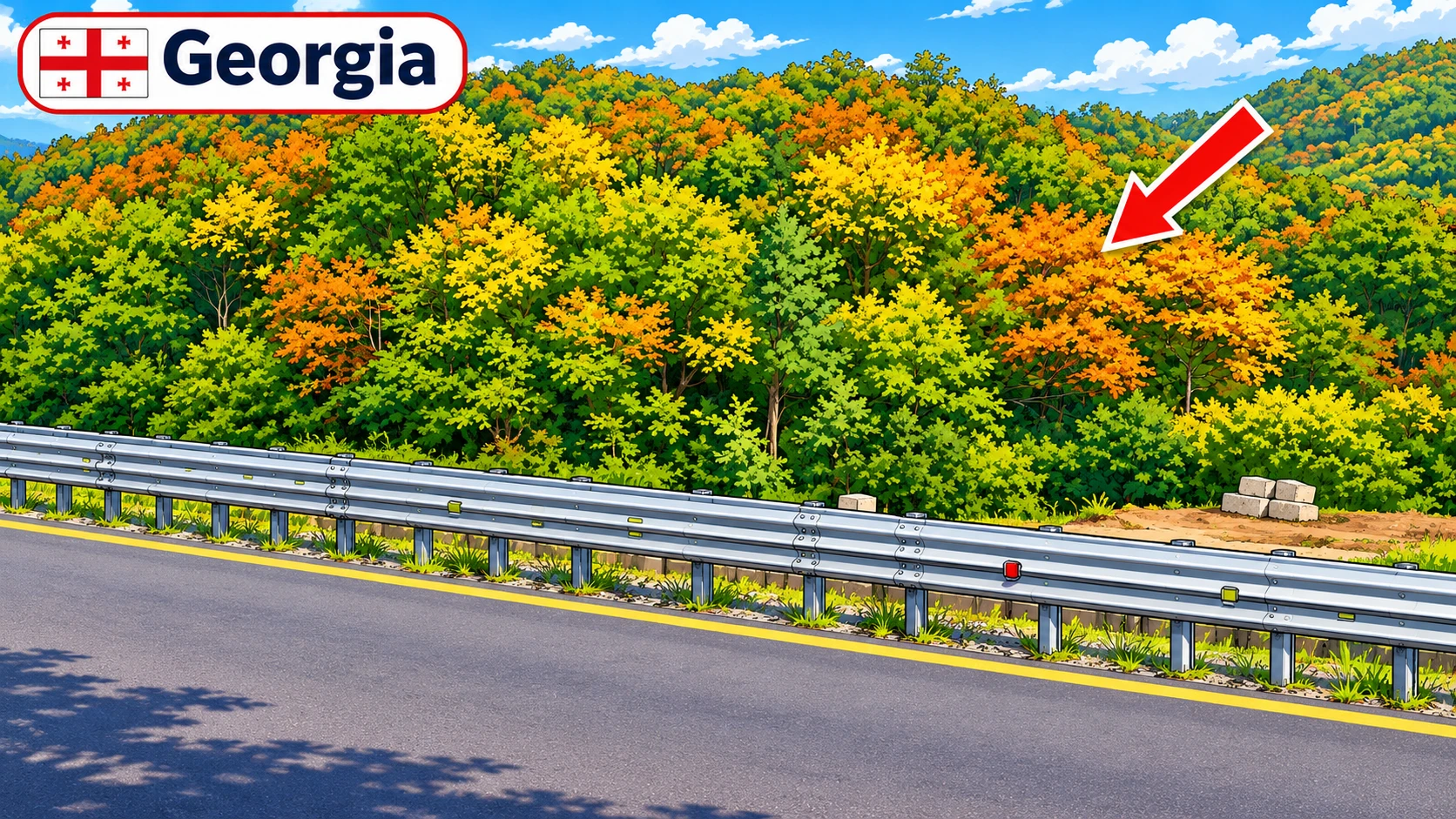
Explore this clueWooded slopes have autumn foliage, contrasted with some Turkish scenes. Summer coverage is also mentioned.
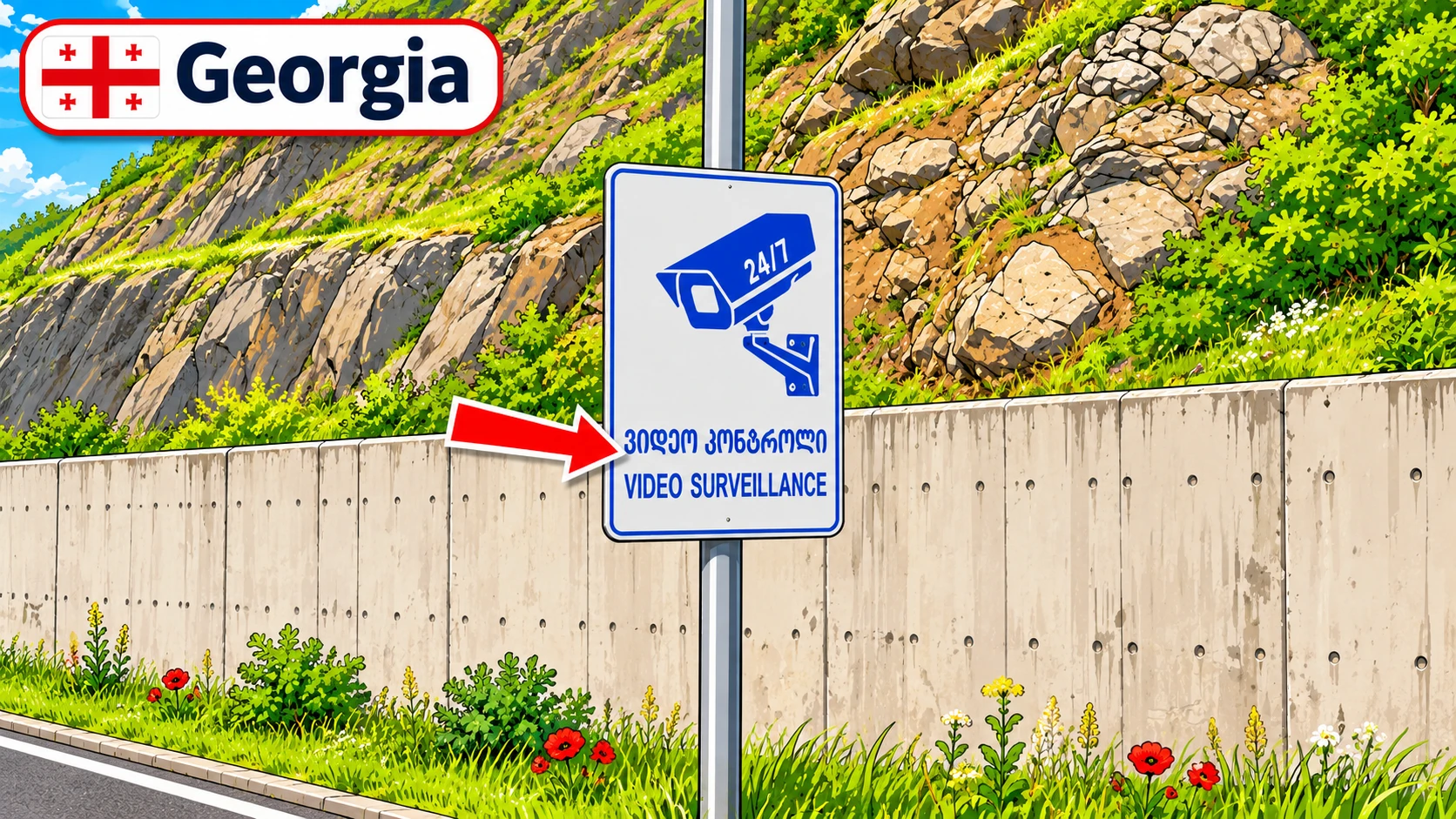
Explore this clueThe sign uses rounded Georgian lettering distinct from both Latin and Cyrillic scripts.
Explore this clueThe white post has a dark upper band and a rectangular white reflector; two small round elements are mentioned on the reverse.
Explore this clueDifferent guardrail profiles appear close together, contrasting with the preceding Danish example.
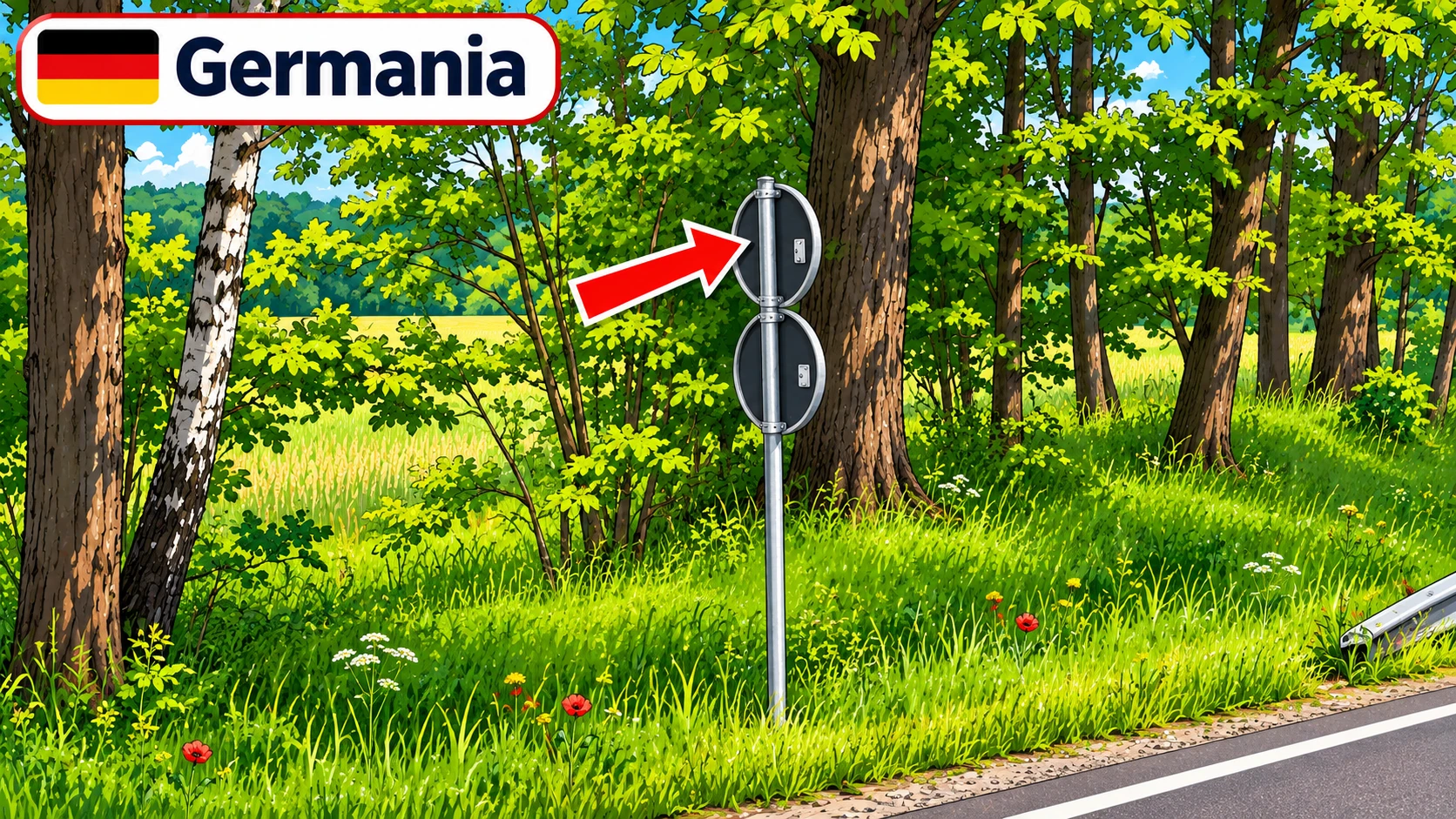
Explore this clueThe rear of road signs looks dark with a lighter metal margin or reinforcement.
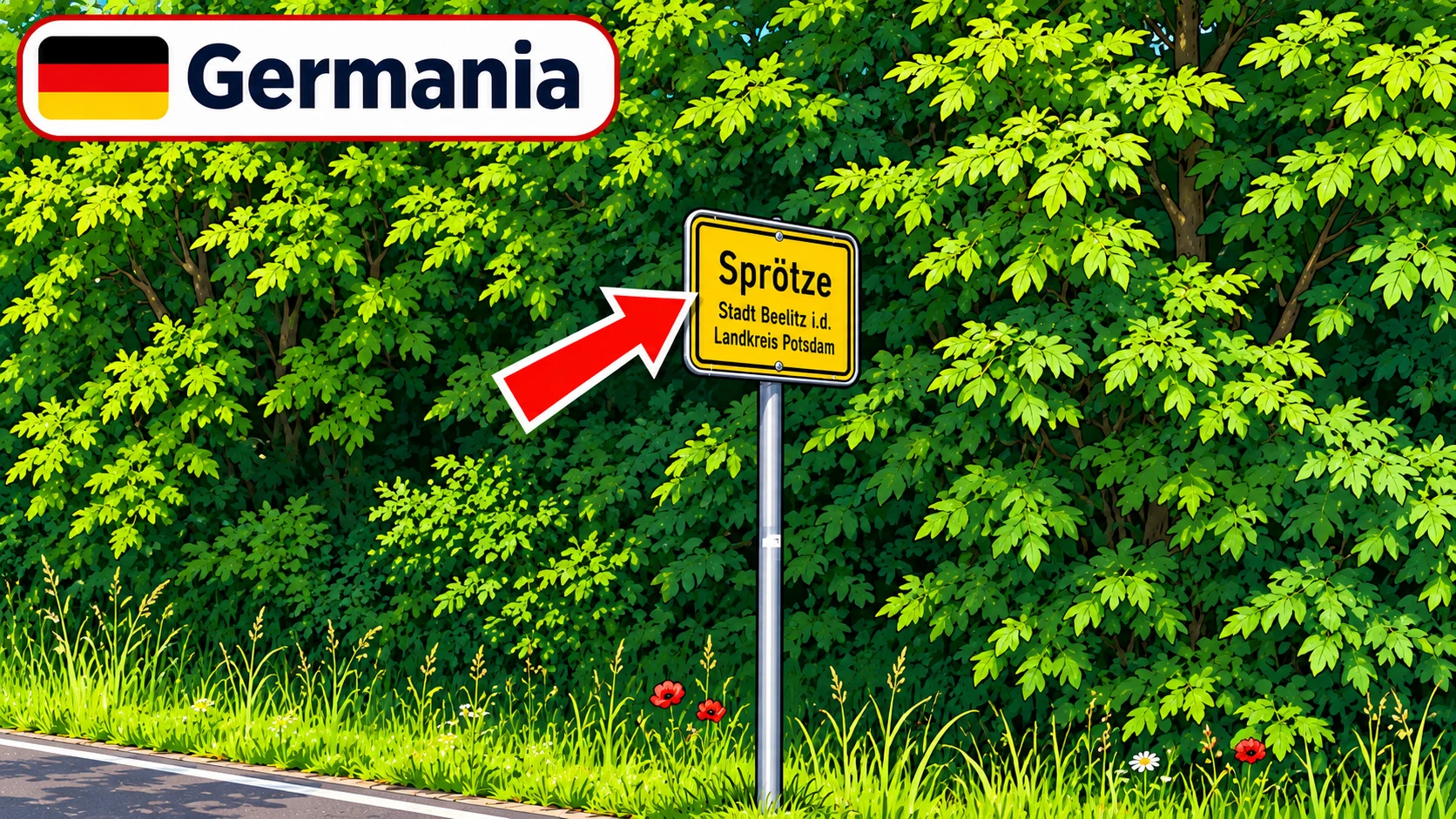
Explore this clueA yellow panel displays Spritze and additional lines within a dark border. It marks a settlement rather than a street name.
Explore this clueA second German scene shows an orange- or yellow-toned reflector, demonstrating that this colour need not mean Spain.
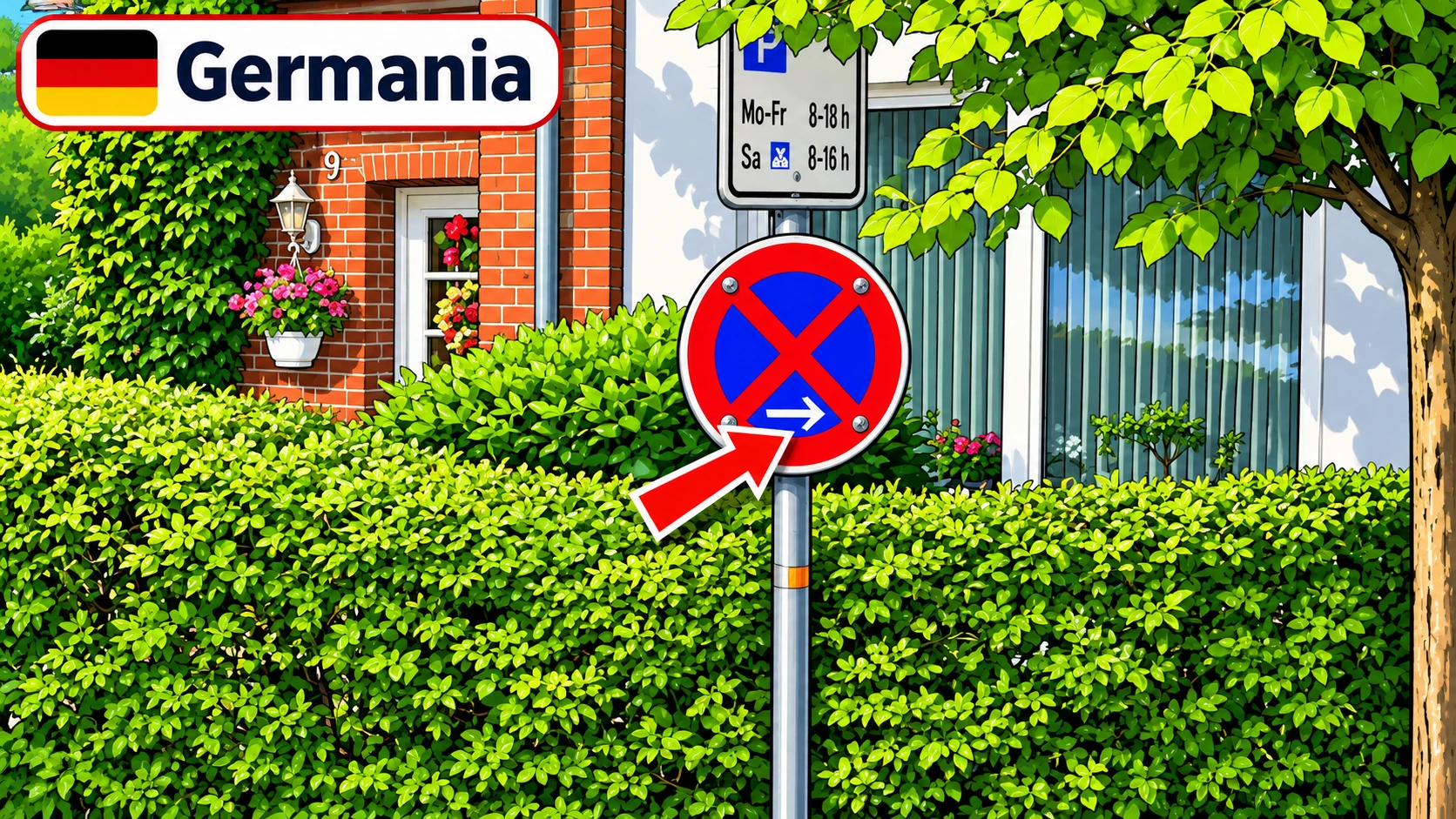
Explore this clueSmall white arrows appear inside blue and red circular restriction signs in urban scenes.
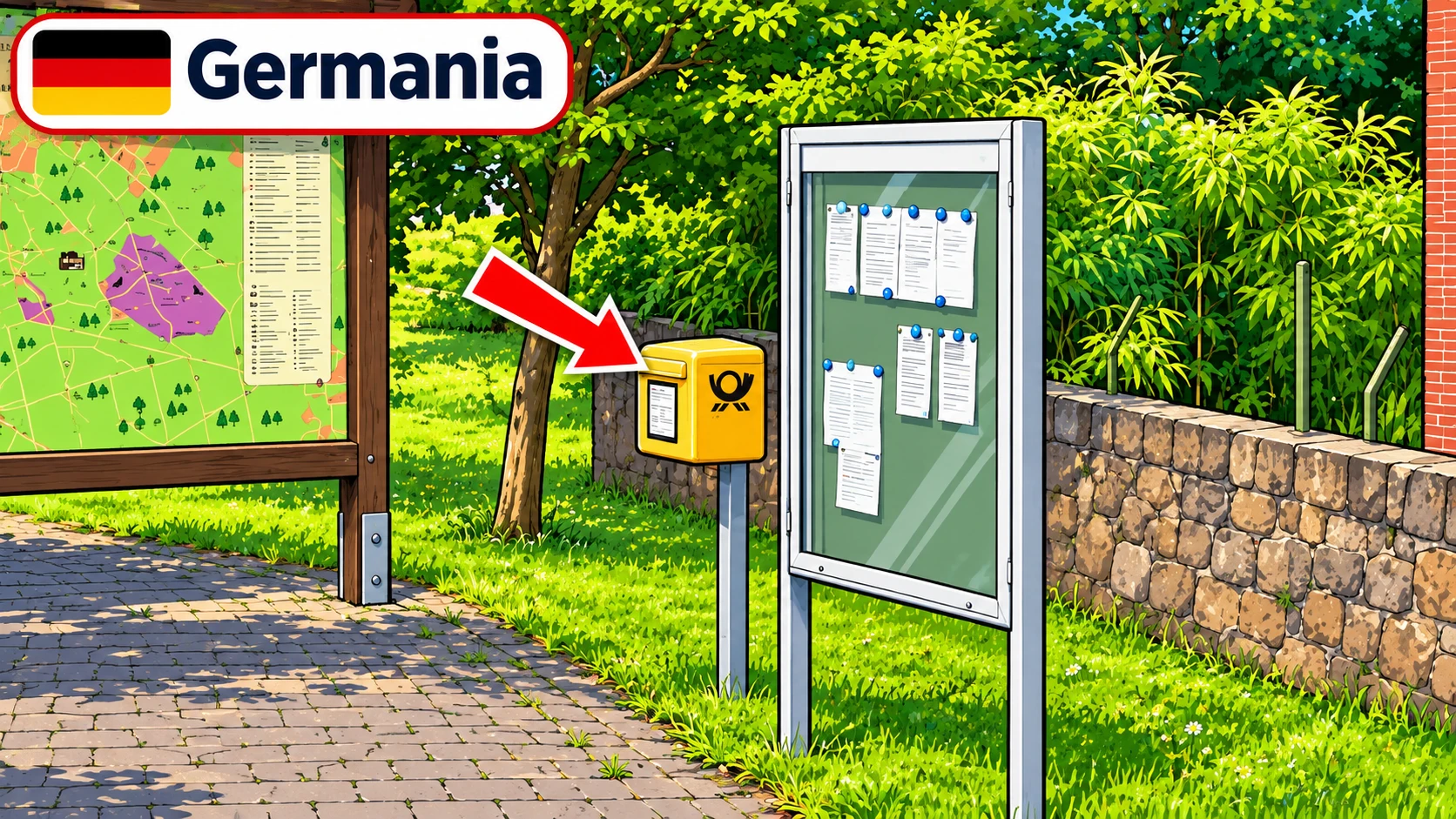
Explore this clueA yellow postbox with a small dark emblem stands beside a noticeboard.
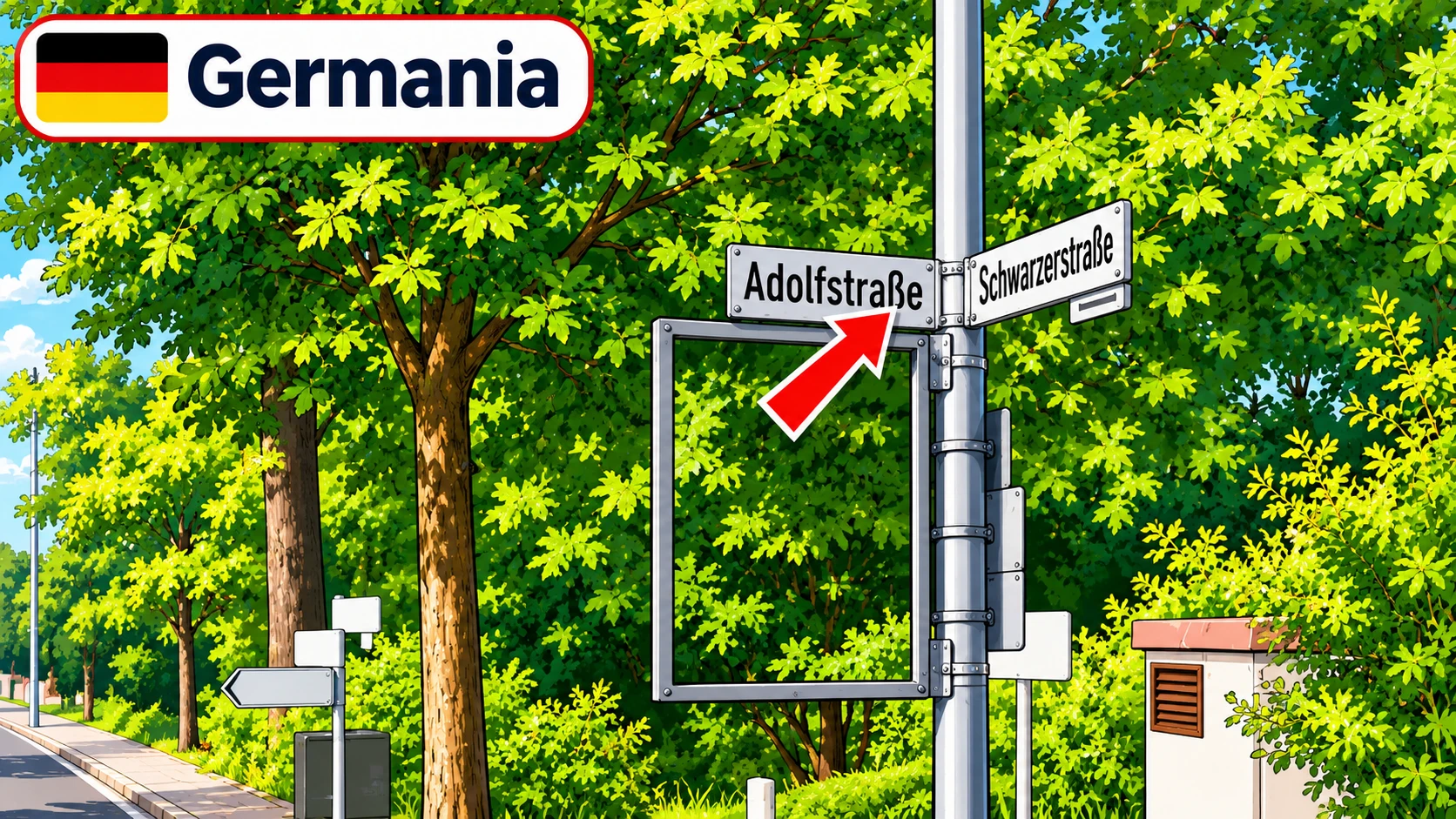
Explore this clueAdolfstraße illustrates ß, a letter that unfamiliar readers may mistake for B.
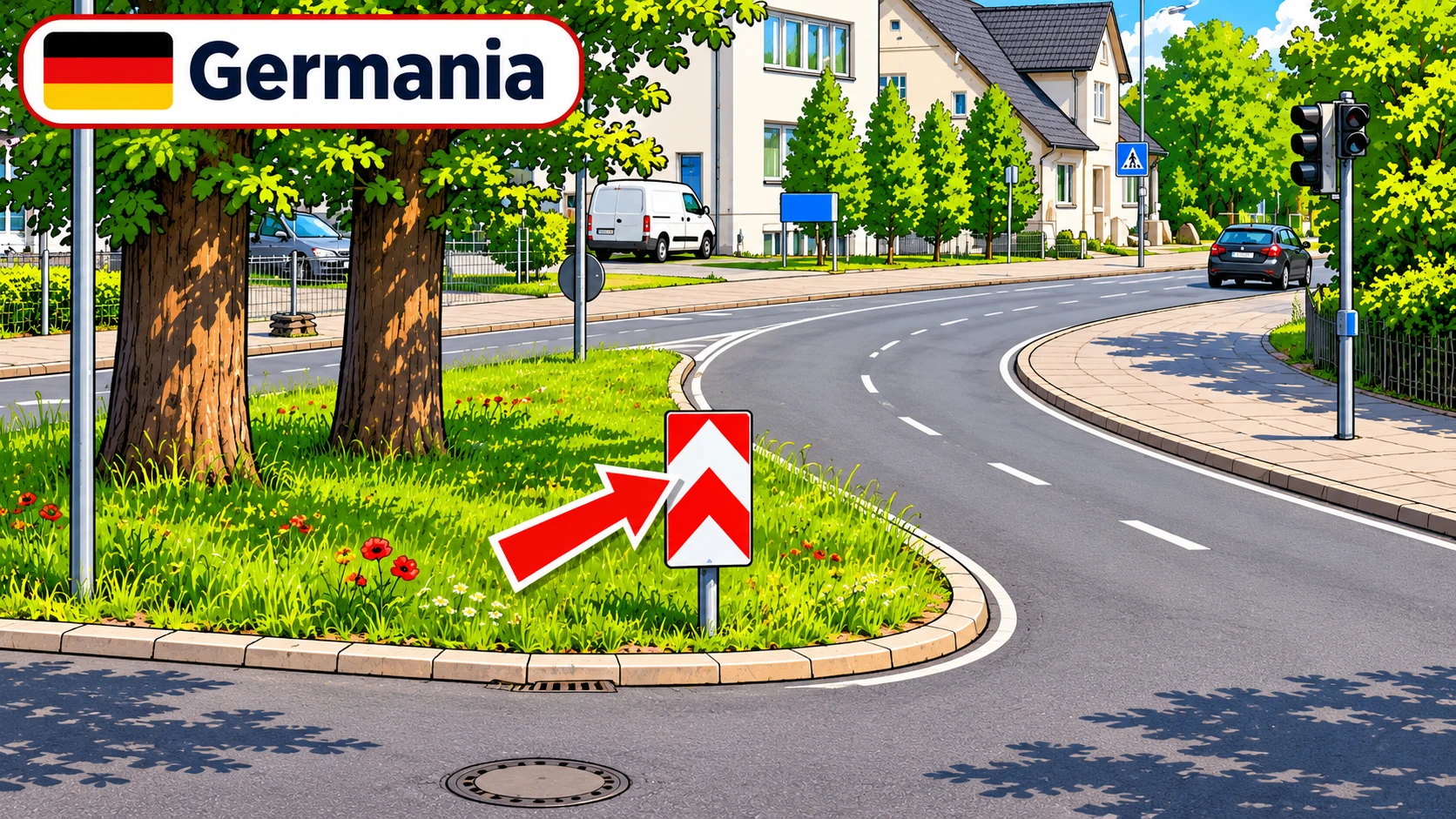
Explore this clueA traffic-island panel shows red chevrons on a white background.
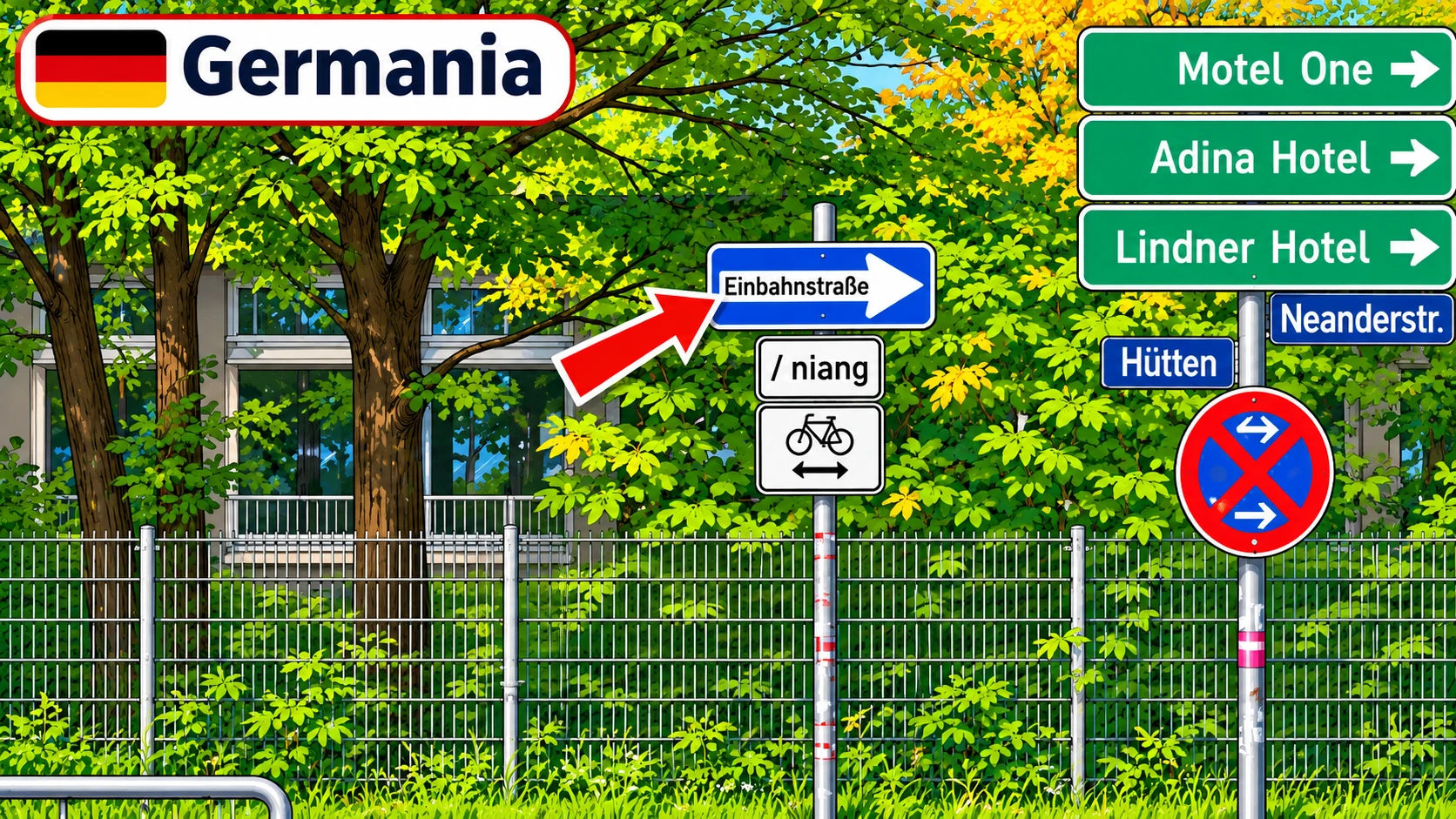
Explore this clueA blue one-way sign contains the word Einbahnstraße in addition to its arrow.
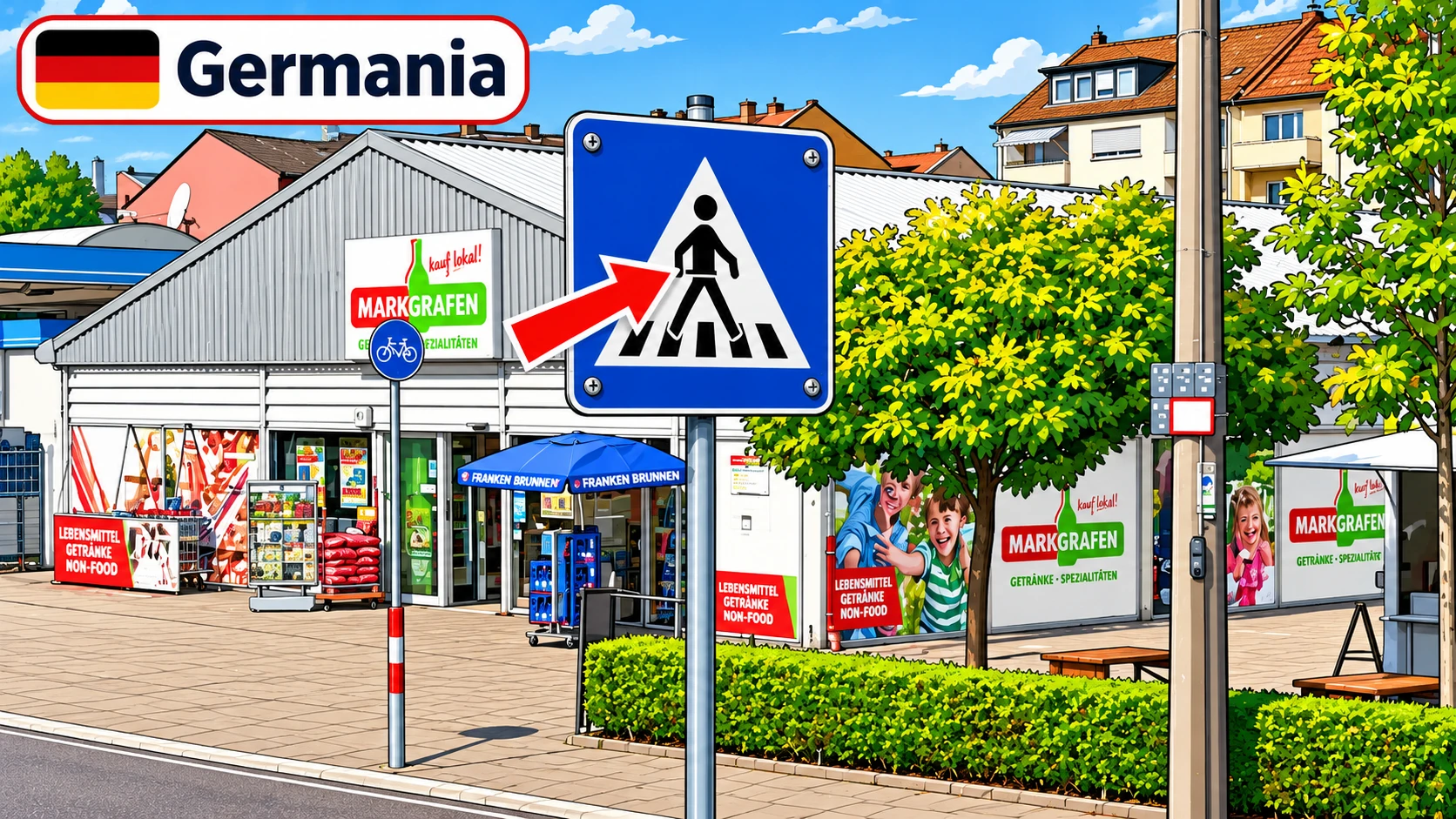
Explore this clueThe enlarged pedestrian has a horizontal body line nicknamed a belt, with four fixings near the panel corners.
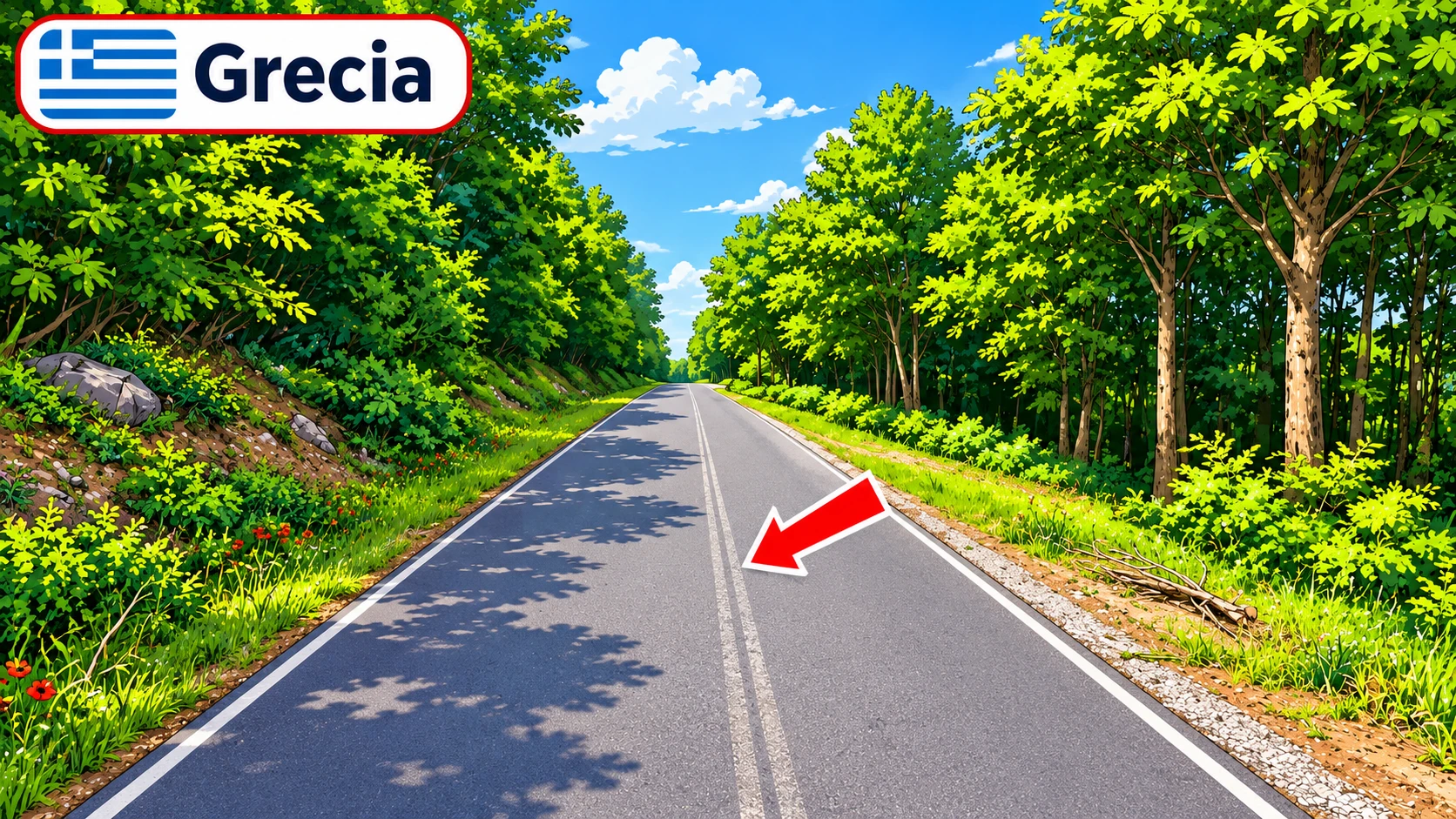
Explore this clueTwo heavily faded parallel white lines may be easy to miss on a rural Greek road.
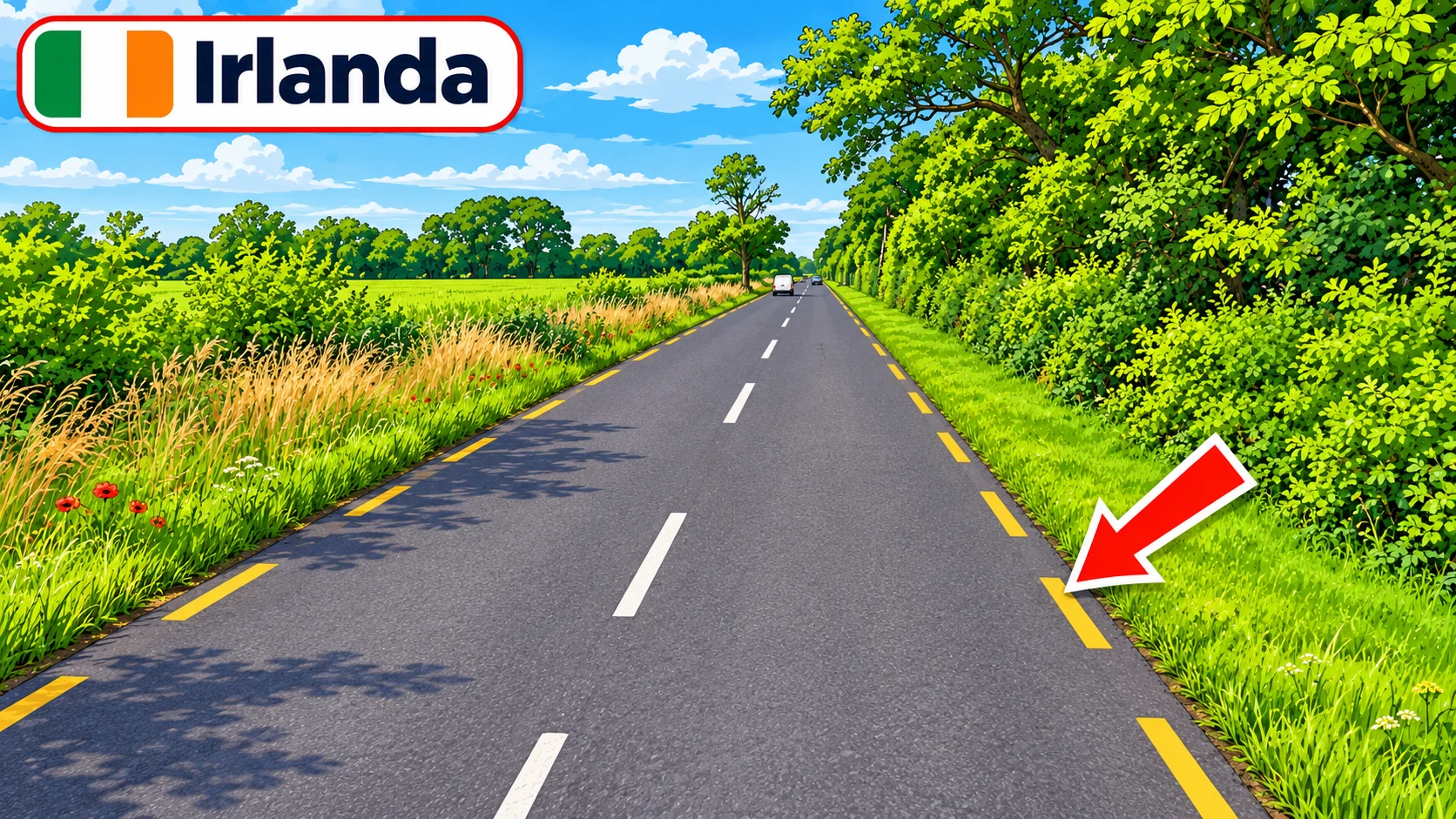
Explore this clueYellow edge dashes contrast with white centre markings. Combine the markings with left-hand driving.
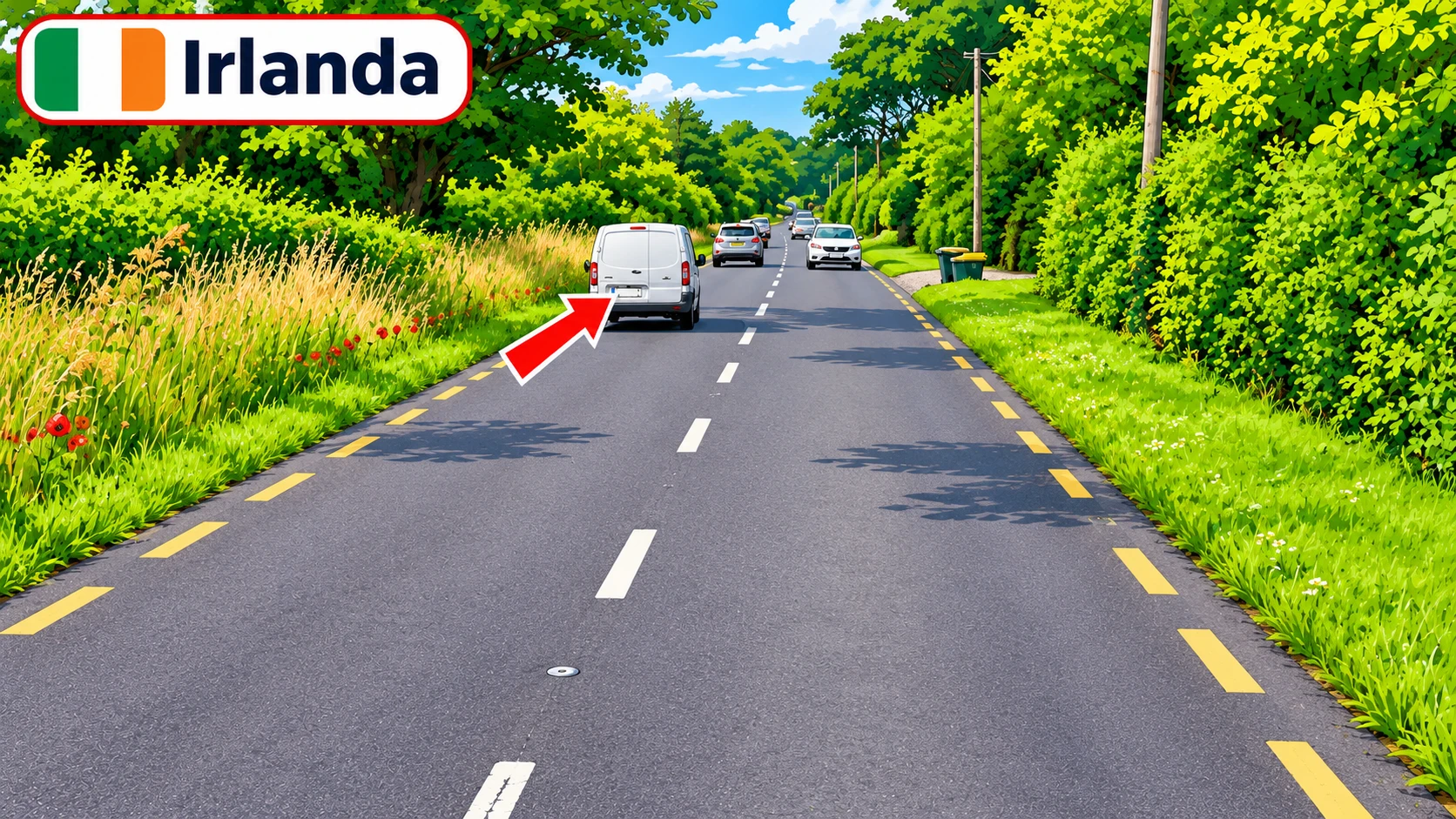
Explore this clueThe van ahead has a pale rear plate, contrasted with Britain's yellow rear plates.
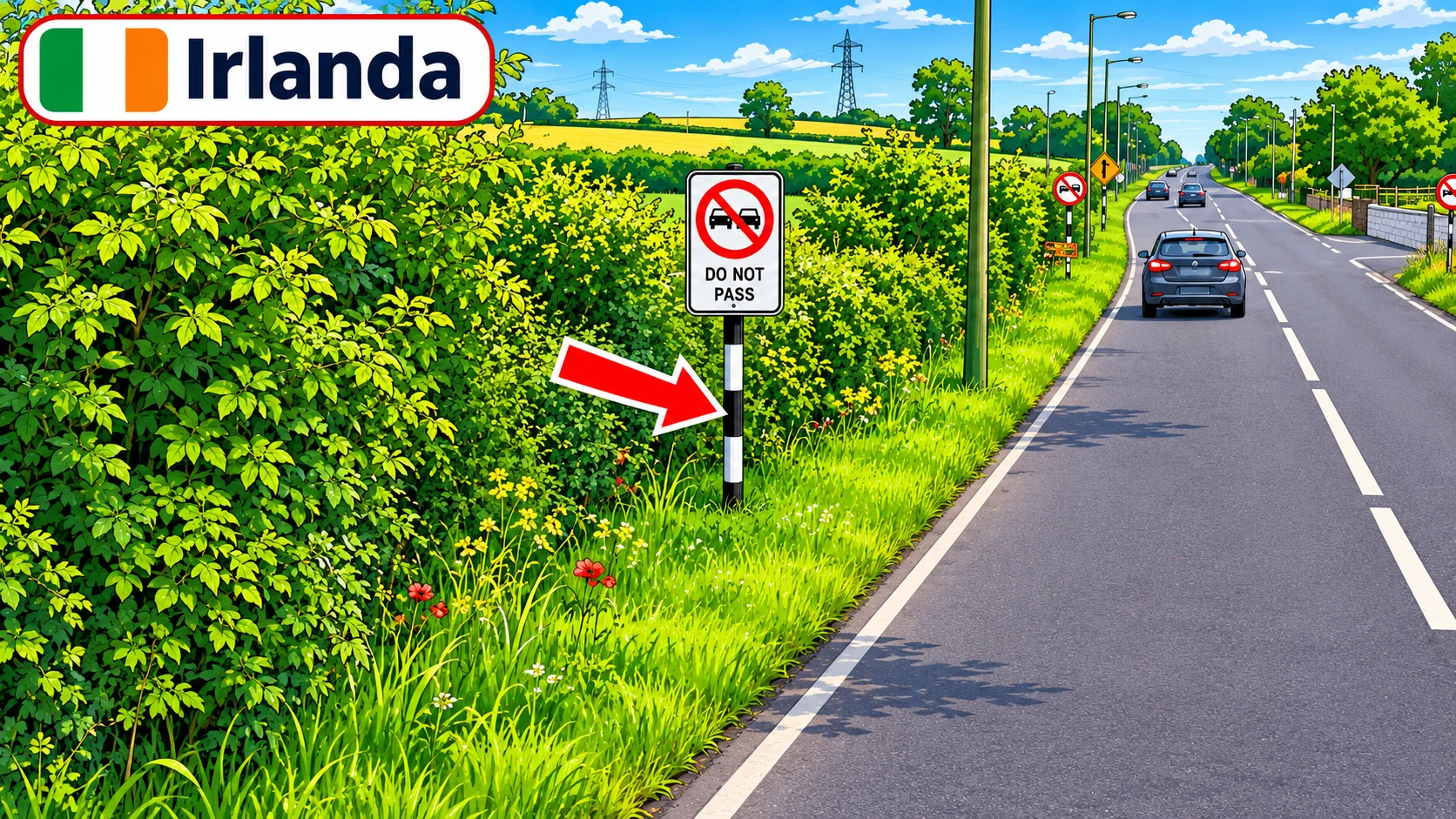
Explore this clueA roadside sign stands on a pole with alternating pale and dark bands.
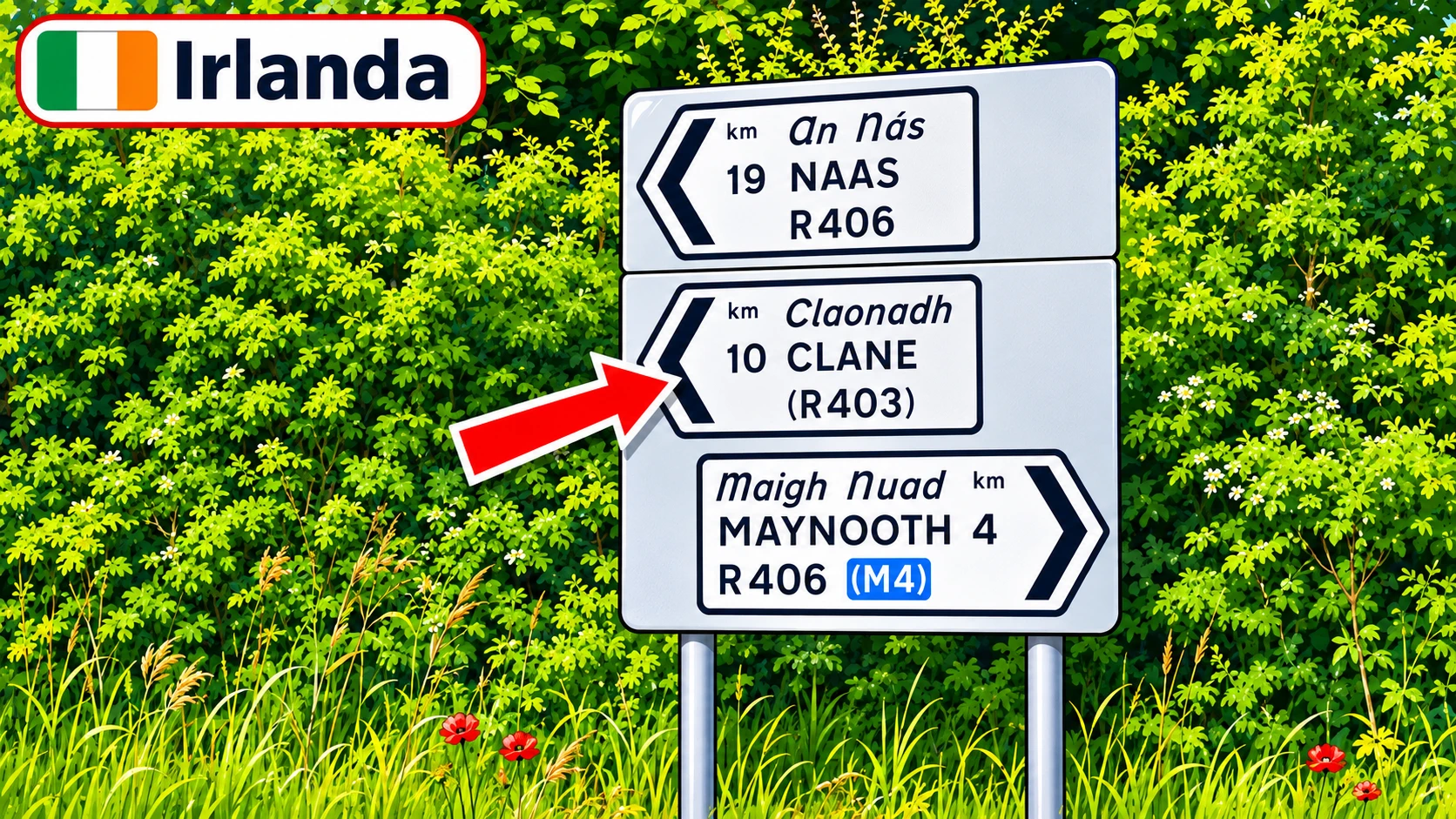
Explore this clueThe panels pair names such as An Nás / NAAS and Maigh Nuad / MAYNOOTH, alongside route R406.
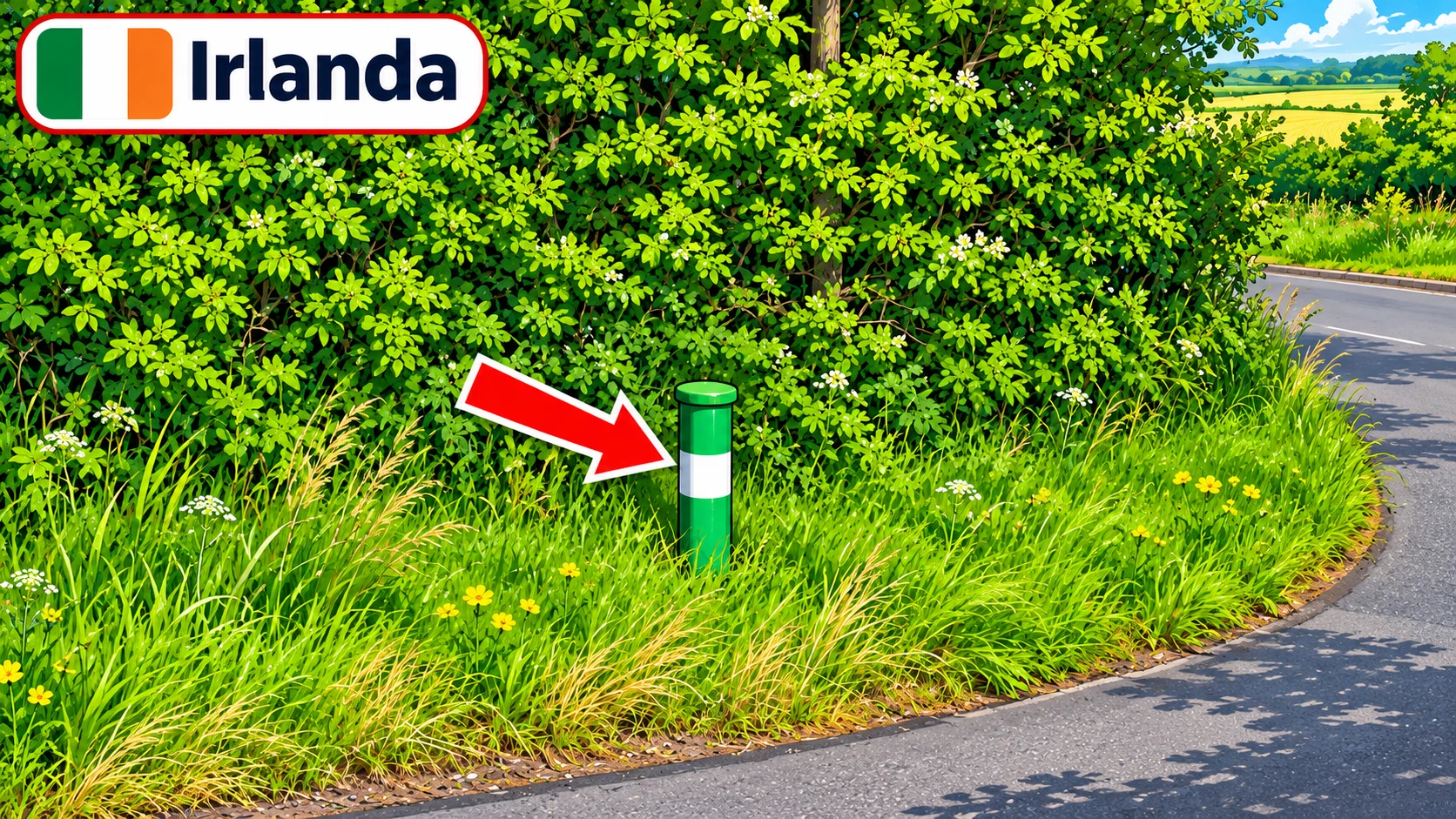
Explore this clueA small roadside support is green with a white band, compared with British examples.
Explore this clueThe guide contrasts inland plains with coastal roads, walls and exposed fields in the west and north.
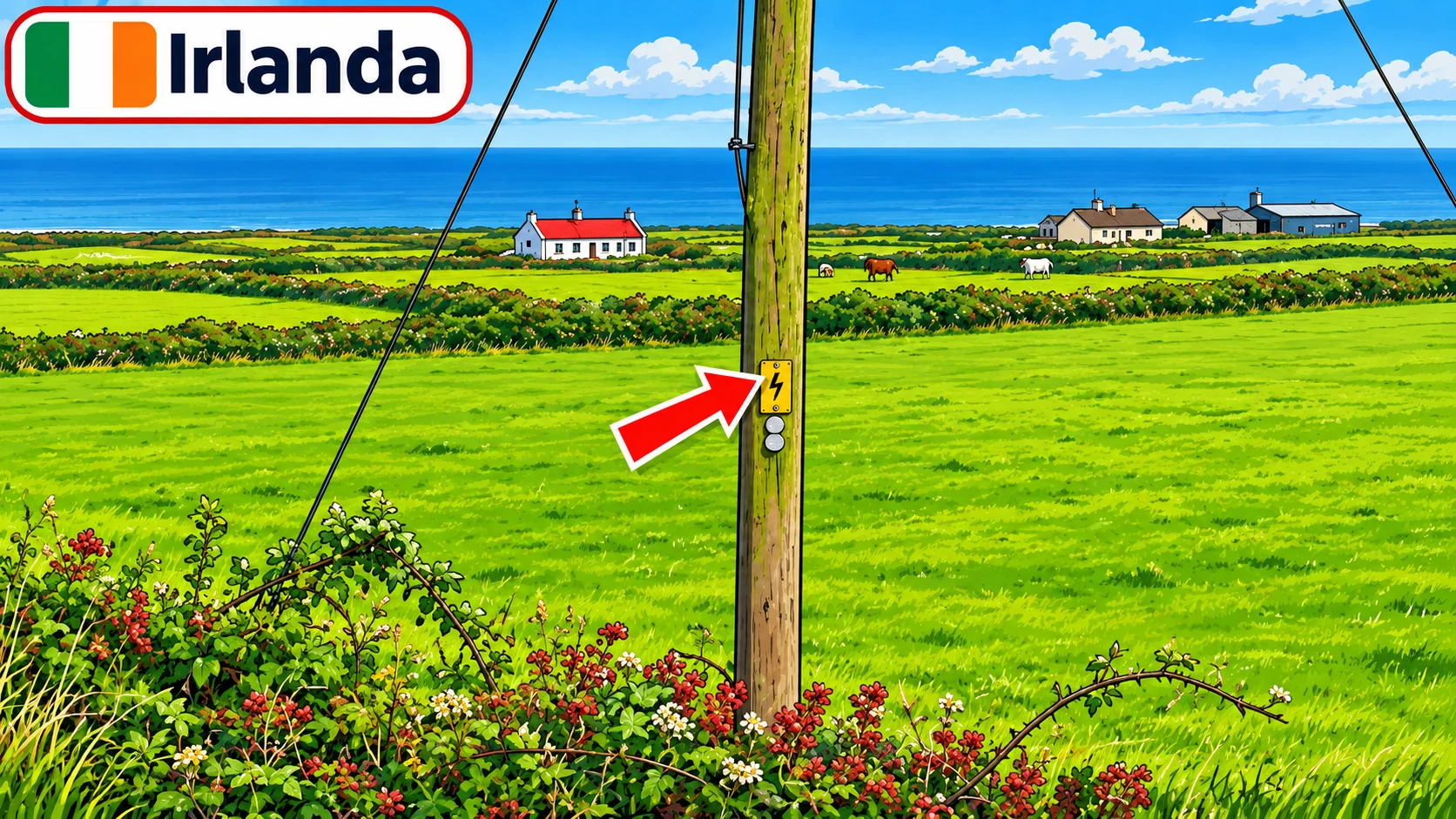
Explore this clueA small pole label is compared with a British design, described as lightning without a human figure.
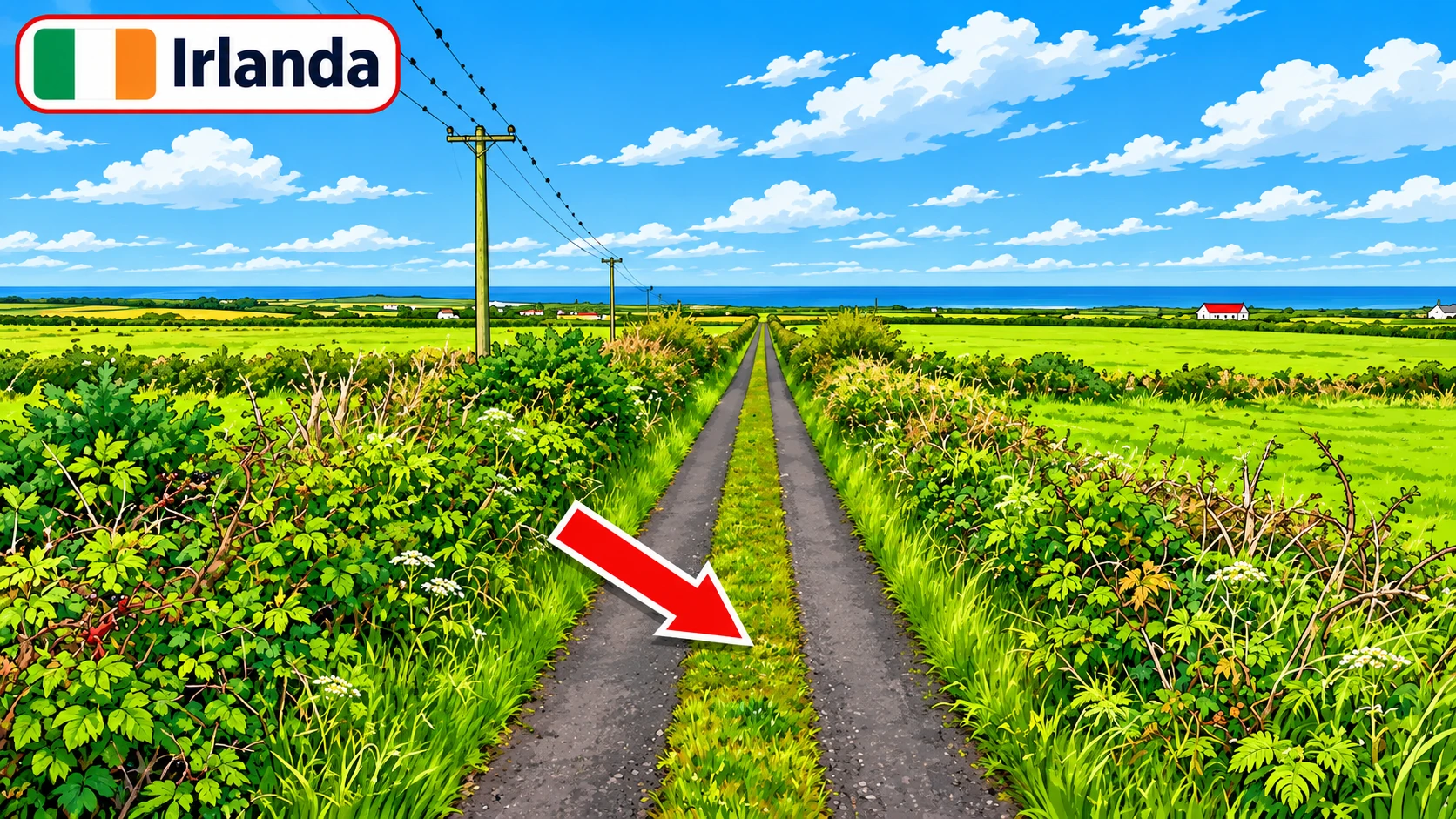
Explore this clueTwo wheel tracks are separated by a central grassy strip, associated with Ireland and the UK.
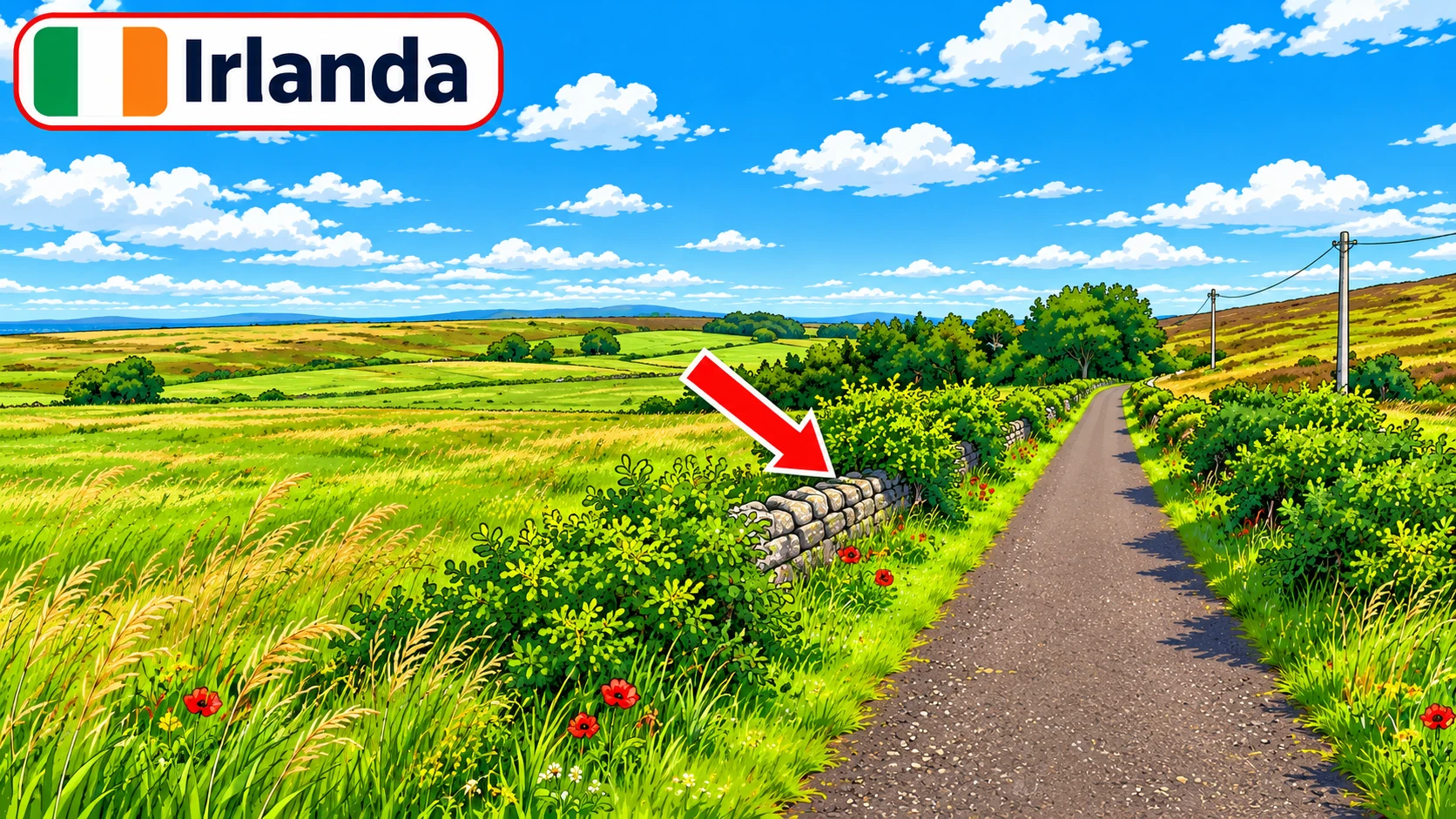
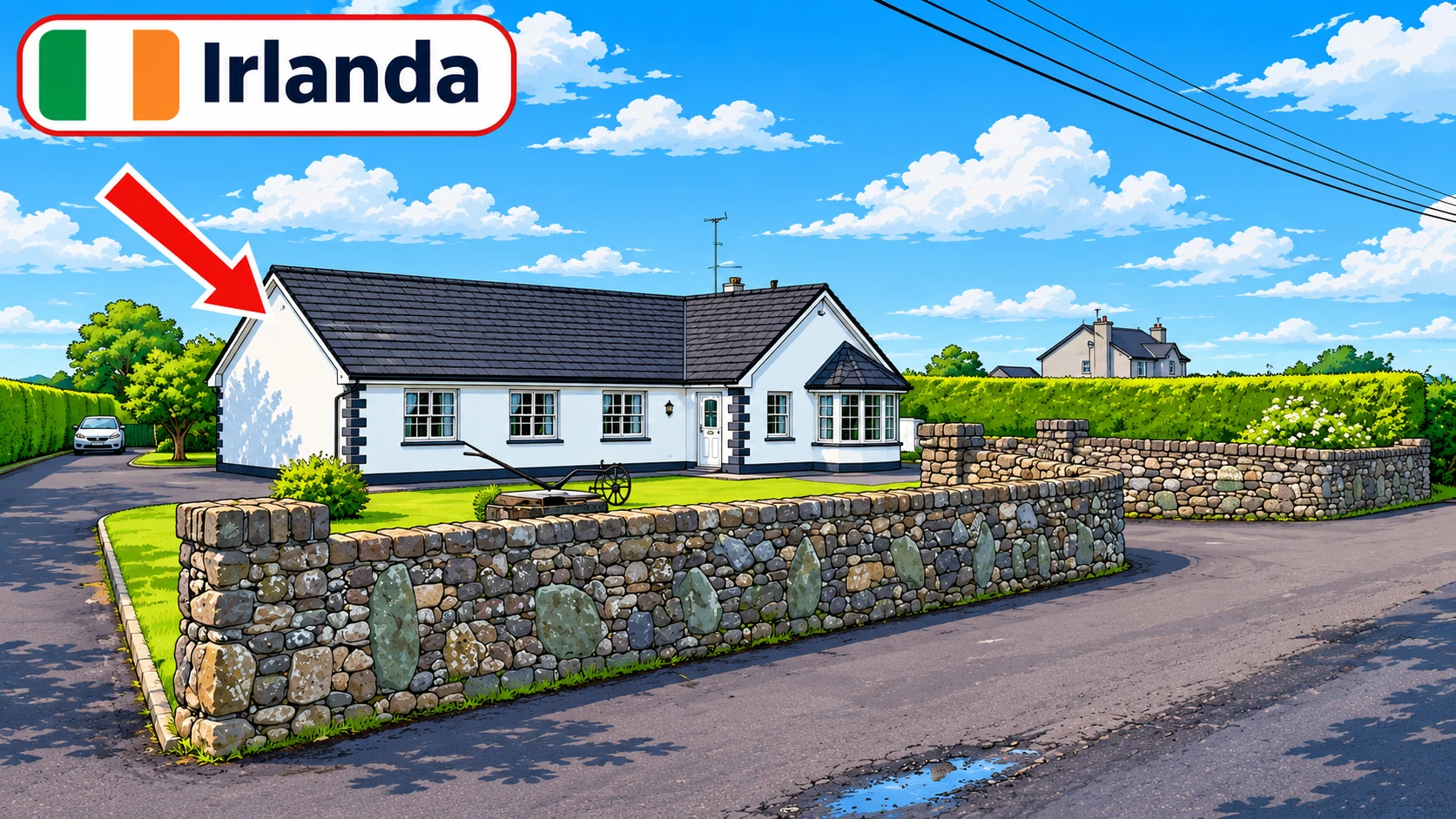
Explore this clueA pale rural house, dark roof and stone boundary wall are contrasted with British brick architecture.
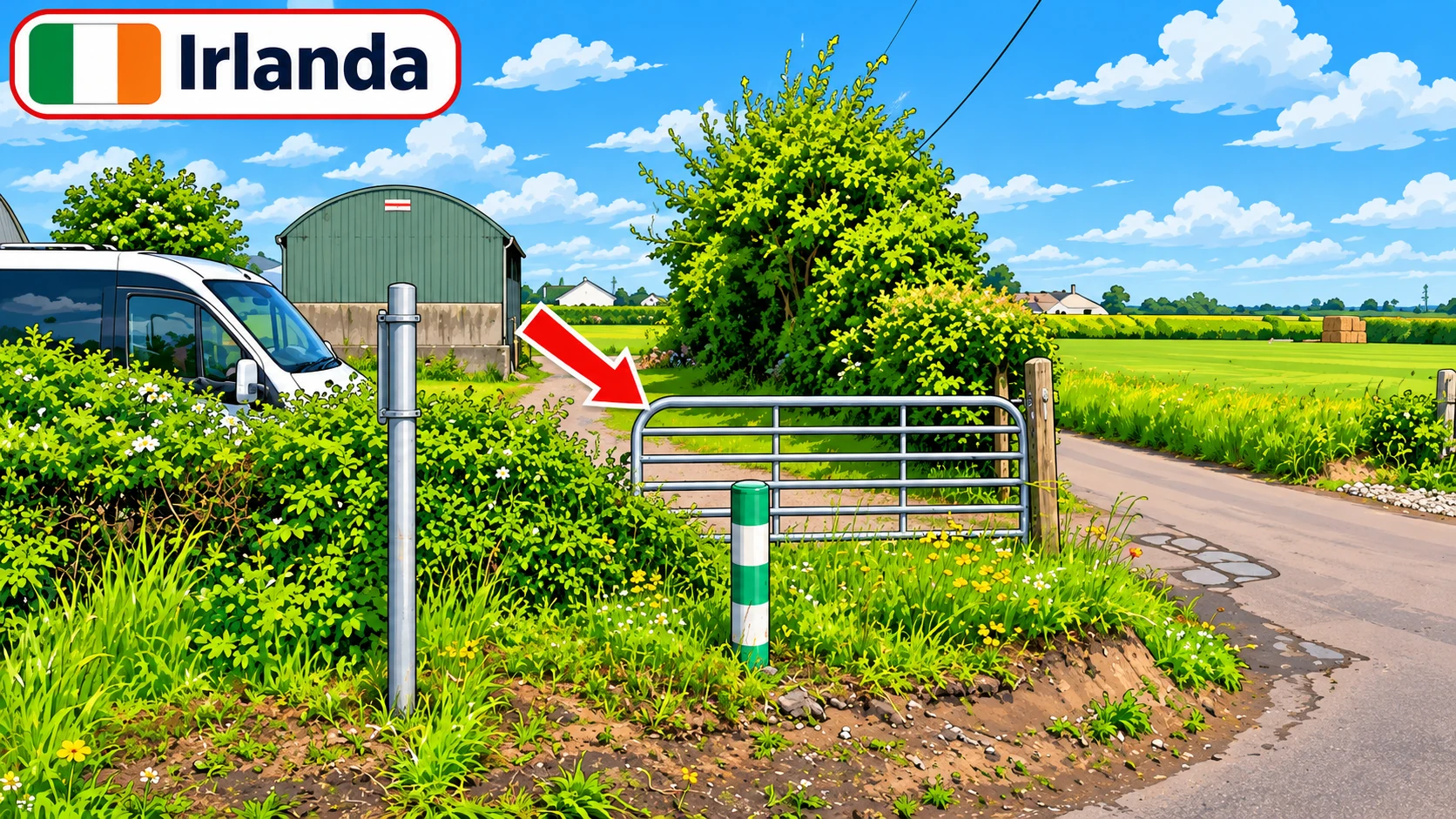
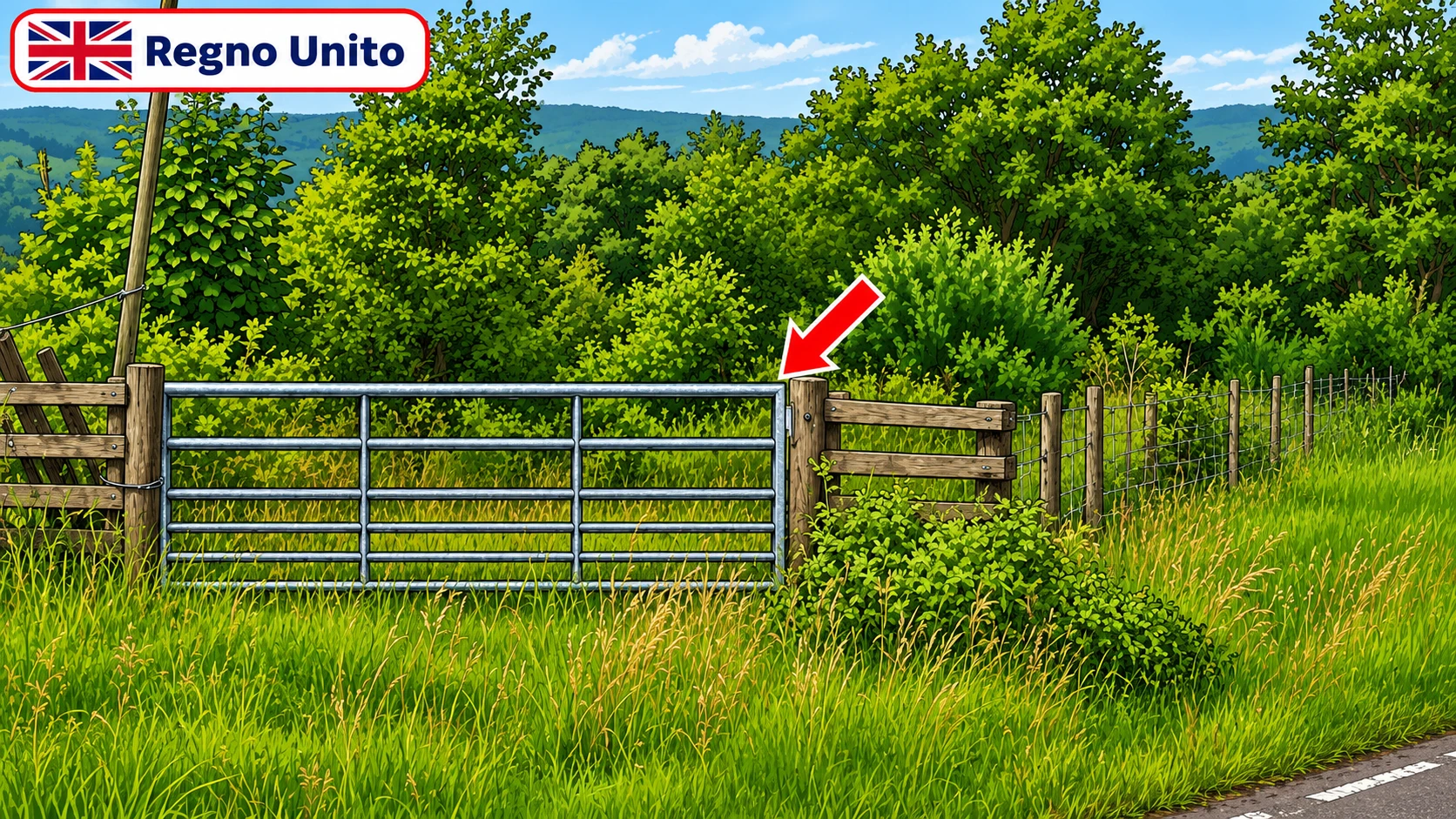
Explore this clueThe metal gate has rounded ends, compared with a more square-cornered British example.
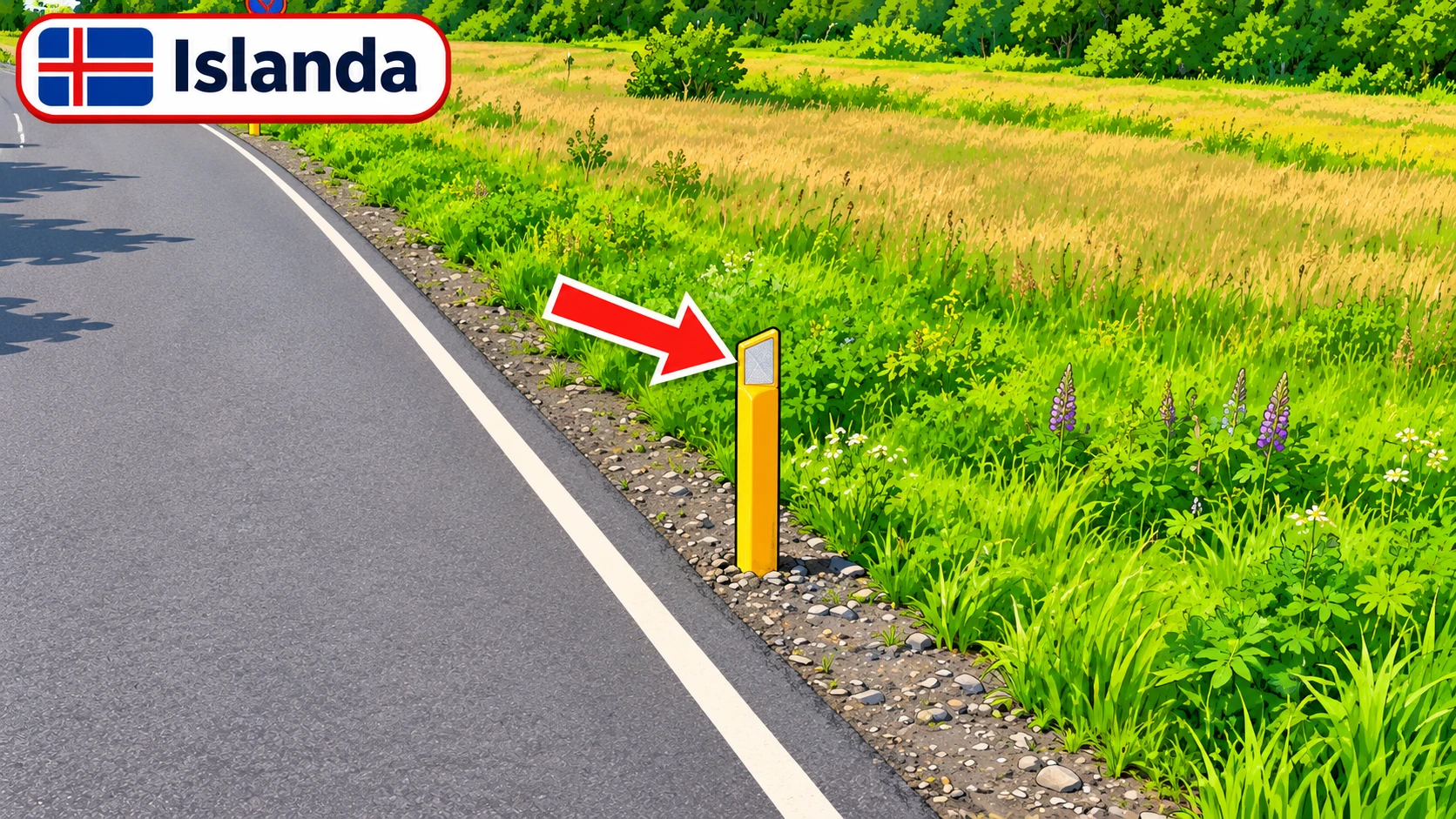
Explore this clueThe Icelandic post is yellow with a high reflector described as trapezoidal and grey or pale.
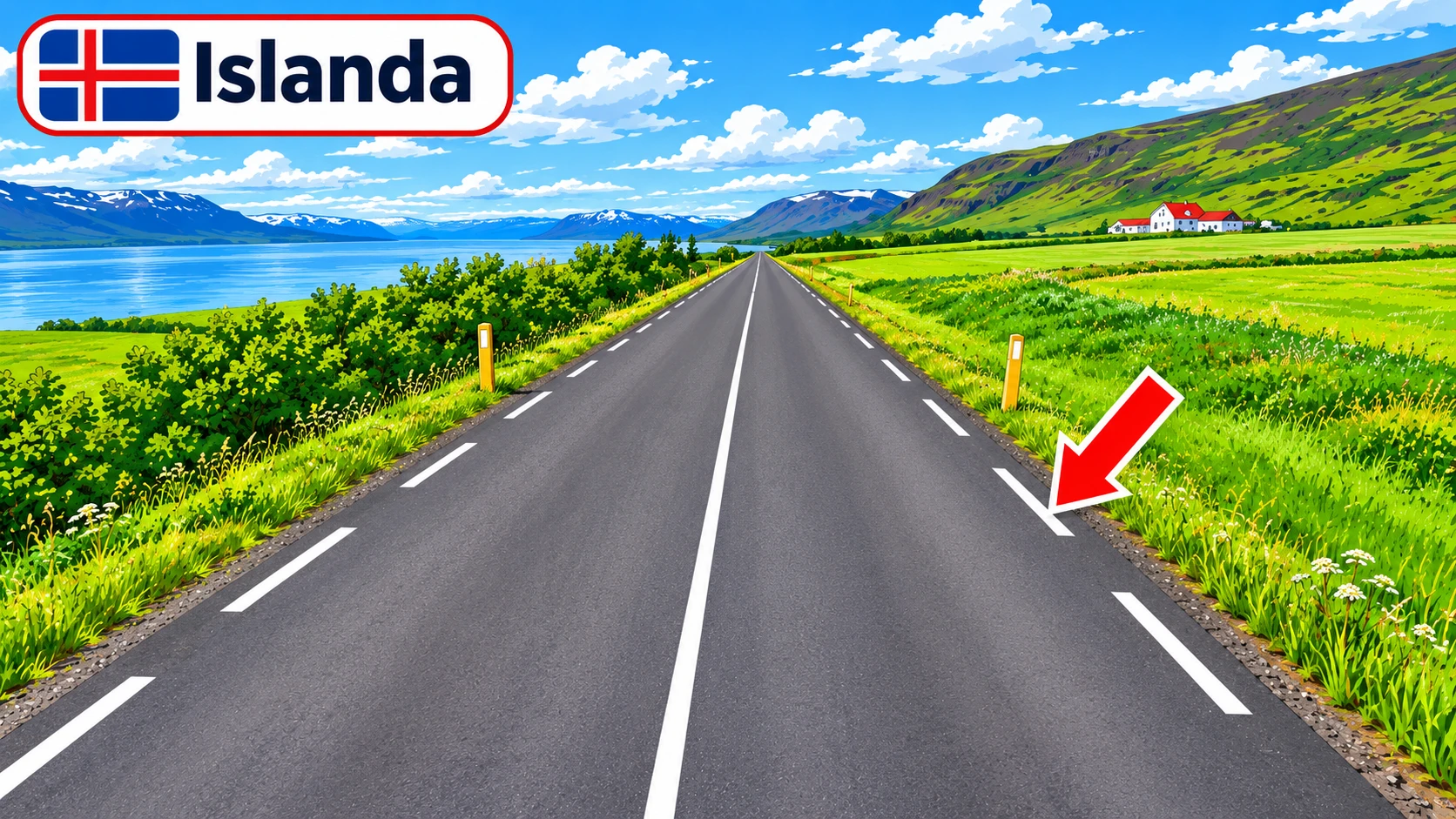
Explore this clueThe road has broken white edge markings and a white centre line within an open landscape.
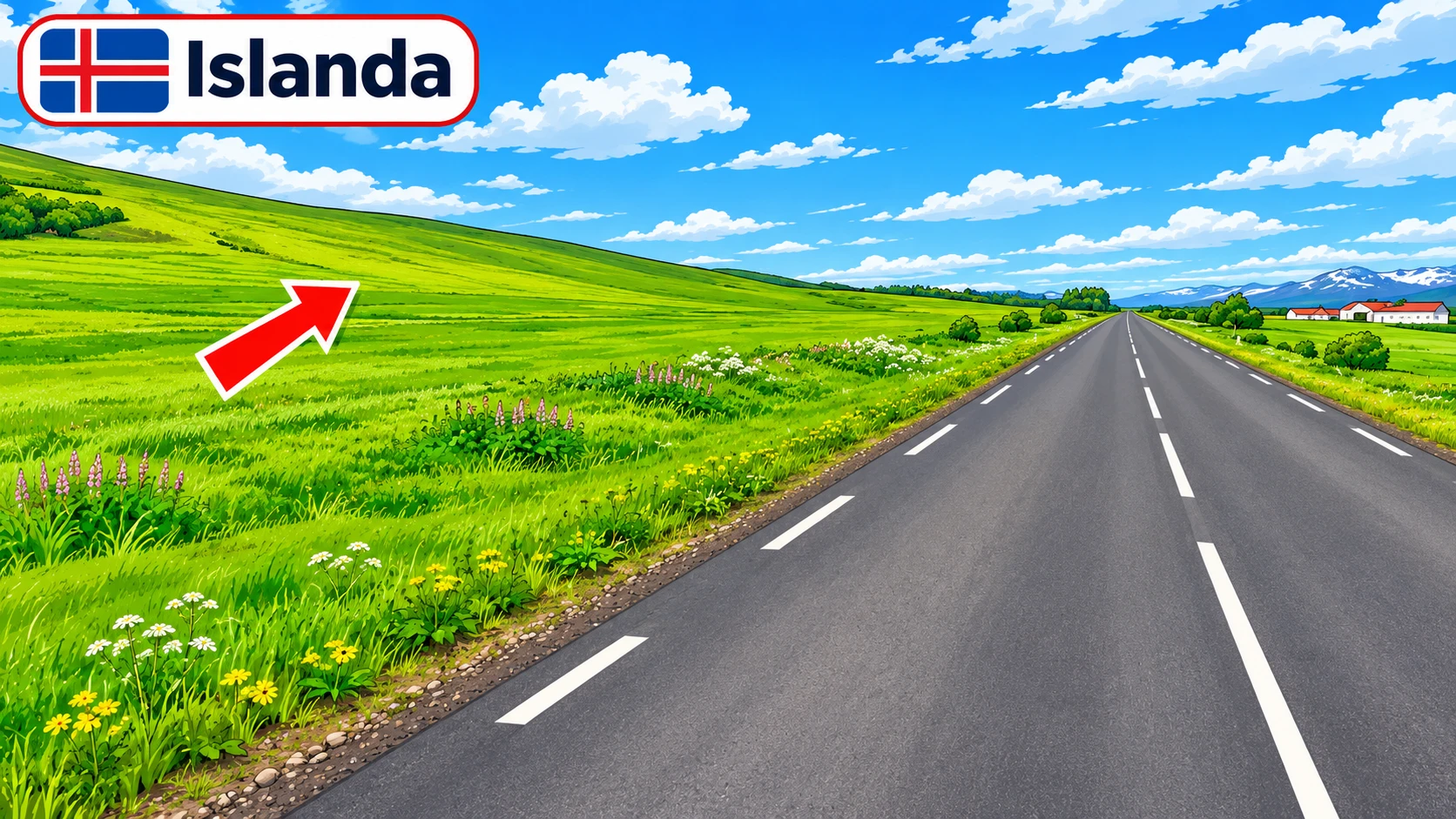
Explore this clueThe guide shows green fields, low vegetation and wide slopes, contrasting Iceland's variety with the Faroes.
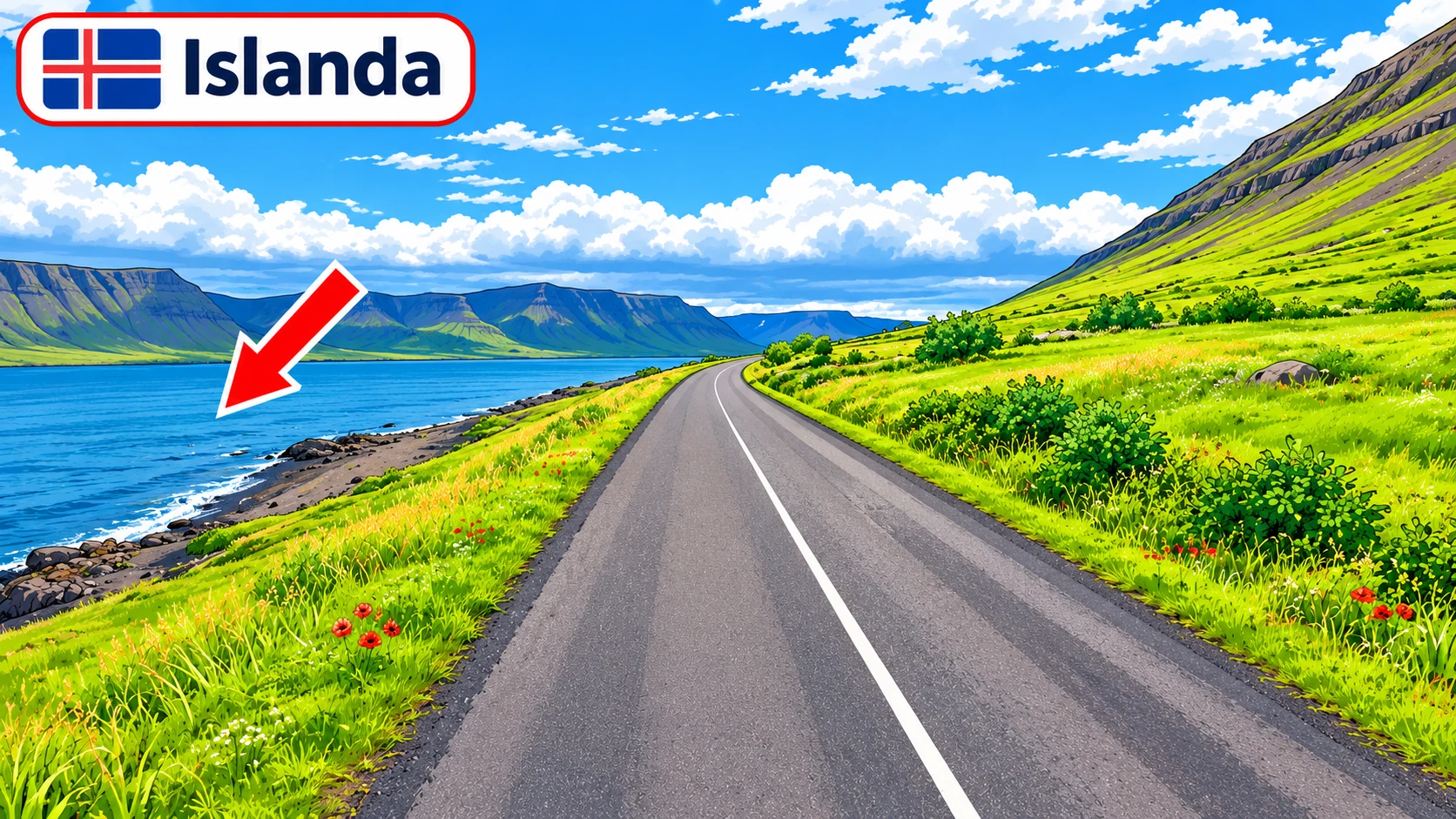
Explore this clueA coastal road runs beside water and high terrain, associated in the guide with northwestern fjords.
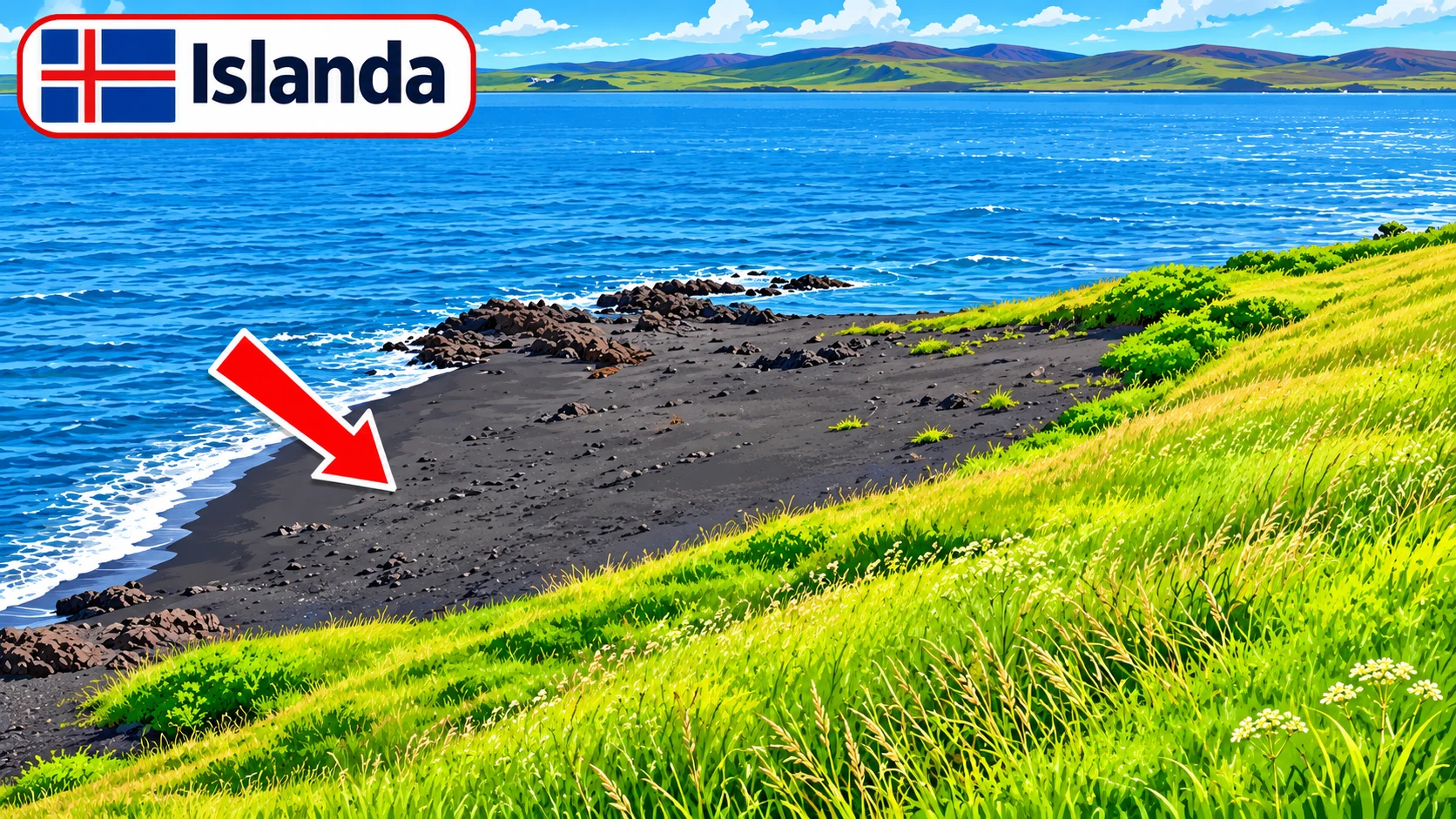
Explore this clueCoastal and interior scenes show very dark soil and sparse vegetation.
Explore this clueThe guide uses a map to discuss regional numbering patterns, including 2-series routes in the southwest.
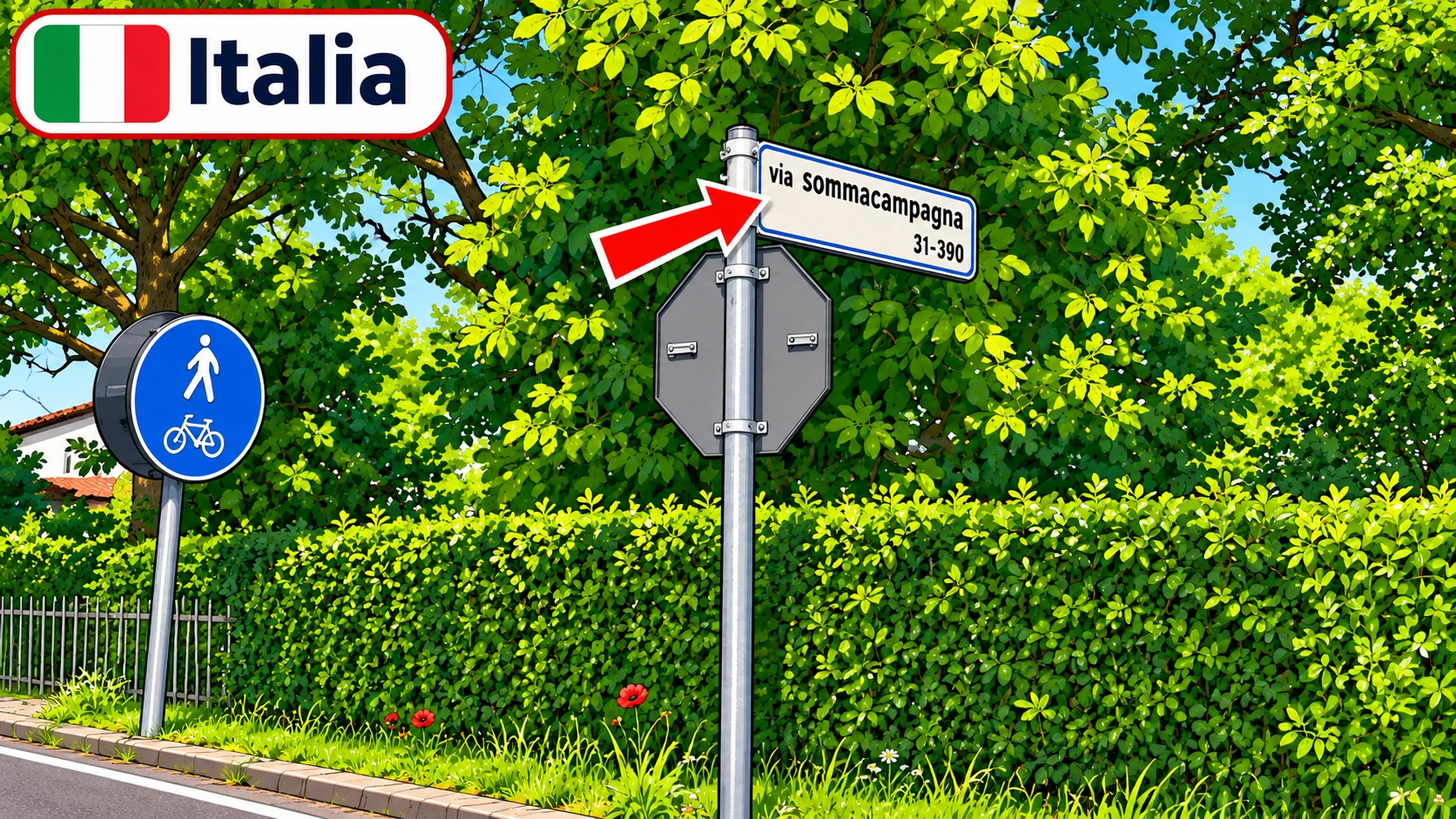
Explore this clueA light street-name plaque has a dark blue border and the word via; the video compares the layout with San Marino.
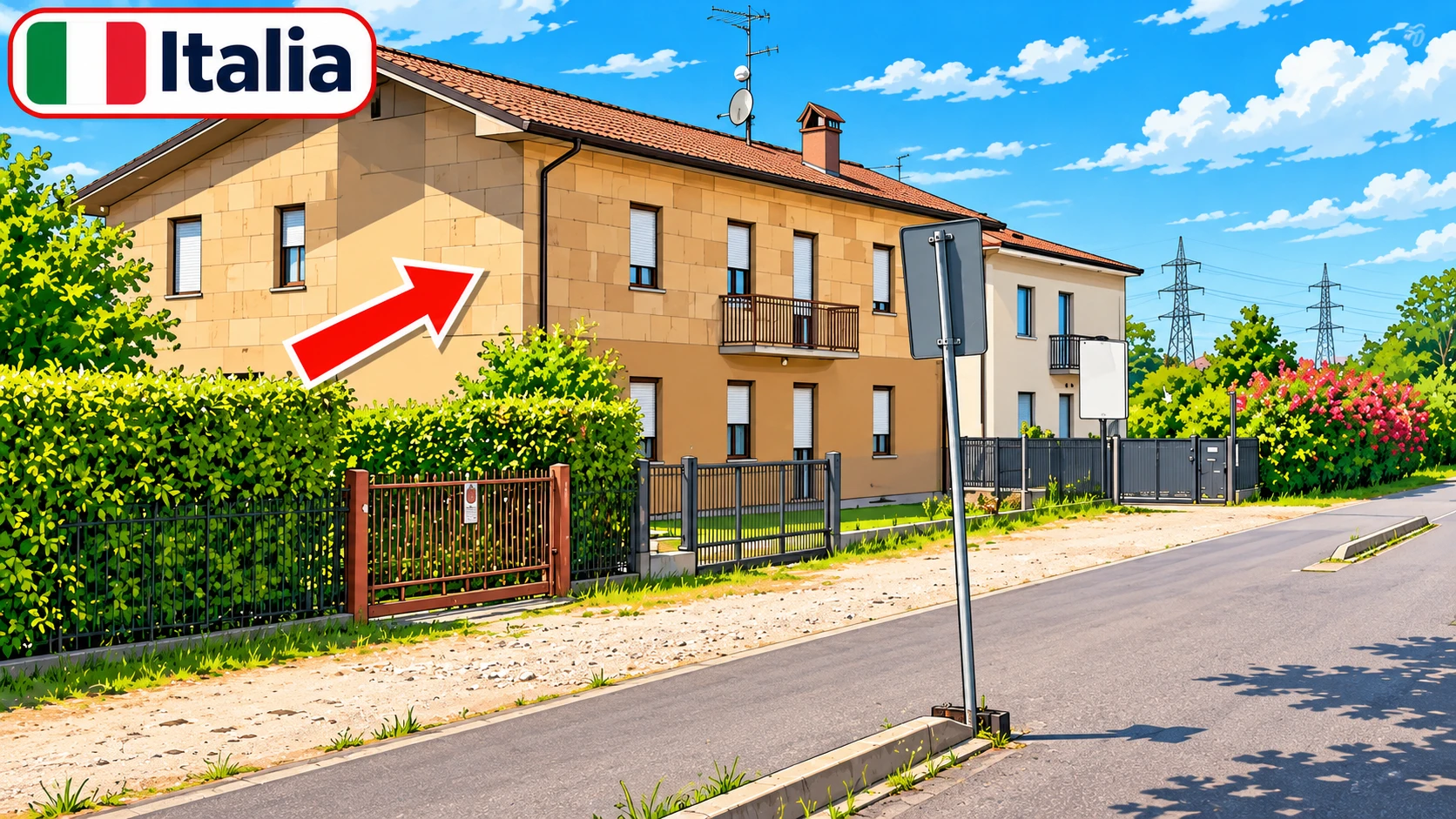
Explore this cluePale and pastel houses are compared with taller continuous façades in central Rome, illustrating local variation.
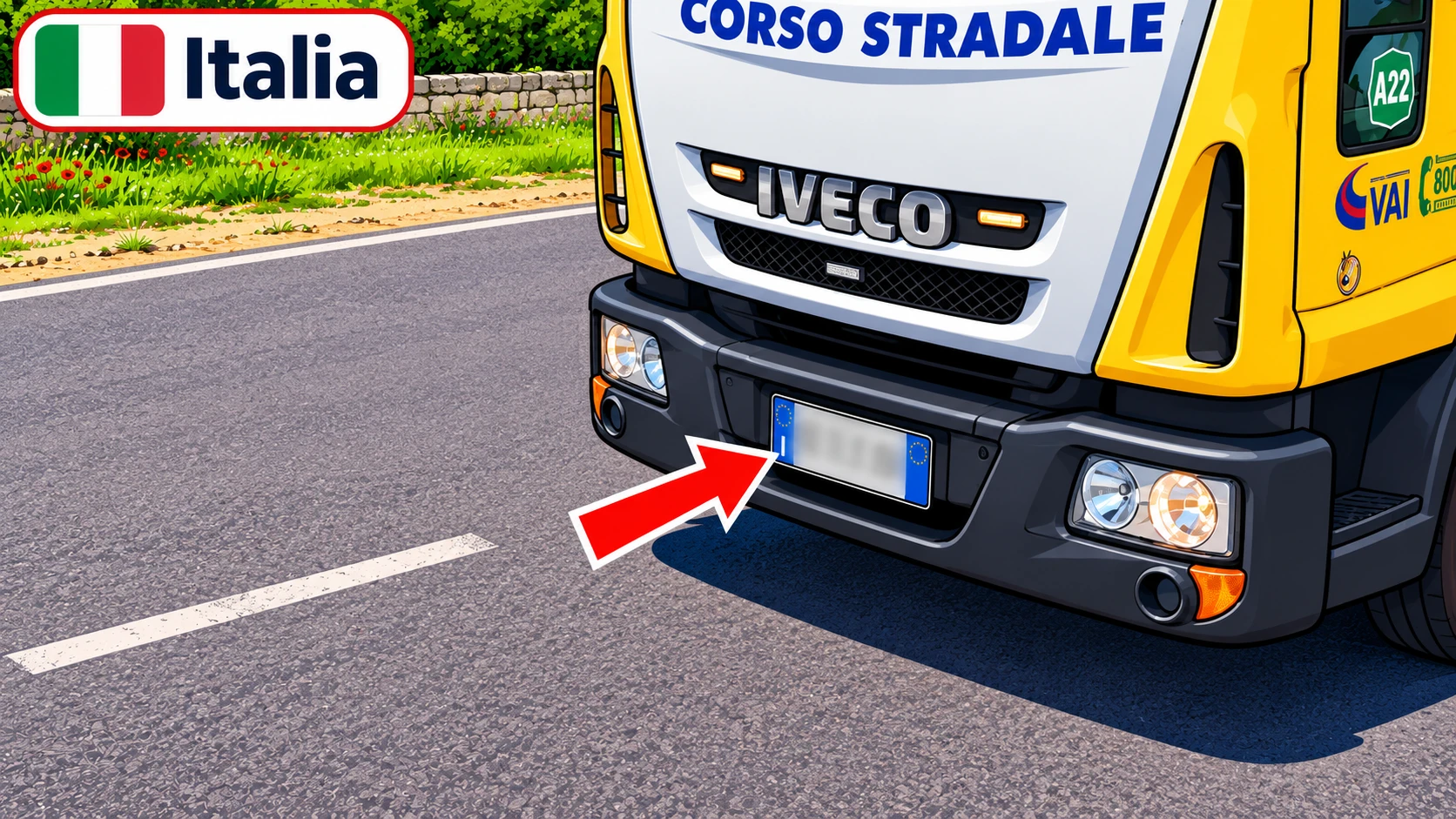
Explore this clueThe guide highlights a blue band at each end of Italian plates and describes front plates as shorter than rear ones.
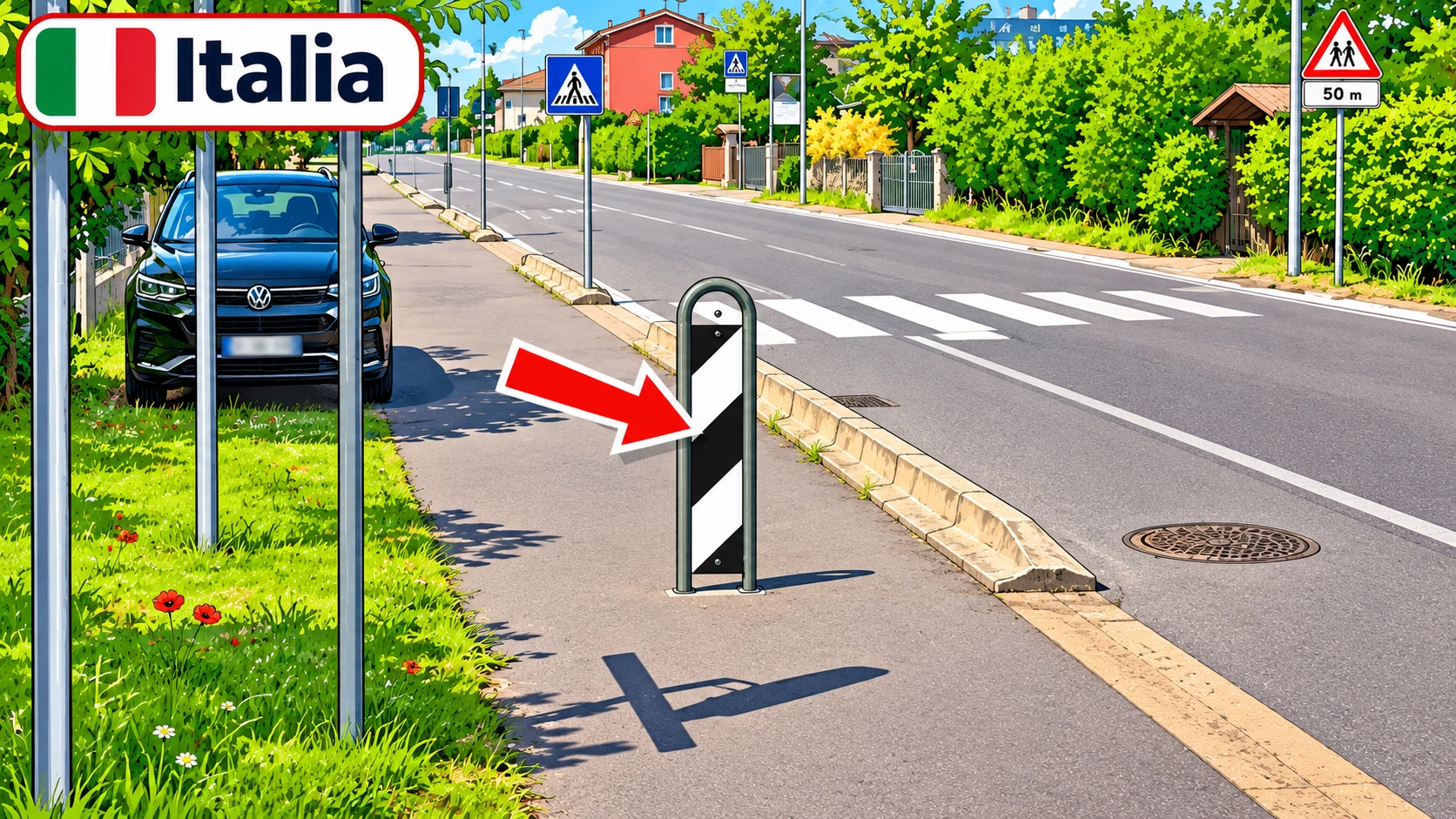
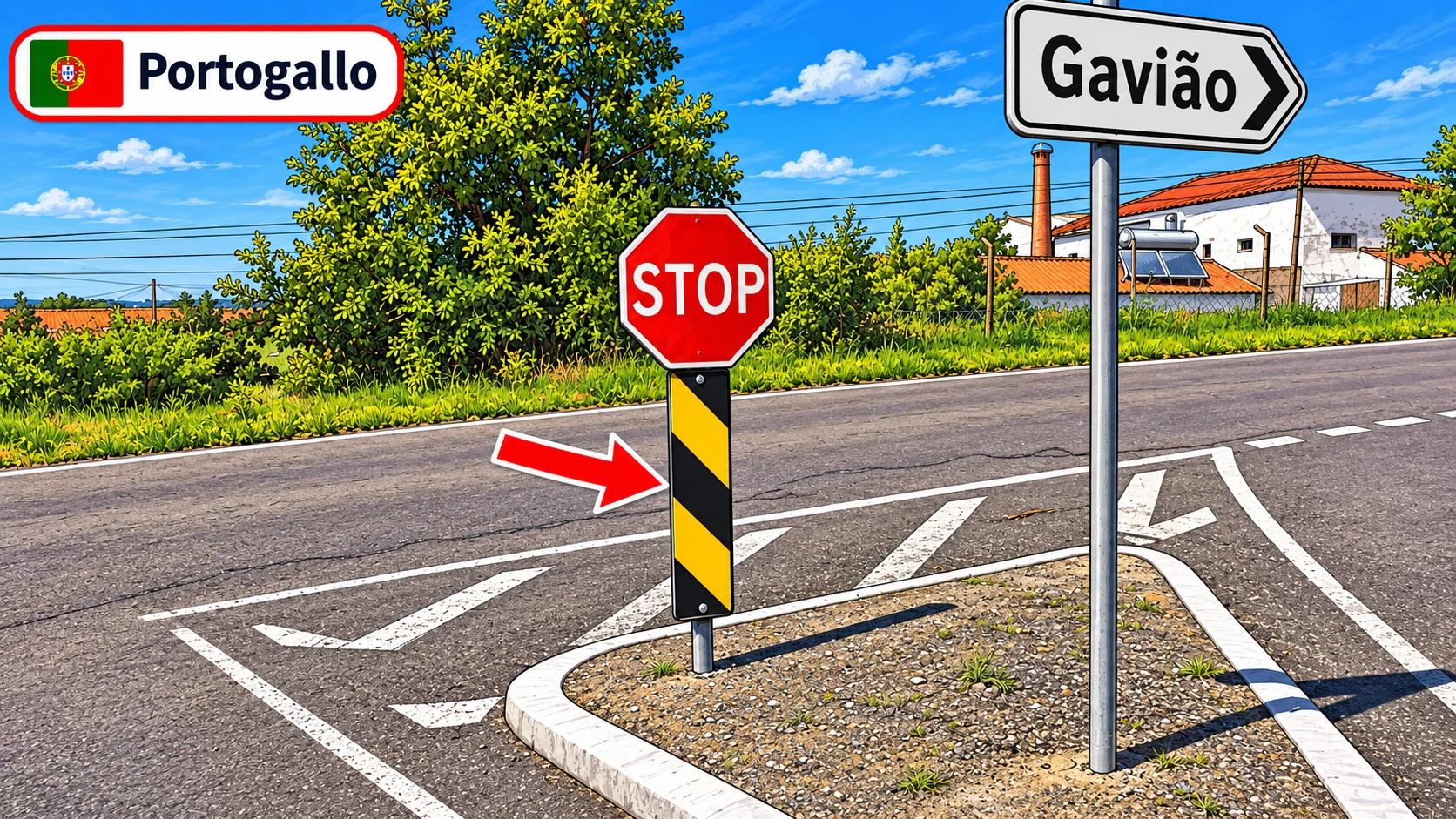
Explore this clueA vertical support on the island has diagonal black-and-white areas, unlike ordinary white rural edge posts.
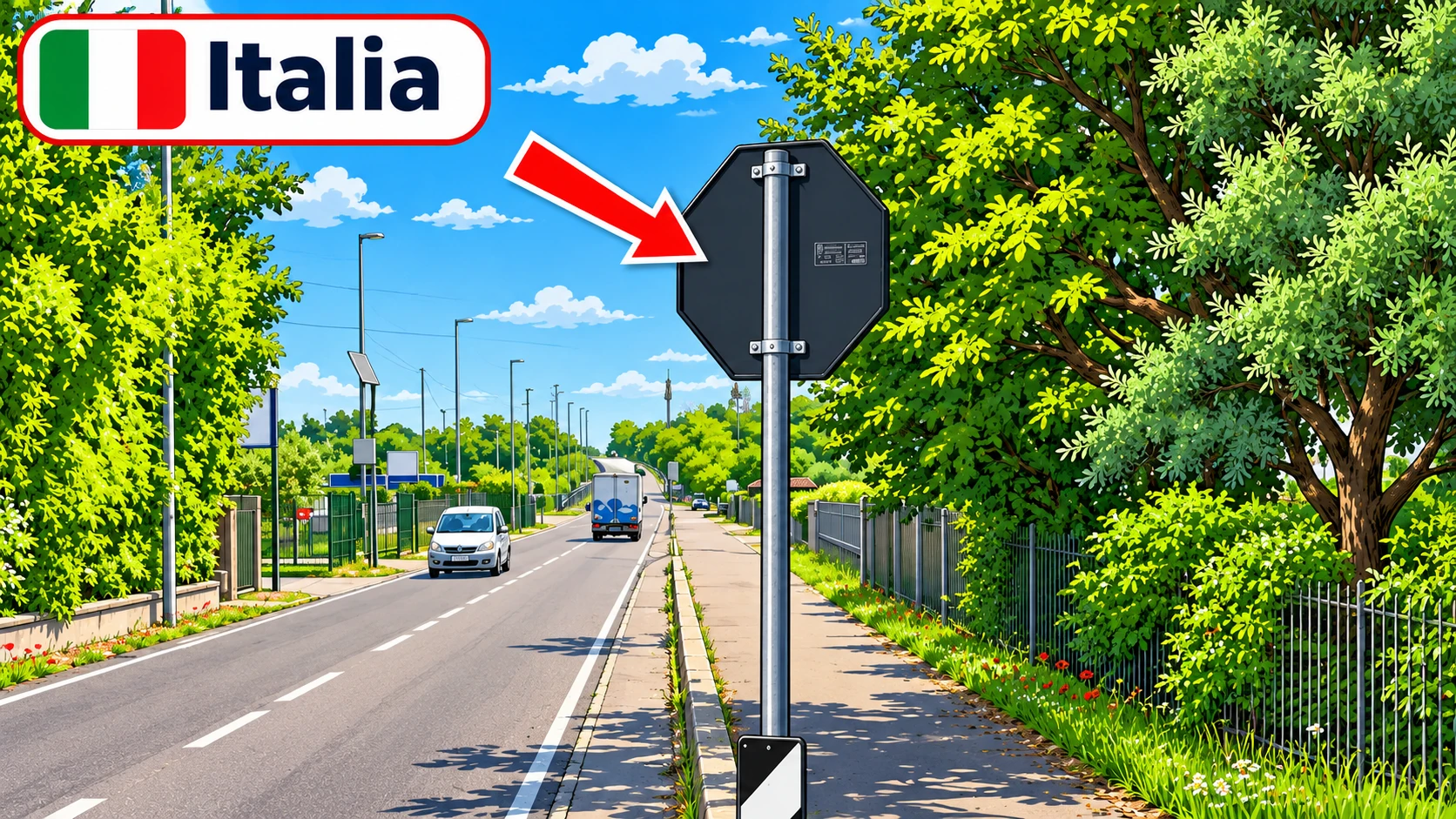
Explore this clueThe stop sign has a very dark rear, a feature also discussed for Albania and Romania.
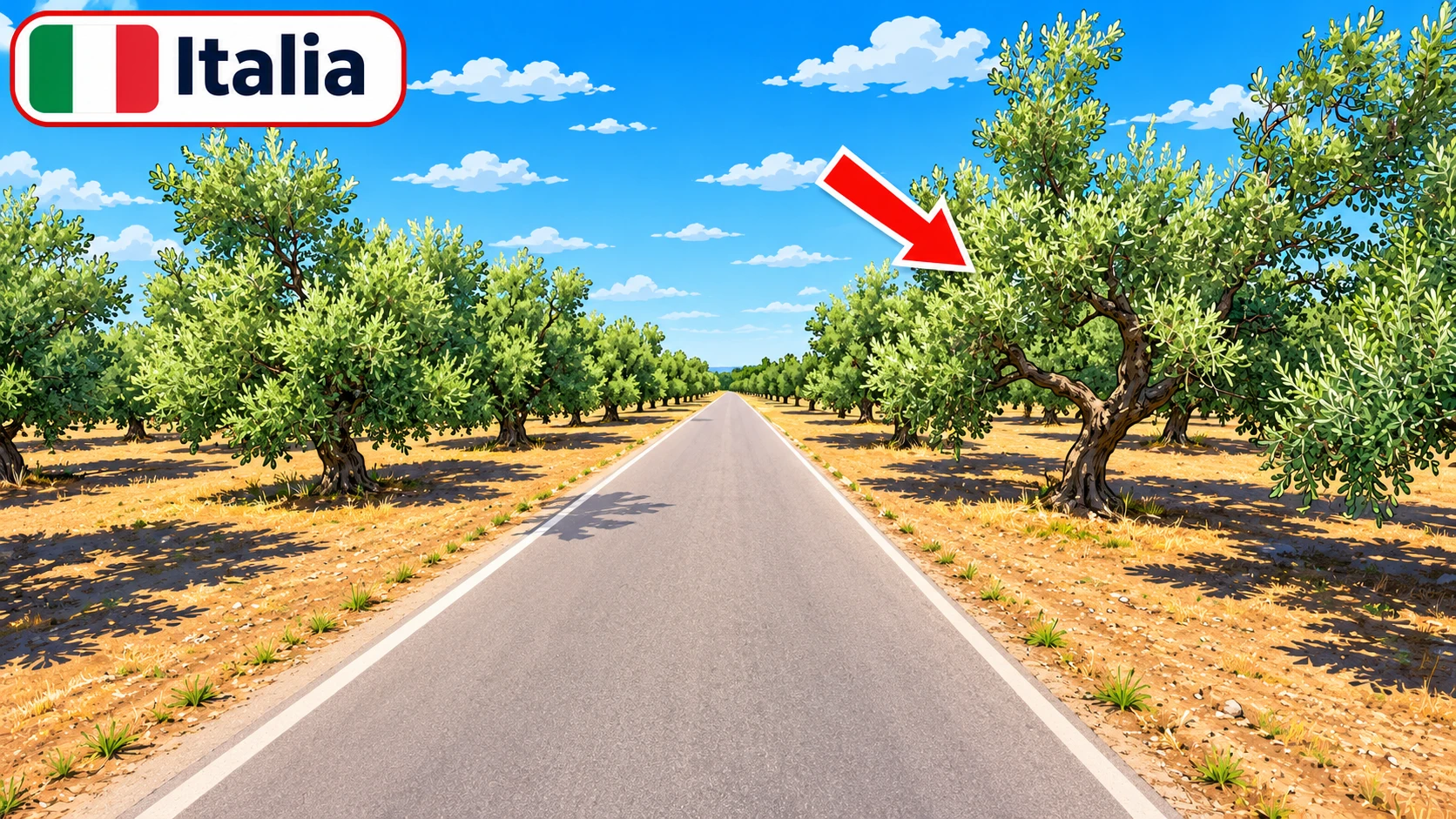
Explore this clueThe sequence compares broad flat fields with dry terrain and grey-green trees, mentioning the northern plain and the Bari area.
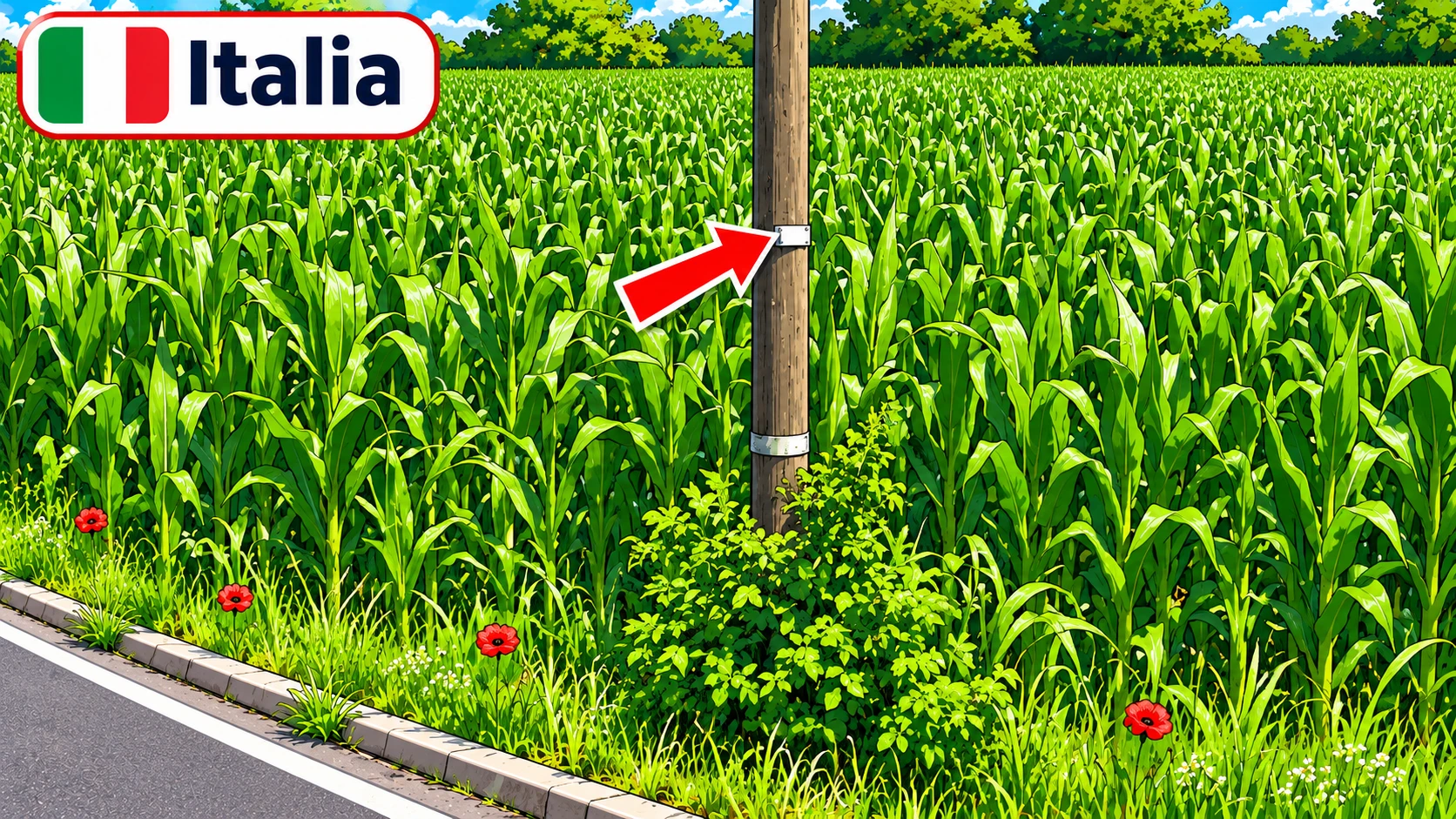
Explore this clueA small horizontal white label is indicated on a utility pole, described as frequent particularly on wooden poles.
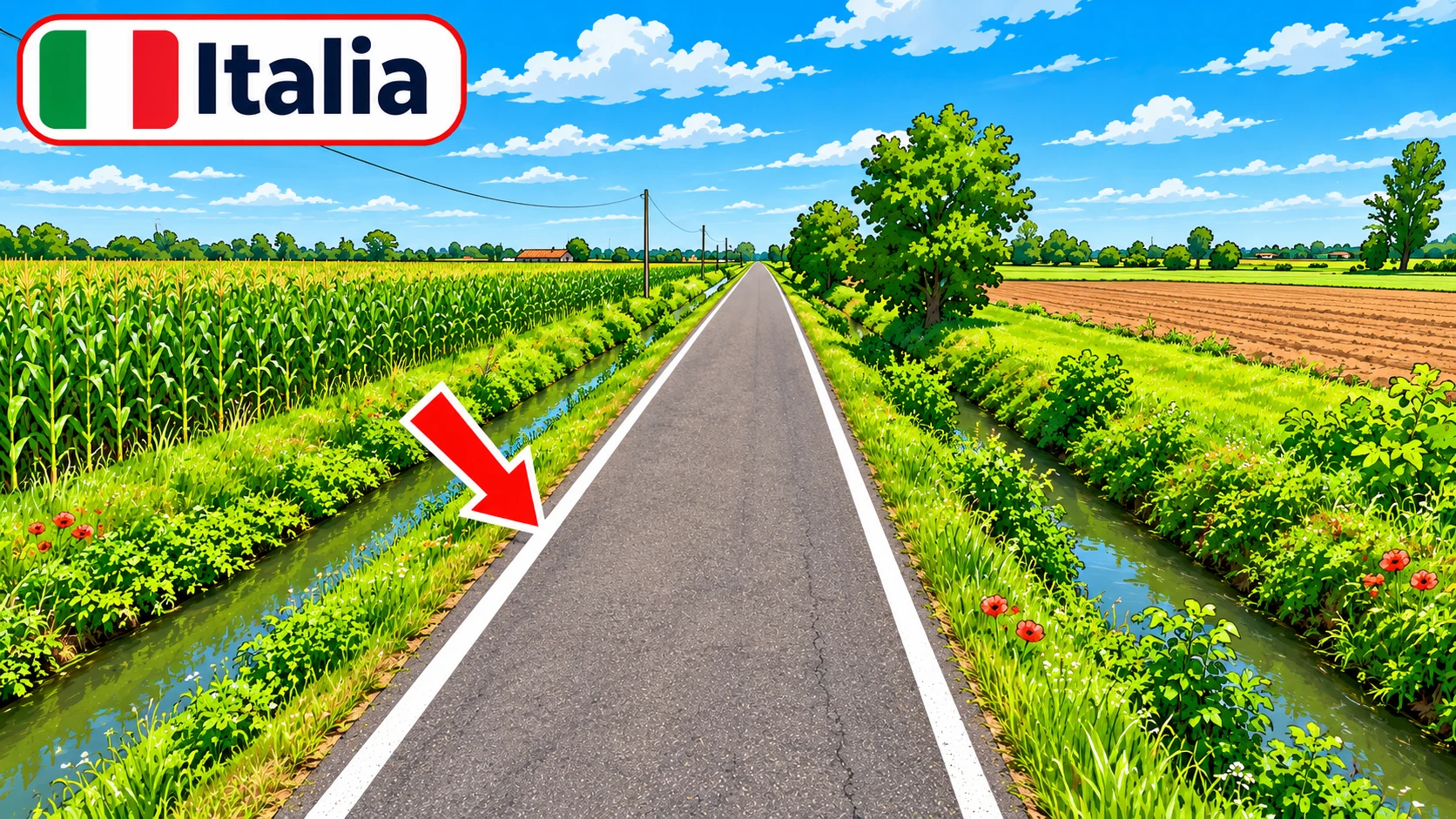
Explore this clueThe narrow road has continuous white edges. Some rural and mountain examples lack a centre marking.
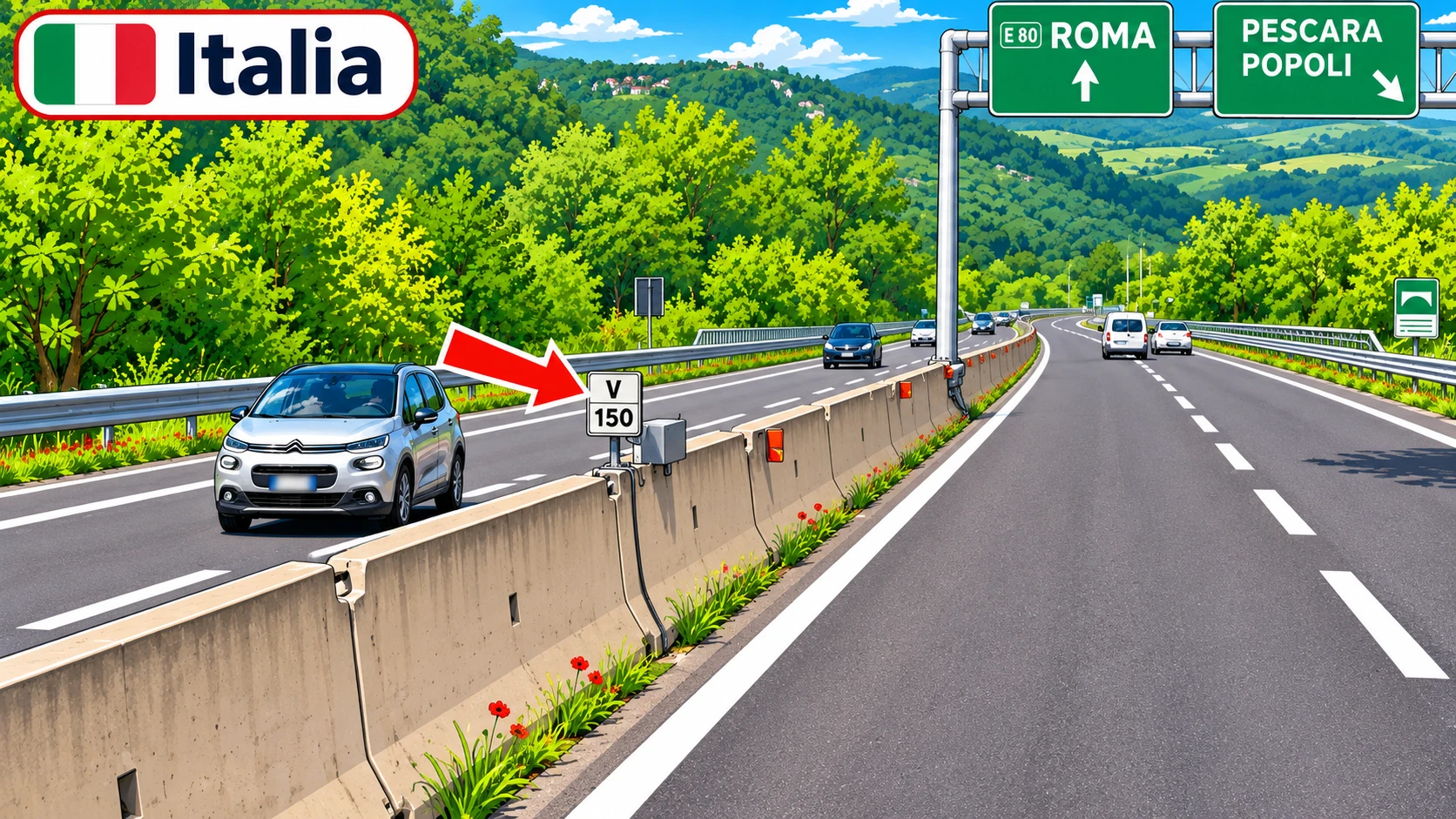
Explore this clueThe narration describes a distance marker with a Roman numeral near its top.
Explore this clueA mountain-road delineator has a white body, black upper area and reflector, linked with rural and snowy roads.
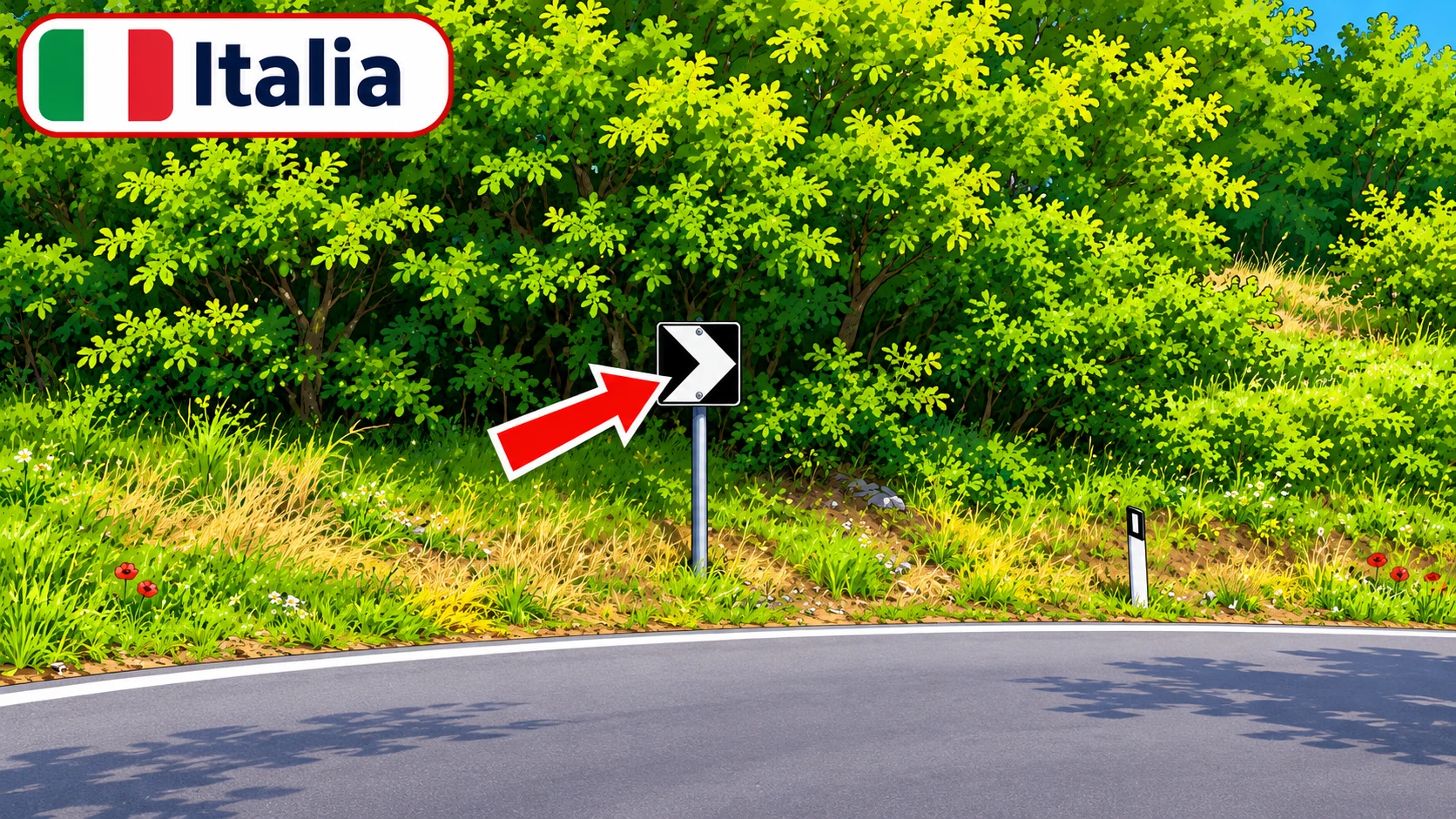
Explore this clueWhite chevrons on black accompany a narrow winding mountain road.
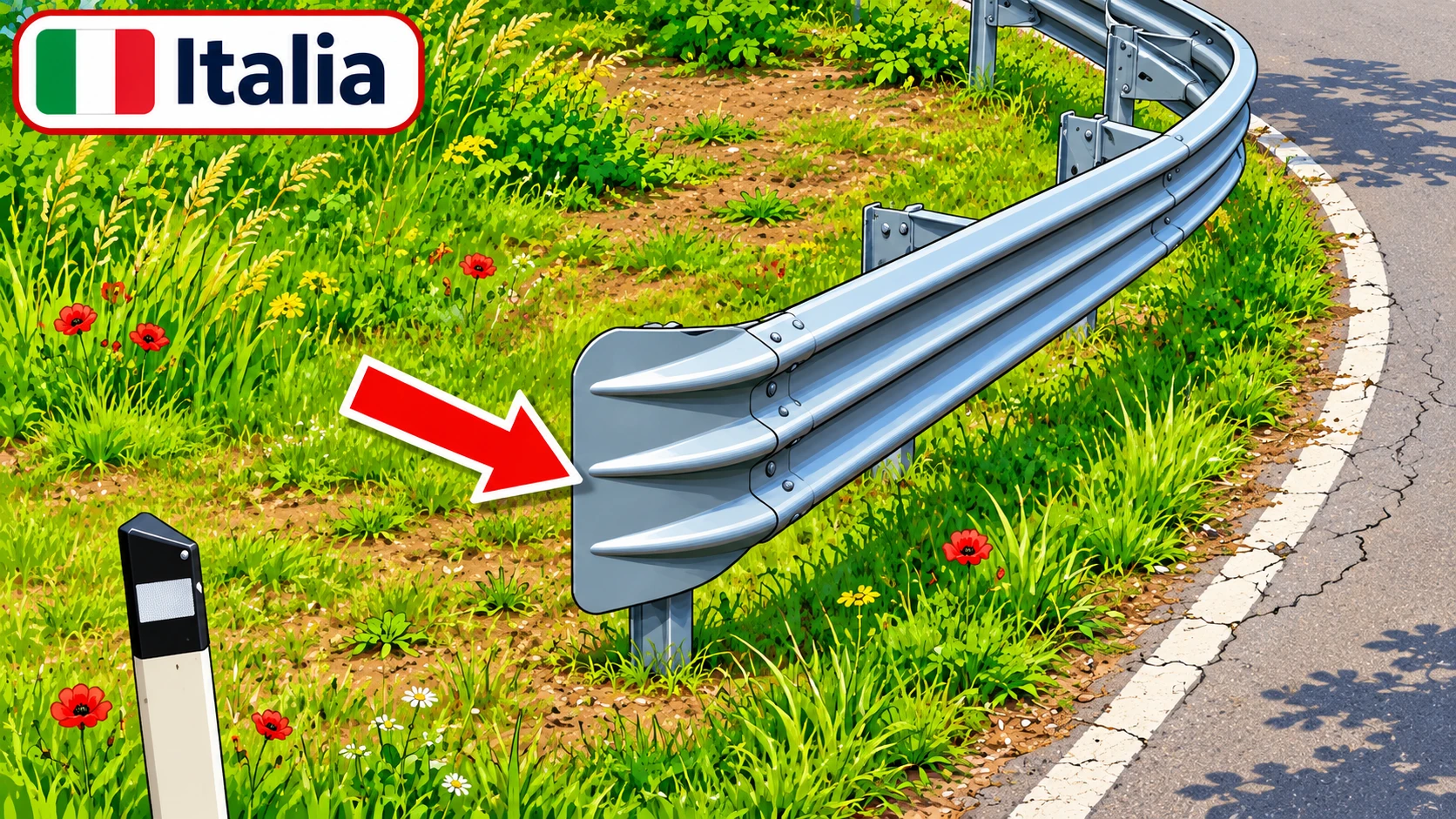
Explore this clueThe terminal has several stacked ribs or projecting elements. The author mentions two as common but counts three here.
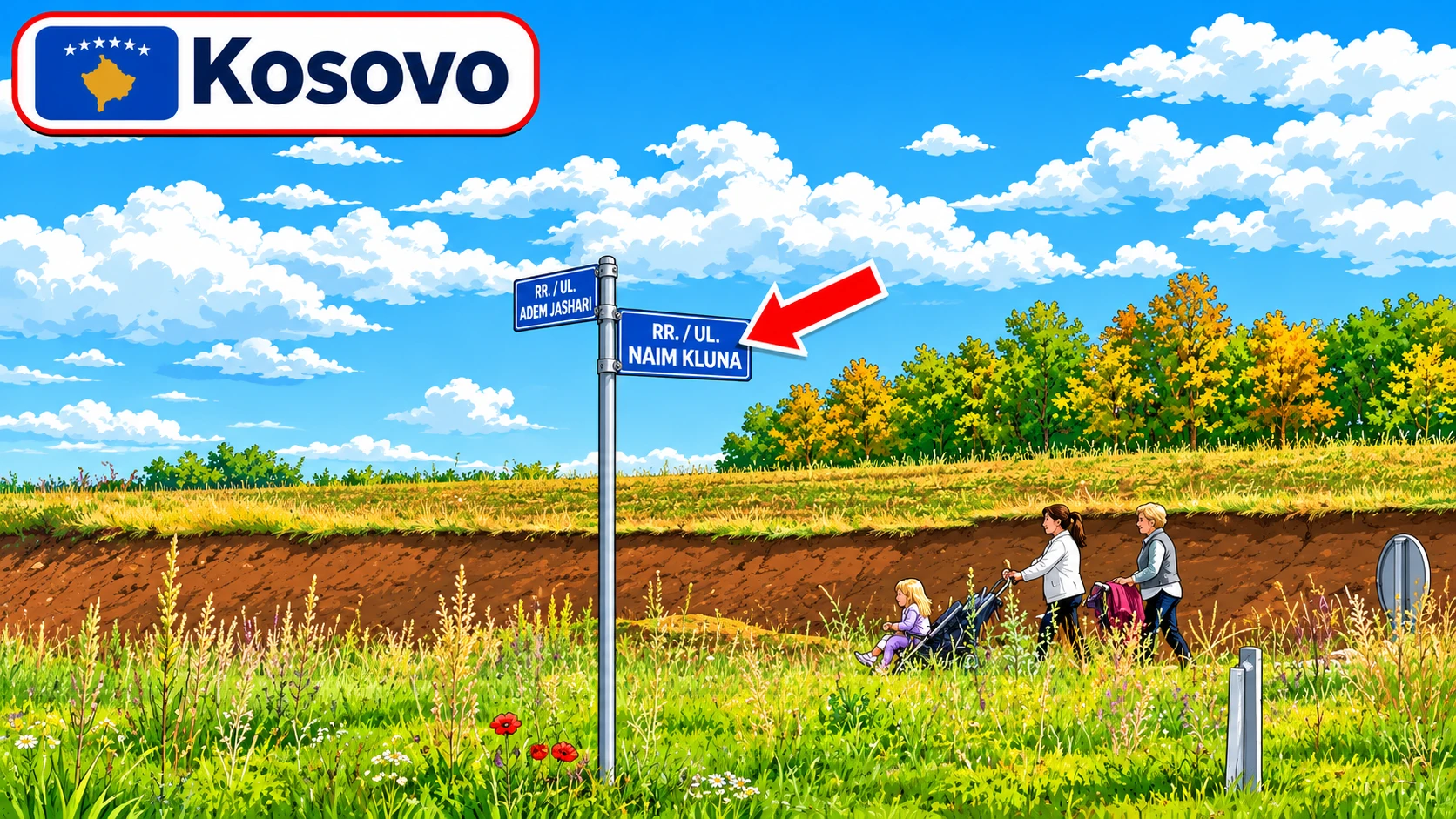
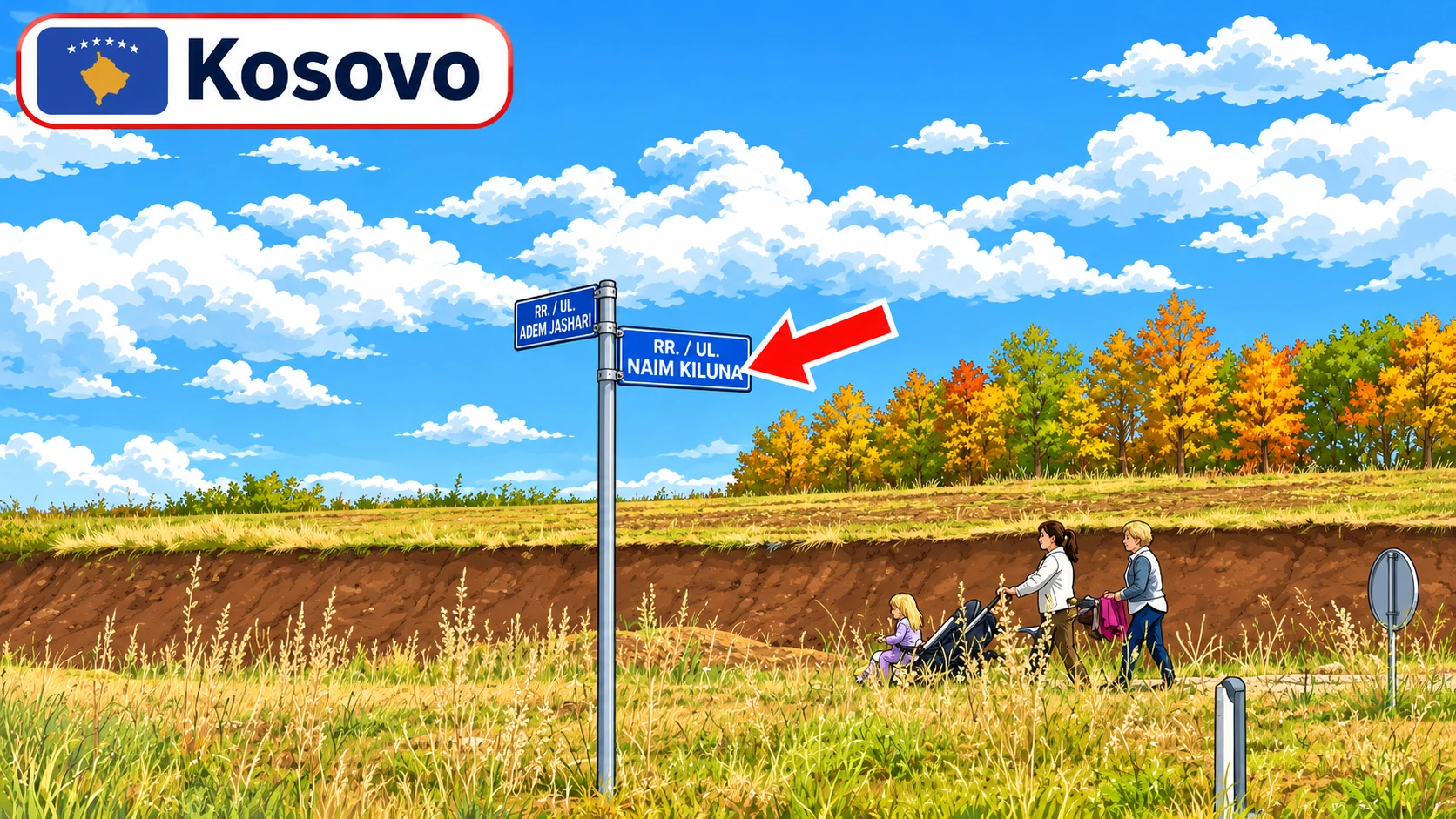
Explore this clueThe blue sign places RR. / UL. above the street name, referring to Albanian Rruga and Serbian Ulica.
Explore this clueYellow and orange foliage demonstrates that Kosovo should not be excluded merely because a scene is not summery.
Explore this clueThe illustrated sign has a broader red band and smaller white centre than Estonia's example, with a pale outer finish.
Explore this clueThe white arrow curves slightly where it joins the rectangular body. The author corrects the comparison and assigns this to Latvia.
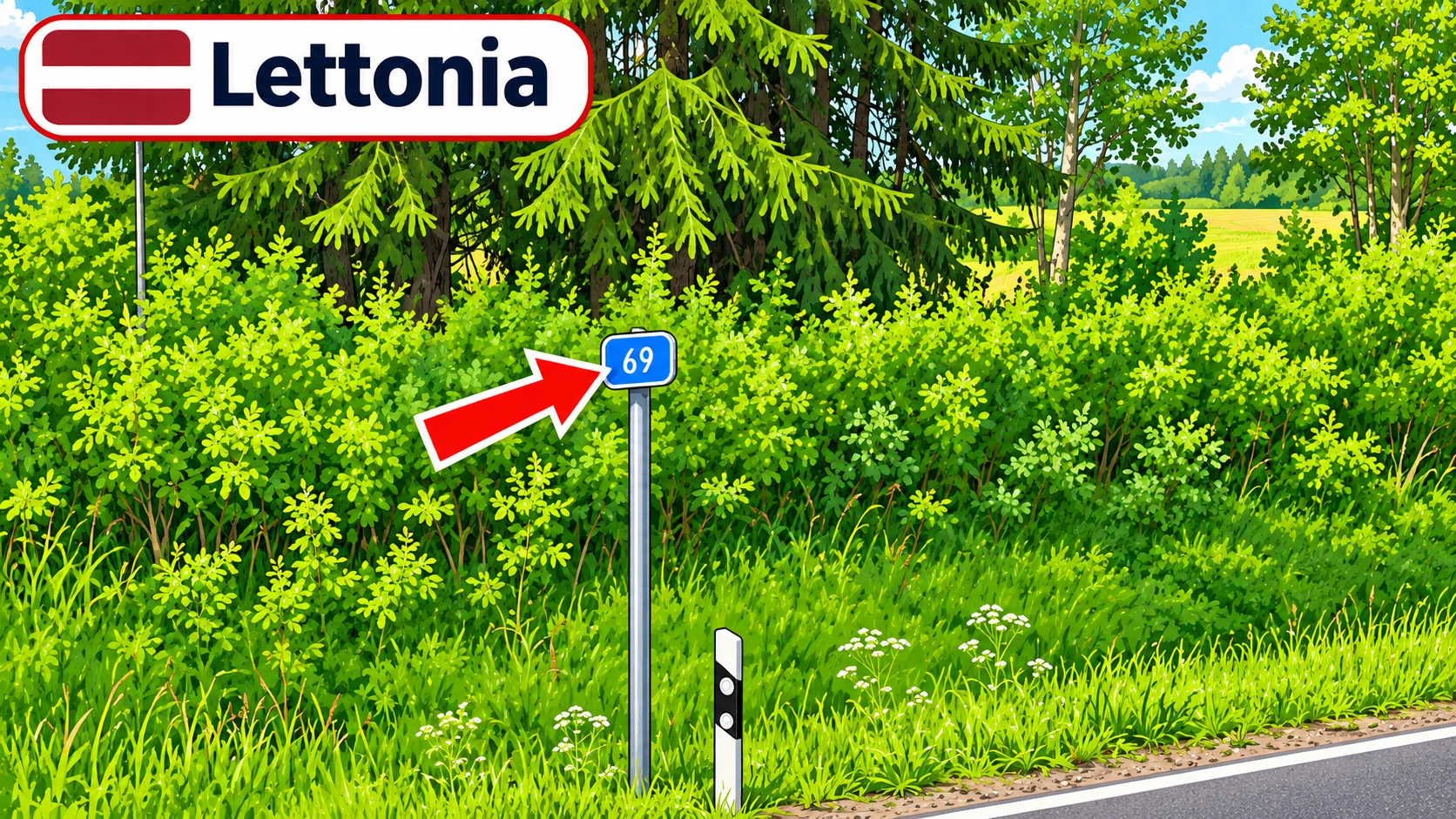
Explore this clueThe blue marker's face runs along the road and is viewed from the side, unlike the Estonian face aimed at approaching drivers.
Explore this clueThe flat narrow post has a dark top with a reflector and a small number beneath.
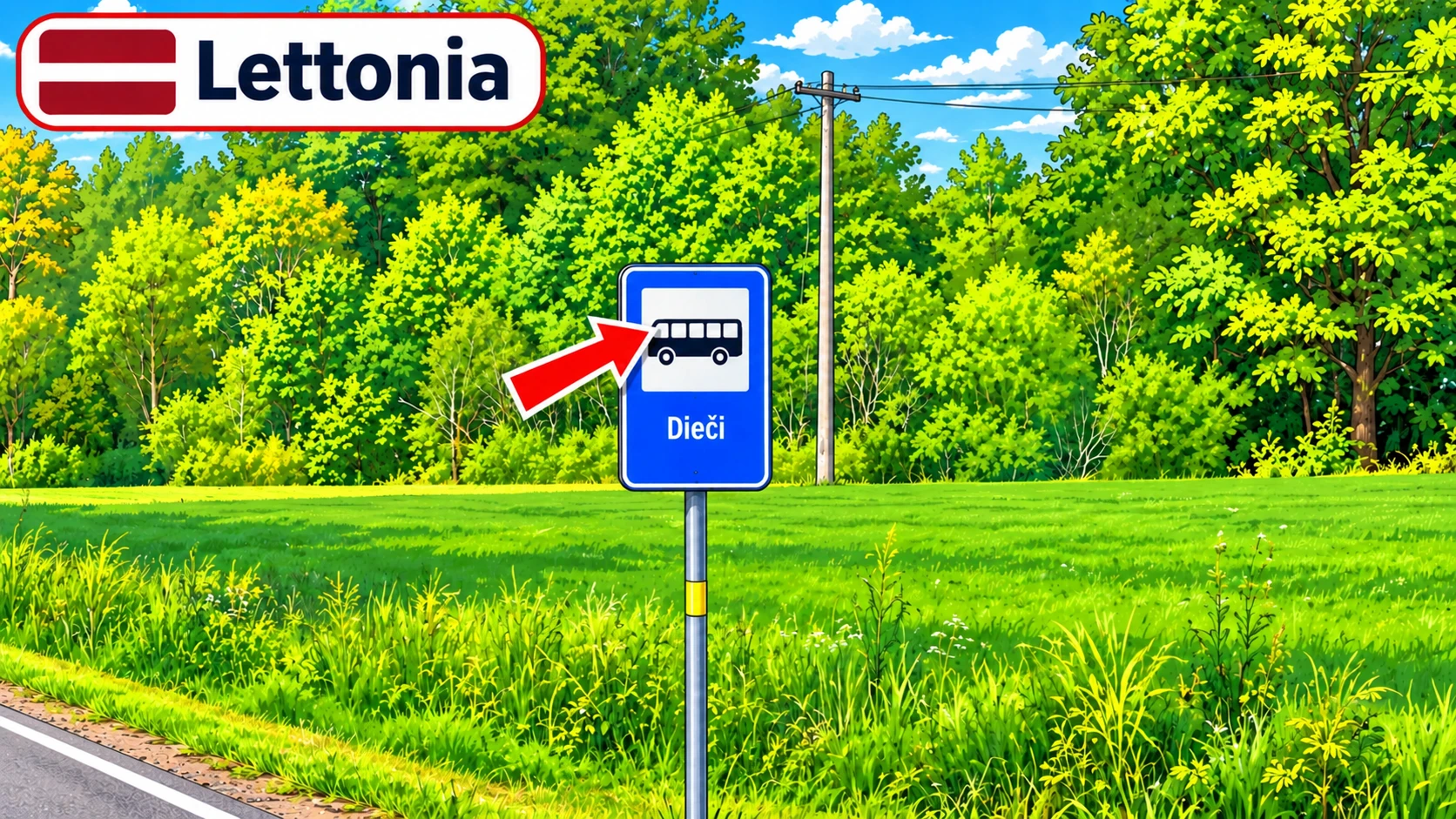
Explore this clueThe video asks viewers to count five bus windows, compared with four in the Lithuanian example.
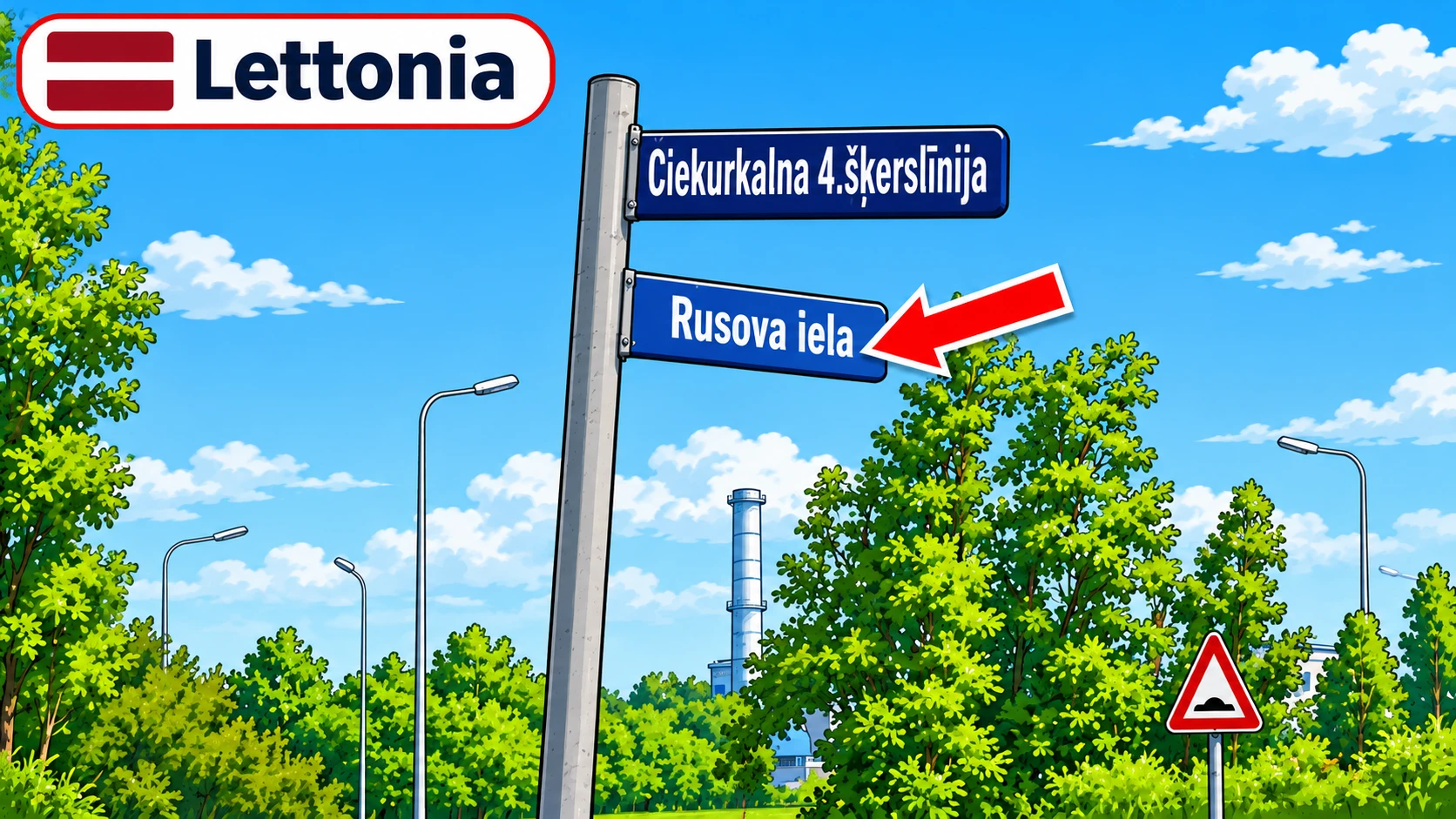
Explore this clueRusova iela illustrates the Latvian word iela, compared with Estonia's tee and Lithuania's g.
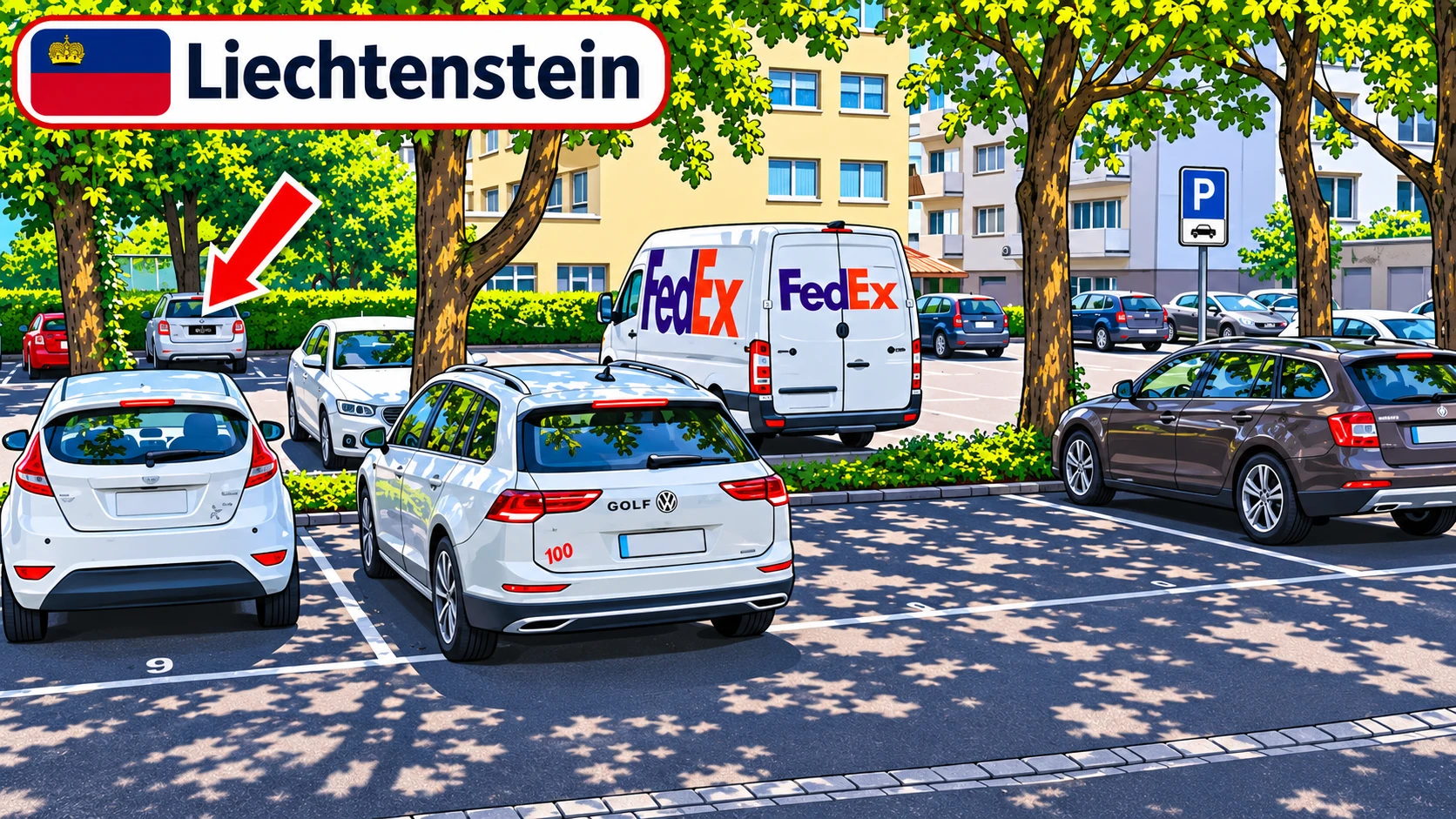
Explore this clueThe author suggests looking for a dark plate with an emblem on the left, while many neighbouring vehicles have white plates.
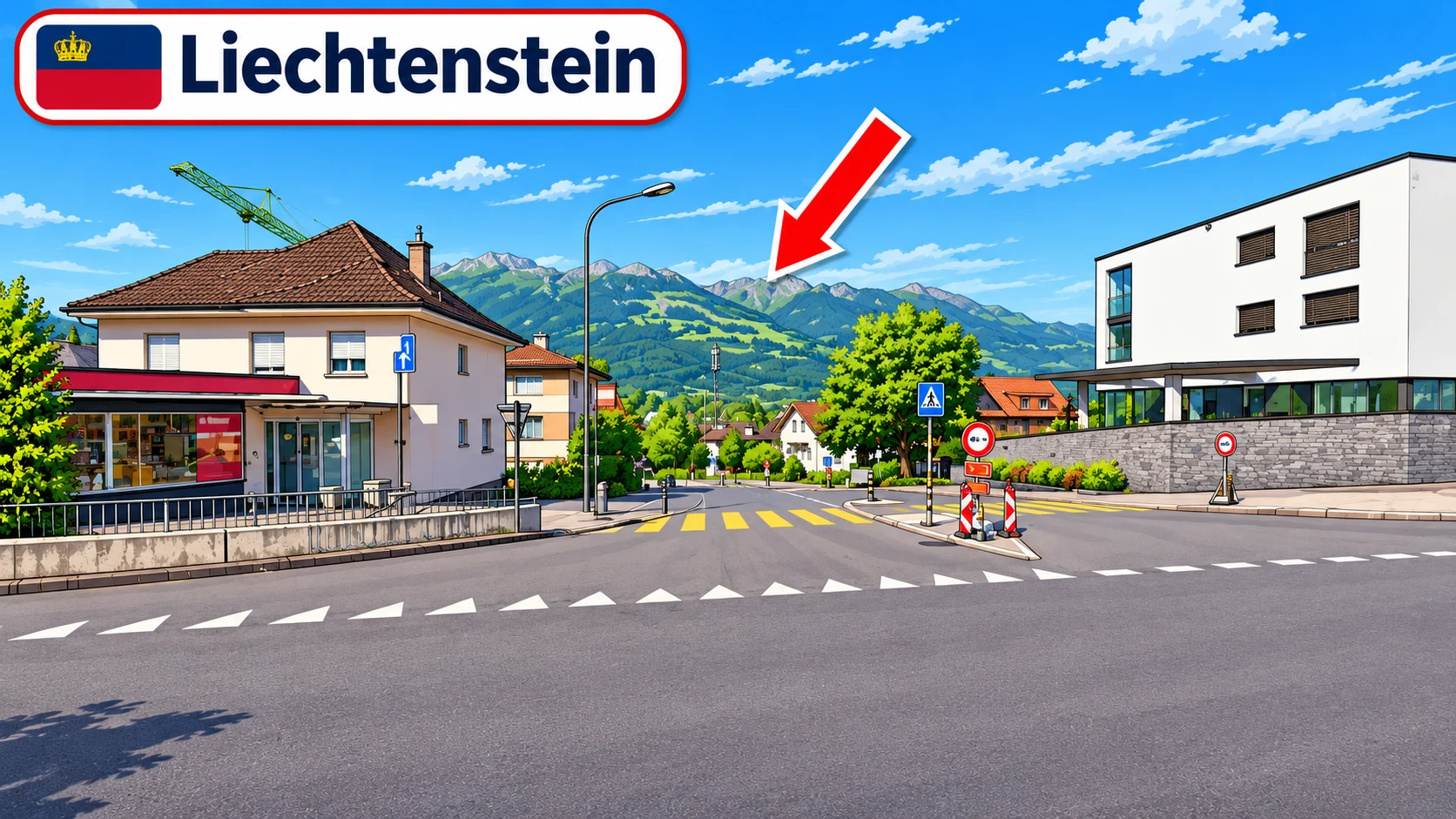
Explore this clueThe urban scene lies on relatively level terrain with large mountains behind it, suggesting Liechtenstein in the guide.
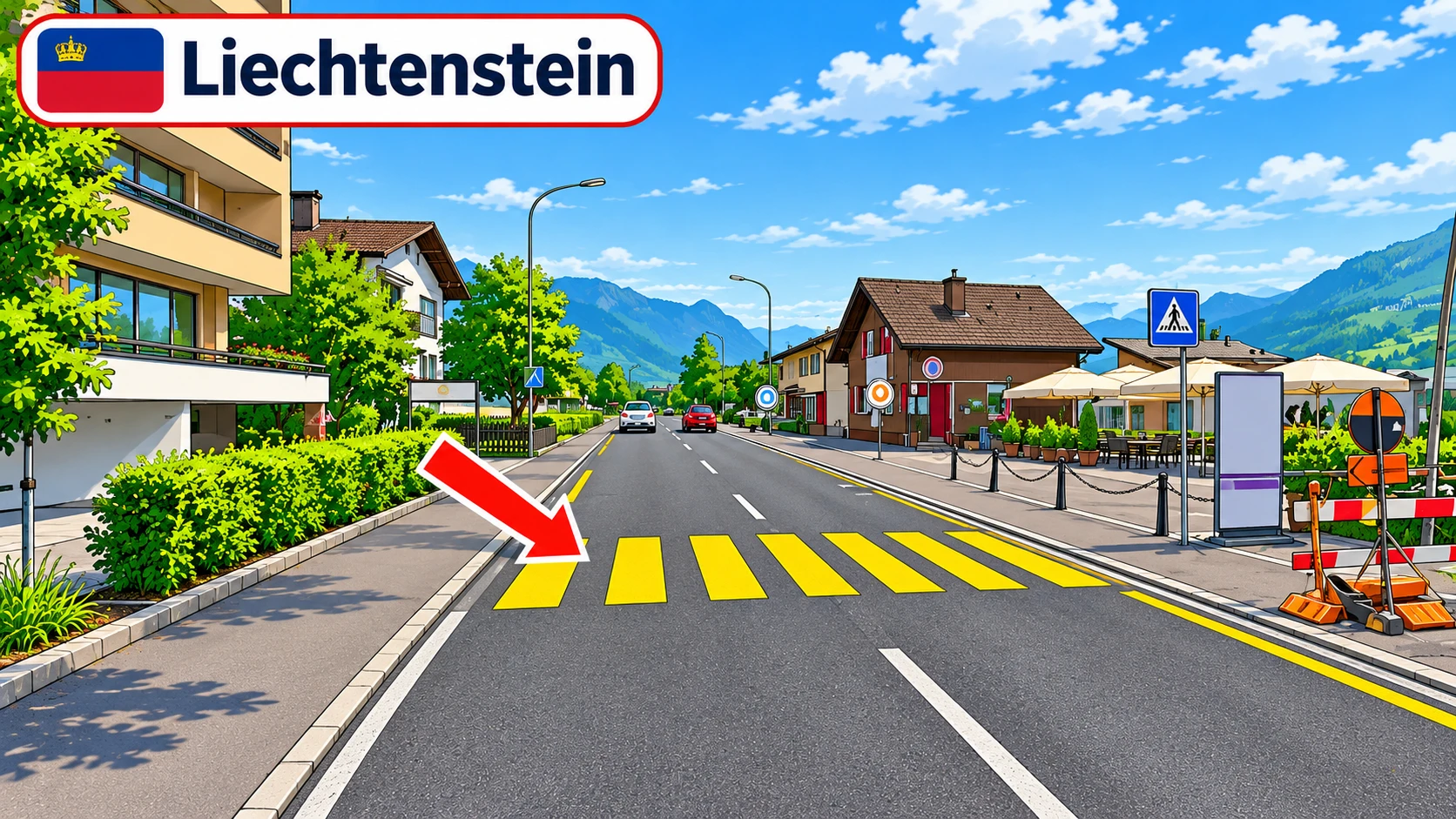
Explore this clueThe pedestrian crossing is yellow. The guide also mentions low-camera Google car imagery and other coloured markings.
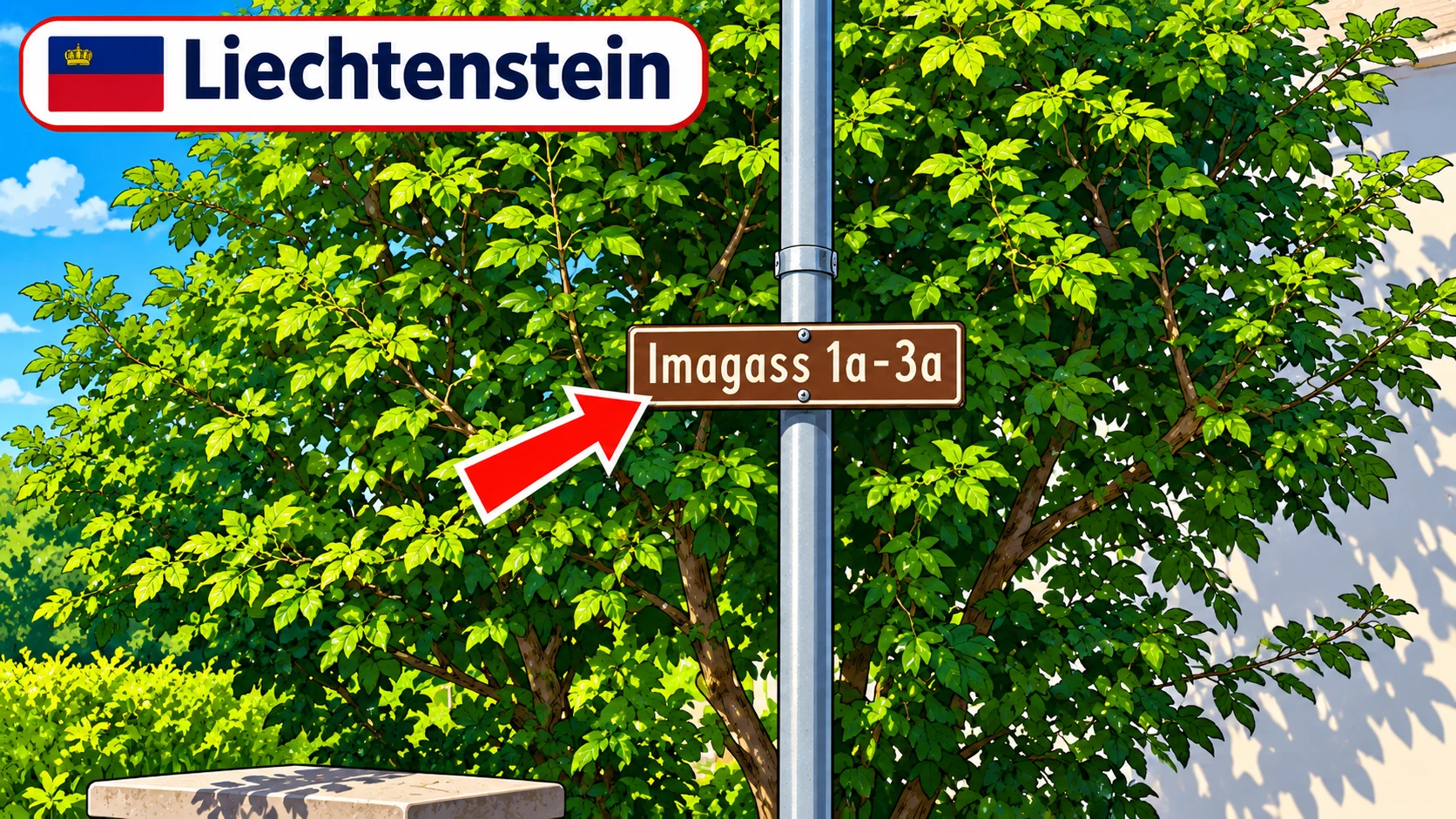
Explore this clueThe street-name sign has a brown background and thin pale lettering, with pale framing and black or blue variants mentioned.
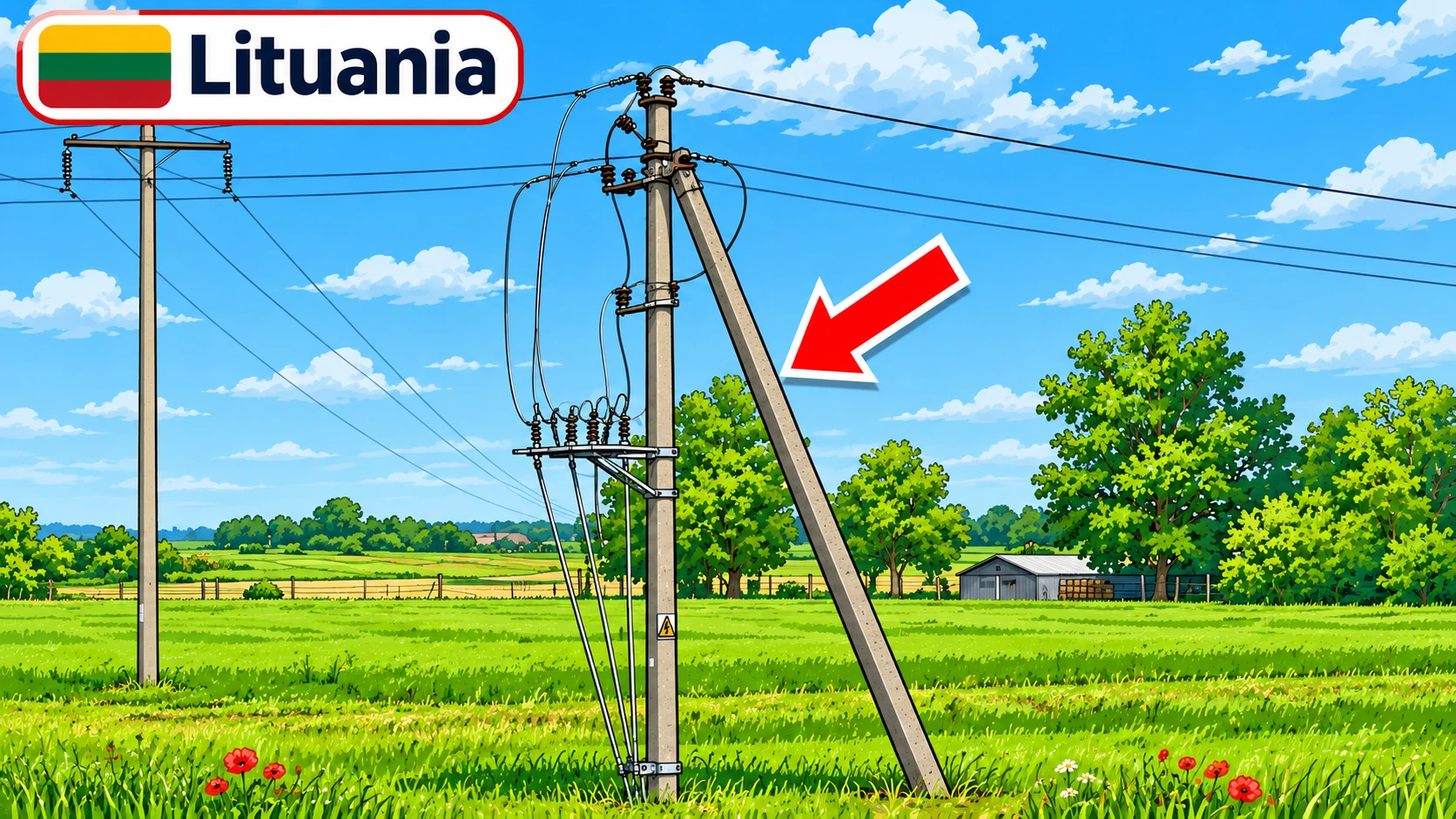
Explore this clueA diagonal support braces the upright concrete pole, illustrated repeatedly in the Baltic comparison.
Explore this clueThe white post's dark upper area contains an orange reflector; the reverse is described as white.
Explore this clueThe panel combines red arrows on white with a fine red outer border, contrasted with Latvian and Polish examples.
Explore this clueCompare the large white centre, relatively thin red band and more apparent white outer rim.
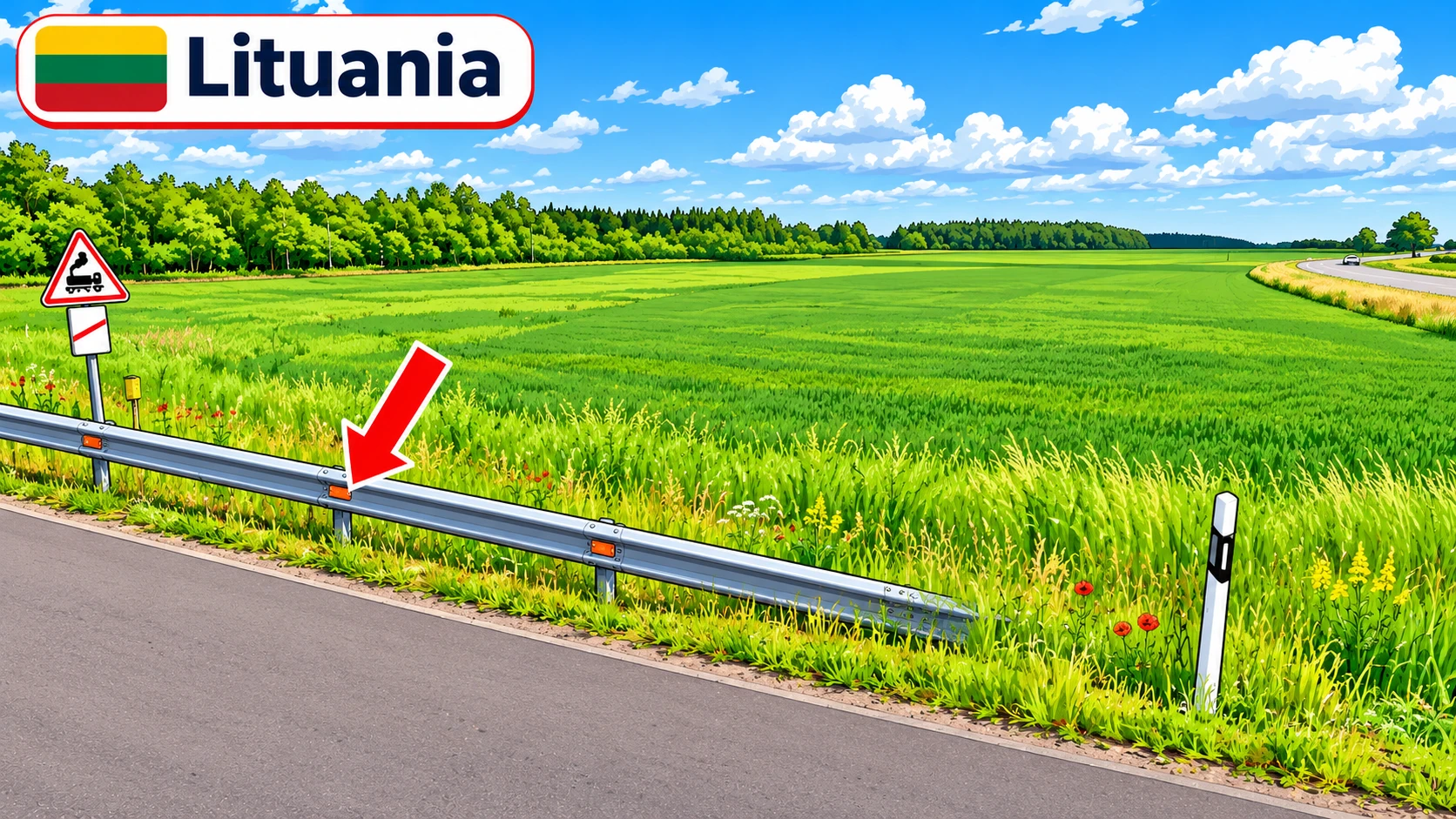
Explore this clueThe author contrasts orange reflectors here with red in Latvia and their absence in the Estonian examples discussed.
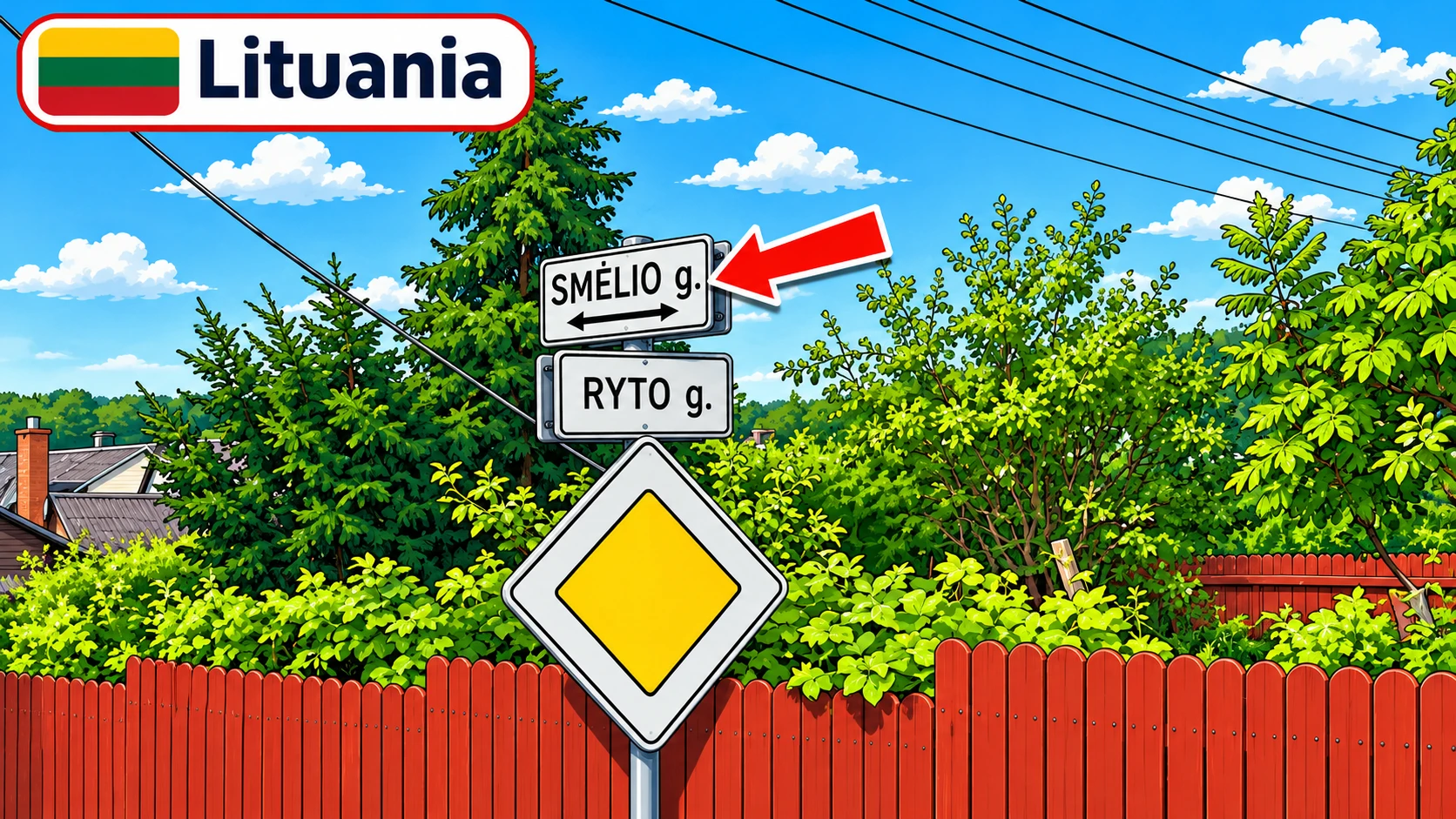
Explore this clueSMĖLIO g. and RYTO g. illustrate the Lithuanian street abbreviation g.
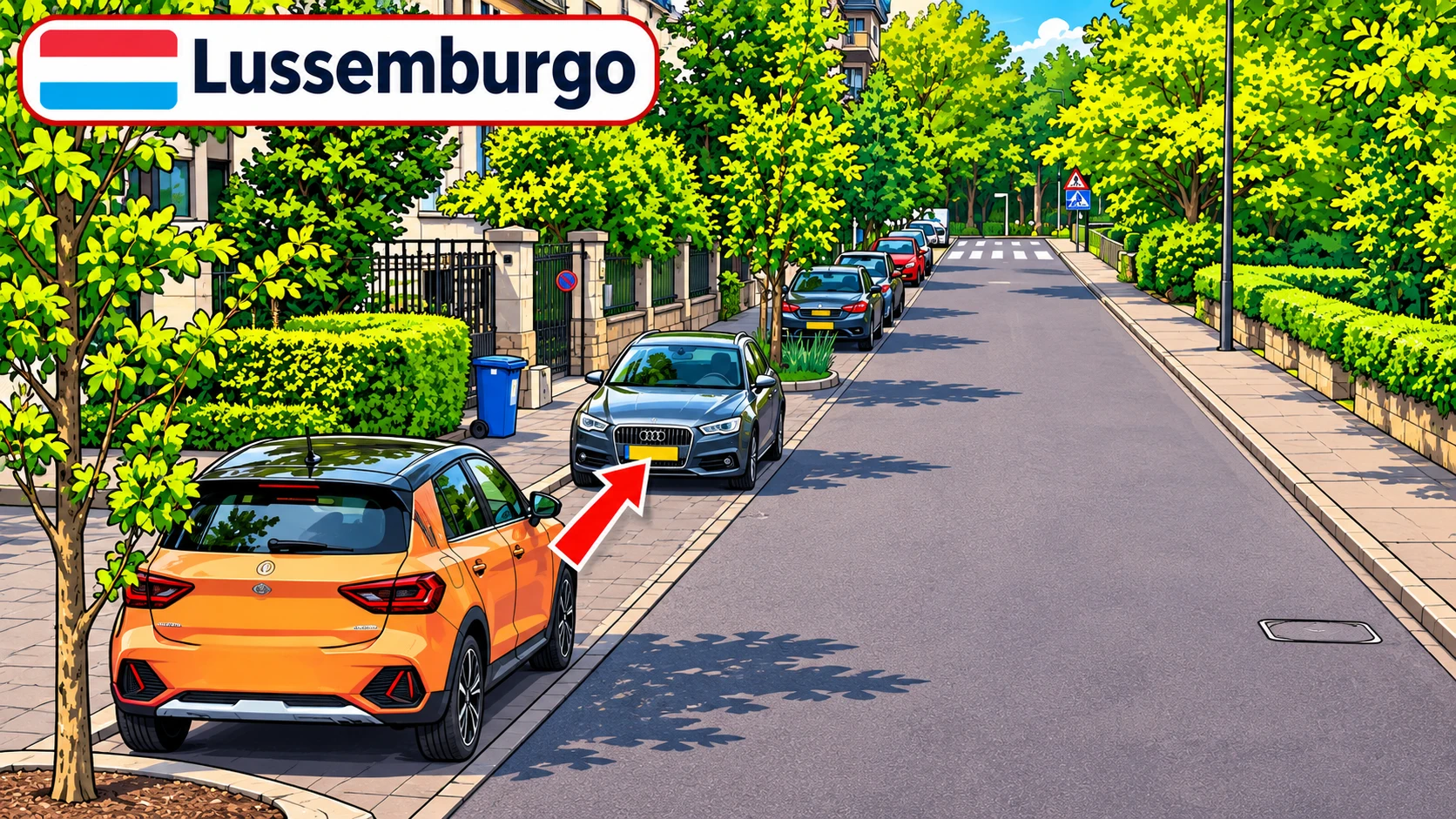
Explore this clueParked cars have yellow plates while the street name is French, used together to distinguish Luxembourg from the Netherlands.
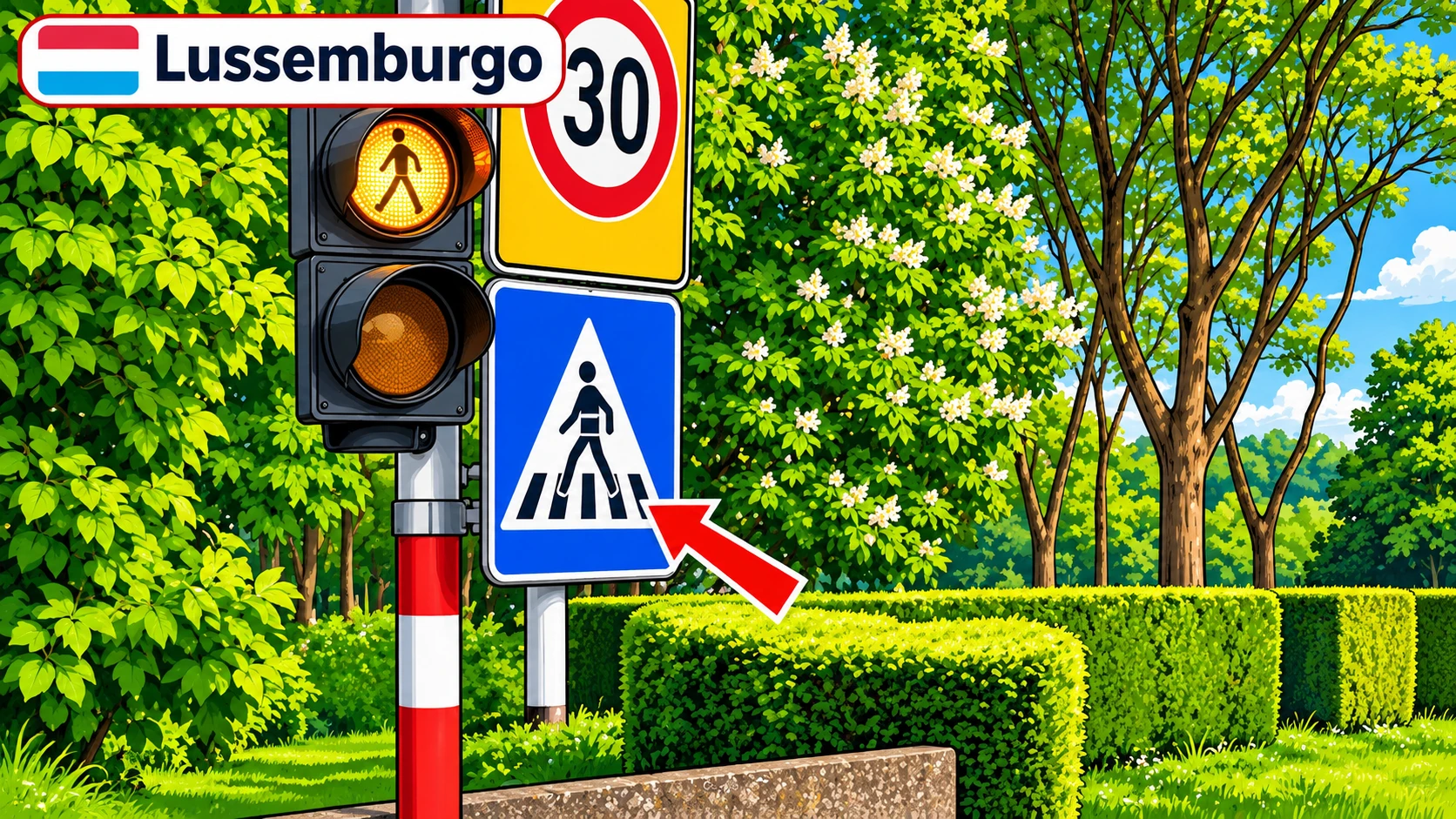
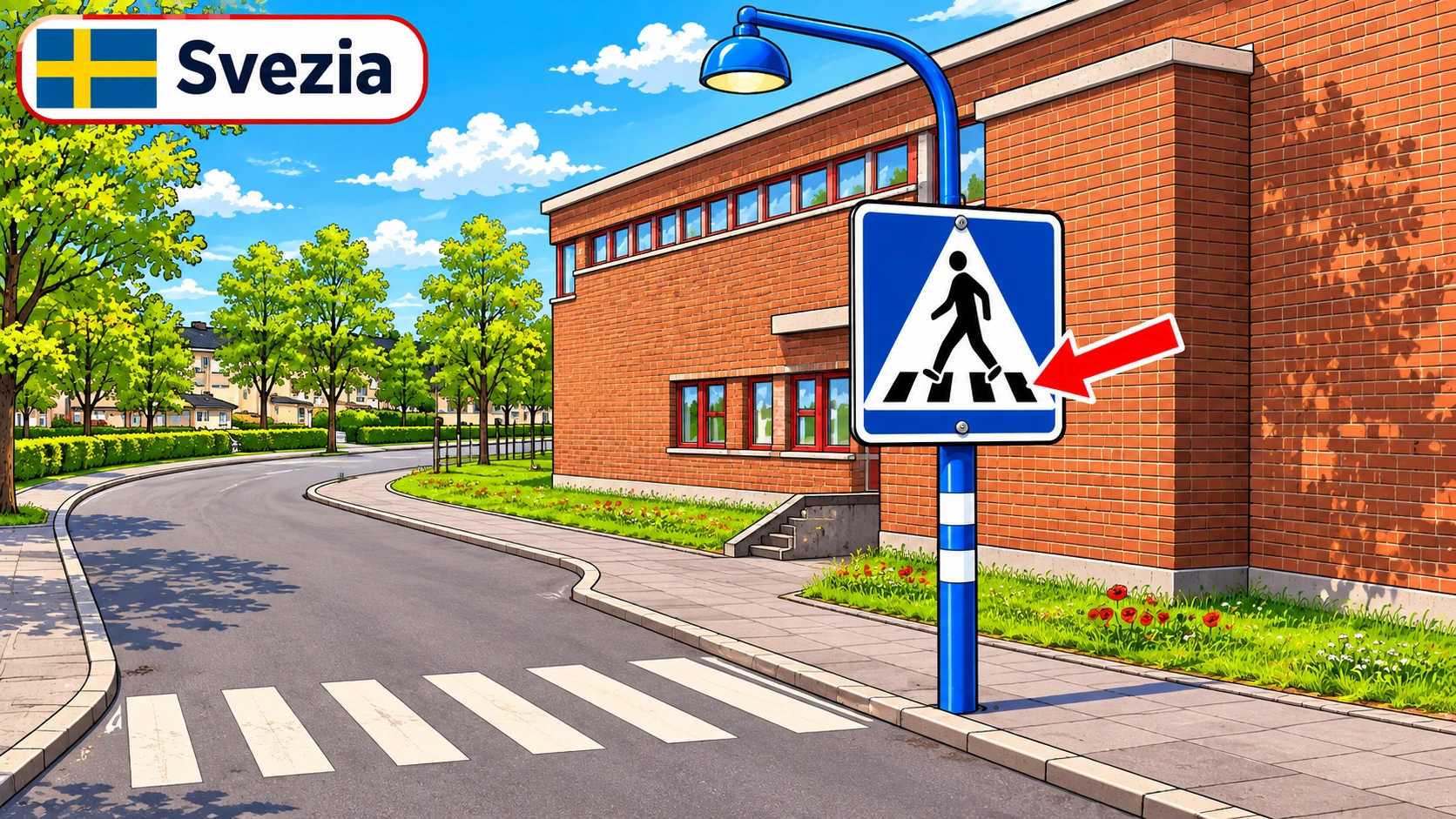
Explore this clueThe pedestrian sign is described with five stripes and a horizontal body line, compared with Germany; its pole has red-white bands.
Explore this clueThe enlarged post resembles a German one; the guide mentions an extra fixing and a greyer reflector.
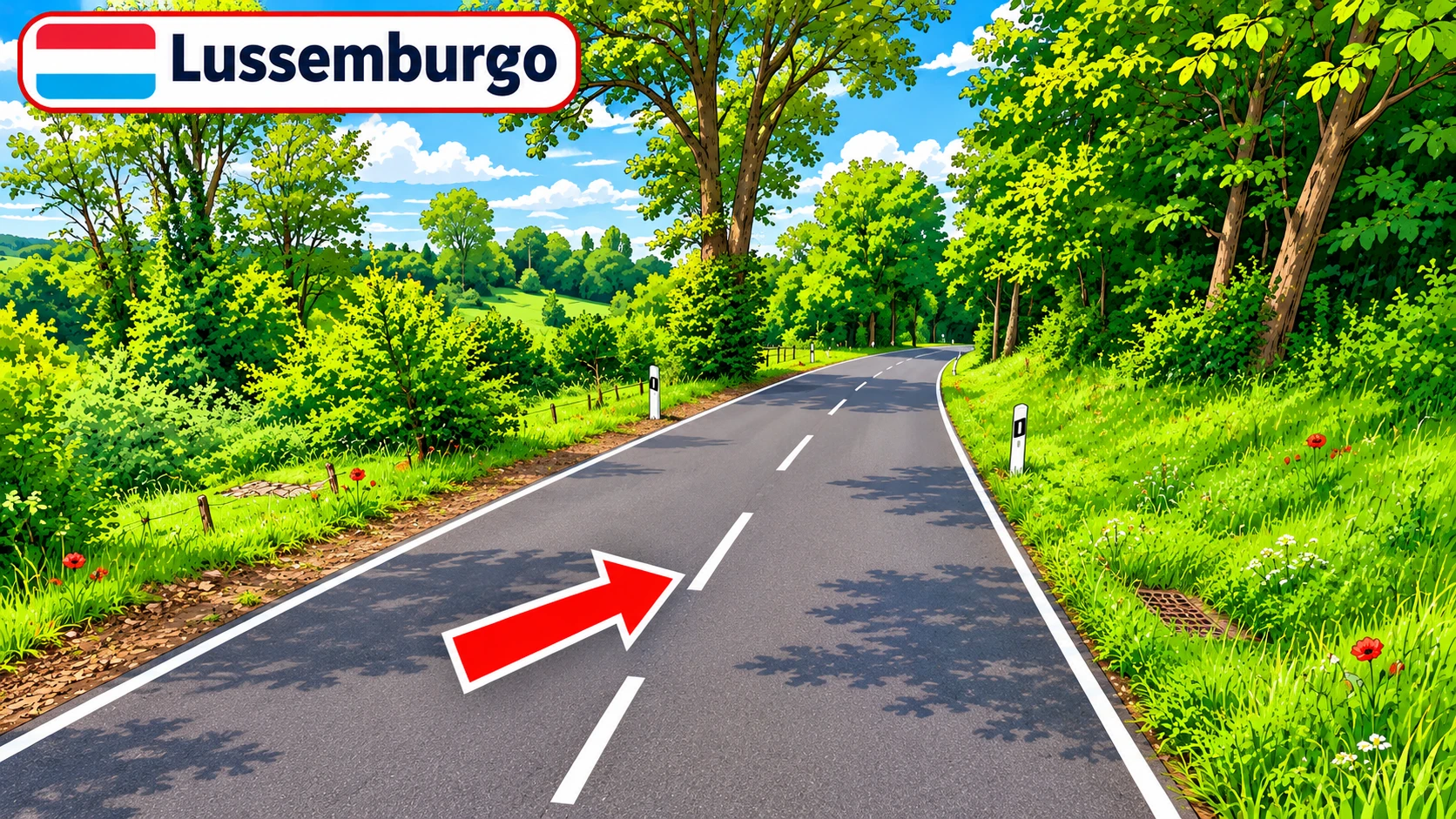
Explore this clueThe sequence includes narrow roads with white edges, some without centre markings and others with broken white centres.
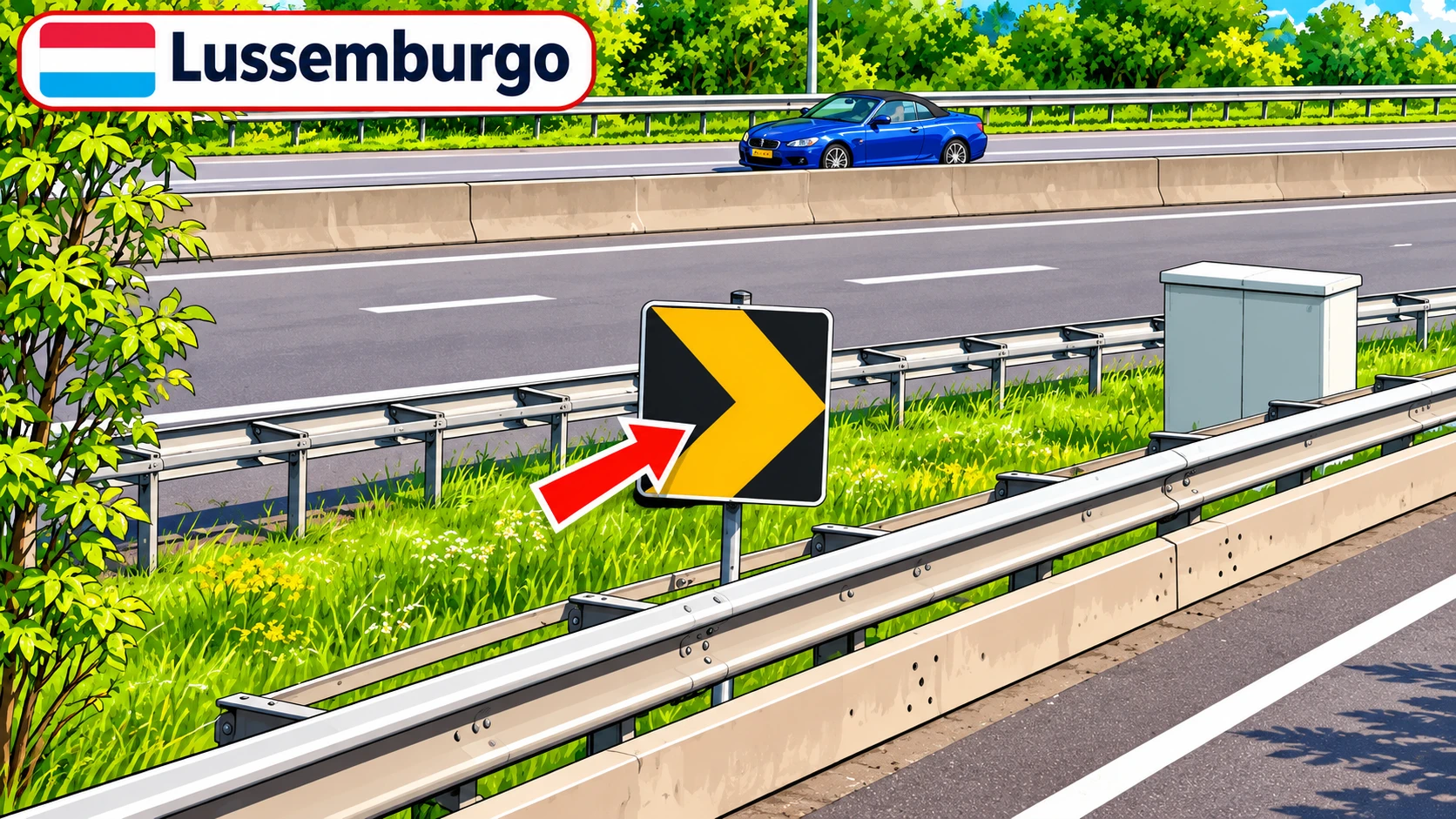
Explore this clueThe ramp panel has a yellow arrow on black, compared with Norwegian and Portuguese designs.
Explore this clueAn open, shaped pole top resembles examples shown in the following French section.
Explore this clueThe yellow sign pairs Cyrillic names with Latin transliterations and abbreviations beside them.
Explore this clueThe guide describes Type A as rounder and more open at its central groove than Type B. Small red reflectors are shown.
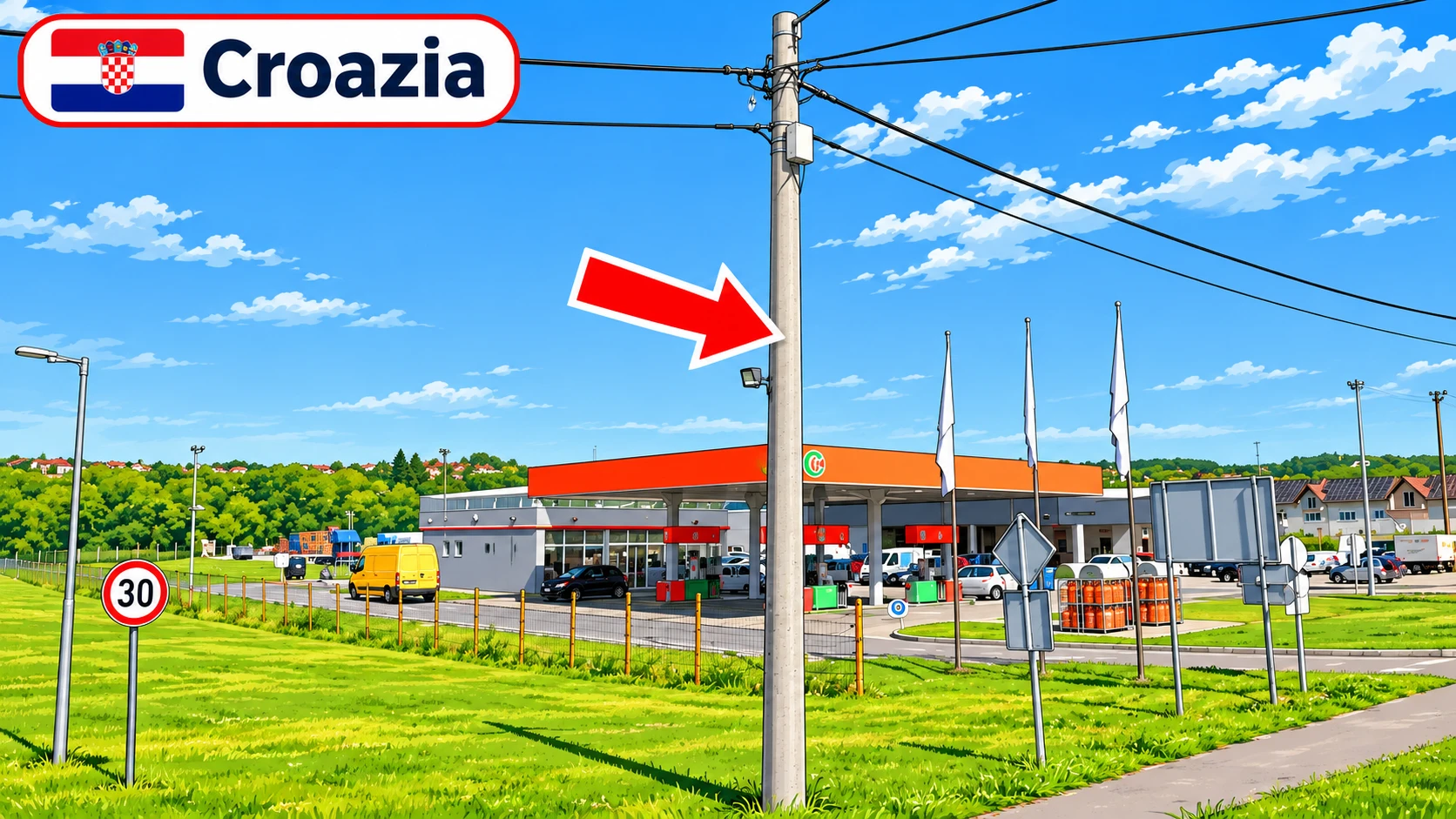
Explore this clueThe white roadside post has a dark upper area and reflector. The author compares Croatia and notes several local designs.
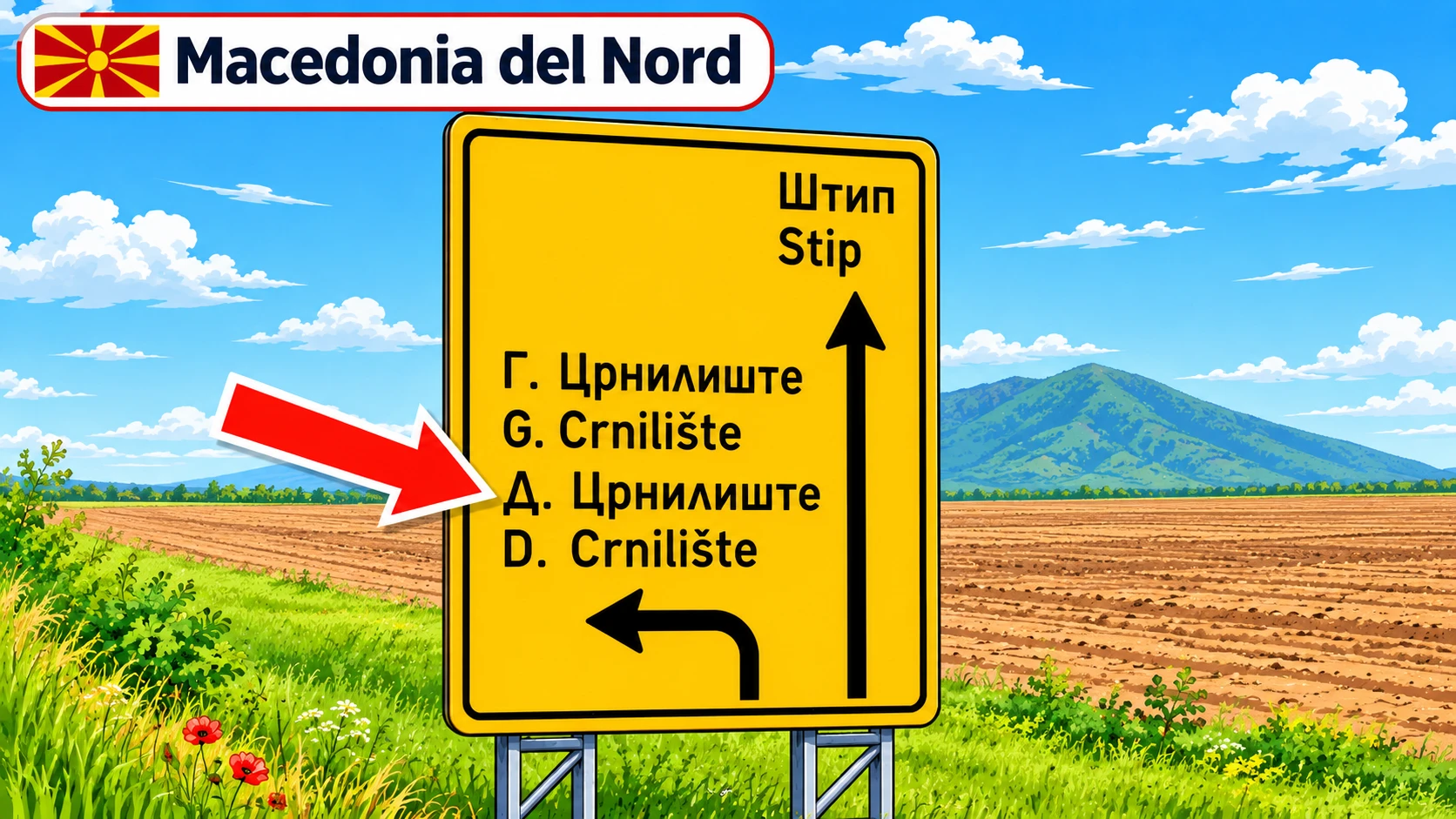
Explore this clueThe guide highlights the absence of a visible vehicle antenna in the North Macedonian coverage being discussed.
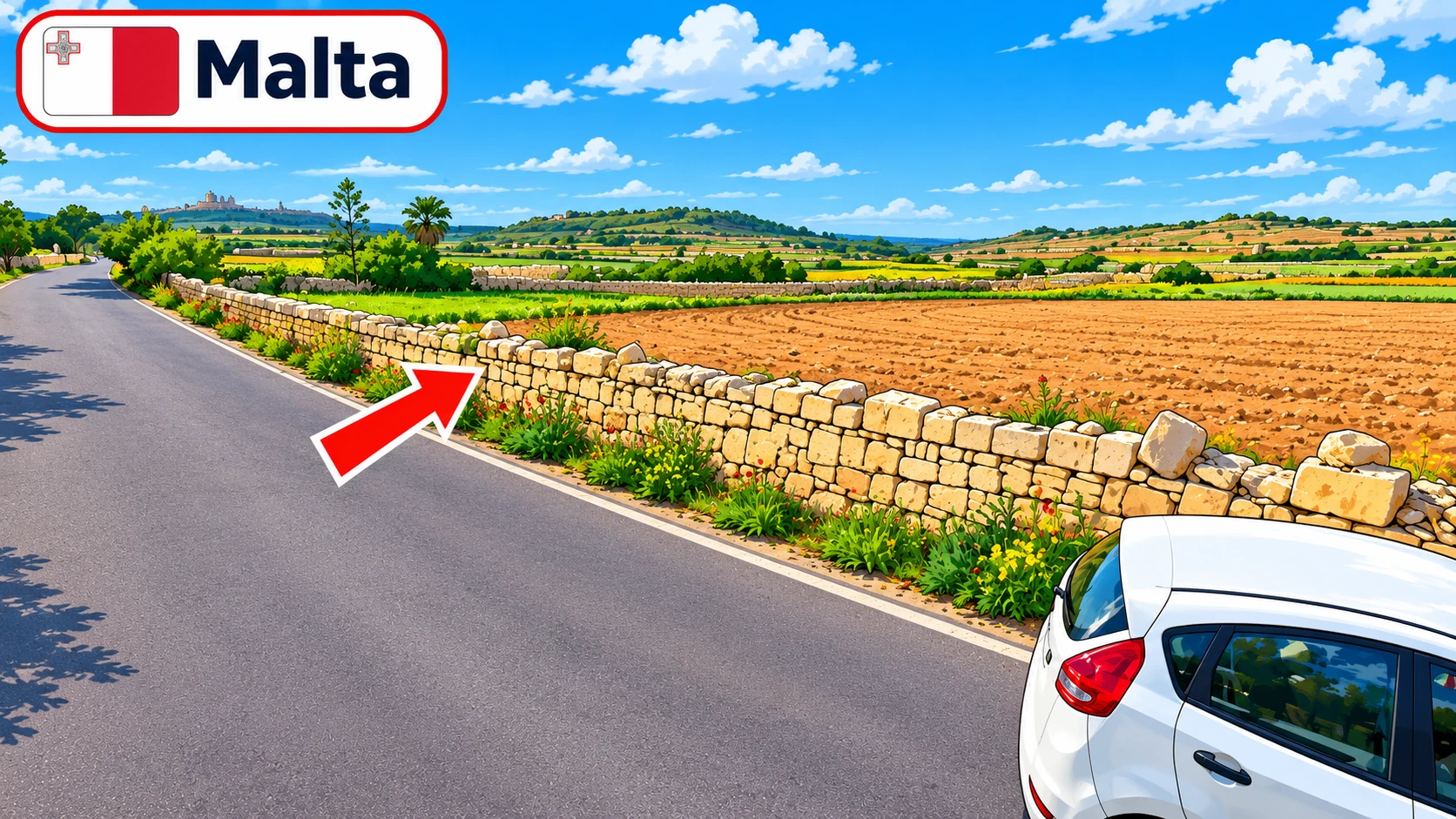
Explore this clueLeft-hand driving combines with low beige or cream field walls following the Maltese road.
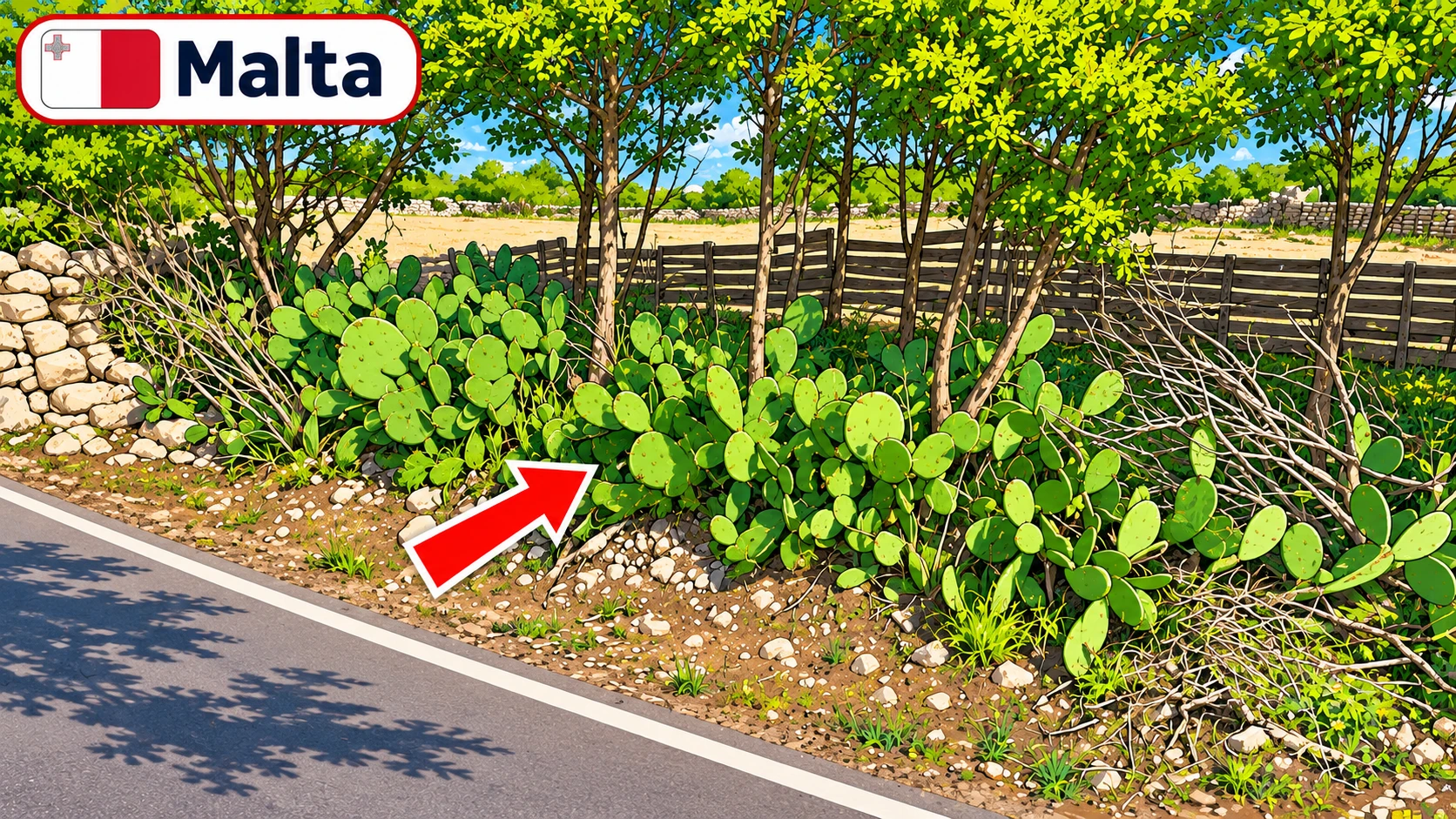
Explore this clueThe enlarged cactus has flat oval pads beside the wall, compared with plants in Spain and Mexico.
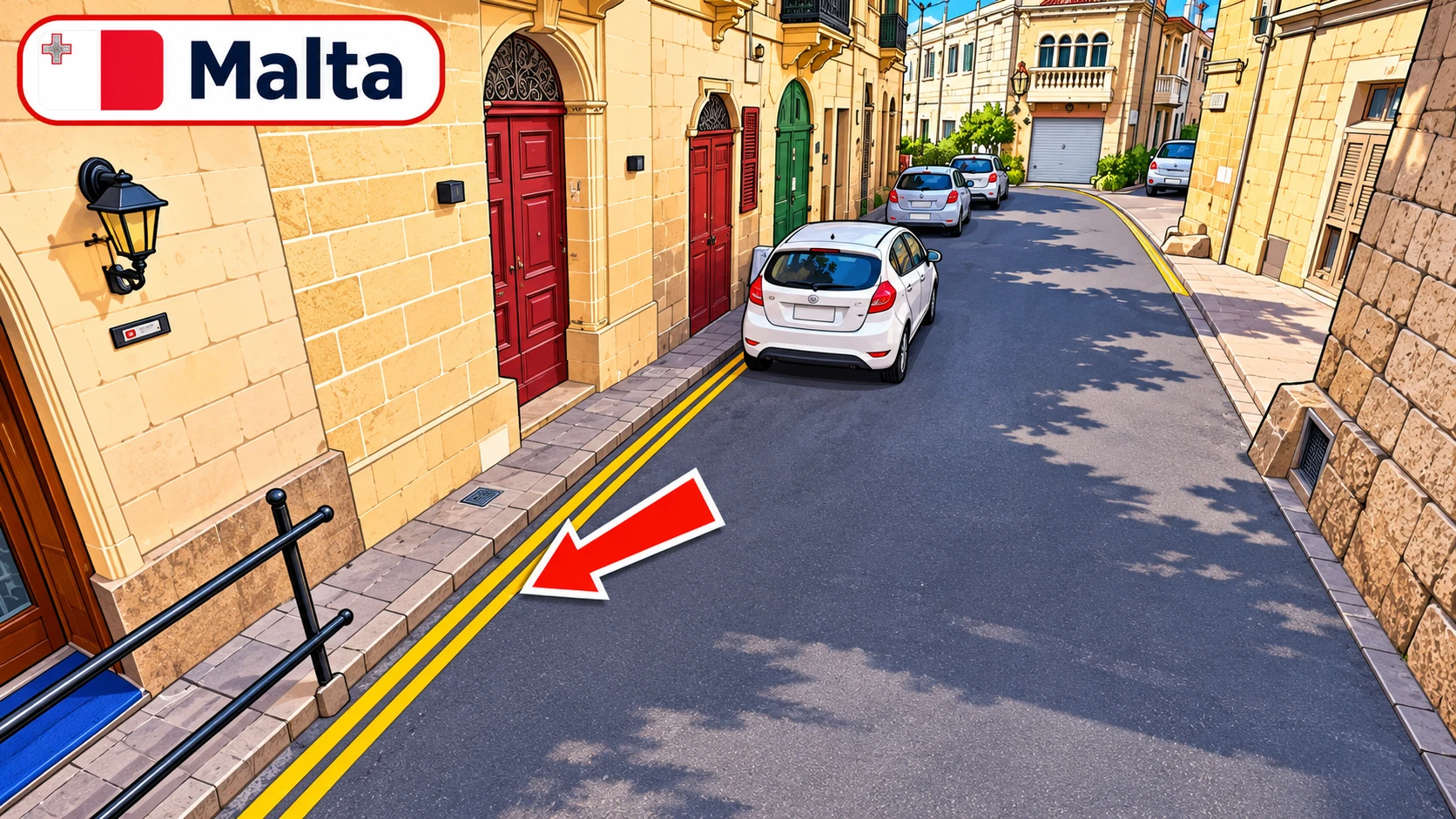
Explore this clueYellow markings follow the edges of narrow urban streets, with both solid and interrupted examples.
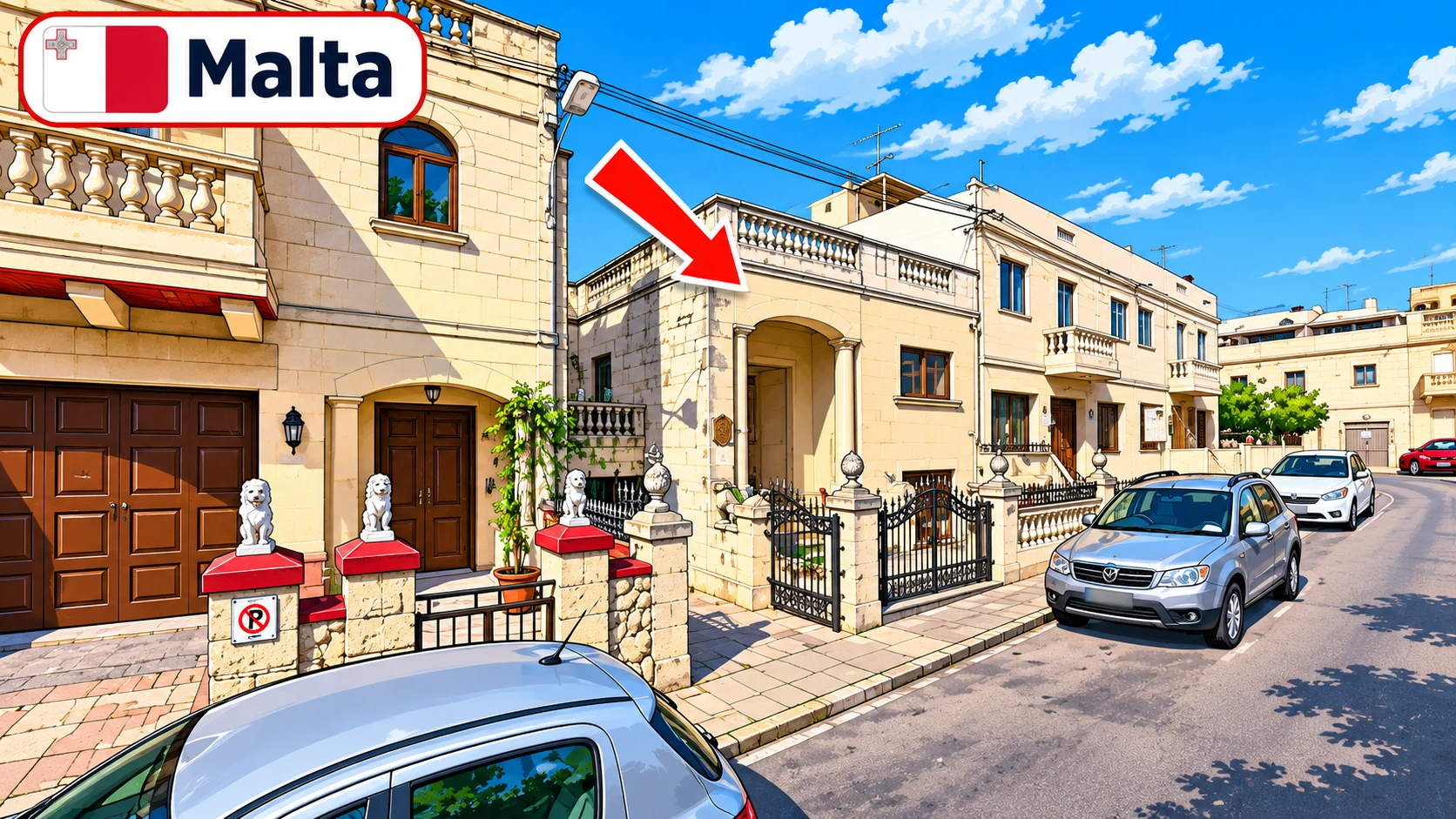
Explore this clueCream and beige buildings form continuous frontages along relatively narrow streets.
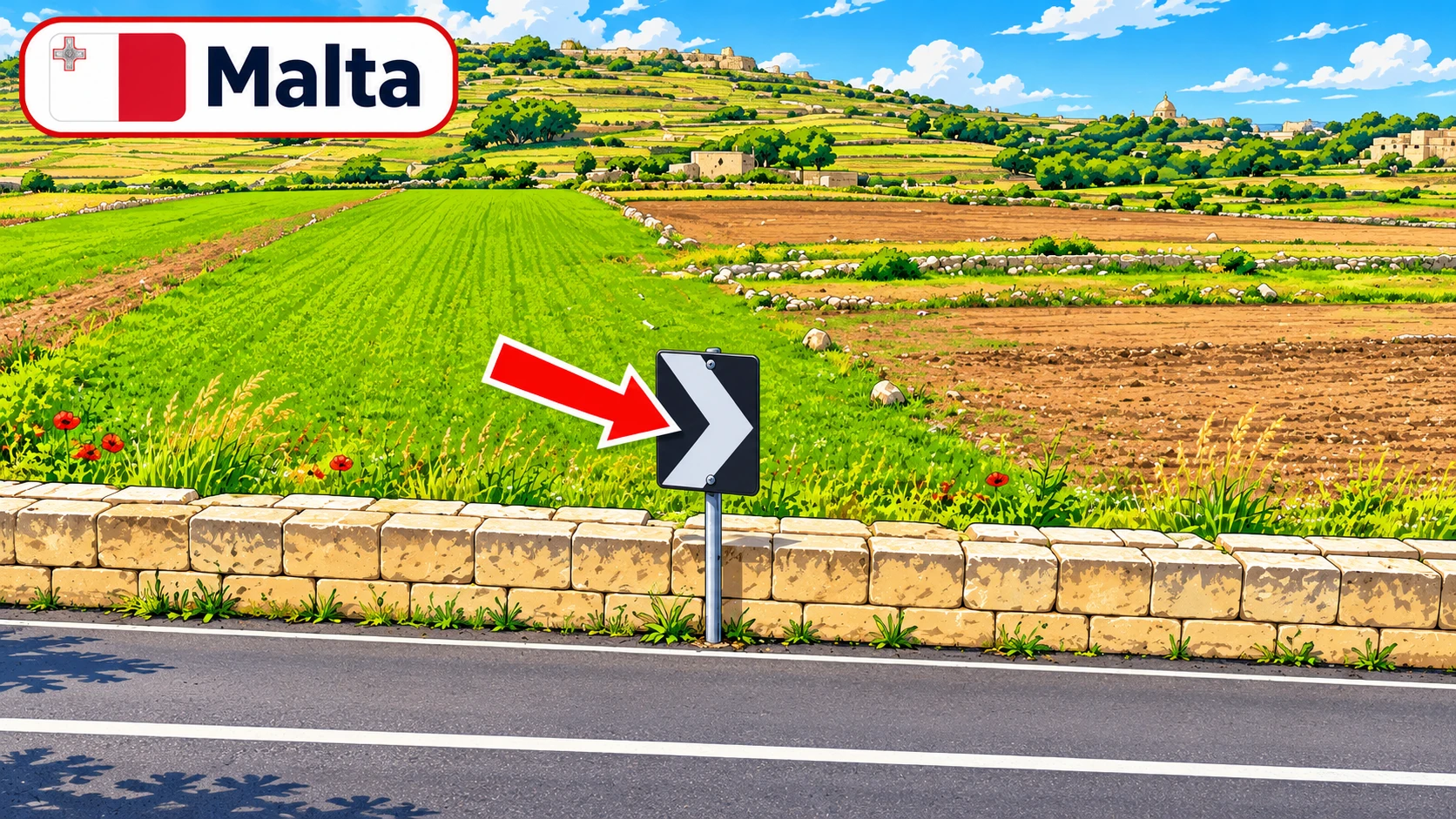
Explore this clueA bend has white arrows on black; a nearby rural road has a single white centre line.
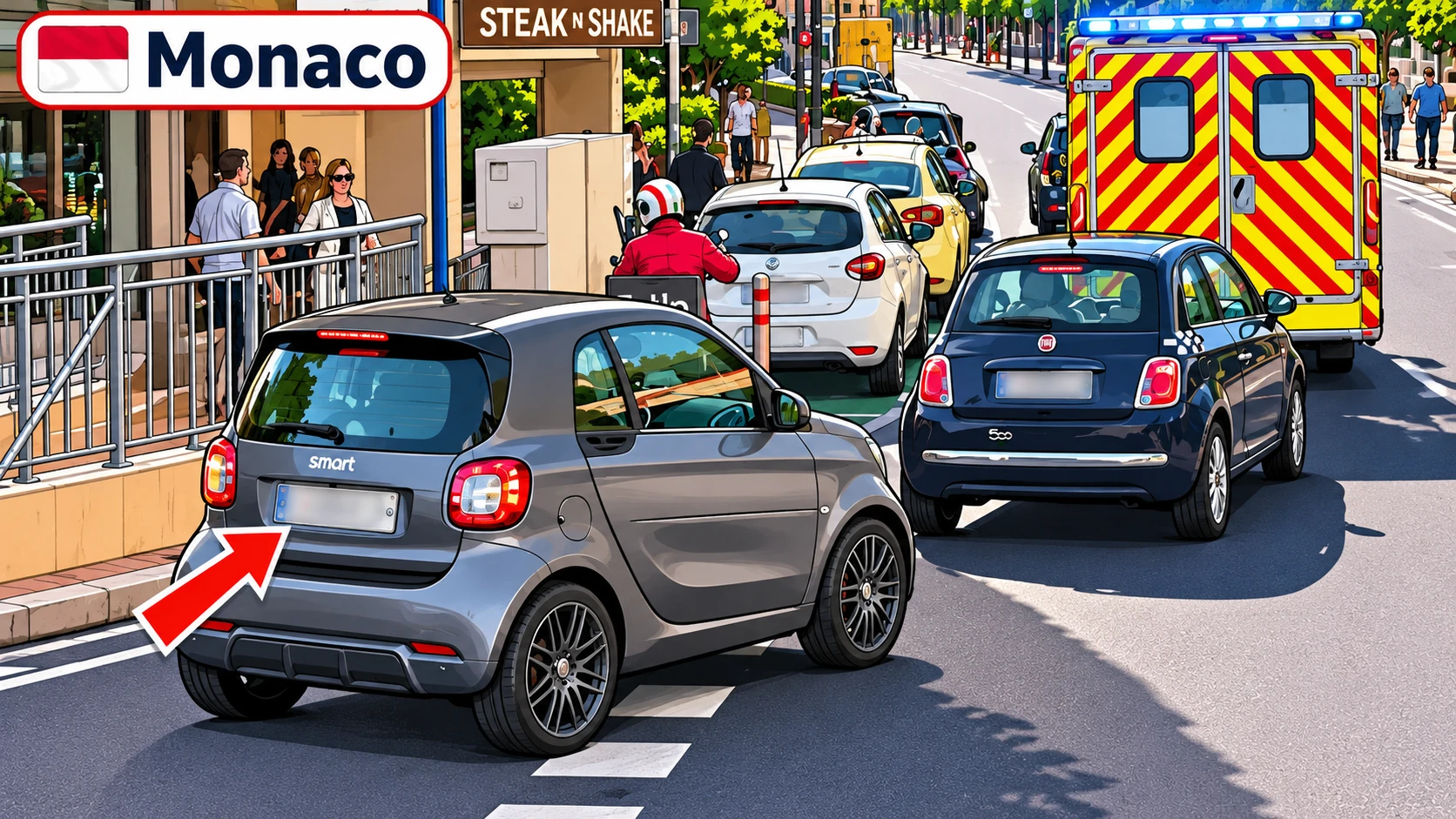
Explore this clueThe author zooms in on light-coloured plates lacking the familiar blue band.
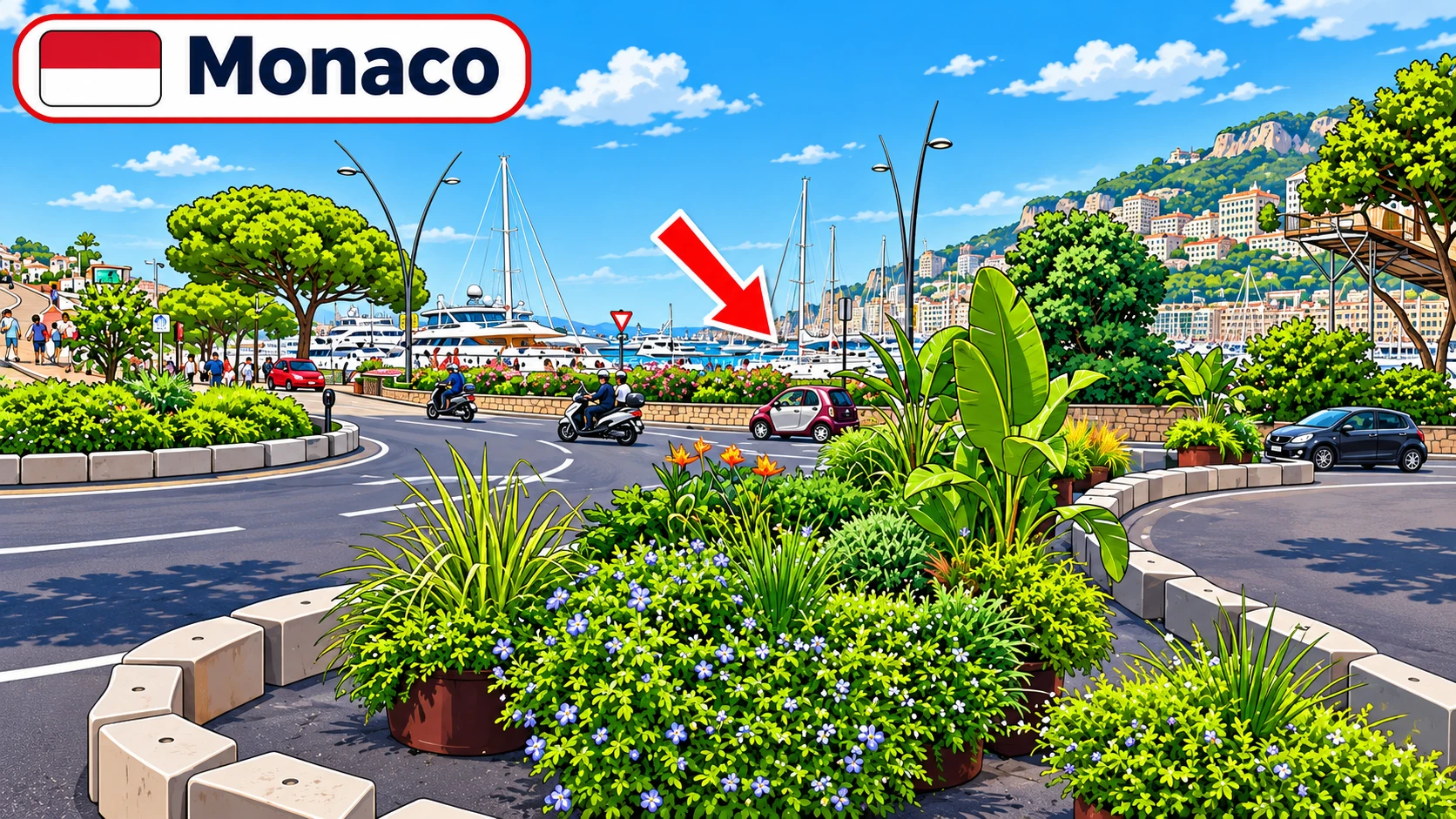
Explore this clueSailboats, large buildings and densely developed hillsides surround a harbour-side roundabout.
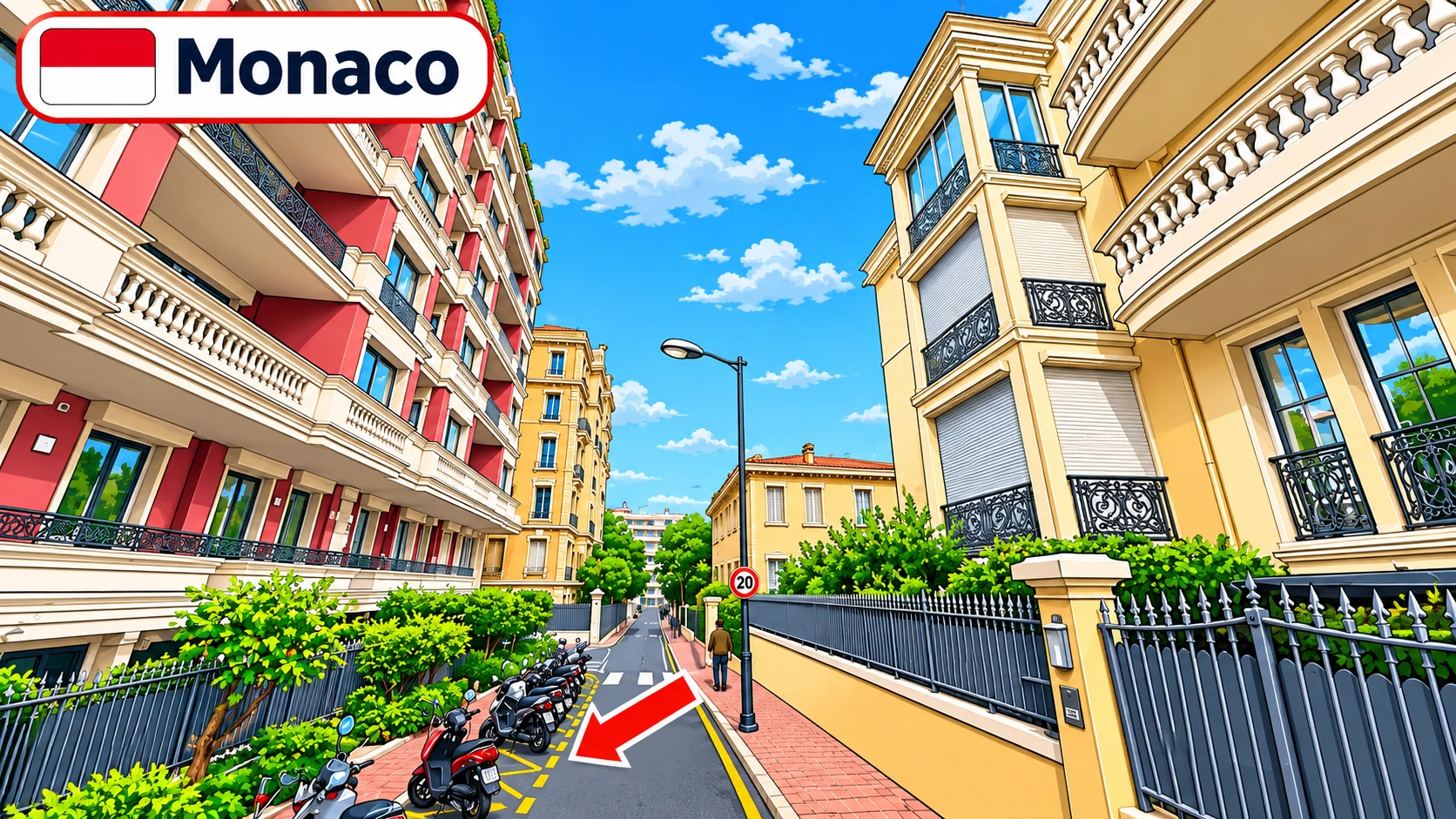
Explore this clueAn upper neighbourhood has cream, pink and yellow façades, balconies and a narrow road with yellow paint.
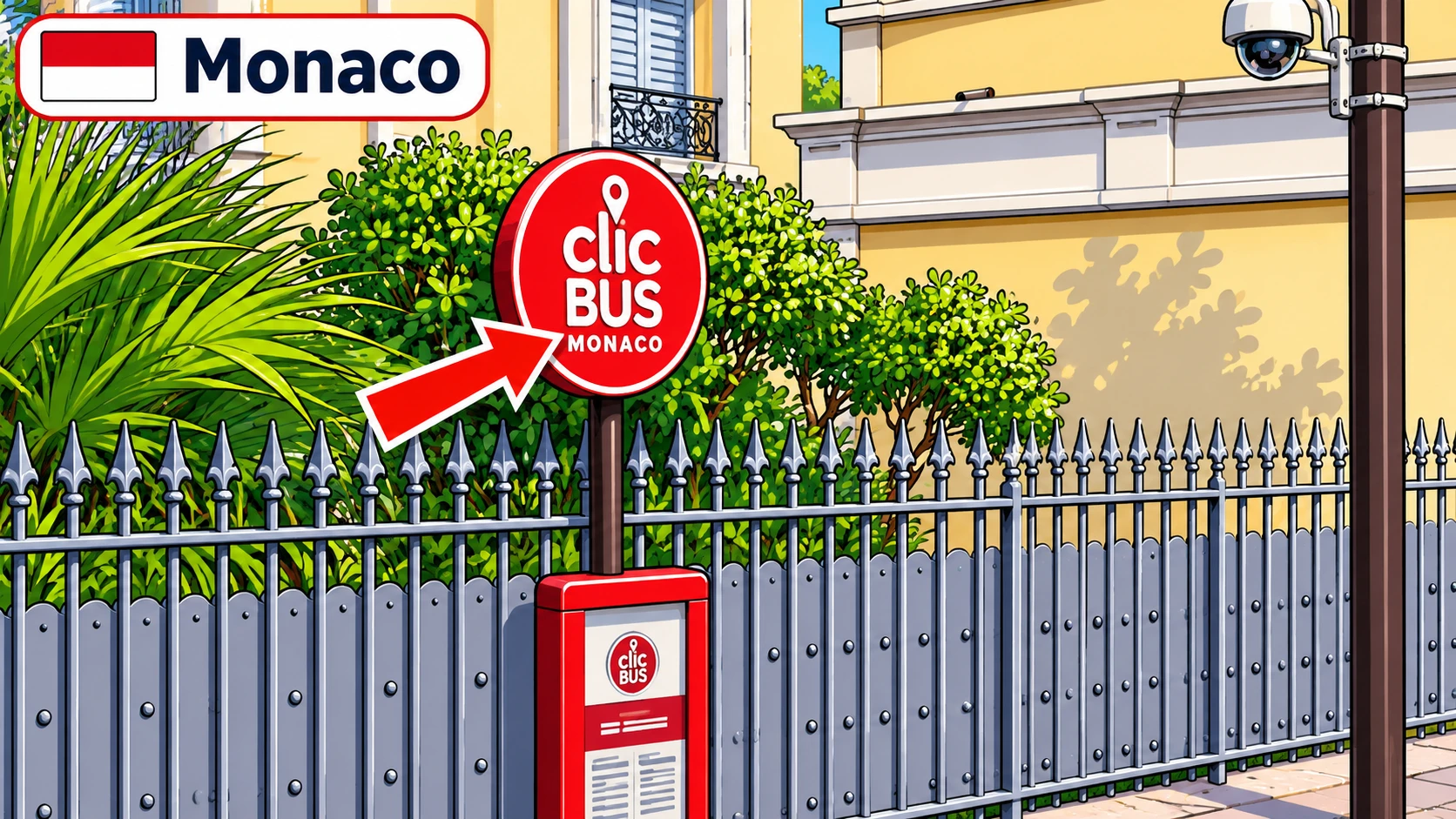
Explore this clueThe guide enlarges a red clic BUS stop and suggests looking for Monaco references on bus-stop panels.
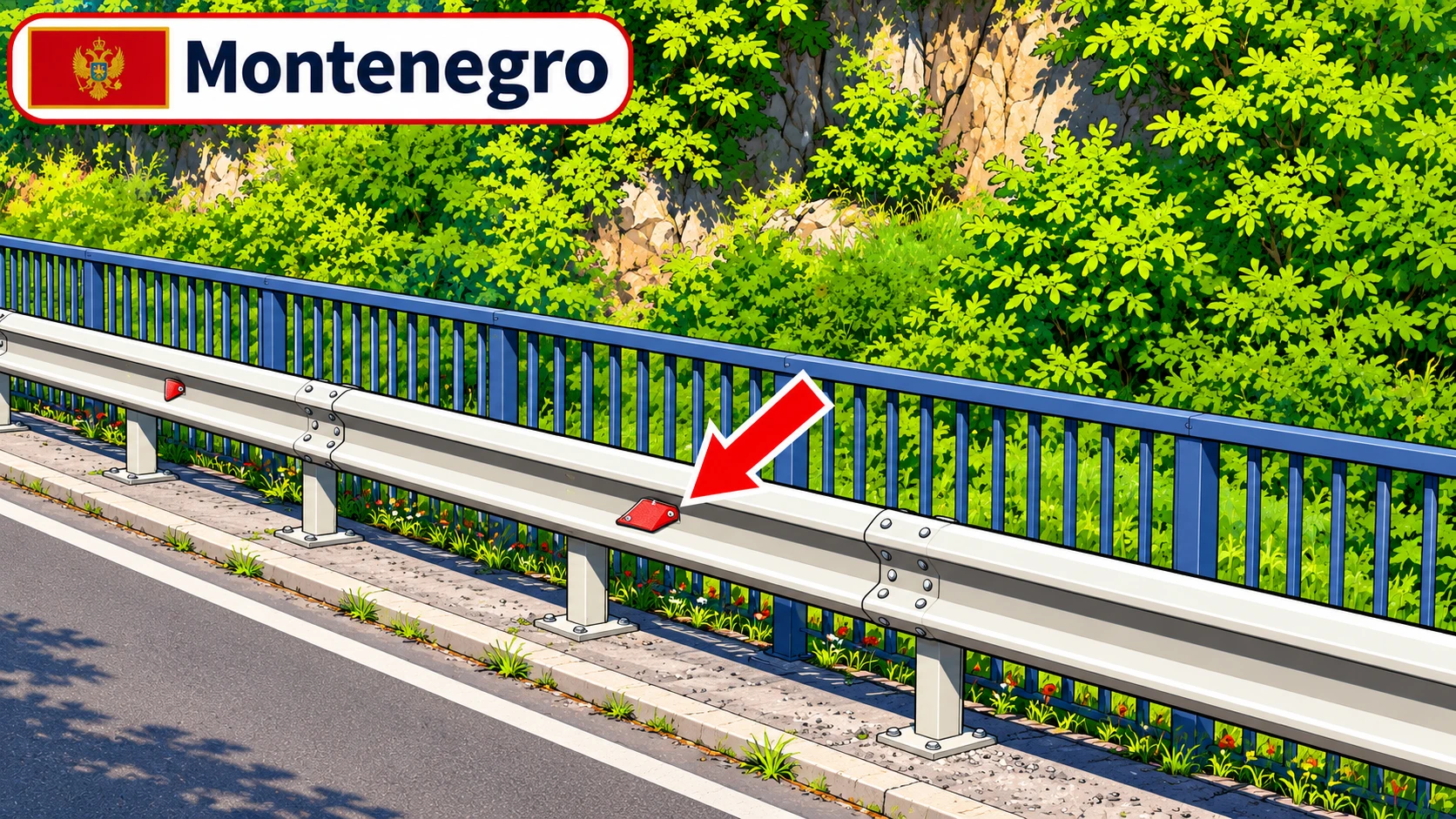
Explore this clueThe author describes trapezoidal red reflectors on Type A barriers and compares Kosovo.
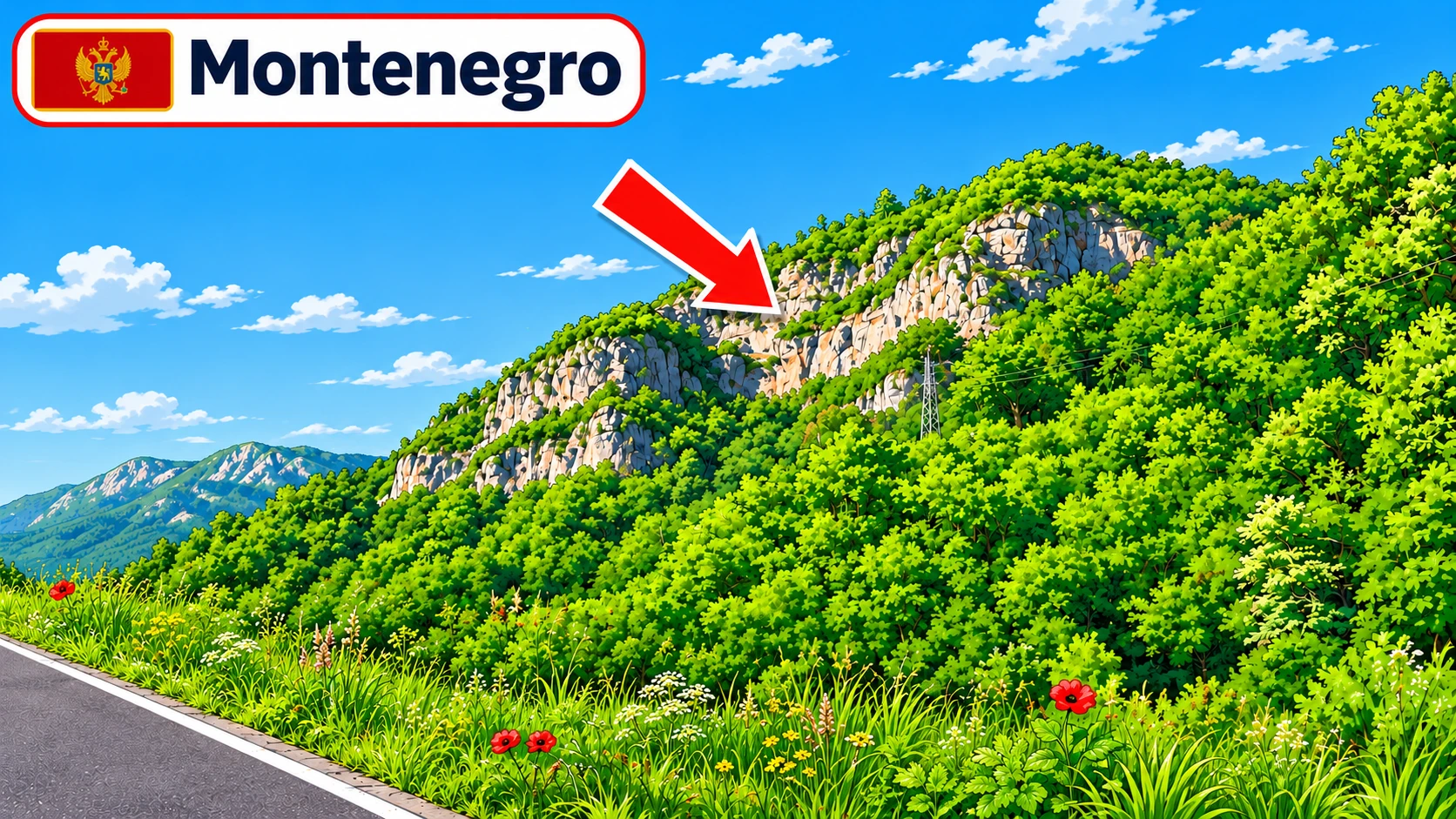
Explore this clueThick vegetation alternates with large areas of bare pale rock in the mountain slopes.
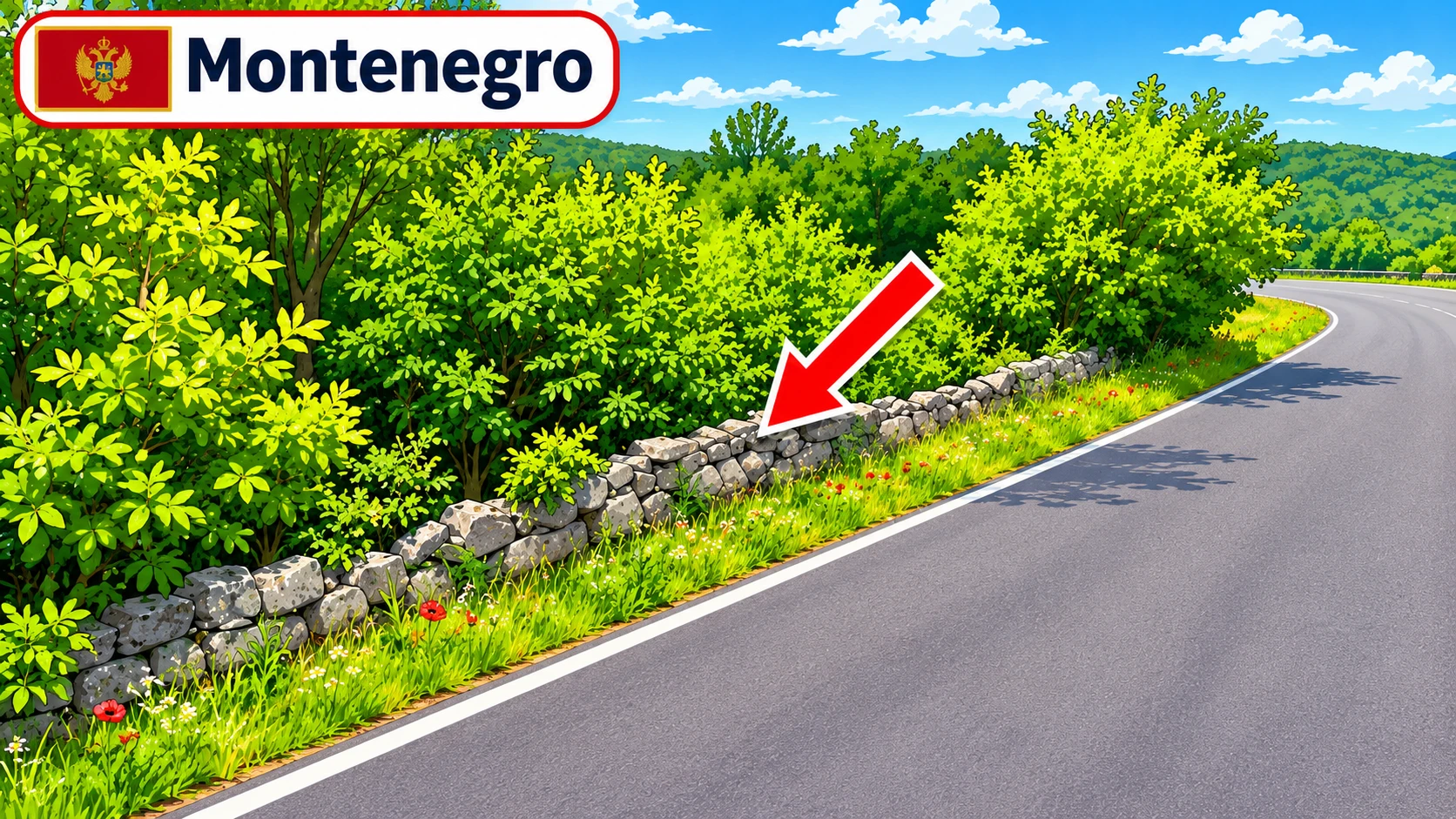
Explore this clueLook for nearby exposed rocks, scrub and low stone walls, distinguished from the larger distant rock faces.
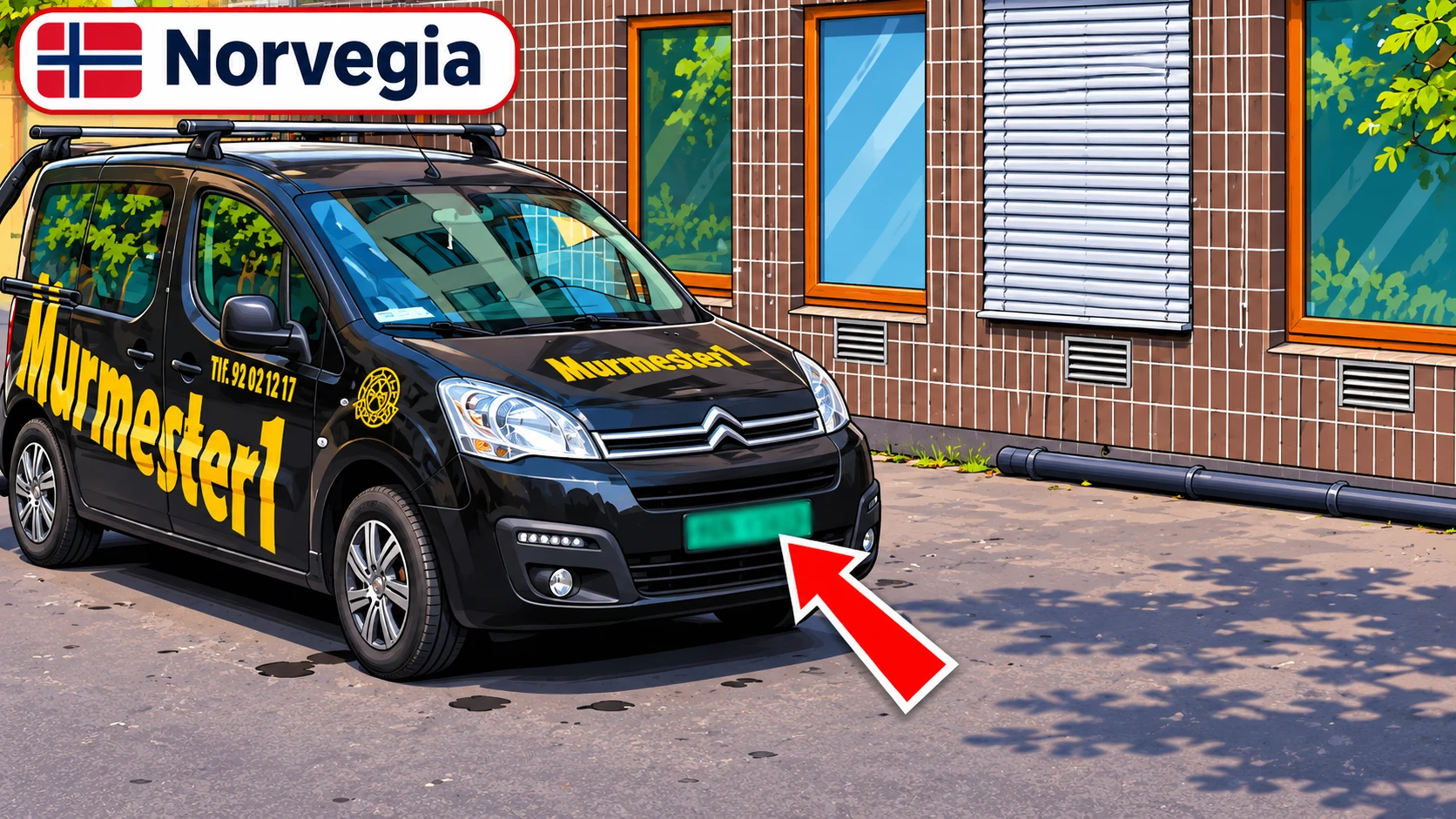
Explore this clueA close-up introduces Norway through a van's green plate; its colour remains visible despite blurred characters.
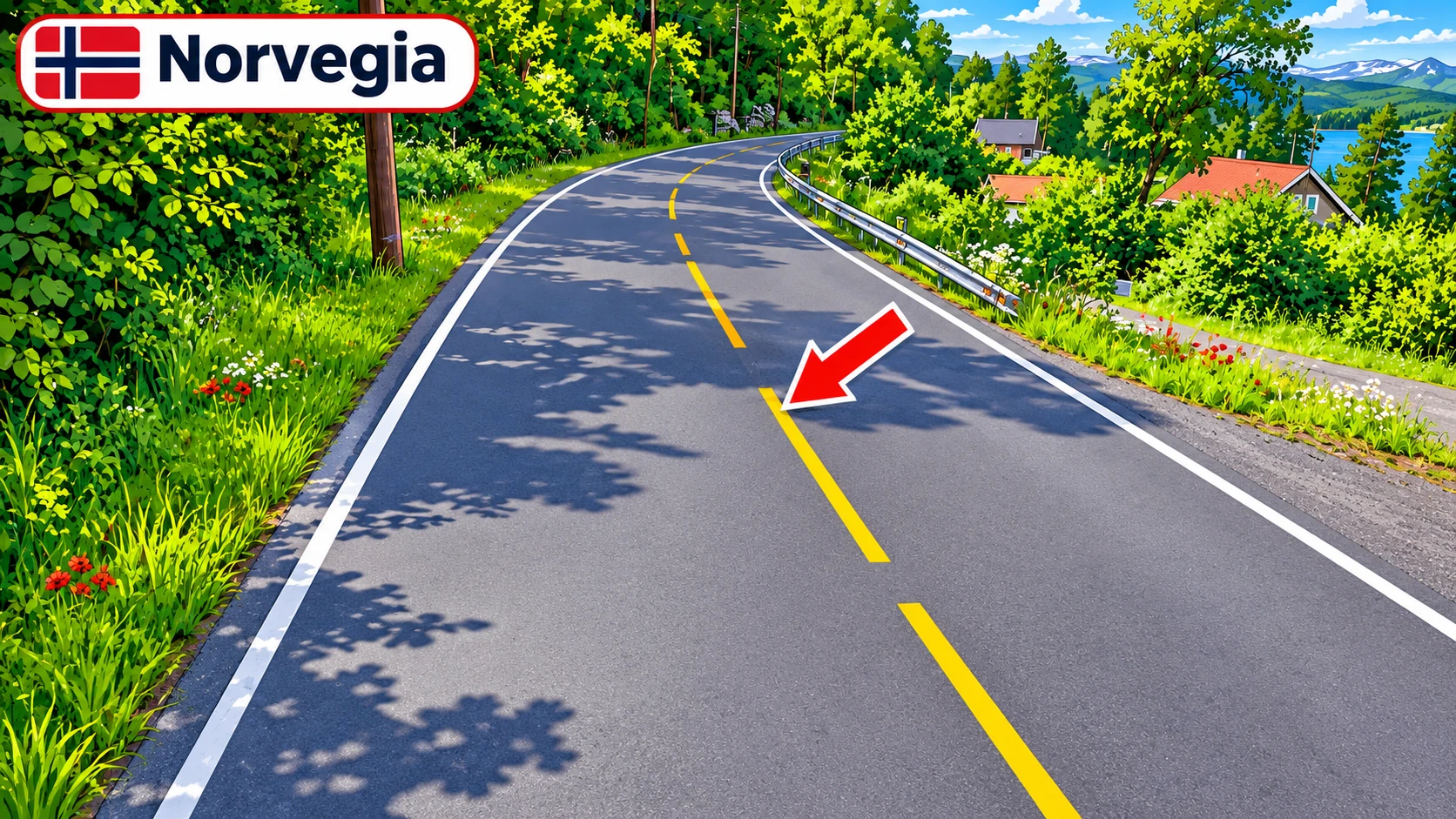
Explore this clueThe sequence contrasts yellow centres with solid white edges, and roads without centres but with long white edge dashes.
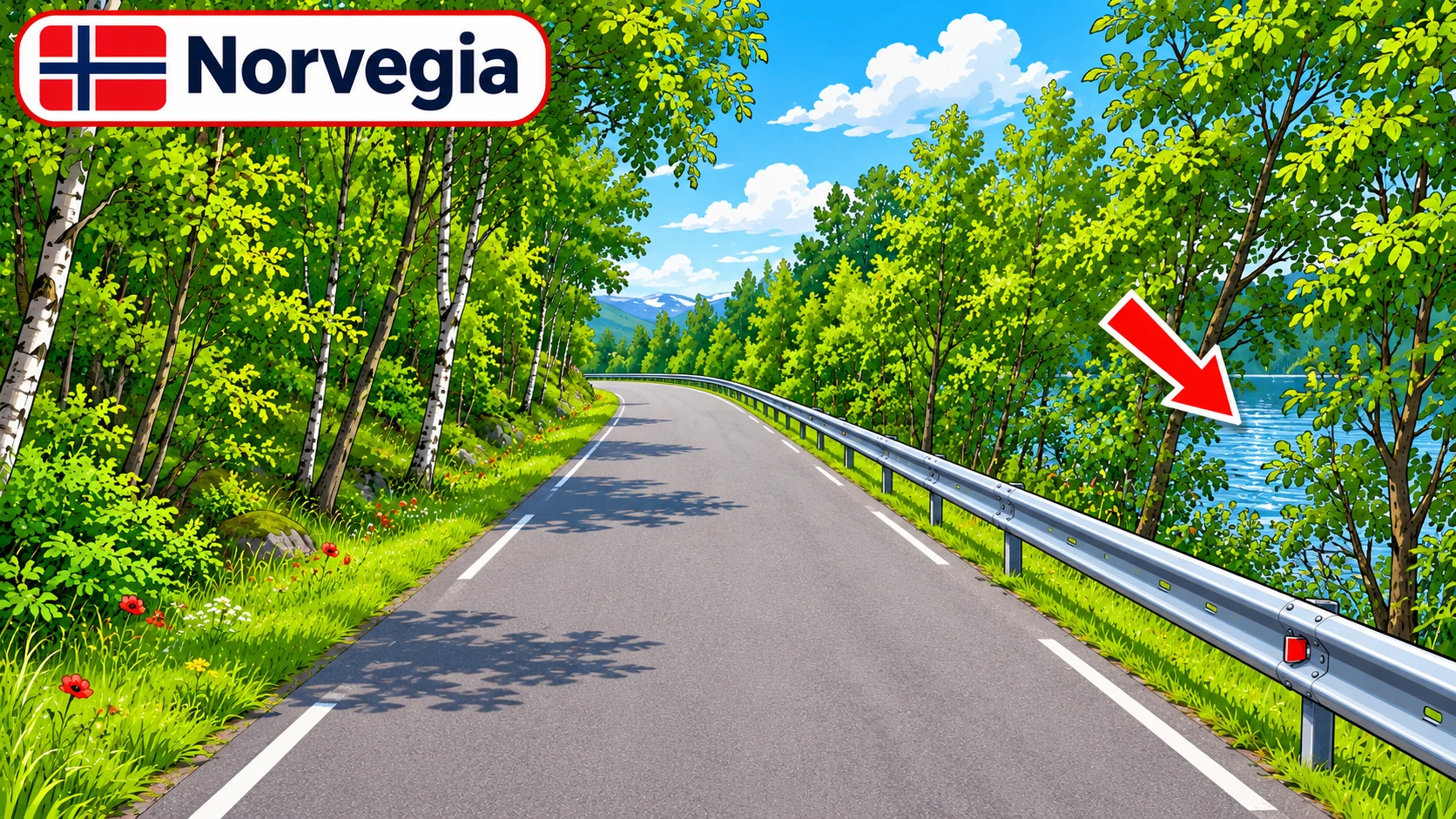
Explore this clueA road follows water between wooded slopes. The author especially mentions southwestern Norway's narrow valleys and high relief.
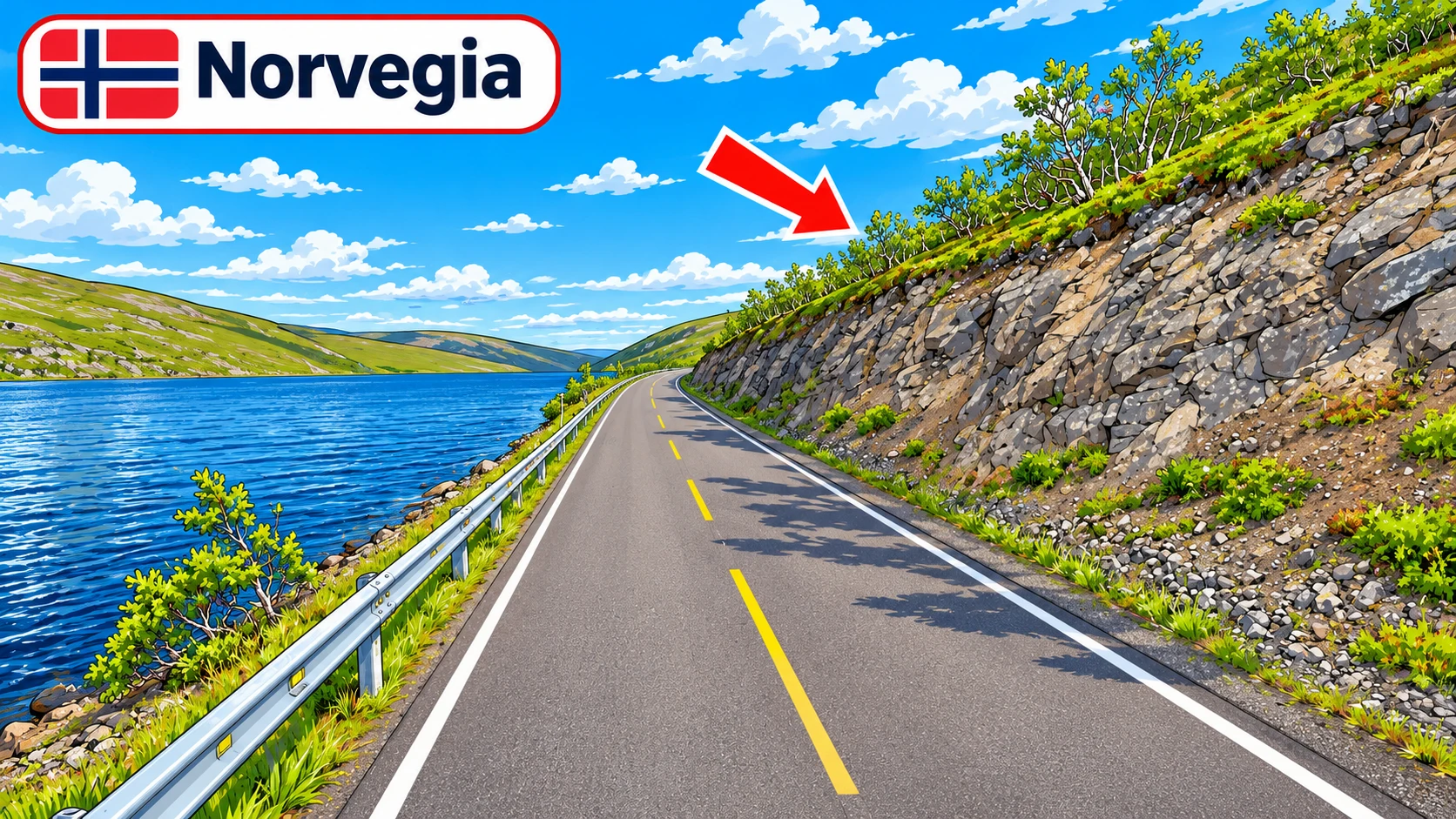
Explore this clueThe next example has sparsely vegetated slopes and small trees, contrasted with southern scenes.
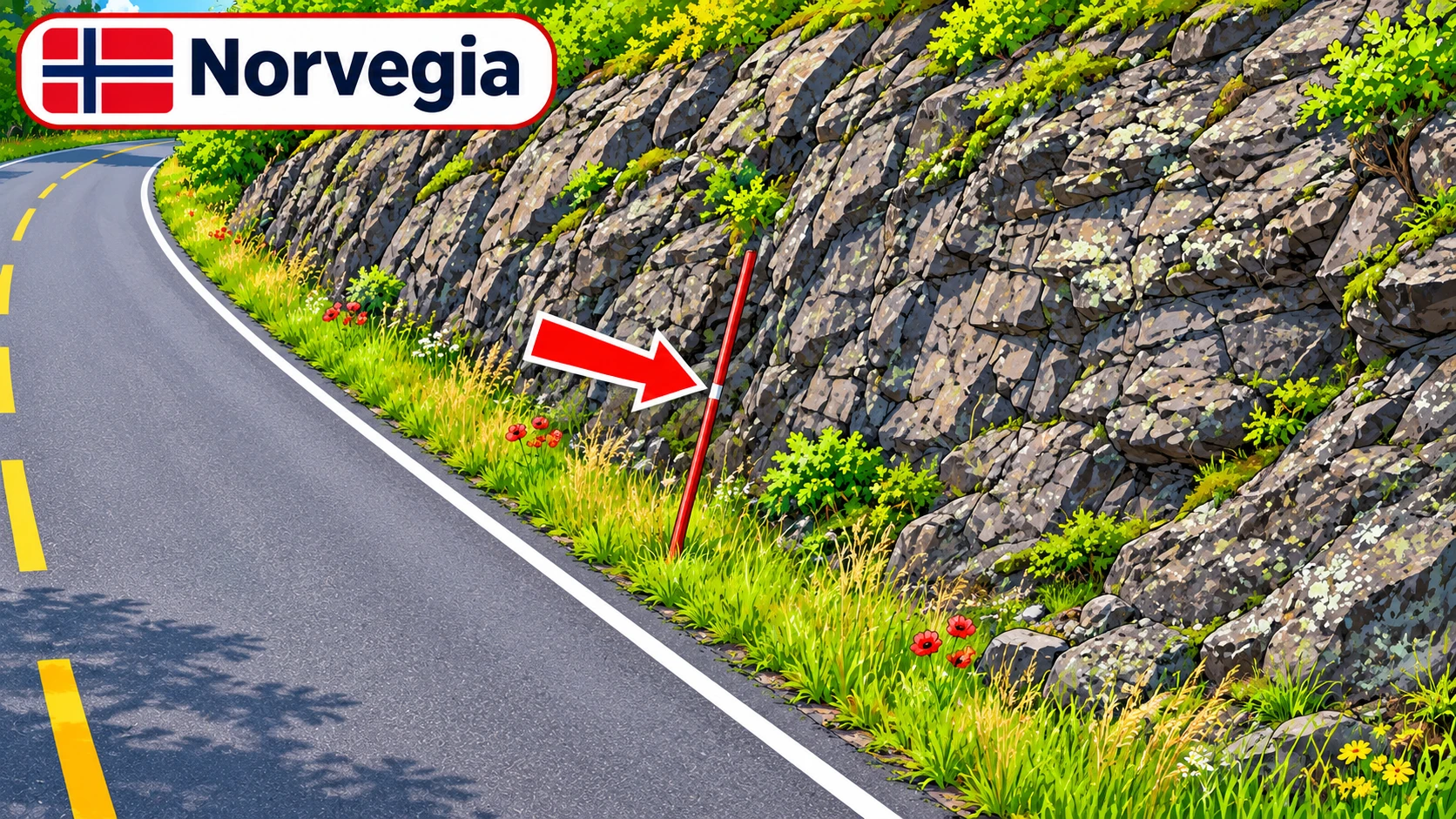
Explore this clueA thin pole beside rock has a white element partway up, compared with Sweden.
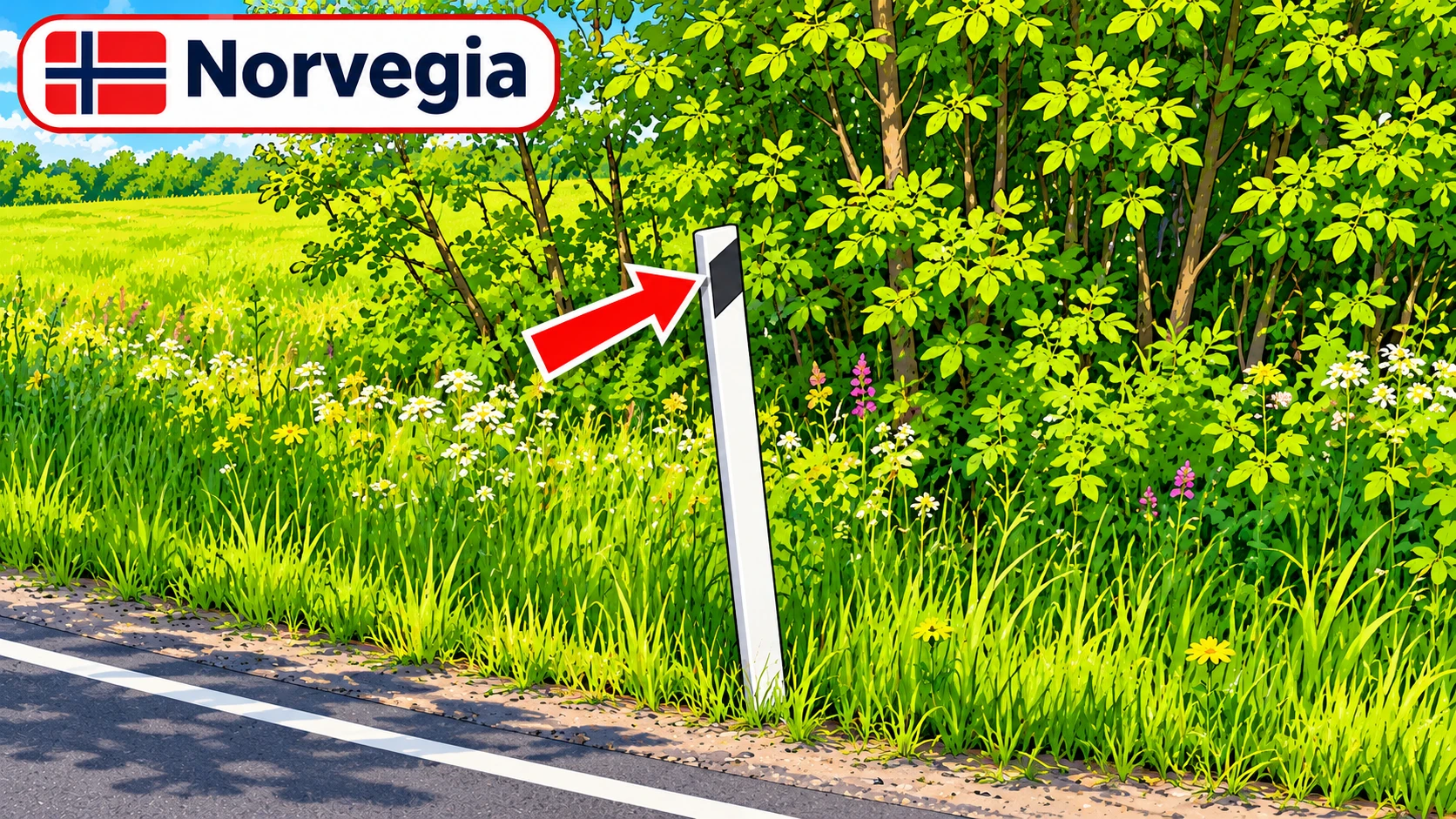
Explore this clueA slim flat white post has an angled or triangular dark upper pattern, compared with a Swedish design.
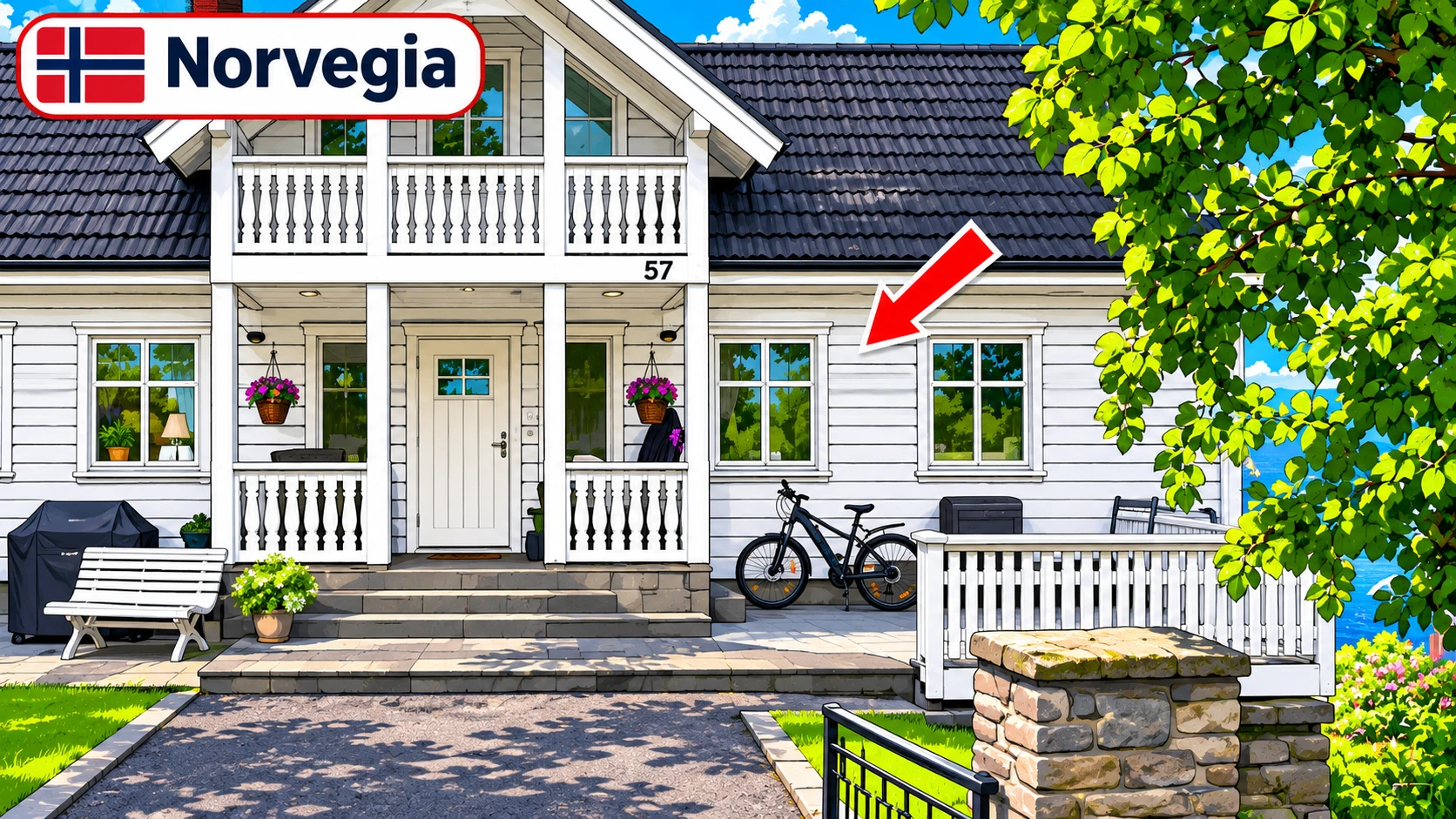
Explore this clueHorizontal timber cladding, white houses and red barns or homes form the illustrated architectural pattern.
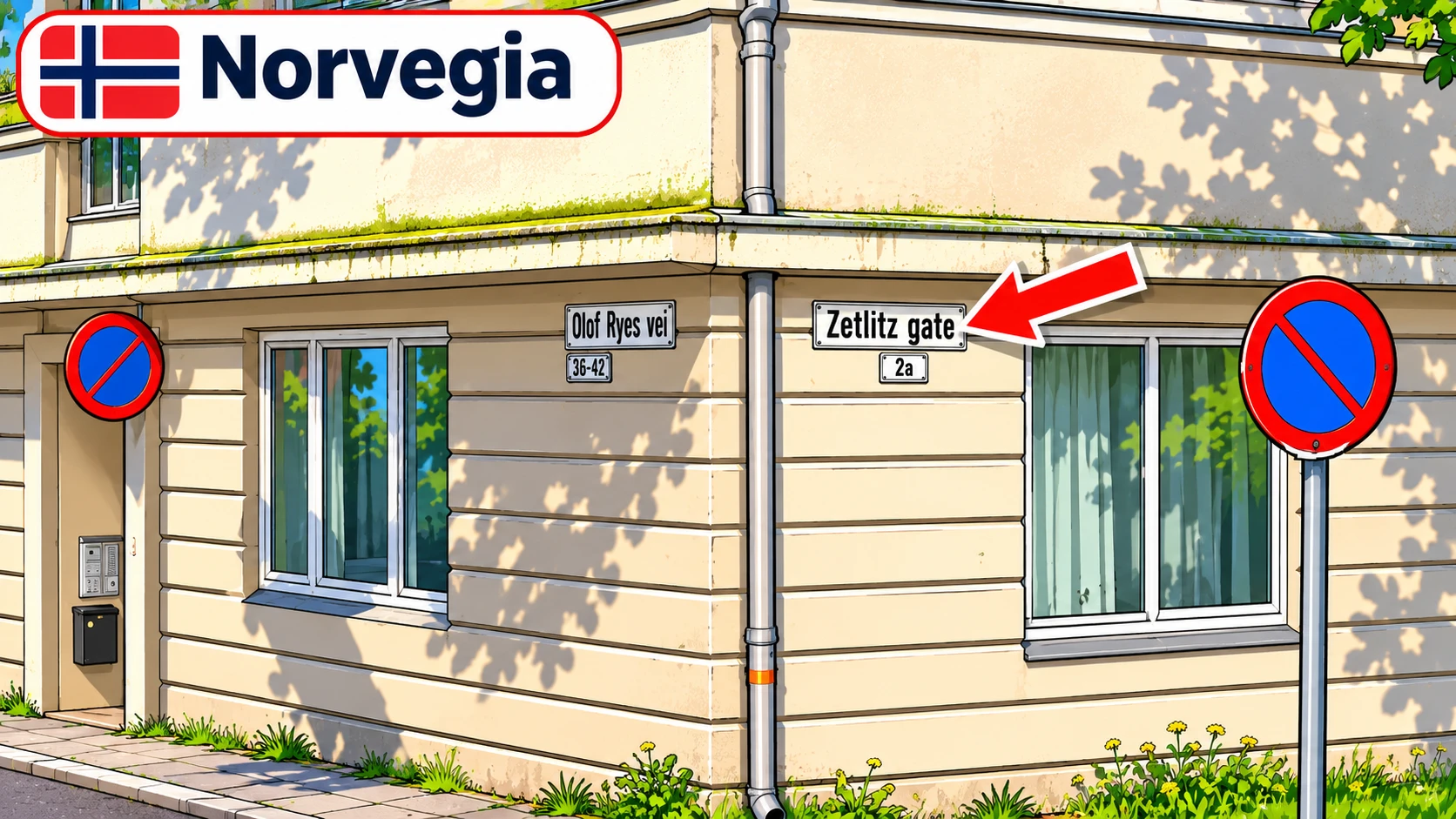
Explore this clueThe guide highlights these Norwegian street-name forms alongside other urban details.
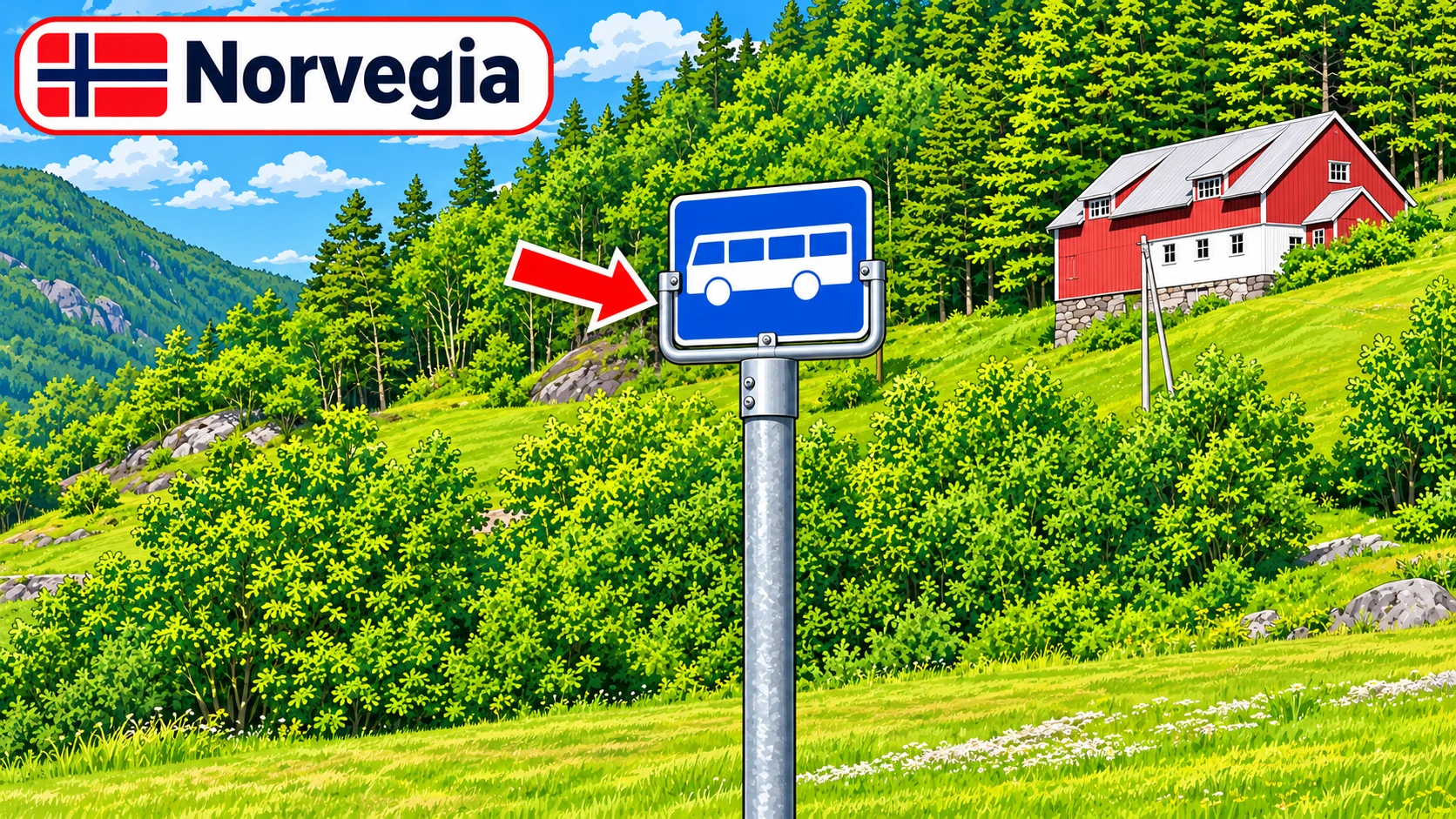
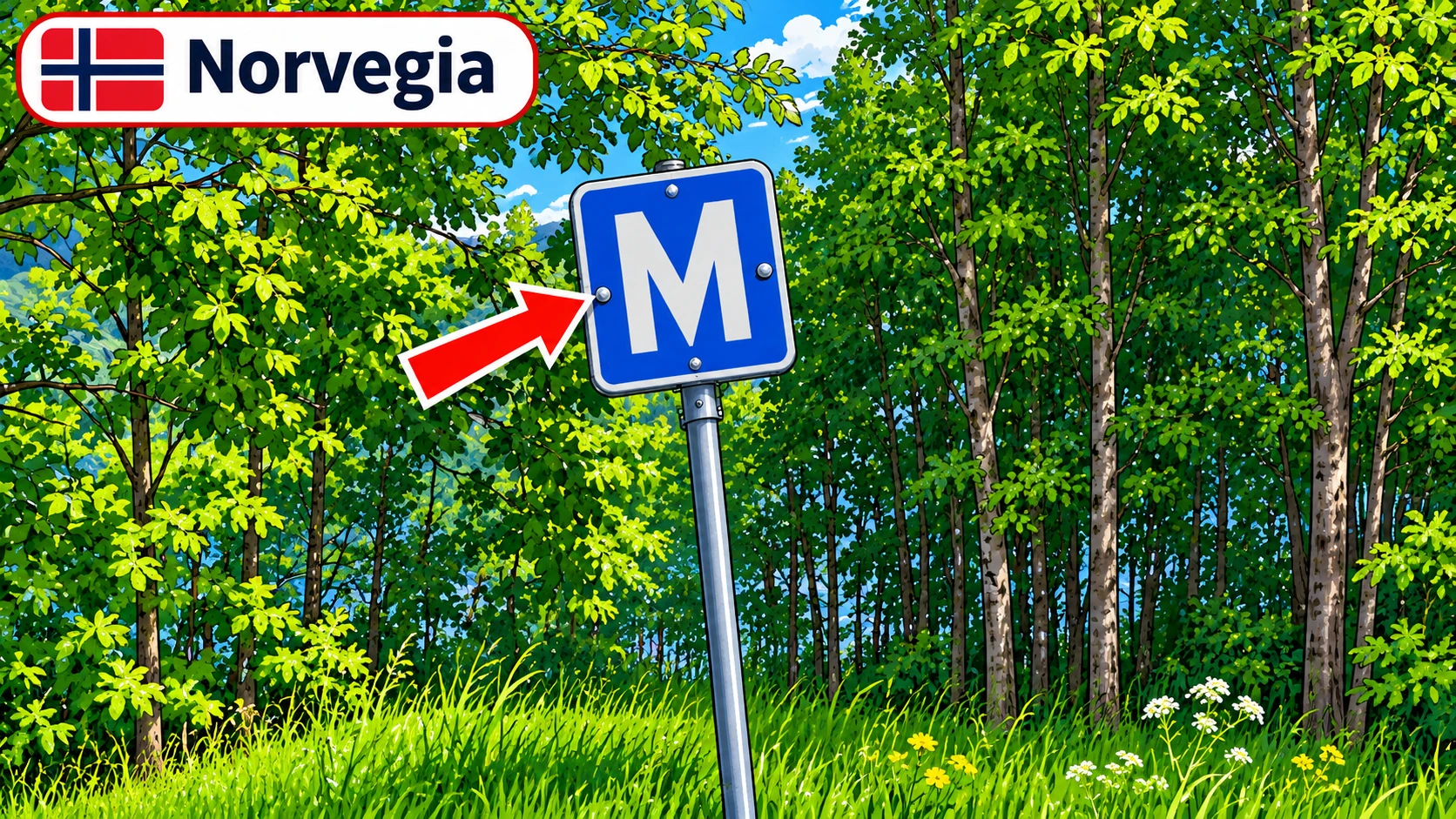
Explore this clueStreet, bus-stop and M signs illustrate a curved metal mounting structure that stops short of the panel's top.
Explore this clueThe guide separately mentions four rectangularly arranged fixings, yellow-on-black chevrons and an M differing from Sweden's.
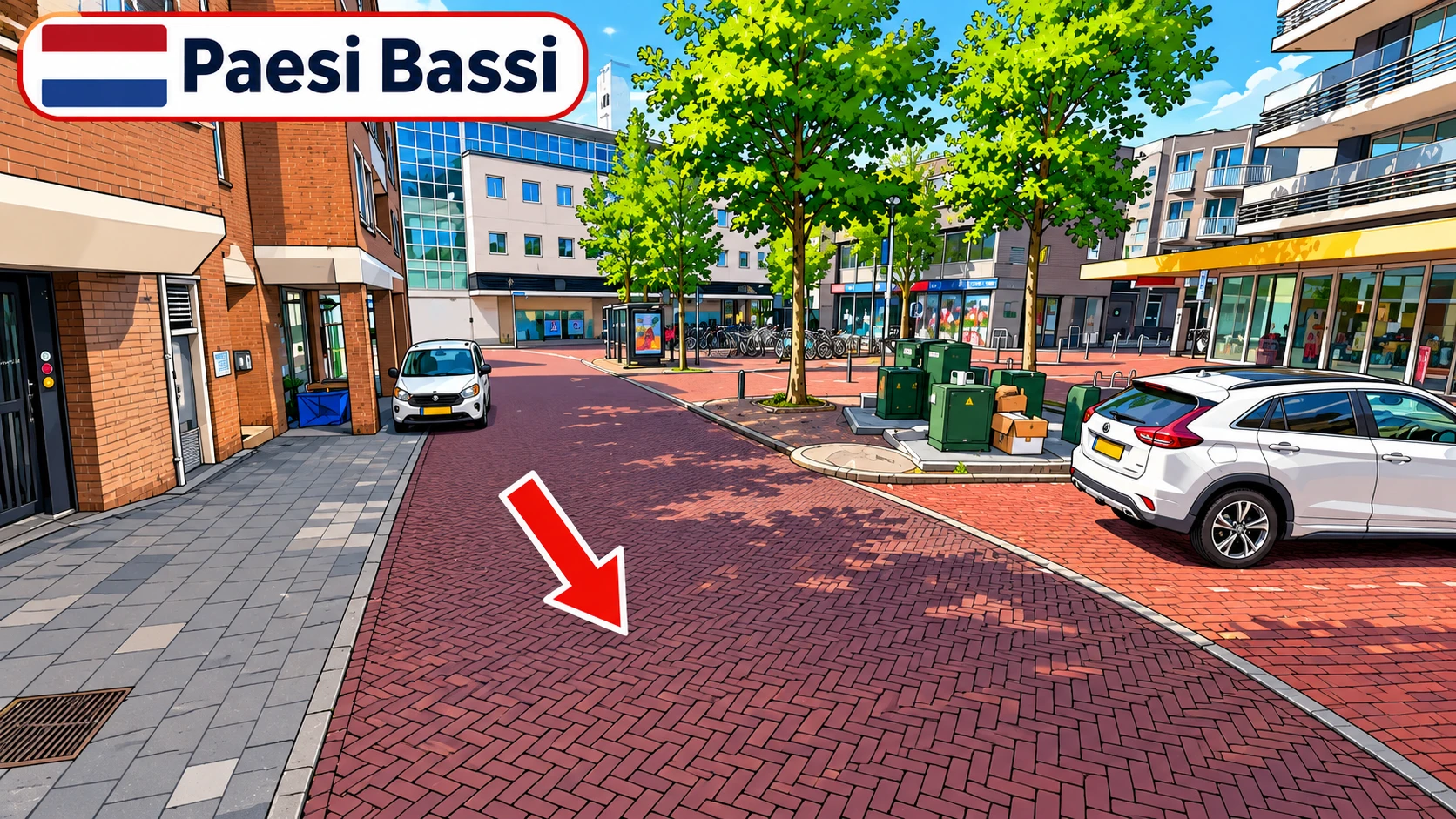
Explore this clueSmall dark red blocks pave the carriageway, with a brighter red strip beside it, described as frequent in Dutch towns.
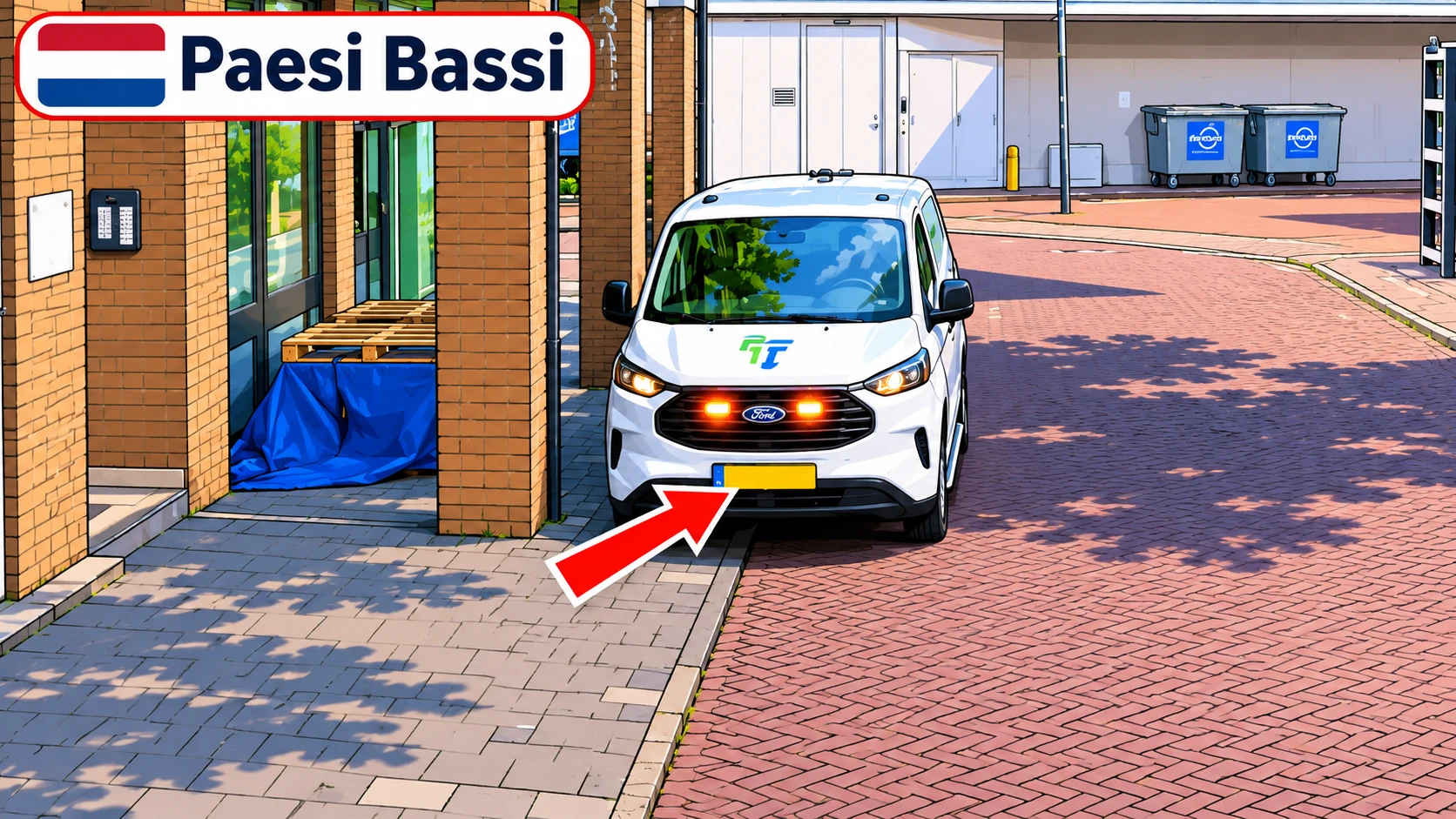
Explore this clueThe van's yellow front plate illustrates the Dutch use of yellow at both ends, compared with the UK and Luxembourg.
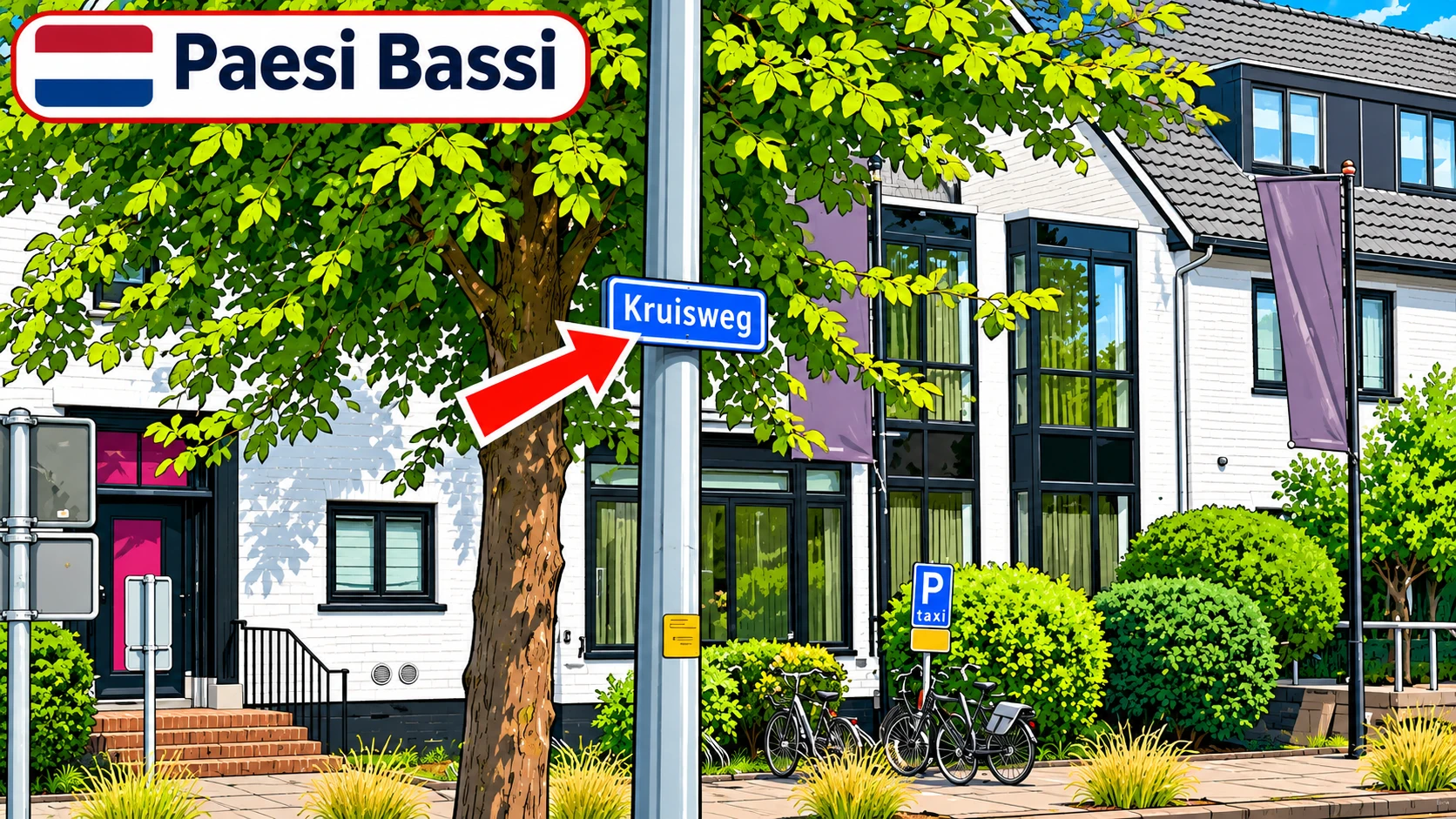
Explore this clueKruisweg illustrates weg; the guide also highlights straat with double a and Dutch vowel combinations.
Explore this clueThe pale post has an upper red reflector, compared with Belgian, Turkish and Australian designs.
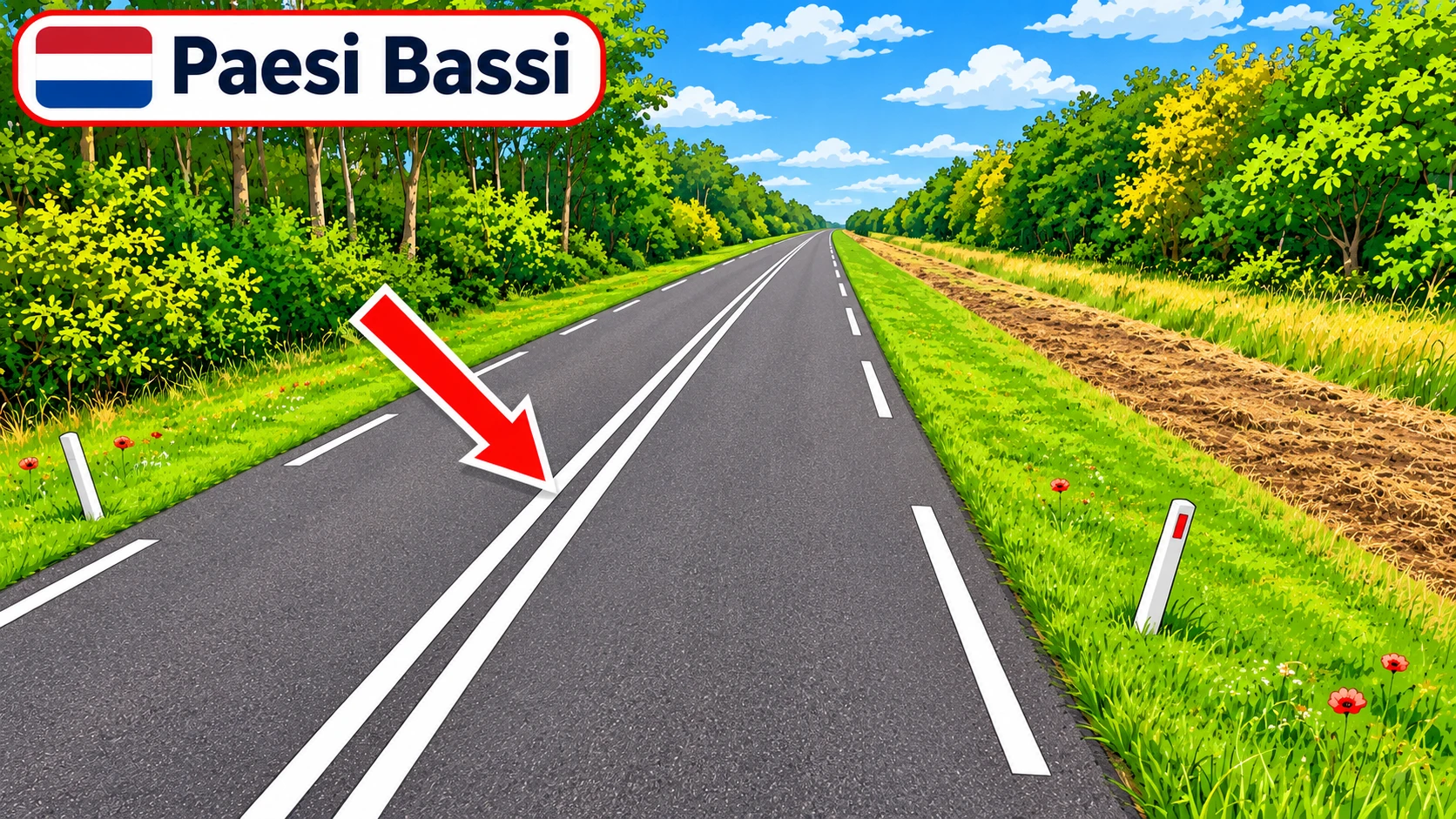
Explore this clueThe rural road has two white centre lines and white edge segments, compared with French layouts.
Explore this clueFolded metal rims reveal some front-face colour around the back edges of the signs.
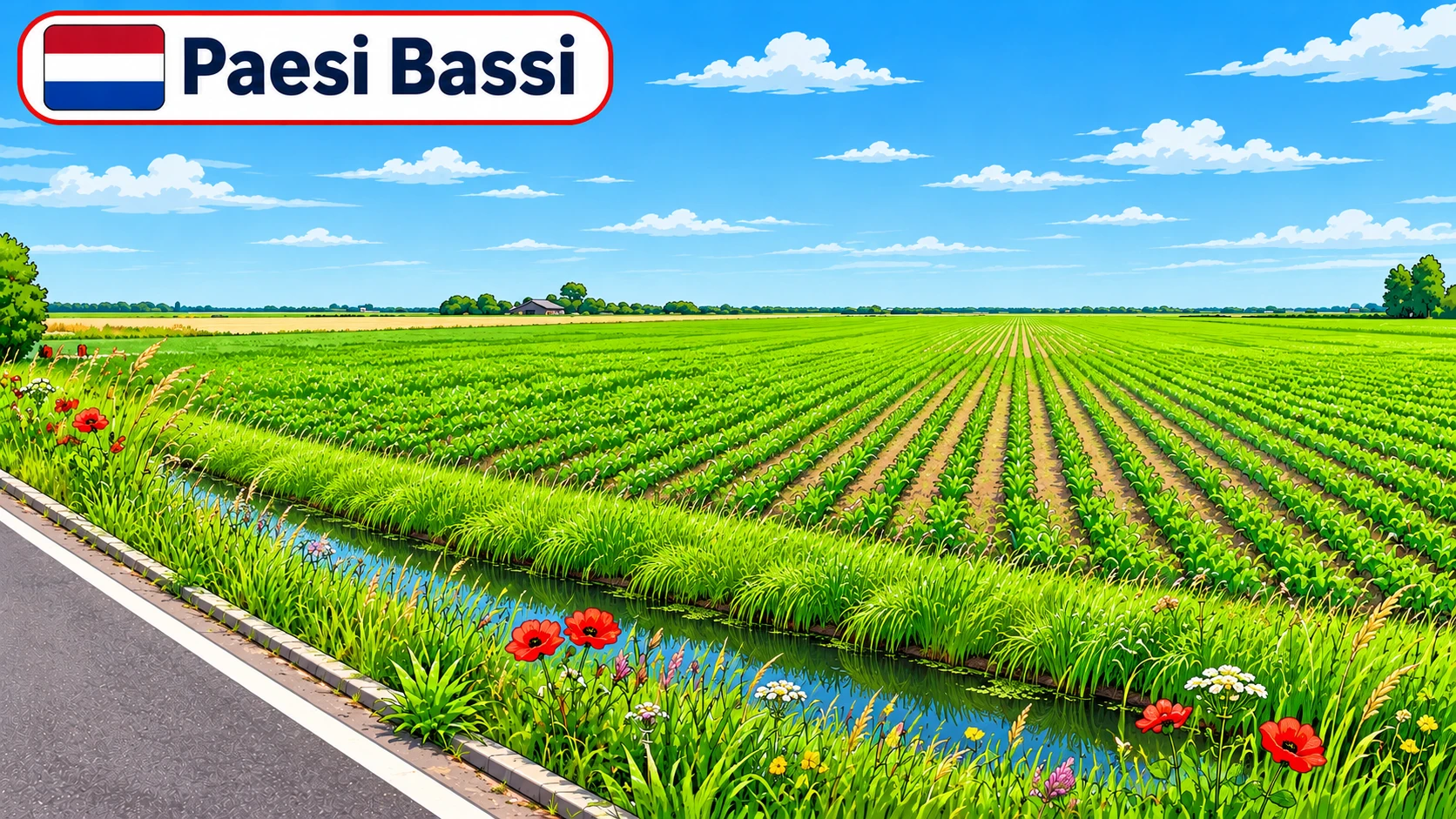
Explore this clueBroad fields meet a nearly level horizon, with drainage ditches or canals along some edges.
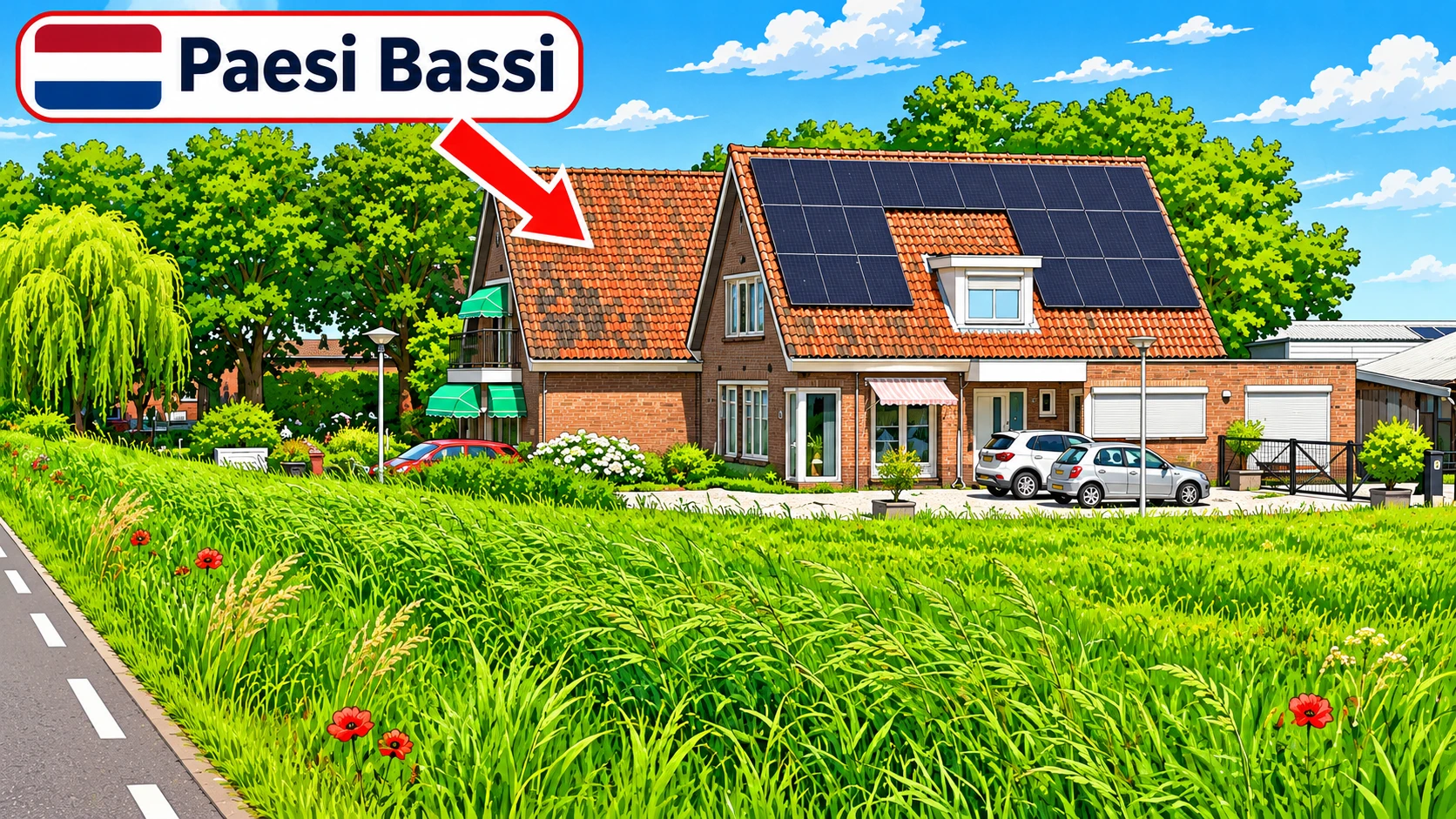
Explore this clueThe rural house has brick walls and a dark red or brown sloping roof.
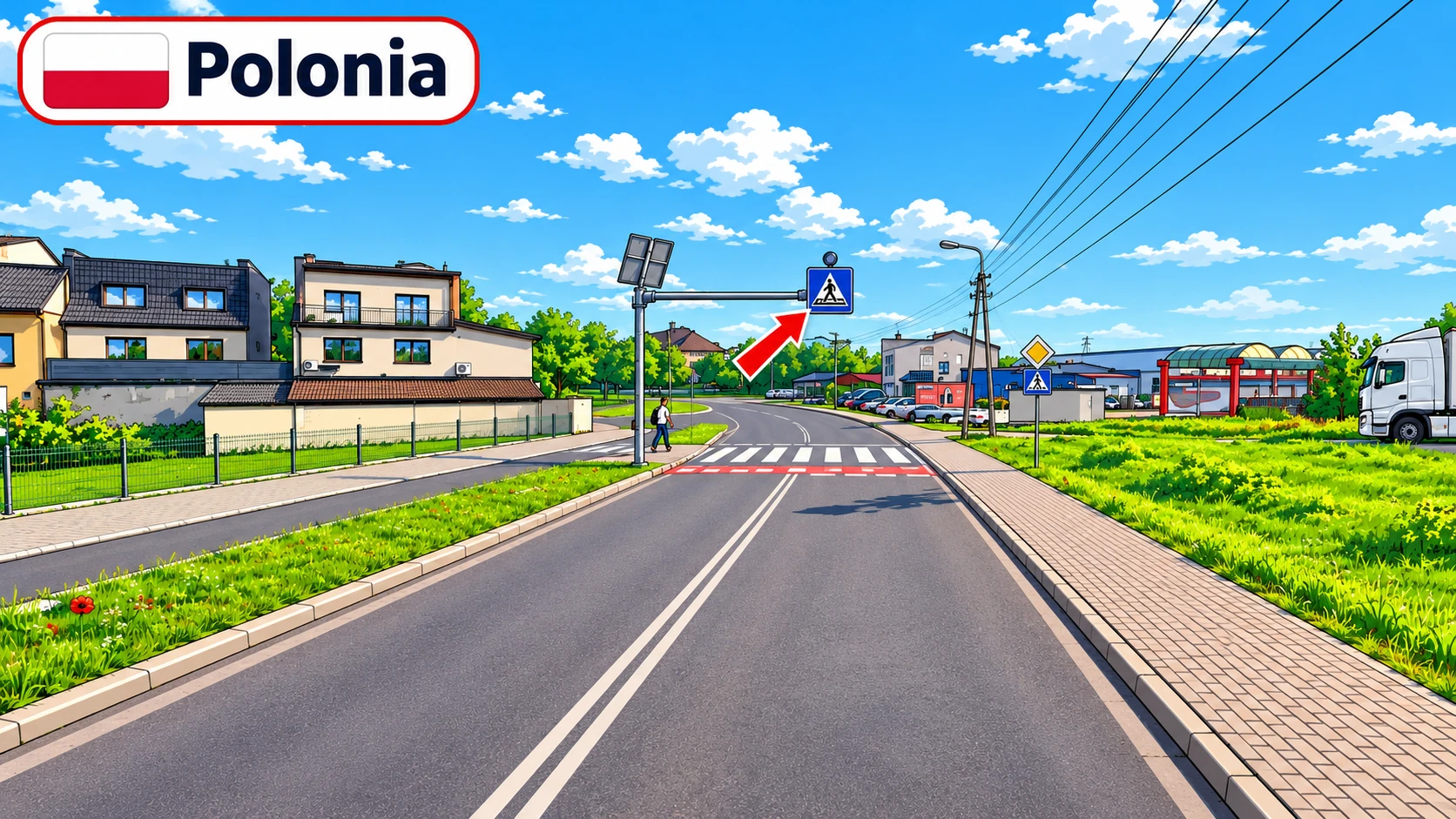
Explore this clueLook for one horizontal bar rather than separate stripes under the pedestrian pictogram.
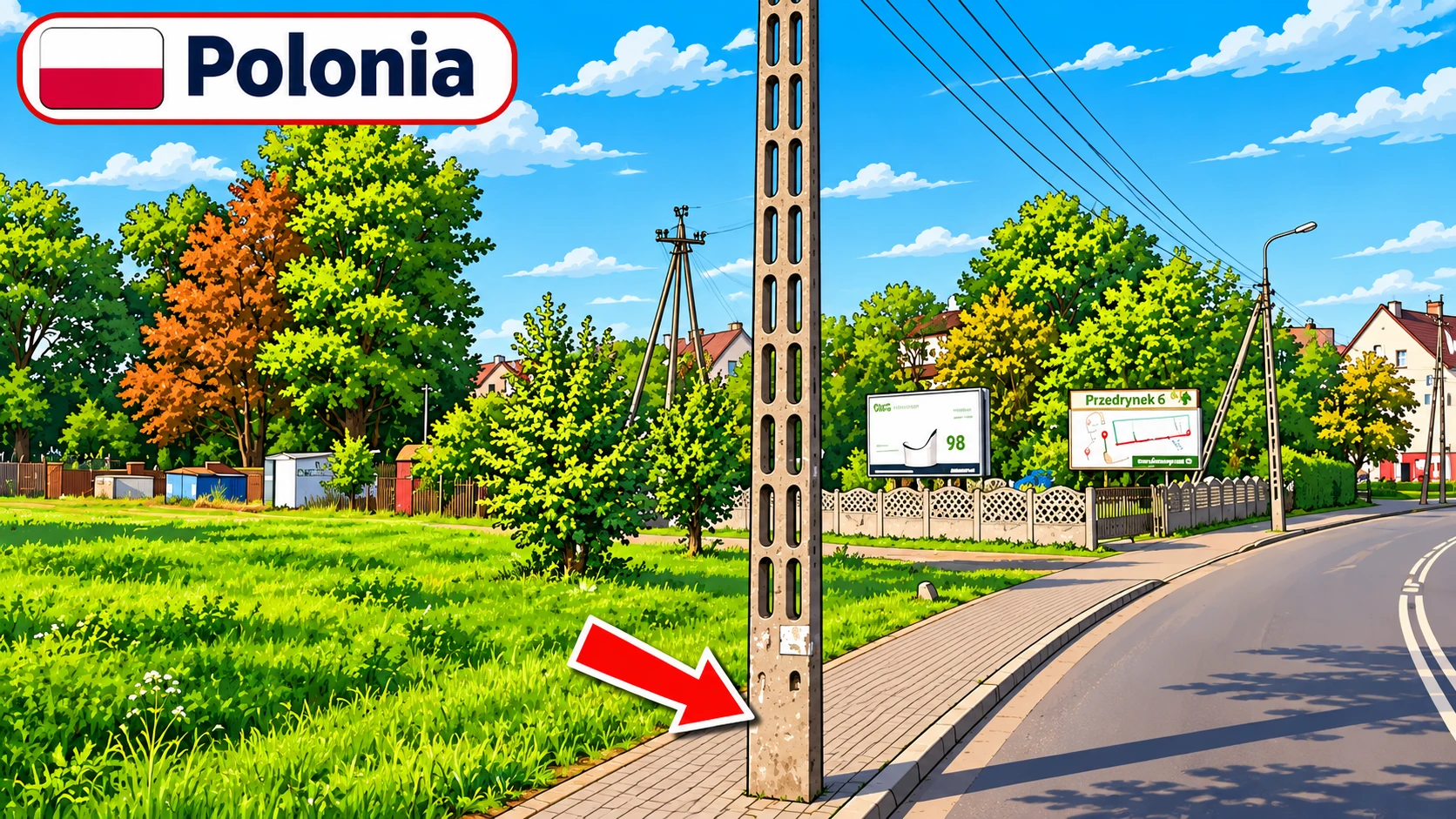
Explore this clueThe concrete pole's openings stop above ground level, leaving a solid lower section.
Explore this clueThe guide suggests double white centres for Poland when other clues help distinguish Greece and Denmark.
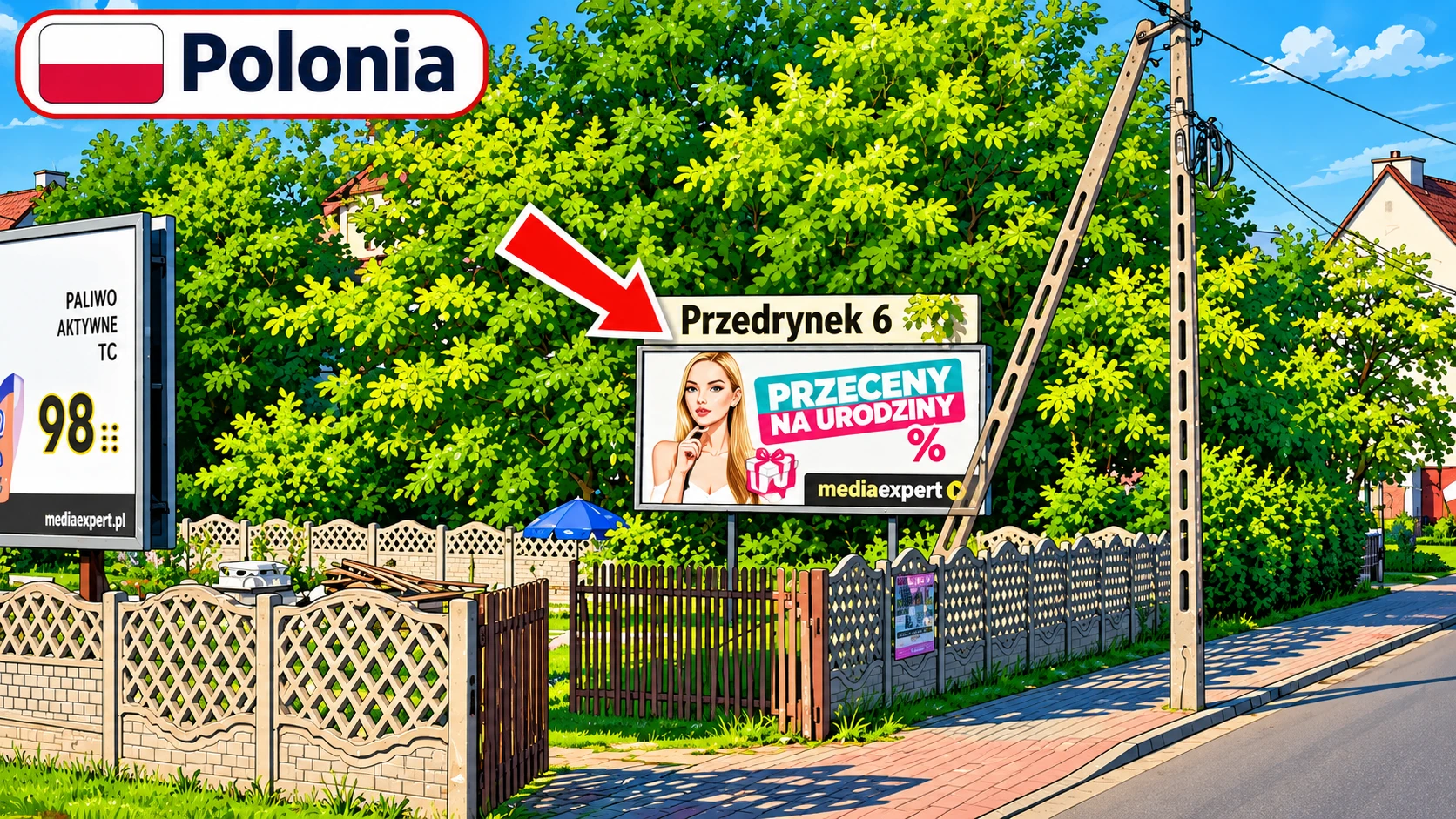
Explore this clueWords on signs contain clusters such as prz, alongside frequent z and y.
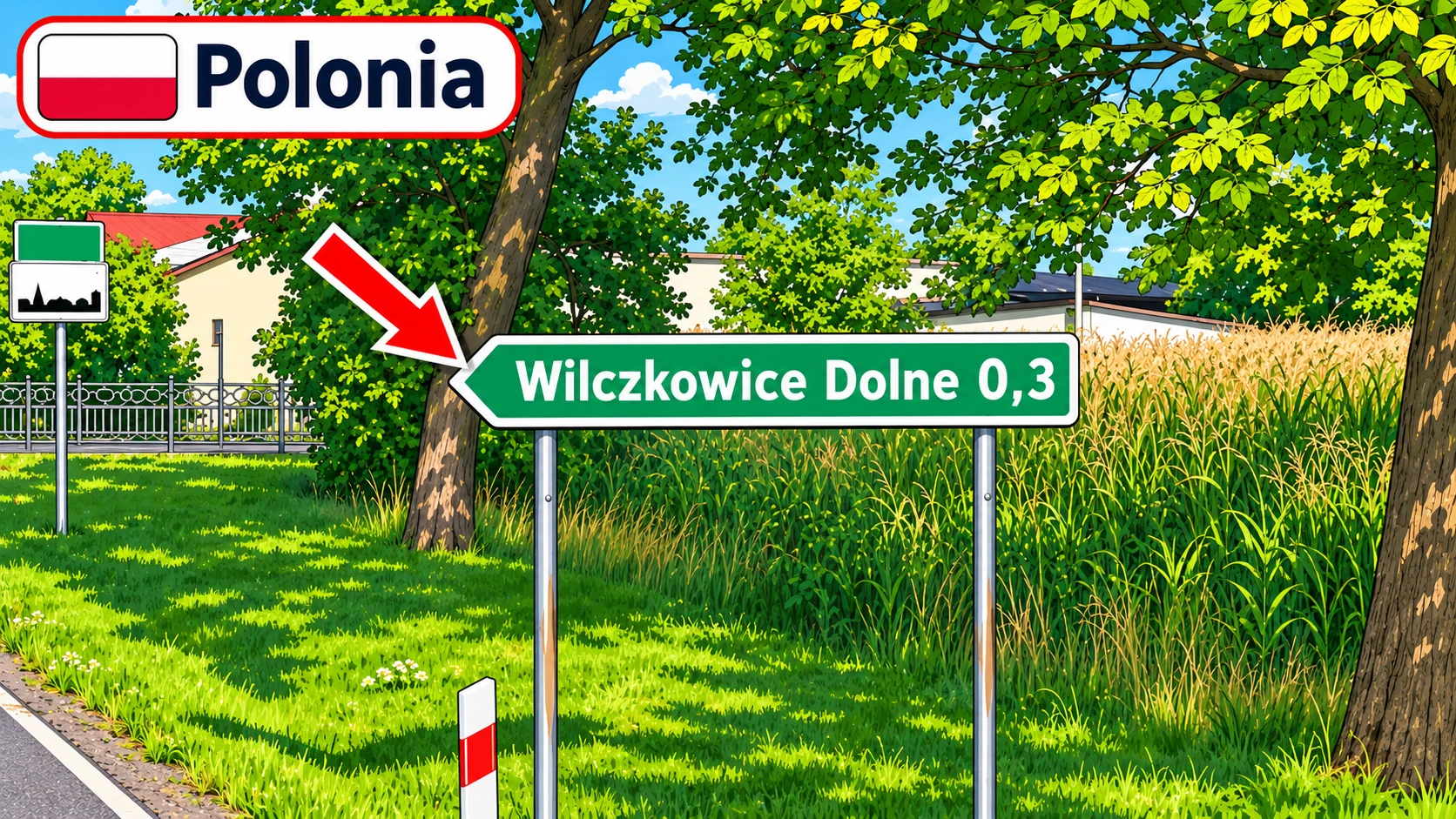
Explore this clueThe directional sign has a green background, white text and an arrow tip. Rectangular settlement panels are also mentioned.
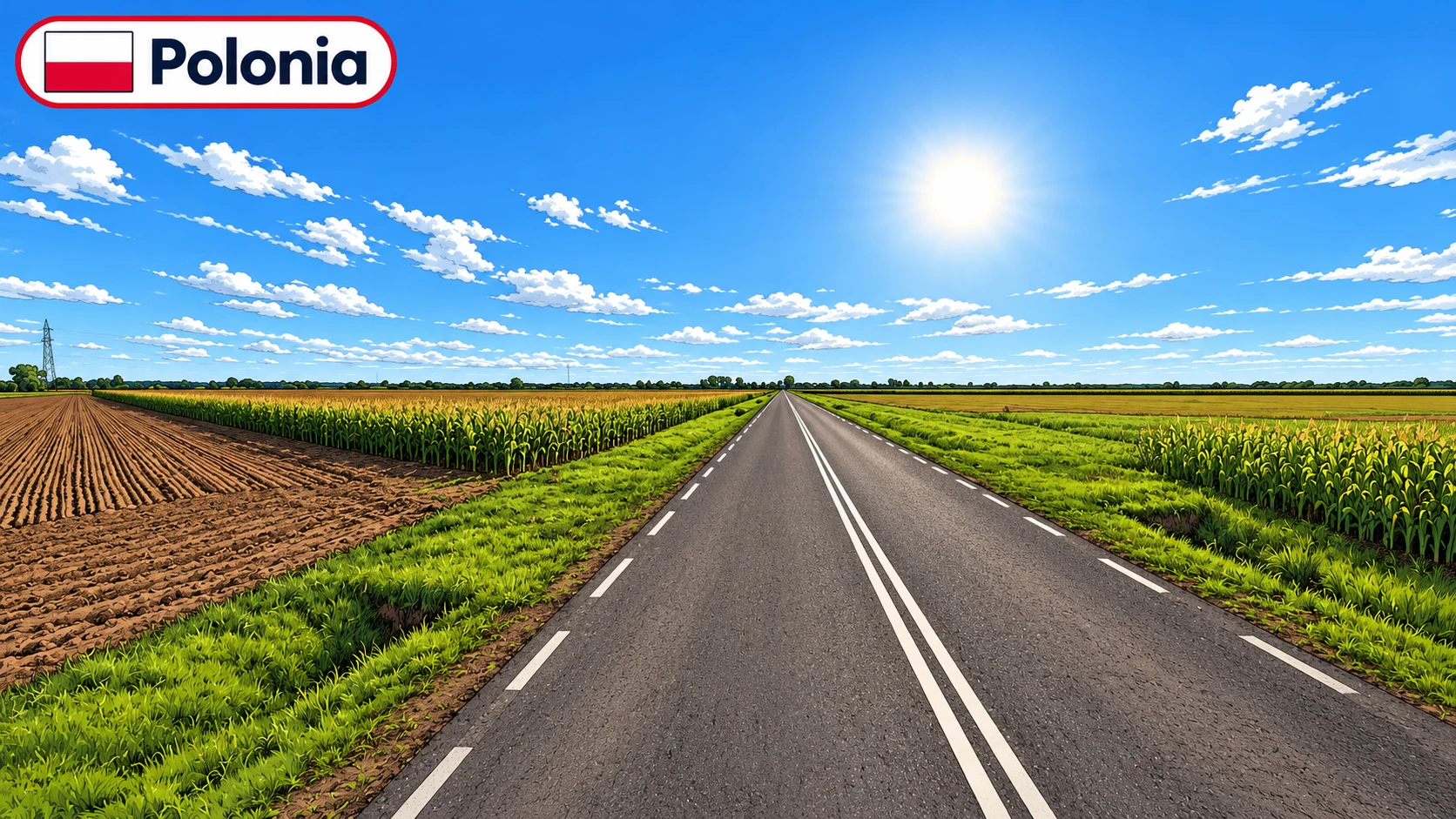
Explore this clueBroad fields, an unobstructed horizon and double centre markings are combined when readable text is absent.
Explore this clueThe white post has a black upper band and a small white reflector close to its top, compared with Croatia and Germany.
Explore this clueA close-up shows a ladder arrangement of round openings, followed by the reverse side for comparison.
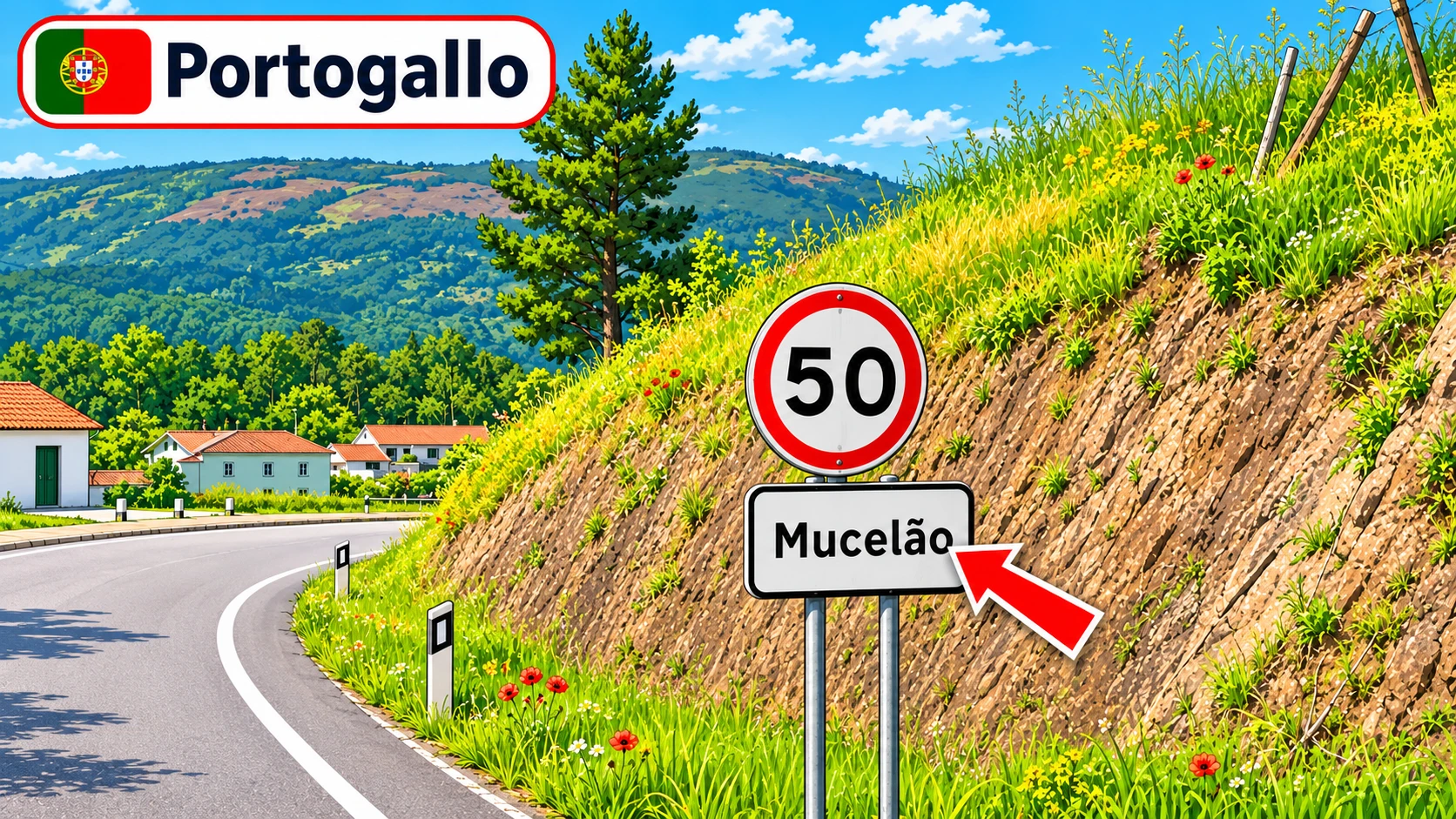
Explore this clueMucelão illustrates a tilde over a, with other Portuguese characters mentioned in the guide.
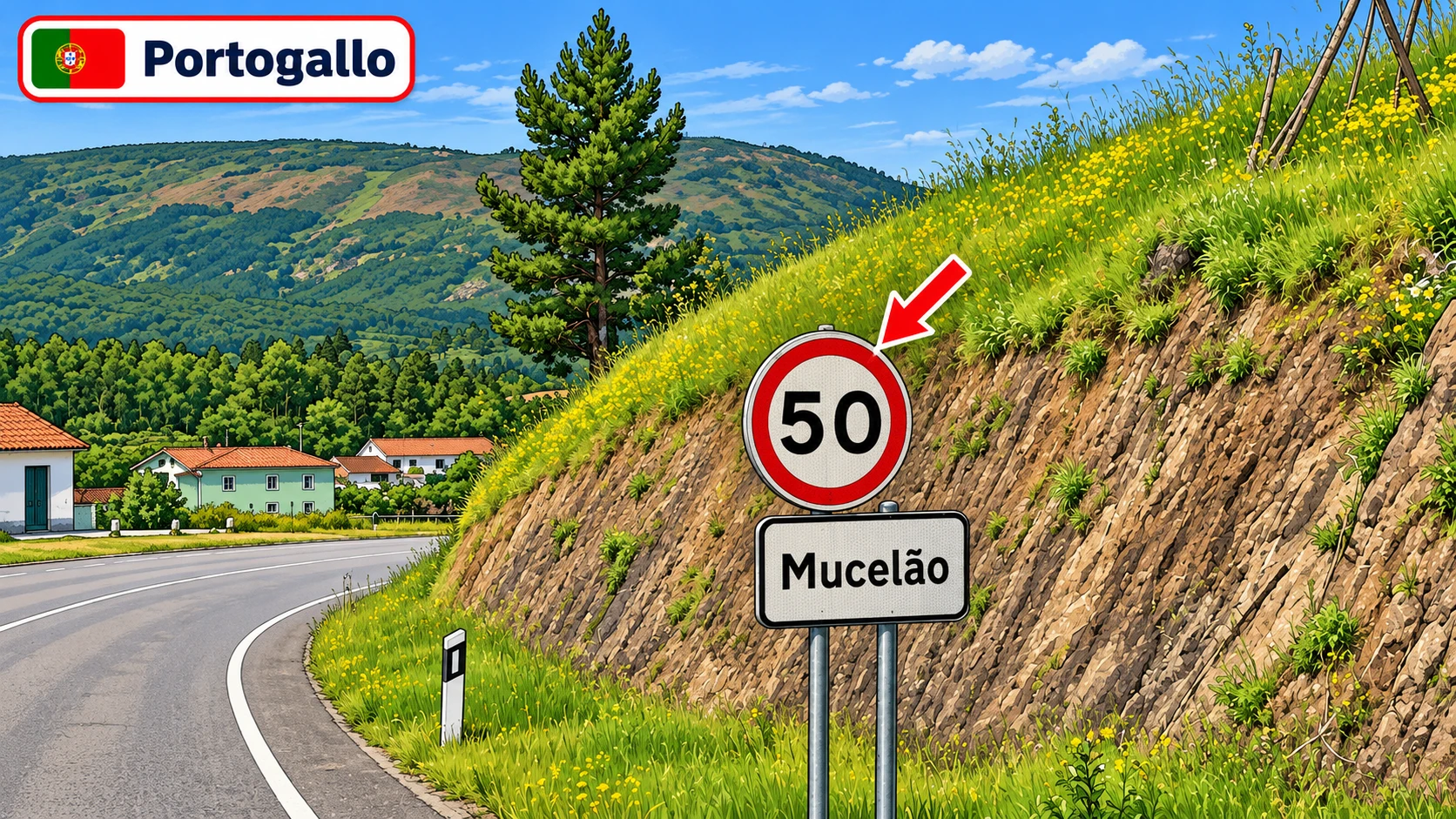
Explore this clueA speed sign has a light margin outside the red ring, contrasted with Spanish examples whose red reaches the edge.
Explore this clueThe author compares green hills and reddish ground with drier Spanish examples.
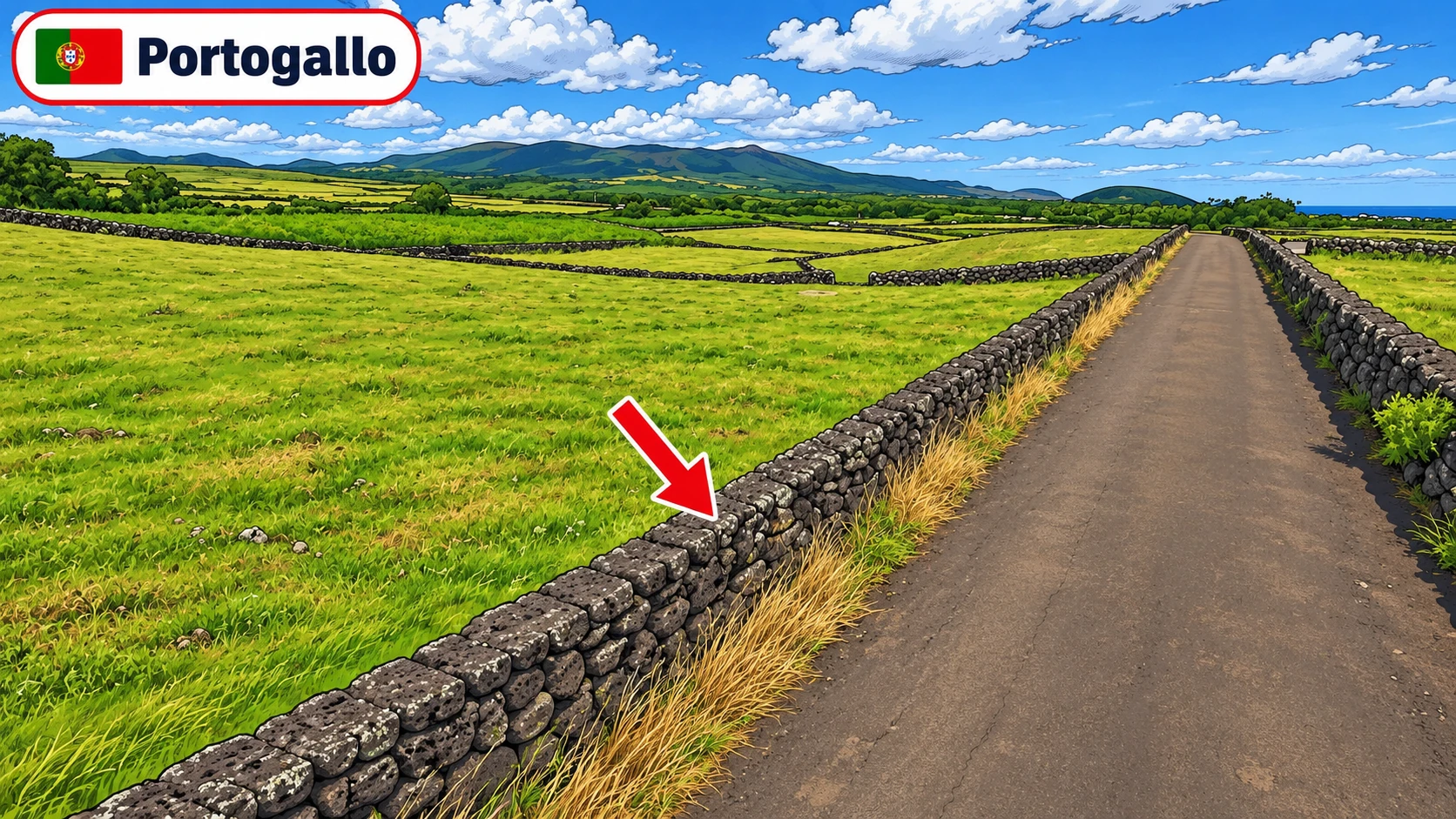
Explore this clueThe Azores example combines green fields, dark stone walls and distant relief.
Explore this clueA blue-and-white plaque shows RUA, compared with Spain's calle.
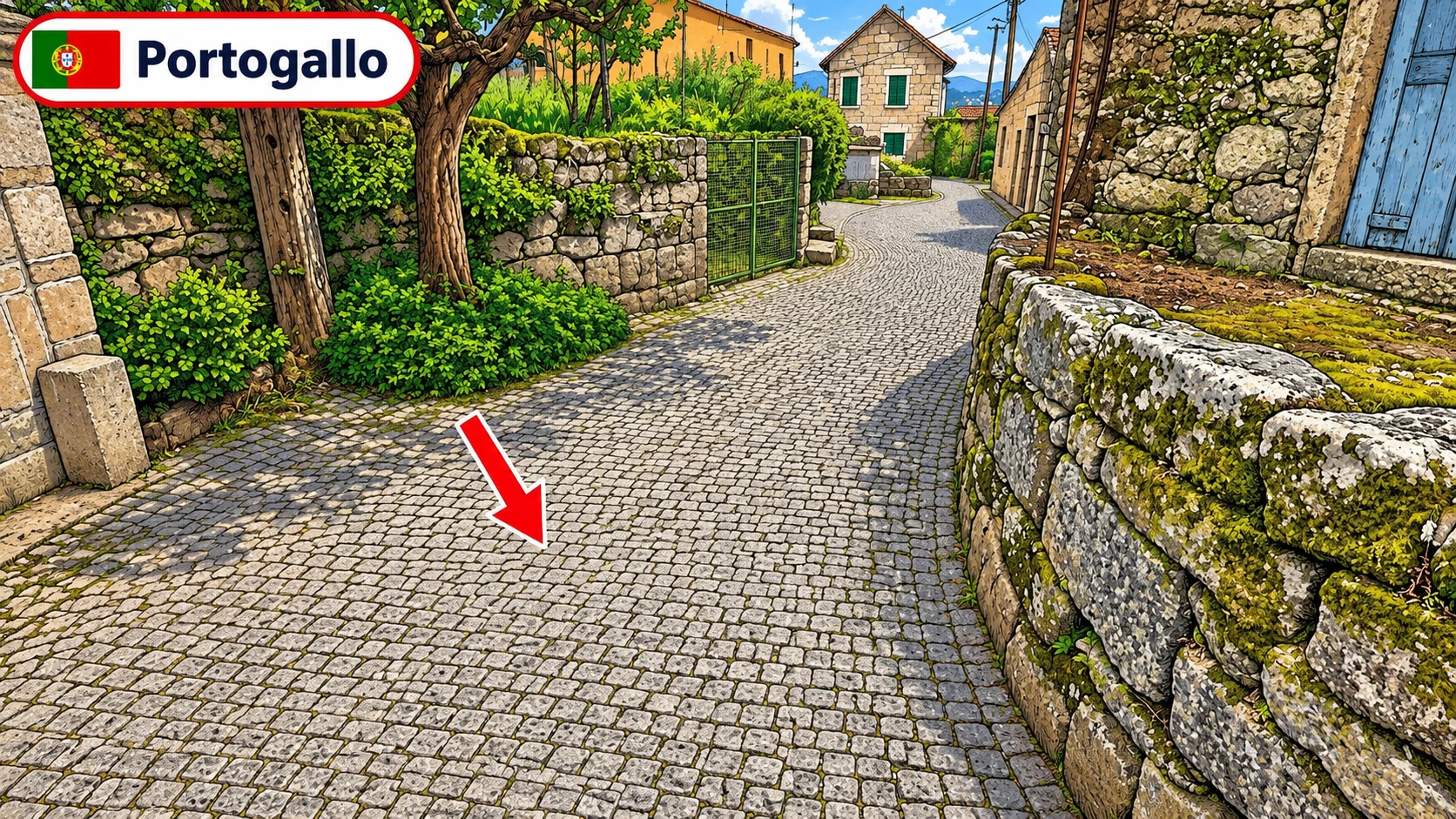
Explore this clueSmall pale stone blocks create bright road and pavement surfaces contrasting with asphalt.
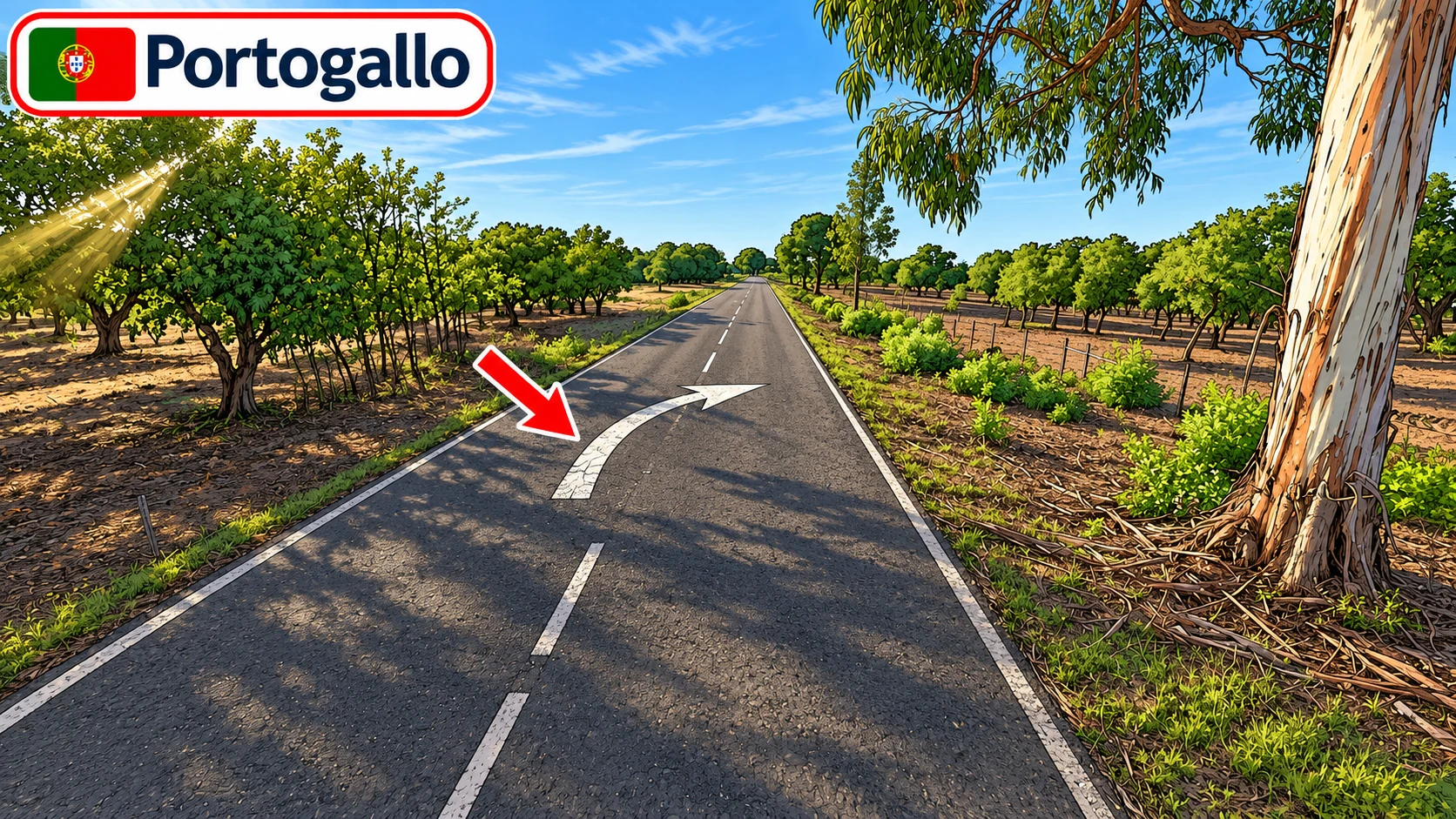
Explore this clueA rural road has a merge-back arrow near the end of an overtaking section, compared with France and Romania.
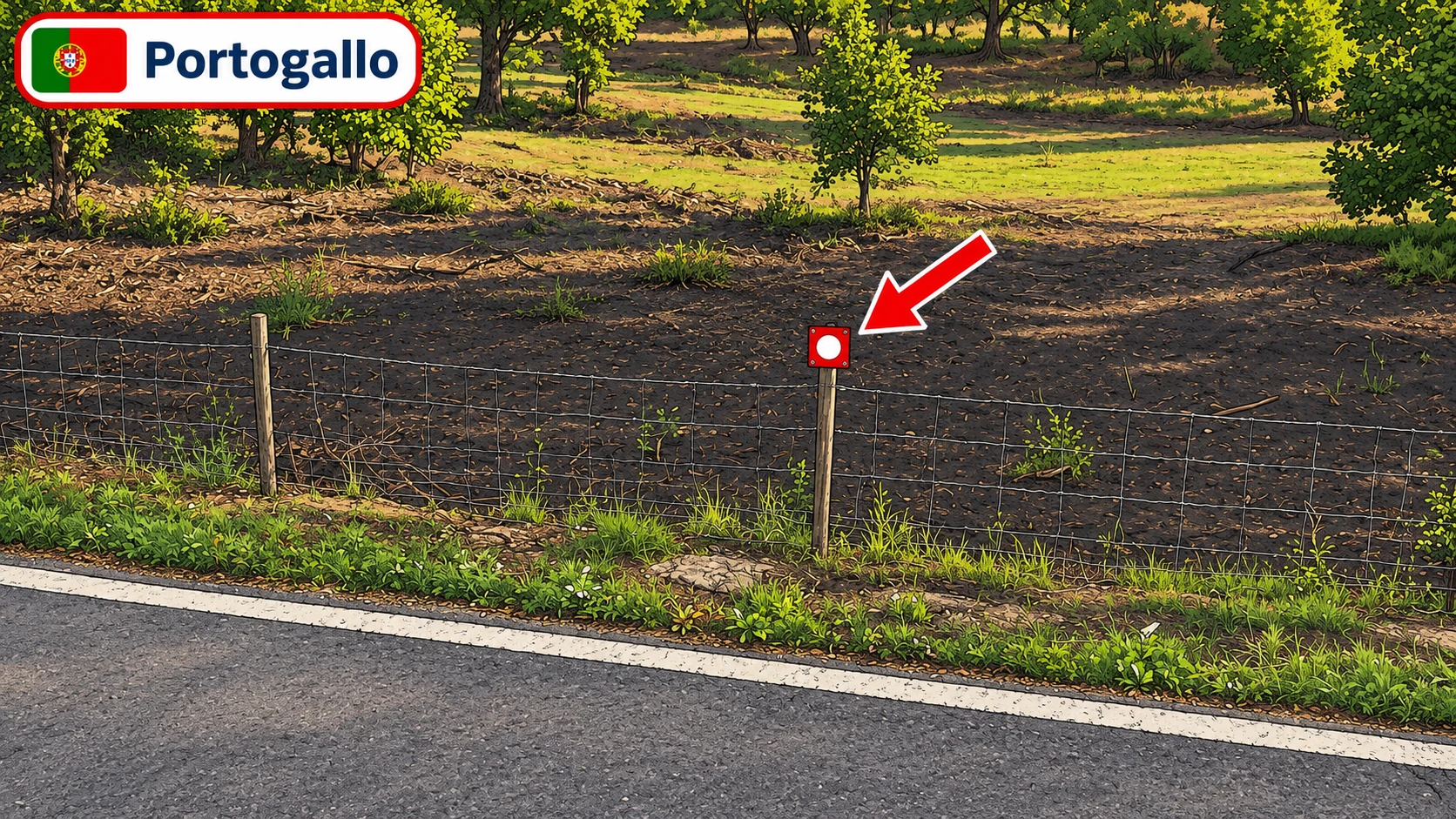
Explore this clueA tiny rural panel beside a field has a red square containing a white circle, compared with a Spanish hunting sign.
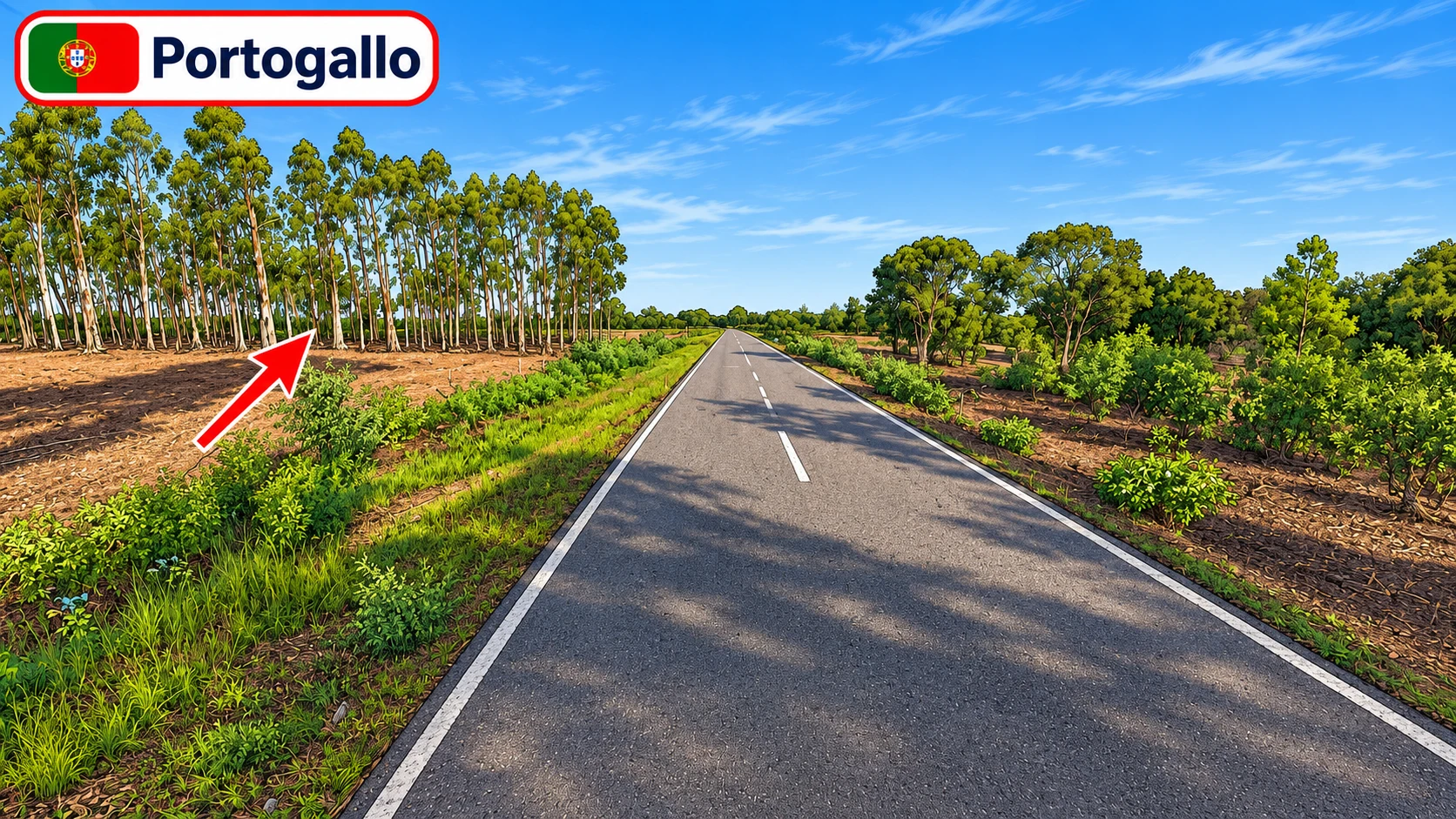
Explore this clueTall pale-trunked trees with relatively sparse foliage are identified by the guide as eucalyptus.
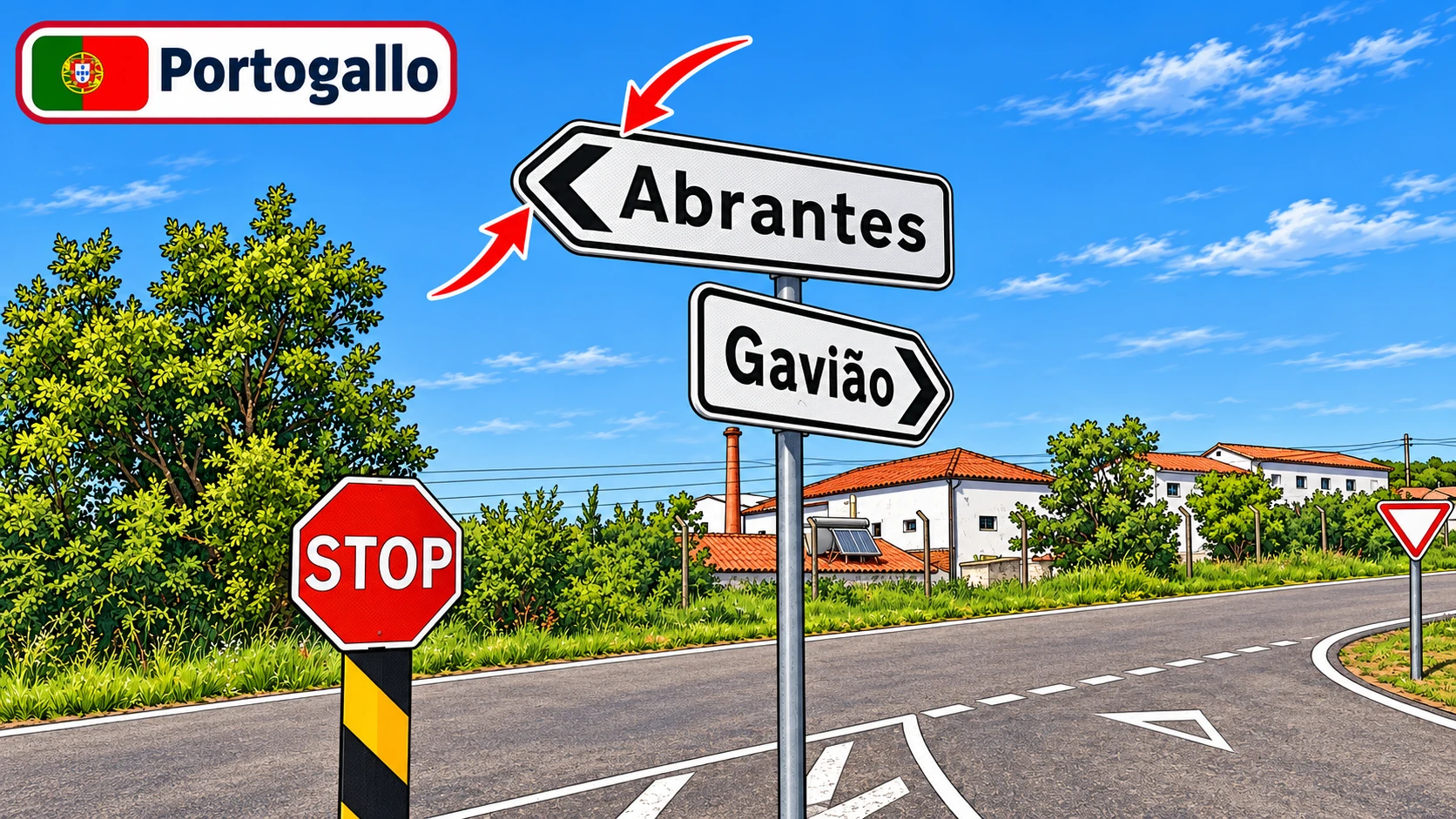
Explore this clueAbrantes and Gavião appear on white panels with black lettering and dark frames following their arrow shapes.
Explore this clueThe panel beneath the stop sign uses yellow and black bands, also referenced in other country comparisons.
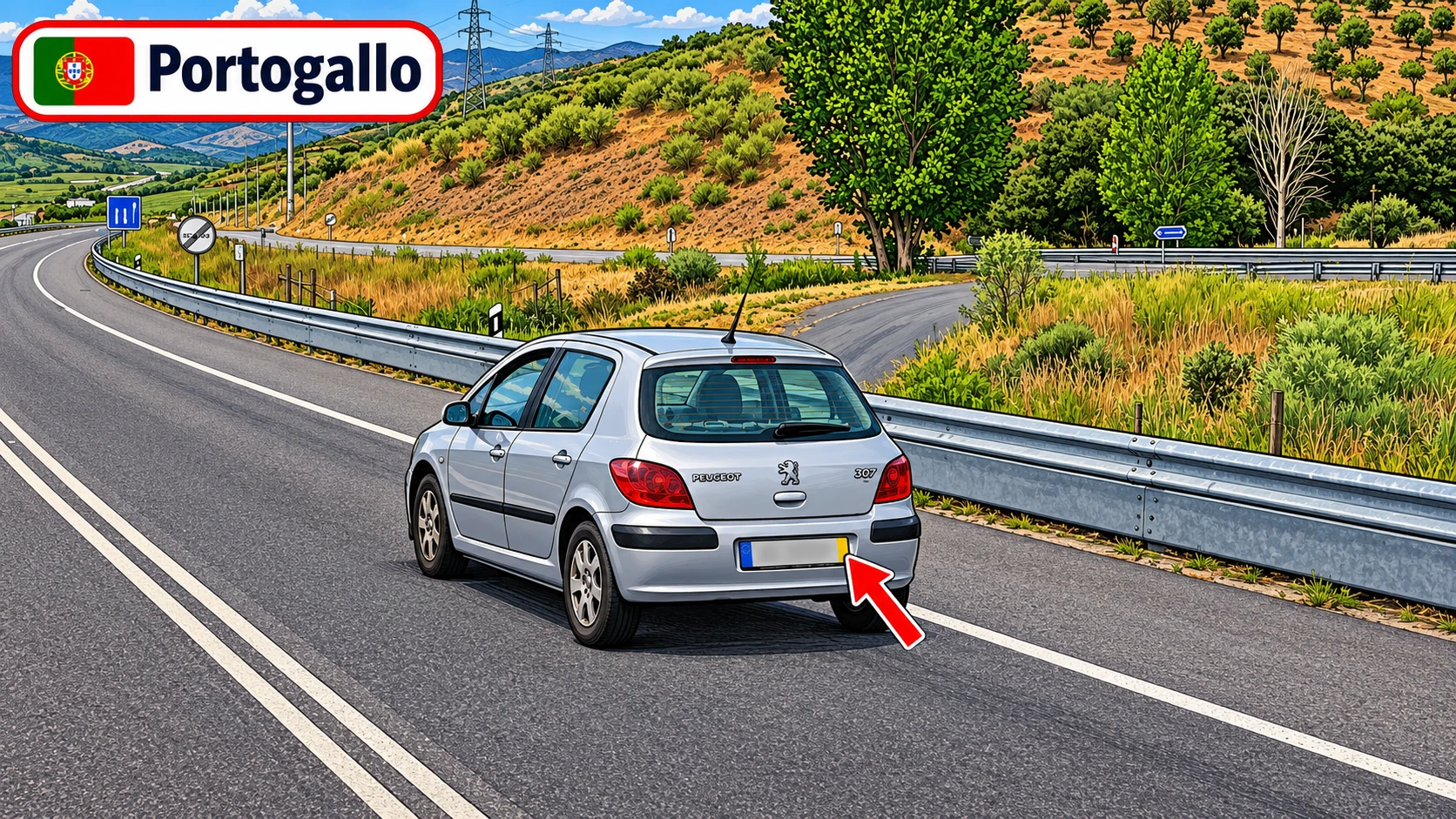
Explore this clueThe enlarged car is used to look for a yellow right-hand plate band opposite the usual blue band.
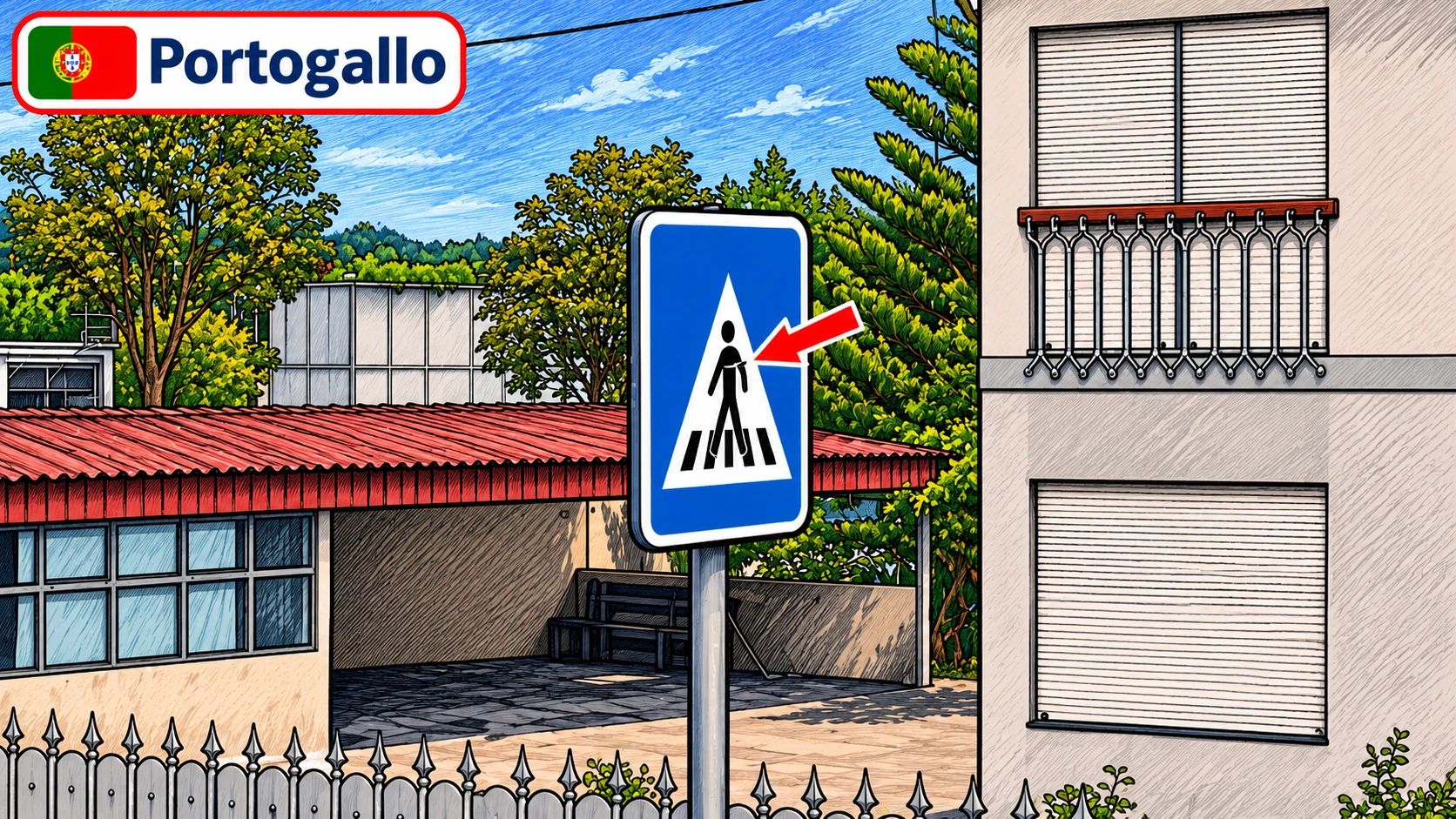
Explore this clueThe author compares five stripes and a small high horizontal line on the pedestrian with Spanish and Andorran signs.
Explore this clueA post variant has its reflector near the tip, and the narrator mentions an orange reverse face.
Explore this clueThe residential scene has light walls and red roof tiles, compared with other Mediterranean settings.
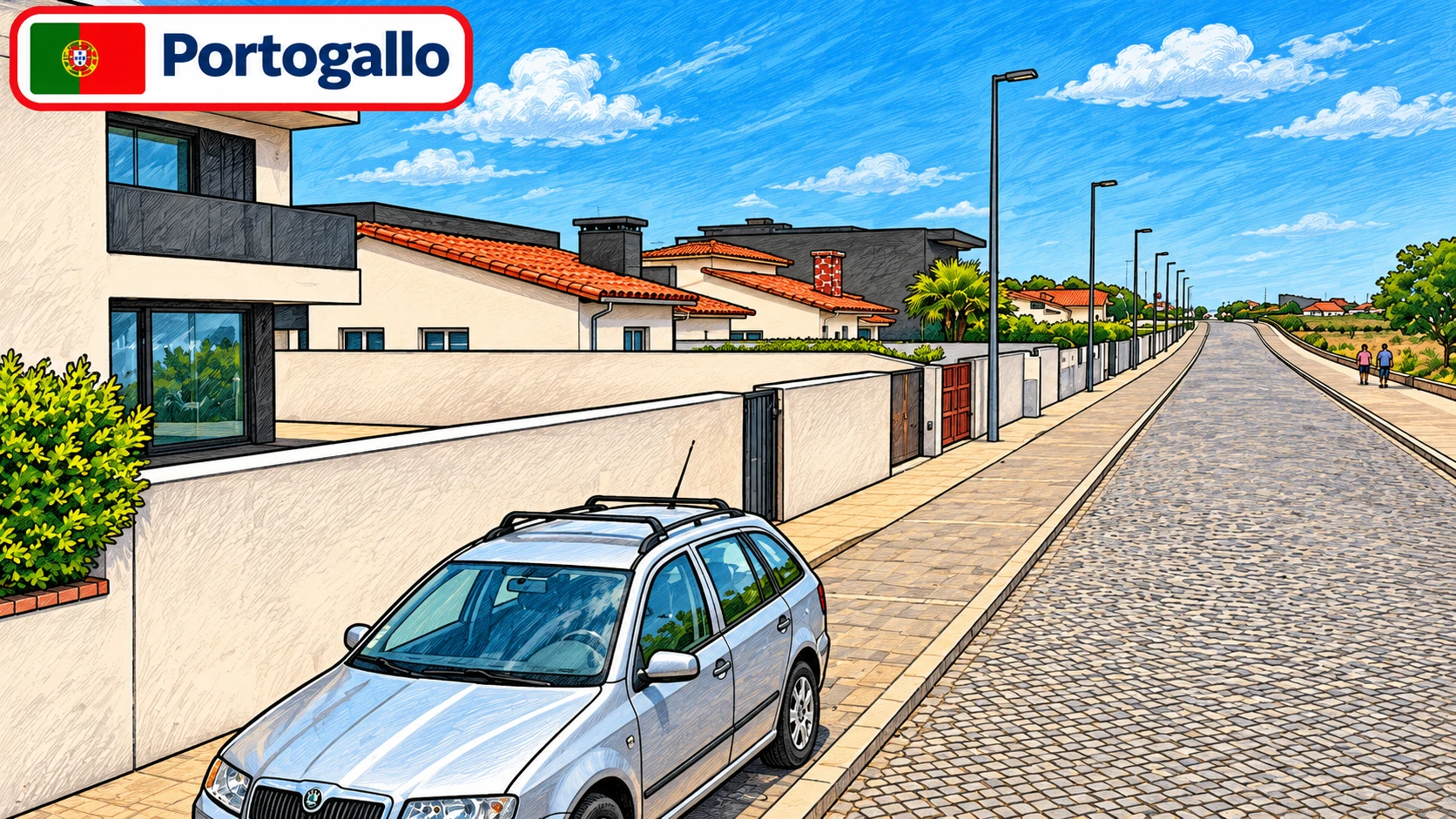
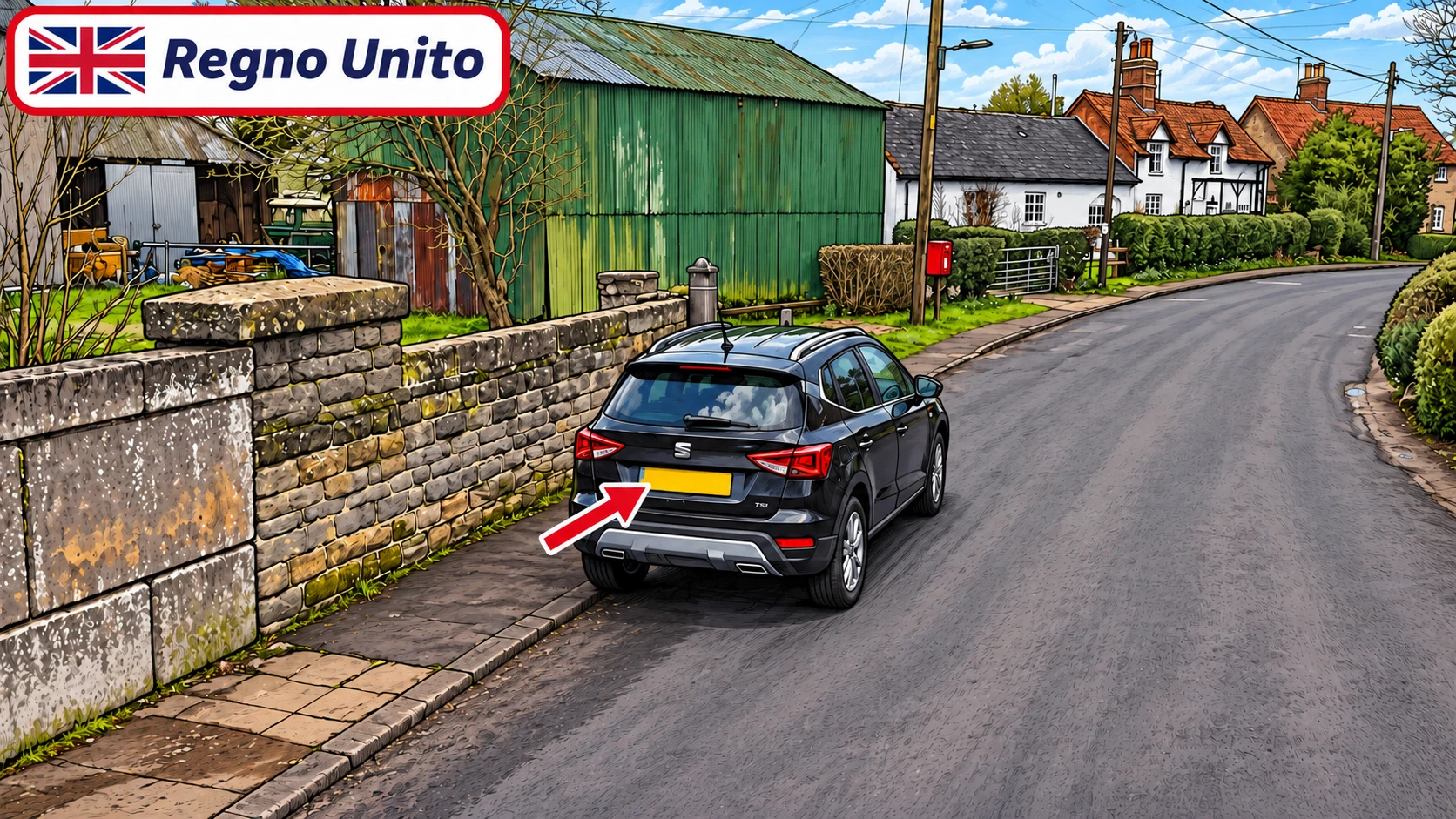
Explore this clueThe car has a yellow rear plate; fronts are described as pale. Traffic and signs establish left-hand driving.
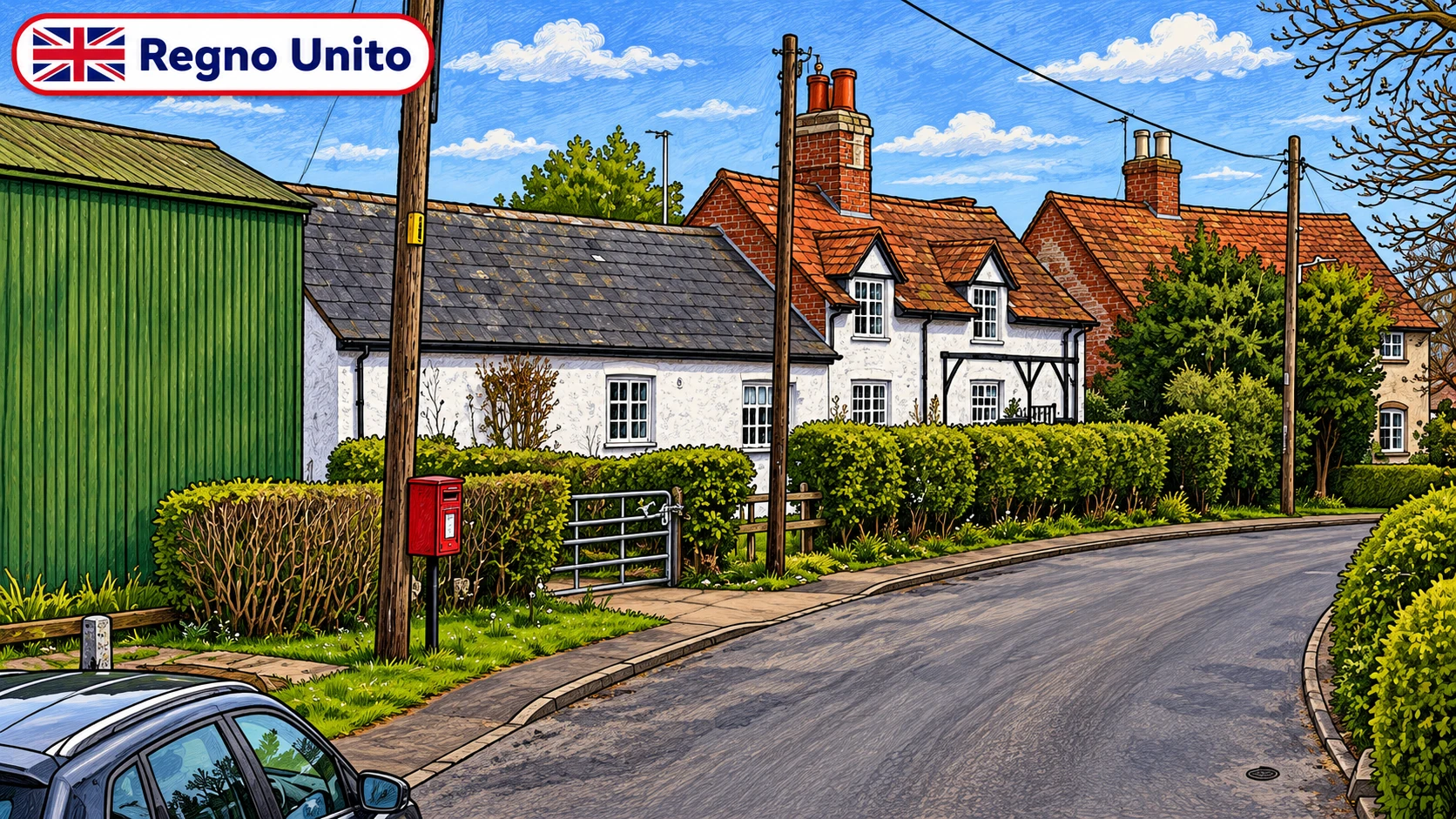
Explore this clueThe street combines brick houses, pale window frames and projecting chimneys, with white or grey rendered houses also discussed.
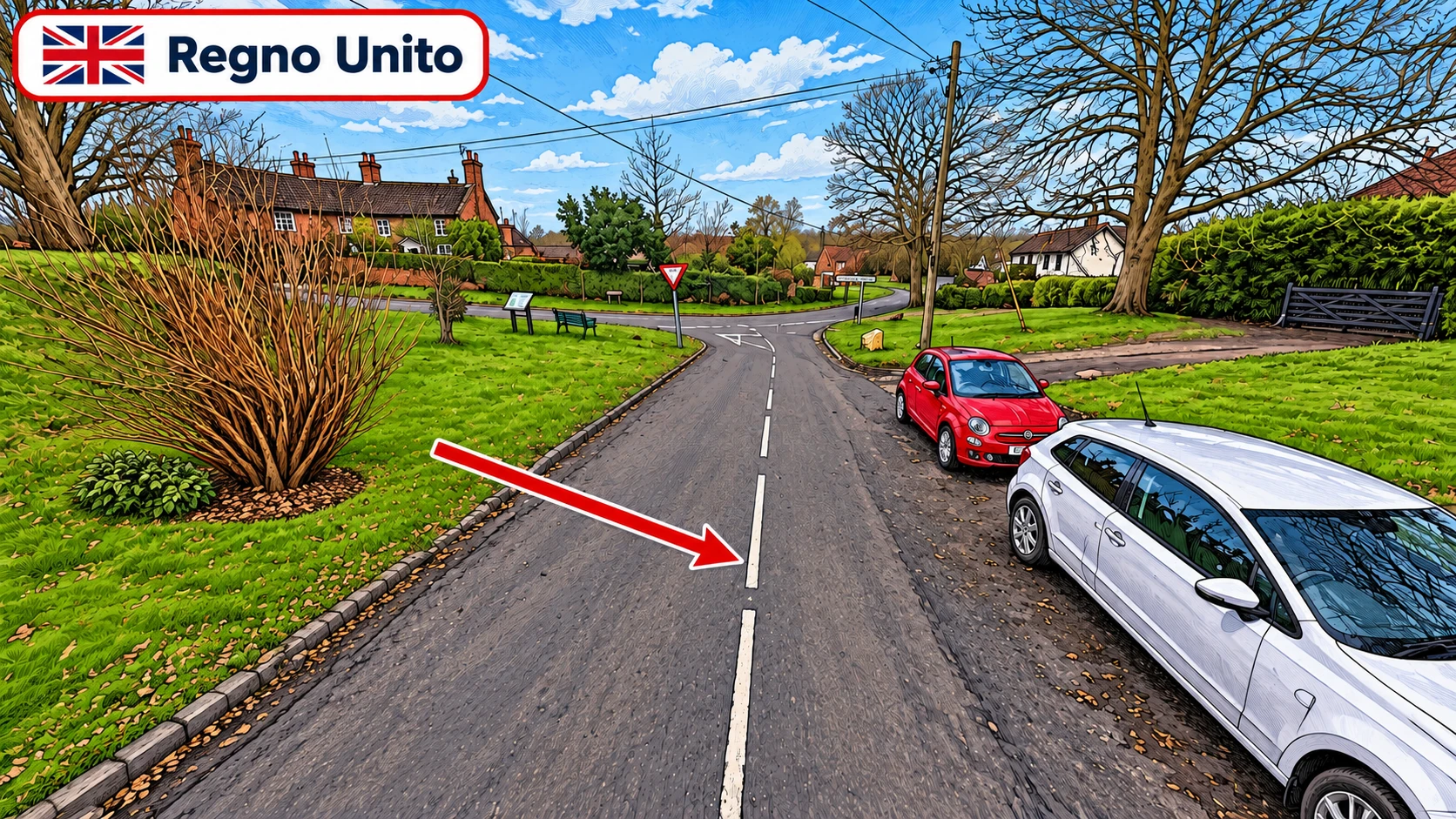
Explore this clueThe guide compares dash lengths and spacing with France, using traffic direction for the British context.
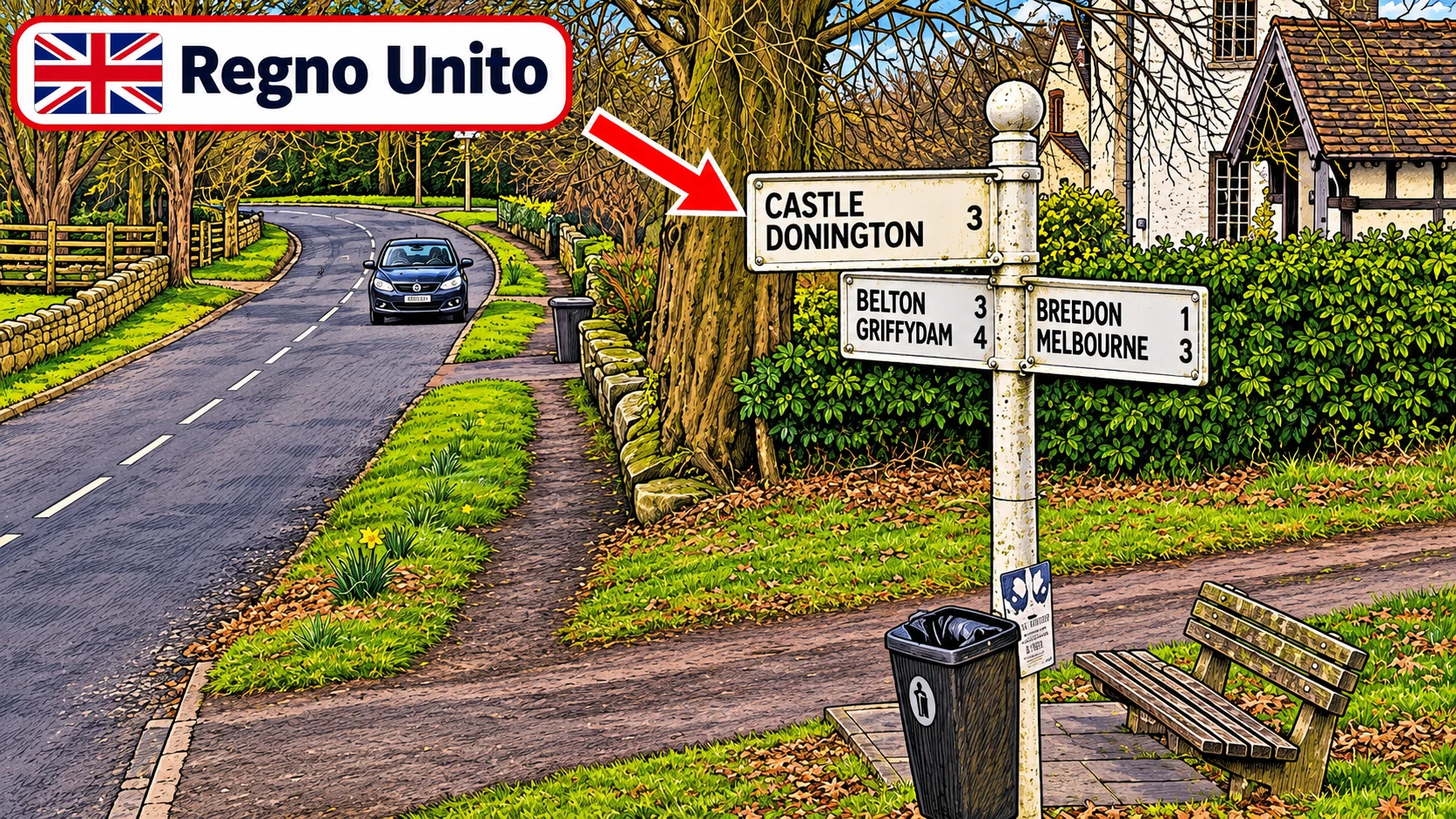
Explore this clueCastle Donington, Melbourne and Belton illustrate English text in a British setting.
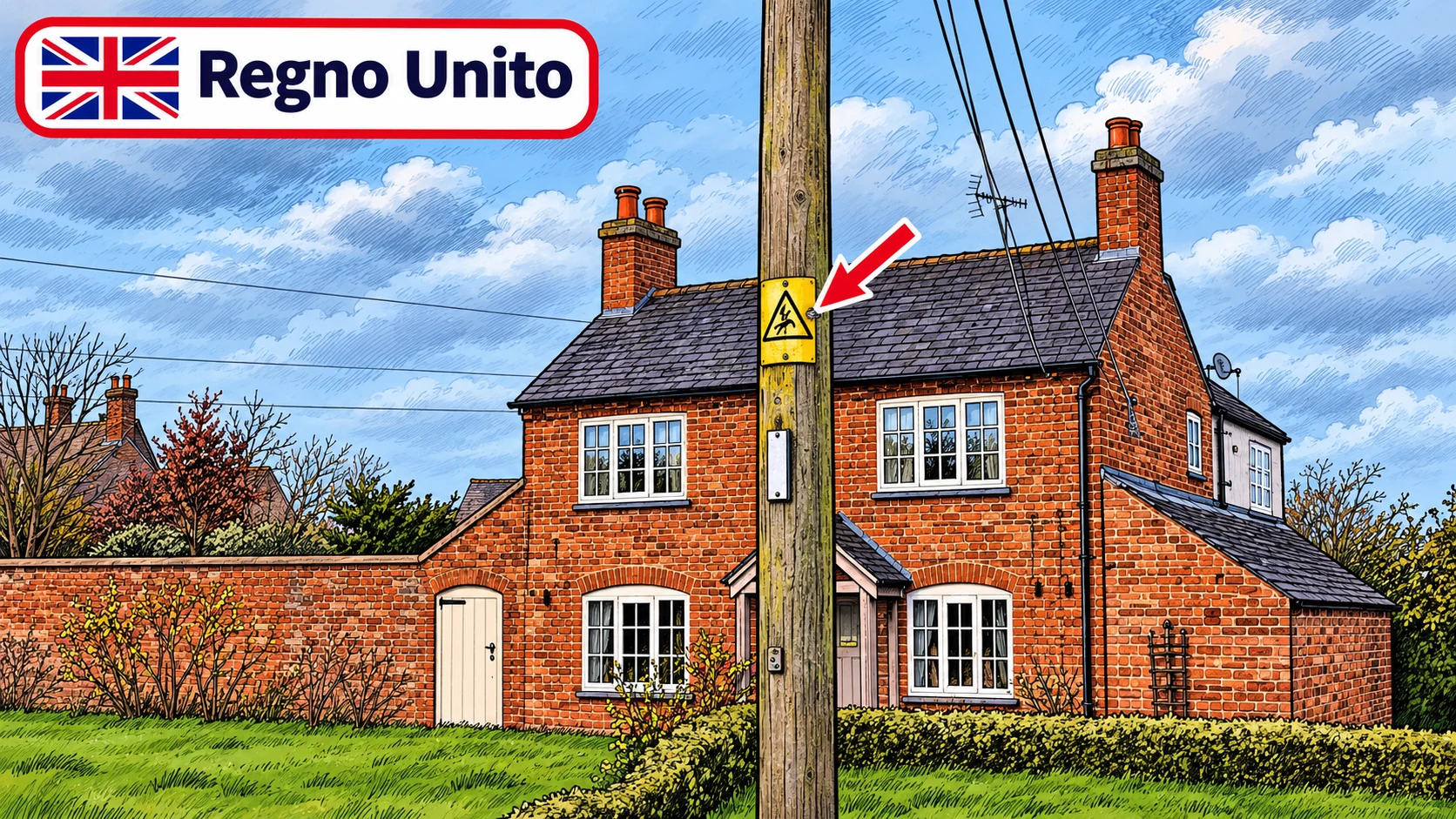
Explore this clueThe enlarged pole label is described as showing electrical danger with a human figure, compared with Ireland.
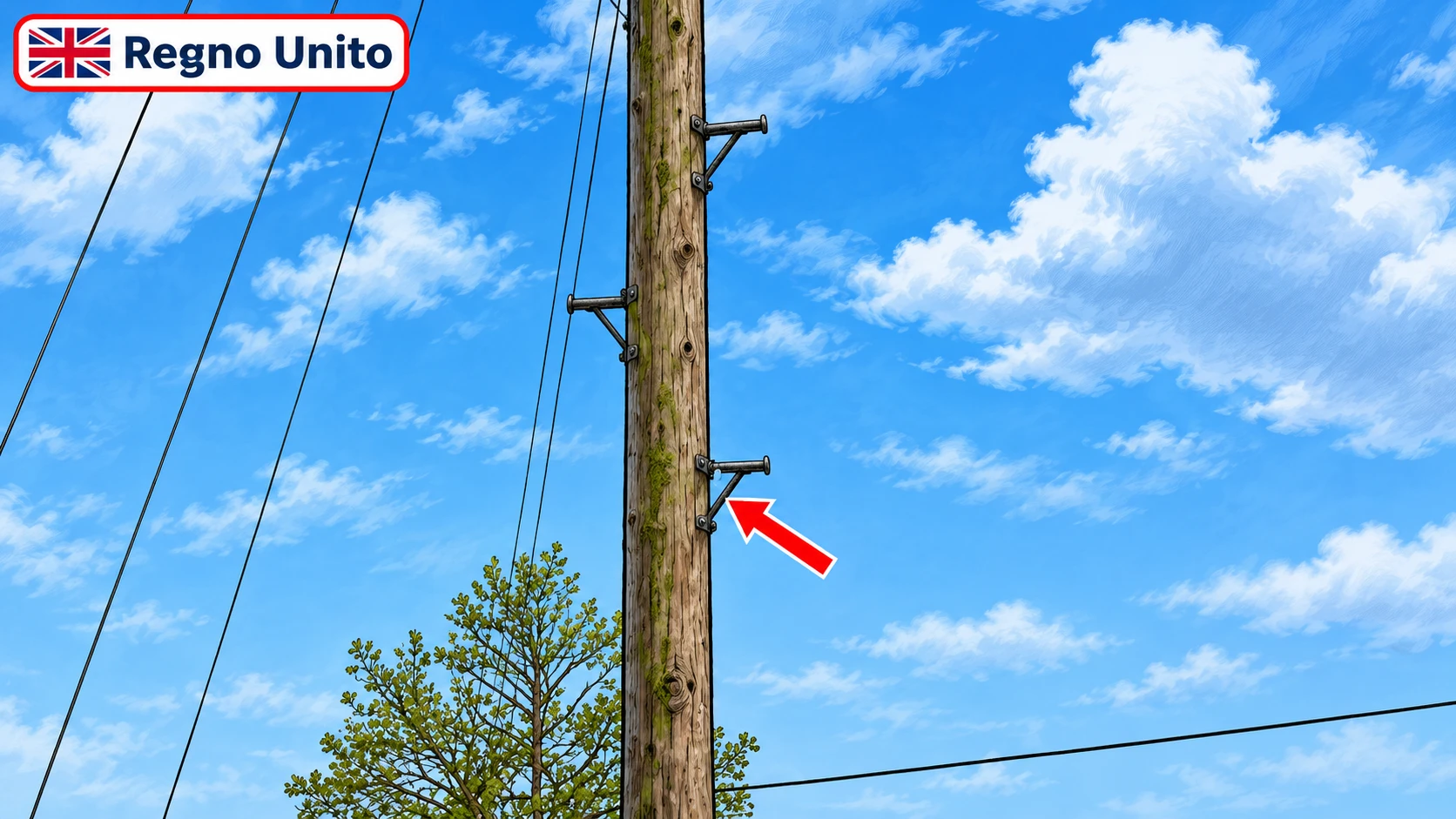
Explore this clueMetal climbing steps project from alternate sides, with small triangular gaps mentioned in the Irish comparison.
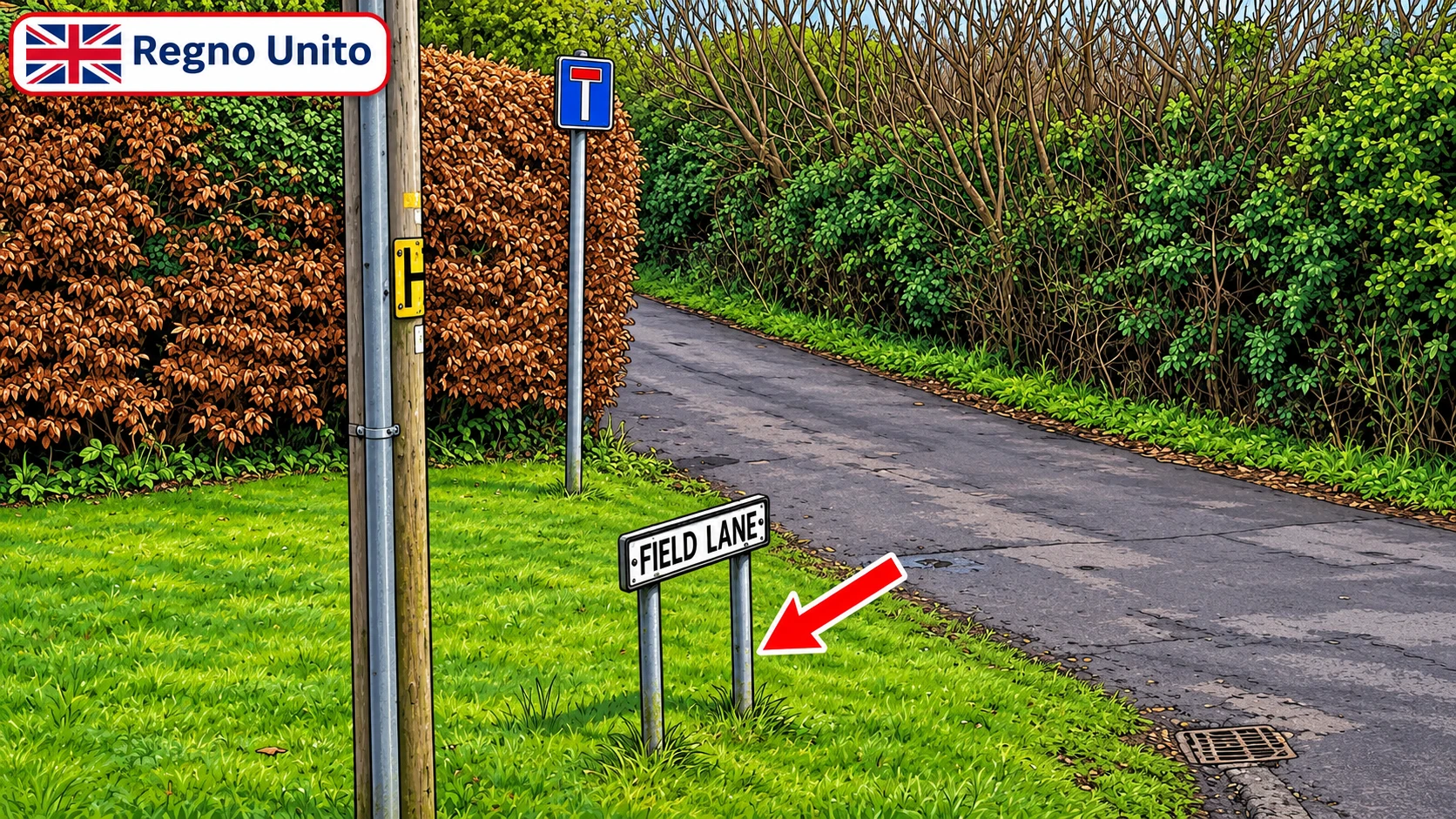
Explore this clueTRENCH LANE appears on a pale panel mounted low on two short uprights.
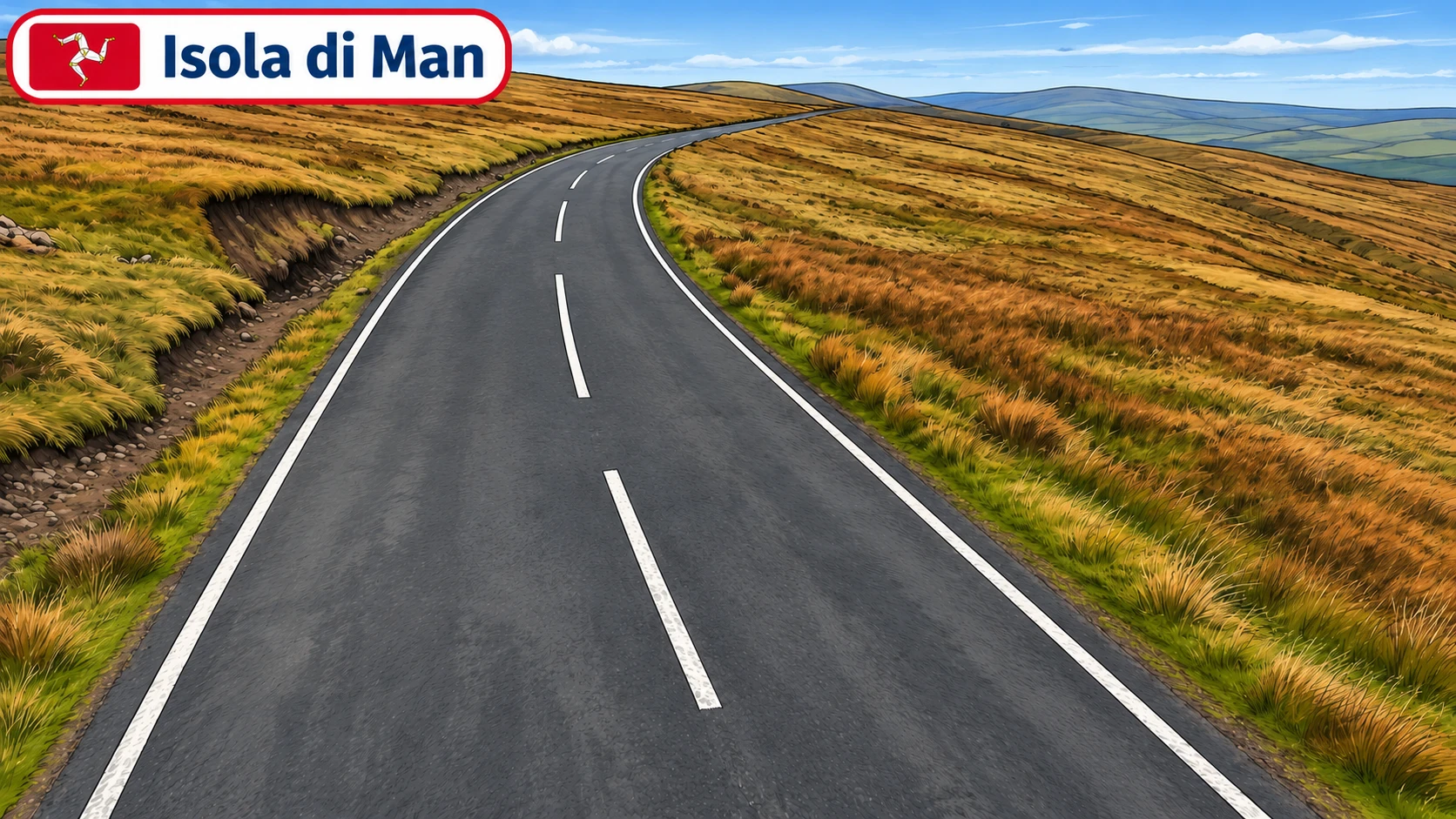
Explore this clueOpen hills and low vegetation lead into rural stone-walled scenery, associated particularly with the north.
Explore this clueThe British metal gate has squarer corners than the rounded Irish example.
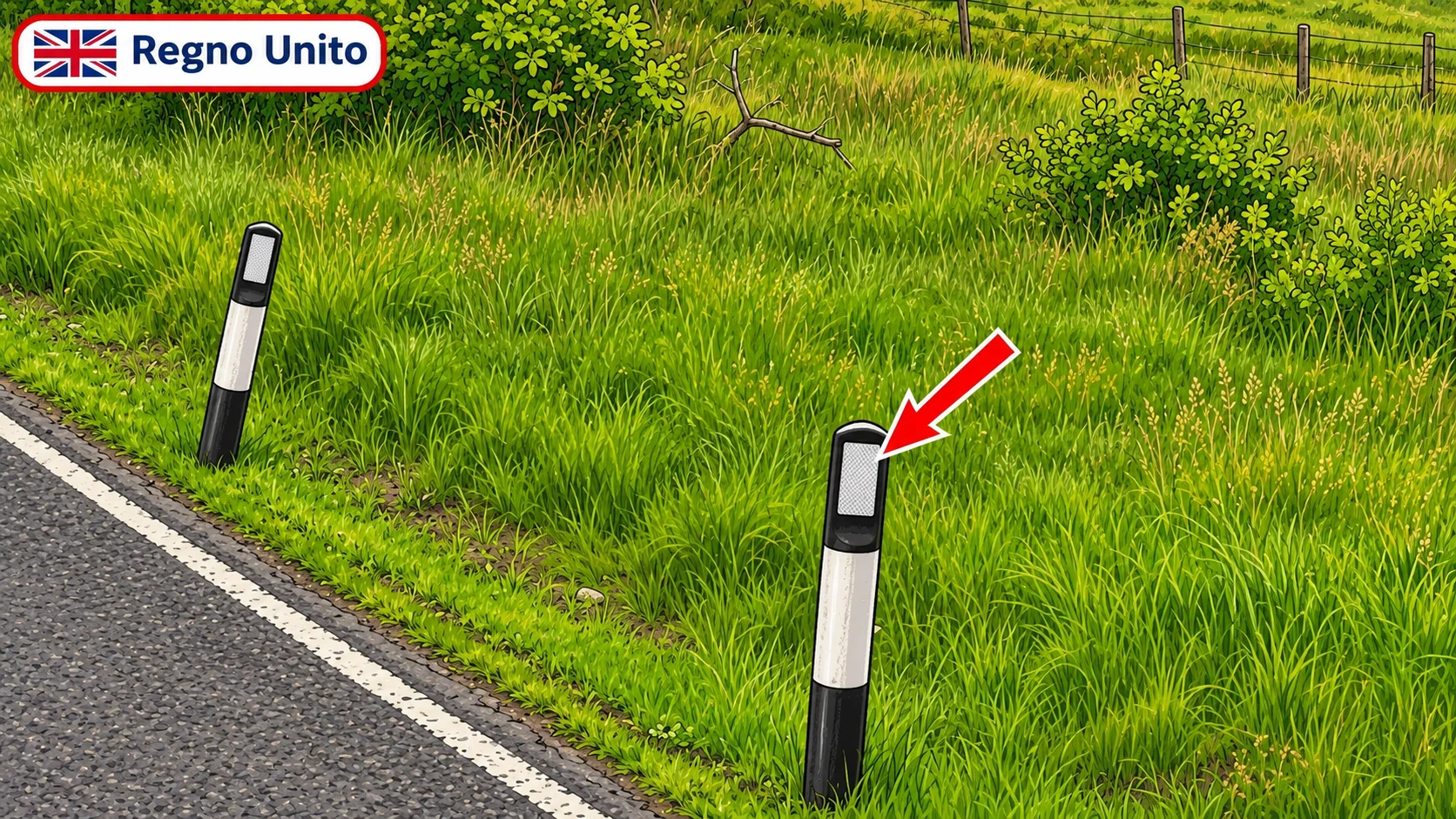
Explore this clueThe guide enlarges a black-and-white post and also shows the face with a red reflective element.
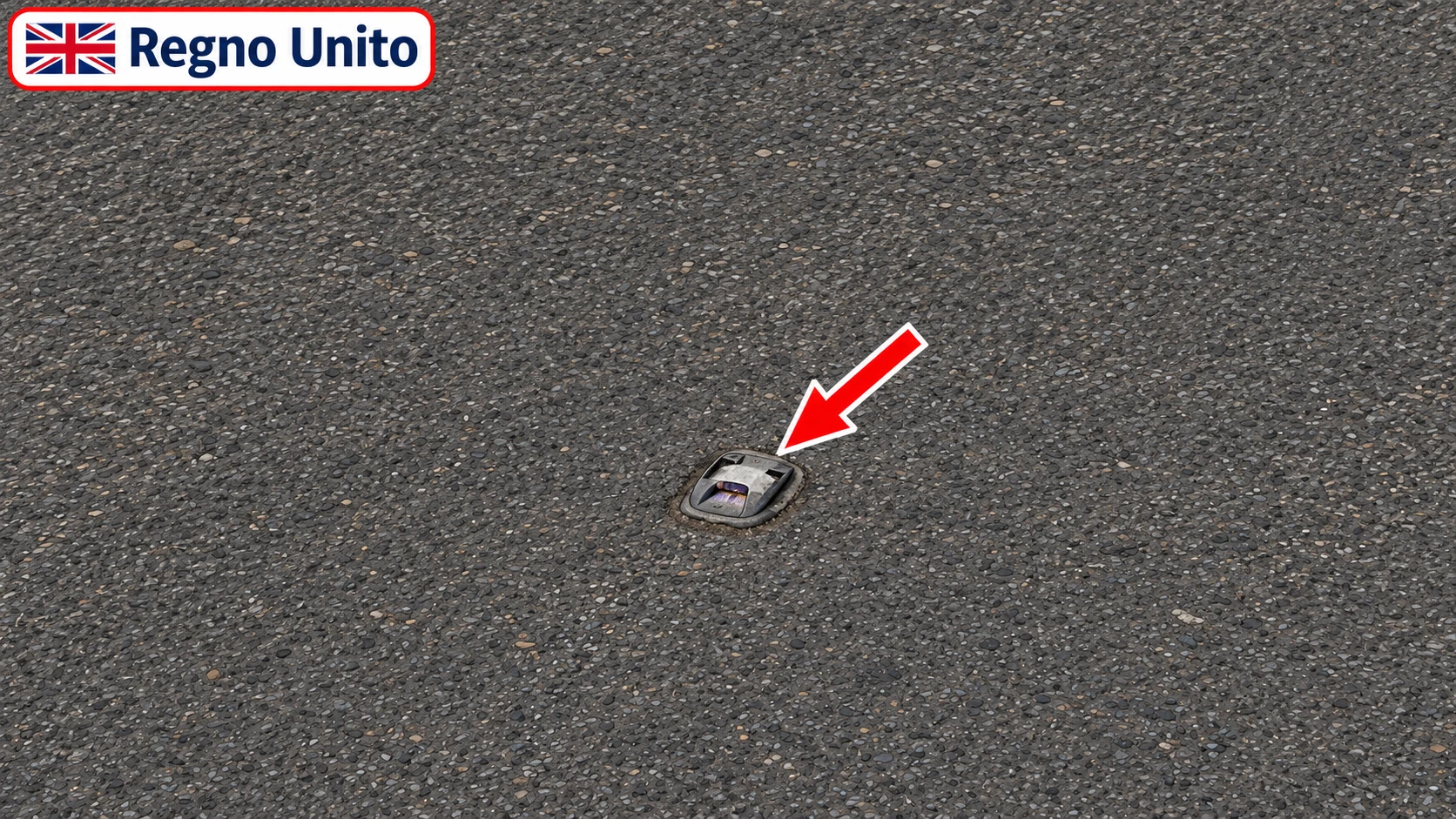
Explore this clueSmall raised reflective studs are visible in the asphalt beside the marking.
Explore this clueOlder-quality imagery shows bare hills followed by greener coastal settlements.
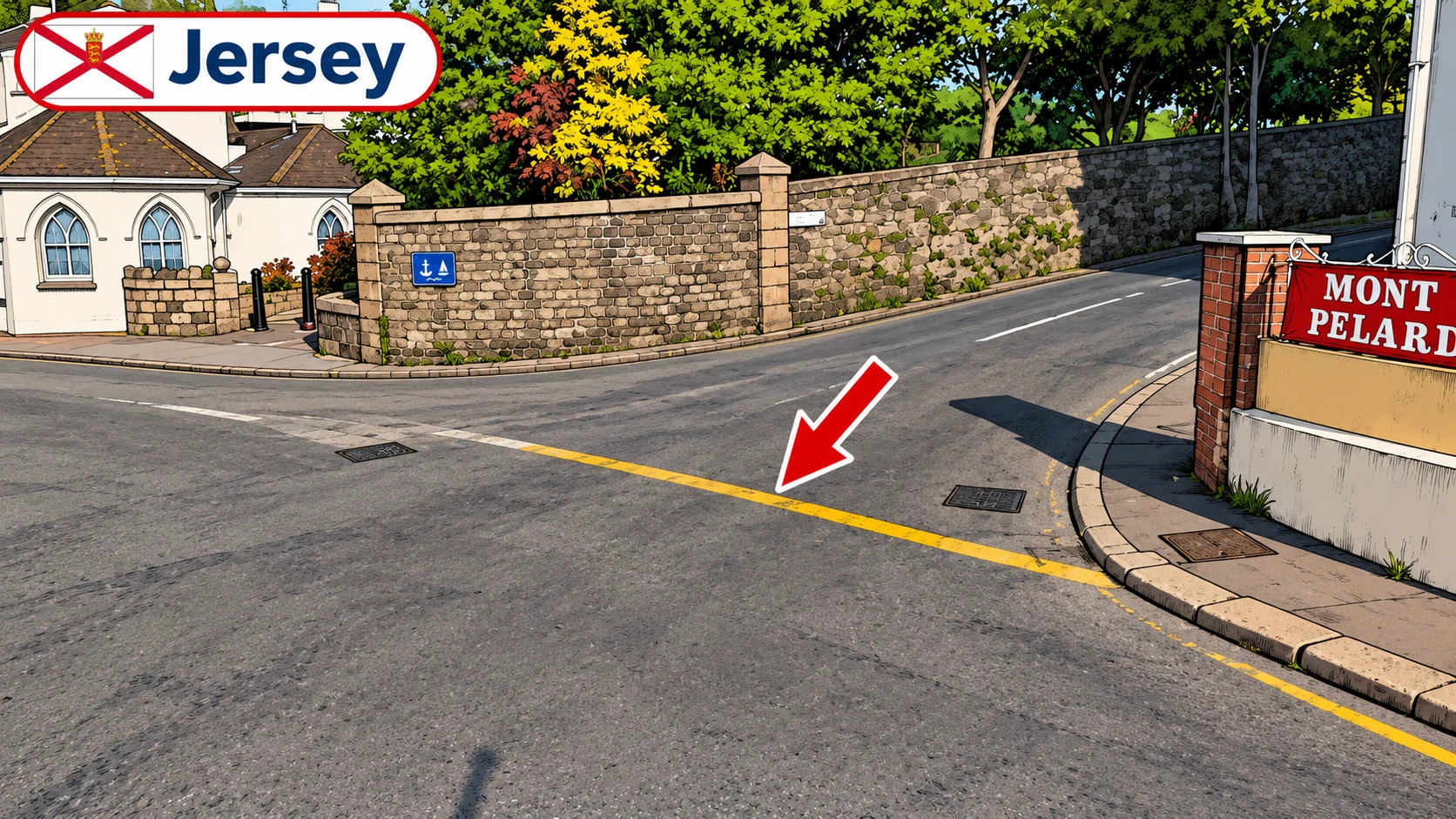
Explore this clueChannel Island examples highlight a solid yellow line where a minor road joins another.
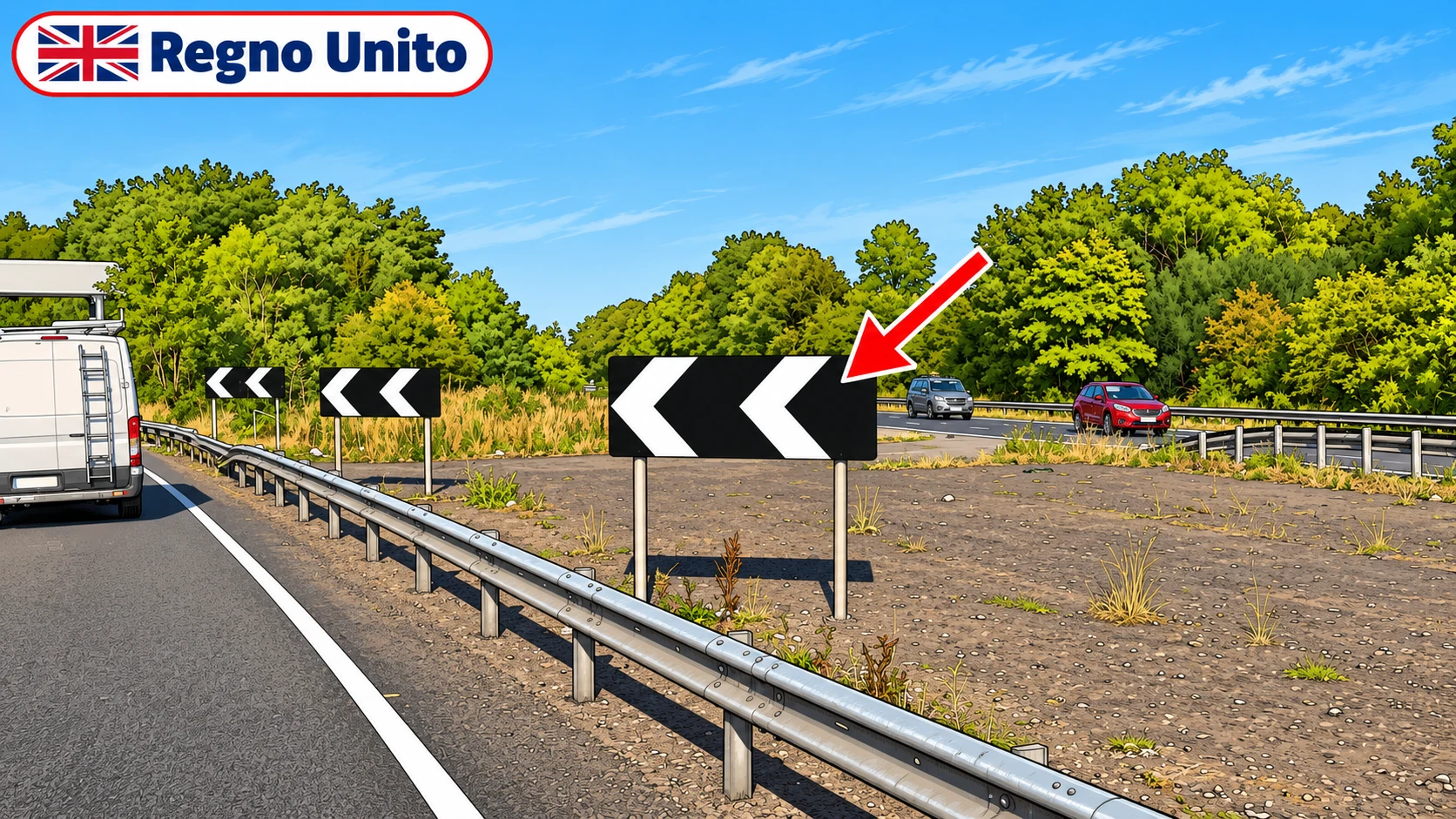
Explore this clueA roundabout has large white arrows on black panels, associated with the British scene.
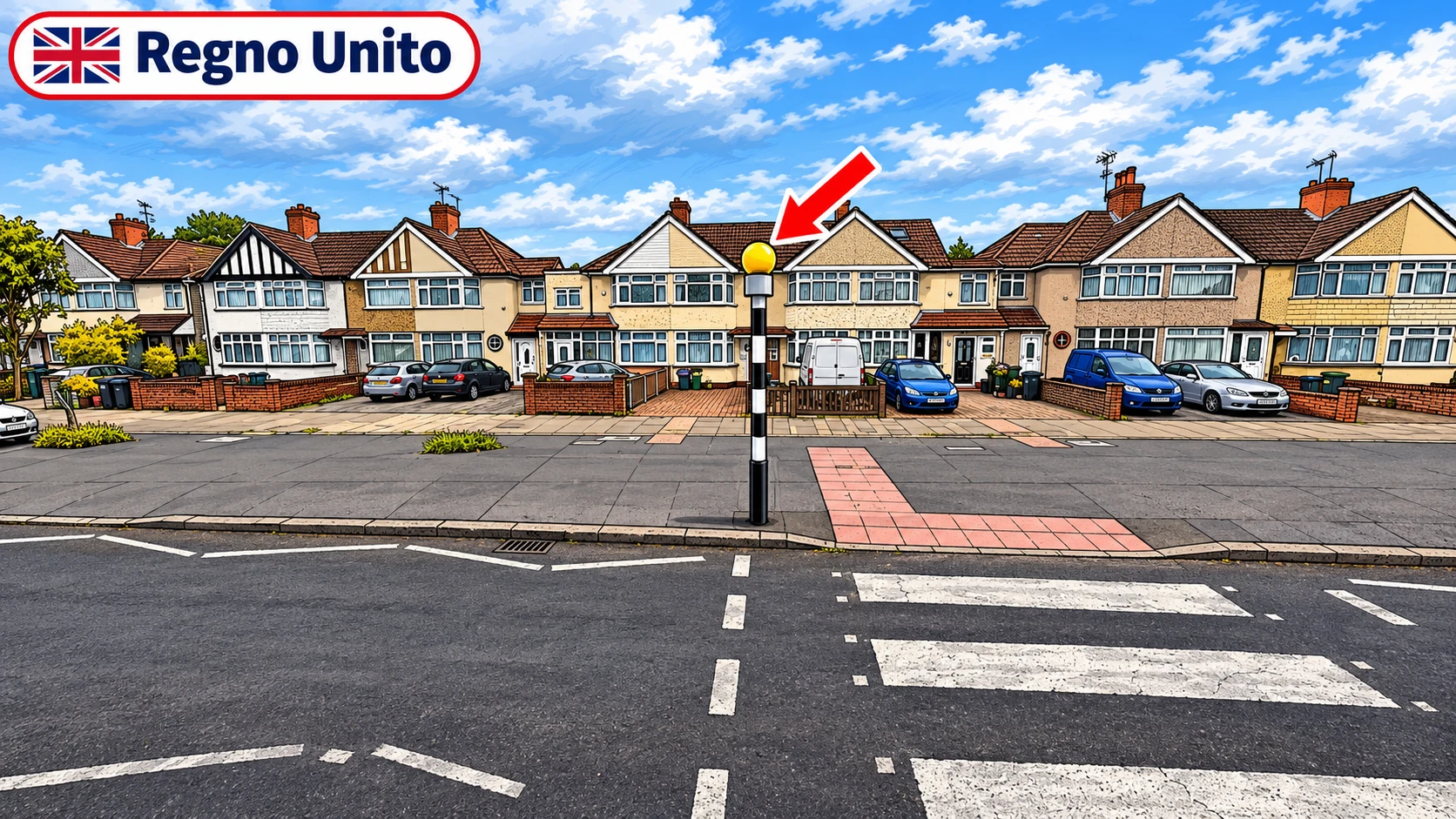
Explore this clueBlack-and-white banded posts carry yellow globes at the pedestrian crossing.
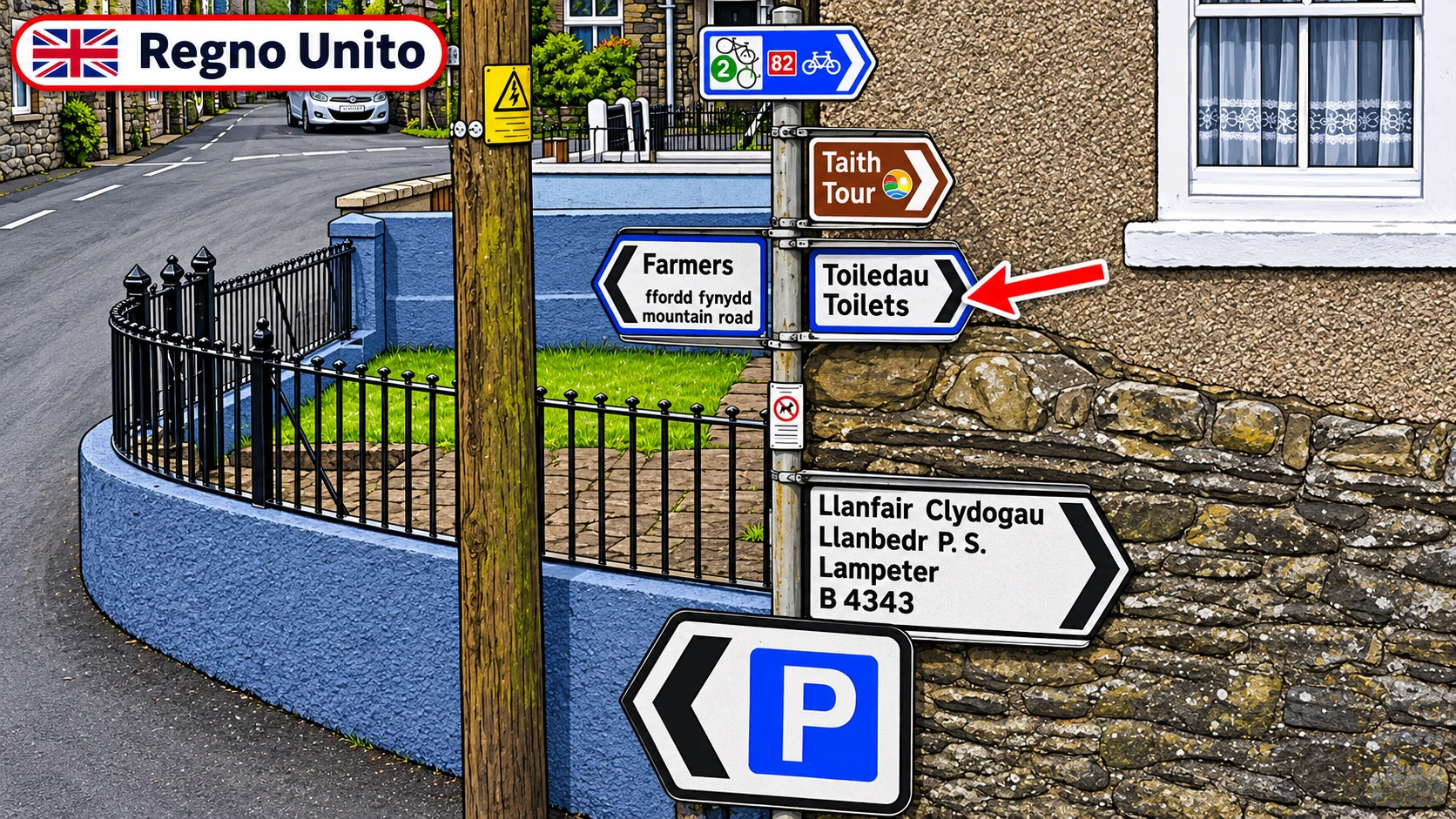
Explore this clueToiledau / Toilets and Welsh letter groups such as ll and ff appear on bilingual signs.
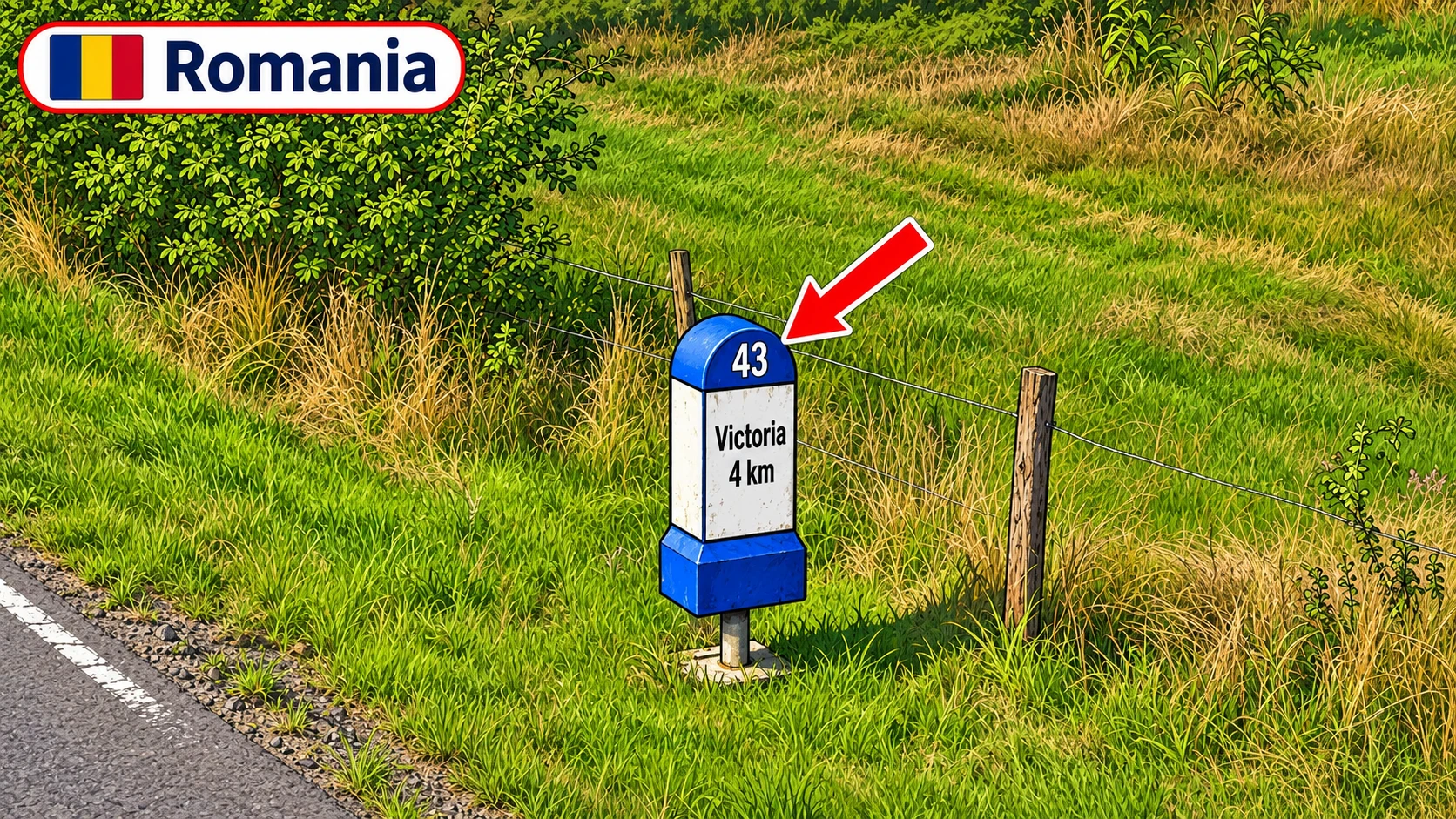
Explore this clueThe marker has a white body, rounded blue top and blue base; white-and-red variants are also mentioned.
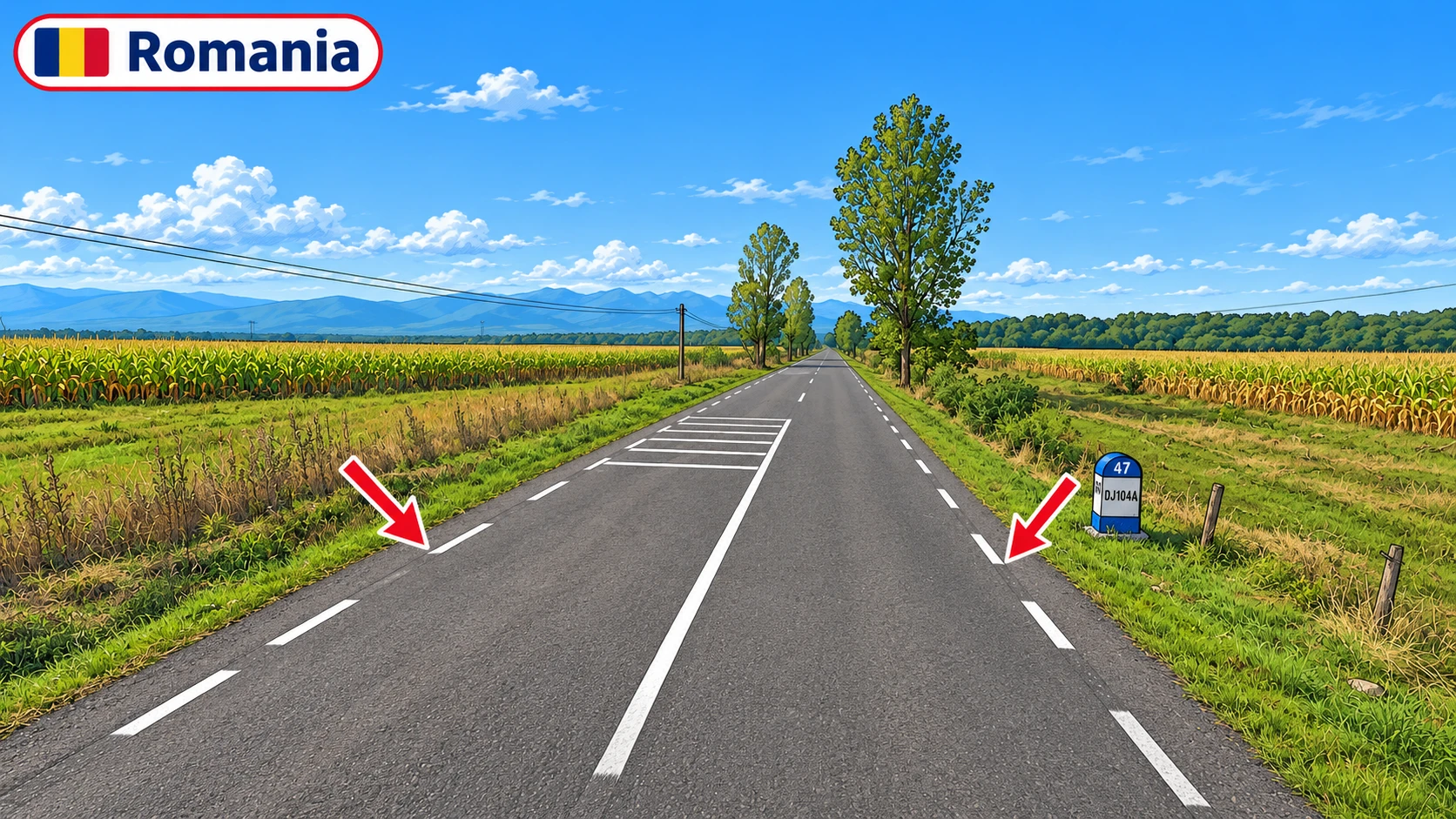
Explore this clueShort broken white segments run along the carriageway edges, described as frequent in Romanian examples.
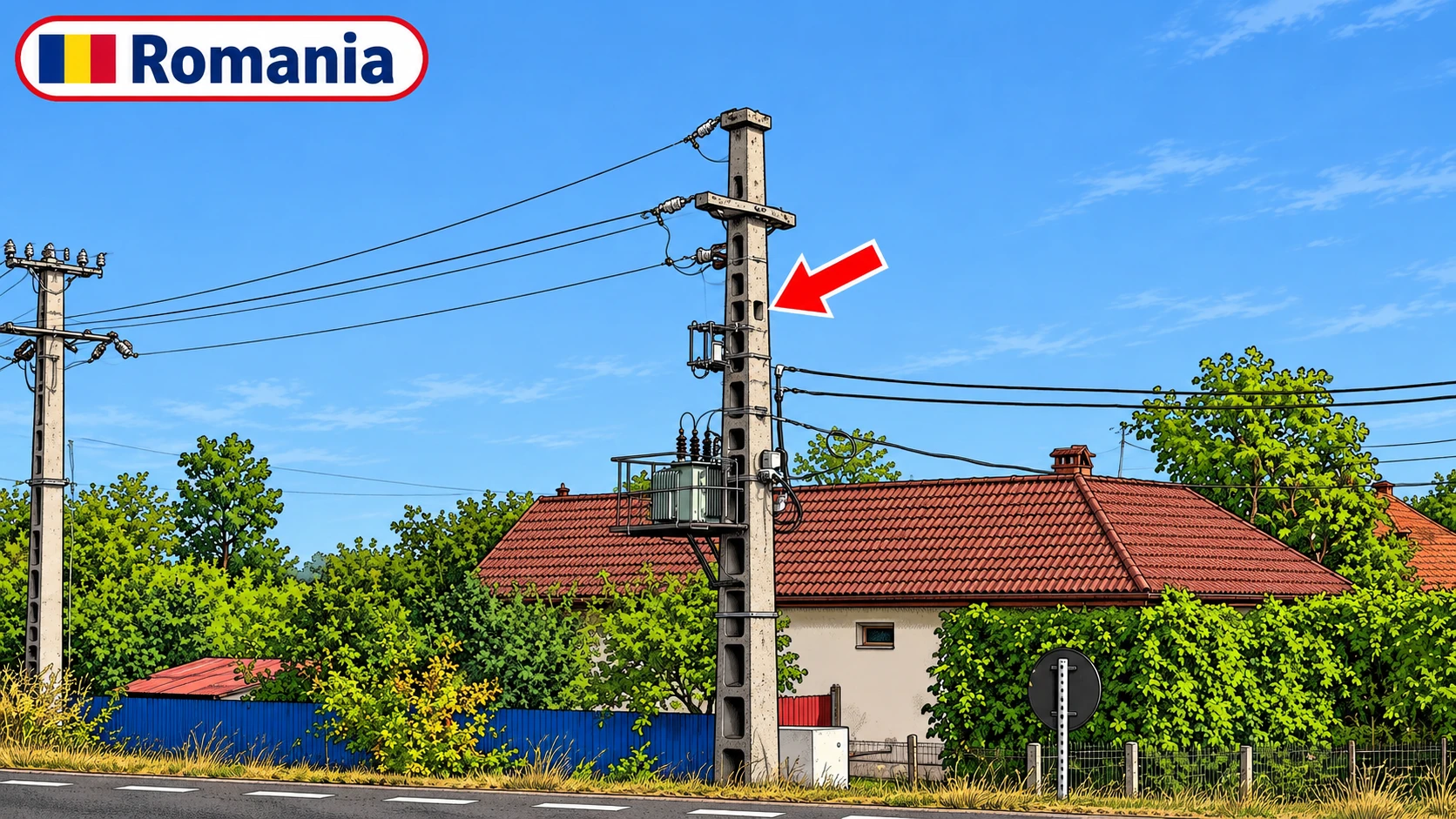
Explore this clueRobust concrete poles have openings extending low down, with a possible yellow label; black sign backs are discussed in the same scene.
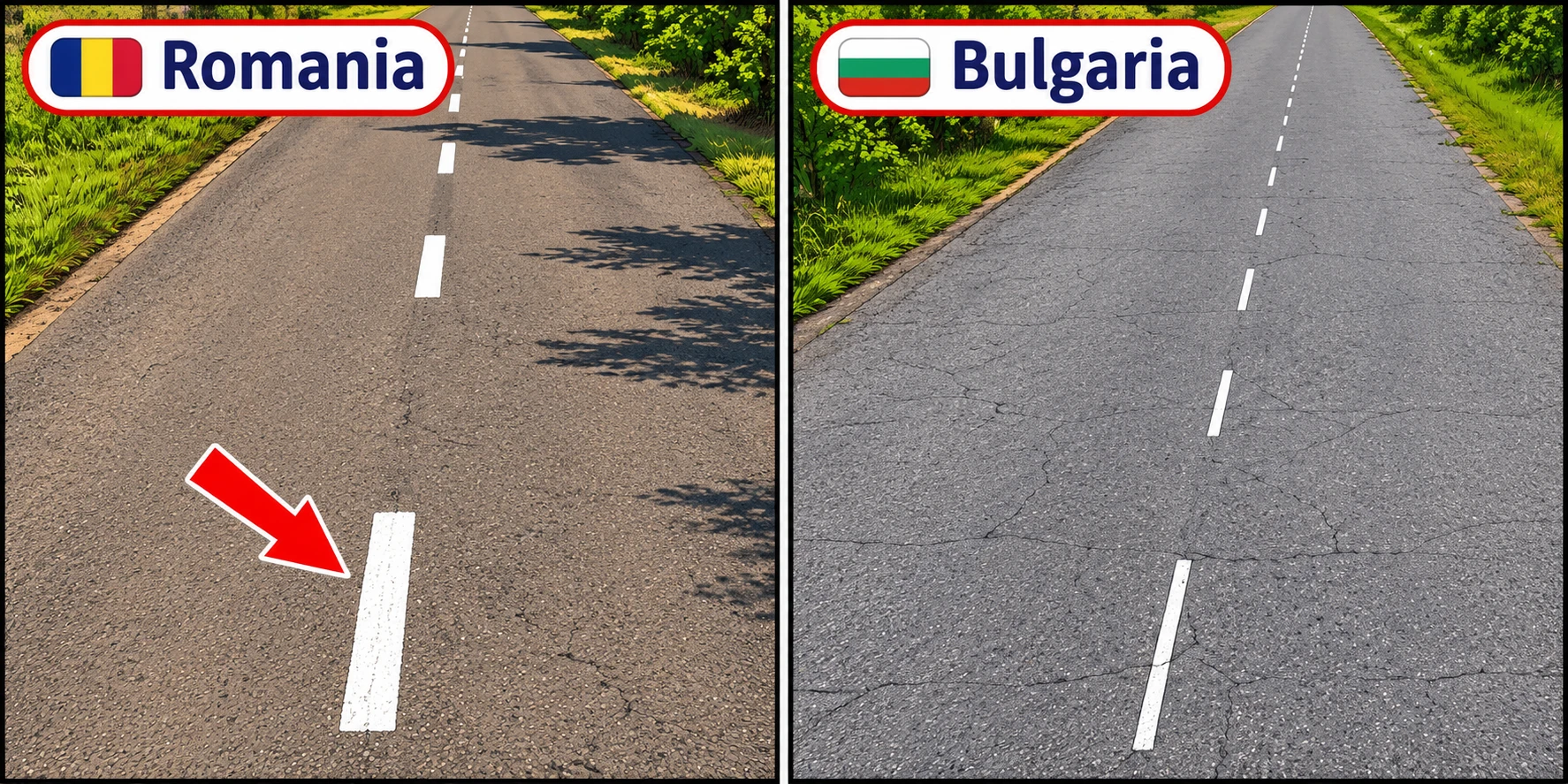
Explore this clueAn illustrated comparison presents Romanian markings as relatively thicker than Bulgarian ones.
Explore this clueLarge dry fields are associated with the southwestern sector toward Kazakhstan; winter-looking coverage is also mentioned.
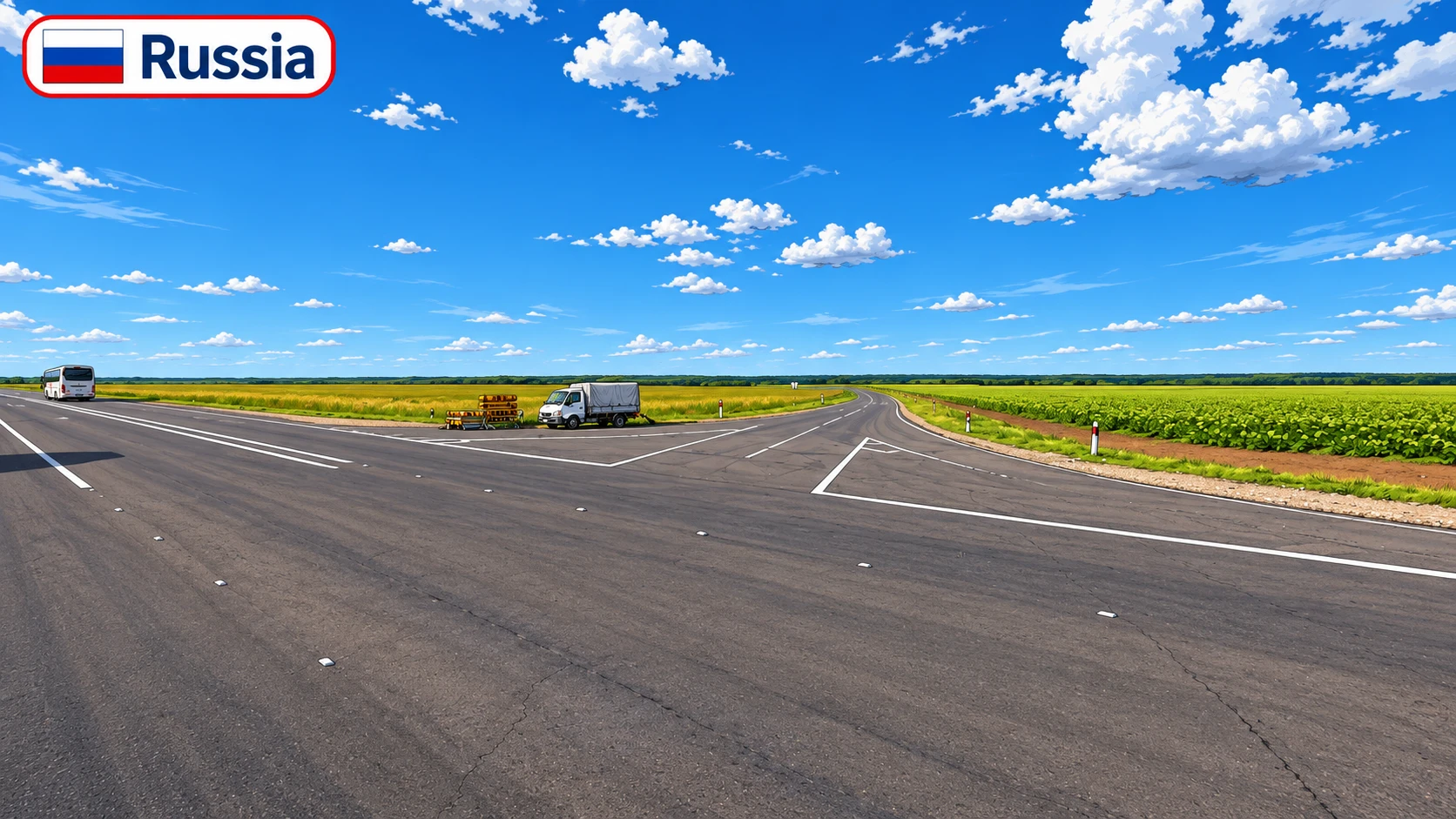
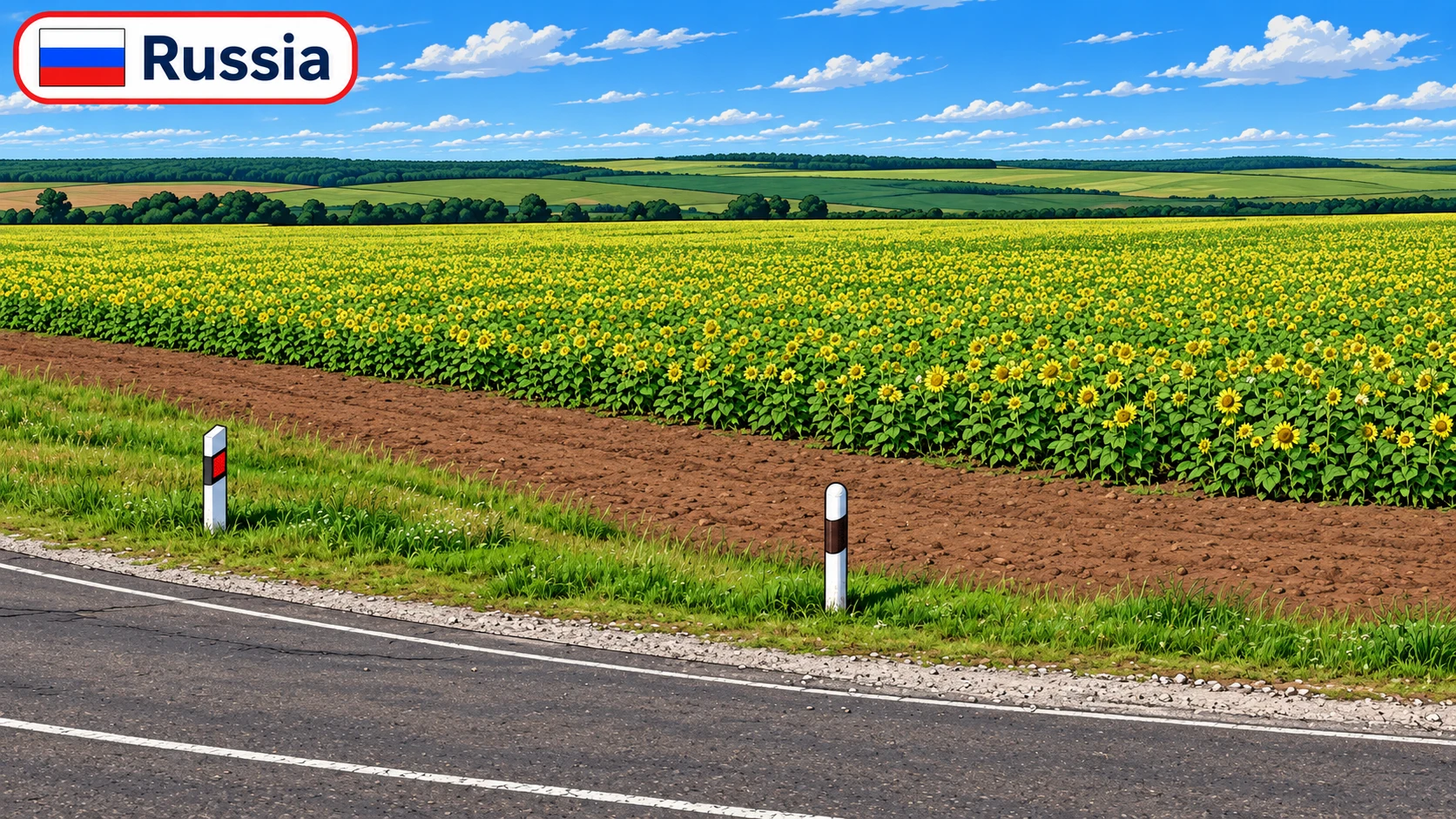
Explore this clueTwo differently shaped roadside posts illustrate the variety of Russian designs, including types resembling other countries'.
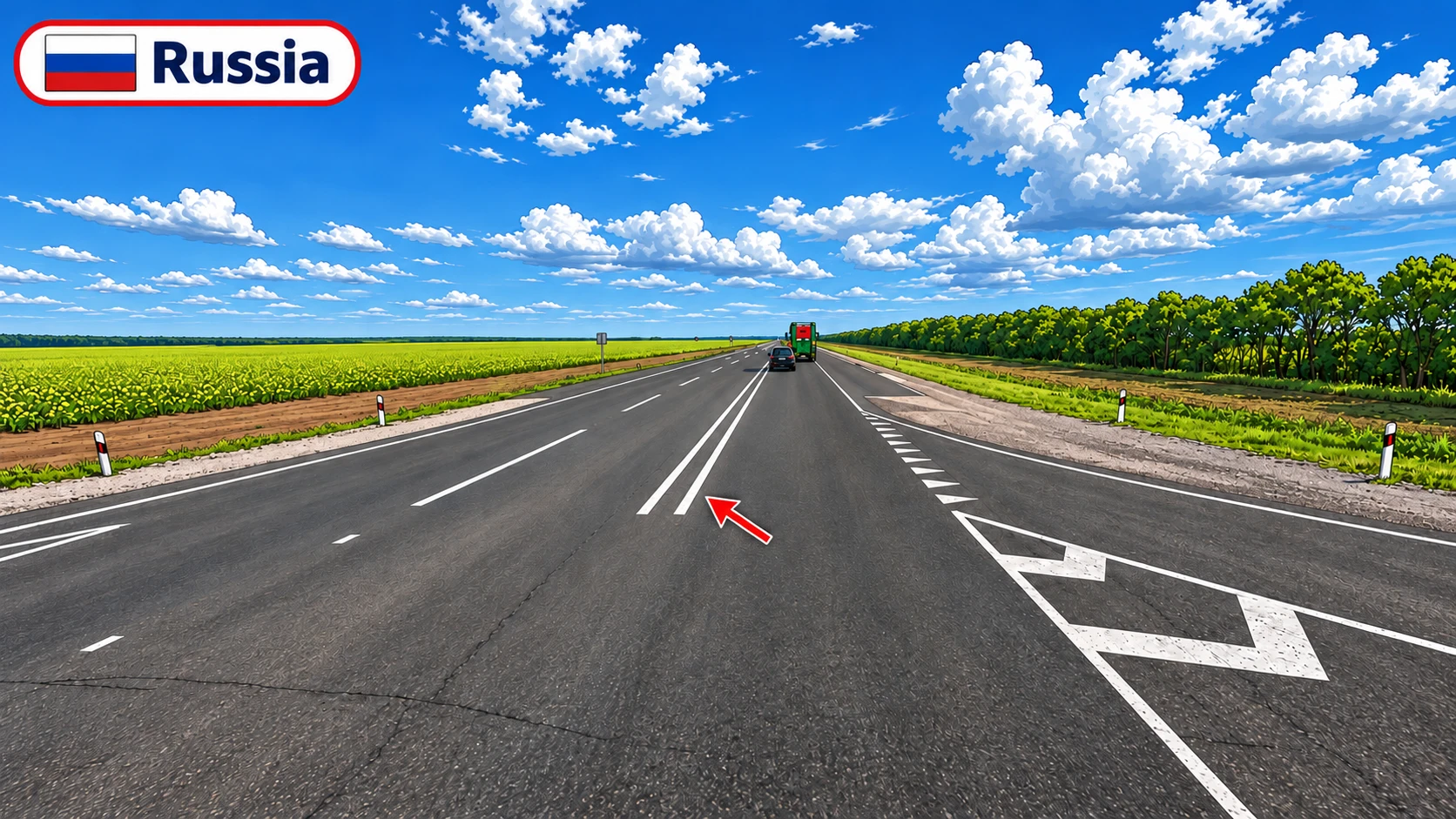
Explore this clueThe example shows double white lines, while the guide also mentions yellow inner or outer markings and other layouts.
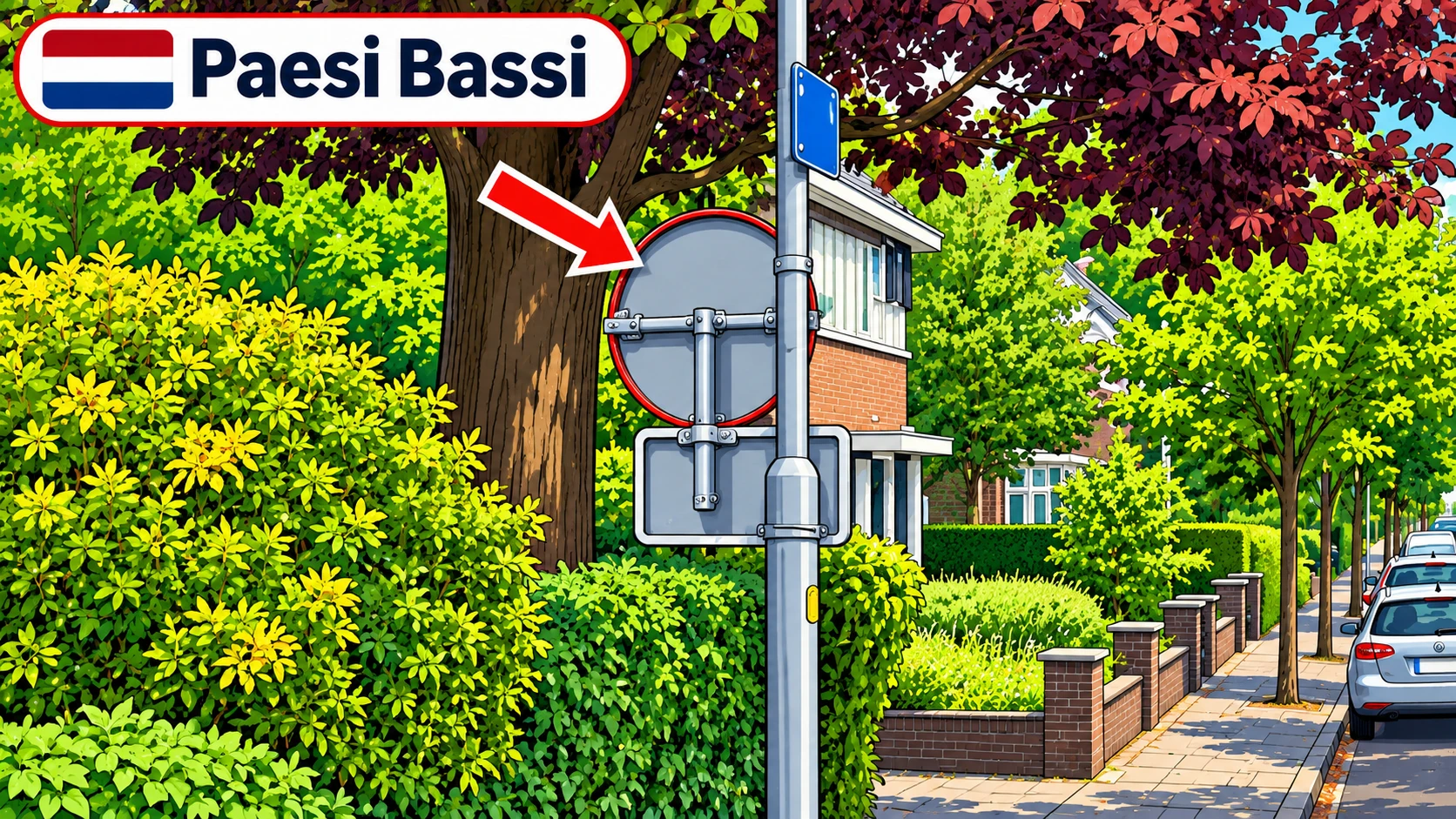
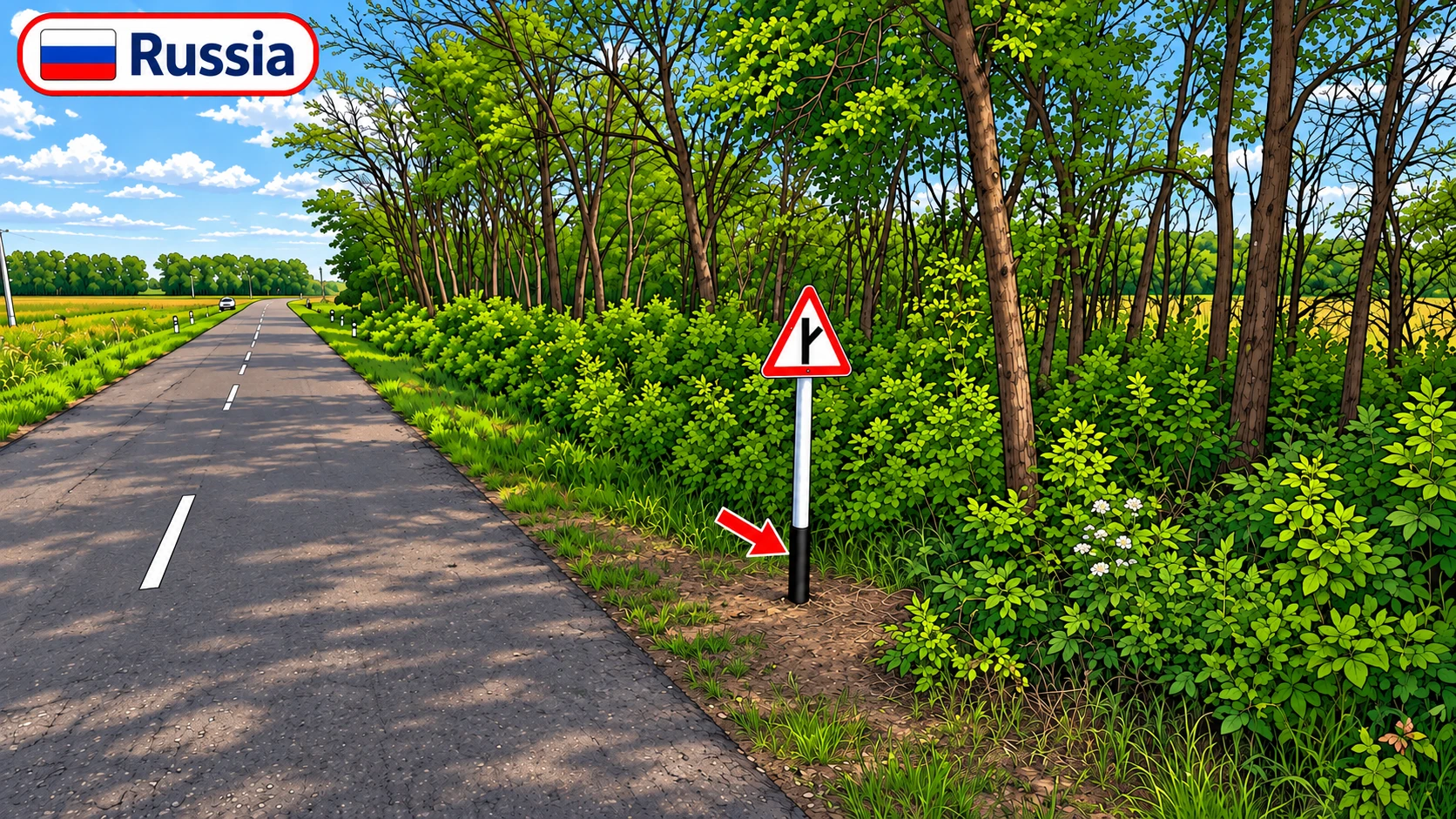
Explore this clueThe lower part of a triangular sign's support is painted black, informally called a black sock.
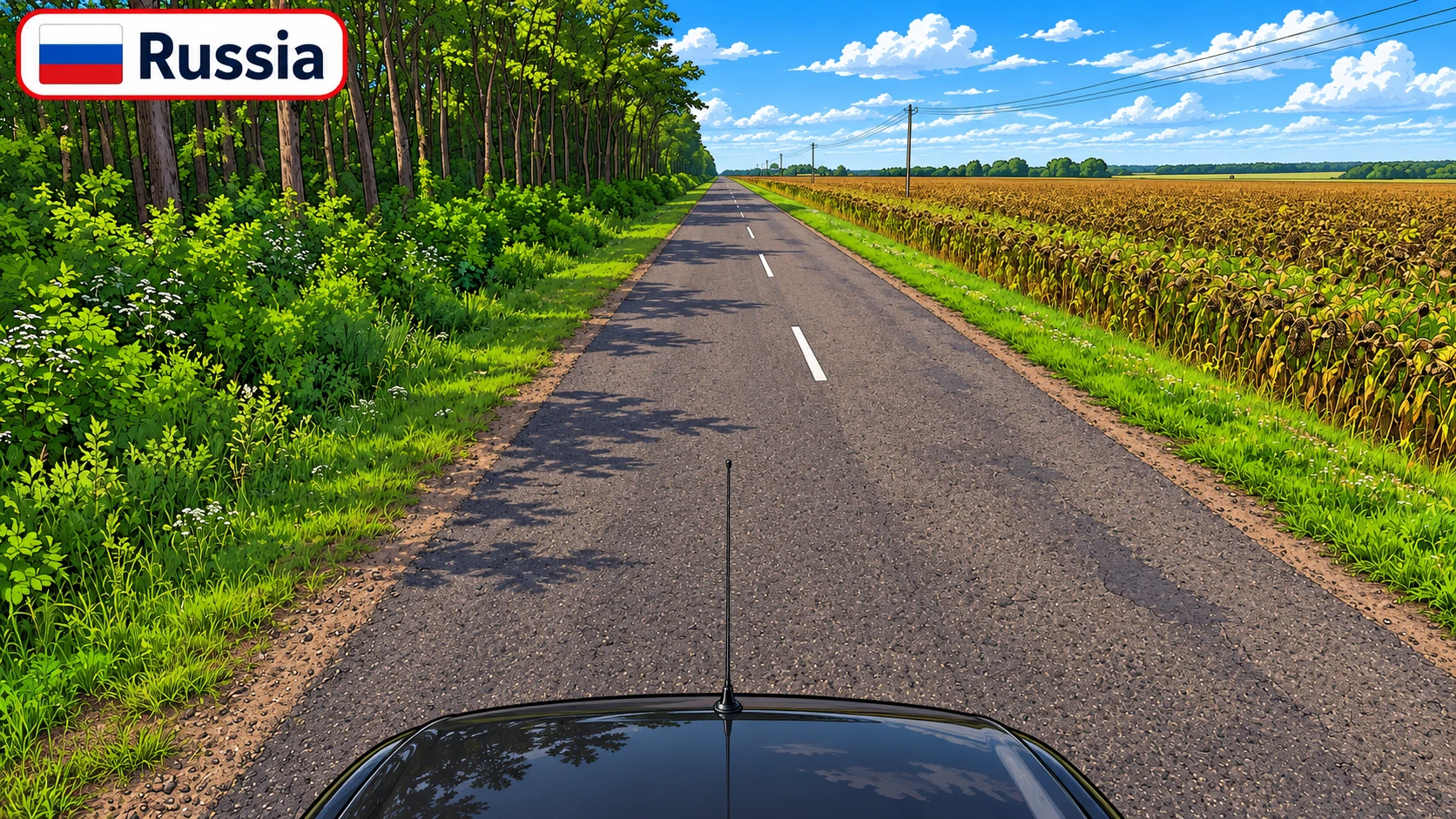
Explore this clueThe guide mentions a dark rear vehicle section, long antenna and less saturated Gen 3 imagery.
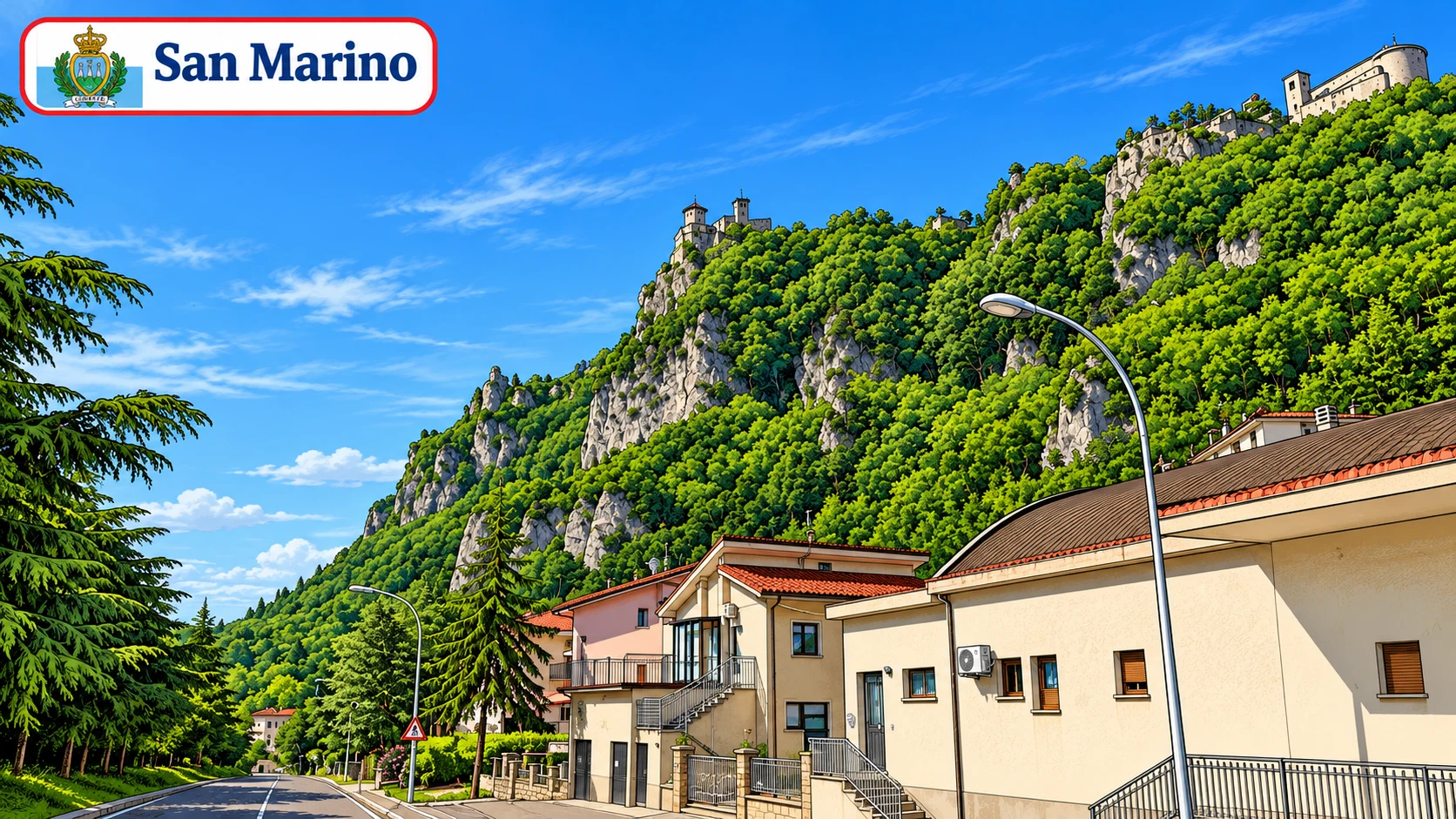
Explore this clueThe guide points towards the hill above the settlement and mentions three towers, shown in different portions of the sequence.
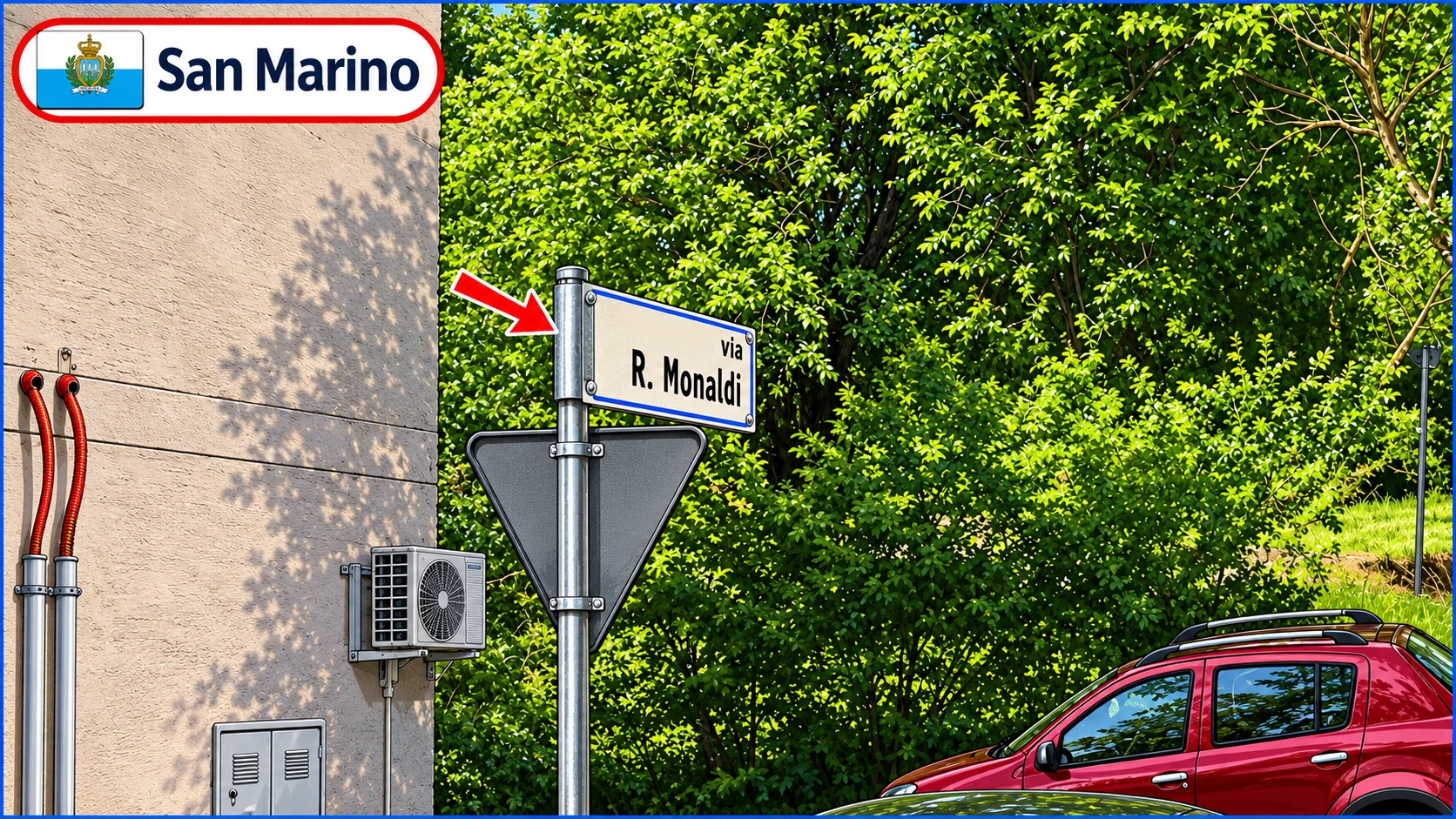
Explore this clueA close-up of V. Masi illustrates a metal edge or reinforcement, contrasted with Italian street signs.
Explore this clueSeveral posts appear in succession on short stretches of the selected rural roads.
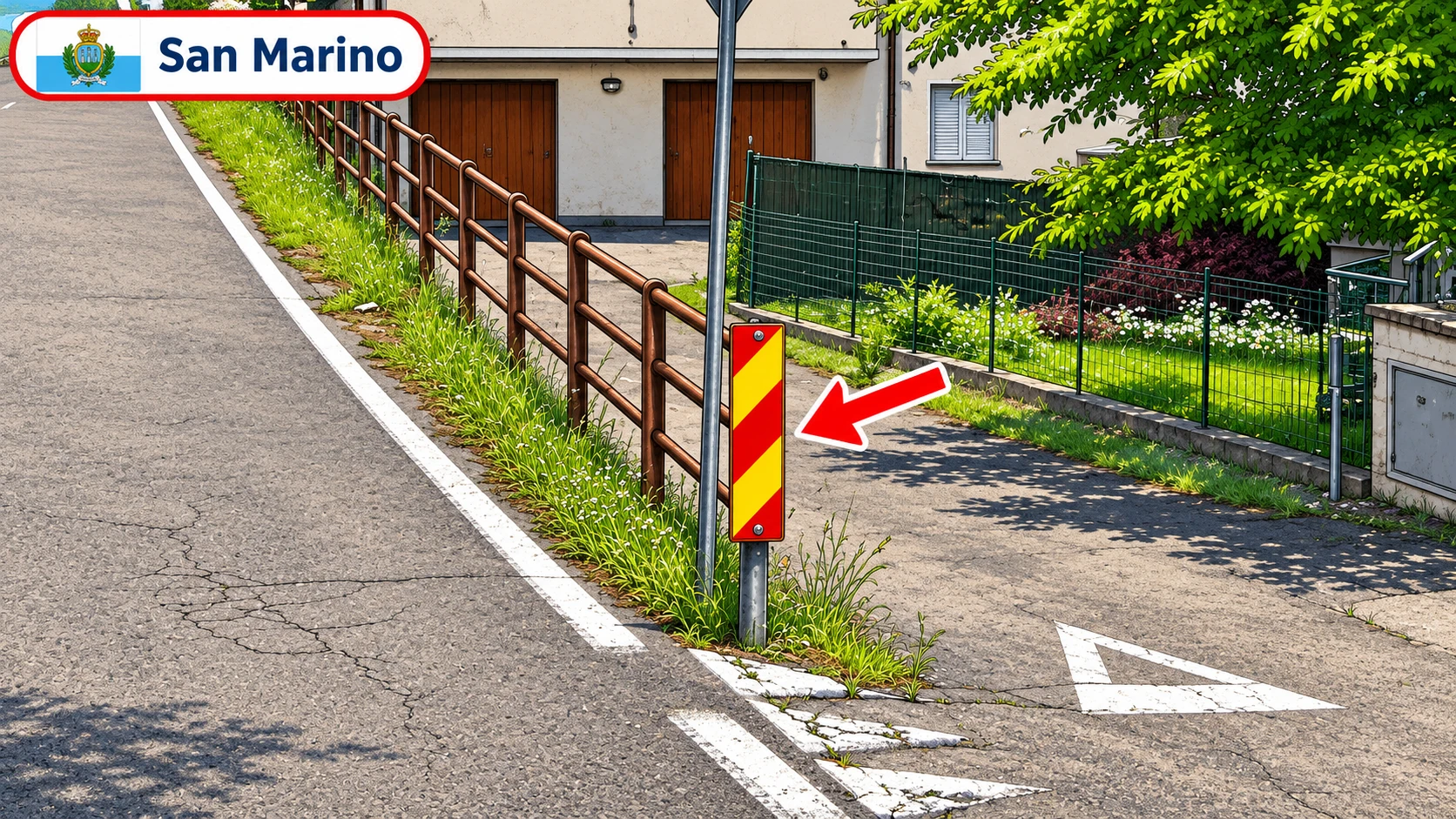
Explore this clueA vertical panel beside the road has diagonal yellow and red bands, contrasted with the preceding Italian examples.
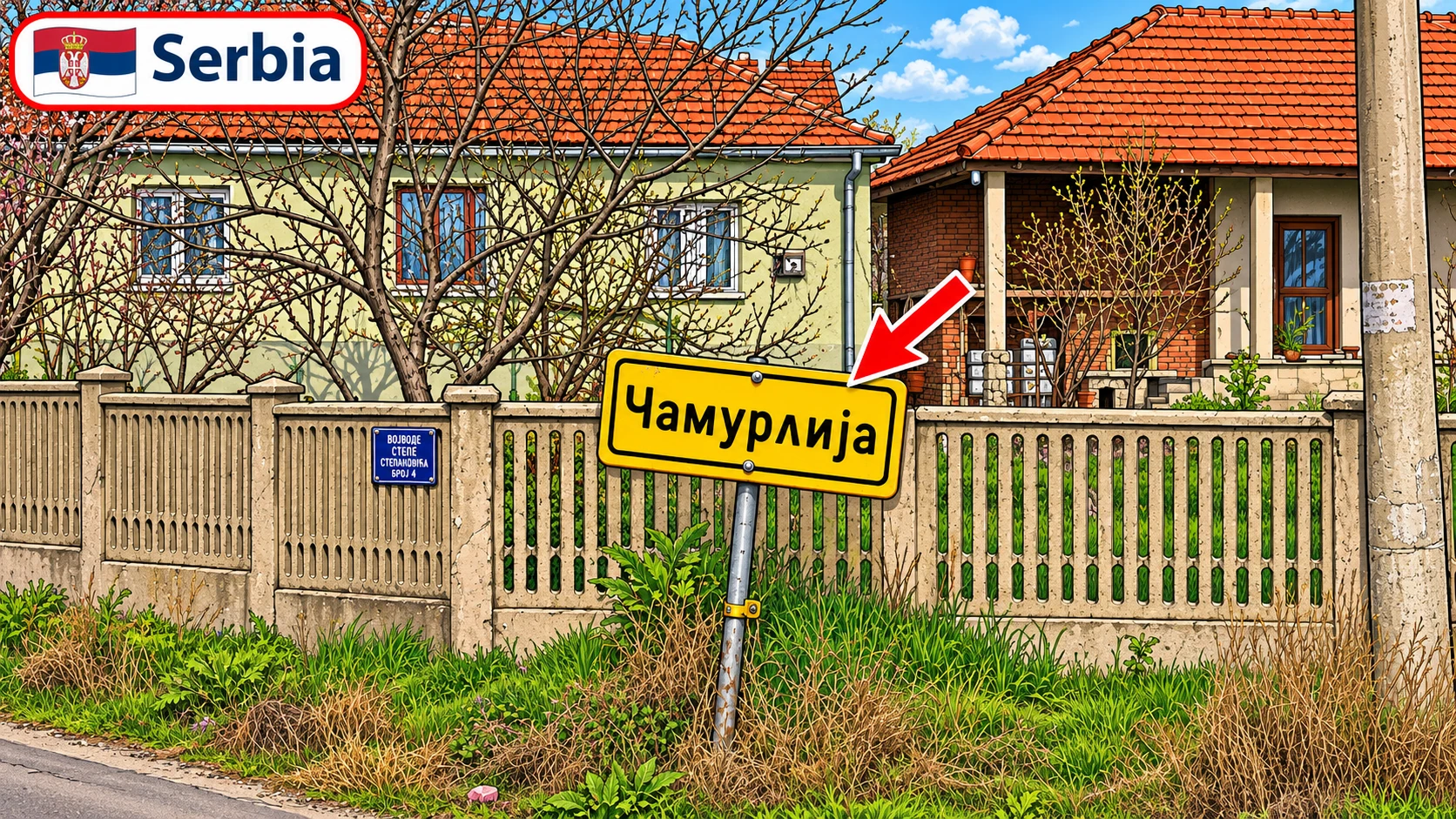
Explore this clueThe entry panel is rectangular and yellow, with a black border and Cyrillic lettering.
Explore this clueOlder plates without blue bands are compared with newer designs that include them.
Explore this clueThe roof example revisits the light mortar discussed for Bulgaria, emphasising a similarity between the countries.
Explore this clueThe guide highlights the overall shape of a white post with a reflector area on one side.
Explore this clueMountains behind the settlement rise more strongly than the gentle Czech hills used for comparison.
Explore this clueSimple straight poles often stand in close pairs, in either wood or concrete.
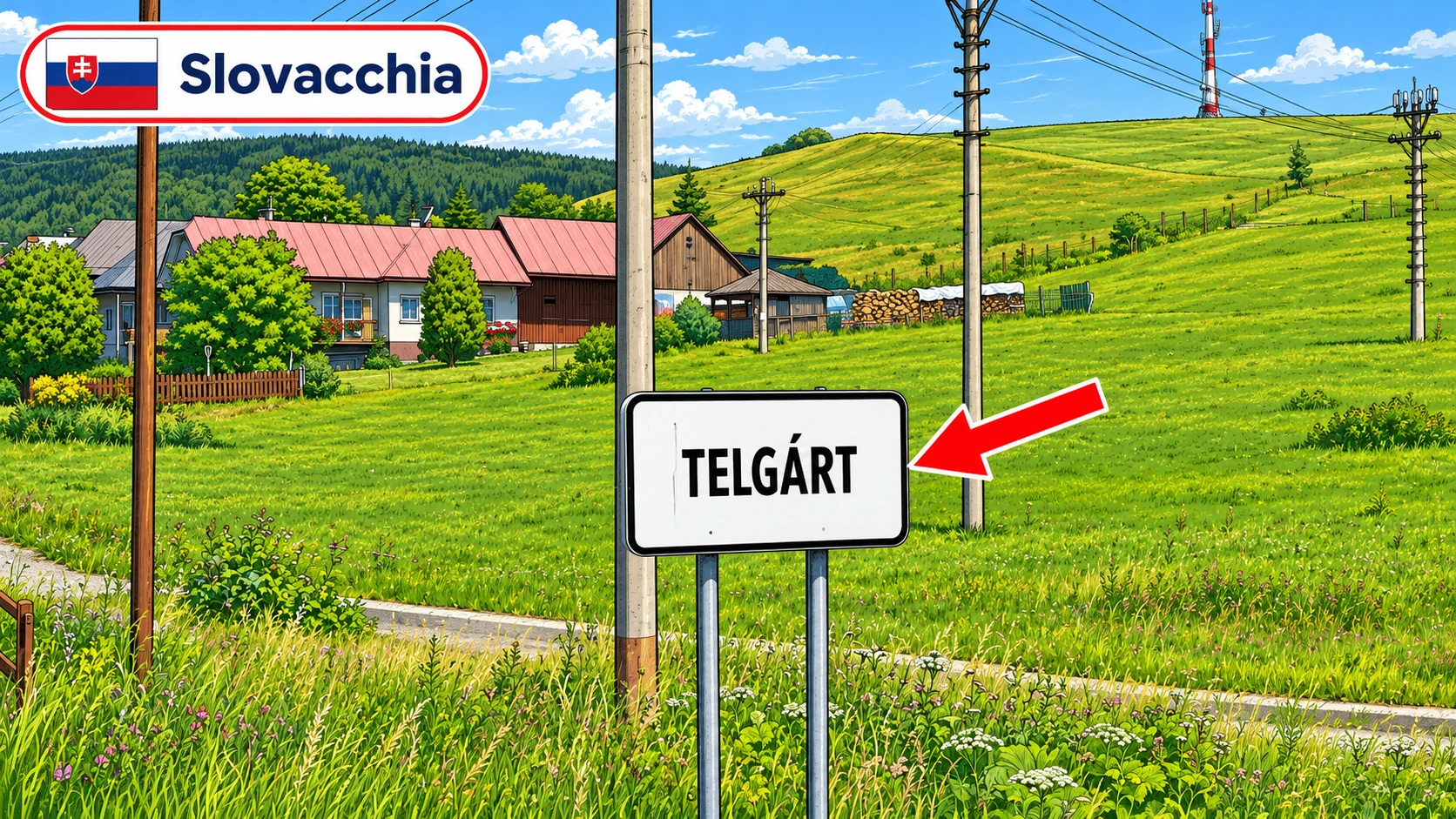
Explore this clueTELGÁRT has a relatively small name within a white panel with a black border, compared with a Czech sign.
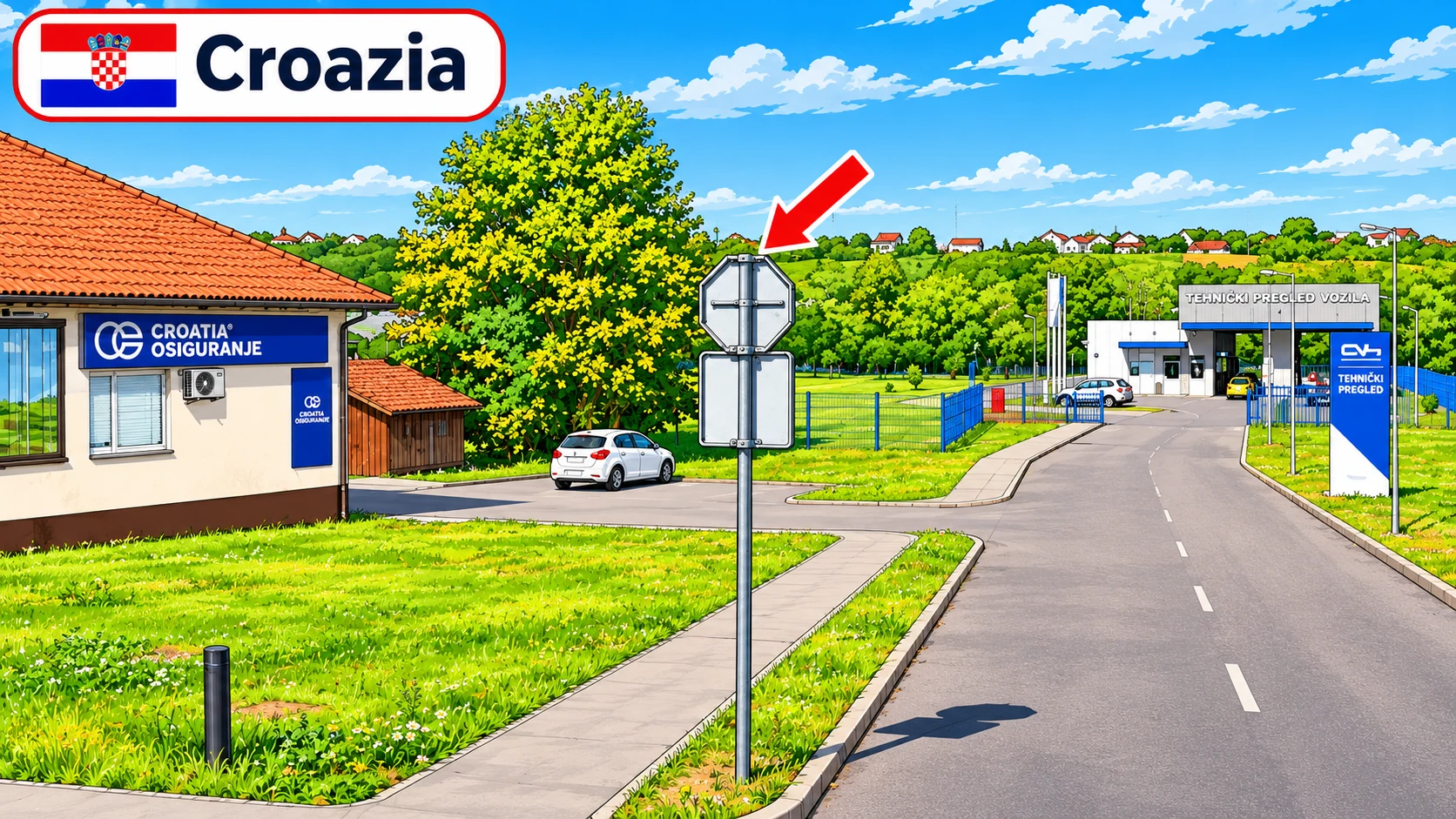
Explore this clueThe stop sign's rear has a folded edge and reinforcements, compared with Croatia.
Explore this clueWhite or pastel walls, Alpine-looking roofs and mountainous wooded scenery feature in the guide.
Explore this clueThe white post has an upper red area; the Austrian comparison concerns a possible small upper recess and paler red tone.
Explore this clueYellow marks are associated with bus stops or other special areas of the carriageway.
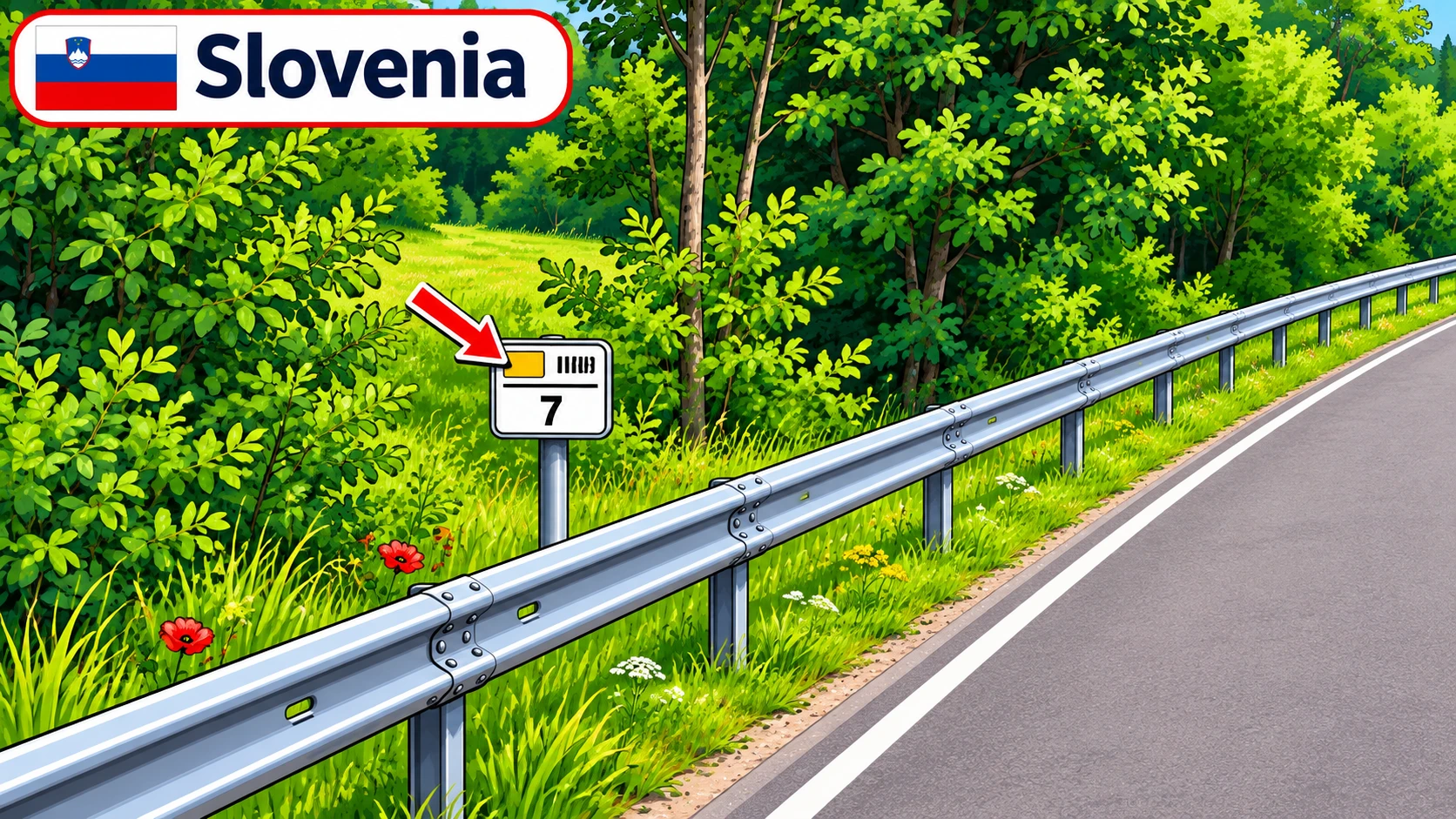
Explore this clueThe small panel places a yellow box upper-left, a number upper-right and distance information below.
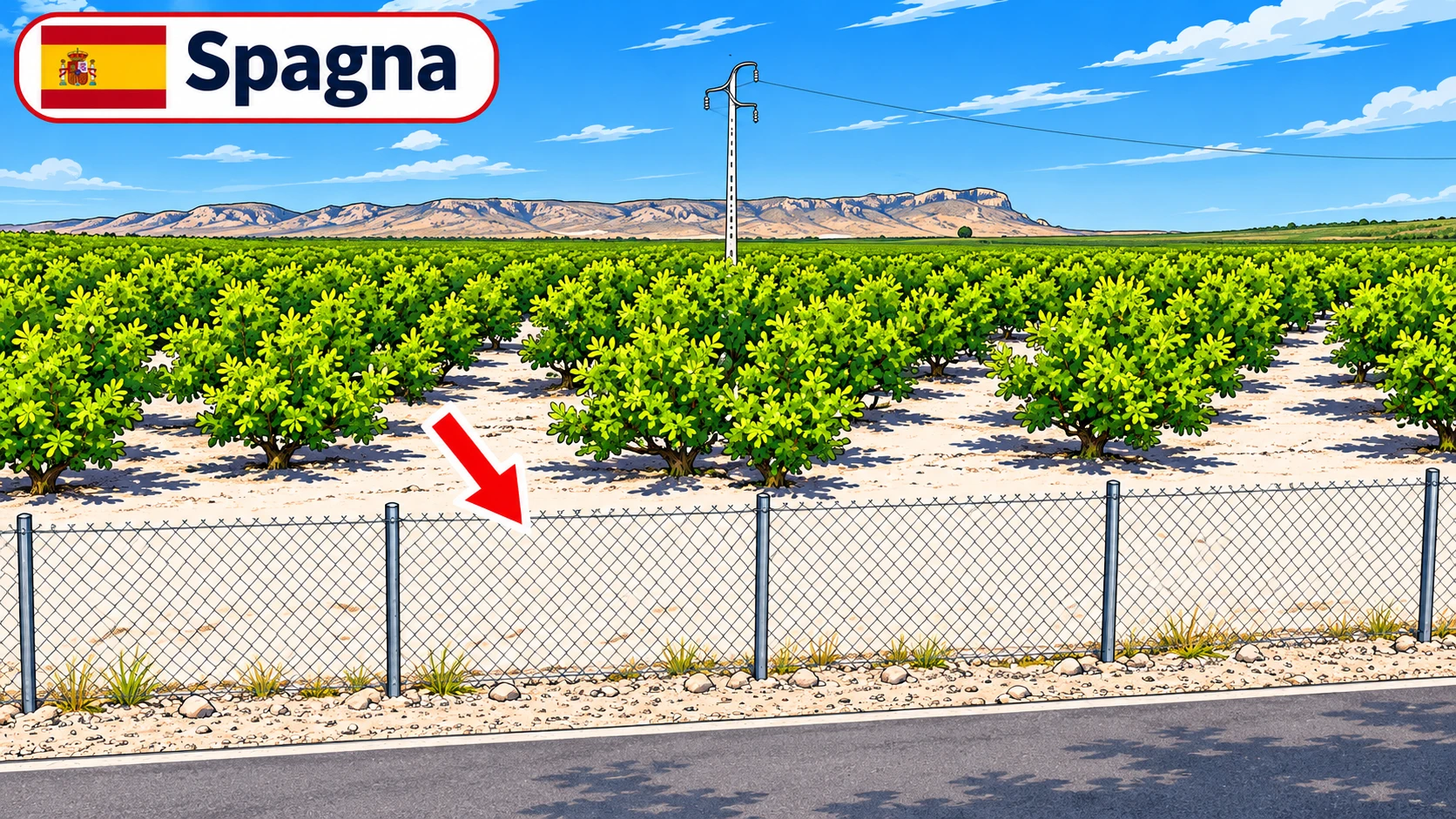
Explore this clueVery pale ground, regularly planted rows and distant hills introduce a drier part of Spain.
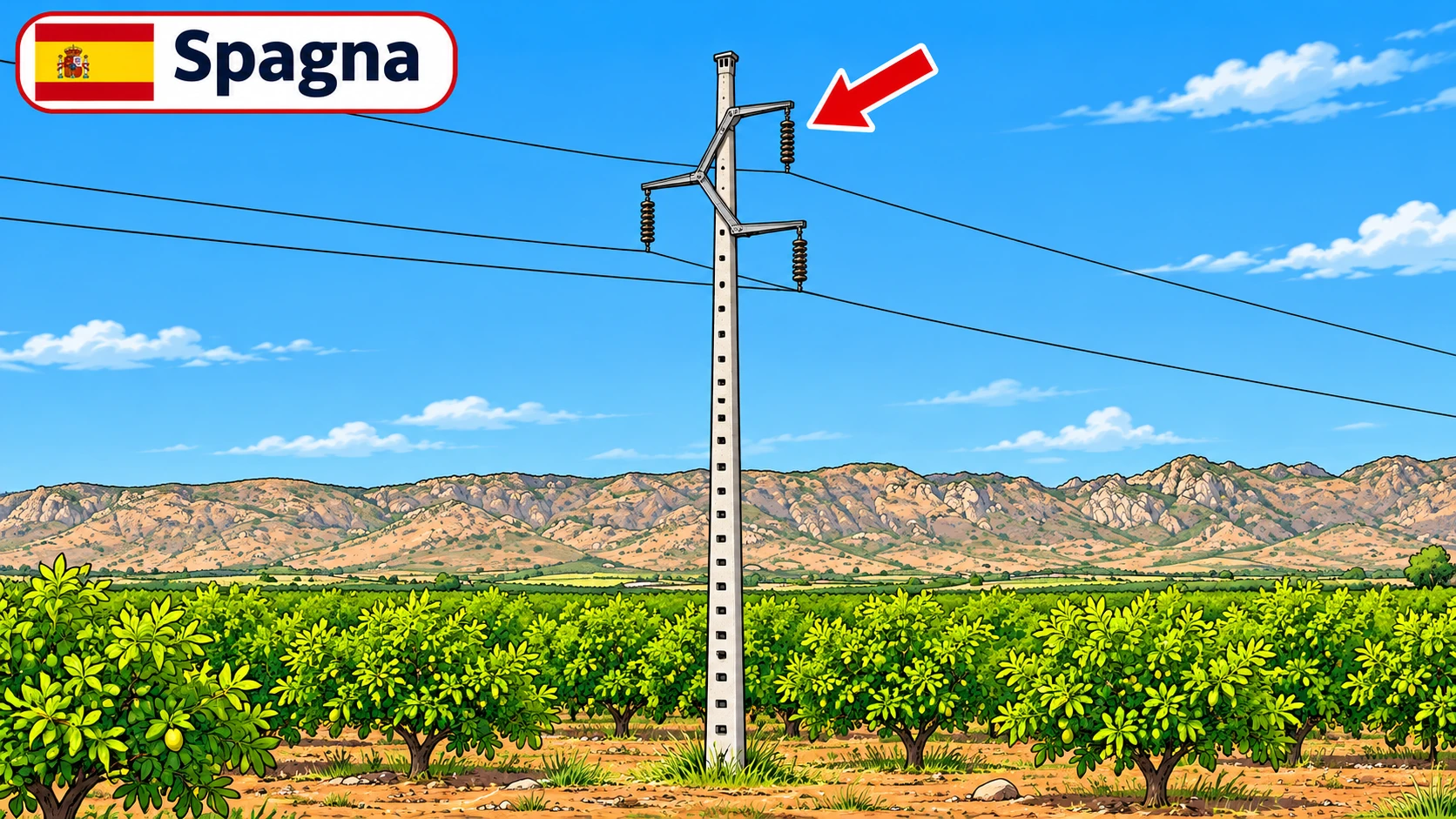
Explore this clueRecesses in the shaft and a complex upper structure are compared with French poles.
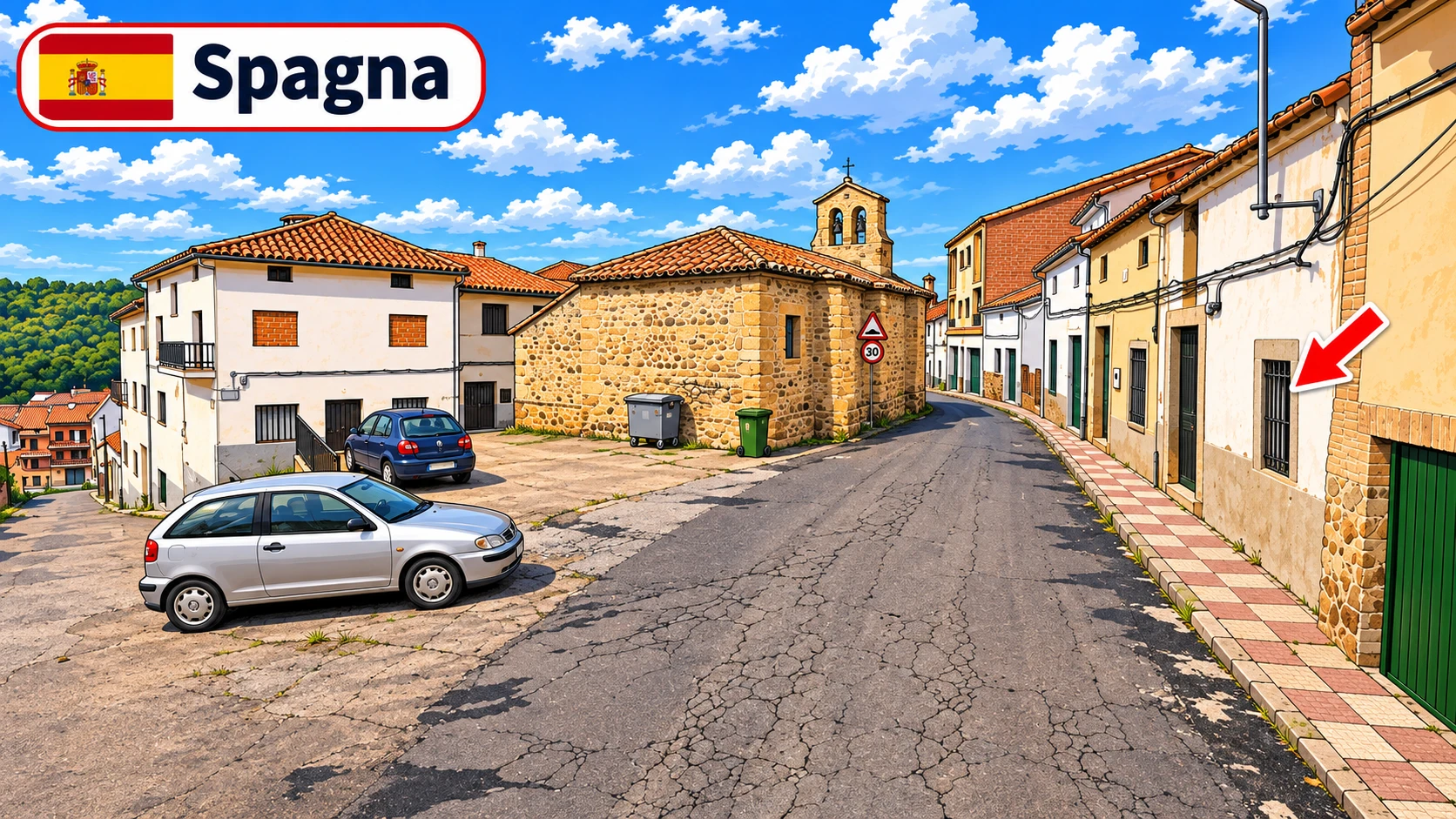
Explore this clueLight walls and darker details in a Spanish settlement are contrasted with French examples.
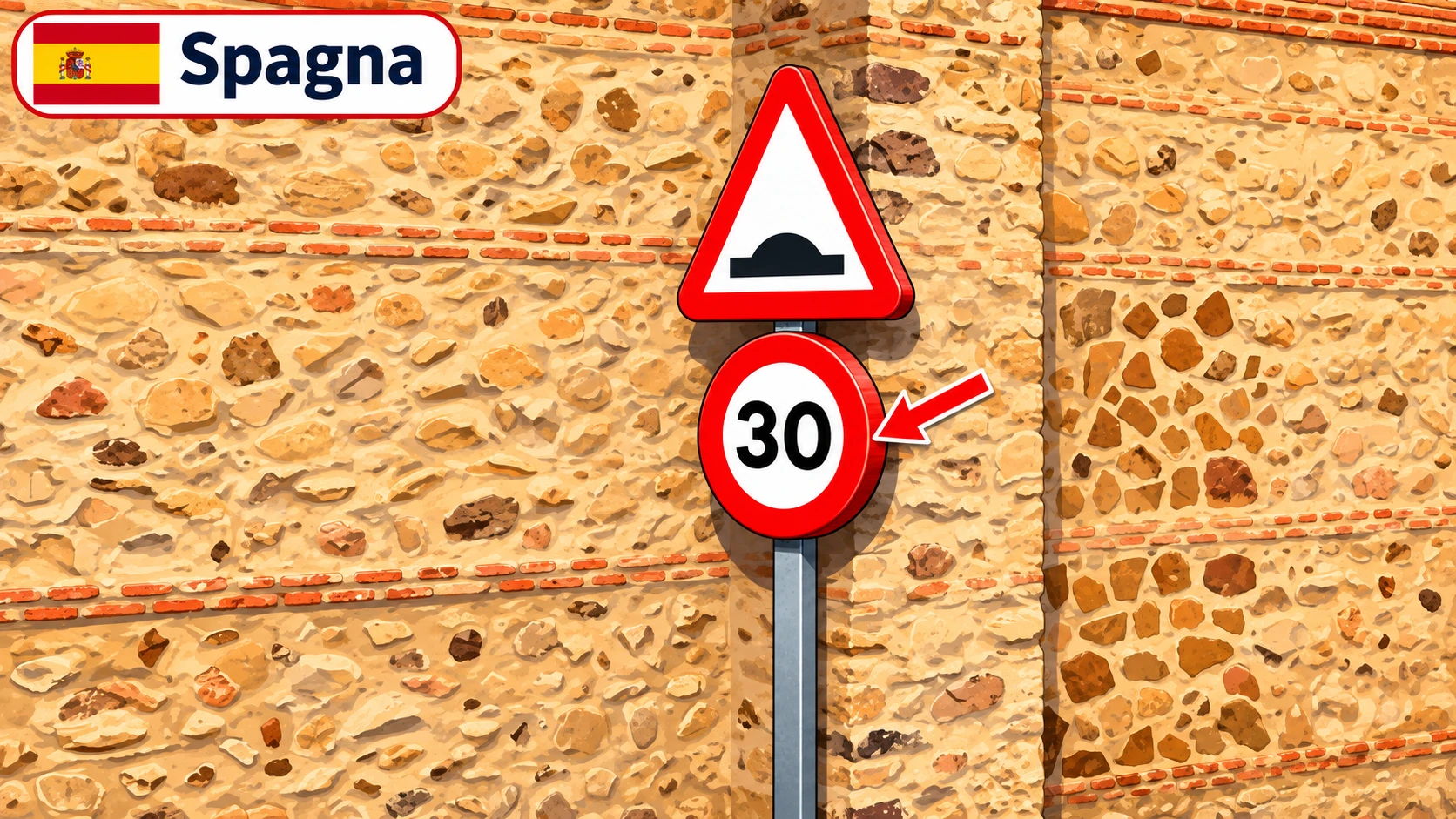
Explore this clueSpeed and warning signs have prominent red bands reaching their outer edges, with folded colour and rectangular supports discussed.
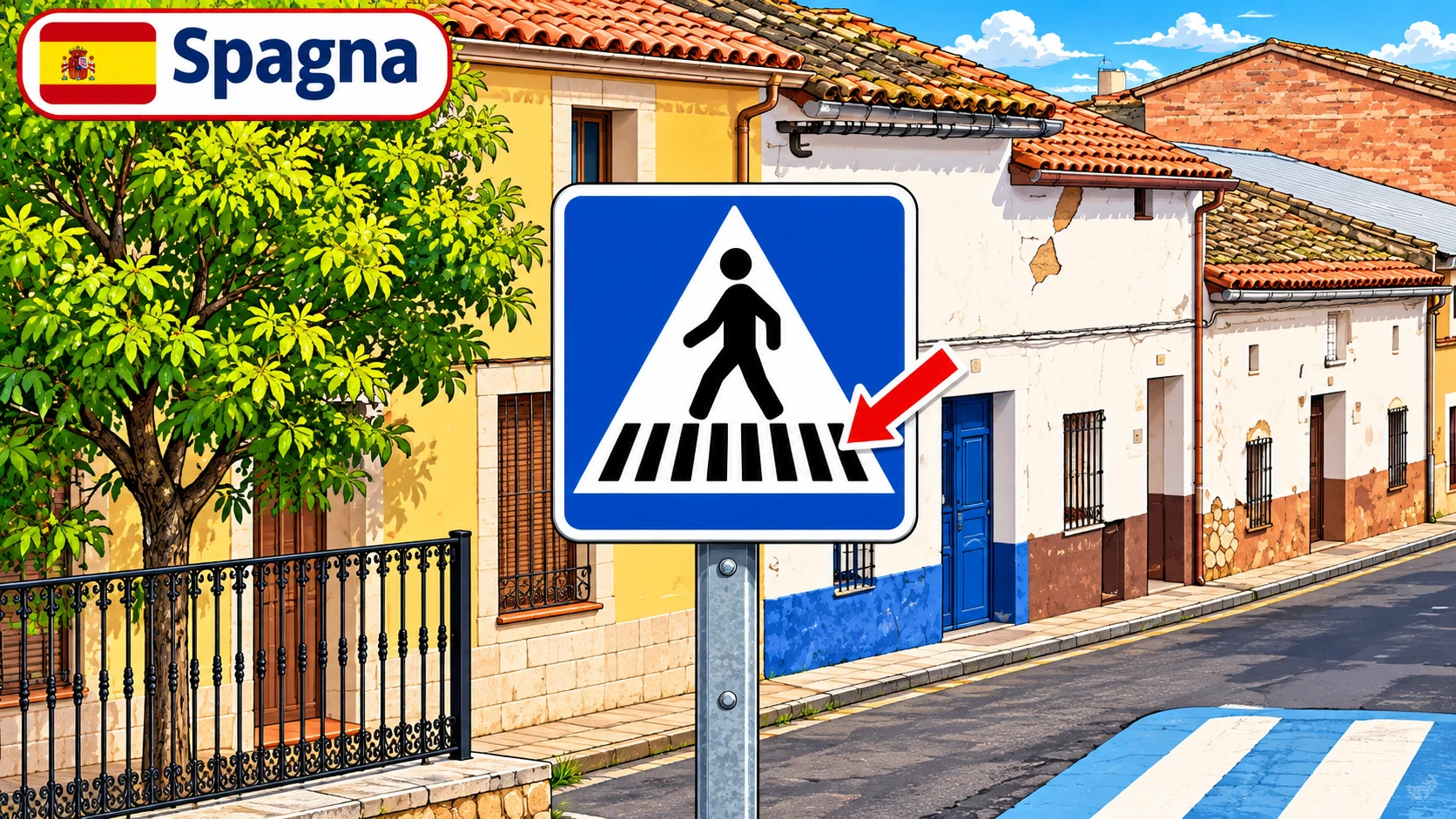
Explore this clueThe guide counts eight stripes beneath the pedestrian, later adding that Andorra shares this design.
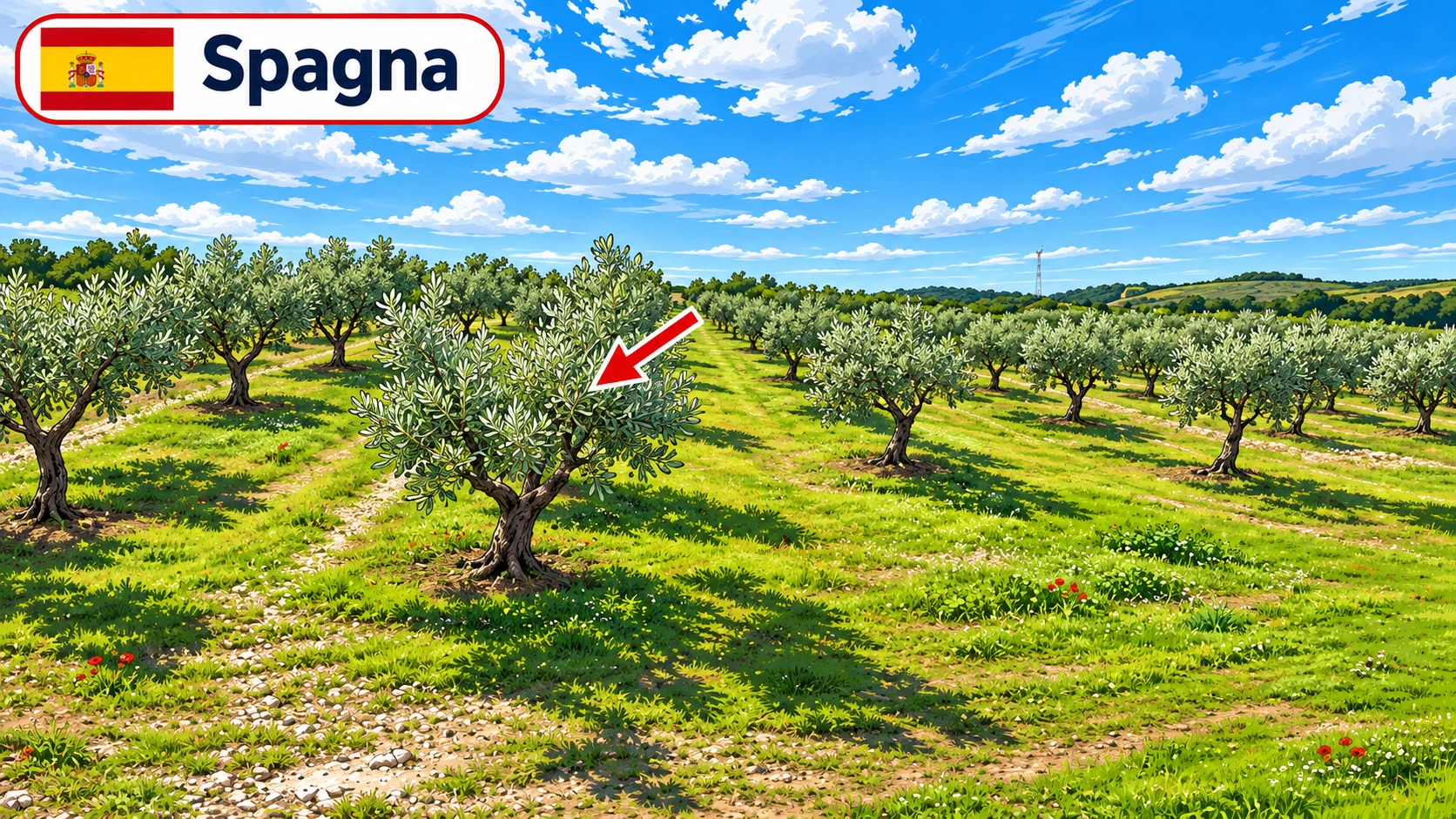
Explore this clueSmall grey-green canopies arranged in regular rows are identified by the author as olive trees.
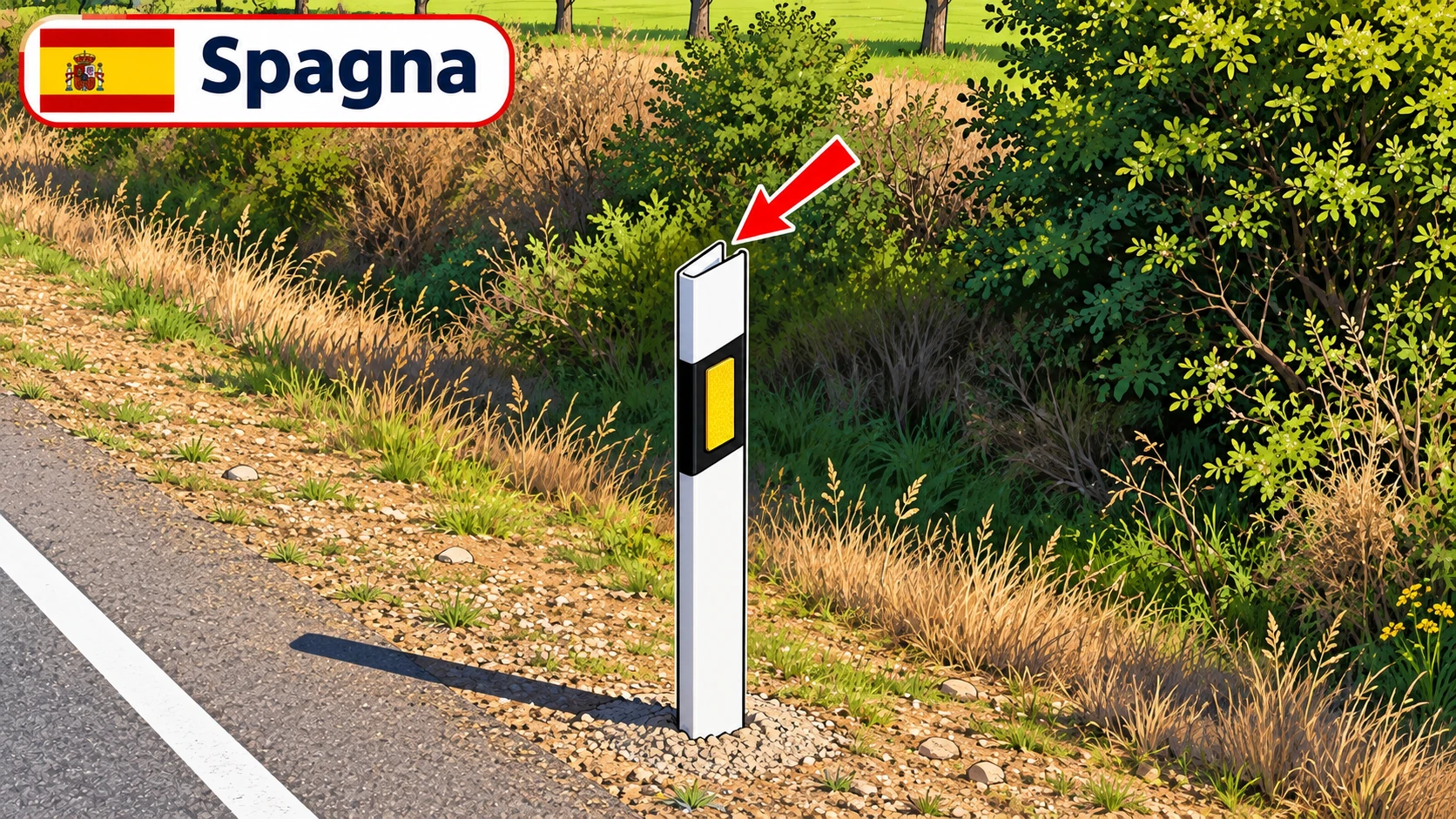
Explore this clueThe white post has a black upper section, rectangular yellow reflector and an opening at its top, contrasted with Germany.
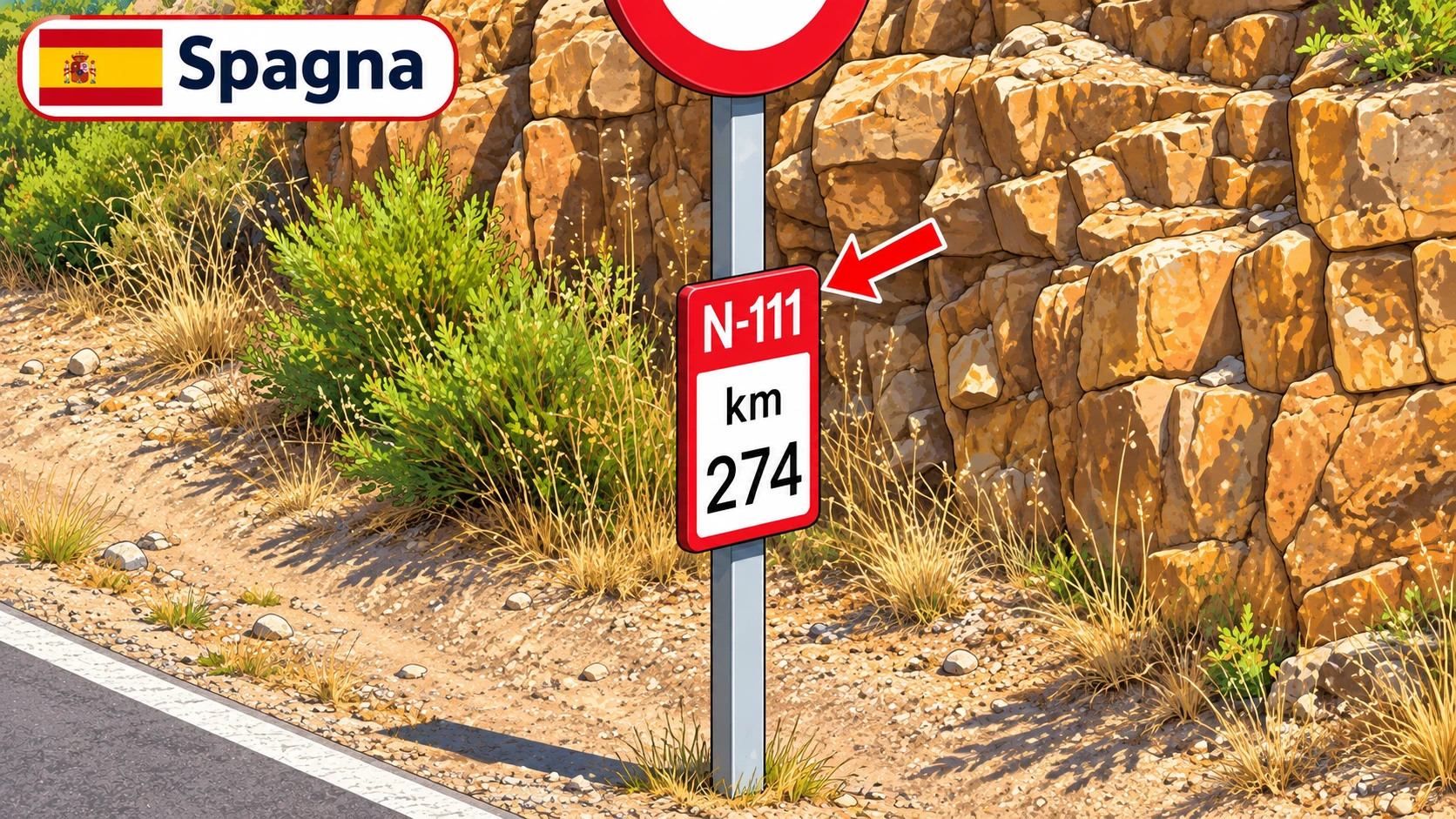
Explore this clueN-111 / km 274 has a red heading and thin lettering, with the colour extending to the outer edge.
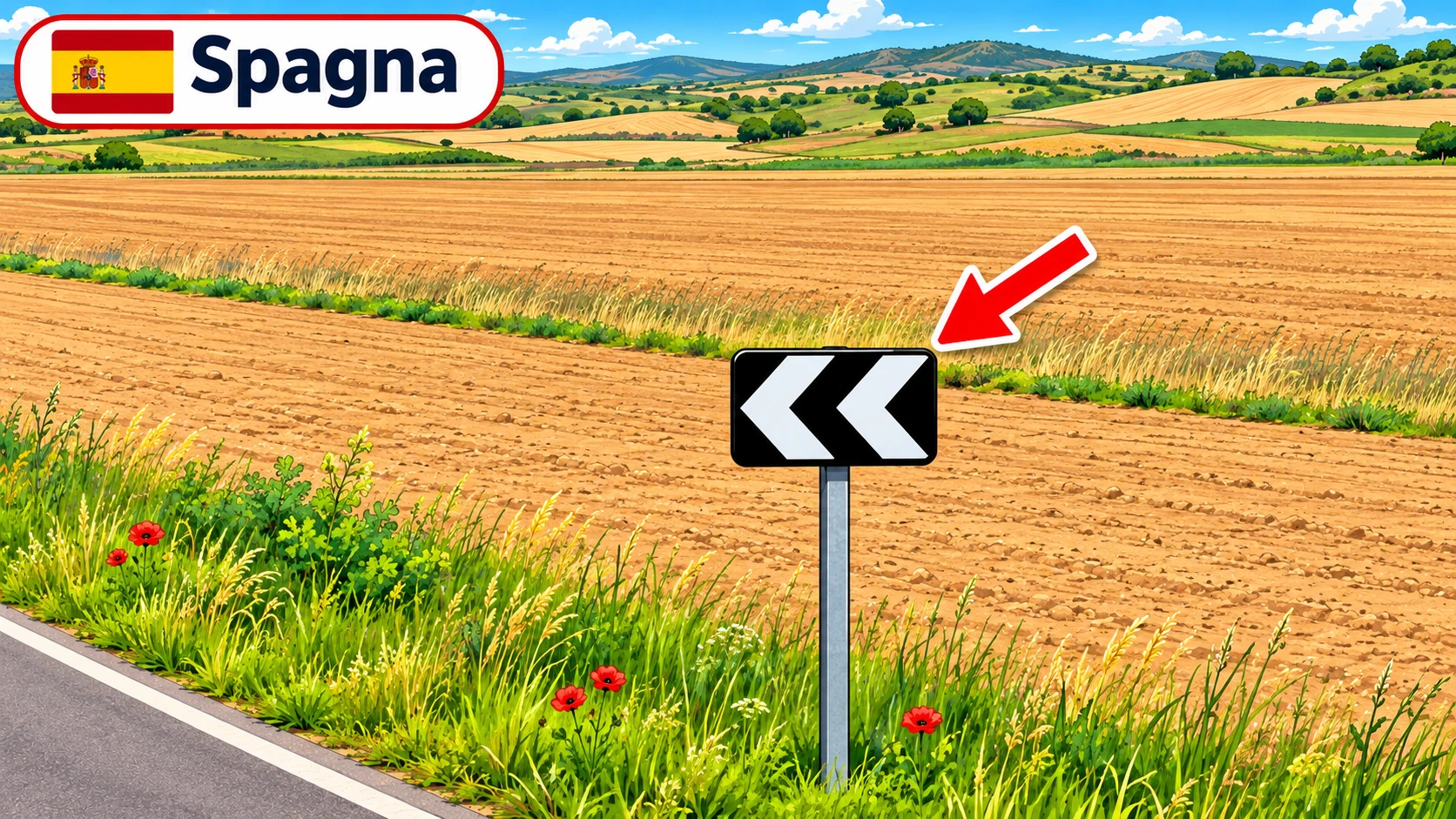
Explore this clueThe arrow is white on black; later the guide notes that Spain also uses white-on-blue versions.
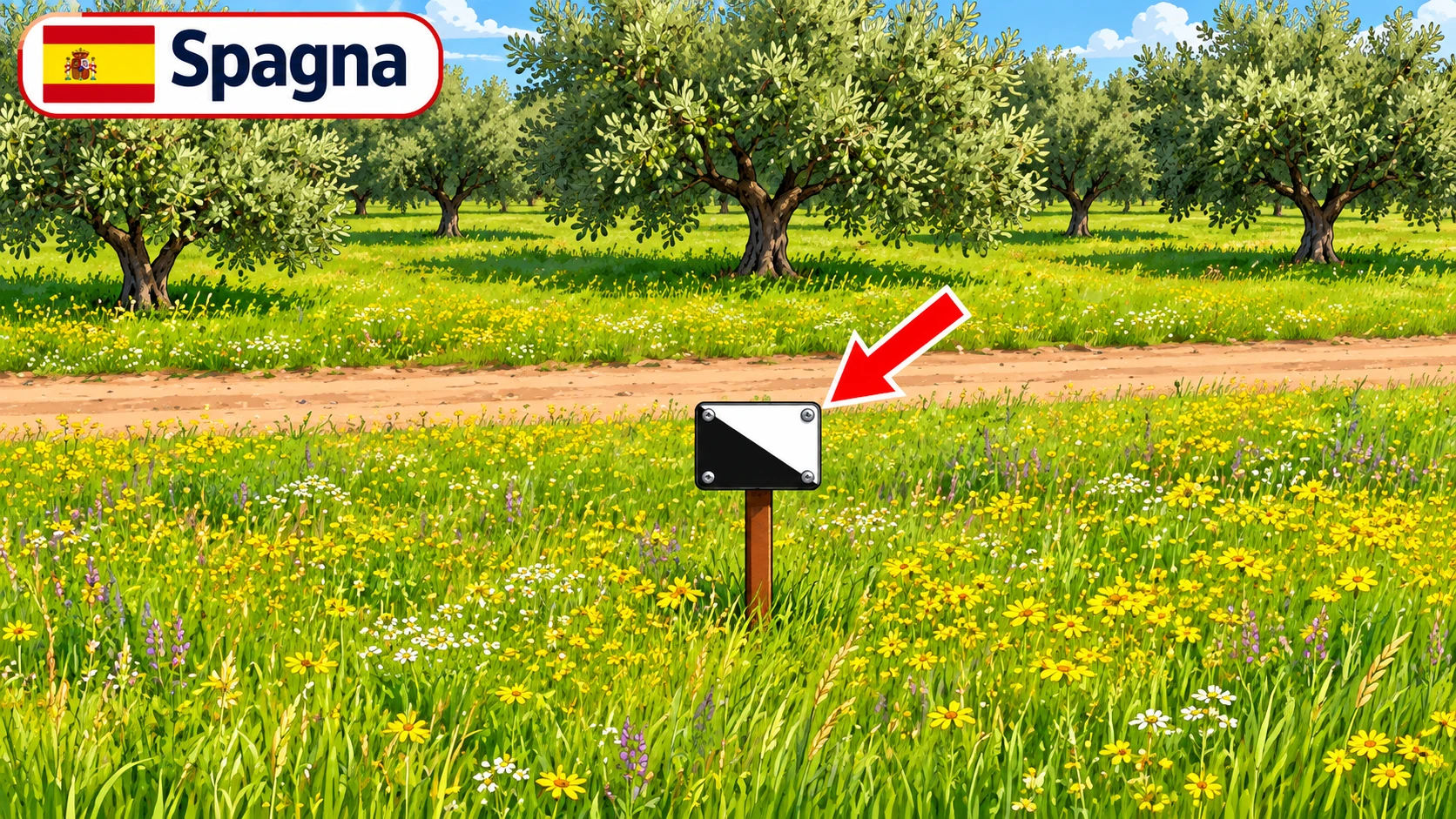
Explore this clueThe enlarged panel is divided diagonally into white and black halves, associated with Spanish hunting areas.
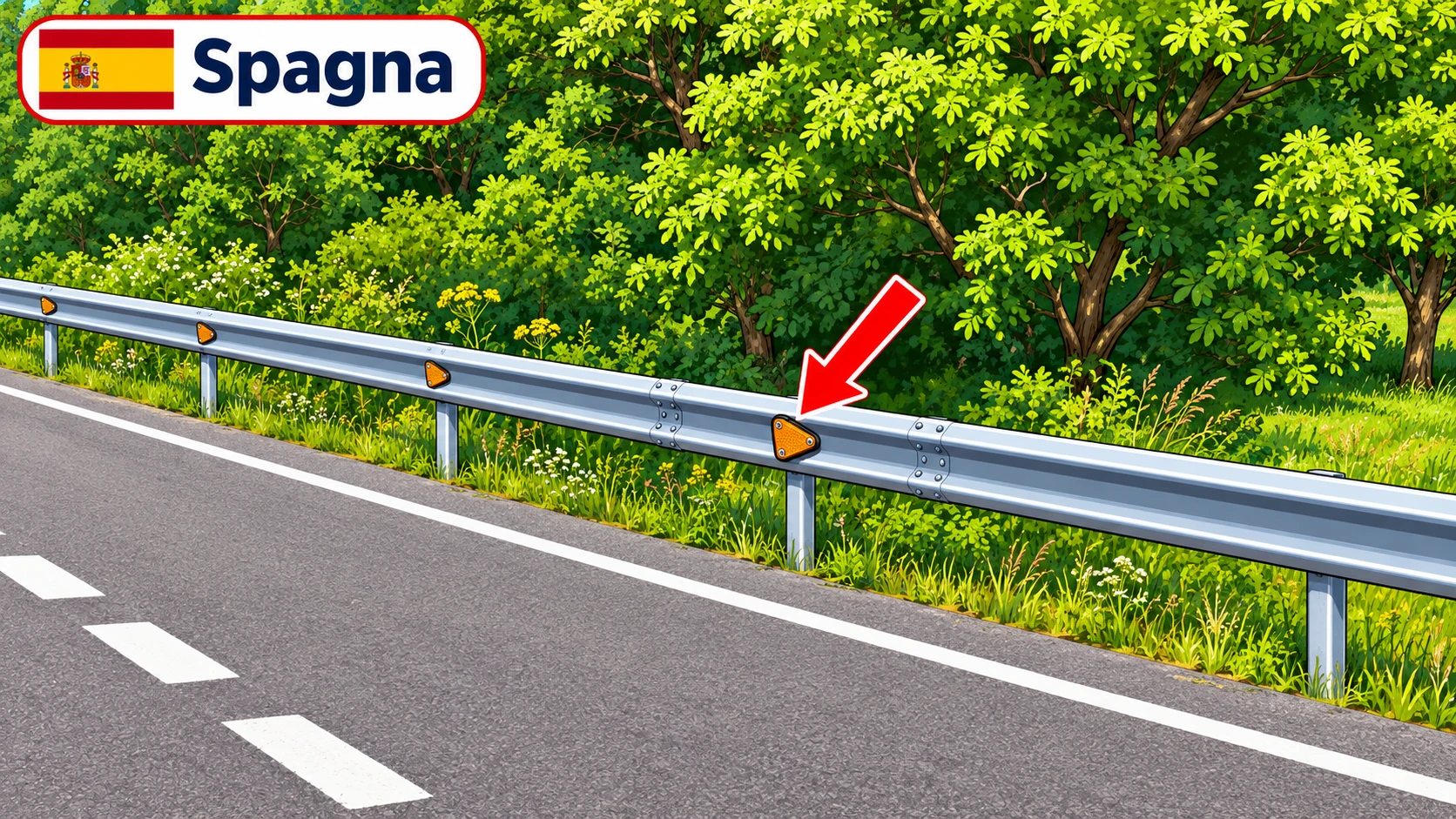
Explore this clueThe video combines relatively thin white edge dashes with yellow or orange reflectors on the metal barrier.
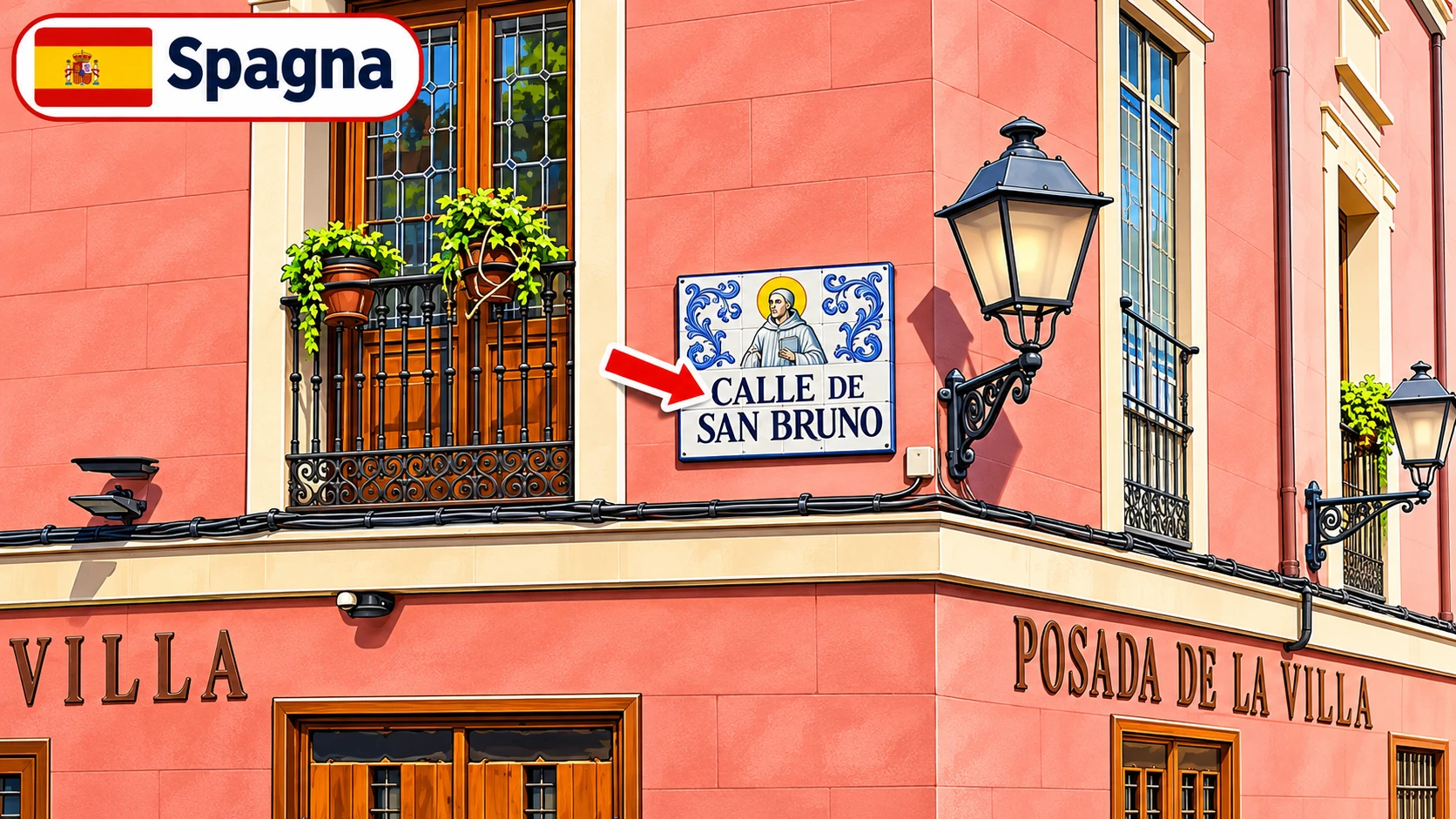
Explore this clueA blue number plaque is followed by a CALLE sign, compared with French rue and Andorran carrer.
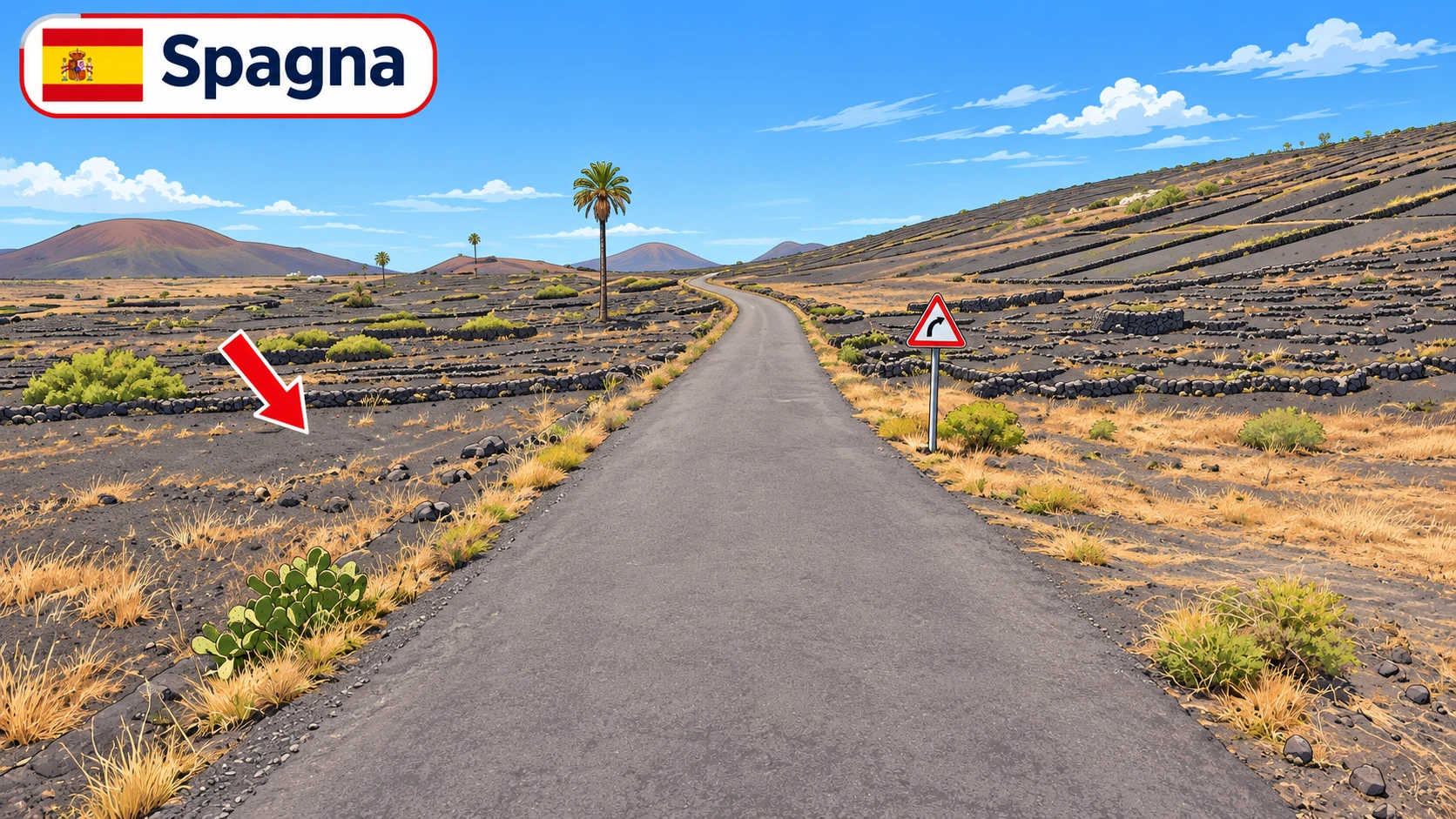
Explore this clueThe island sequence moves from dark bare ground beside a road to buildings, palms and distant hills.
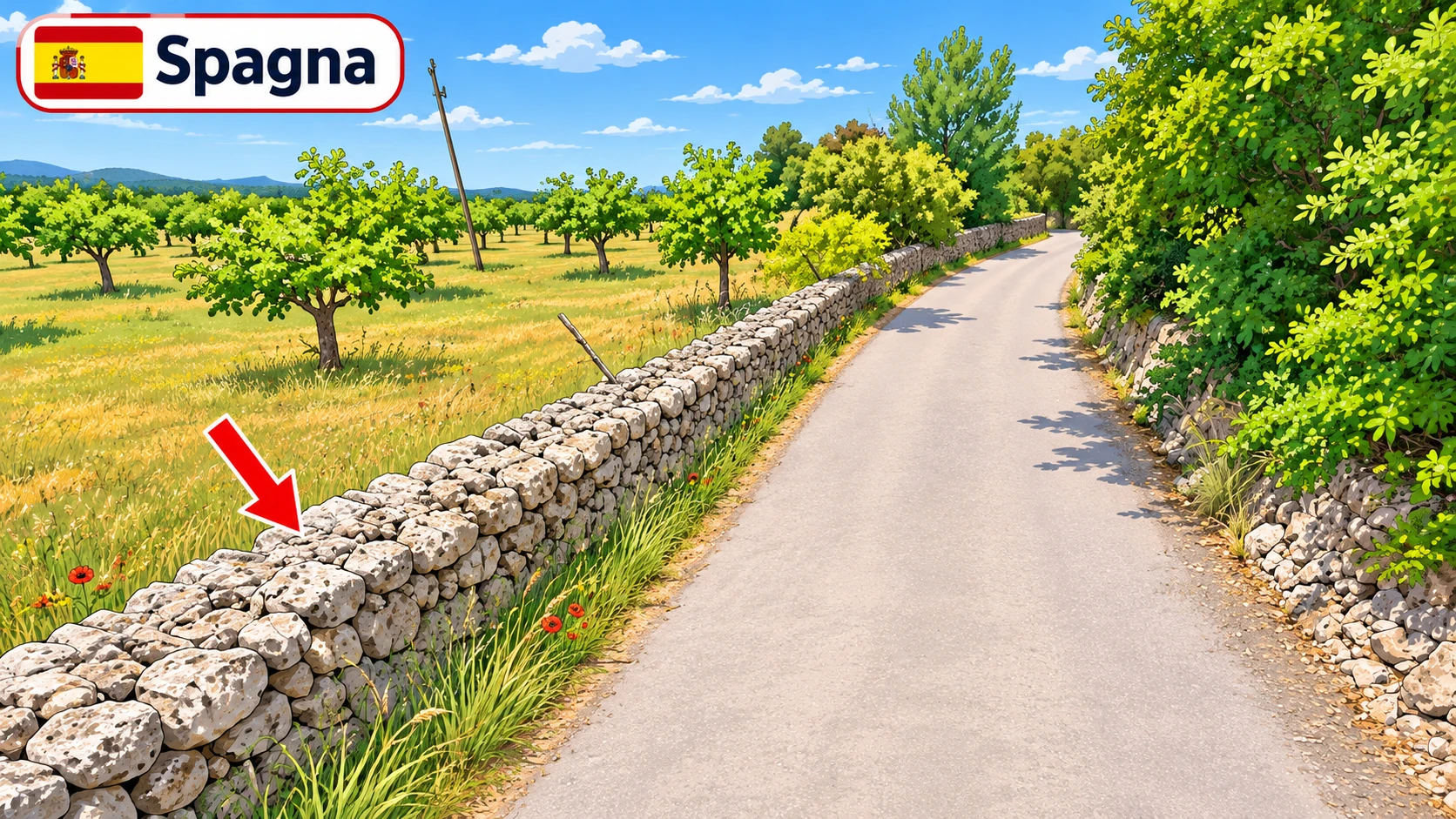
Explore this clueAfter a Mallorca and Balearic map, a narrow rural road is bordered by pale dry-stone walls and tree-filled fields.
Explore this clueThe Swedish sequence shows slim and wider posts with black upper areas and white reflectors, including Estonian comparisons.
Explore this clueThe guide uses Sweden's flag and IKEA as a mnemonic for yellow-on-blue chevrons. The pictured arrows appear pale and faded.
Explore this clueBrief white dashes line the road, contrasted with Finnish solid edges and longer Norwegian examples.
Explore this clueThe guide describes four stripes versus five in the Finnish example, alongside blue-white support details.
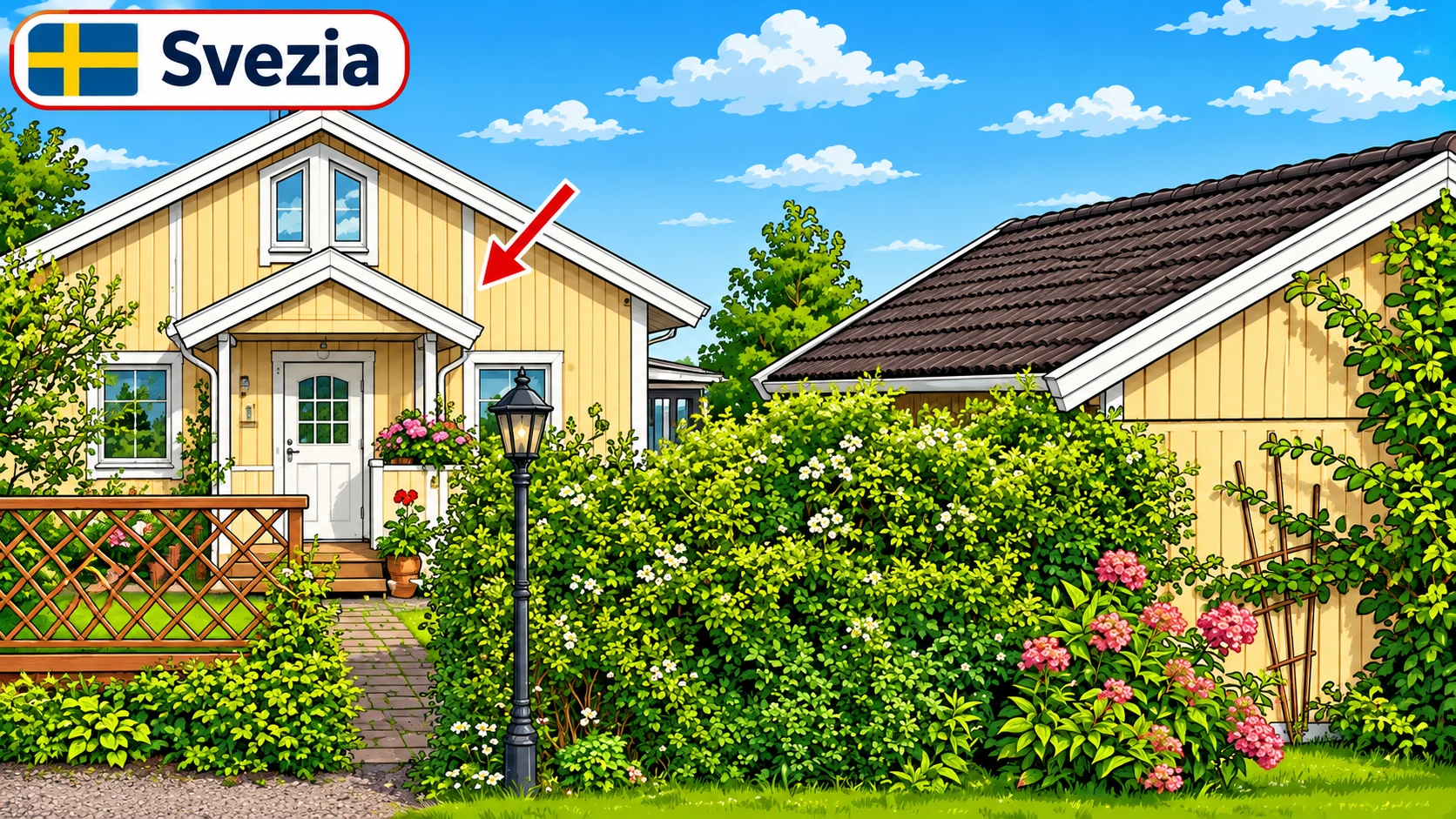
Explore this clueBrick housing is compared with coloured or white timber-clad homes and dark roofs, discussed especially in southern and coastal example...
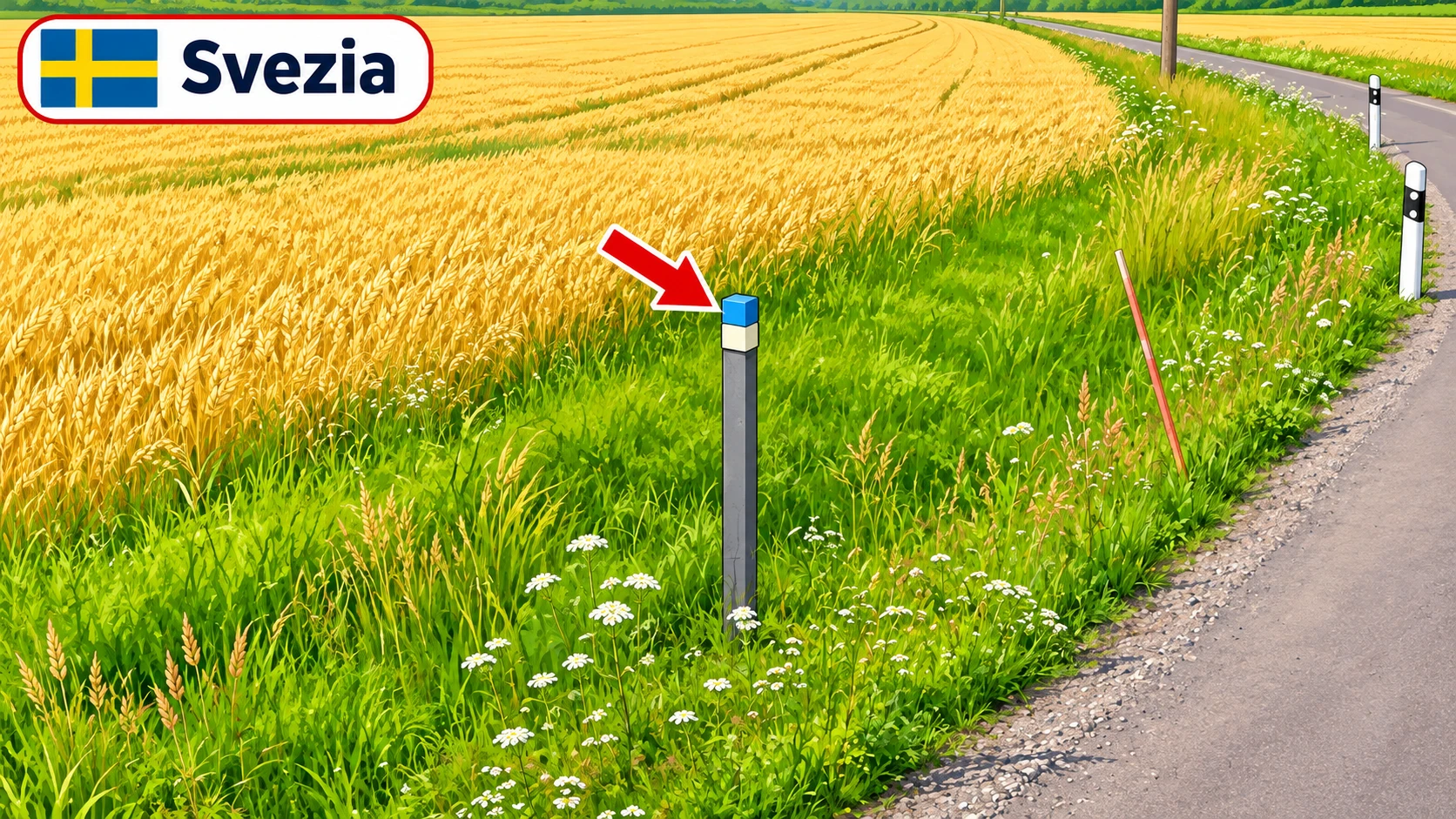
Explore this clueA small blue-and-yellow-topped marker is described as an electricity-installation marker.
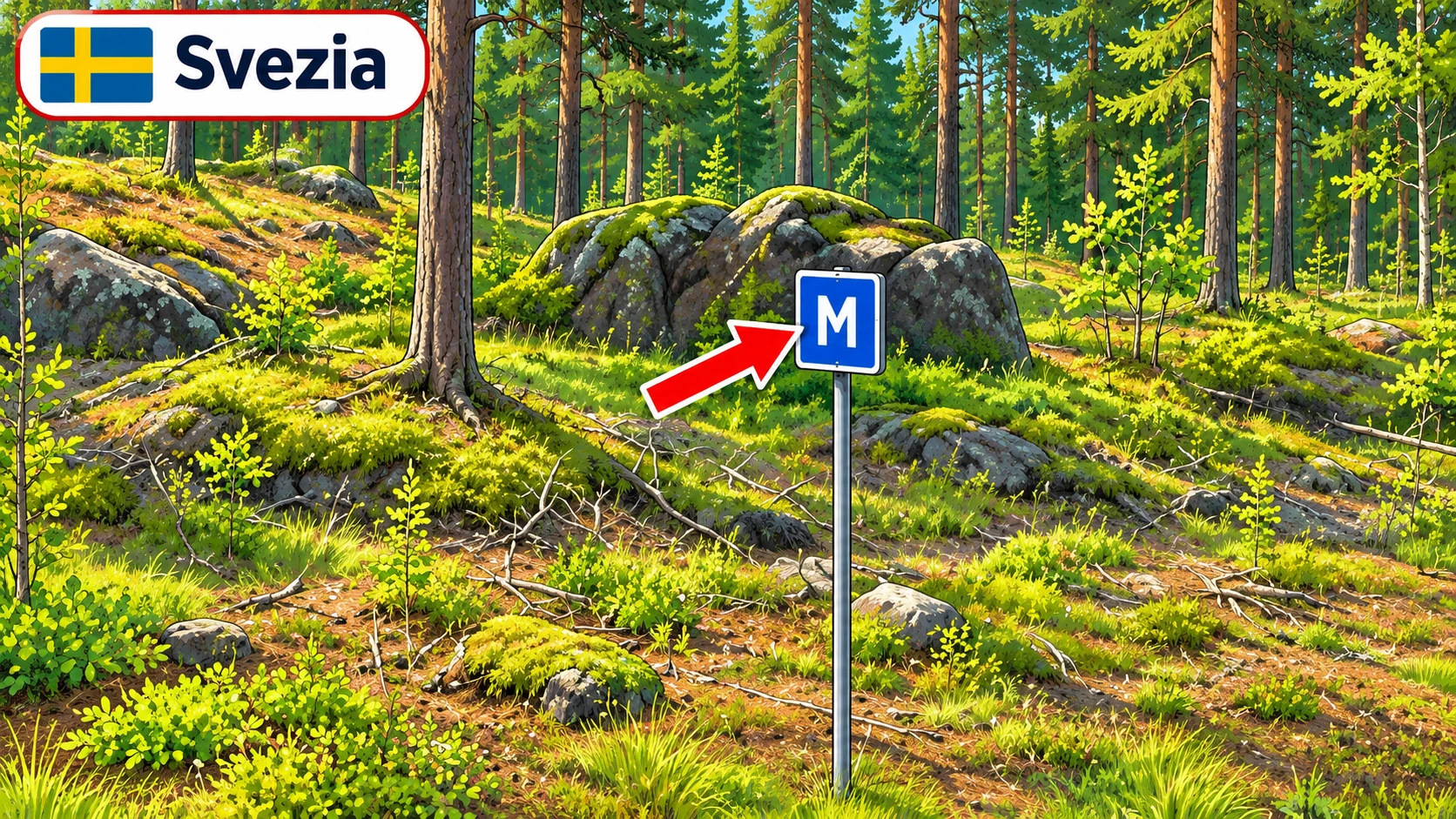
Explore this clueA small blue panel with a pale M stands beside a narrow road, described as frequent in these Swedish settings.
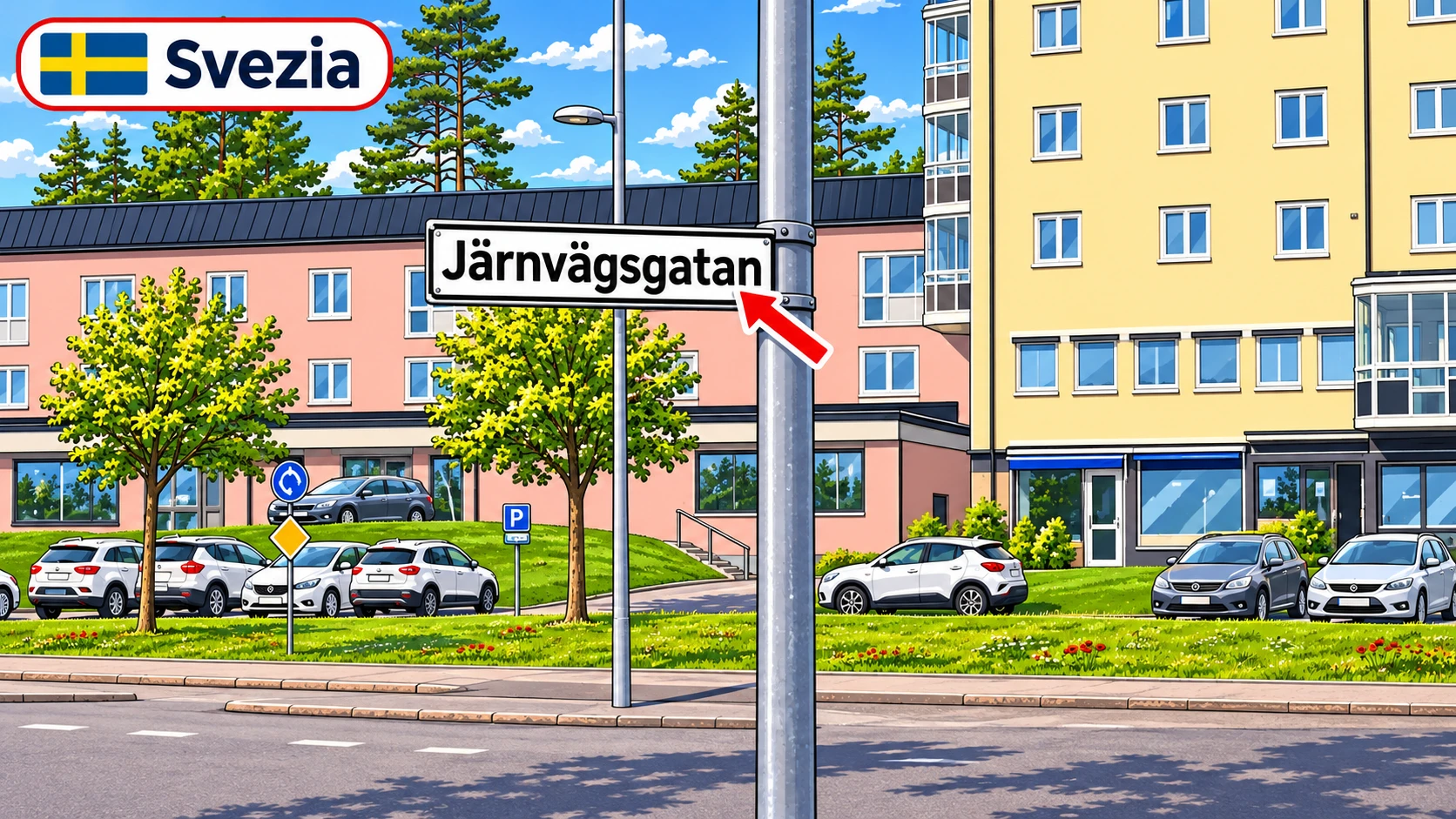
Explore this clueThe street plaque illustrates gatan, while vägen and abbreviations g or v are also mentioned.
Explore this clueOlder Swedish imagery includes visible red vehicle sections and a pale variant with a small antenna.
Explore this clueThe guide combines a low viewpoint, bluish front blur and short front plates without the blue bands illustrated for Italy.
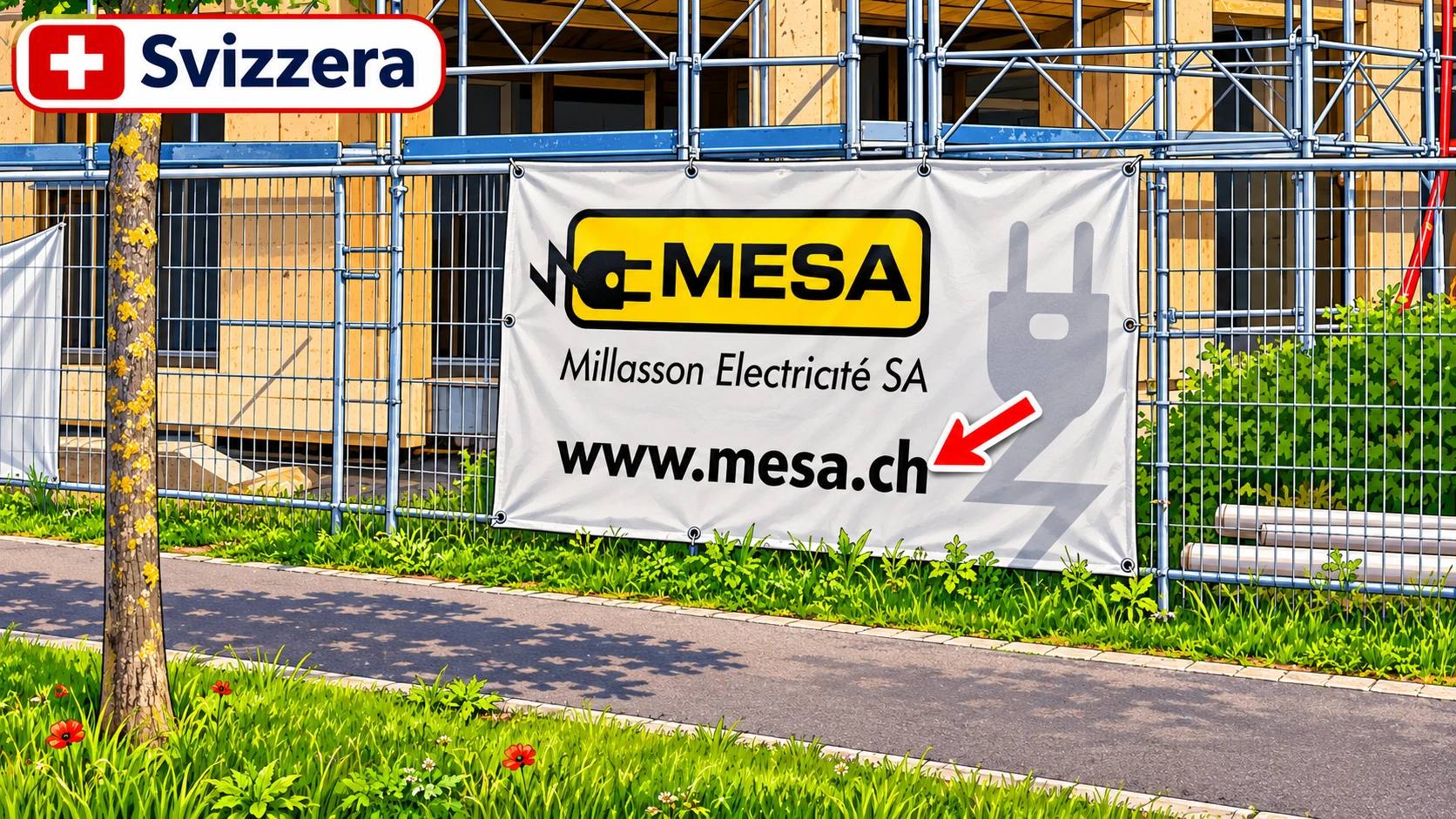
Explore this clueThe advertisement reads www.mesa.ch; .ch is highlighted for Switzerland rather than Czechia.
Explore this clueA pale street or settlement panel has a metal border and frame; blue-background variants are also mentioned.
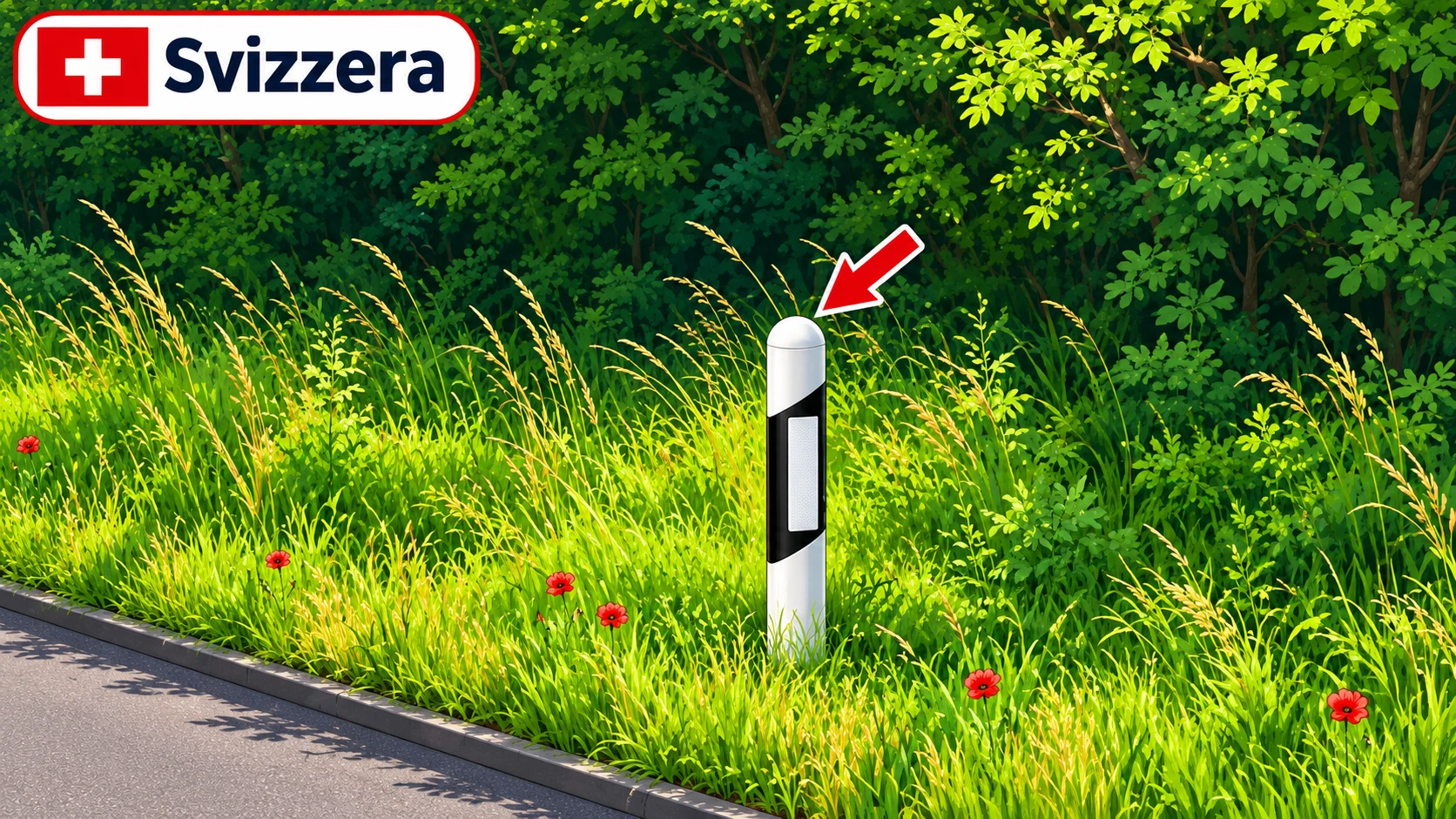
Explore this clueThe white cylindrical post has a rounded tip and a dark section with a long reflector, compared with Liechtenstein.
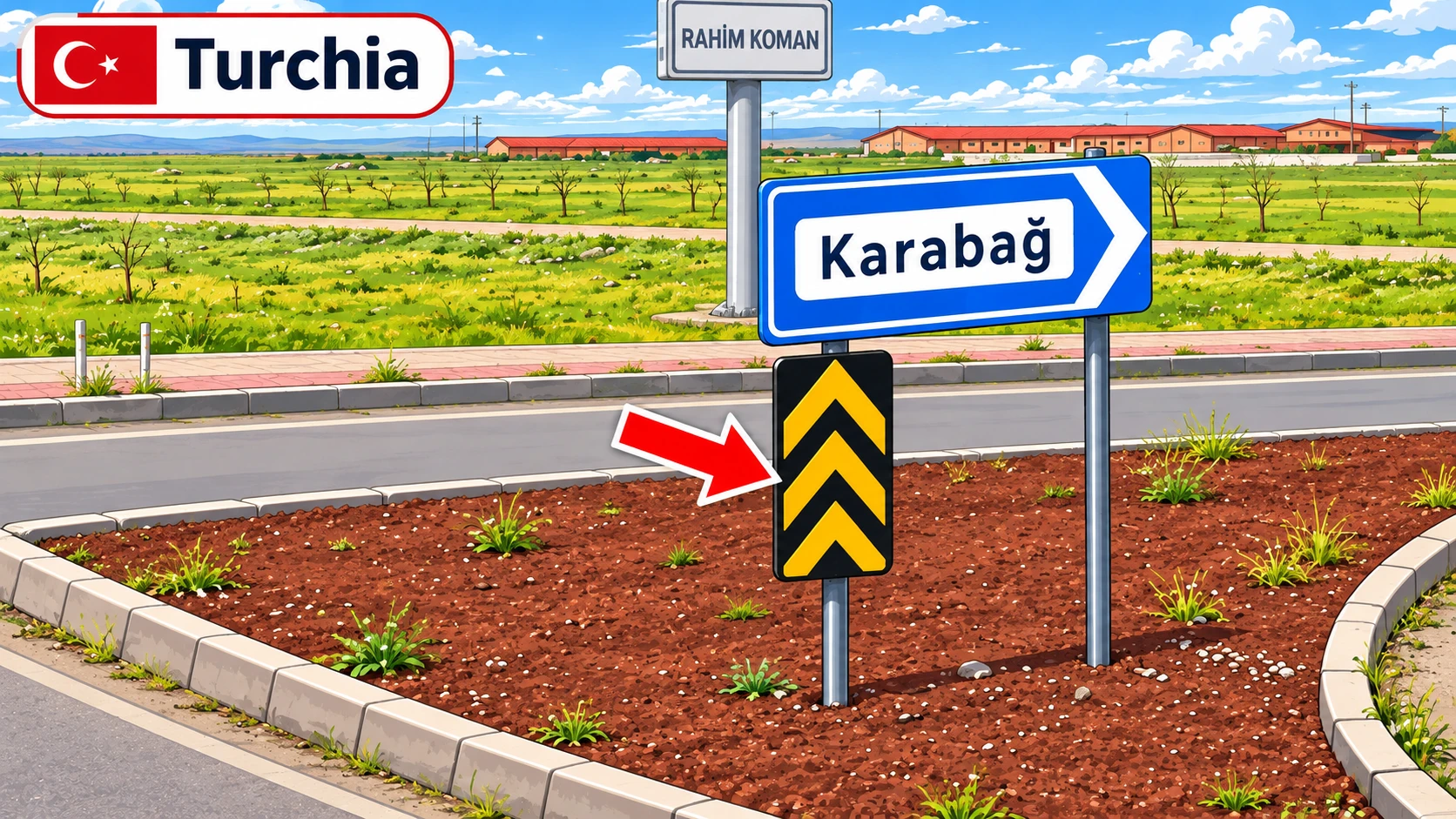
Explore this clueA vertical panel beneath a blue direction sign has several upward-pointing yellow-and-black chevrons at this Turkish junction.
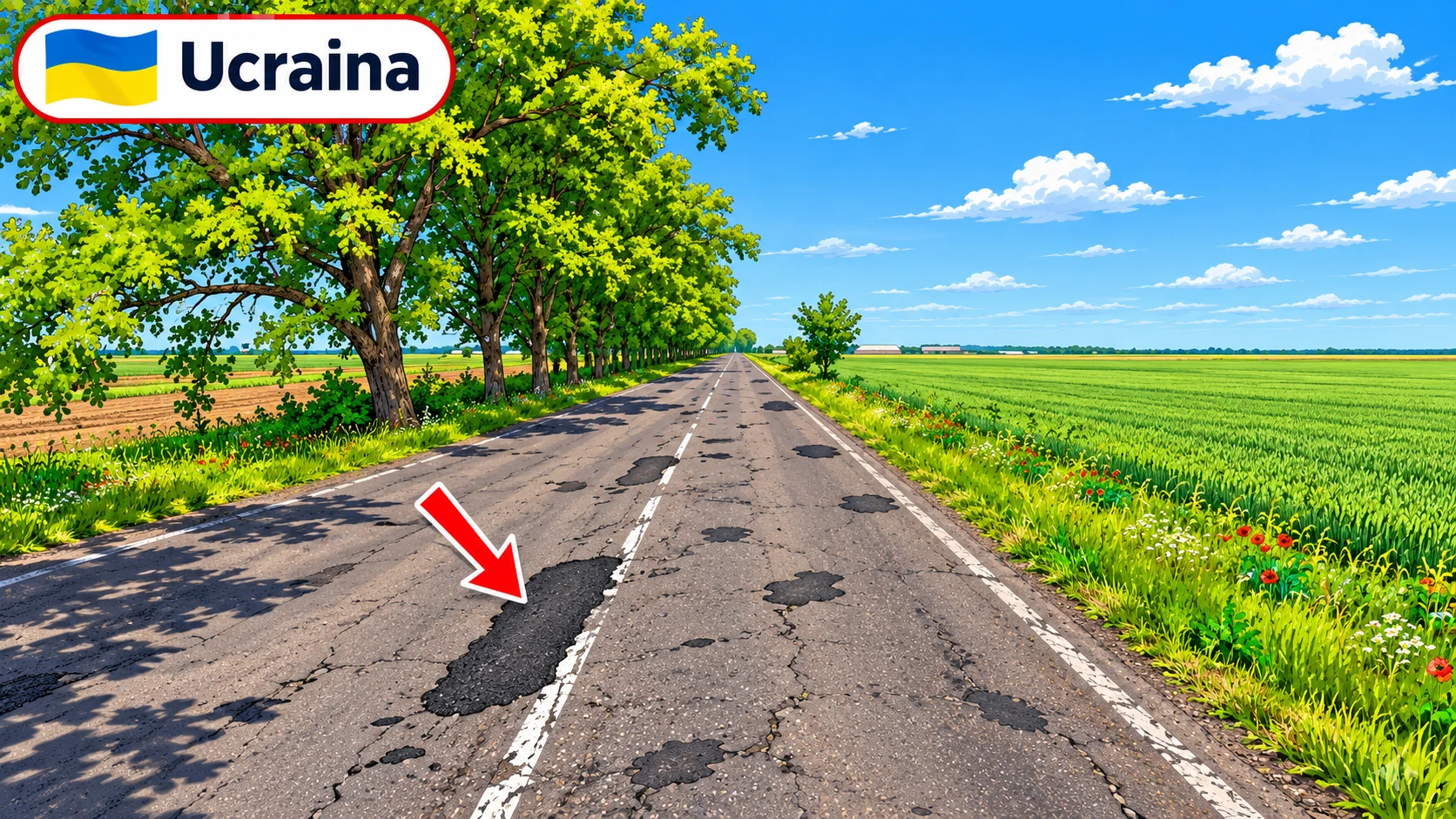
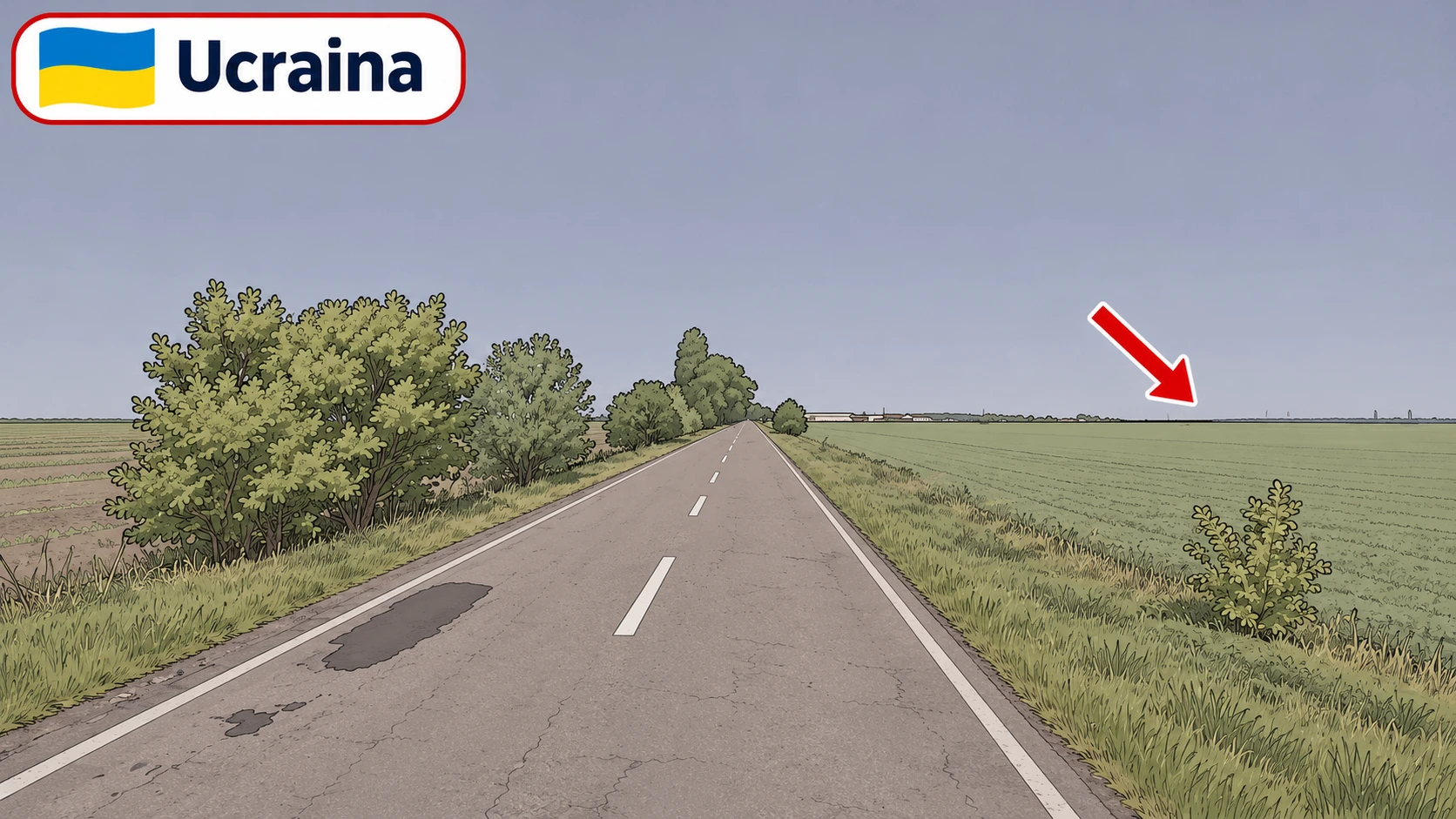
Explore this clueNumerous bitumen patches and cracks are visible, highlighted for Ukraine even without the red Google car.
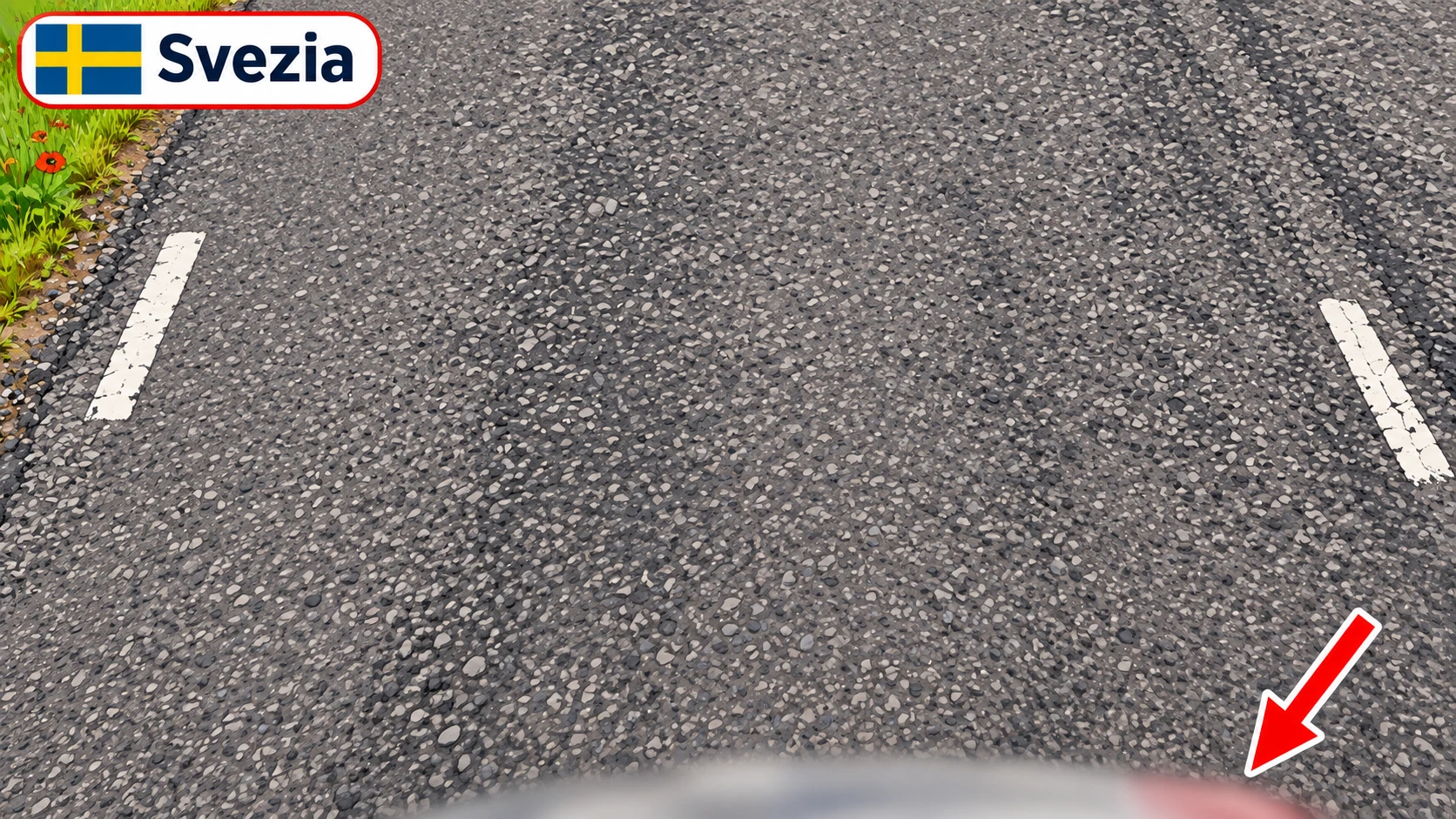
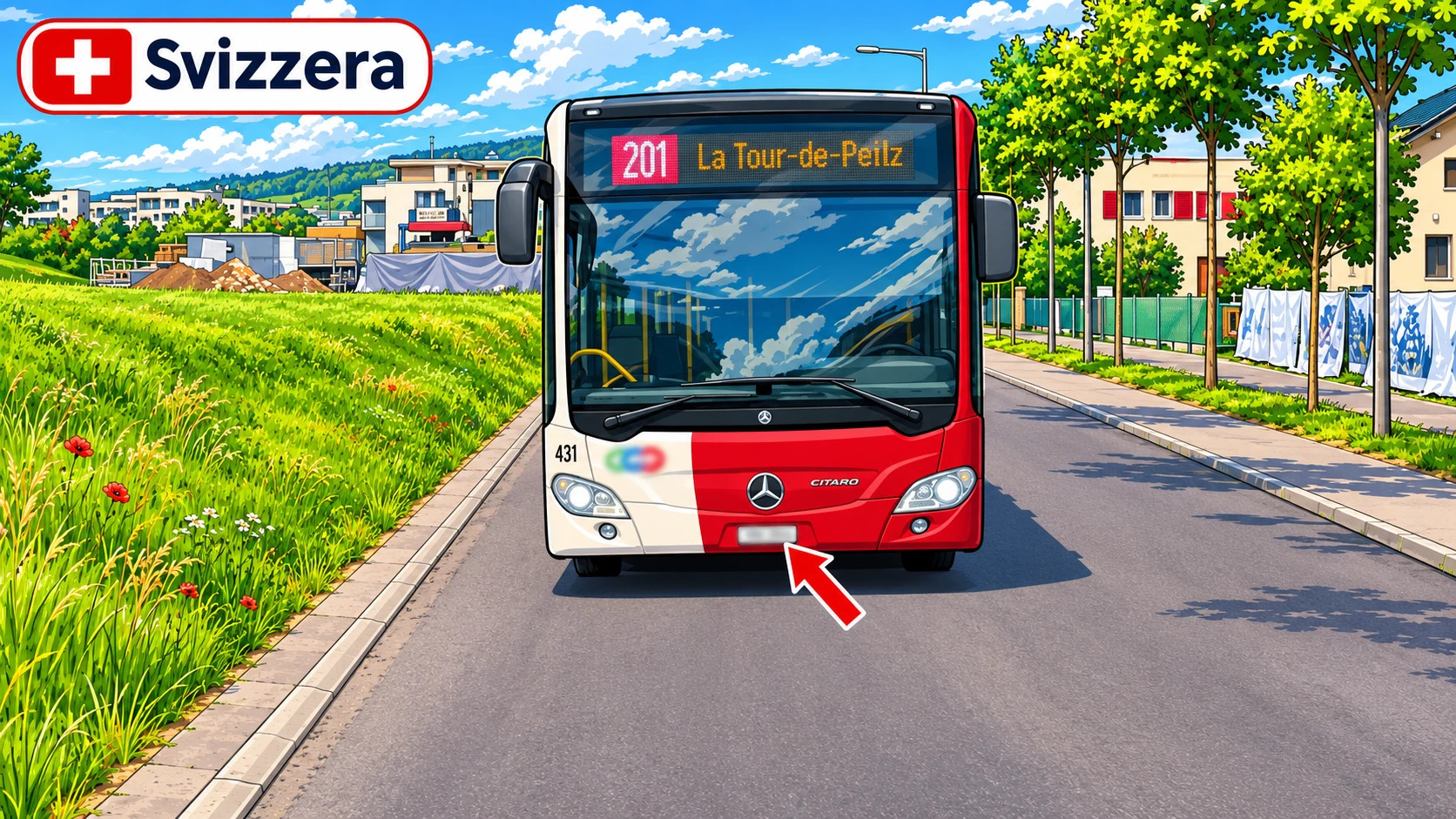
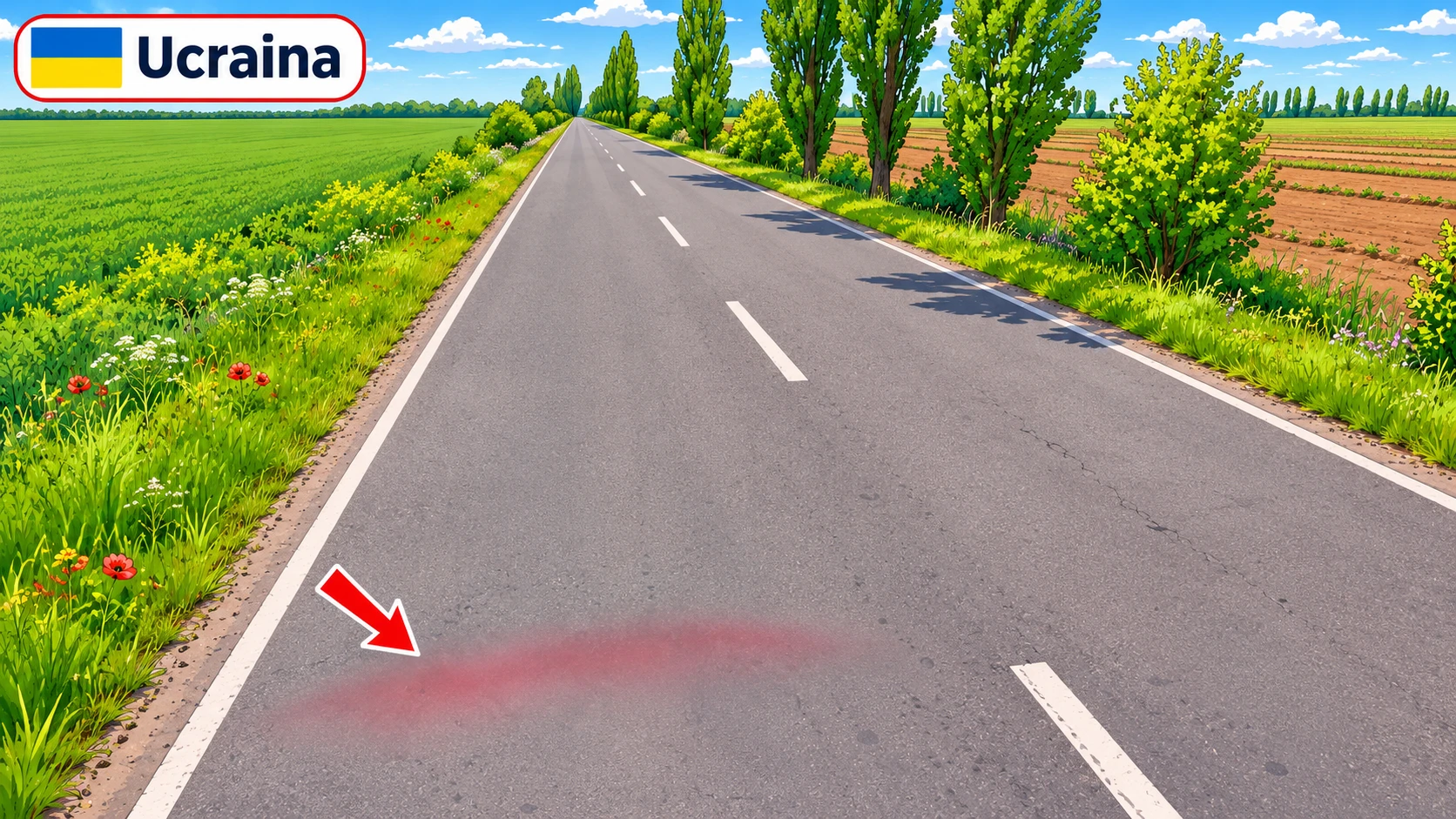
Explore this clueA blurred reddish vehicle part appears at the bottom, following an earlier scene where it was not obvious.
Explore this clueFlat fields, subdued imagery colours and possible camera marks form the guide's coverage-based impression.
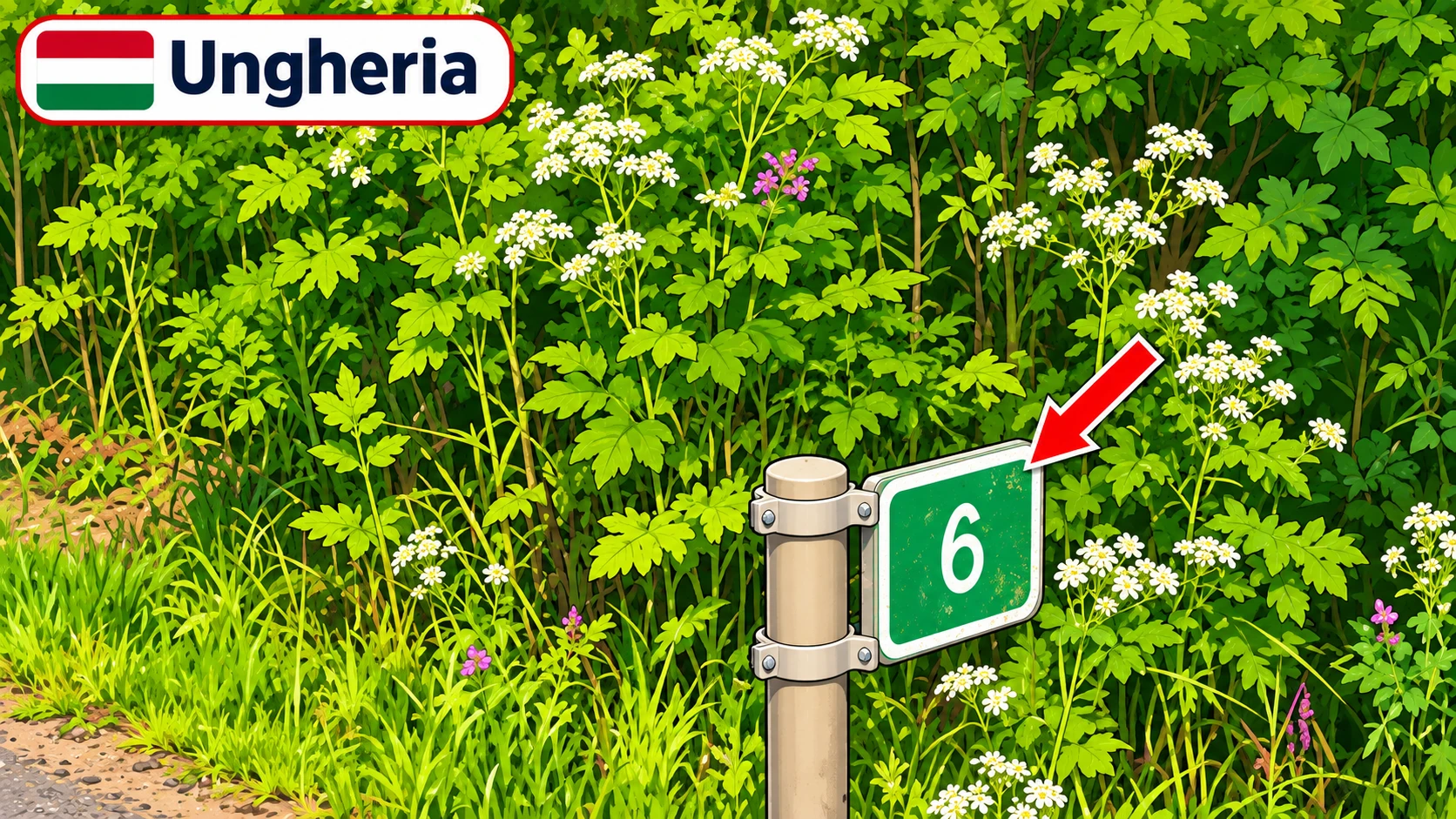
Explore this clueA small green roadside distance sign has white framing and a white digit, highlighted for Hungary.
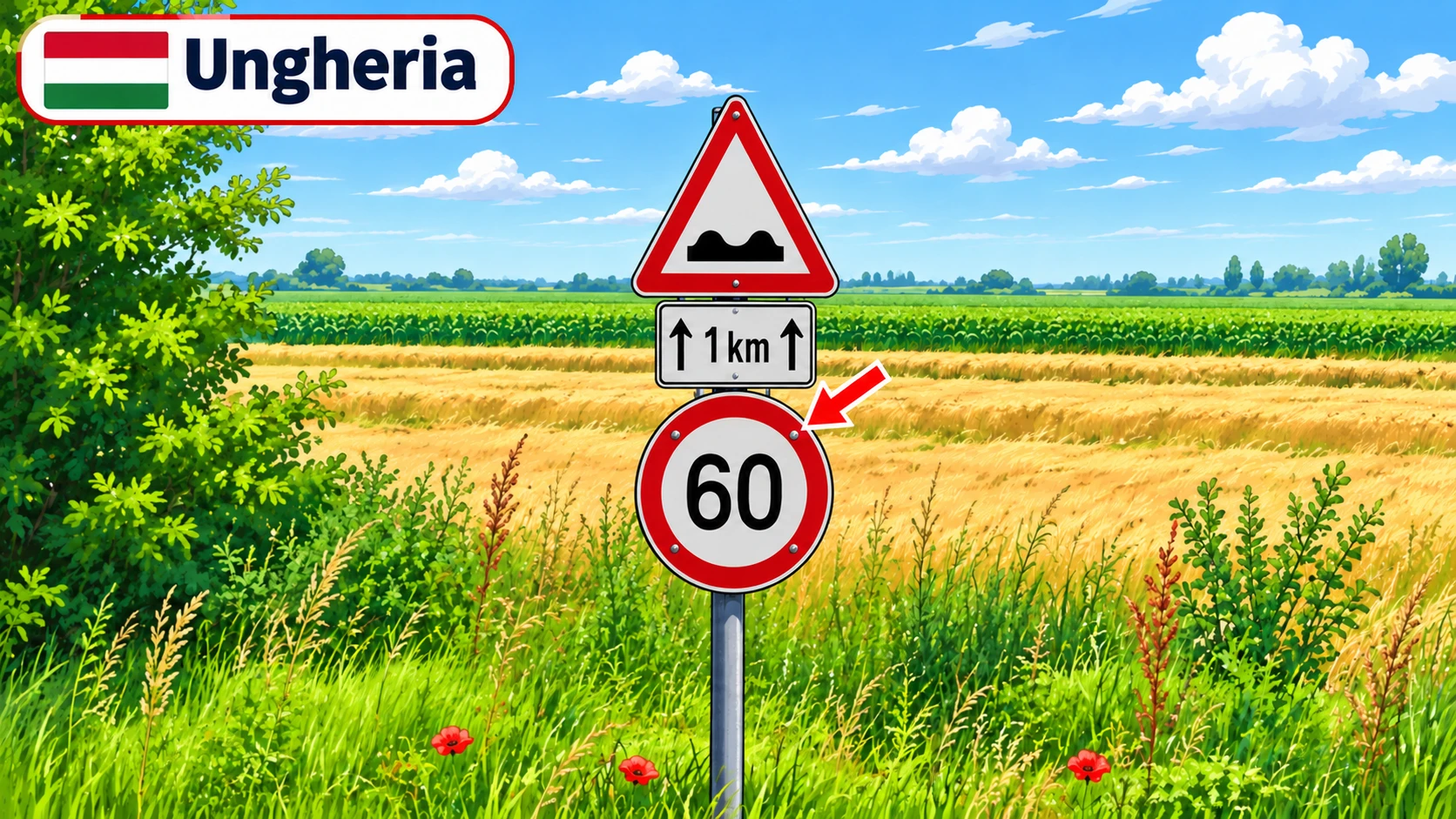
Explore this clueFour fixing points form two pairs on signs in a scene containing a warning, supplementary panel and speed limit.
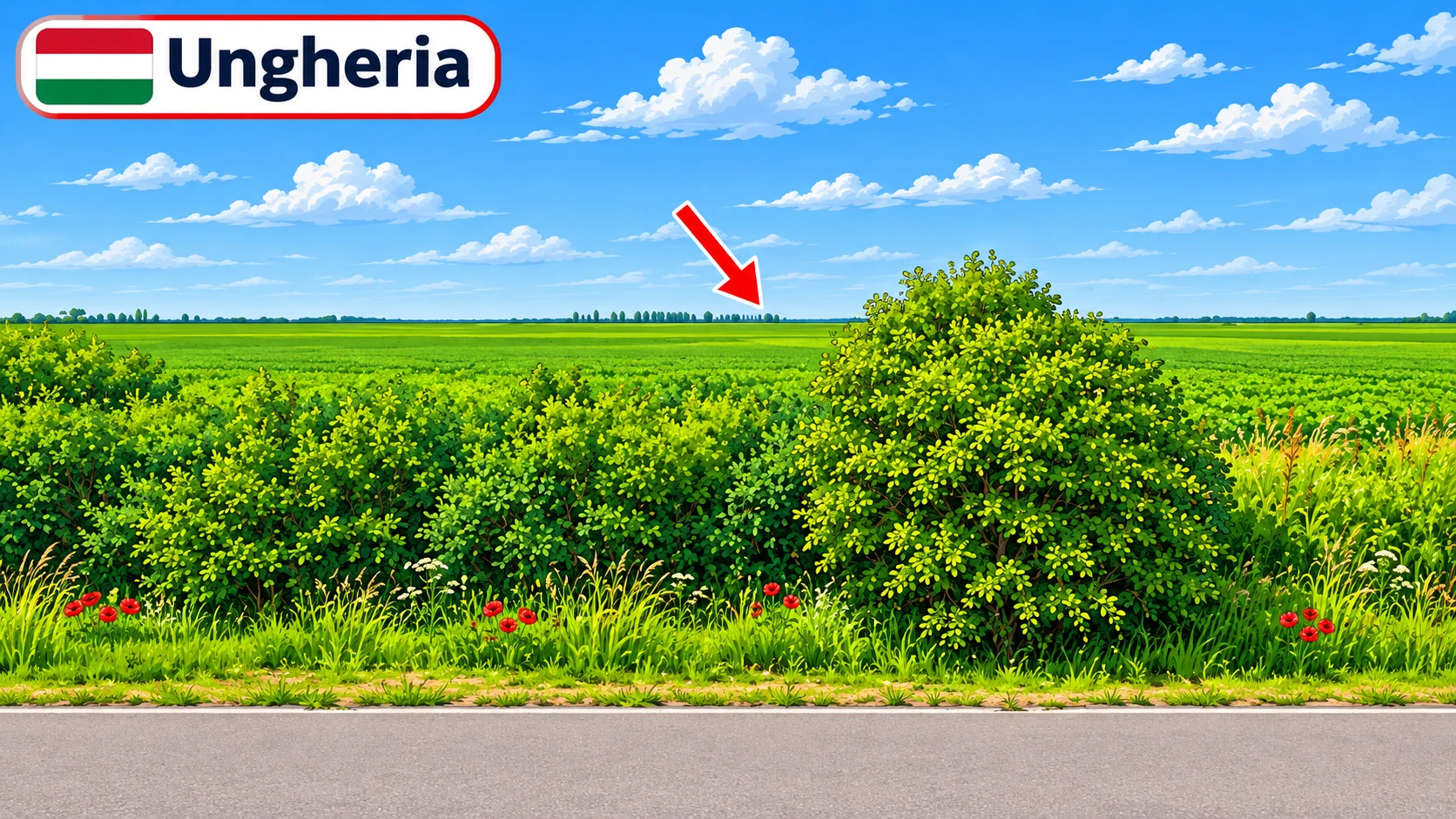
Explore this clueThe guide combines flat fields, light road surfacing and sometimes a broken white centre, with a possible blue Google car.
Explore this clueOpen a clue and add it to your favourites or review list.